Downloaded 10 times
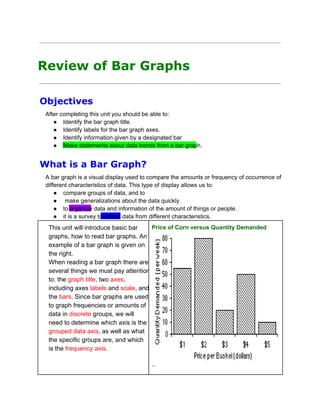
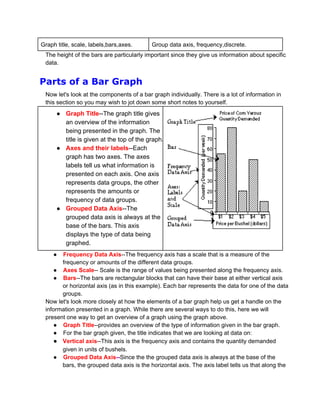
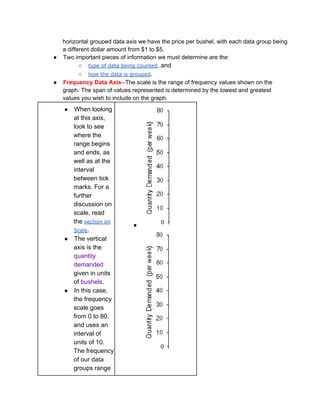



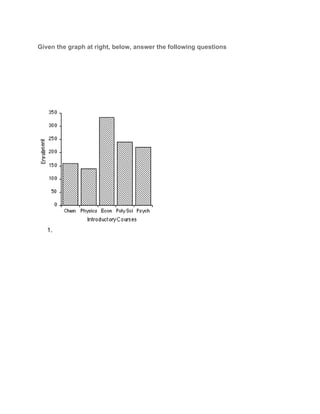

This document provides an overview of bar graphs, including their objectives, components, and how to read them. It discusses that bar graphs allow comparison of amounts or frequencies of different data characteristics and organize data visually. Key parts of a bar graph are identified as the title, axes with labels, scale, and bars. The grouped data axis shows discrete categories of data, while the frequency axis scale indicates amounts. Reading a bar graph involves determining the type of data, how it is grouped, and what the bars represent to understand trends from the graph.


