Reverse Barrier Nursing
(Protective Isolation)
Mrs. Dilnasheen Safdar
Director Nursing and Infection Control and Prevention
NIBD BMT Lahore Campus
Introduction:
• Implementation of isolation precautions from the Centres
for Disease Control and Prevention (CDC) has been justified
through research and clinical evidence
• Infectious diseases are the second leading cause of death in the field
of oncology including HSCT. Around 60% of deaths are infection
related to cancer patients, especially with underlying hematological
malignancies.
https://doi.org/10.1200/JCO.2019.37.15_suppl. e2309 Journal of clinical oncology
Why do we need to Isolate/barrier nurse?
• Barrier nursing is one way of preventing the spread of infection from
one person to another in hospital.
• To reduce the risk of spreading certain infections or antibiotic
resistant germs to other patients and staff.
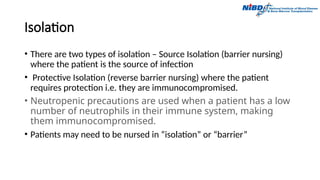
Isolation
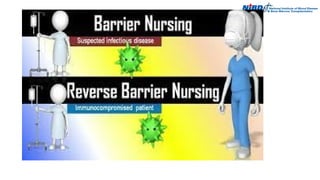
• There are two types of isolation – Source Isolation (barrier nursing)
where the patient is the source of infection
• Protective Isolation (reverse barrier nursing) where the patient
requires protection i.e. they are immunocompromised.
• Neutropenic precautions are used when a patient has a low
number of neutrophils in their immune system, making
them immunocompromised.
• Patients may need to be nursed in “isolation” or “barrier”
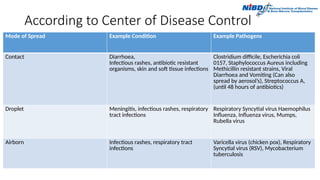
According to Center of Disease Control
Mode of Spread Example Condition Example Pathogens
Contact Diarrhoea,
Infectious rashes, antibiotic resistant
organisms, skin and soft tissue infections
Clostridium difficile, Escherichia coli
0157, Staphylococcus Aureus including
Methicillin resistant strains, Viral
Diarrhoea and Vomiting (Can also
spread by aerosol’s), Streptococcus A,
(until 48 hours of antibiotics)
Droplet Meningitis, infectious rashes, respiratory
tract infections
Respiratory Syncytial virus Haemophilus
Influenza, Influenza virus, Mumps,
Rubella virus
Airborn Infectious rashes, respiratory tract
infections
Varicella virus (chicken pox), Respiratory
Syncytial virus (RSV), Mycobacterium
tuberculosis
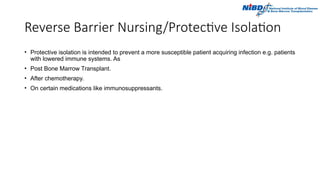
Reverse Barrier Nursing/Protective Isolation
• Protective isolation is intended to prevent a more susceptible patient acquiring infection e.g. patients
with lowered immune systems. As
• Post Bone Marrow Transplant.
• After chemotherapy.
• On certain medications like immunosuppressants.
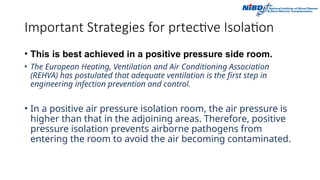
Important Strategies for prtective Isolation
• This is best achieved in a positive pressure side room.
• The European Heating, Ventilation and Air Conditioning Association
(REHVA) has postulated that adequate ventilation is the first step in
engineering infection prevention and control.
• In a positive air pressure isolation room, the air pressure is
higher than that in the adjoining areas. Therefore, positive
pressure isolation prevents airborne pathogens from
entering the room to avoid the air becoming contaminated.
Hand Hygiene
Personel Protective Equipments
• When you are caring for immunocompromised patients strict on
isolation protocol as.
• Perform hand hygiene
• Wear Mask, nursing cap and gown before enter the room.
• Perform hand hygiene in patient zone wear gloves if required.
• Use surgical gloves if handle central line or IV line.
Environmental Cleaning
• Use single room Dry mop,wet mop use recommended disinfectant.
• Individual room disopsable damp dusting with surface disinfectant.
• Hepafiltrational for air cleaning.
• Special concideration on highly touched area e.g remote, call bell, bed
side rails.
• Proper disposal of waste at the point of care
Neutropenic Diet
• This diet helps protect them from bacteria and other
harmful organisms found in some food and drinks.
• Avoid all fresh fruits and vegetables except thick peeled
fruits
• Well cooked food is allowed preferably home cooked
• Avoid fresh raw salad
• Use boiled water
• Avoid raw nuts.
• Make sure all of the dairy products you eat are pasteurized.
• Avoid yogurt and yogurt products with live and active
cultures.
• Wash your hands before handling food.
• Wash all surfaces, cutting boards and cutting utensils
thoroughly.
• Keep hot food hot and cold food cold.
Attendent Policy
• In reverse Barrier precation attends are not allowed in special cases of
pediatric patients one attendent allowed after proper screening and
education.
• He/She will wear proper PPE during stay.
• If any sign of infection change her immedialely.
• Emphasized on proper hand hygiene.
Other Alerts
• No entery if you have flu,dermatitis,sore throat or itching.
• Remove dirty shoes outside the isolation and wear clean shoes inside.
• Remove Coats, Dupata, over coat at bufferzone area or at enterance.
• Keep bags, Laptop outside the isolation.
• Fresh flowers, plants are not allowed .
• Stuff toys stuff cloths are prohibited ( Pediatric Patient can use Plastic
toys with smooth surface and video games are also allowed).
• Avoid trafficking in isolation
Thanks

Reverse Barrier Nursing Neutropenic care

  • 1.
    Reverse Barrier Nursing (ProtectiveIsolation) Mrs. Dilnasheen Safdar Director Nursing and Infection Control and Prevention NIBD BMT Lahore Campus
  • 3.
    Introduction: • Implementation ofisolation precautions from the Centres for Disease Control and Prevention (CDC) has been justified through research and clinical evidence • Infectious diseases are the second leading cause of death in the field of oncology including HSCT. Around 60% of deaths are infection related to cancer patients, especially with underlying hematological malignancies. https://doi.org/10.1200/JCO.2019.37.15_suppl. e2309 Journal of clinical oncology
  • 4.
    Why do weneed to Isolate/barrier nurse? • Barrier nursing is one way of preventing the spread of infection from one person to another in hospital. • To reduce the risk of spreading certain infections or antibiotic resistant germs to other patients and staff.
  • 5.
    Isolation • There aretwo types of isolation – Source Isolation (barrier nursing) where the patient is the source of infection • Protective Isolation (reverse barrier nursing) where the patient requires protection i.e. they are immunocompromised. • Neutropenic precautions are used when a patient has a low number of neutrophils in their immune system, making them immunocompromised. • Patients may need to be nursed in “isolation” or “barrier”
  • 6.
    According to Centerof Disease Control Mode of Spread Example Condition Example Pathogens Contact Diarrhoea, Infectious rashes, antibiotic resistant organisms, skin and soft tissue infections Clostridium difficile, Escherichia coli 0157, Staphylococcus Aureus including Methicillin resistant strains, Viral Diarrhoea and Vomiting (Can also spread by aerosol’s), Streptococcus A, (until 48 hours of antibiotics) Droplet Meningitis, infectious rashes, respiratory tract infections Respiratory Syncytial virus Haemophilus Influenza, Influenza virus, Mumps, Rubella virus Airborn Infectious rashes, respiratory tract infections Varicella virus (chicken pox), Respiratory Syncytial virus (RSV), Mycobacterium tuberculosis
  • 7.
    Reverse Barrier Nursing/ProtectiveIsolation • Protective isolation is intended to prevent a more susceptible patient acquiring infection e.g. patients with lowered immune systems. As • Post Bone Marrow Transplant. • After chemotherapy. • On certain medications like immunosuppressants.
  • 8.
    Important Strategies forprtective Isolation • This is best achieved in a positive pressure side room. • The European Heating, Ventilation and Air Conditioning Association (REHVA) has postulated that adequate ventilation is the first step in engineering infection prevention and control. • In a positive air pressure isolation room, the air pressure is higher than that in the adjoining areas. Therefore, positive pressure isolation prevents airborne pathogens from entering the room to avoid the air becoming contaminated.
  • 9.
  • 10.
    Personel Protective Equipments •When you are caring for immunocompromised patients strict on isolation protocol as. • Perform hand hygiene • Wear Mask, nursing cap and gown before enter the room. • Perform hand hygiene in patient zone wear gloves if required. • Use surgical gloves if handle central line or IV line.
  • 11.
    Environmental Cleaning • Usesingle room Dry mop,wet mop use recommended disinfectant. • Individual room disopsable damp dusting with surface disinfectant. • Hepafiltrational for air cleaning. • Special concideration on highly touched area e.g remote, call bell, bed side rails. • Proper disposal of waste at the point of care
  • 12.
    Neutropenic Diet • Thisdiet helps protect them from bacteria and other harmful organisms found in some food and drinks. • Avoid all fresh fruits and vegetables except thick peeled fruits • Well cooked food is allowed preferably home cooked • Avoid fresh raw salad • Use boiled water
  • 13.
    • Avoid rawnuts. • Make sure all of the dairy products you eat are pasteurized. • Avoid yogurt and yogurt products with live and active cultures. • Wash your hands before handling food. • Wash all surfaces, cutting boards and cutting utensils thoroughly. • Keep hot food hot and cold food cold.
  • 14.
    Attendent Policy • Inreverse Barrier precation attends are not allowed in special cases of pediatric patients one attendent allowed after proper screening and education. • He/She will wear proper PPE during stay. • If any sign of infection change her immedialely. • Emphasized on proper hand hygiene.
  • 15.
    Other Alerts • Noentery if you have flu,dermatitis,sore throat or itching. • Remove dirty shoes outside the isolation and wear clean shoes inside. • Remove Coats, Dupata, over coat at bufferzone area or at enterance. • Keep bags, Laptop outside the isolation. • Fresh flowers, plants are not allowed . • Stuff toys stuff cloths are prohibited ( Pediatric Patient can use Plastic toys with smooth surface and video games are also allowed). • Avoid trafficking in isolation
  • 16.