PRIMARY RECOVERY MECHANISMS
BY: KUSIIMA PATRIC
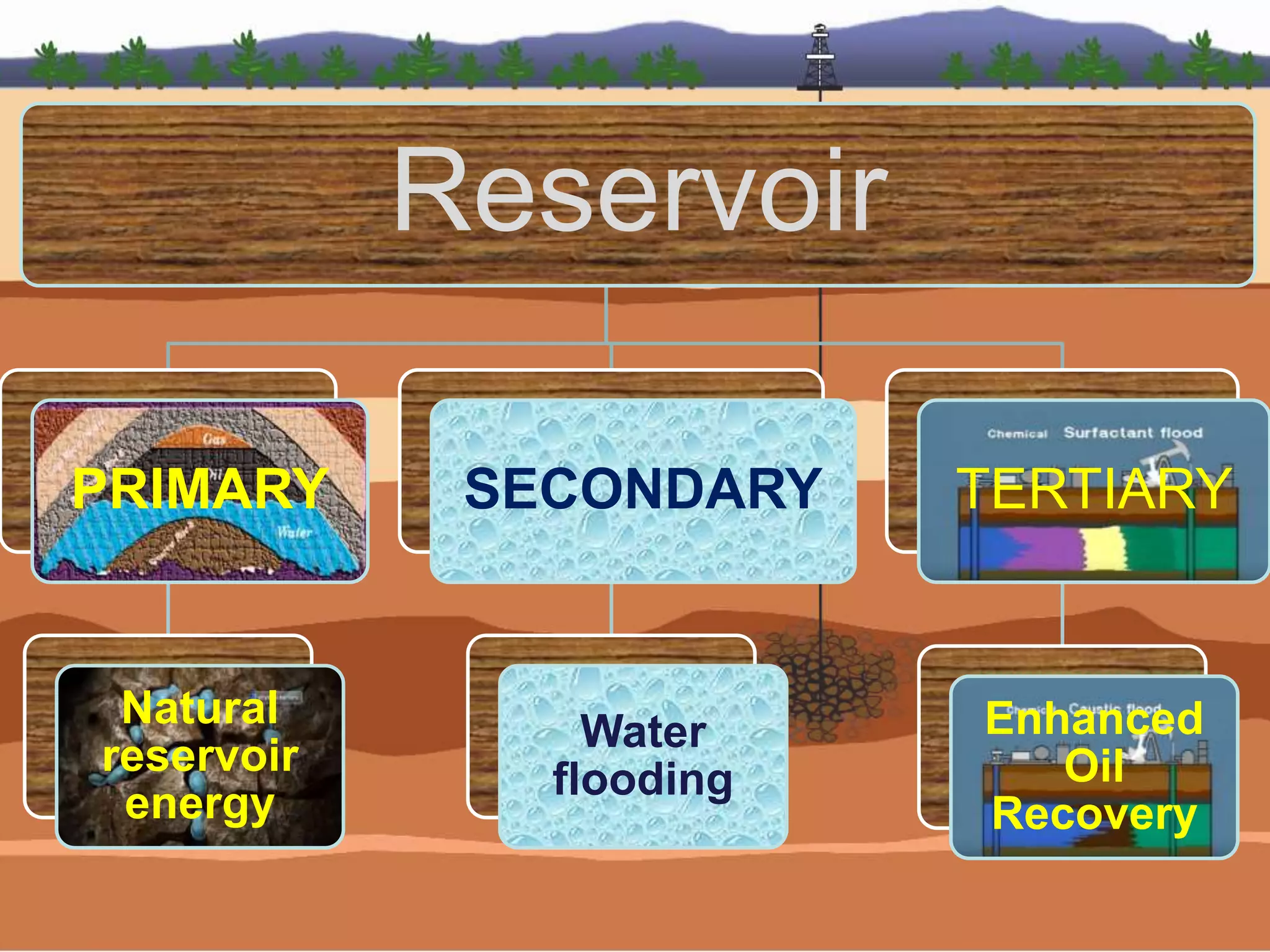
Reservoir
PRIMARY
Natural
reservoir
energy
SECONDARY
Water
flooding
TERTIARY
Enhanced
Oil
Recovery
PRIMARY RECOVERY MECHANISMS
 Liberation and expansion of solution gas
 Influx of aquifer water
 Contraction of reservoir rock skeleton
 Expansion of original reservoir fluids
- Free gas, if present
- Interstitial water
- Oil, if present
• Gravitational forces
 The natural energy of the reservoir is utilized during the initial production of
hydrocarbons.
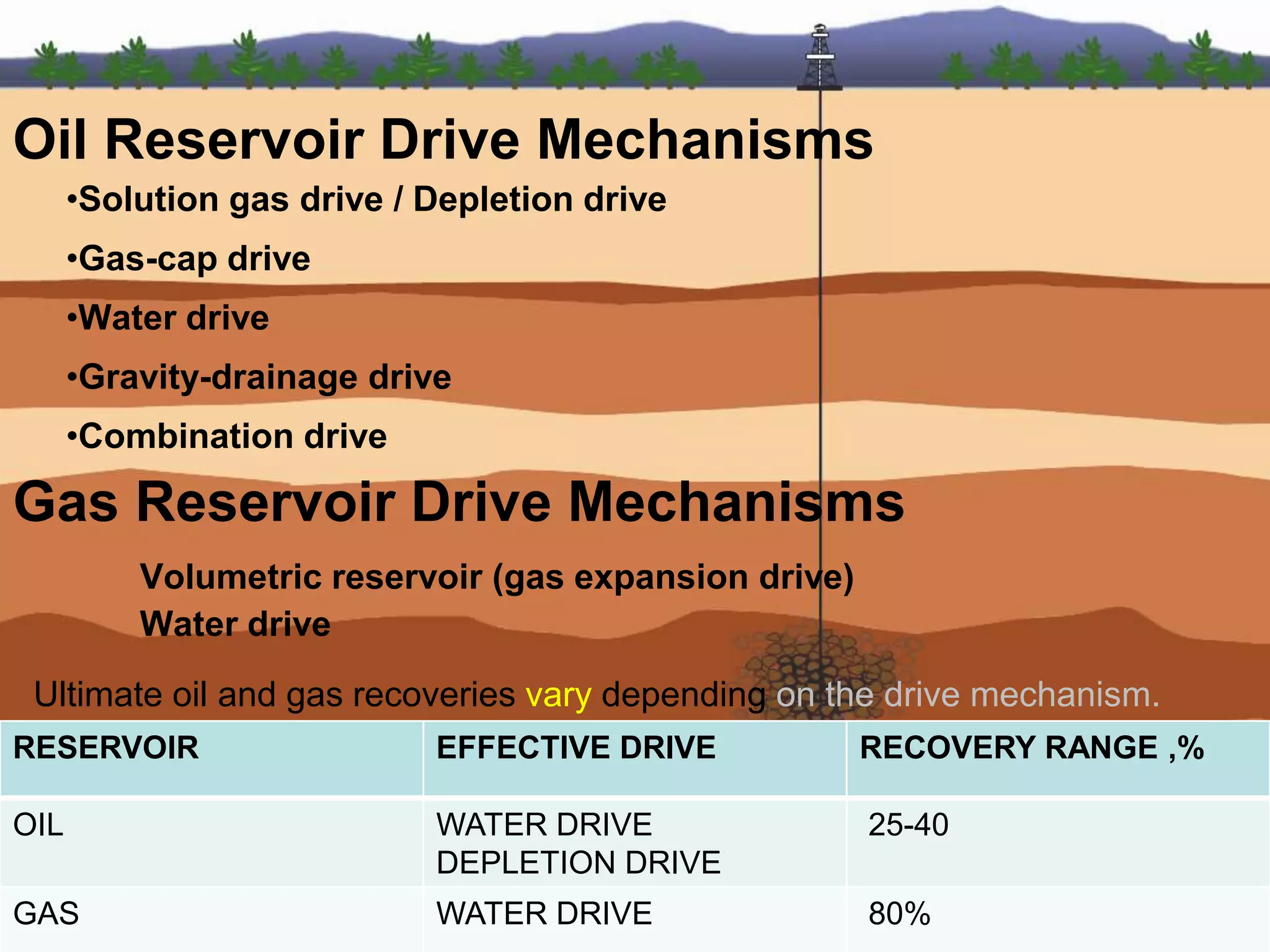
•Solution gas drive / Depletion drive
•Gas-cap drive
•Water drive
•Gravity-drainage drive
•Combination drive
Ultimate oil and gas recoveries vary depending on the drive mechanism.
RESERVOIR EFFECTIVE DRIVE RECOVERY RANGE ,%
OIL WATER DRIVE
DEPLETION DRIVE
25-40
GAS WATER DRIVE 80%
Gas Reservoir Drive Mechanisms
Volumetric reservoir (gas expansion drive)
Water drive
Oil Reservoir Drive Mechanisms
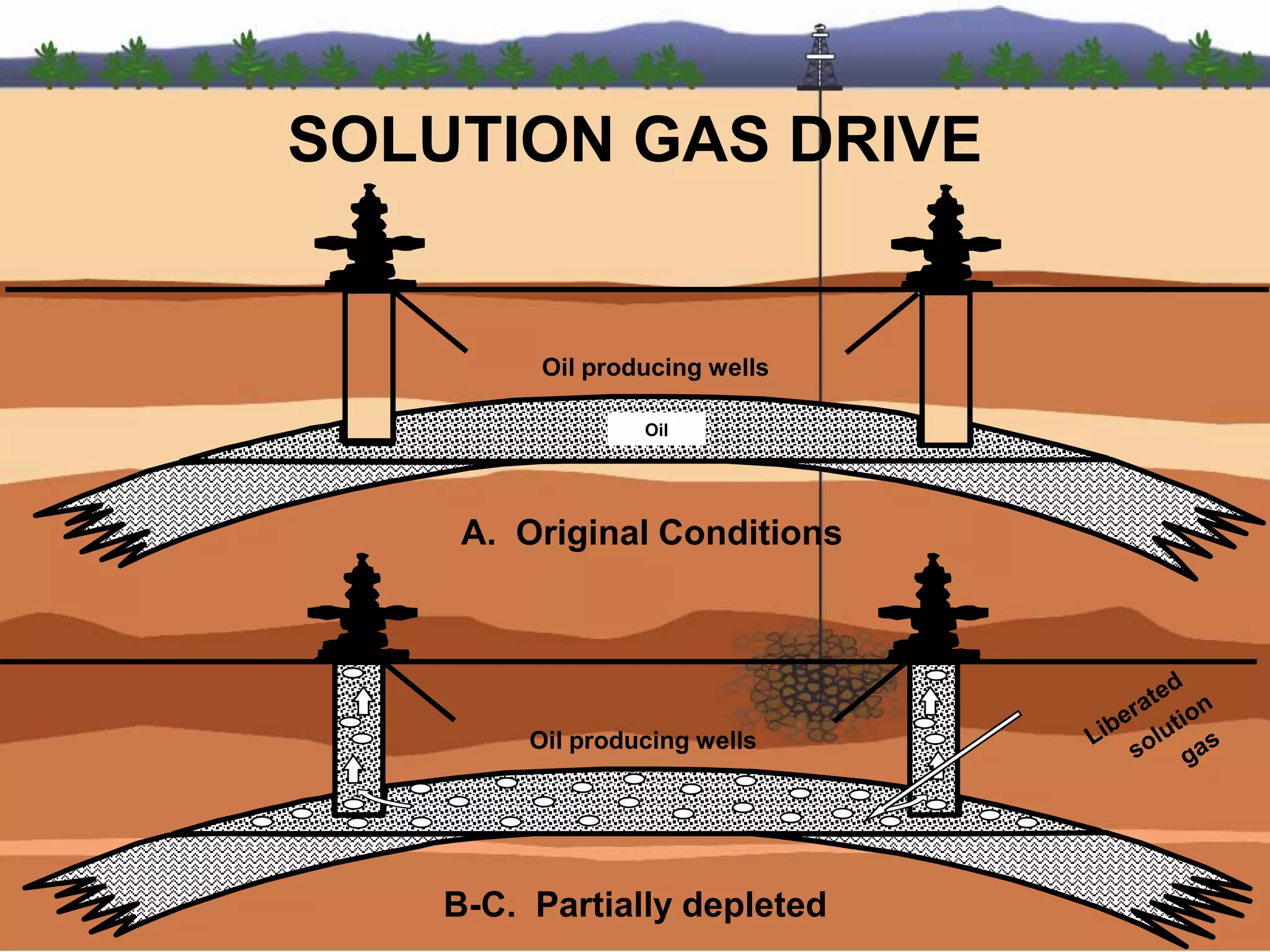
• Gas liberation from the crude oil and the subsequent expansion of the
solution gas as the reservoir pressure is reduced
CP
LIQUID
GAS
P
T
20%40%
60%80%
X
PiA
B
C
A. Original Conditions
B-C. Partially depleted
SOLUTION GAS DRIVE
Pr
Oil
A. Original Conditions
B-C. Partially depleted
Oil producing wells
Oil producing wells
SOLUTION GAS DRIVE
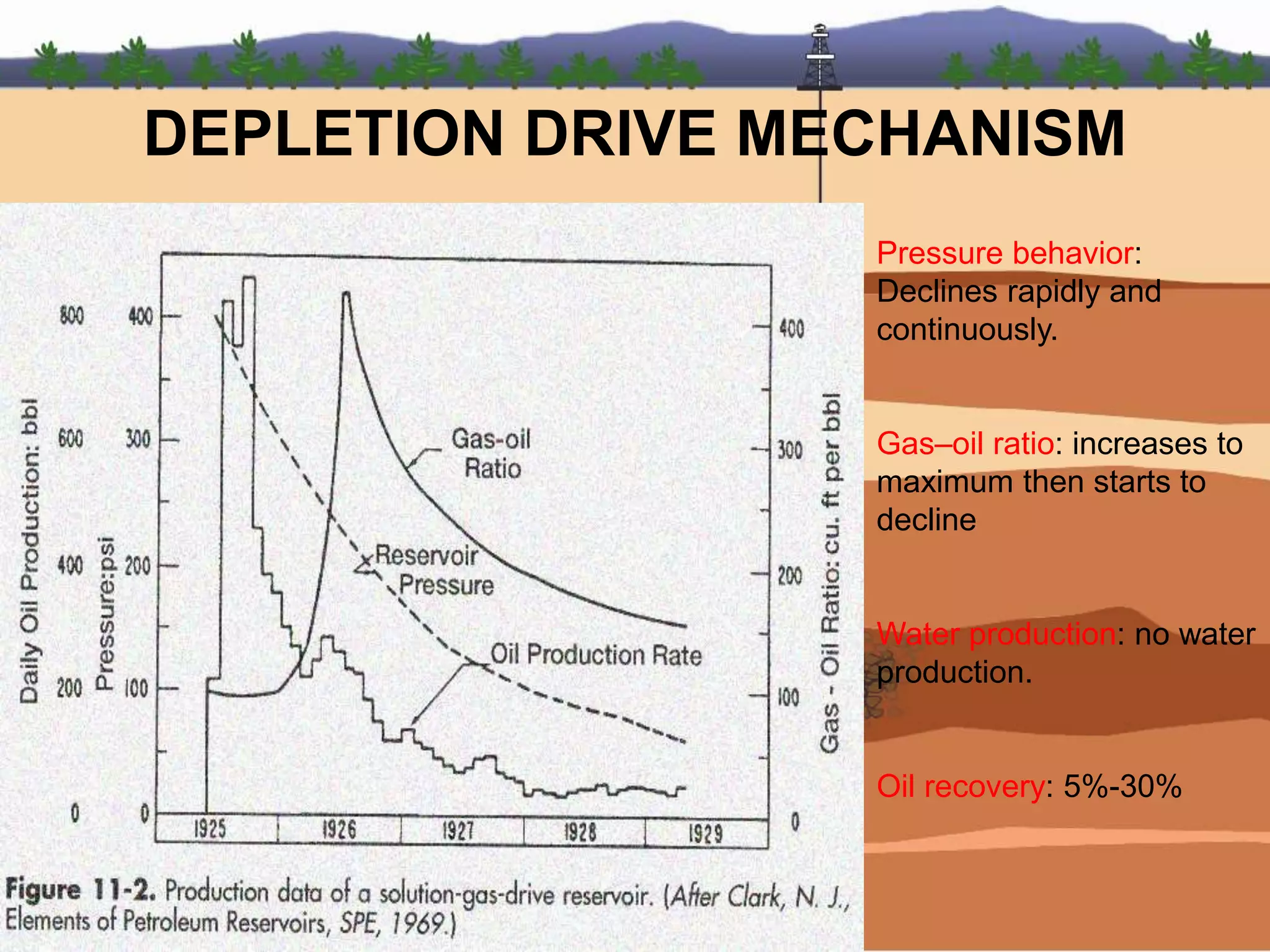
DEPLETION DRIVE MECHANISM
Pressure behavior:
Declines rapidly and
continuously.
Gas–oil ratio: increases to
maximum then starts to
decline
Water production: no water
production.
Oil recovery: 5%-30%
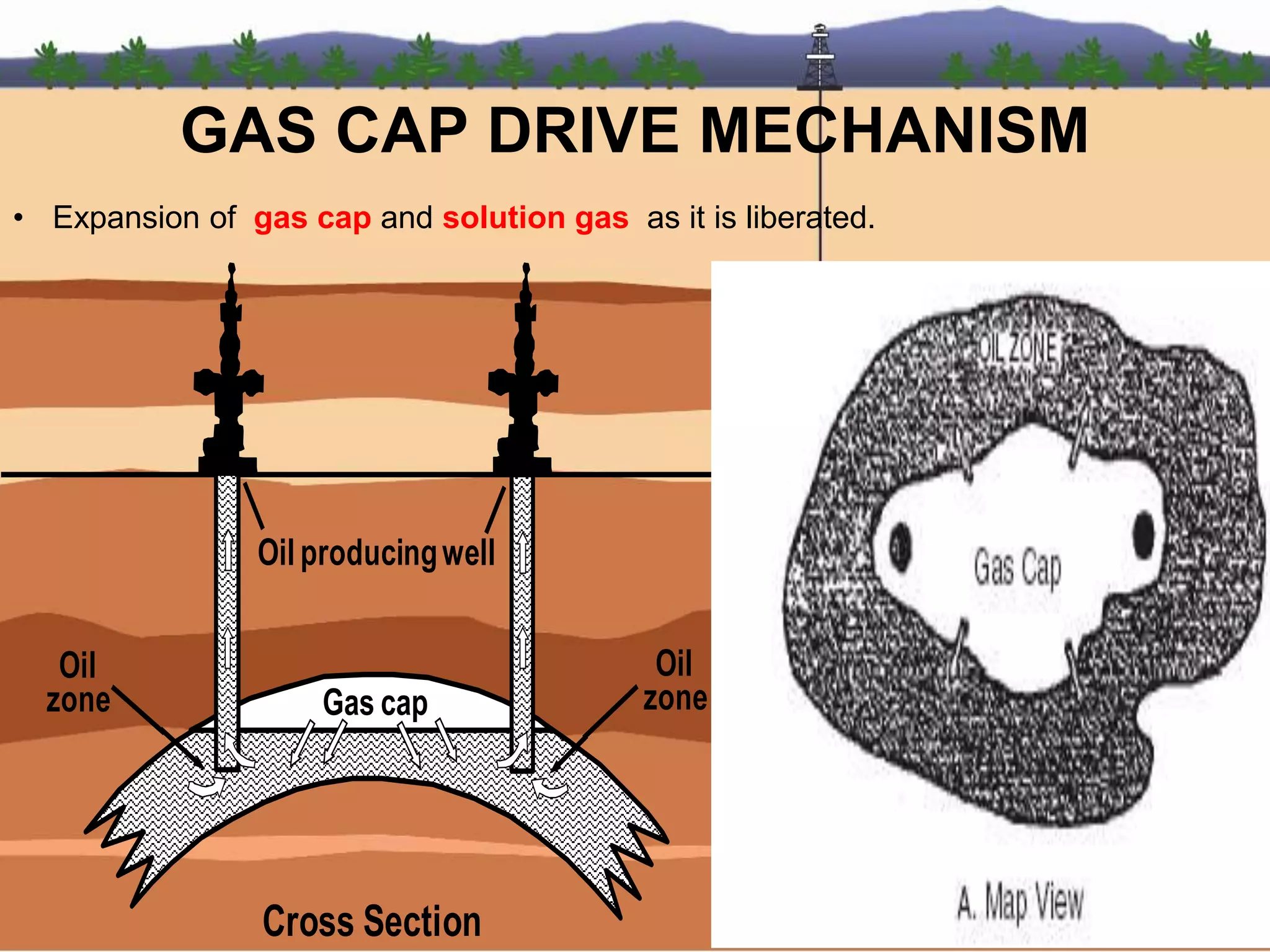
GAS CAP DRIVE MECHANISM
• Expansion of gas cap and solution gas as it is liberated.
Cross Section
Oil producingwell
Oil
zone
Oil
zoneGas cap
GAS CAP DRIVE MECHANISM
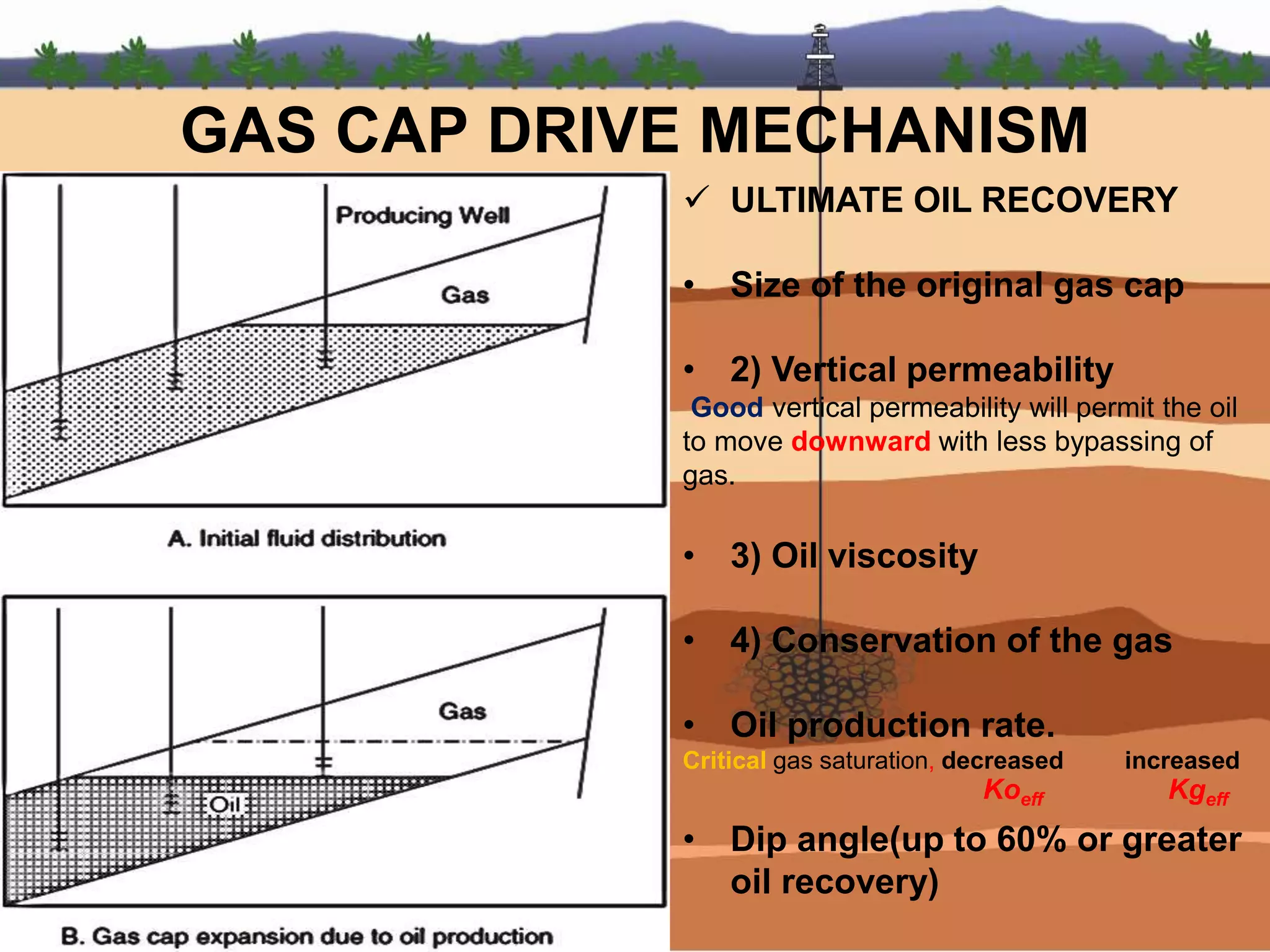
 ULTIMATE OIL RECOVERY
• Size of the original gas cap
• 2) Vertical permeability
Good vertical permeability will permit the oil
to move downward with less bypassing of
gas.
• 3) Oil viscosity
• 4) Conservation of the gas
• Oil production rate.
Critical gas saturation, decreased increased
• Dip angle(up to 60% or greater
oil recovery)
KgeffKoeff
Characteristic Trends
Oil Recovery 20% to 40%
OOIP
Reservoir
pressure
Declines
slowly and
constantly
Gas-Oil ratio Rises
constantly
Water
Production
None
Well Behavior Reservoir
pressure
maintained
GAS CAP DRIVE MECHANISM
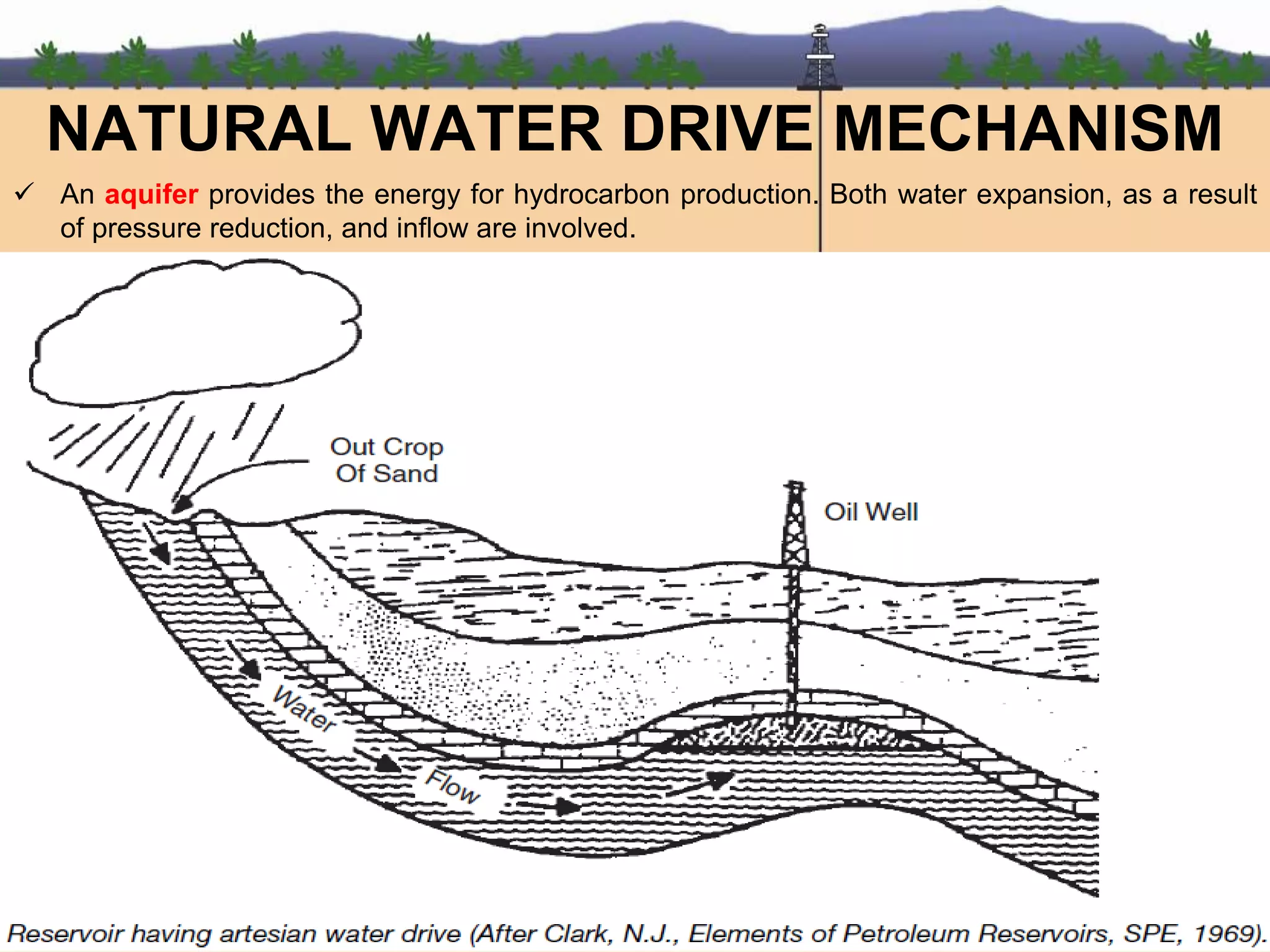
NATURAL WATER DRIVE MECHANISM
 An aquifer provides the energy for hydrocarbon production. Both water expansion, as a result
of pressure reduction, and inflow are involved.
Different Water Drive Mechanisms
Oil producing well
Water Water
Cross Section
Oil Zone
water leg underlies the entire reservoir
Oil producing well
Cross Section
Oil Zone
Water
Edge Water Drive
only part of the areal extent is
contacted by water,
Bottom Water Drive
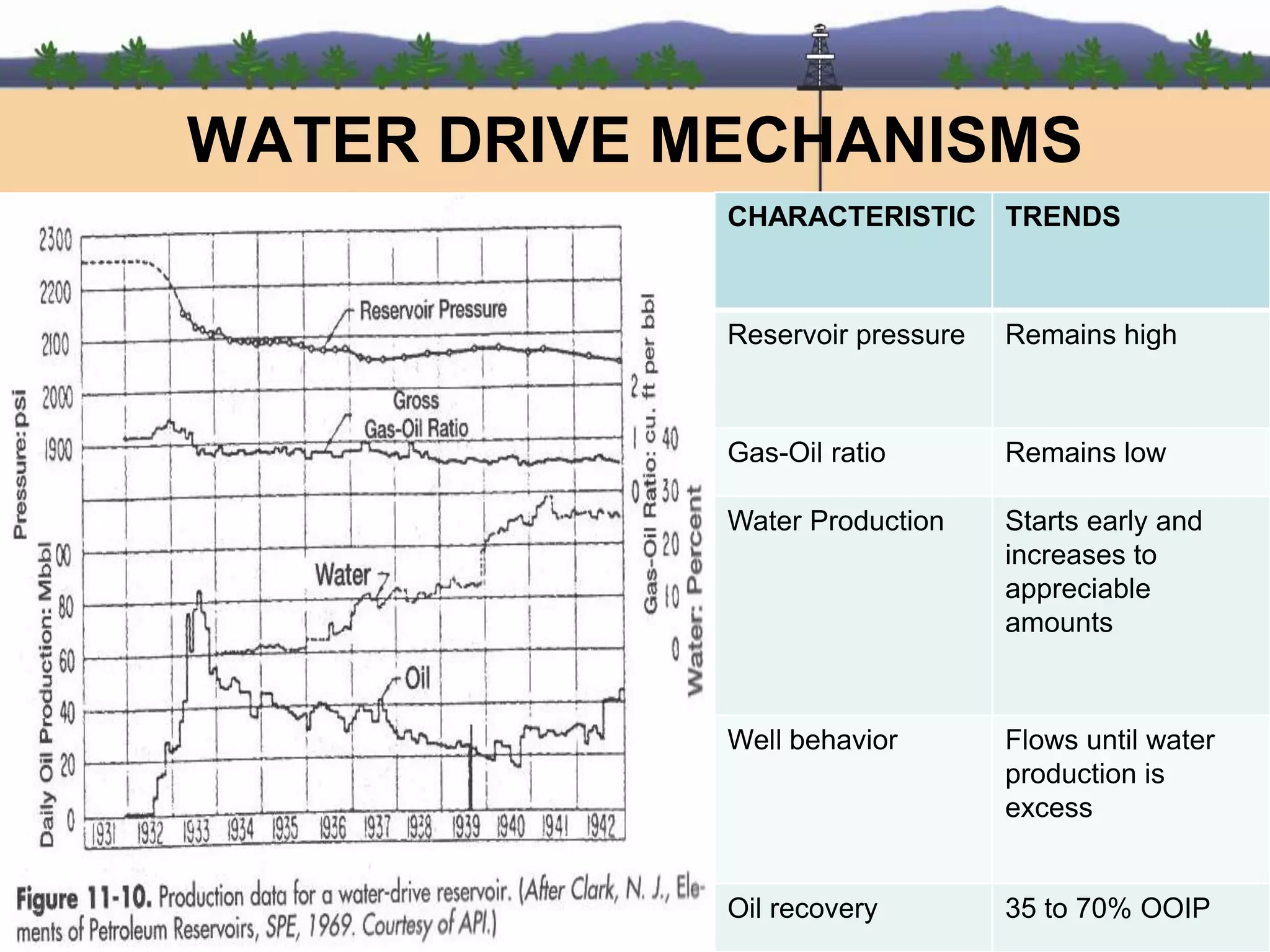
CHARACTERISTIC TRENDS
Reservoir pressure Remains high
Gas-Oil ratio Remains low
Water Production Starts early and
increases to
appreciable
amounts
Well behavior Flows until water
production is
excess
Oil recovery 35 to 70% OOIP
WATER DRIVE MECHANISMS
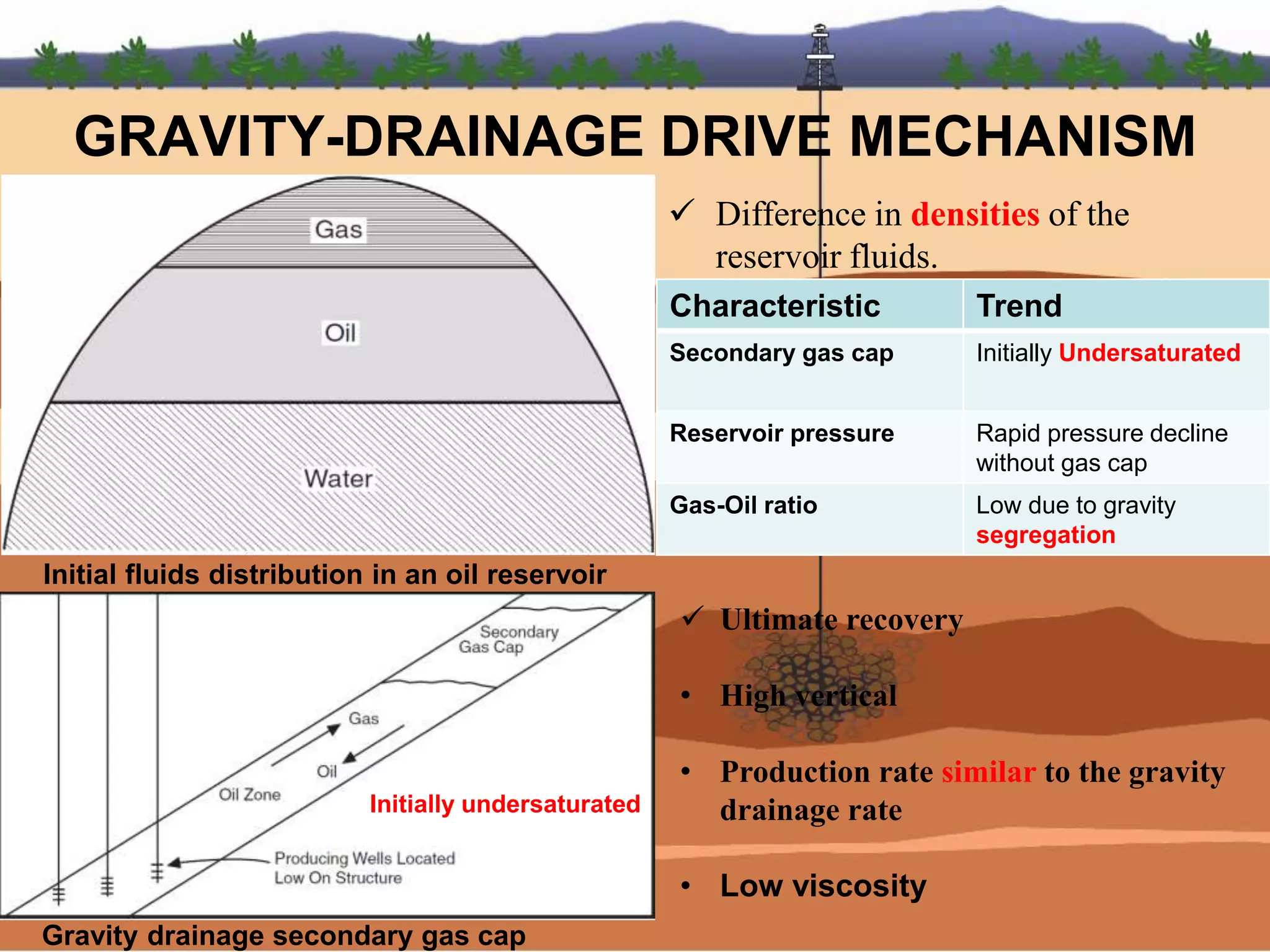
GRAVITY-DRAINAGE DRIVE MECHANISM
Initial fluids distribution in an oil reservoir
Gravity drainage secondary gas cap
Initially undersaturated
 Difference in densities of the
reservoir fluids.
Characteristic Trend
Secondary gas cap Initially Undersaturated
Reservoir pressure Rapid pressure decline
without gas cap
Gas-Oil ratio Low due to gravity
segregation
 Ultimate recovery
• High vertical
• Production rate similar to the gravity
drainage rate
• Low viscosity
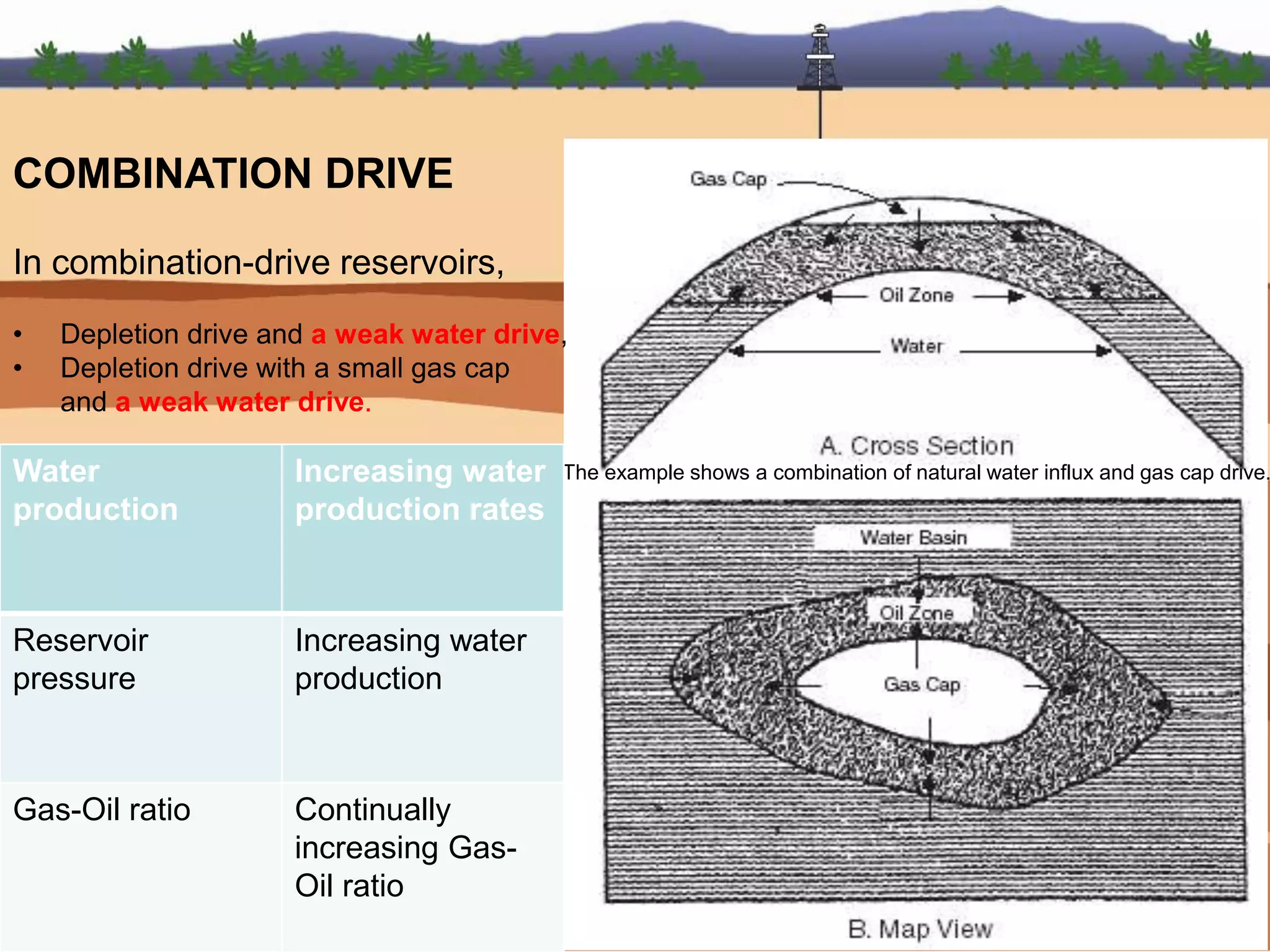
COMBINATION DRIVE
In combination-drive reservoirs,
• Depletion drive and a weak water drive,
• Depletion drive with a small gas cap
and a weak water drive.
The example shows a combination of natural water influx and gas cap drive.Water
production
Increasing water
production rates
Reservoir
pressure
Increasing water
production
Gas-Oil ratio Continually
increasing Gas-
Oil ratio
PRIMARY RECOVERY MECHANISMS
BY: KUSIIMA PATRIC

Reservoir Primary Recovery Mechanisms

  • 1.
  • 2.
  • 3.
    PRIMARY RECOVERY MECHANISMS Liberation and expansion of solution gas  Influx of aquifer water  Contraction of reservoir rock skeleton  Expansion of original reservoir fluids - Free gas, if present - Interstitial water - Oil, if present • Gravitational forces  The natural energy of the reservoir is utilized during the initial production of hydrocarbons.
  • 4.
    •Solution gas drive/ Depletion drive •Gas-cap drive •Water drive •Gravity-drainage drive •Combination drive Ultimate oil and gas recoveries vary depending on the drive mechanism. RESERVOIR EFFECTIVE DRIVE RECOVERY RANGE ,% OIL WATER DRIVE DEPLETION DRIVE 25-40 GAS WATER DRIVE 80% Gas Reservoir Drive Mechanisms Volumetric reservoir (gas expansion drive) Water drive Oil Reservoir Drive Mechanisms
  • 5.
    • Gas liberationfrom the crude oil and the subsequent expansion of the solution gas as the reservoir pressure is reduced CP LIQUID GAS P T 20%40% 60%80% X PiA B C A. Original Conditions B-C. Partially depleted SOLUTION GAS DRIVE Pr
  • 6.
    Oil A. Original Conditions B-C.Partially depleted Oil producing wells Oil producing wells SOLUTION GAS DRIVE
  • 7.
    DEPLETION DRIVE MECHANISM Pressurebehavior: Declines rapidly and continuously. Gas–oil ratio: increases to maximum then starts to decline Water production: no water production. Oil recovery: 5%-30%
  • 8.
    GAS CAP DRIVEMECHANISM • Expansion of gas cap and solution gas as it is liberated. Cross Section Oil producingwell Oil zone Oil zoneGas cap
  • 9.
    GAS CAP DRIVEMECHANISM  ULTIMATE OIL RECOVERY • Size of the original gas cap • 2) Vertical permeability Good vertical permeability will permit the oil to move downward with less bypassing of gas. • 3) Oil viscosity • 4) Conservation of the gas • Oil production rate. Critical gas saturation, decreased increased • Dip angle(up to 60% or greater oil recovery) KgeffKoeff
  • 10.
    Characteristic Trends Oil Recovery20% to 40% OOIP Reservoir pressure Declines slowly and constantly Gas-Oil ratio Rises constantly Water Production None Well Behavior Reservoir pressure maintained GAS CAP DRIVE MECHANISM
  • 11.
    NATURAL WATER DRIVEMECHANISM  An aquifer provides the energy for hydrocarbon production. Both water expansion, as a result of pressure reduction, and inflow are involved.
  • 12.
    Different Water DriveMechanisms Oil producing well Water Water Cross Section Oil Zone water leg underlies the entire reservoir Oil producing well Cross Section Oil Zone Water Edge Water Drive only part of the areal extent is contacted by water, Bottom Water Drive
  • 13.
    CHARACTERISTIC TRENDS Reservoir pressureRemains high Gas-Oil ratio Remains low Water Production Starts early and increases to appreciable amounts Well behavior Flows until water production is excess Oil recovery 35 to 70% OOIP WATER DRIVE MECHANISMS
  • 14.
    GRAVITY-DRAINAGE DRIVE MECHANISM Initialfluids distribution in an oil reservoir Gravity drainage secondary gas cap Initially undersaturated  Difference in densities of the reservoir fluids. Characteristic Trend Secondary gas cap Initially Undersaturated Reservoir pressure Rapid pressure decline without gas cap Gas-Oil ratio Low due to gravity segregation  Ultimate recovery • High vertical • Production rate similar to the gravity drainage rate • Low viscosity
  • 15.
    COMBINATION DRIVE In combination-drivereservoirs, • Depletion drive and a weak water drive, • Depletion drive with a small gas cap and a weak water drive. The example shows a combination of natural water influx and gas cap drive.Water production Increasing water production rates Reservoir pressure Increasing water production Gas-Oil ratio Continually increasing Gas- Oil ratio
  • 16.