Research in Psychology
 Is Empirical
(based off observation)
 Measures and Describes
( psychological constructs and operational definitions)
 Makes a Prediction
(formulates a hypothesis about the relationship
between 2 or more variables)
 Suggests an application
(understanding allows control over our environment)
Theories, Hypotheses, and Research
 Theories (from the specific to the general)
 Hypotheses (from the general to the specific)
 Research ( a term for the multiple ways a
hypothesis can be tested)
Steps in Scientific Research
1) Establish a testable hypothesis (operational
definition must be clear and precise)
2) Design the Study (how you will test and measure
the variables of interest)
3) Collect the Data (Could be though direct
observation, questionnaires, or behavioral tests)
4) Analyze Data and Suggest an Application
(statistical analysis and relevance of research)
5) Report the findings (writing a research report
and journal submission)
Experimental Research
 Establishes Cause and Effect
 Independent Variable (IV): is manipulated
 Dependent Variable (DV): is measured
 Experimental Group : receives the (IV)

 Control Group: receives nothing or placebo
Experimental Research
 Population (random selection)
 Sample (random assignment)

•
•
•
•

Extraneous Variables: are controlled
Selection bias (random selection)
Assignment bias (random assignment)
Experimenter bias (double-blind study)
Novelty effects (field study)

 Confounding Variables: have an effect on the (DV)
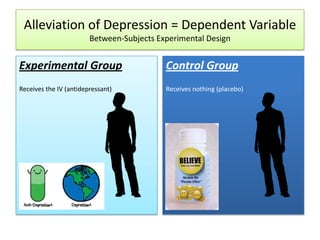
Alleviation of Depression = Dependent Variable
Between-Subjects Experimental Design

Experimental Group

Control Group

Receives the IV (antidepressant)

Receives nothing (placebo)
Identify the (IV) and the (DV)
• A researcher is conducting a study to see if room
temperature influences learning.
• Of 100 individuals with obsessive-compulsive
disorder (OCD), 50 receive 8 weeks of an
experimental drug for OCD, while 50 are placed
on a waiting list for 8 weeks. At the end of the 8
weeks, all 100 individuals are given psychological
tests to assess their level of OCD.
Variations in Experimental Designs
Within-Subjects Experimental Design

 Some experimental designs do not compare
groups. (no random assignment)
All members of the sample participate in both
control and experimental conditions.
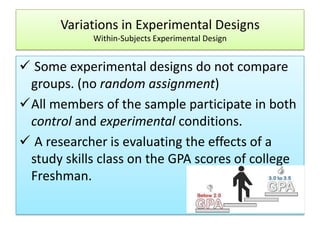
 A researcher is evaluating the effects of a
study skills class on the GPA scores of college
Freshman.
Variations in Experimental Designs
Single-Subject Experimental Design

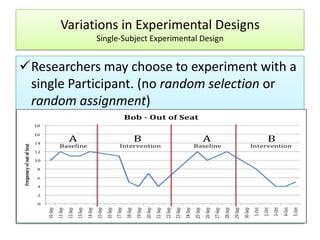
Researchers may choose to experiment with a
single Participant. (no random selection or
random assignment)
Statistical Analysis
 The Null Hypothesis (accept or reject)
 Type I Error: rejecting a true null hypothesis

 Type II Error: accepting a false null hypothesis
 The Alpha Level: the probability of chance occurrence
• Low Alpha (.01) increased risk of type II error
• High Alpha (.05) increased risk of type I error
Advantages and Disadvantages of Experimental
Research
Advantages
 It is the only form of
research that can establish
cause and effect.
 Experiments allow the
researcher precise control
over variables.

Disadvantages
 Experiments are often
artificial.
 Some experiments cannot
be conducted due to ethical
concerns.
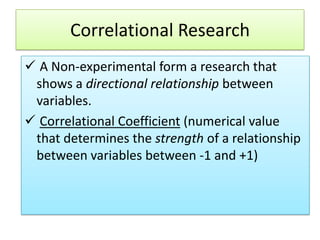
Correlational Research
 A Non-experimental form a research that
shows a directional relationship between
variables.
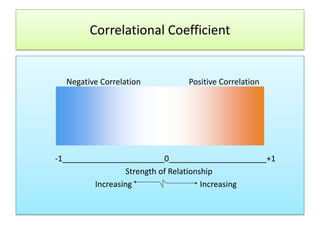
 Correlational Coefficient (numerical value
that determines the strength of a relationship
between variables between -1 and +1)
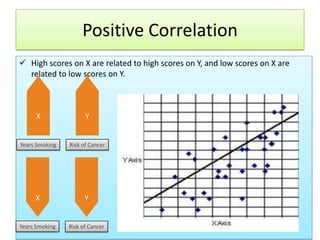
Positive Correlation
 High scores on X are related to high scores on Y, and low scores on X are
related to low scores on Y.

X

Y

Years Smoking

Risk of Cancer

X

Y

Years Smoking

Risk of Cancer
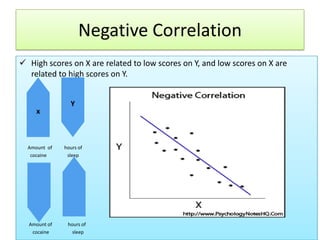
Negative Correlation
 High scores on X are related to low scores on Y, and low scores on X are
related to high scores on Y.
Y

x

Amount of
cocaine

hours of
sleep

x

Amount of
cocaine

hours of
sleep
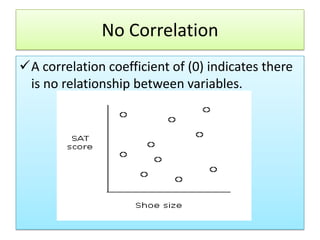
No Correlation
A correlation coefficient of (0) indicates there
is no relationship between variables.
Correlational Coefficient

Negative Correlation

Positive Correlation

-1_______________________0______________________+1
Strength of Relationship
Increasing
Increasing
Advantages and Disadvantages of Correlational
Research
Advantages
 It allows researchers to
study variables that would
be unethical to manipulate.
 Researchers can study
variables as they exist
naturally.

Disadvantages
 Correlations are not able to
show cause and effect. (no
manipulation of the (IV)
 They provide little control
over extraneous variables.
 The direction of the
relationship is unclear.

Research in Psychology

  • 1.
    Research in Psychology Is Empirical (based off observation)  Measures and Describes ( psychological constructs and operational definitions)  Makes a Prediction (formulates a hypothesis about the relationship between 2 or more variables)  Suggests an application (understanding allows control over our environment)
  • 2.
    Theories, Hypotheses, andResearch  Theories (from the specific to the general)  Hypotheses (from the general to the specific)  Research ( a term for the multiple ways a hypothesis can be tested)
  • 3.
    Steps in ScientificResearch 1) Establish a testable hypothesis (operational definition must be clear and precise) 2) Design the Study (how you will test and measure the variables of interest) 3) Collect the Data (Could be though direct observation, questionnaires, or behavioral tests) 4) Analyze Data and Suggest an Application (statistical analysis and relevance of research) 5) Report the findings (writing a research report and journal submission)
  • 4.
    Experimental Research  EstablishesCause and Effect  Independent Variable (IV): is manipulated  Dependent Variable (DV): is measured  Experimental Group : receives the (IV)  Control Group: receives nothing or placebo
  • 5.
    Experimental Research  Population(random selection)  Sample (random assignment)  • • • • Extraneous Variables: are controlled Selection bias (random selection) Assignment bias (random assignment) Experimenter bias (double-blind study) Novelty effects (field study)  Confounding Variables: have an effect on the (DV)
  • 6.
    Alleviation of Depression= Dependent Variable Between-Subjects Experimental Design Experimental Group Control Group Receives the IV (antidepressant) Receives nothing (placebo)
  • 7.
    Identify the (IV)and the (DV) • A researcher is conducting a study to see if room temperature influences learning. • Of 100 individuals with obsessive-compulsive disorder (OCD), 50 receive 8 weeks of an experimental drug for OCD, while 50 are placed on a waiting list for 8 weeks. At the end of the 8 weeks, all 100 individuals are given psychological tests to assess their level of OCD.
  • 8.
    Variations in ExperimentalDesigns Within-Subjects Experimental Design  Some experimental designs do not compare groups. (no random assignment) All members of the sample participate in both control and experimental conditions.  A researcher is evaluating the effects of a study skills class on the GPA scores of college Freshman.
  • 9.
    Variations in ExperimentalDesigns Single-Subject Experimental Design Researchers may choose to experiment with a single Participant. (no random selection or random assignment)
  • 10.
    Statistical Analysis  TheNull Hypothesis (accept or reject)  Type I Error: rejecting a true null hypothesis  Type II Error: accepting a false null hypothesis  The Alpha Level: the probability of chance occurrence • Low Alpha (.01) increased risk of type II error • High Alpha (.05) increased risk of type I error
  • 11.
    Advantages and Disadvantagesof Experimental Research Advantages  It is the only form of research that can establish cause and effect.  Experiments allow the researcher precise control over variables. Disadvantages  Experiments are often artificial.  Some experiments cannot be conducted due to ethical concerns.
  • 12.
    Correlational Research  ANon-experimental form a research that shows a directional relationship between variables.  Correlational Coefficient (numerical value that determines the strength of a relationship between variables between -1 and +1)
  • 13.
    Positive Correlation  Highscores on X are related to high scores on Y, and low scores on X are related to low scores on Y. X Y Years Smoking Risk of Cancer X Y Years Smoking Risk of Cancer
  • 14.
    Negative Correlation  Highscores on X are related to low scores on Y, and low scores on X are related to high scores on Y. Y x Amount of cocaine hours of sleep x Amount of cocaine hours of sleep
  • 15.
    No Correlation A correlationcoefficient of (0) indicates there is no relationship between variables.
  • 16.
    Correlational Coefficient Negative Correlation PositiveCorrelation -1_______________________0______________________+1 Strength of Relationship Increasing Increasing
  • 17.
    Advantages and Disadvantagesof Correlational Research Advantages  It allows researchers to study variables that would be unethical to manipulate.  Researchers can study variables as they exist naturally. Disadvantages  Correlations are not able to show cause and effect. (no manipulation of the (IV)  They provide little control over extraneous variables.  The direction of the relationship is unclear.