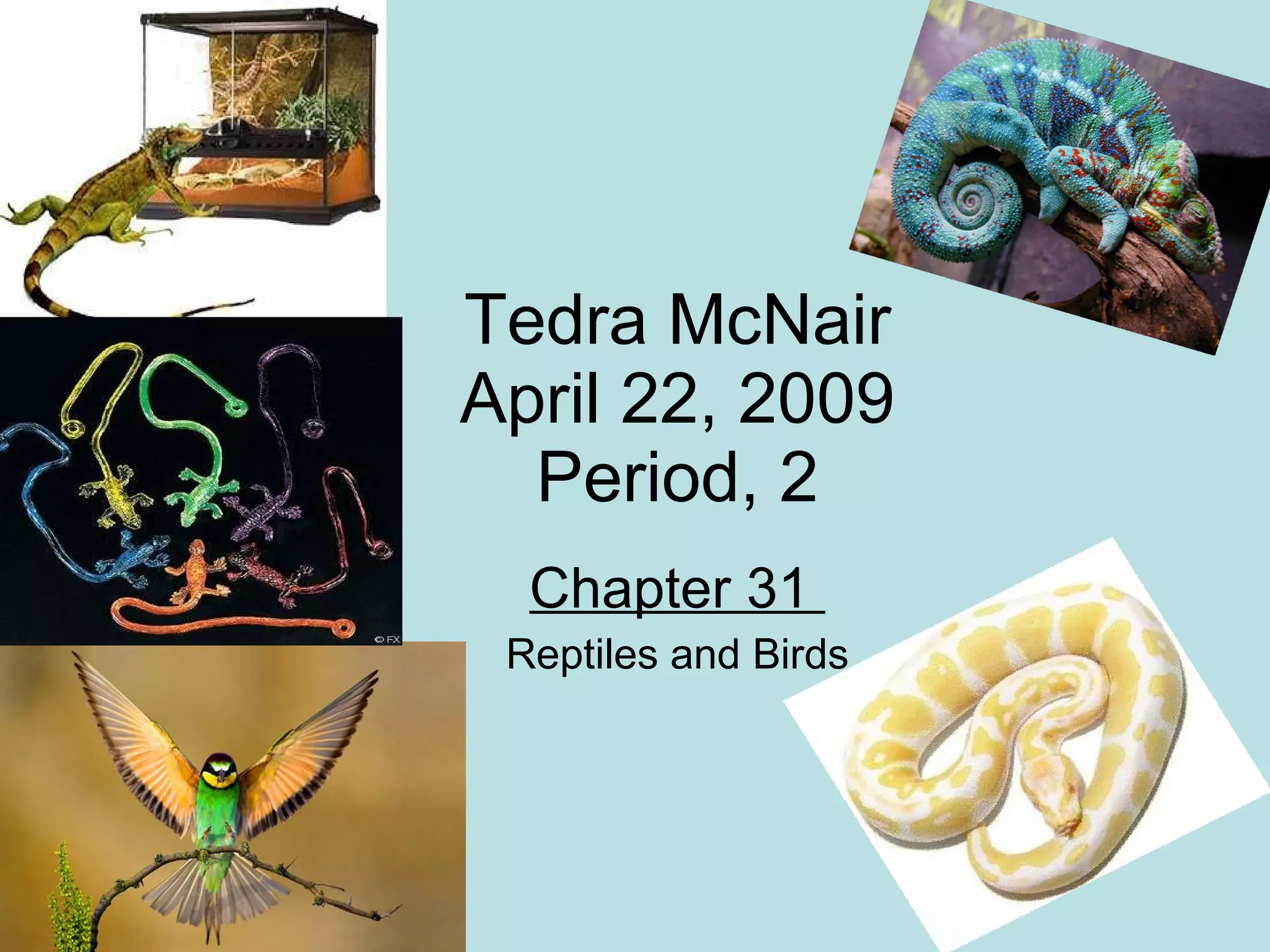
Tedra McNair April 22, 2009 Period, 2 Chapter 31  Reptiles and Birds
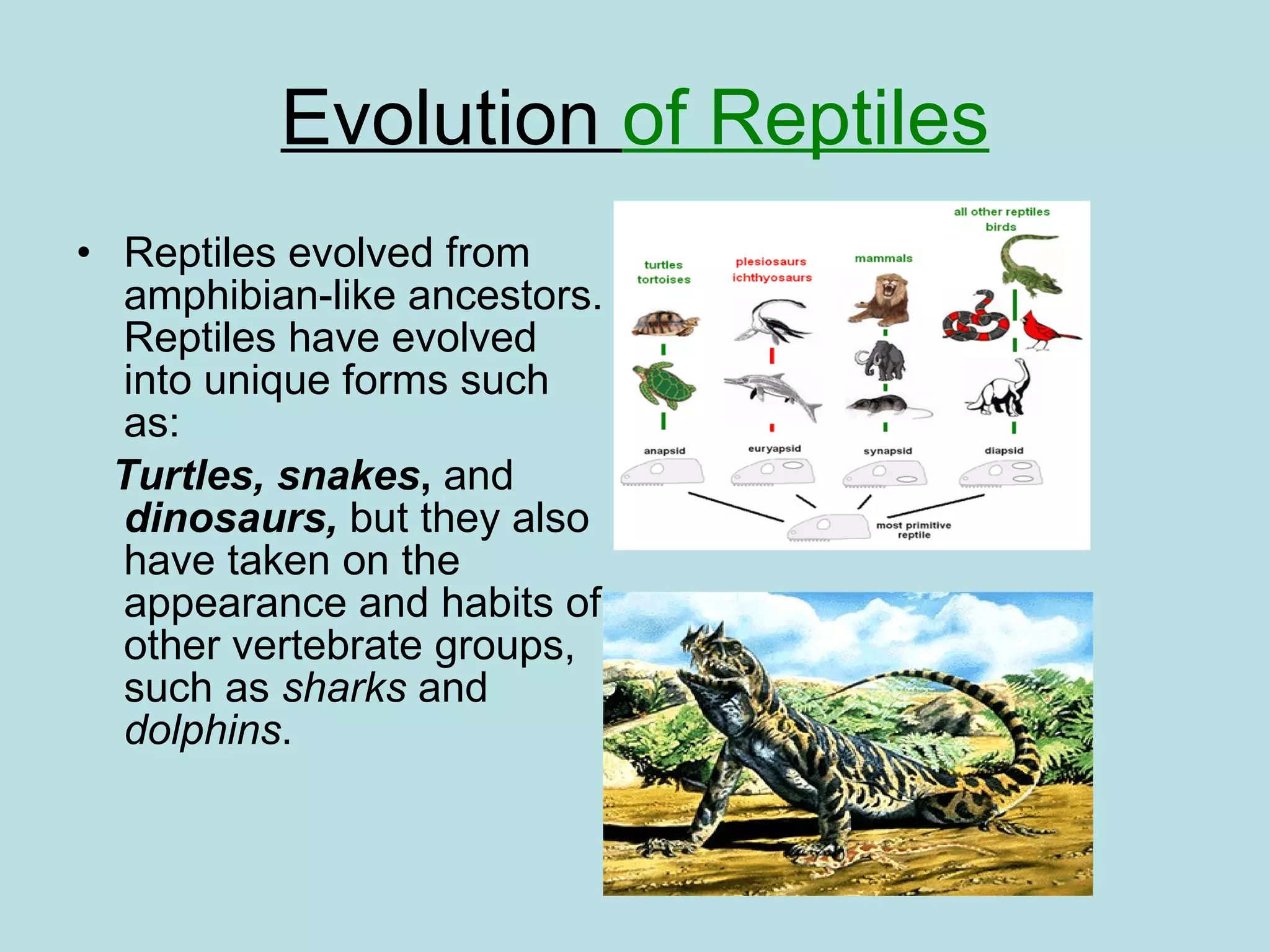
Evolution  of Reptiles Reptiles evolved from amphibian-like ancestors. Reptiles have evolved into unique forms such as:  Turtles, snakes ,  and  dinosaurs,  but they also have taken on the appearance and habits of other vertebrate groups, such as  sharks  and  dolphins .
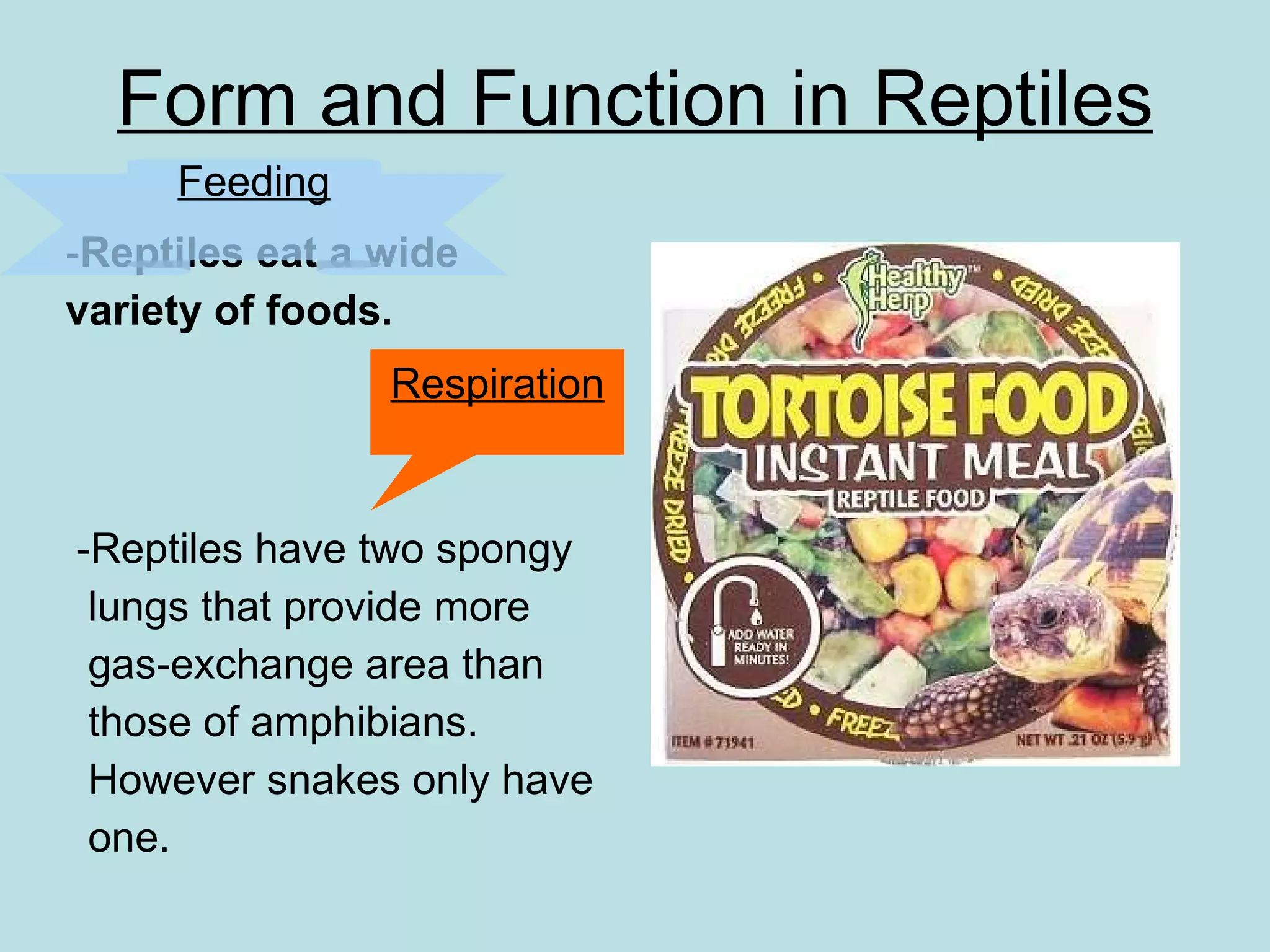
Form and Function in Reptiles - Reptiles eat a wide variety of foods.  -Reptiles have two spongy  lungs that provide more gas-exchange area than those of amphibians.  However snakes only have one. Respiration Feeding
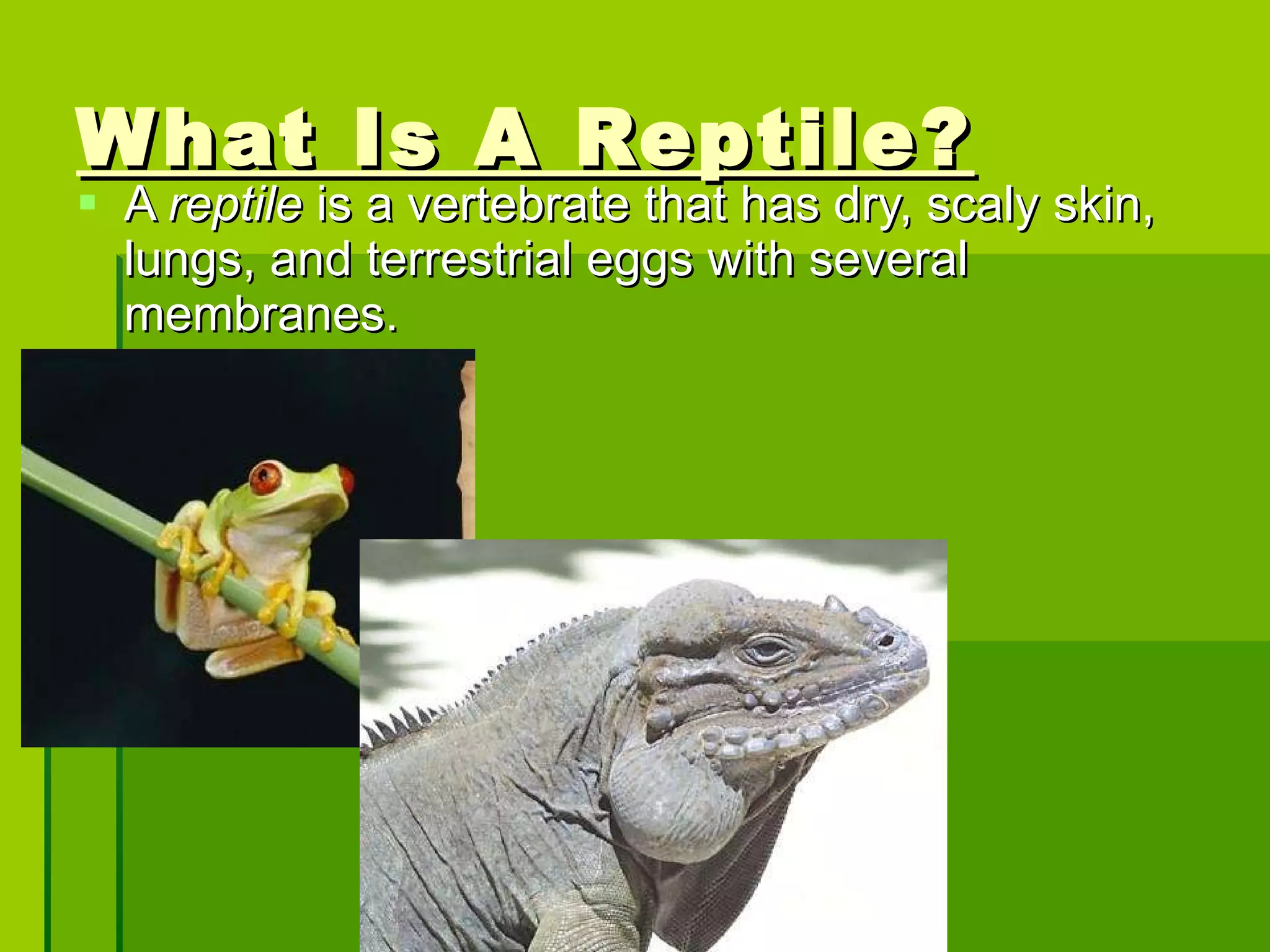
What Is A Reptile? A  reptile  is a vertebrate that has dry, scaly skin, lungs, and terrestrial eggs with several membranes.
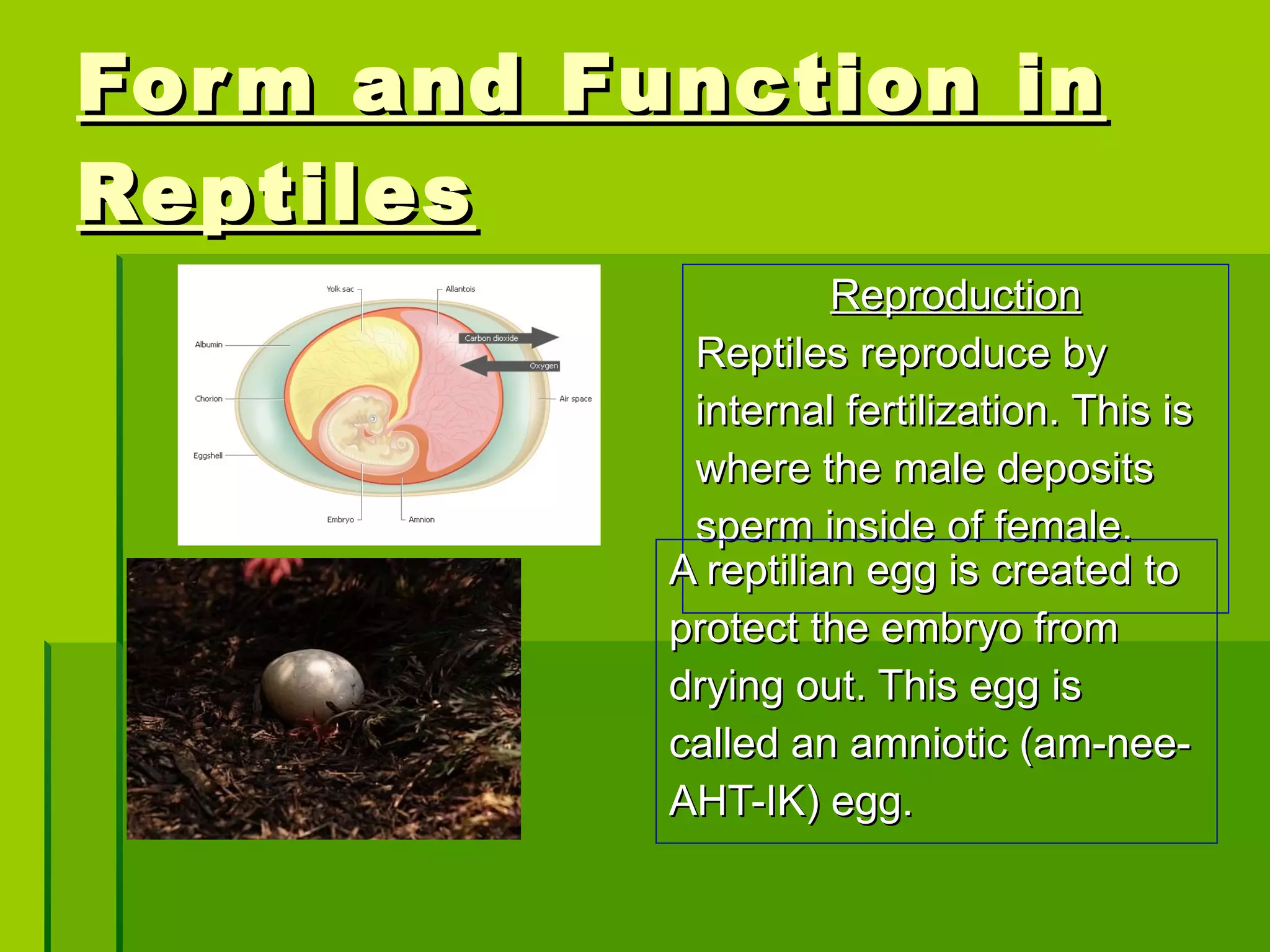
Form and Function in Reptiles Reproduction Reptiles reproduce by internal fertilization. This is  where the male deposits sperm inside of female. A reptilian egg is created to  protect the embryo from  drying out. This egg is  called an amniotic (am-nee- AHT-IK) egg.
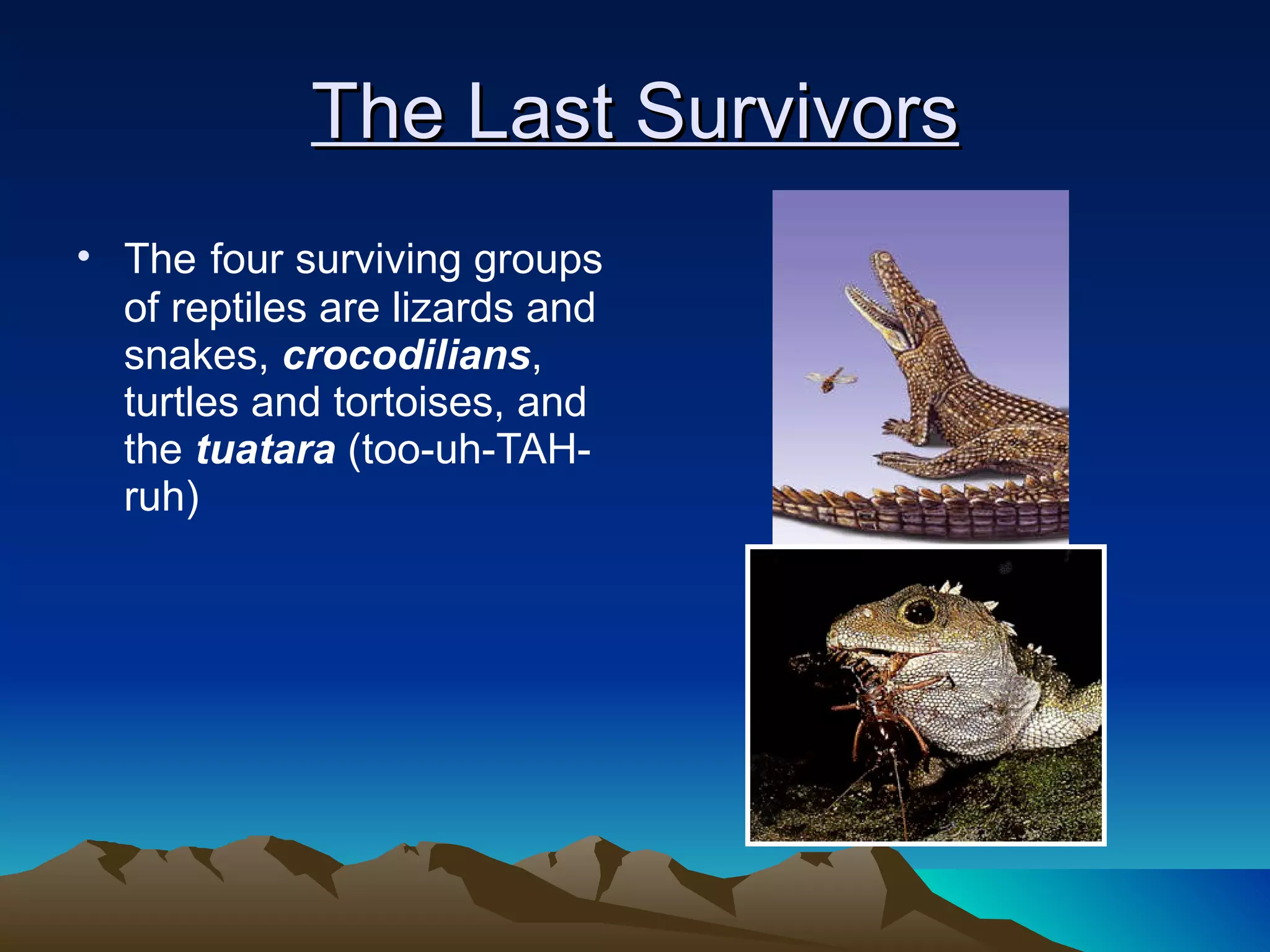
The Last Survivors The   four surviving groups of reptiles are lizards and snakes,  crocodilians , turtles and tortoises, and the  tuatara  (too-uh-TAH-ruh)
What Is a Bird? Birds are reptile-like animals that maintain a constant internal body temperature.  They include the following: An outer covering of feathers Two legs that are covered in scales and are used for walking and perching. Front limbs modified into wings.
Form, Function, and Flight Body Temperature Control Unlike reptiles, birds can  generate their own body heat.  Animals that generate their  own body heat are called  endotherms. Feeding Any body heat that a bird loses  must be regained by eating food. The more food a bird eats, the more heat energy its metabolism can generate.

Reptiles 31

  • 1.
    Tedra McNair April22, 2009 Period, 2 Chapter 31 Reptiles and Birds
  • 2.
    Evolution ofReptiles Reptiles evolved from amphibian-like ancestors. Reptiles have evolved into unique forms such as: Turtles, snakes , and dinosaurs, but they also have taken on the appearance and habits of other vertebrate groups, such as sharks and dolphins .
  • 3.
    Form and Functionin Reptiles - Reptiles eat a wide variety of foods. -Reptiles have two spongy lungs that provide more gas-exchange area than those of amphibians. However snakes only have one. Respiration Feeding
  • 4.
    What Is AReptile? A reptile is a vertebrate that has dry, scaly skin, lungs, and terrestrial eggs with several membranes.
  • 5.
    Form and Functionin Reptiles Reproduction Reptiles reproduce by internal fertilization. This is where the male deposits sperm inside of female. A reptilian egg is created to protect the embryo from drying out. This egg is called an amniotic (am-nee- AHT-IK) egg.
  • 6.
    The Last SurvivorsThe four surviving groups of reptiles are lizards and snakes, crocodilians , turtles and tortoises, and the tuatara (too-uh-TAH-ruh)
  • 7.
    What Is aBird? Birds are reptile-like animals that maintain a constant internal body temperature. They include the following: An outer covering of feathers Two legs that are covered in scales and are used for walking and perching. Front limbs modified into wings.
  • 8.
    Form, Function, andFlight Body Temperature Control Unlike reptiles, birds can generate their own body heat. Animals that generate their own body heat are called endotherms. Feeding Any body heat that a bird loses must be regained by eating food. The more food a bird eats, the more heat energy its metabolism can generate.