NAVODAYA VIDYALAYA SAMITI,
NOIDA
E-CONTENT FOR CLASS X SCIENCE
HOW DO ORGANISMS REPRODUCE?
Prepared by
P.KAMARAJ
PGT BIOLOGY, JNV KANNUR
HOW DO ORGANISMS
REPRODUCE
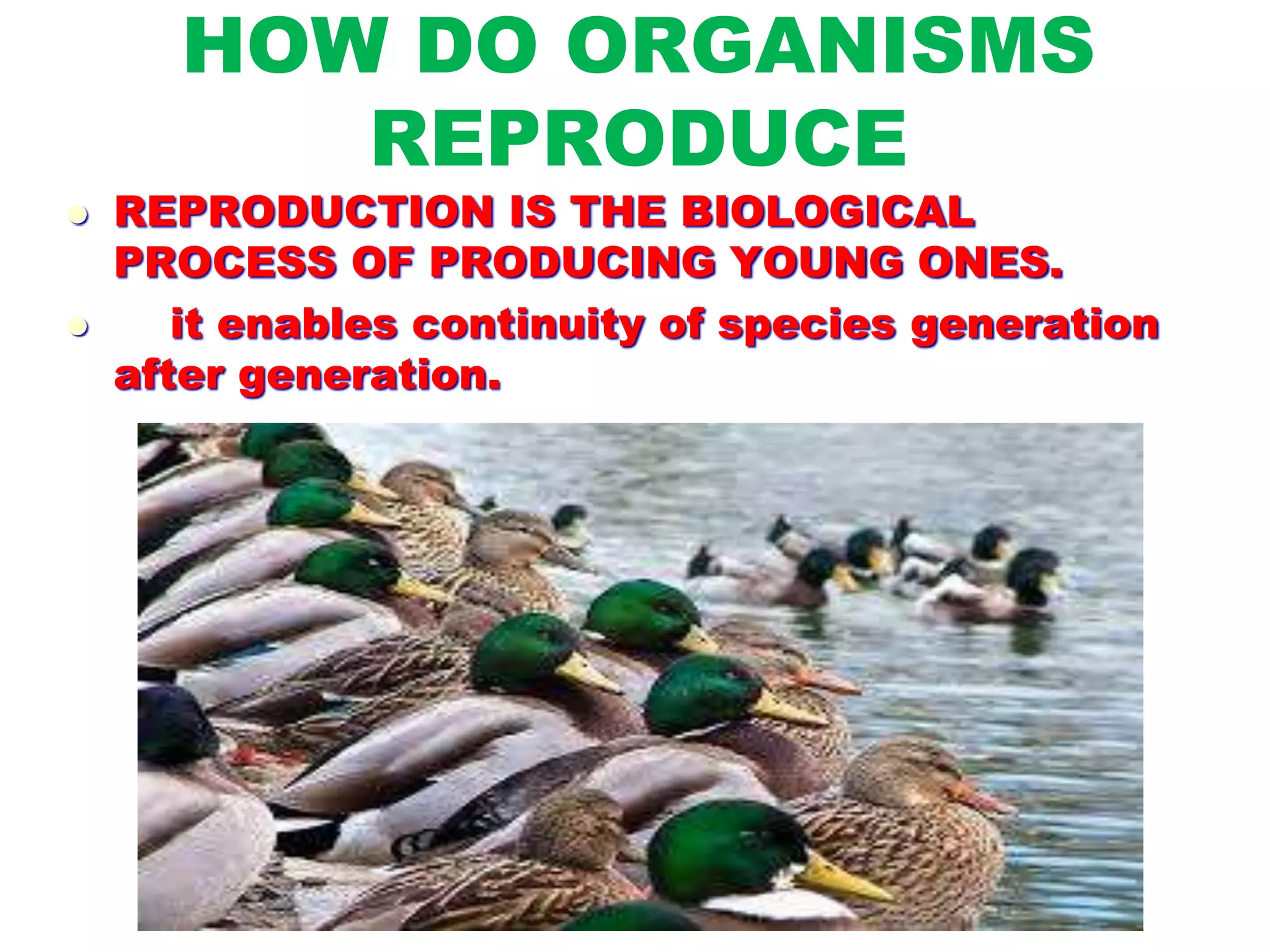
 REPRODUCTION IS THE BIOLOGICAL
PROCESS OF PRODUCING YOUNG ONES.
 it enables continuity of species generation
after generation.
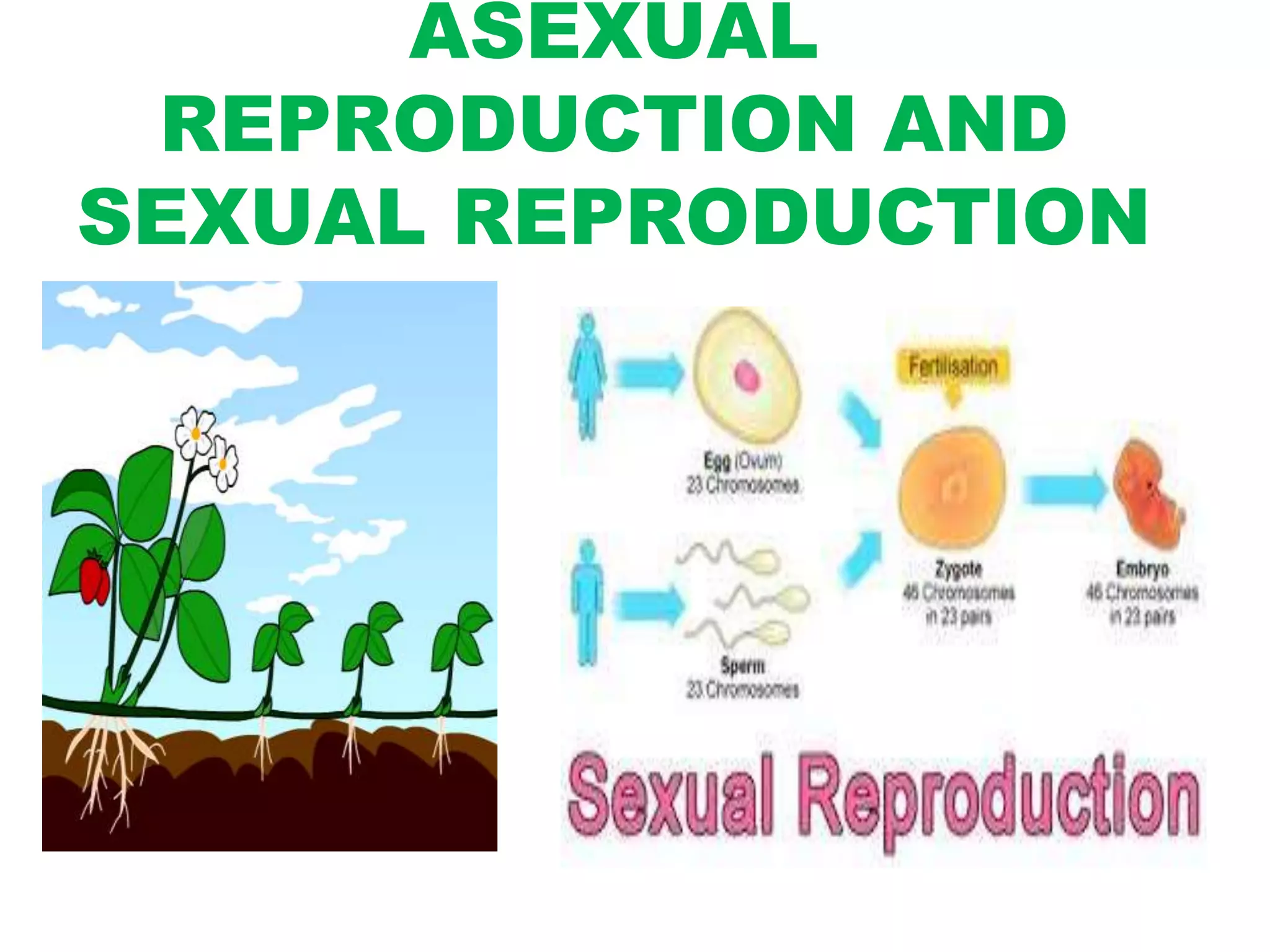
ASEXUAL
REPRODUCTION AND
SEXUAL REPRODUCTION
ASEXUAL REPRODUCTION
• Asexual reproduction is a form
of reproduction in which
an organism gives rise to genetically-
identical individuals. It involve only
single parent.
TYPES OF ASEXUAL
REPRODUCTION
 FISSION
 FRAGMENTATION
 BUDDING
 VEGETATIVE
PROPAGATION
 SPORE FORMNATION
FISSION
It is the process of division of a single Cell
into two or more individuals
TYPES OF FISSION:
 1.BINARY FISSION
 2. MULTIPLE FISSION
BINARY FISSION
 Binary fission is an form of asexual
reproduction by which the body splits
into two new bodies.
 Eg: AMOEBA , AND LEISHMANIA
MULTIPLE FISSION
 A single cell splits into many daughter
cells are produced from the parent
cell.
 Eg:Plasmodium
FRAGMENTATION
 Body breaks into fragments.each
fragment develops into an organism+
 Eg: Spirogyra
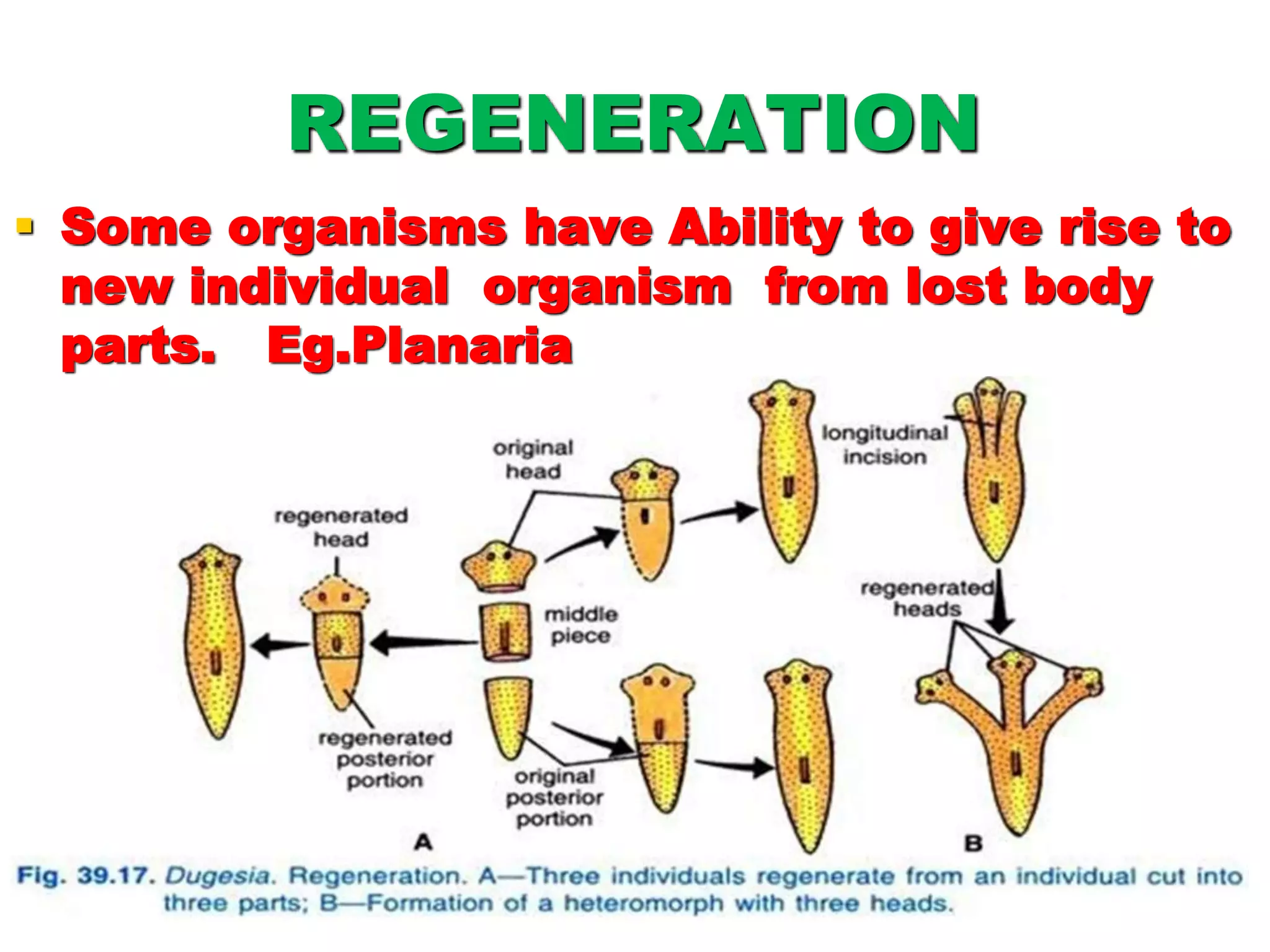
REGENERATION
 Some organisms have Ability to give rise to
new individual organism from lost body
parts. Eg.Planaria
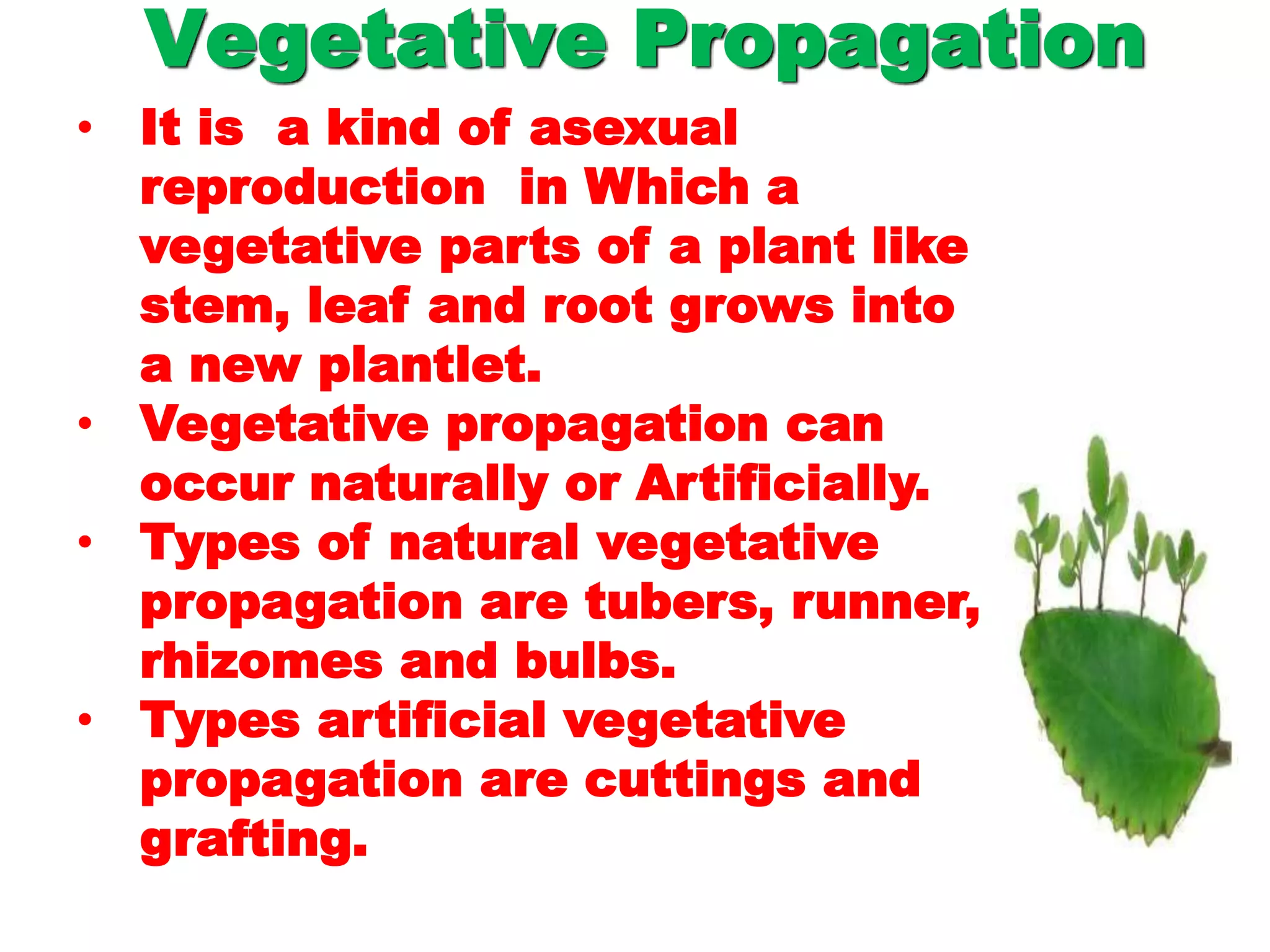
Vegetative Propagation
• It is a kind of asexual
reproduction in Which a
vegetative parts of a plant like
stem, leaf and root grows into
a new plantlet.
• Vegetative propagation can
occur naturally or Artificially.
• Types of natural vegetative
propagation are tubers, runner,
rhizomes and bulbs.
• Types artificial vegetative
propagation are cuttings and
grafting.
Vegetative Propagation
Cuttings
• Pieces of a root or stem that in
certain conditions are made into
new plants.
• Some examples are bananas, roses
and sugar cane
Grafting
• Taking a part of a plant and
connecting it to another one.
• Combining the two plants.
• Some examples are seedless
oranges and grapes.
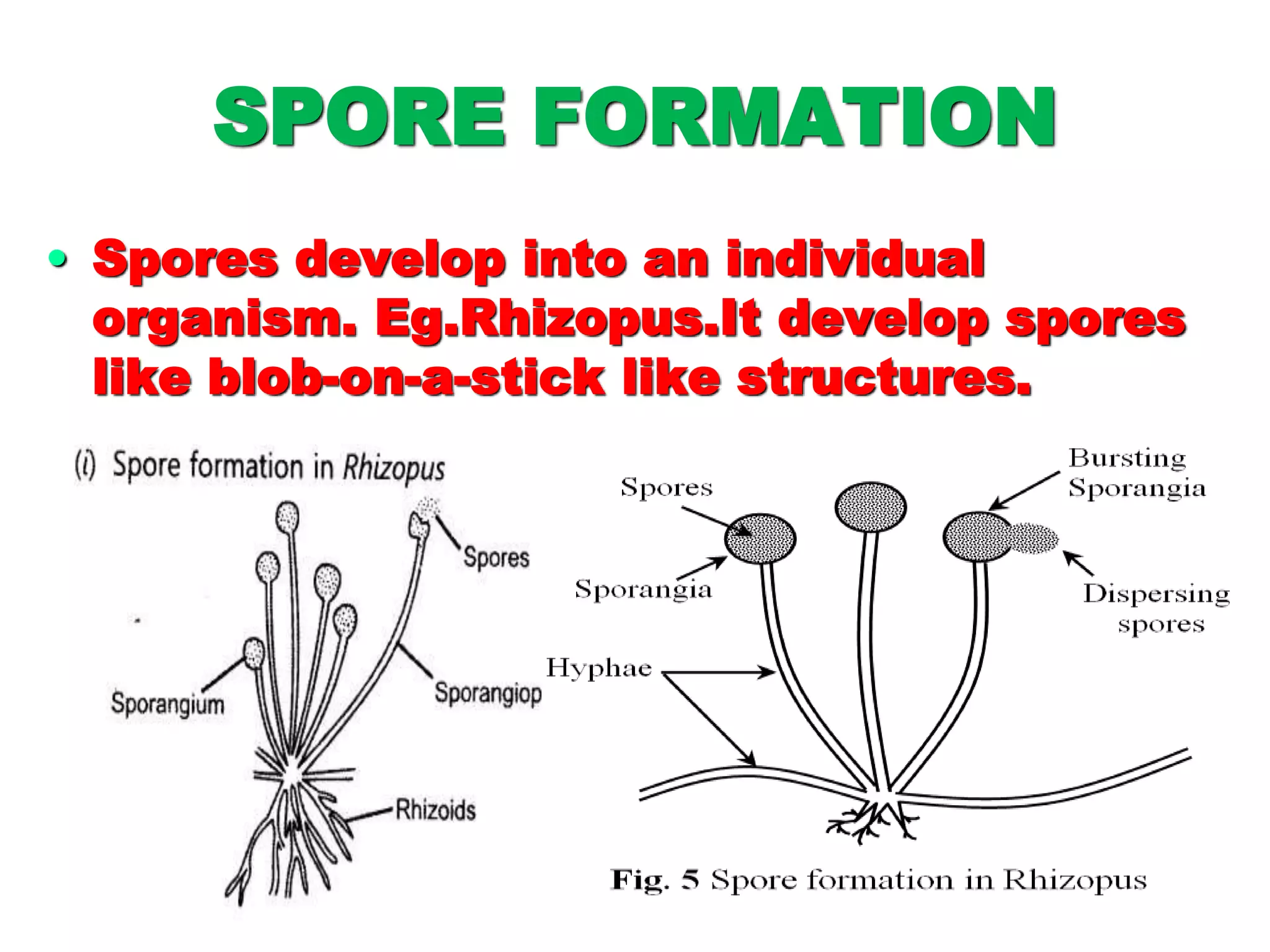
SPORE FORMATION
• Spores develop into an individual
organism. Eg.Rhizopus.It develop spores
like blob-on-a-stick like structures.
• SEXUAL REPRODUCTION IN
FLOWERING PLANTS
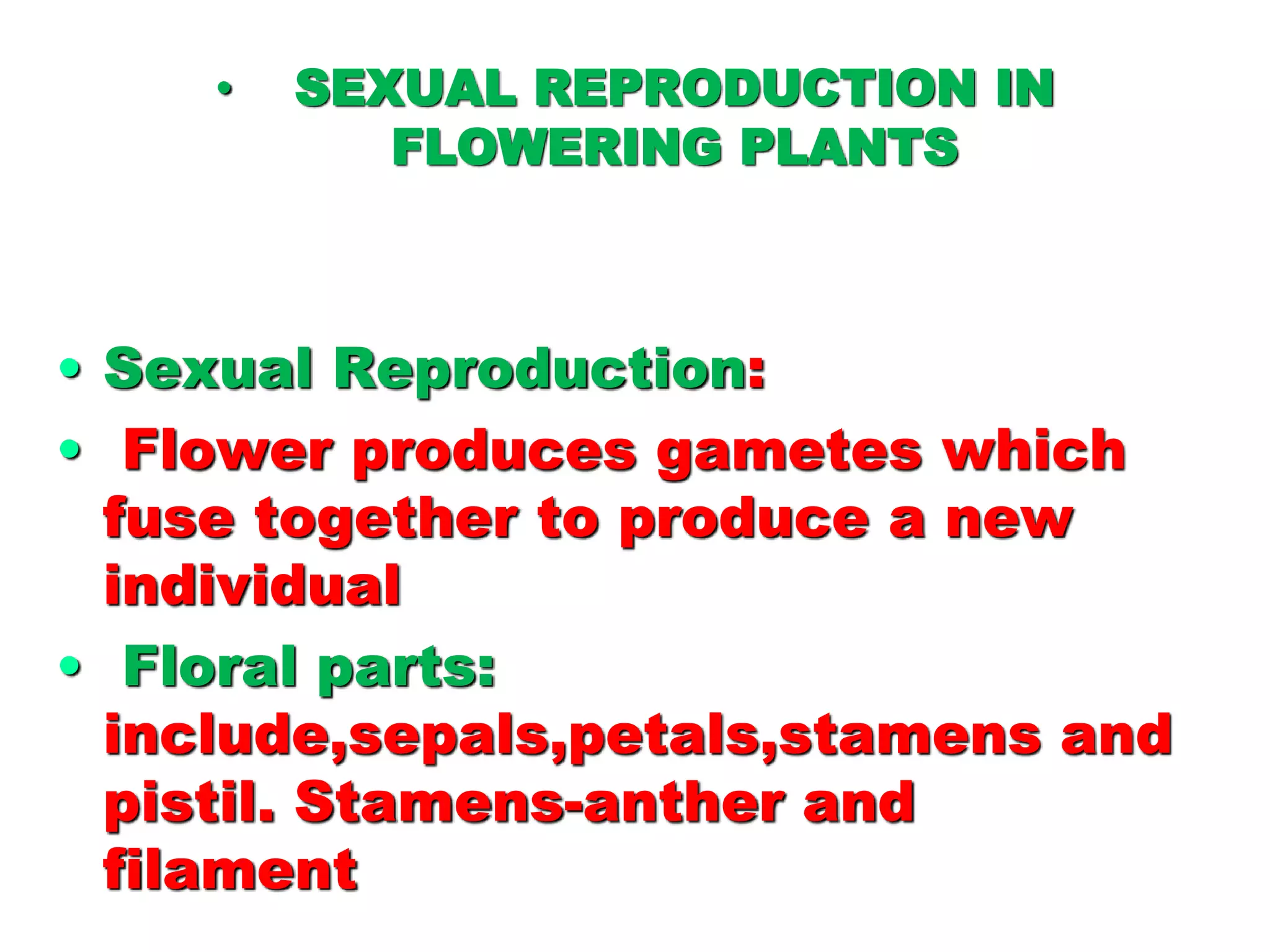
• Sexual Reproduction:
• Flower produces gametes which
fuse together to produce a new
individual
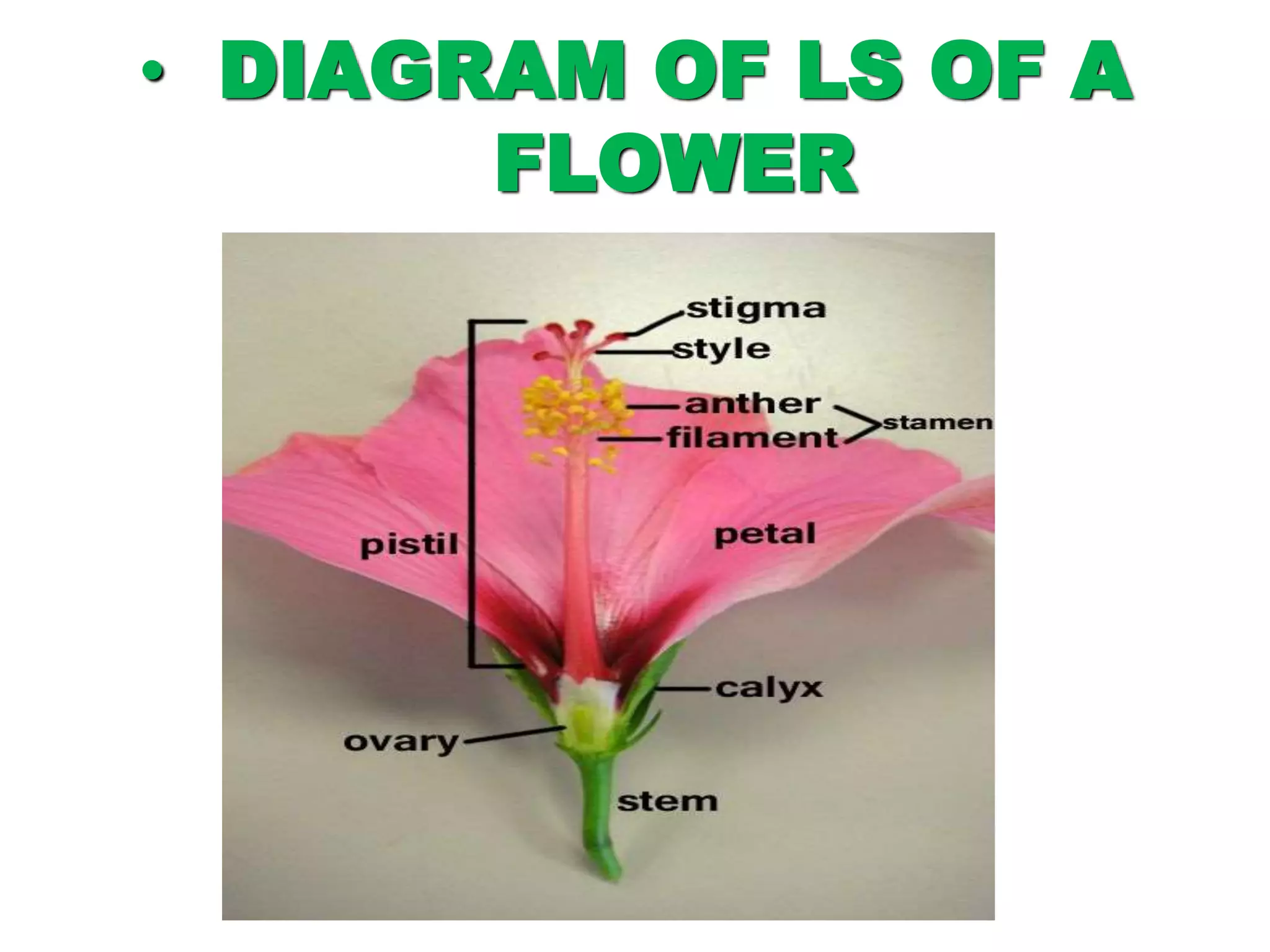
• Floral parts:
include,sepals,petals,stamens and
pistil. Stamens-anther and
filament
• POLLINATION:
• Transfer of pollens to stigma.
• Self-pollination: Pollen is transferred
to a stigma of the same flower, or
another flower on the same plant
• Cross pollination: pollen reaches
the stigma of a flower on a different
plant (of same species)
• DIAGRAM OF LS OF A
FLOWER
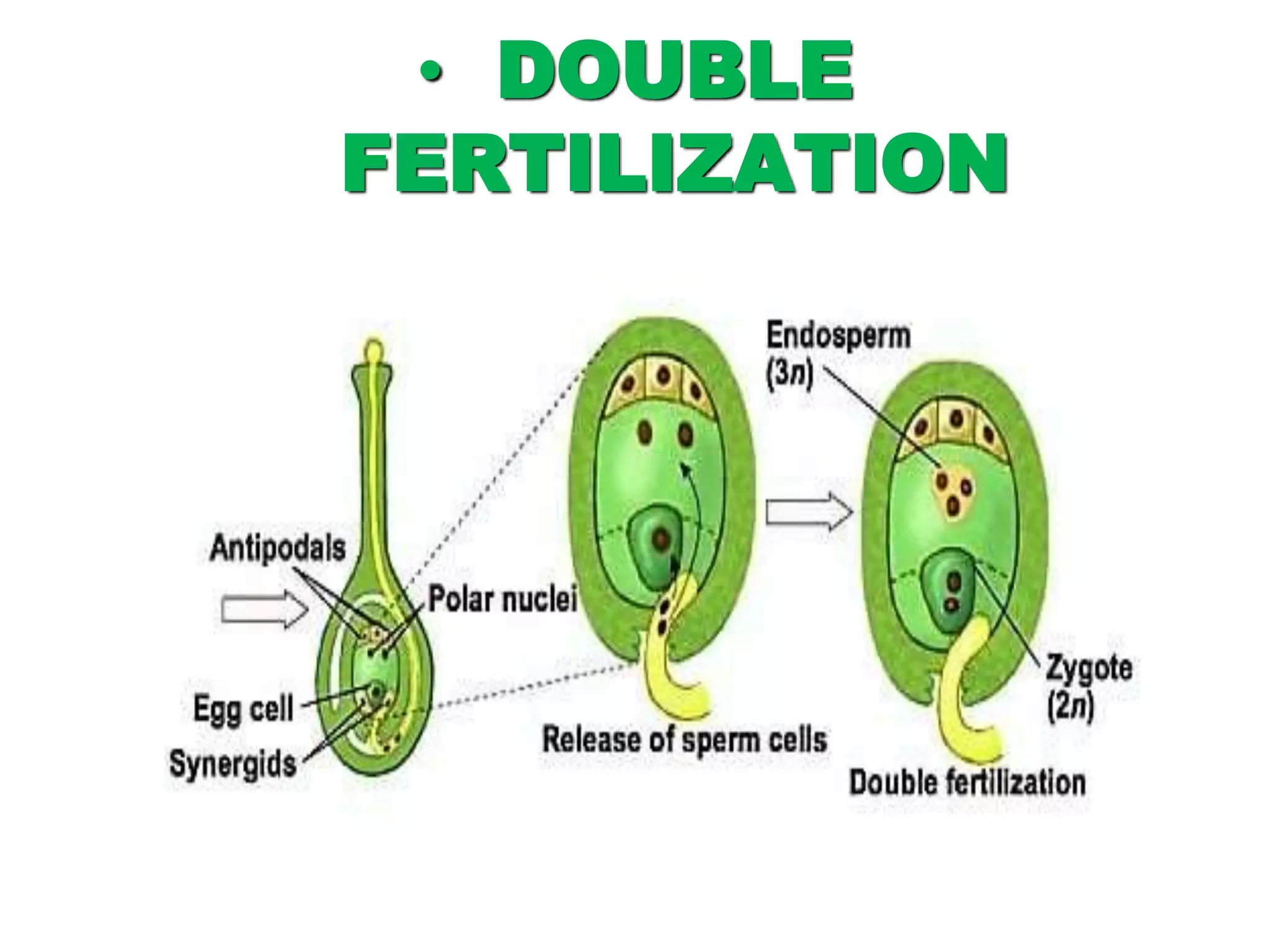
• DOUBLE FERTILIZATION
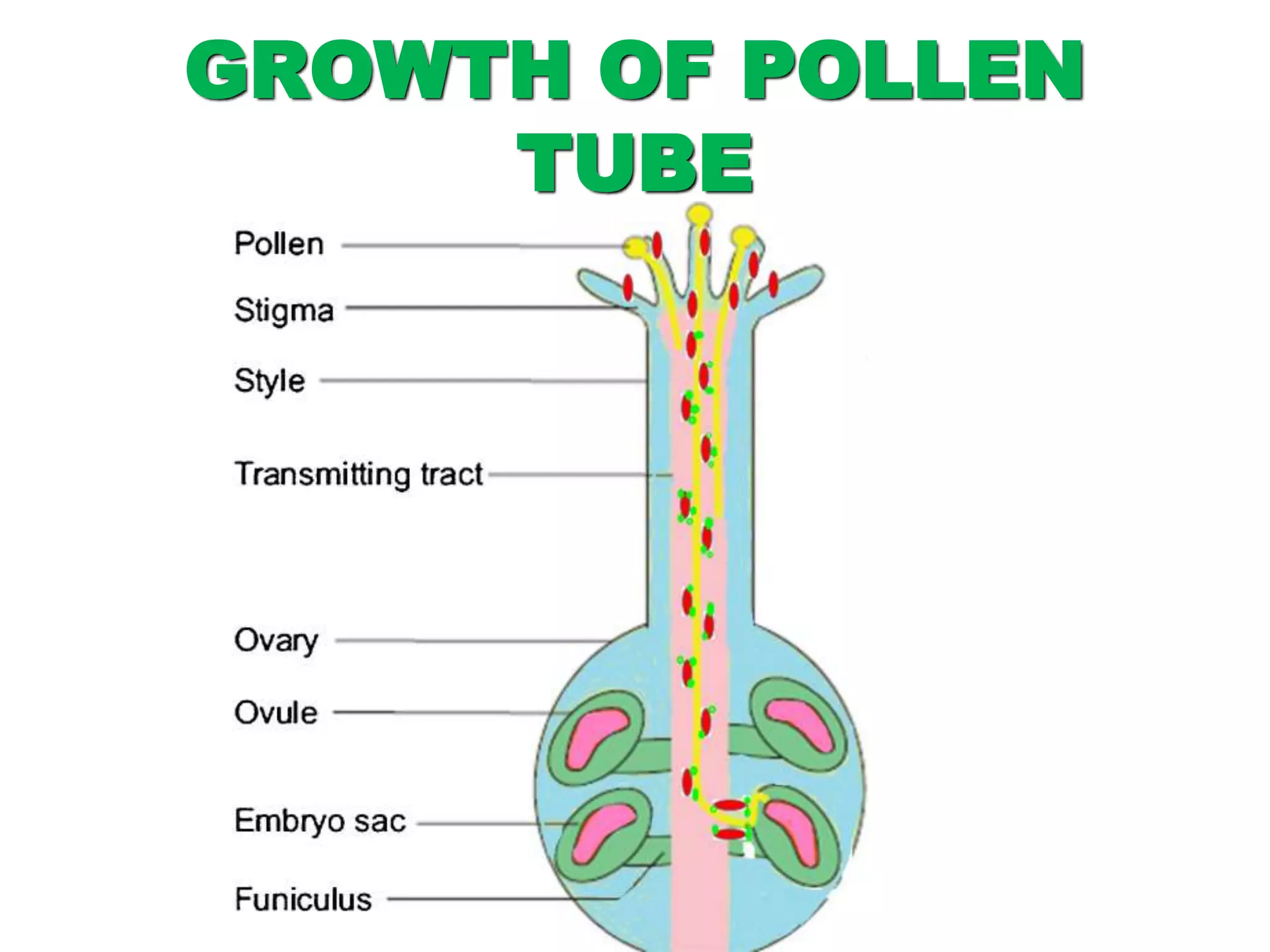
• Pollen tube grows along style and
reach embryo sac.
• One male gamete of pollen fuses
with egg cell and forms zygote
• other male gamete fuses with
polar nuclei and forms endosperm
• Embryo: The growth of a zygote
results into an embryo
• Seed: ovules- and Fruit-ovary
GROWTH OF POLLEN
TUBE
• DOUBLE
FERTILIZATION

1. DEVELOPED BY NVS.ppt

  • 1.
    NAVODAYA VIDYALAYA SAMITI, NOIDA E-CONTENTFOR CLASS X SCIENCE HOW DO ORGANISMS REPRODUCE? Prepared by P.KAMARAJ PGT BIOLOGY, JNV KANNUR
  • 2.
    HOW DO ORGANISMS REPRODUCE REPRODUCTION IS THE BIOLOGICAL PROCESS OF PRODUCING YOUNG ONES.  it enables continuity of species generation after generation.
  • 3.
  • 4.
    ASEXUAL REPRODUCTION • Asexualreproduction is a form of reproduction in which an organism gives rise to genetically- identical individuals. It involve only single parent.
  • 5.
    TYPES OF ASEXUAL REPRODUCTION FISSION  FRAGMENTATION  BUDDING  VEGETATIVE PROPAGATION  SPORE FORMNATION
  • 6.
    FISSION It is theprocess of division of a single Cell into two or more individuals TYPES OF FISSION:  1.BINARY FISSION  2. MULTIPLE FISSION
  • 7.
    BINARY FISSION  Binaryfission is an form of asexual reproduction by which the body splits into two new bodies.  Eg: AMOEBA , AND LEISHMANIA
  • 8.
    MULTIPLE FISSION  Asingle cell splits into many daughter cells are produced from the parent cell.  Eg:Plasmodium
  • 9.
    FRAGMENTATION  Body breaksinto fragments.each fragment develops into an organism+  Eg: Spirogyra
  • 10.
    REGENERATION  Some organismshave Ability to give rise to new individual organism from lost body parts. Eg.Planaria
  • 11.
    Vegetative Propagation • Itis a kind of asexual reproduction in Which a vegetative parts of a plant like stem, leaf and root grows into a new plantlet. • Vegetative propagation can occur naturally or Artificially. • Types of natural vegetative propagation are tubers, runner, rhizomes and bulbs. • Types artificial vegetative propagation are cuttings and grafting.
  • 12.
    Vegetative Propagation Cuttings • Piecesof a root or stem that in certain conditions are made into new plants. • Some examples are bananas, roses and sugar cane Grafting • Taking a part of a plant and connecting it to another one. • Combining the two plants. • Some examples are seedless oranges and grapes.
  • 13.
    SPORE FORMATION • Sporesdevelop into an individual organism. Eg.Rhizopus.It develop spores like blob-on-a-stick like structures.
  • 14.
    • SEXUAL REPRODUCTIONIN FLOWERING PLANTS • Sexual Reproduction: • Flower produces gametes which fuse together to produce a new individual • Floral parts: include,sepals,petals,stamens and pistil. Stamens-anther and filament
  • 15.
    • POLLINATION: • Transferof pollens to stigma. • Self-pollination: Pollen is transferred to a stigma of the same flower, or another flower on the same plant • Cross pollination: pollen reaches the stigma of a flower on a different plant (of same species)
  • 16.
    • DIAGRAM OFLS OF A FLOWER
  • 17.
    • DOUBLE FERTILIZATION •Pollen tube grows along style and reach embryo sac. • One male gamete of pollen fuses with egg cell and forms zygote • other male gamete fuses with polar nuclei and forms endosperm • Embryo: The growth of a zygote results into an embryo • Seed: ovules- and Fruit-ovary
  • 18.
  • 19.