Representation

Representation – How groups, events, places or social
changes are portrayed in the media; how they are re -
presented.

The way someone or something is represented is not reality…

Representations offer a version of reality.

They are subjective rather than objective and are constructed.
Representation


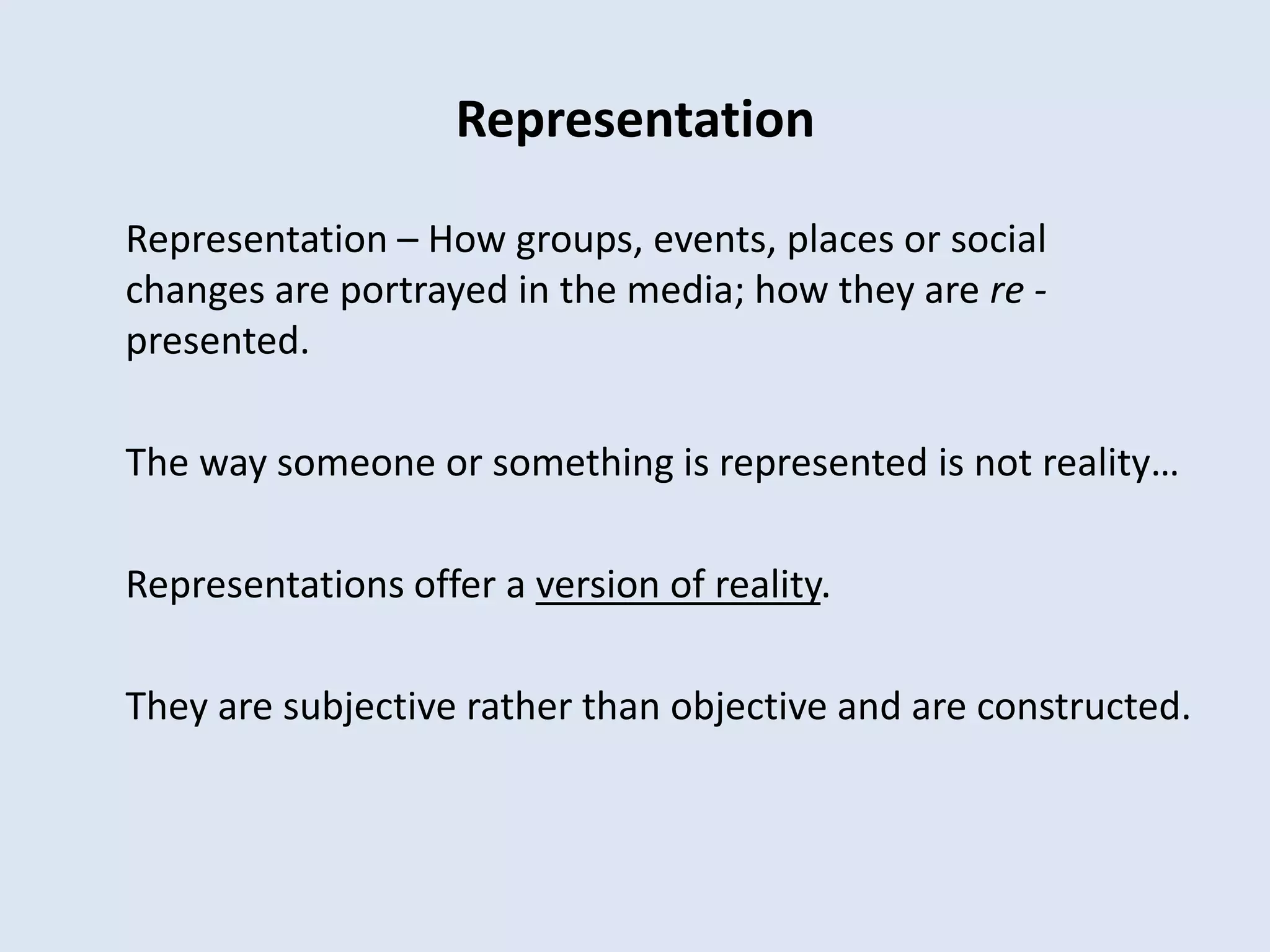
   Reality           Mediation          Representation
The real world     The process of        The text itself.
                  producing a film   A ‘representation’ of
                        text.           the real world.
Representation

Key points to consider when analysing
  representations:

1.   What is being represented?
2.   How is it being represented?
3.   Who is responsible for the representation?
4.   How can the representation be interpreted?
1. What is represented?
Consider denotation and connotation - what information does
the text give you about subject matter, place and characters?
Draw on all your knowledge of microelements such as framing
and camera angles, costume, colour, etc. - consider all the
technical areas: camerawork, mise-en-scene, editing, sound.

2. How is this representative of social groups?
What does the text suggest is typical? Consider what it says
about particular social groups (gender, age, sexuality, ethnicity,
physical ability/disability, regional identity and class/status).
Consider positives and negatives and use of stereotypes. Does
your text reinforce or challenge stereotypes?
3. Who is responsible for the representation?
Consider the filmmakers and the institutions responsible for
production. What agenda do the producers have? Why would
they want to represent things in a certain way? - think about
target audience, genre, commercial aspect or artistic
expression, etc.

4. What does the audience make of it?
Taking all of the above into account what might the audience
response be? However, as we know not everyone will respond to
the text in the same way so there is not one answer to this!

Representation

  • 1.
    Representation Representation – Howgroups, events, places or social changes are portrayed in the media; how they are re - presented. The way someone or something is represented is not reality… Representations offer a version of reality. They are subjective rather than objective and are constructed.
  • 2.
    Representation Reality Mediation Representation The real world The process of The text itself. producing a film A ‘representation’ of text. the real world.
  • 3.
    Representation Key points toconsider when analysing representations: 1. What is being represented? 2. How is it being represented? 3. Who is responsible for the representation? 4. How can the representation be interpreted?
  • 4.
    1. What isrepresented? Consider denotation and connotation - what information does the text give you about subject matter, place and characters? Draw on all your knowledge of microelements such as framing and camera angles, costume, colour, etc. - consider all the technical areas: camerawork, mise-en-scene, editing, sound. 2. How is this representative of social groups? What does the text suggest is typical? Consider what it says about particular social groups (gender, age, sexuality, ethnicity, physical ability/disability, regional identity and class/status). Consider positives and negatives and use of stereotypes. Does your text reinforce or challenge stereotypes?
  • 5.
    3. Who isresponsible for the representation? Consider the filmmakers and the institutions responsible for production. What agenda do the producers have? Why would they want to represent things in a certain way? - think about target audience, genre, commercial aspect or artistic expression, etc. 4. What does the audience make of it? Taking all of the above into account what might the audience response be? However, as we know not everyone will respond to the text in the same way so there is not one answer to this!