NARRATIVE
Media StudiesMedia Studies
 “Narrative is a way of organising spatial
and temporal data into a cause and effect
chain of events with a beginning, middle
and end that embodies a judgement about
the nature of the events as well as
demonstrates how it is possible to know,
and hence to narrate, the events. “
Brannigan E. Narrative Comprehension and Film
Features of Narrative
Structure
• Aristotle’s beginning, middle and end.
• Todorov’s equilibrium>disequilibrium>re-equilibrium
• Propp’s “functions”
2. Temporal order, temporal duration,
temporal frequency
3. Story and Plot
• Explicitly presented actions/events
• Implicitly inferred actions/events
• Non diegetic material (captions/titles, drama enhancing music
etc.)
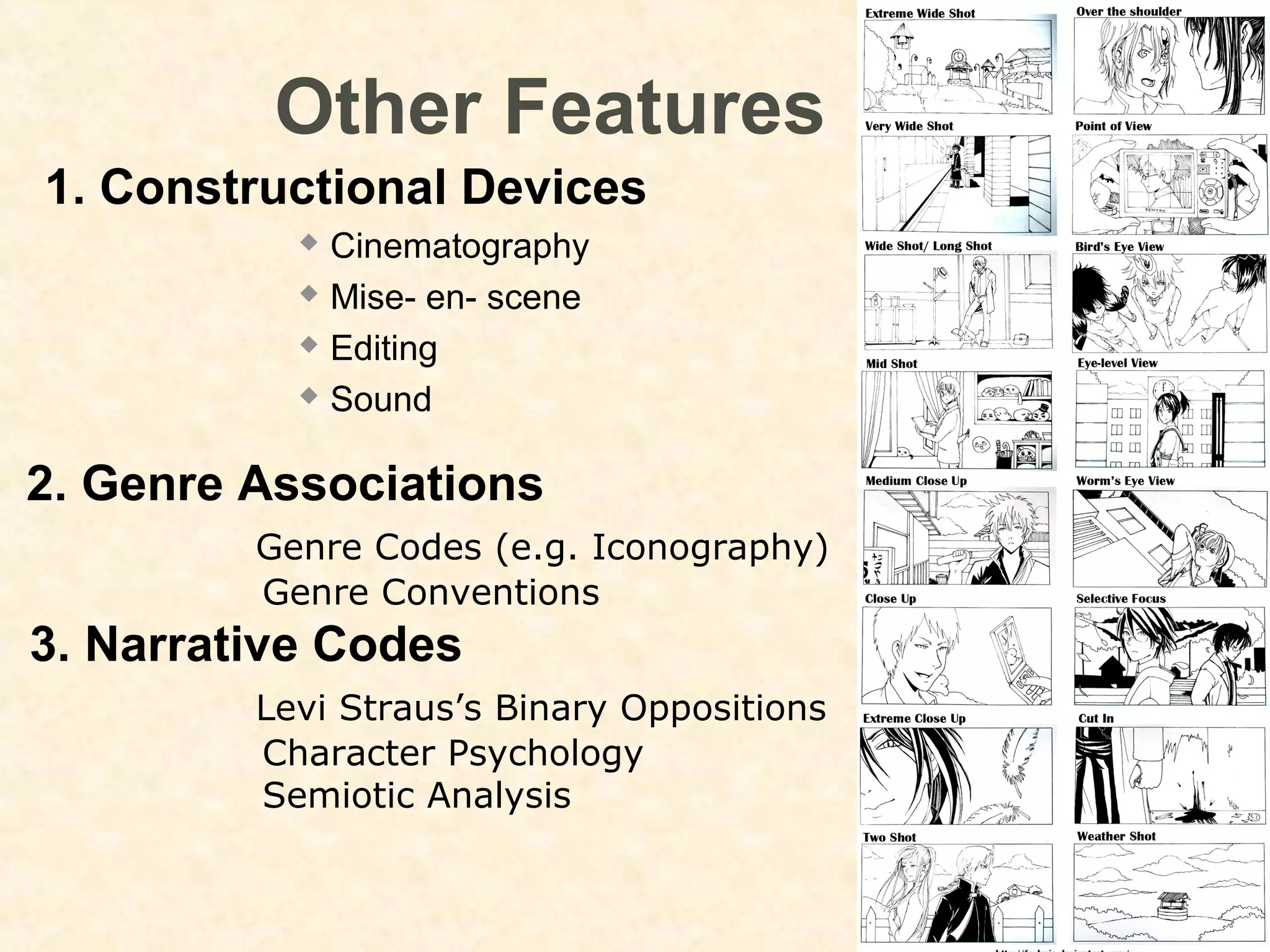
Other Features
1. Constructional Devices
 Cinematography
 Mise- en- scene
 Editing
 Sound
2. Genre Associations
Genre Codes (e.g. Iconography)
Genre Conventions
3. Narrative Codes
Levi Straus’s Binary Oppositions
Character Psychology
Semiotic Analysis
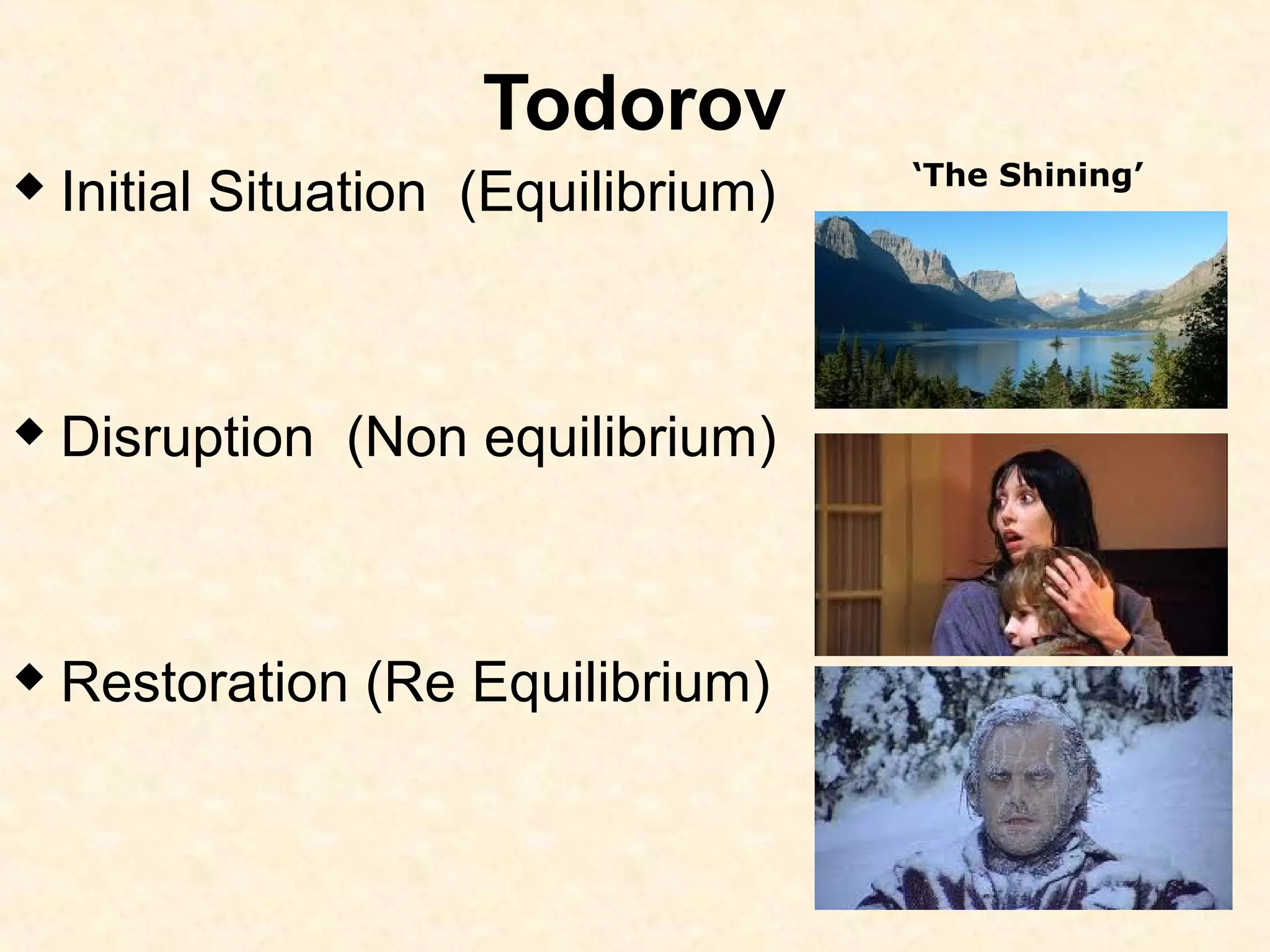
Todorov
 Initial Situation (Equilibrium)
 Disruption (Non equilibrium)
 Restoration (Re Equilibrium)
‘The Shining’
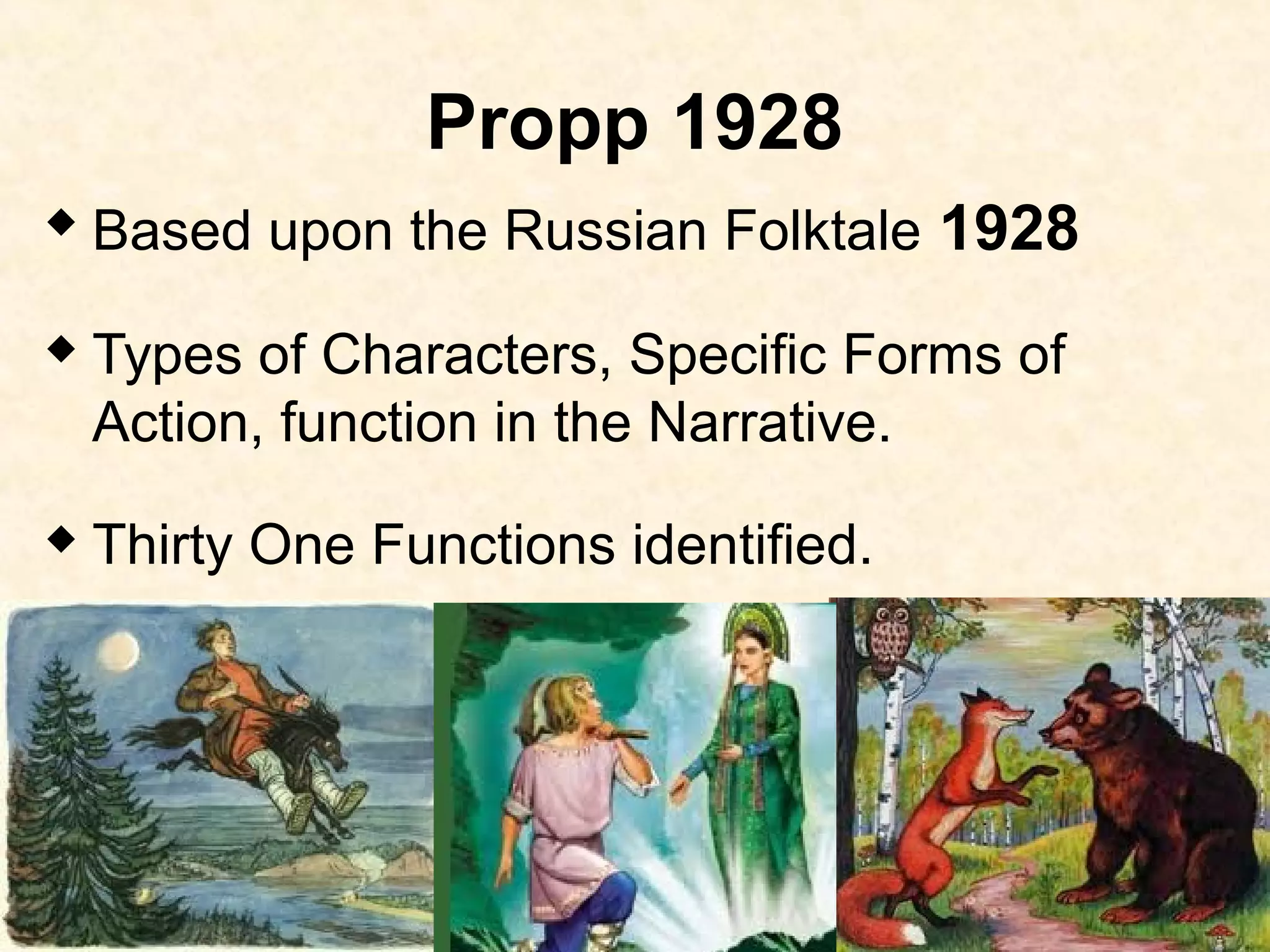
Propp 1928
 Based upon the Russian Folktale 1928
 Types of Characters, Specific Forms of
Action, function in the Narrative.
 Thirty One Functions identified.
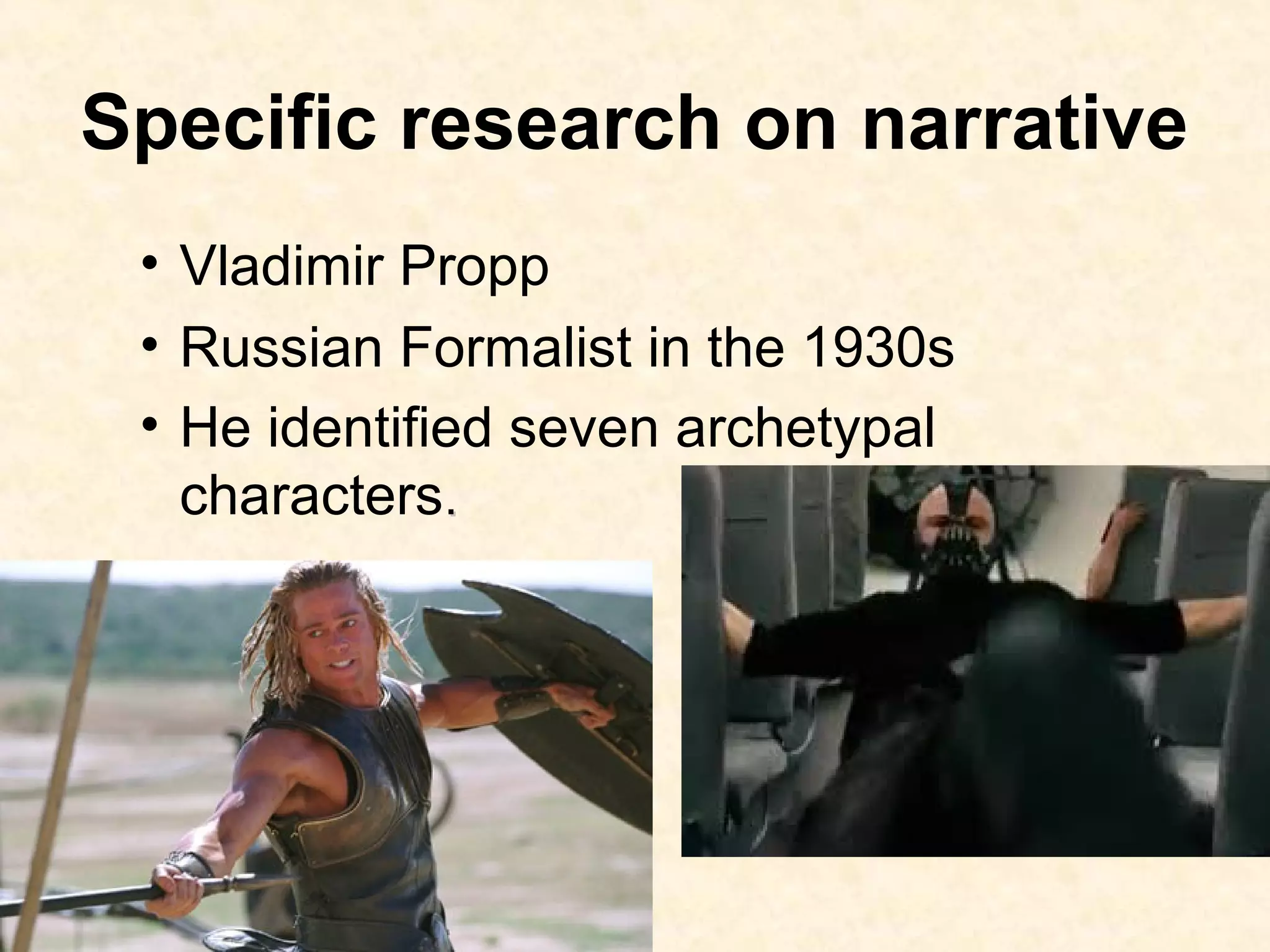
Specific research on narrative
• Vladimir Propp
• Russian Formalist in the 1930s
• He identified seven archetypal
characters..
Propp’s character archetypes
 The Villain
 The Donor/giver of knowledge
 The Helper
 The Princess (sought after person)
 The Dispatcher
 The Hero (or victim)
 The False Hero
Propp’s character archetypes
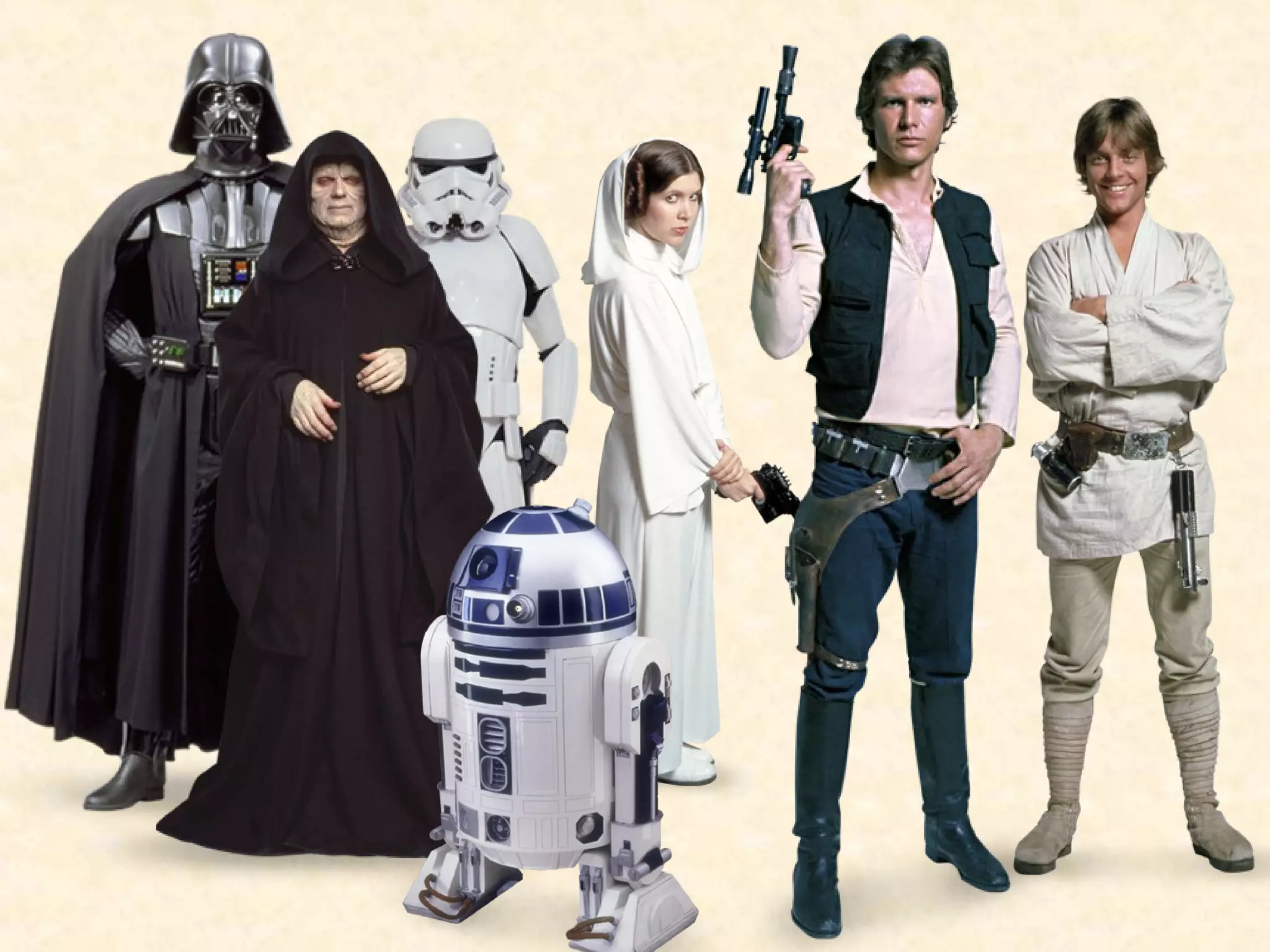
 The Villain Darth Vader
 The Donor Obi Won Kenobe
 The Helper Han Solo
 The Princess Princess Leah
 The Dispatcher R2 - D2
 The Hero Luke Skywalker
 The False Hero Darth Vader (Luke’s dad)
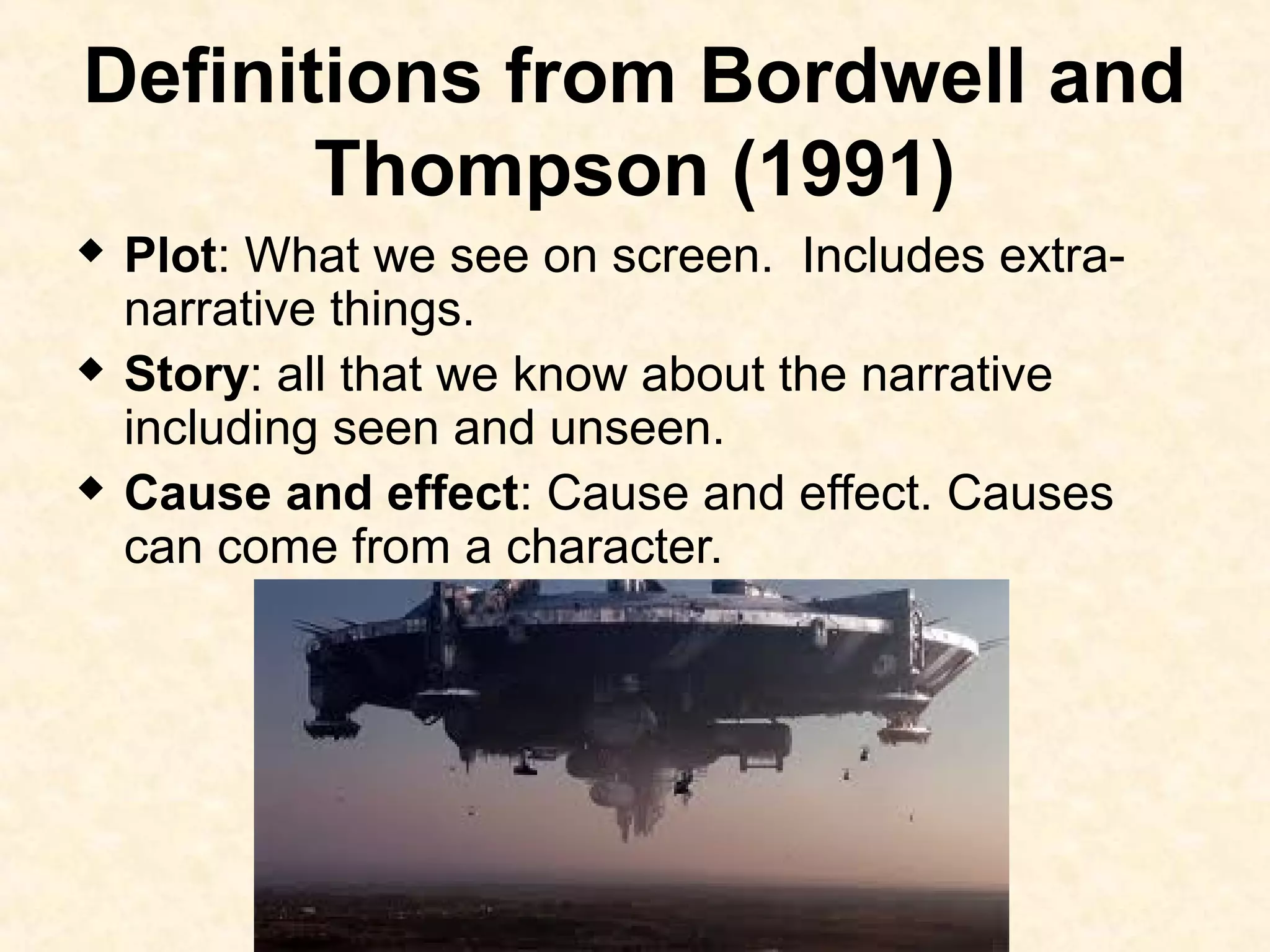
Definitions from Bordwell and
Thompson (1991)
 Plot: What we see on screen. Includes extra-
narrative things.
 Story: all that we know about the narrative
including seen and unseen.
 Cause and effect: Cause and effect. Causes
can come from a character.
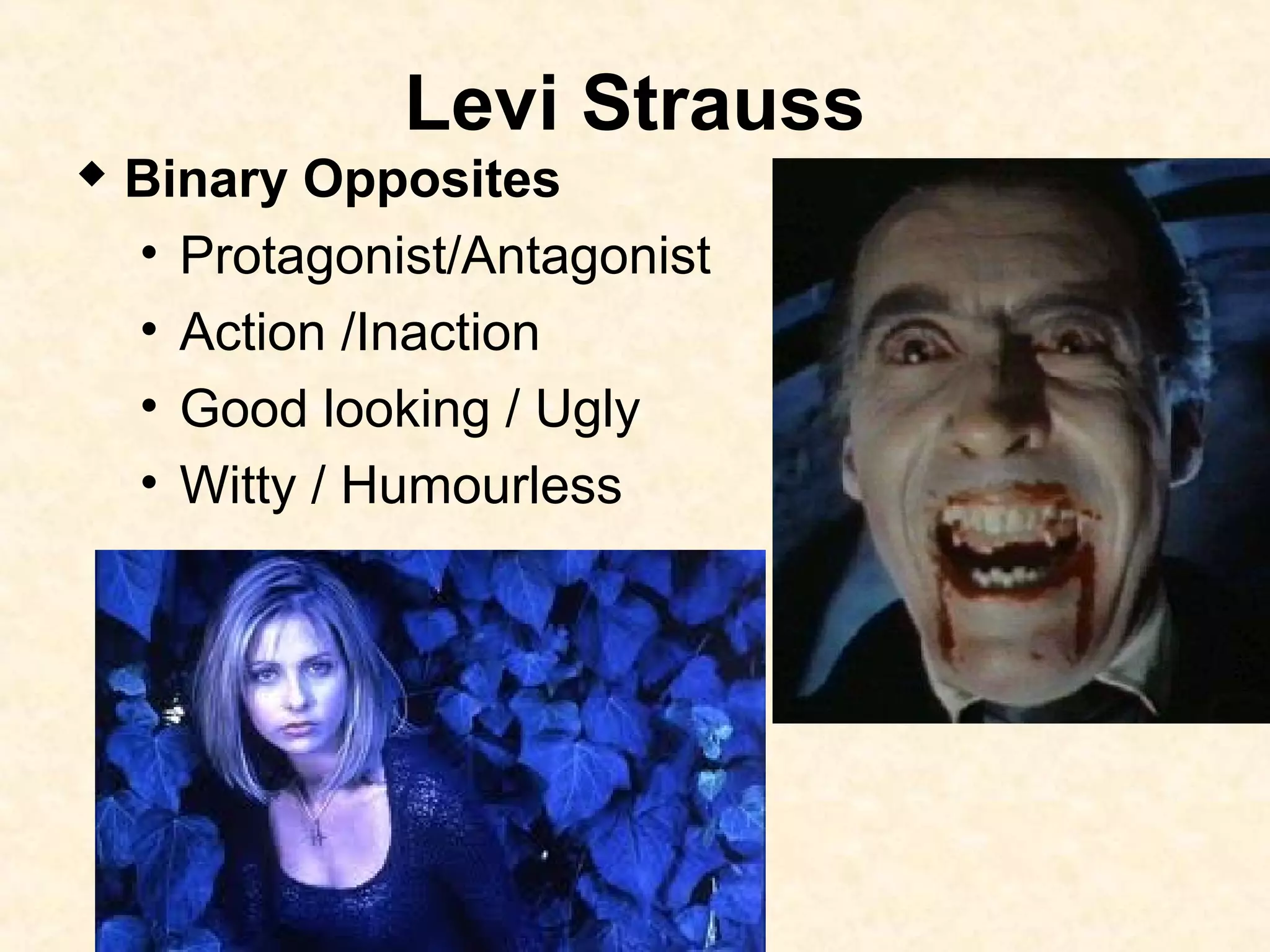
Levi Strauss
 Binary Opposites
• Protagonist/Antagonist
• Action /Inaction
• Good looking / Ugly
• Witty / Humourless
Barthes
 Audience Decodes
• Enigma Code (sets up a question to be answered
later)
• Action Code - understood by cross reference to
other narratives in our culture
• Semic Code (How characters, actions ,events,
settings etc. take on meaning within a culture.
• Symbolic Code - Binary Oppositions or
Psychological symbols
• Cultural Codes - understood through our interaction
with the wider world.

Narrative theory

  • 1.
  • 2.
     “Narrative isa way of organising spatial and temporal data into a cause and effect chain of events with a beginning, middle and end that embodies a judgement about the nature of the events as well as demonstrates how it is possible to know, and hence to narrate, the events. “ Brannigan E. Narrative Comprehension and Film
  • 3.
    Features of Narrative Structure •Aristotle’s beginning, middle and end. • Todorov’s equilibrium>disequilibrium>re-equilibrium • Propp’s “functions” 2. Temporal order, temporal duration, temporal frequency 3. Story and Plot • Explicitly presented actions/events • Implicitly inferred actions/events • Non diegetic material (captions/titles, drama enhancing music etc.)
  • 4.
    Other Features 1. ConstructionalDevices  Cinematography  Mise- en- scene  Editing  Sound 2. Genre Associations Genre Codes (e.g. Iconography) Genre Conventions 3. Narrative Codes Levi Straus’s Binary Oppositions Character Psychology Semiotic Analysis
  • 5.
    Todorov  Initial Situation(Equilibrium)  Disruption (Non equilibrium)  Restoration (Re Equilibrium) ‘The Shining’
  • 6.
    Propp 1928  Basedupon the Russian Folktale 1928  Types of Characters, Specific Forms of Action, function in the Narrative.  Thirty One Functions identified.
  • 7.
    Specific research onnarrative • Vladimir Propp • Russian Formalist in the 1930s • He identified seven archetypal characters..
  • 8.
    Propp’s character archetypes The Villain  The Donor/giver of knowledge  The Helper  The Princess (sought after person)  The Dispatcher  The Hero (or victim)  The False Hero
  • 10.
    Propp’s character archetypes The Villain Darth Vader  The Donor Obi Won Kenobe  The Helper Han Solo  The Princess Princess Leah  The Dispatcher R2 - D2  The Hero Luke Skywalker  The False Hero Darth Vader (Luke’s dad)
  • 11.
    Definitions from Bordwelland Thompson (1991)  Plot: What we see on screen. Includes extra- narrative things.  Story: all that we know about the narrative including seen and unseen.  Cause and effect: Cause and effect. Causes can come from a character.
  • 12.
    Levi Strauss  BinaryOpposites • Protagonist/Antagonist • Action /Inaction • Good looking / Ugly • Witty / Humourless
  • 13.
    Barthes  Audience Decodes •Enigma Code (sets up a question to be answered later) • Action Code - understood by cross reference to other narratives in our culture • Semic Code (How characters, actions ,events, settings etc. take on meaning within a culture. • Symbolic Code - Binary Oppositions or Psychological symbols • Cultural Codes - understood through our interaction with the wider world.