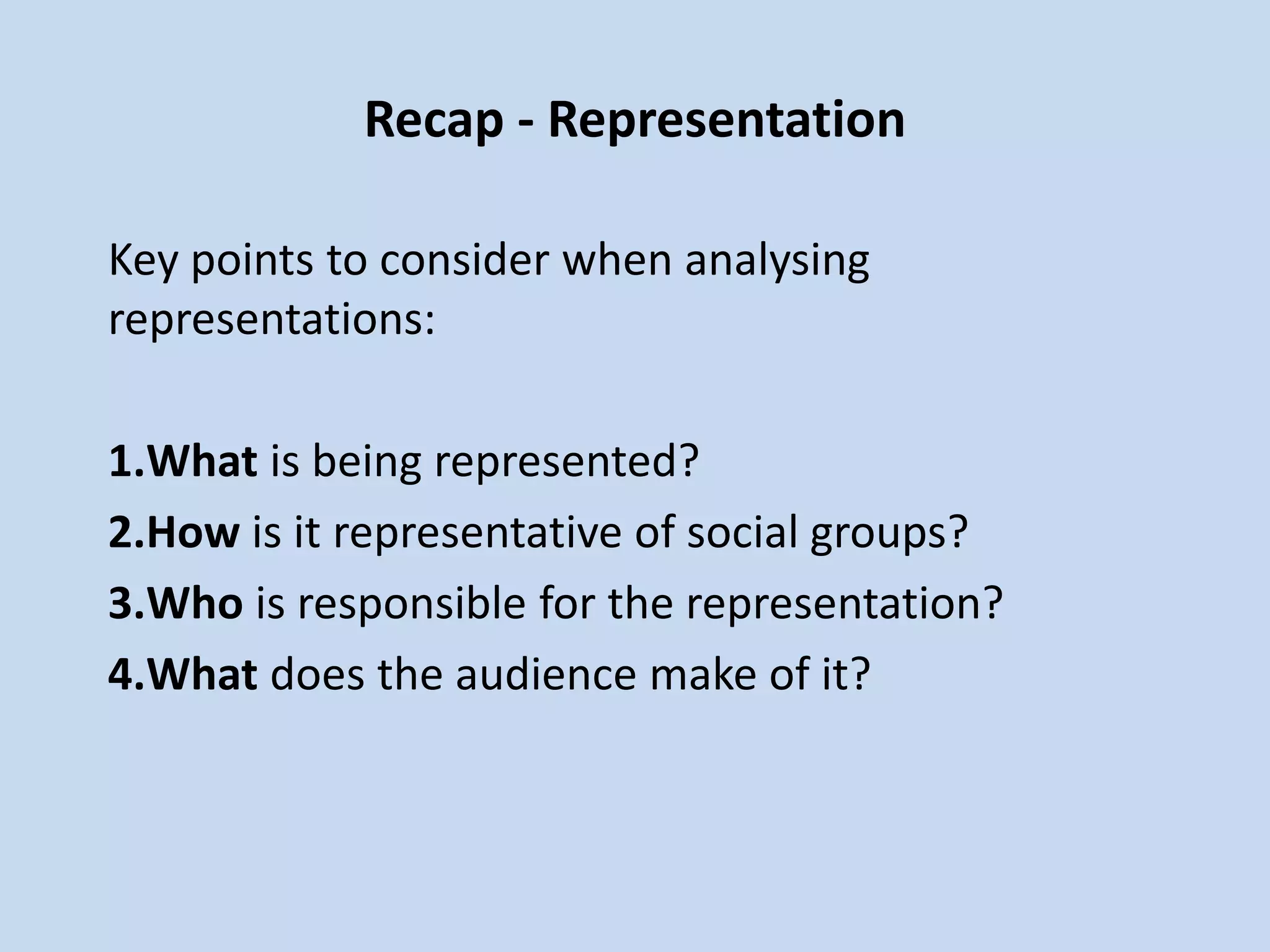
This document discusses representation in media texts and how to analyze representations. It defines representation as how groups, events, places or social changes are portrayed in media. Representations offer a version of reality but are subjective and constructed rather than objective. The document outlines Richard Dyer's 4 key points for analyzing representations: 1) What is represented 2) How it represents social groups 3) Who is responsible 4) Audience response. It also discusses theorists Stuart Hall and how representations rely on stereotypes that can subordinate groups.
The concept of representation in media, leading into discussion on various media forms.
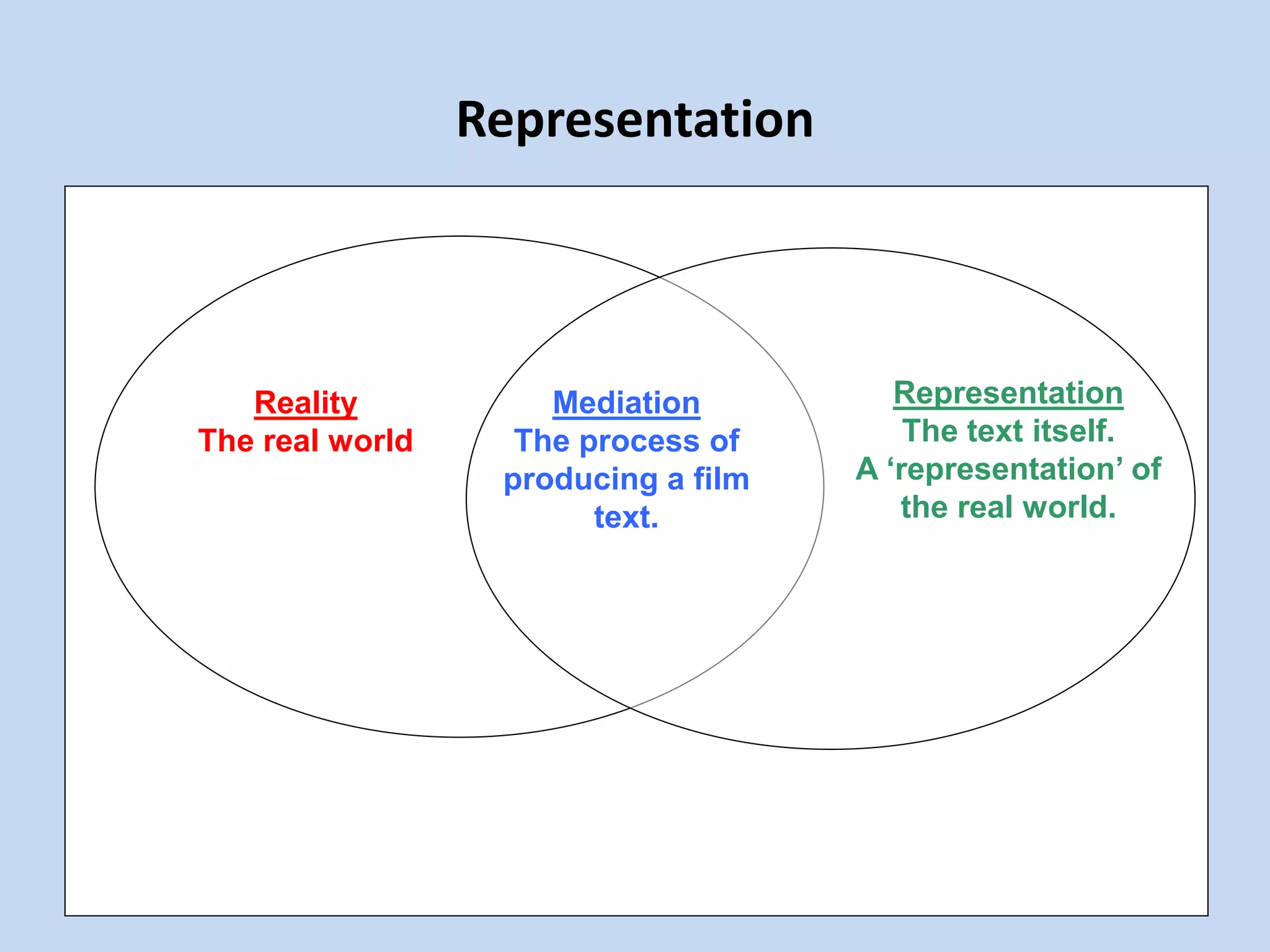
Discussion on how different media formats represent reality, emphasizing that all are mediated and subjective. Listing factors influencing representation in media: gender, age, ethnicity, etc. and the process of mediation.
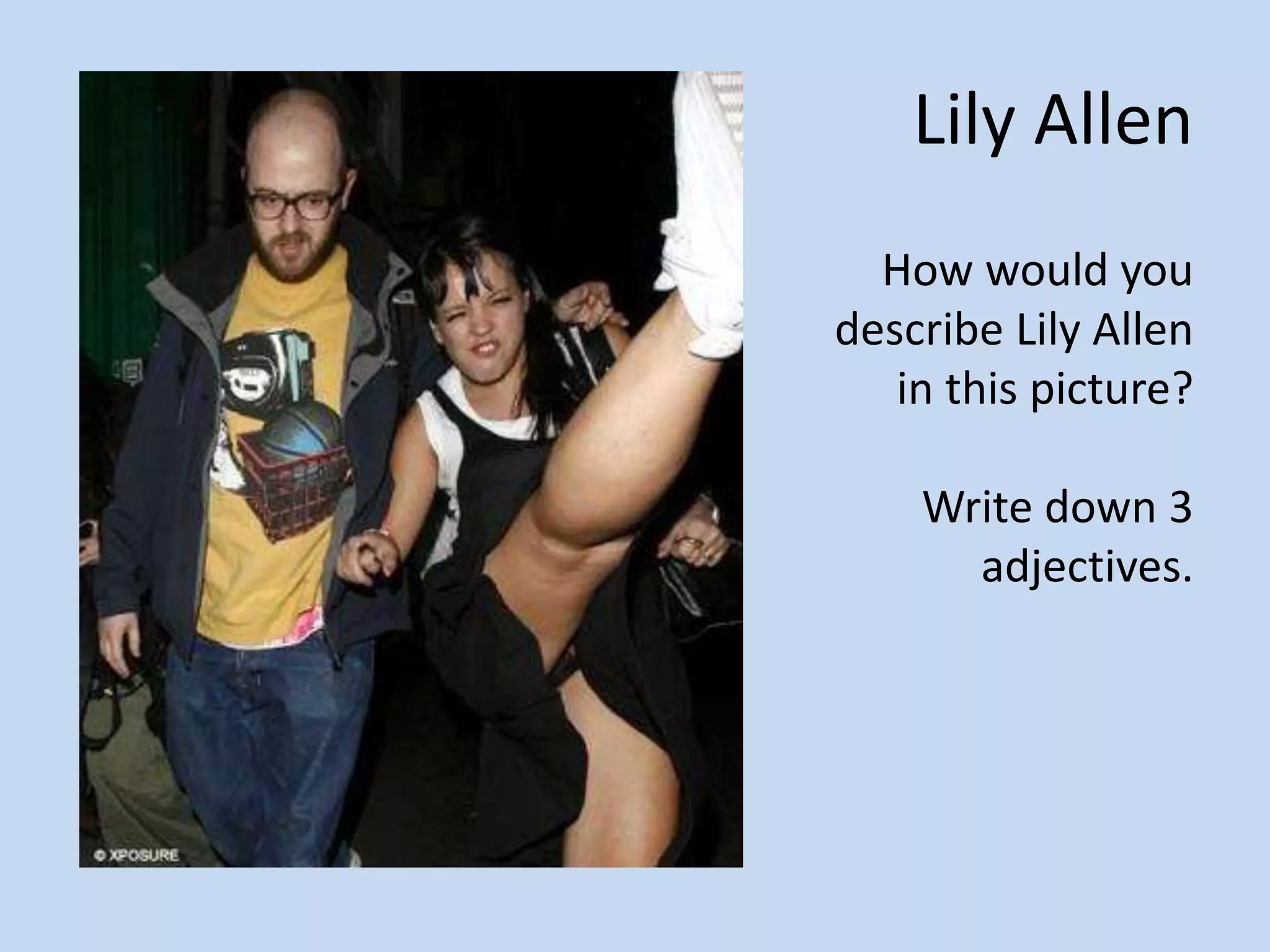
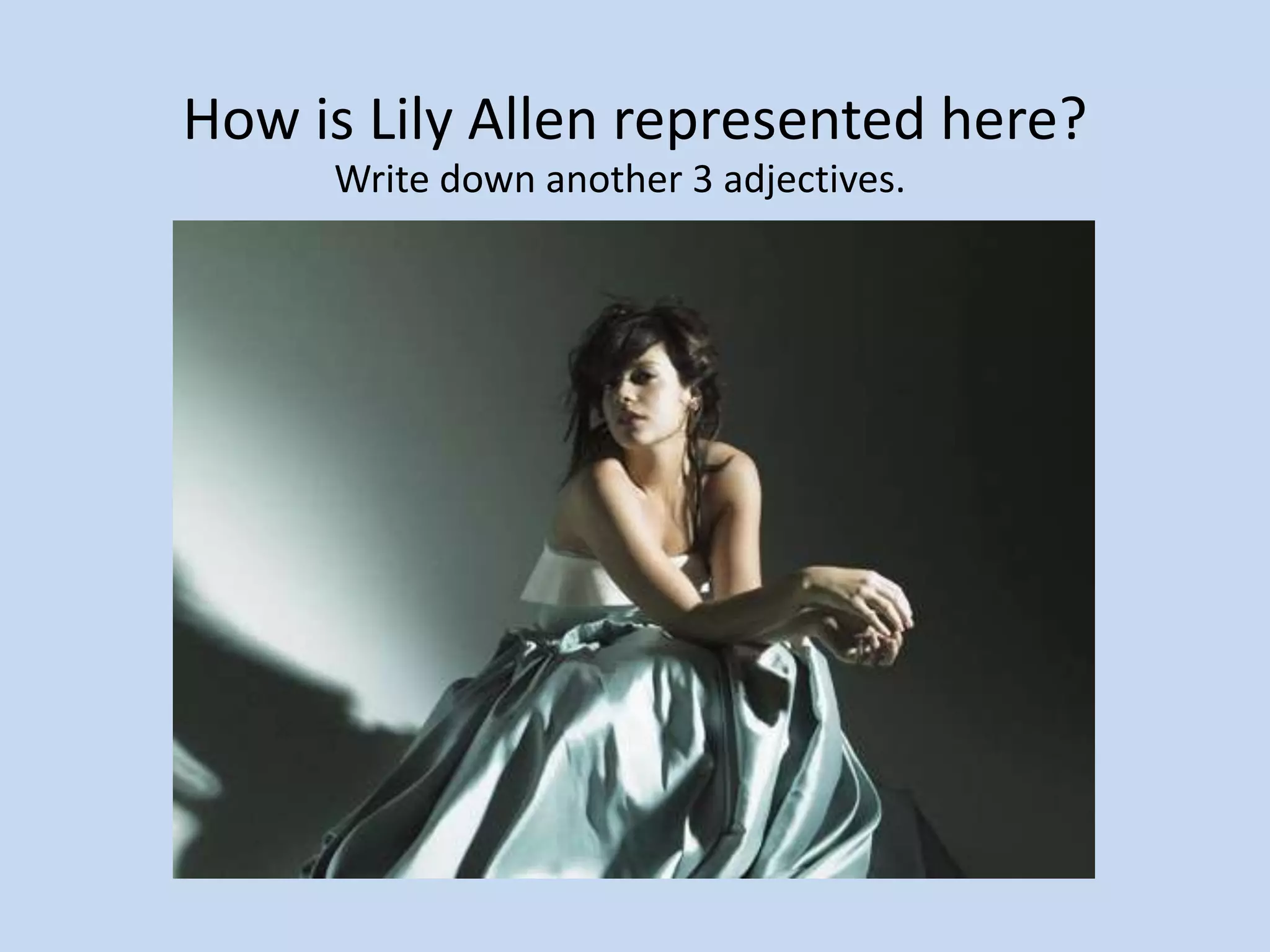
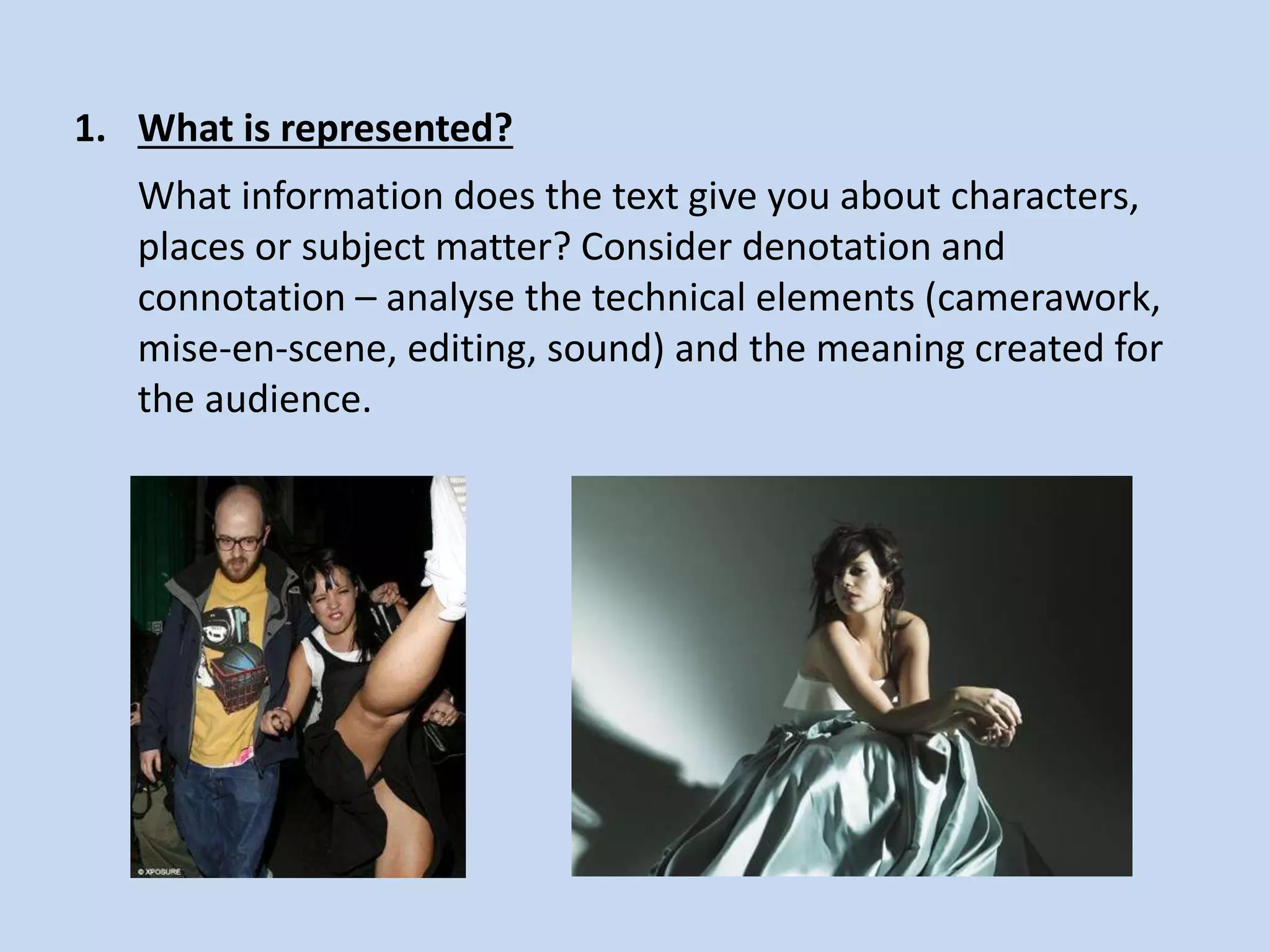
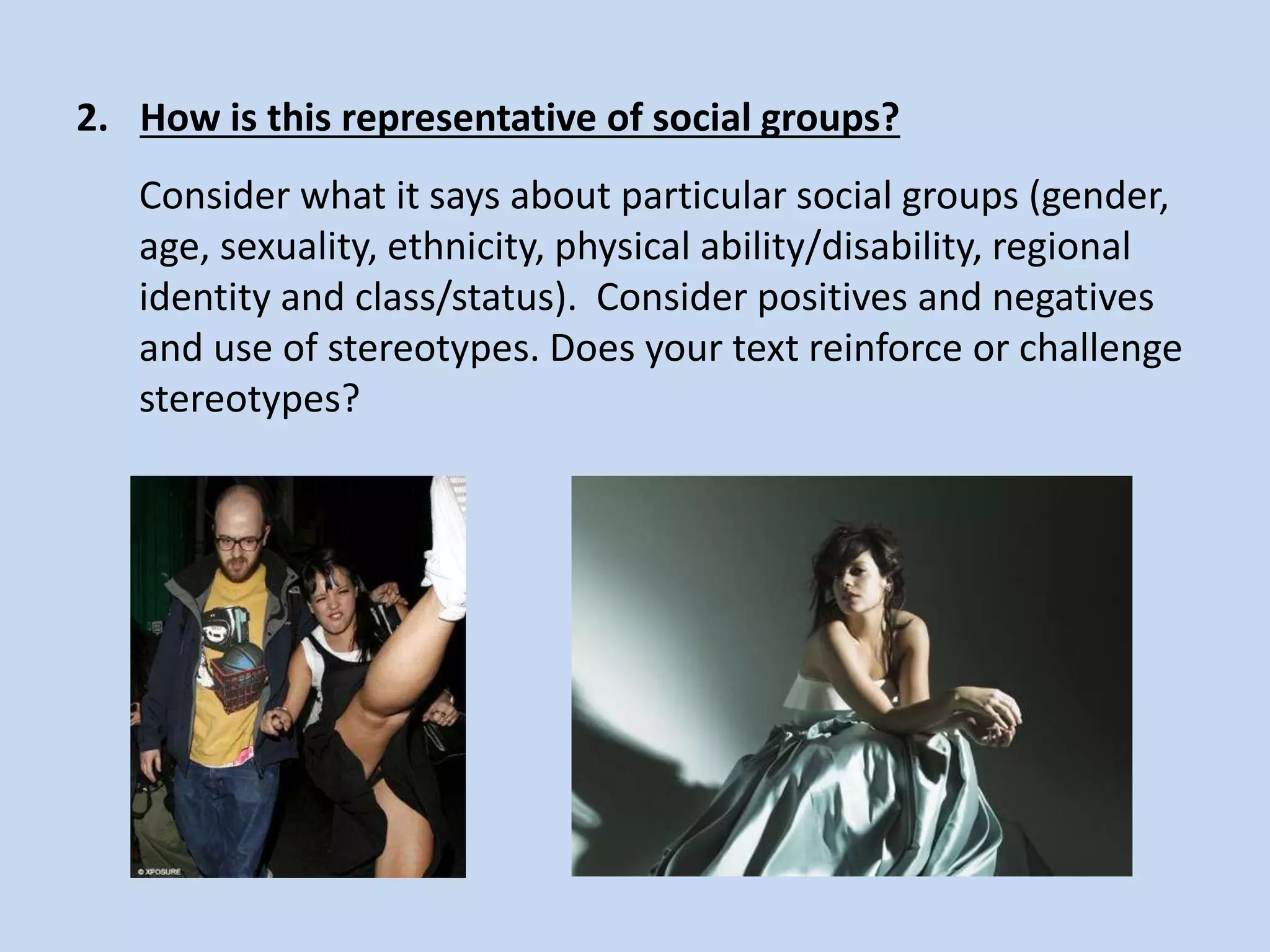
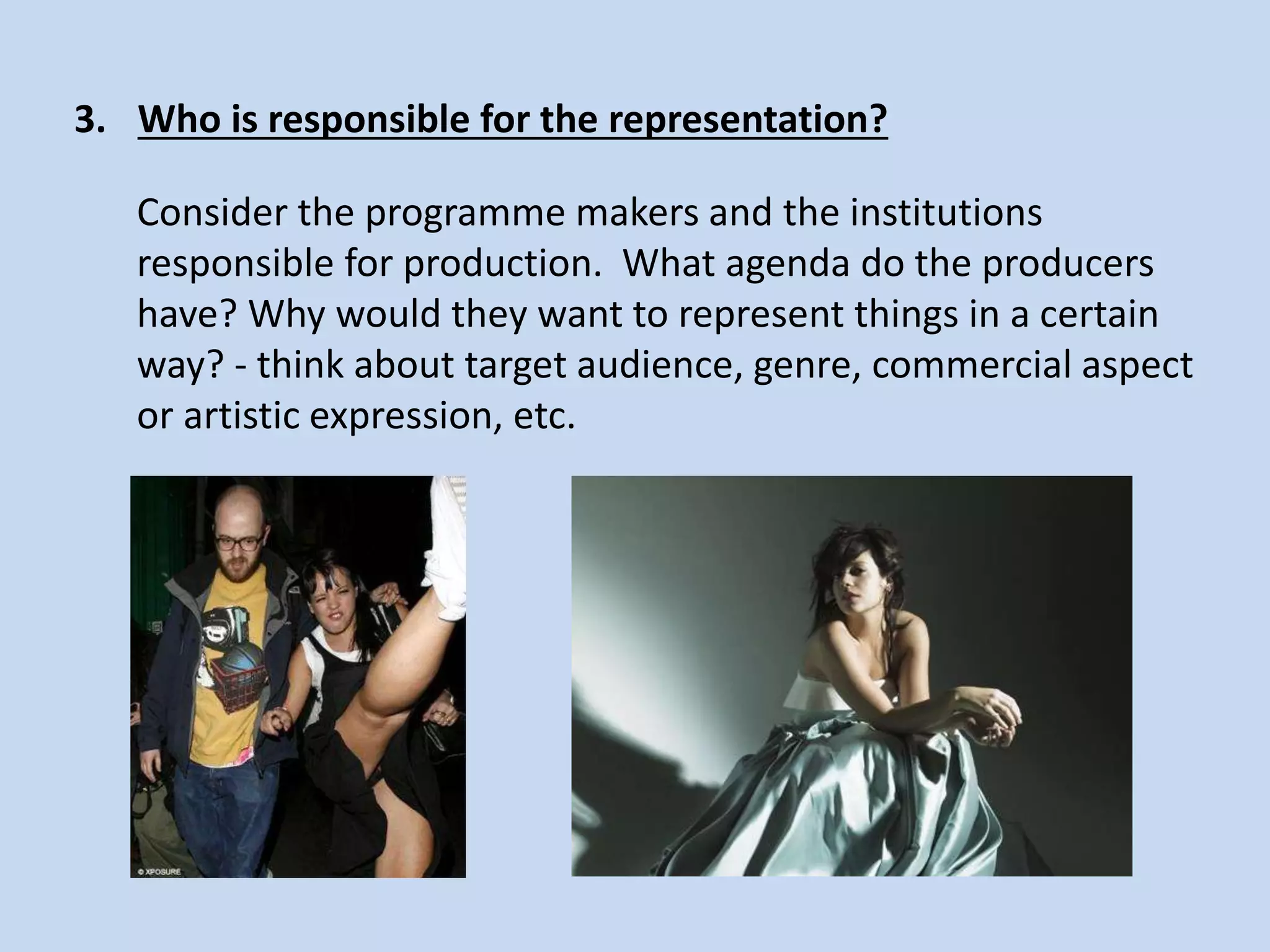
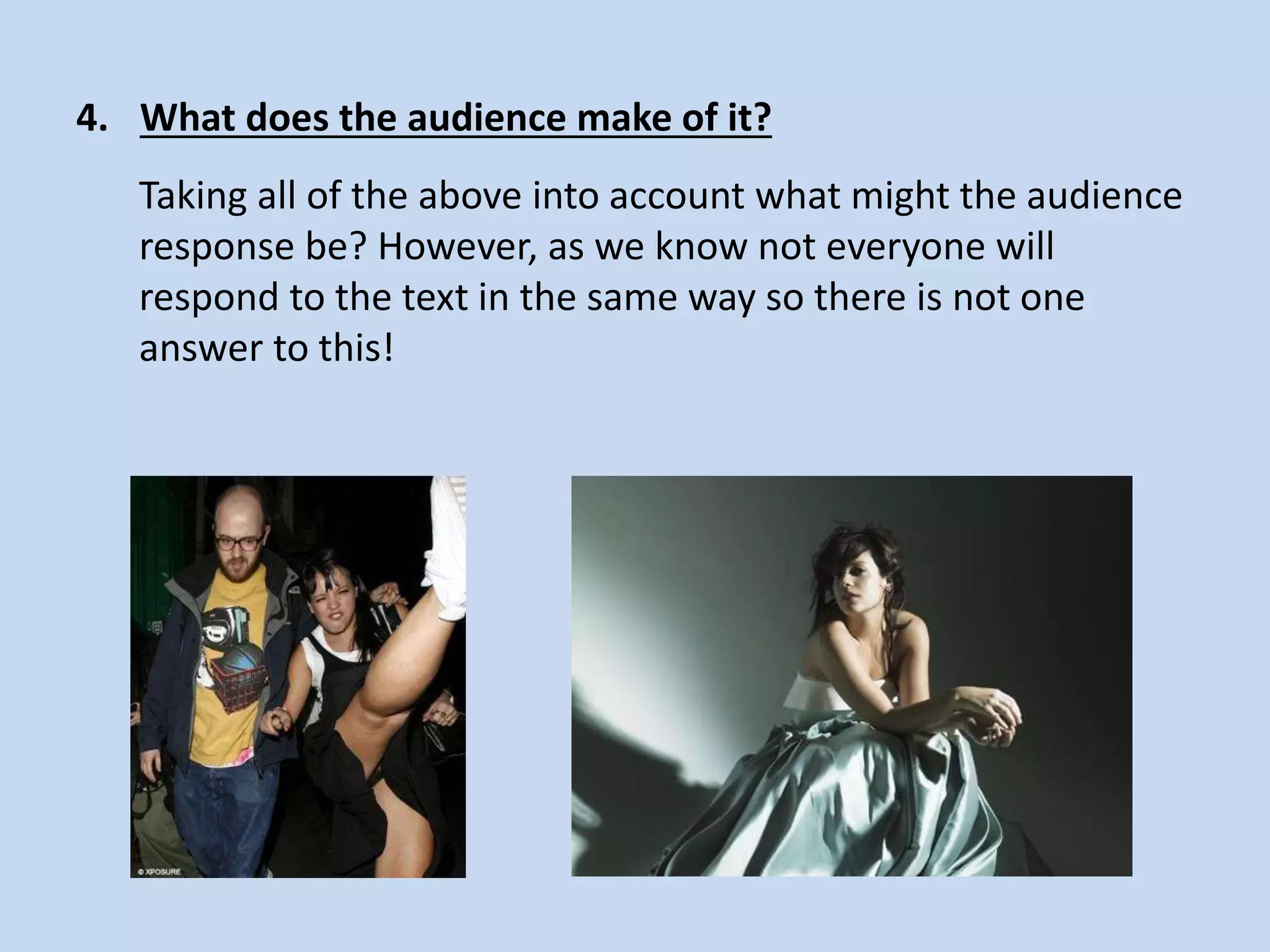
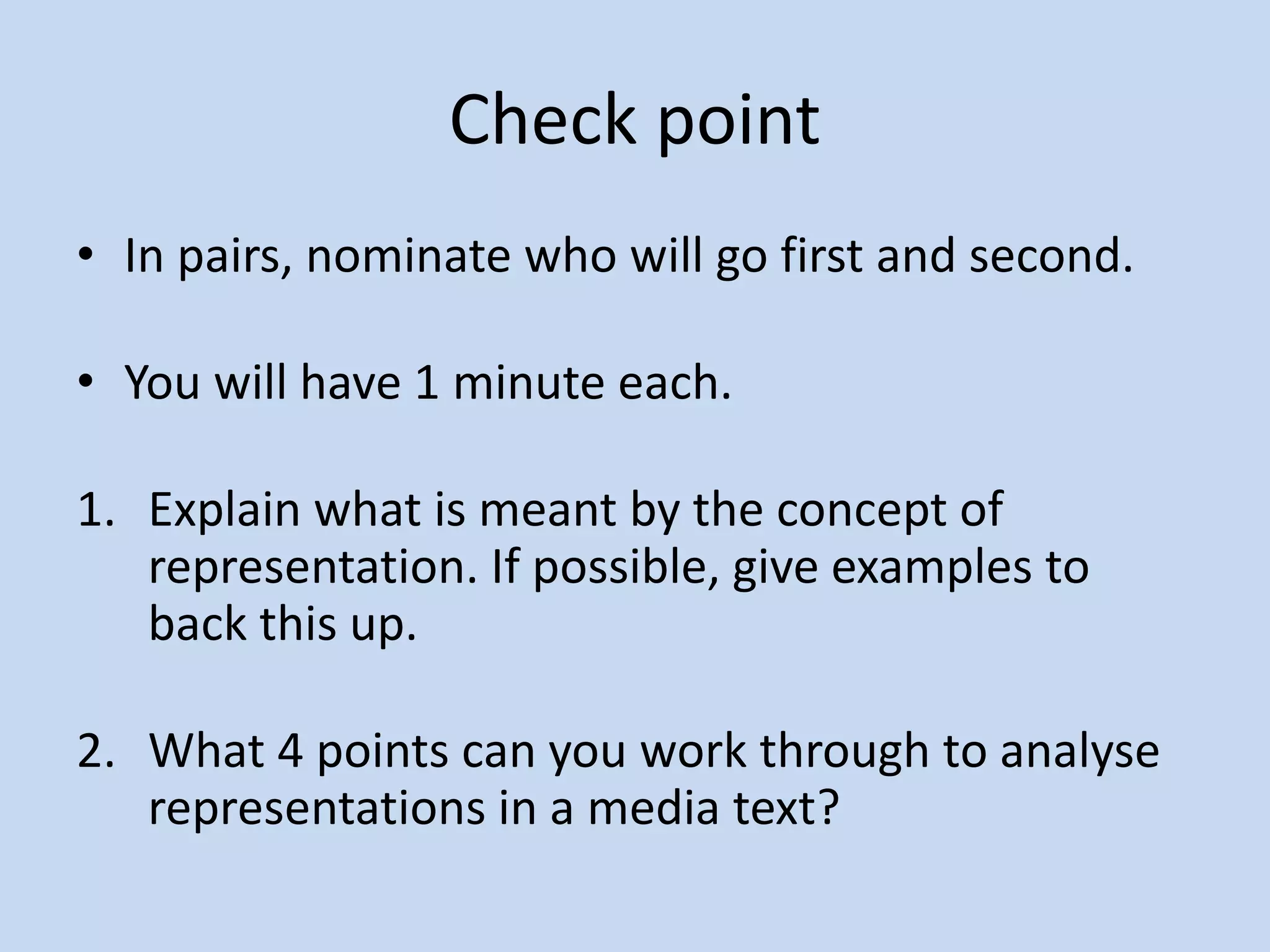
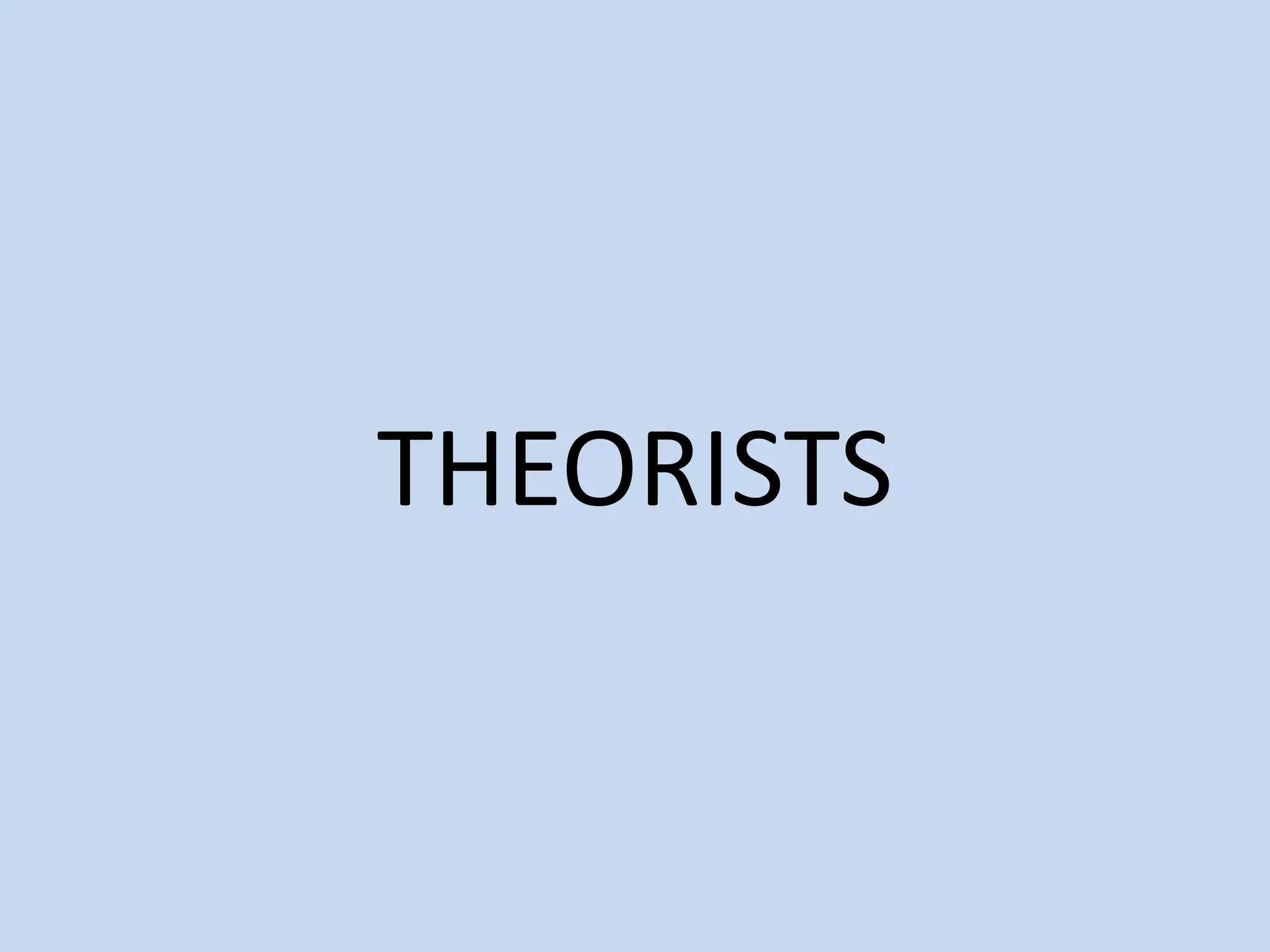
Encourages analysis of a representation using specific examples (like Lily Allen) to explore subjective perceptions.
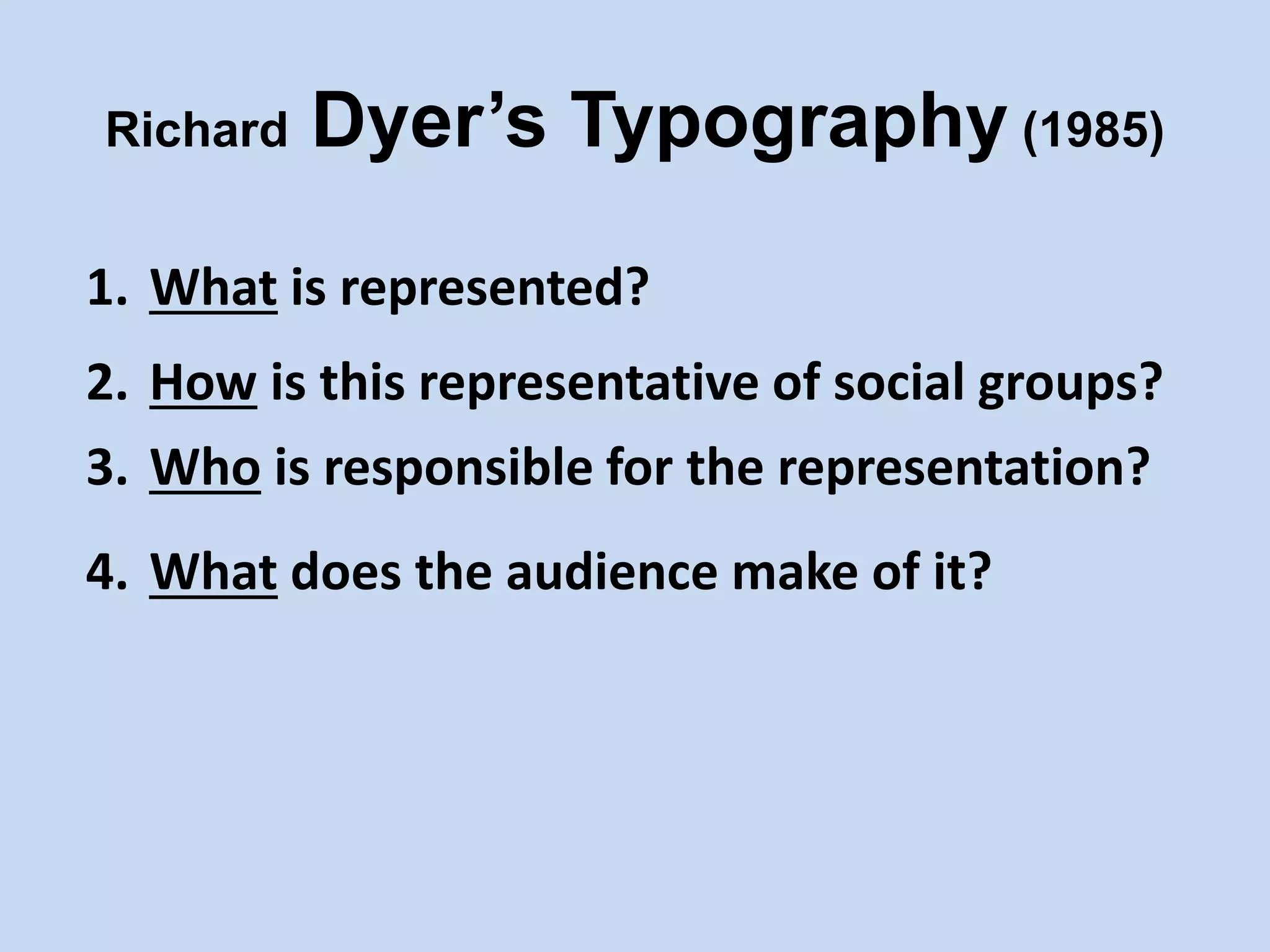
Framework for analyzing media representations with essential questions regarding social groups and audience interpretation.
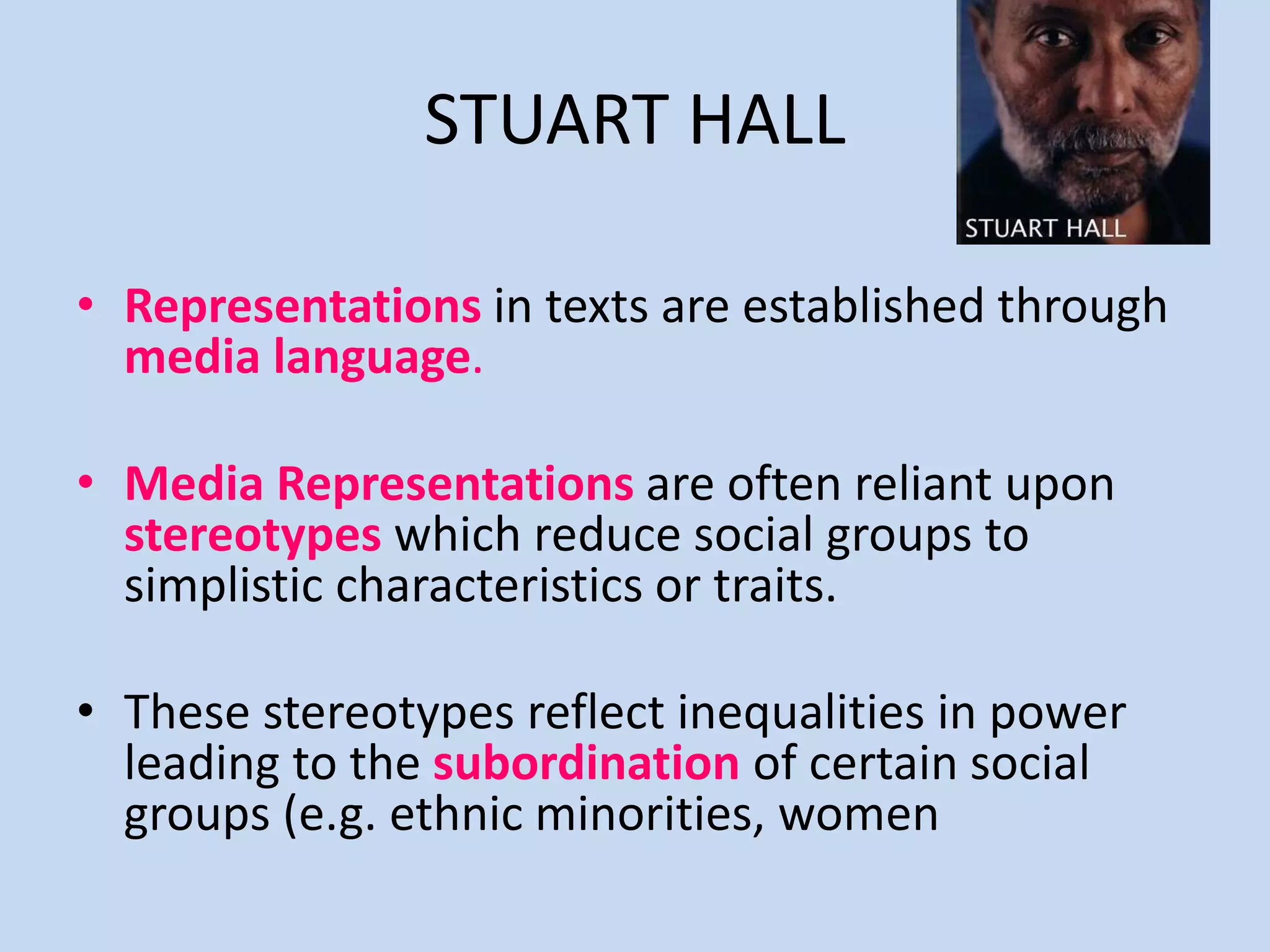
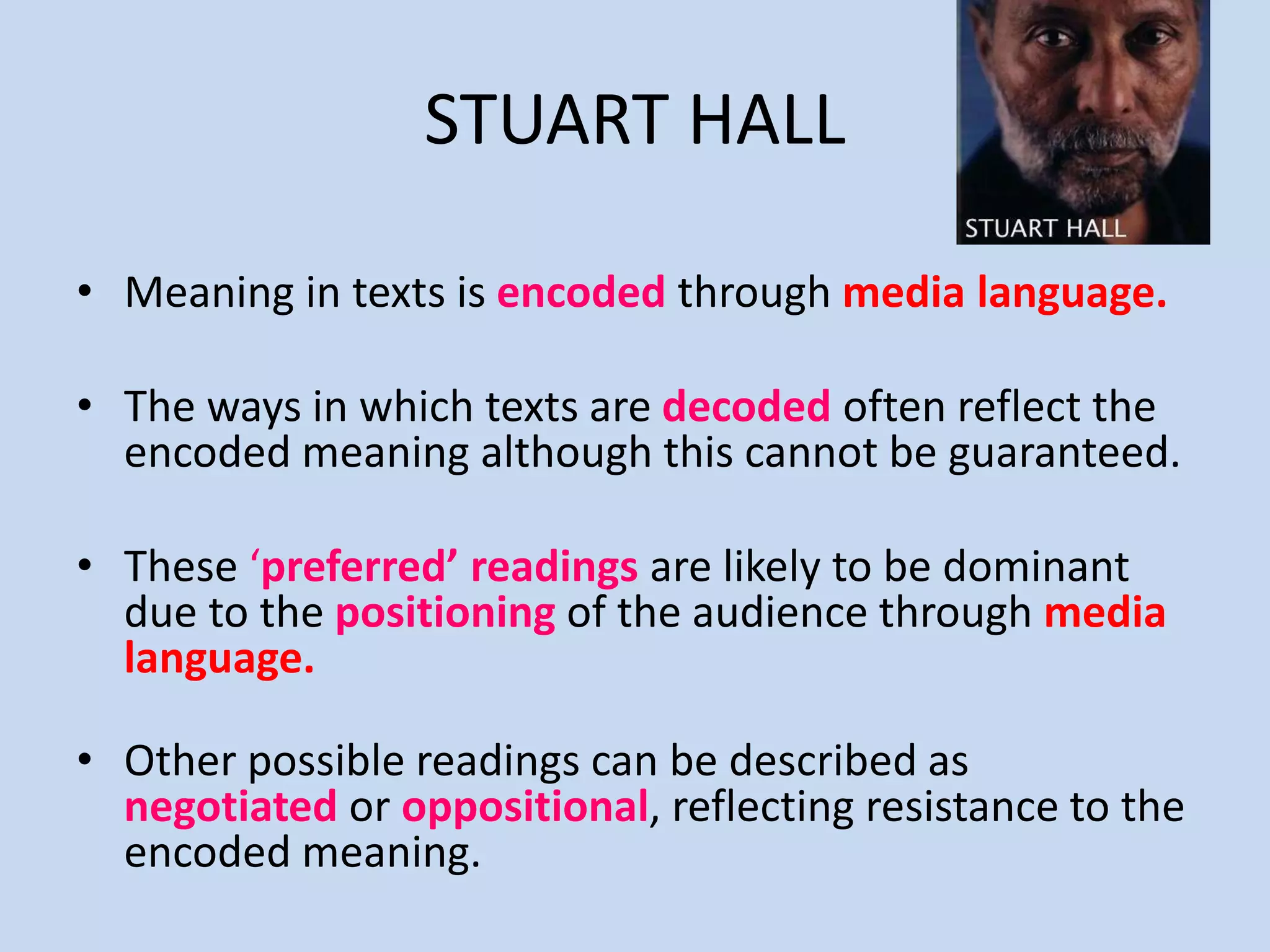
Introduction to key theorists such as Richard Dyer and Stuart Hall, discussing their contributions to understanding representation.
Recap of core concepts of representation in media, stressing its constructed nature and importance of analysis.
Which of thefollowing do you think
accurately represents reality:
• a television newscast?
• a documentary?
• a Reality TV programme?
• a TV drama?
3.
Constructed reality
The truthis, that none of these programmes accurately
reflect reality. Reality is mediated in all four examples.
i.e. a newscast story or documentary is never entirely objective.
• It may contain slant or bias.
• It may only show one aspect of an issue.
• It contains many camerawork and editing decisions that will
have an effect on meaning created.
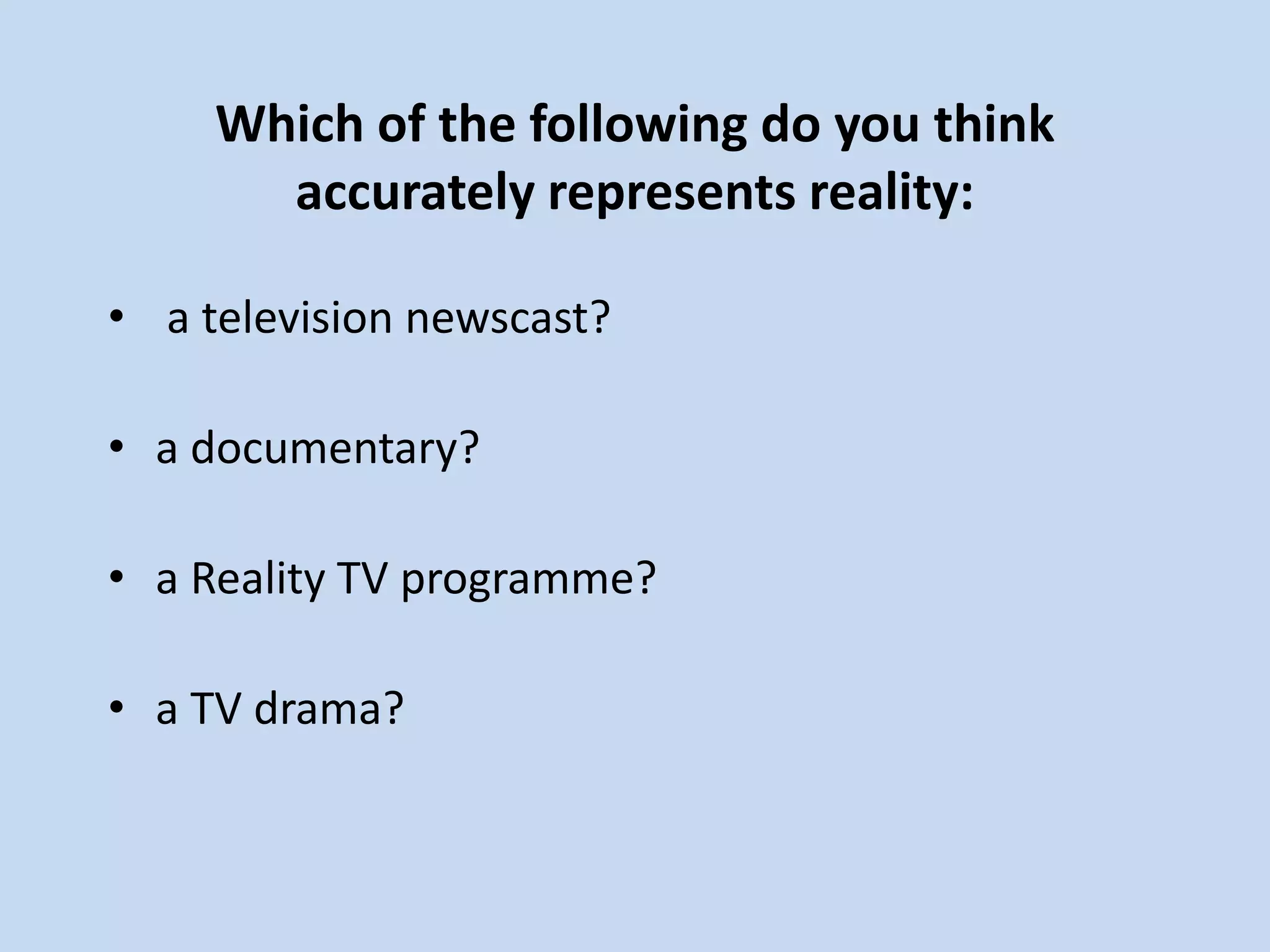
Also, the types of stories that
make the news - the "if it bleeds
it leads" approach does not
create a well-rounded picture of
events as they occur in real life.
4.
KEY POINT: realityon television is constructed
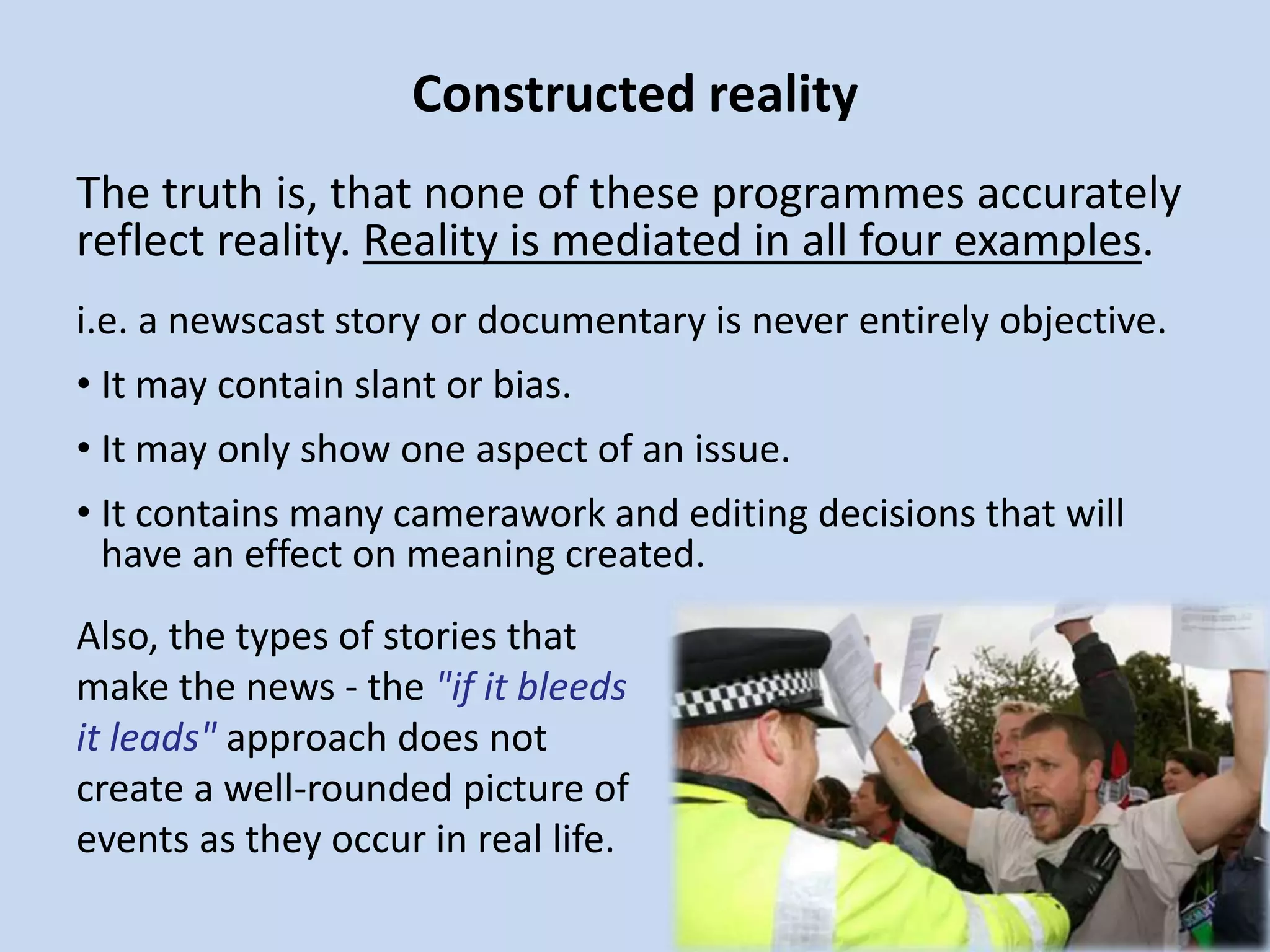
TV drama takes a further step into constructed
reality by dealing with characterisations and
dramatic elements within those characters lives.
TV dramas, although fictitious, may perpetuate
stereotypes that influence our perceptions about
different groups of people.
5.
– Gender
– Age
–Sexuality
– Ethnicity
– Class and status
– Ability/disability
– Regional identity
6.
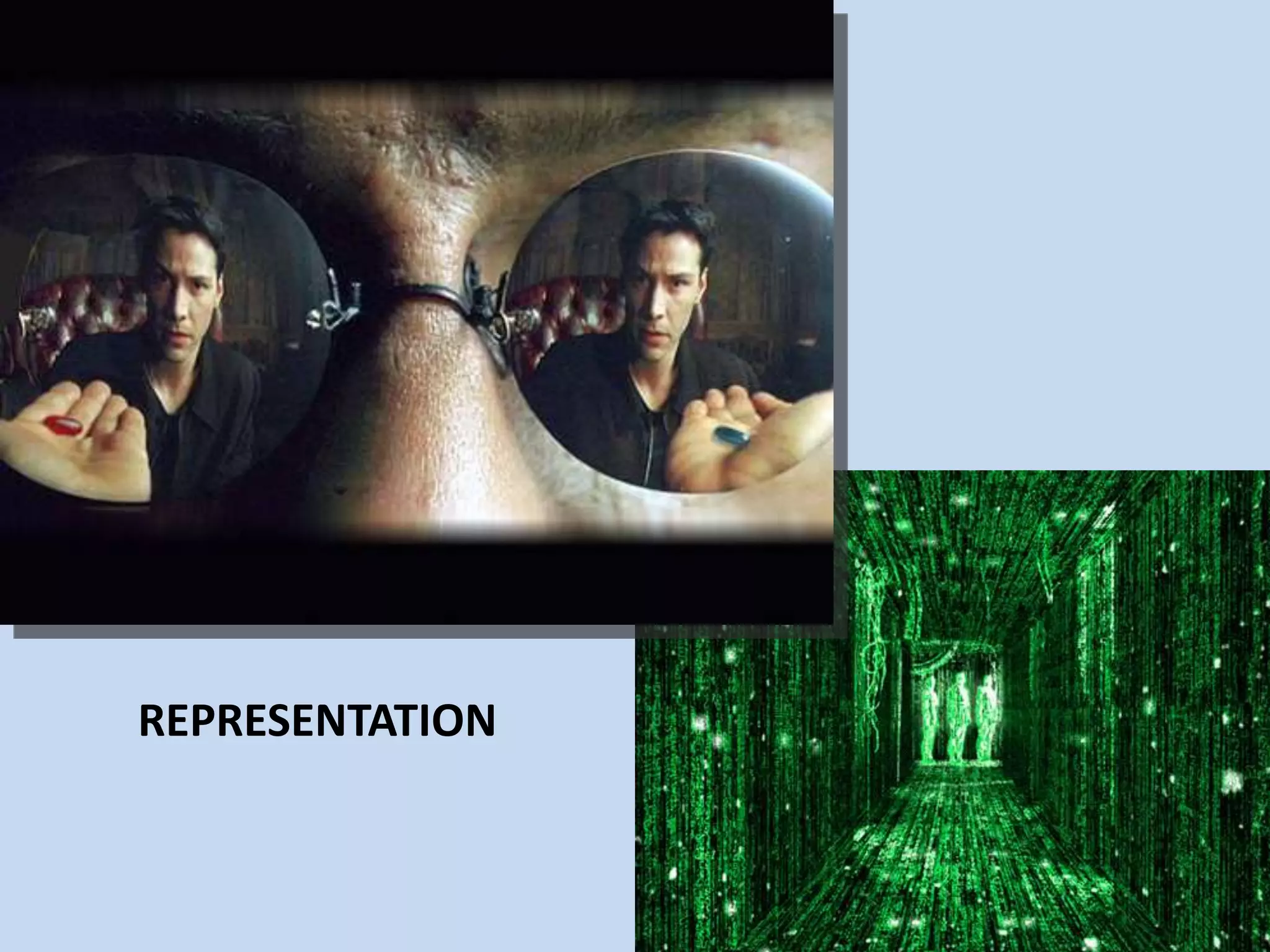
Representation
Representation – Howgroups, events, places or
social changes are portrayed in the media; how they
are re - presented.
Representations offer a version of reality.
Representations are subjective rather than objective
and are constructed.
Lily Allen
How wouldyou
describe Lily Allen
in this picture?
Write down 3
adjectives.
9.
How is LilyAllen represented here?
Write down another 3 adjectives.
10.
Representation
Key points toconsider when analysing
representations:
1.What is being represented?
2.How is it representative of social groups?
3.Who is responsible for the representation?
4.What does the audience make of it?
Consider the Lily Allen examples as we work through each of these points…
11.
1. What isrepresented?
What information does the text give you about characters,
places or subject matter? Consider denotation and
connotation – analyse the technical elements (camerawork,
mise-en-scene, editing, sound) and the meaning created for
the audience.
12.
2. How isthis representative of social groups?
Consider what it says about particular social groups (gender,
age, sexuality, ethnicity, physical ability/disability, regional
identity and class/status). Consider positives and negatives
and use of stereotypes. Does your text reinforce or challenge
stereotypes?
13.
3. Who isresponsible for the representation?
Consider the programme makers and the institutions
responsible for production. What agenda do the producers
have? Why would they want to represent things in a certain
way? - think about target audience, genre, commercial aspect
or artistic expression, etc.
14.
4. What doesthe audience make of it?
Taking all of the above into account what might the audience
response be? However, as we know not everyone will
respond to the text in the same way so there is not one
answer to this!
15.
Check point
• Inpairs, nominate who will go first and second.
• You will have 1 minute each.
1. Explain what is meant by the concept of
representation. If possible, give examples to
back this up.
2. What 4 points can you work through to analyse
representations in a media text?
Richard Dyer’s Typography(1985)
1. What is represented?
2. How is this representative of social groups?
3. Who is responsible for the representation?
4. What does the audience make of it?
18.
STUART HALL
• Representationsin texts are established through
media language.
• Media Representations are often reliant upon
stereotypes which reduce social groups to
simplistic characteristics or traits.
• These stereotypes reflect inequalities in power
leading to the subordination of certain social
groups (e.g. ethnic minorities, women
19.
STUART HALL
• Meaningin texts is encoded through media language.
• The ways in which texts are decoded often reflect the
encoded meaning although this cannot be guaranteed.
• These ‘preferred’ readings are likely to be dominant
due to the positioning of the audience through media
language.
• Other possible readings can be described as
negotiated or oppositional, reflecting resistance to the
encoded meaning.
20.
Recap - Representation
Representation– How groups, events, places or
social changes are portrayed in the media; how they
are re - presented.
Representations offer a version of reality.
Representations are subjective rather than objective
and are constructed.
21.
Recap - Representation
Keypoints to consider when analysing
representations:
1.What is being represented?
2.How is it representative of social groups?
3.Who is responsible for the representation?
4.What does the audience make of it?