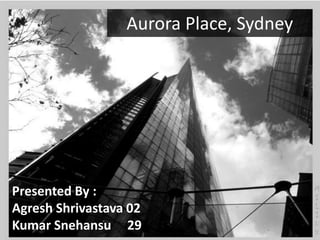
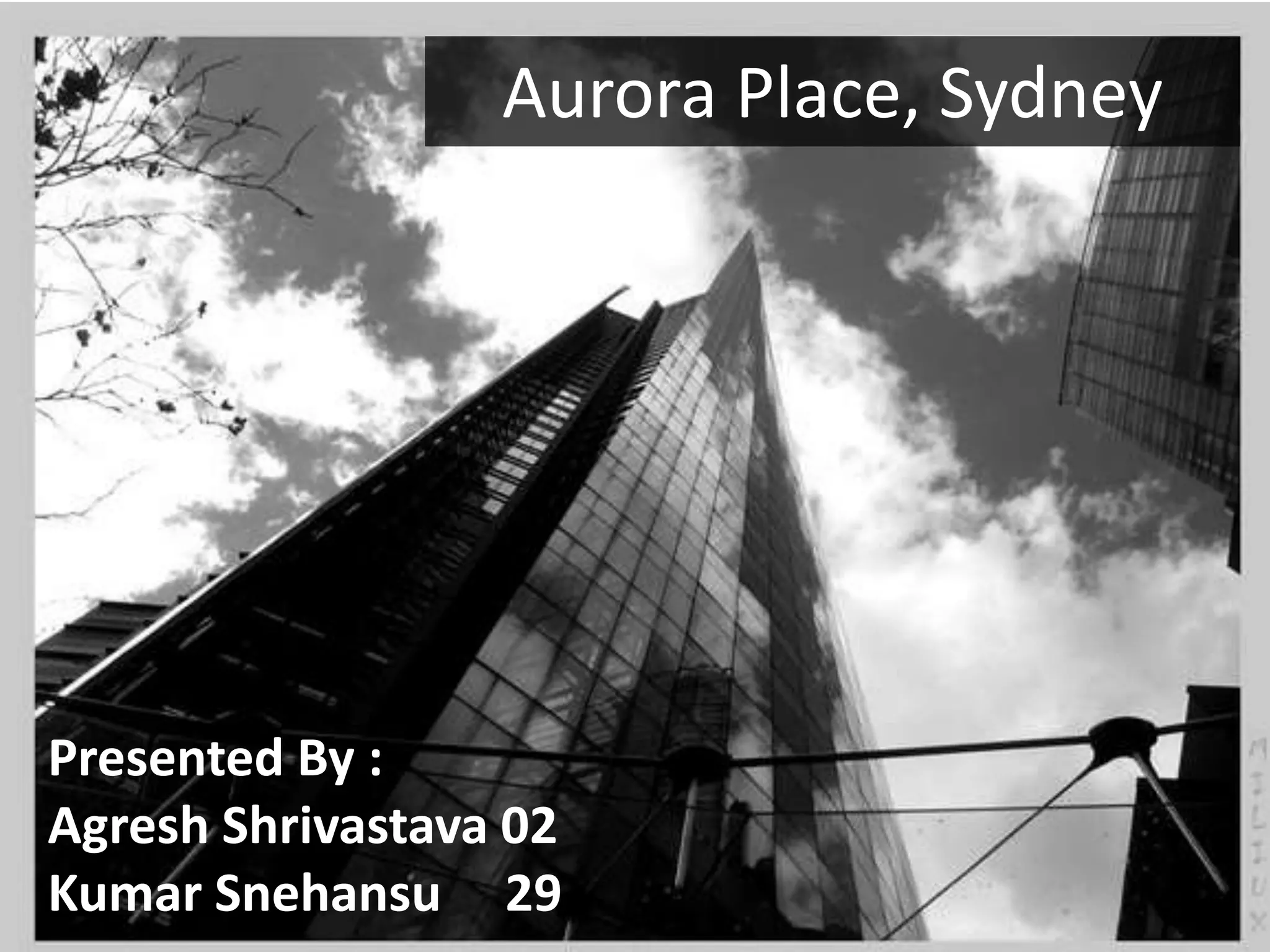
Aurora Place, Sydney
Presented By :
Agresh Shrivastava 02
Kumar Snehansu 29
Project Details
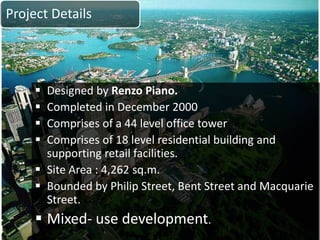
 Designed by Renzo Piano.
 Completed in December 2000
 Comprises of a 44 level office tower
 Comprises of 18 level residential building and
supporting retail facilities.
 Site Area : 4,262 sq.m.
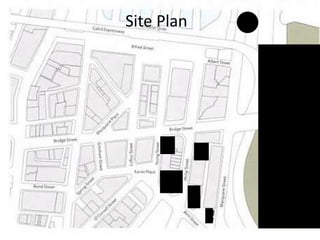
 Bounded by Philip Street, Bent Street and Macquarie
Street.
 Mixed- use development.
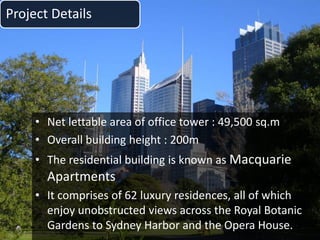
• Net lettable area of office tower : 49,500 sq.m
• Overall building height : 200m
• The residential building is known as Macquarie
Apartments
• It comprises of 62 luxury residences, all of which
enjoy unobstructed views across the Royal Botanic
Gardens to Sydney Harbor and the Opera House.
Project Details
R
E
N
Z
O
P
I
A
N
O
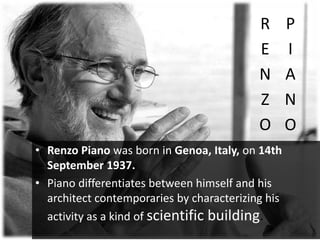
• Renzo Piano was born in Genoa, Italy, on 14th
September 1937.
• Piano differentiates between himself and his
architect contemporaries by characterizing his
activity as a kind of scientific building.
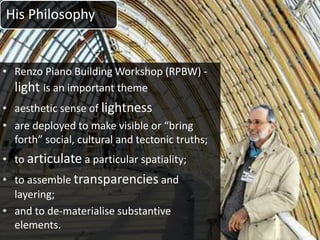
His Philosophy
• Renzo Piano Building Workshop (RPBW) -
light is an important theme
• aesthetic sense of lightness
• are deployed to make visible or “bring
forth” social, cultural and tectonic truths;
• to articulate a particular spatiality;
• to assemble transparencies and
layering;
• and to de-materialise substantive
elements.
-Piano
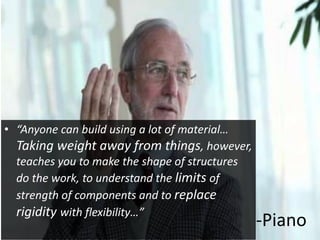
• “Anyone can build using a lot of material…
Taking weight away from things, however,
teaches you to make the shape of structures
do the work, to understand the limits of
strength of components and to replace
rigidity with flexibility…”
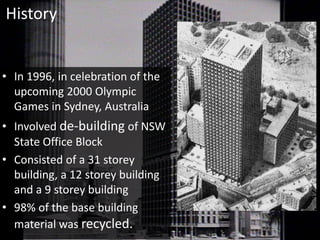
History
• In 1996, in celebration of the
upcoming 2000 Olympic
Games in Sydney, Australia
• Involved de-building of NSW
State Office Block
• Consisted of a 31 storey
building, a 12 storey building
and a 9 storey building
• 98% of the base building
material was recycled.
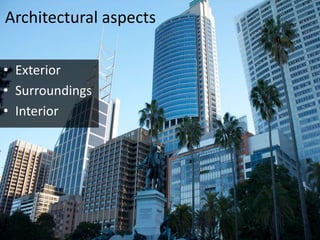
Architectural aspects
• Exterior
• Surroundings
• Interior
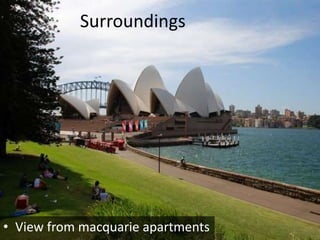
Surroundings
• View from macquarie apartments
Site Plan
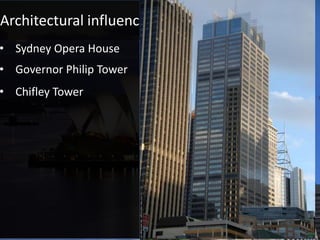
Architectural influences of surrounding buildings
• Chifley Tower
• Sydney Opera House
• Governor Philip Tower
East
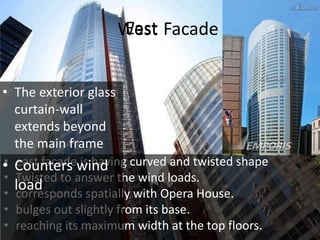
• east façade is having curved and twisted shape
• Twisted to answer the wind loads.
• corresponds spatially with Opera House.
• bulges out slightly from its base.
• reaching its maximum width at the top floors.
FacadeWest
• The exterior glass
curtain-wall
extends beyond
the main frame
• Counters wind
load
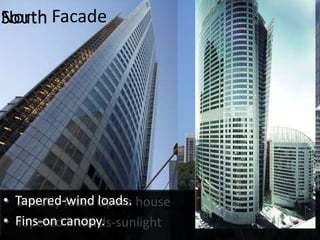
North
• Directly faces Opera house
• Tapered inwards-sunlight
FacadeSouth
• Tapered-wind loads.
• Fins-on canopy.
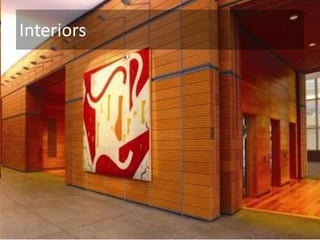
Interiors
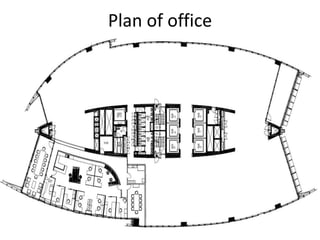
Plan of office
Salient features
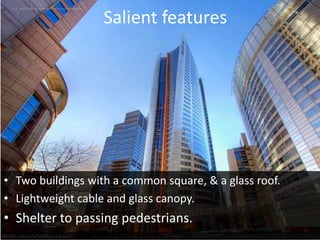
• Two buildings with a common square, & a glass roof.
• Lightweight cable and glass canopy.
• Shelter to passing pedestrians.
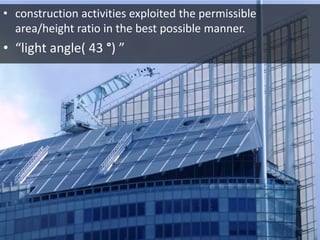
• construction activities exploited the permissible
area/height ratio in the best possible manner.
• “light angle( 43 °) ”
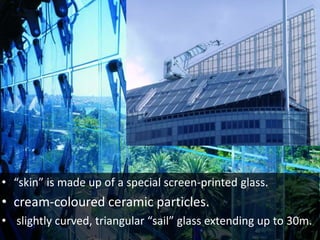
• “skin” is made up of a special screen-printed glass.
• cream-coloured ceramic particles.
• slightly curved, triangular “sail” glass extending up to 30m.
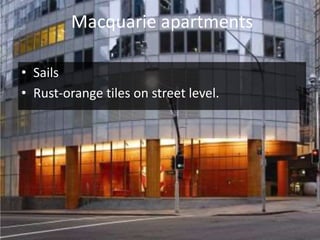
Macquarie apartments
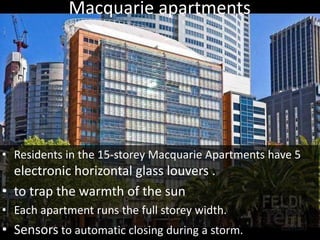
• Residents in the 15-storey Macquarie Apartments have 5
electronic horizontal glass louvers .
• to trap the warmth of the sun
• Each apartment runs the full storey width.
• Sensors to automatic closing during a storm.
Macquarie apartments
• Sails
• Rust-orange tiles on street level.
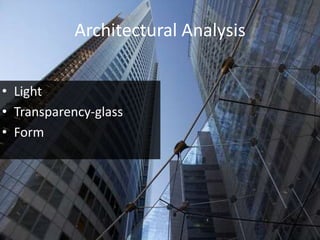
Architectural Analysis
• Light
• Transparency-glass
• Form
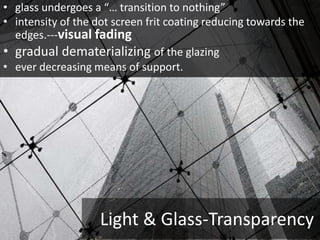
Light & Glass-Transparency
• glass undergoes a “… transition to nothing”
• intensity of the dot screen frit coating reducing towards the
edges.---visual fading
• gradual dematerializing of the glazing
• ever decreasing means of support.
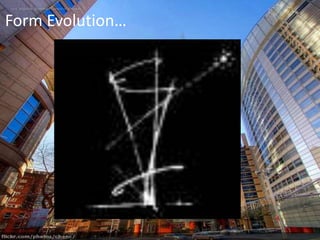
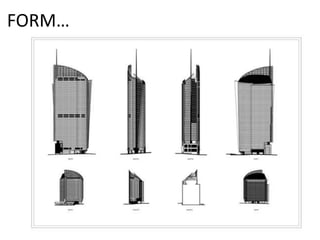
Form Evolution…
FORM…
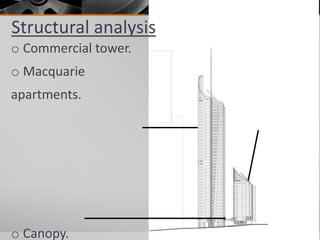
Structural analysis
o Commercial tower.
o Macquarie
apartments.
o Canopy.
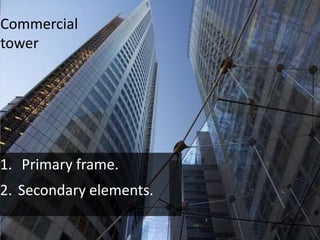
Commercial
tower
1. Primary frame.
2. Secondary elements.
Primary frame
 Three levels of basement were previously constructed
over the entire site, which was extended to 10m( two
additional levels).
 Sandstone in foundation.
 Columns have reinforced pad footings.
 Max loads on columns=40,000kN (200 elephants).
 10 permanent rock anchors are used.
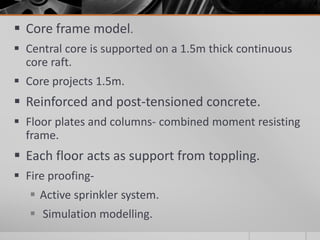
 Core frame model.
 Central core is supported on a 1.5m thick continuous
core raft.
 Core projects 1.5m.
 Reinforced and post-tensioned concrete.
 Floor plates and columns- combined moment resisting
frame.
 Each floor acts as support from toppling.
 Fire proofing-
 Active sprinkler system.
 Simulation modelling.
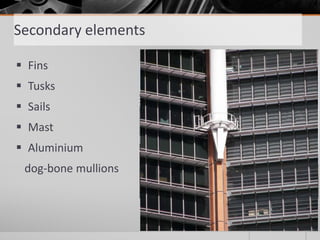
Secondary elements
 Fins
 Tusks
 Sails
 Mast
 Aluminium
dog-bone mullions
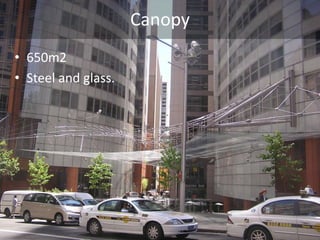
Canopy
• 650m2
• Steel and glass.
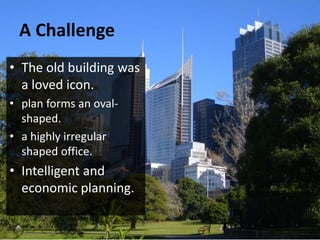
A Challenge
• The old building was
a loved icon.
• plan forms an oval-
shaped.
• a highly irregular
shaped office.
• Intelligent and
economic planning.
Critiques
"He brings to each project a great seriousness of
purpose, combined with a lyrical understanding of
materials - so that what emerges is an architecture of
extraordinary clarity and finesse."
“It is more common to conceal technology in a building
than to reveal it, and scant few who do reveal it do so
poetically. The technology that constitutes the
figurative aspect of the architecture at Aurora Place is
derived from construction, factory production and
engineering, three great form-giving agencies of
20thcentury Modernism.”
- Ar. Charles Correa, Pritzker Juror
Our Analysis
 Tech-savvy structure.
 Unique
conceptualization.
 Low response on street
levels.
 “Form follows function” ?
Thank you

Renzo piano final es

  • 1.
    Aurora Place, Sydney PresentedBy : Agresh Shrivastava 02 Kumar Snehansu 29
  • 2.
    Project Details  Designedby Renzo Piano.  Completed in December 2000  Comprises of a 44 level office tower  Comprises of 18 level residential building and supporting retail facilities.  Site Area : 4,262 sq.m.  Bounded by Philip Street, Bent Street and Macquarie Street.  Mixed- use development.
  • 3.
    • Net lettablearea of office tower : 49,500 sq.m • Overall building height : 200m • The residential building is known as Macquarie Apartments • It comprises of 62 luxury residences, all of which enjoy unobstructed views across the Royal Botanic Gardens to Sydney Harbor and the Opera House. Project Details
  • 4.
    R E N Z O P I A N O • Renzo Pianowas born in Genoa, Italy, on 14th September 1937. • Piano differentiates between himself and his architect contemporaries by characterizing his activity as a kind of scientific building.
  • 5.
    His Philosophy • RenzoPiano Building Workshop (RPBW) - light is an important theme • aesthetic sense of lightness • are deployed to make visible or “bring forth” social, cultural and tectonic truths; • to articulate a particular spatiality; • to assemble transparencies and layering; • and to de-materialise substantive elements.
  • 6.
    -Piano • “Anyone canbuild using a lot of material… Taking weight away from things, however, teaches you to make the shape of structures do the work, to understand the limits of strength of components and to replace rigidity with flexibility…”
  • 7.
    History • In 1996,in celebration of the upcoming 2000 Olympic Games in Sydney, Australia • Involved de-building of NSW State Office Block • Consisted of a 31 storey building, a 12 storey building and a 9 storey building • 98% of the base building material was recycled.
  • 8.
    Architectural aspects • Exterior •Surroundings • Interior
  • 9.
    Surroundings • View frommacquarie apartments
  • 10.
  • 11.
    Architectural influences ofsurrounding buildings • Chifley Tower • Sydney Opera House • Governor Philip Tower
  • 12.
    East • east façadeis having curved and twisted shape • Twisted to answer the wind loads. • corresponds spatially with Opera House. • bulges out slightly from its base. • reaching its maximum width at the top floors. FacadeWest • The exterior glass curtain-wall extends beyond the main frame • Counters wind load
  • 13.
    North • Directly facesOpera house • Tapered inwards-sunlight FacadeSouth • Tapered-wind loads. • Fins-on canopy.
  • 14.
  • 15.
  • 16.
    Salient features • Twobuildings with a common square, & a glass roof. • Lightweight cable and glass canopy. • Shelter to passing pedestrians.
  • 17.
    • construction activitiesexploited the permissible area/height ratio in the best possible manner. • “light angle( 43 °) ”
  • 18.
    • “skin” ismade up of a special screen-printed glass. • cream-coloured ceramic particles. • slightly curved, triangular “sail” glass extending up to 30m.
  • 19.
    Macquarie apartments • Residentsin the 15-storey Macquarie Apartments have 5 electronic horizontal glass louvers . • to trap the warmth of the sun • Each apartment runs the full storey width. • Sensors to automatic closing during a storm.
  • 20.
    Macquarie apartments • Sails •Rust-orange tiles on street level.
  • 21.
    Architectural Analysis • Light •Transparency-glass • Form
  • 22.
    Light & Glass-Transparency •glass undergoes a “… transition to nothing” • intensity of the dot screen frit coating reducing towards the edges.---visual fading • gradual dematerializing of the glazing • ever decreasing means of support.
  • 23.
  • 24.
  • 25.
    Structural analysis o Commercialtower. o Macquarie apartments. o Canopy.
  • 26.
  • 27.
    Primary frame  Threelevels of basement were previously constructed over the entire site, which was extended to 10m( two additional levels).  Sandstone in foundation.  Columns have reinforced pad footings.  Max loads on columns=40,000kN (200 elephants).  10 permanent rock anchors are used.
  • 28.
     Core framemodel.  Central core is supported on a 1.5m thick continuous core raft.  Core projects 1.5m.  Reinforced and post-tensioned concrete.  Floor plates and columns- combined moment resisting frame.  Each floor acts as support from toppling.  Fire proofing-  Active sprinkler system.  Simulation modelling.
  • 29.
    Secondary elements  Fins Tusks  Sails  Mast  Aluminium dog-bone mullions
  • 30.
  • 31.
    A Challenge • Theold building was a loved icon. • plan forms an oval- shaped. • a highly irregular shaped office. • Intelligent and economic planning.
  • 32.
    Critiques "He brings toeach project a great seriousness of purpose, combined with a lyrical understanding of materials - so that what emerges is an architecture of extraordinary clarity and finesse." “It is more common to conceal technology in a building than to reveal it, and scant few who do reveal it do so poetically. The technology that constitutes the figurative aspect of the architecture at Aurora Place is derived from construction, factory production and engineering, three great form-giving agencies of 20thcentury Modernism.” - Ar. Charles Correa, Pritzker Juror
  • 33.
    Our Analysis  Tech-savvystructure.  Unique conceptualization.  Low response on street levels.  “Form follows function” ?
  • 34.

Editor's Notes

  • #3 Aurora place is a landmark mixed use development situated in the core of Sydney’s Central Business District on the site of the former State Office Block.
  • #4  Macquarie Street is also the location of Parliament House, the State Library of New South Wales, Sydney Mint and the Reserve Bank of Australia. Part of the street is adjacent to the Royal Botanic Gardens, which is the location of Government House and the Sydney Conservatorium of Music. The term "Macquarie Street" is also used as a reference to various aspects of the NSW Government.
  • #5 not only rational, but poetic thought to the construction of buildings.
  • #20 Each apartment runs the full storey width, giving vistas from the Royal Botanic Gardens to the centre of the city.
  • #26 Technology draws only from its own reserves of physics  and mechanics, while techne precedes practical knowledge and resides, in part, in poetics
  • #29 beyond the external perimeter wall lines,…… otherwise each floor needed a centralised support system occupying valuable space within building