Religion, Warfare, and
     Sovereignty
         1540–1660
    Jessica Hammerman
Today we will

• Brief history of the Renaissance
• The Reformation (Luther & Calvin)
• Thirty Years’ War
• Document: Edict of Nantes
The Renaissance, 1350–
         1500


• Rebirth, but from what?
Features of the
           Renaissance

• Deep interest in Classics
• Culture of display and consumption
• Weakness of the Church led to rise of
 secular power and ideas
Renaissance Humanism


• Replaced the scholastic emphasis on logic
 and metaphysics with the study of language,
 literature, history, and ethics

• Revived Classical Latin as the only way to
 read and study (therefore contributed to its
 demise)
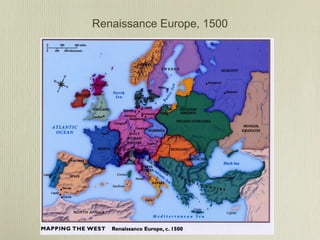
Renaissance Europe, 1500
Renaissance Art


• Botticelli
The Age of Dissent and Division,
          1500-1600
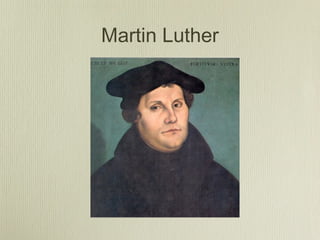
Martin Luther
Some of Luther’s Achievements


• Translated and rapidly disseminated the
 Bible in his native language, German

• Defied the church, printing several pamphlets
 and book called To the Christian Nobility
 (1520)
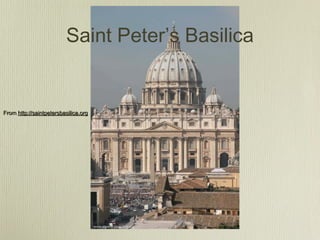
Saint Peter’s Basilica


From http://saintpetersbasilica.org
• Pope Leo X condemned Luther at Worms
 (1520)
Calvinism


• John Calvin (1509–1564)
• Urged Christians to conceive of themselves
 as chosen instruments of God

• Luther: Christians should suffer; Calvin:
 Christians should labor for God
Calvinist Ordinances
• Drunkenness:
That no one shall invite another to drink under penalty of 3 sous.

That taverns shall be closed during the sermon, under penalty that the tavern-keeper
   shall pay 3 sous, and whoever may be found therein shall pay the same amount

If anyone be found intoxicated he shall pay for the first offence 3 sous and shall be
    remanded to the consistory [church governing body]; for the second offence he shall
    be held to pay the sum of 6 sous, and for the third 10 sous and be put in prison


Songs and Dances.

If anyone sings immoral, dissolute or outrageous songs, or dance the virollet or other
    dance, he shall be put in prison for three days and then sent to the consistory.

(source: Hunt 433)
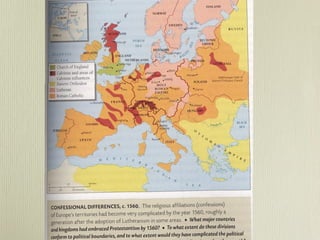
• Peace of Augsburg made Lutheranism a
 legal religion (1555)

• Calvinism spread to France, and followers
 were known as Huguenots

• 10,000 H’s died within six weeks
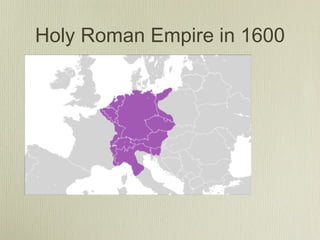
Holy Roman Empire in 1600
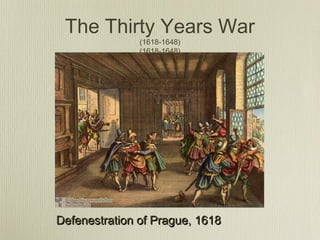
The Thirty Years War
               (1618-1648)
               (1618-1648)


Defenestration of Prague, 1618
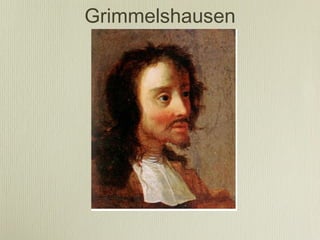
Grimmelshausen
Edict of Nantes

• Who wrote this?
• What is its message?
• When was it conceived?
• What is an edict?
• What stood out to you?
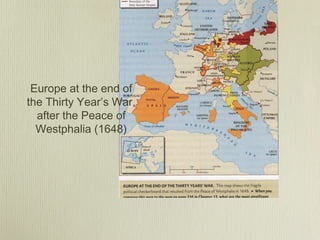
Europe at the end of
the Thirty Year’s War,
  after the Peace of
  Westphalia (1648)
Rennaisance luther religious wars

Rennaisance luther religious wars

  • 1.
    Religion, Warfare, and Sovereignty 1540–1660 Jessica Hammerman
  • 2.
    Today we will •Brief history of the Renaissance • The Reformation (Luther & Calvin) • Thirty Years’ War • Document: Edict of Nantes
  • 3.
    The Renaissance, 1350– 1500 • Rebirth, but from what?
  • 4.
    Features of the Renaissance • Deep interest in Classics • Culture of display and consumption • Weakness of the Church led to rise of secular power and ideas
  • 5.
    Renaissance Humanism • Replacedthe scholastic emphasis on logic and metaphysics with the study of language, literature, history, and ethics • Revived Classical Latin as the only way to read and study (therefore contributed to its demise)
  • 6.
  • 7.
  • 8.
    The Age ofDissent and Division, 1500-1600
  • 9.
  • 10.
    Some of Luther’sAchievements • Translated and rapidly disseminated the Bible in his native language, German • Defied the church, printing several pamphlets and book called To the Christian Nobility (1520)
  • 11.
    Saint Peter’s Basilica Fromhttp://saintpetersbasilica.org
  • 12.
    • Pope LeoX condemned Luther at Worms (1520)
  • 13.
    Calvinism • John Calvin(1509–1564) • Urged Christians to conceive of themselves as chosen instruments of God • Luther: Christians should suffer; Calvin: Christians should labor for God
  • 14.
    Calvinist Ordinances • Drunkenness: Thatno one shall invite another to drink under penalty of 3 sous. That taverns shall be closed during the sermon, under penalty that the tavern-keeper shall pay 3 sous, and whoever may be found therein shall pay the same amount If anyone be found intoxicated he shall pay for the first offence 3 sous and shall be remanded to the consistory [church governing body]; for the second offence he shall be held to pay the sum of 6 sous, and for the third 10 sous and be put in prison Songs and Dances. If anyone sings immoral, dissolute or outrageous songs, or dance the virollet or other dance, he shall be put in prison for three days and then sent to the consistory. (source: Hunt 433)
  • 15.
    • Peace ofAugsburg made Lutheranism a legal religion (1555) • Calvinism spread to France, and followers were known as Huguenots • 10,000 H’s died within six weeks
  • 17.
  • 18.
    The Thirty YearsWar (1618-1648) (1618-1648) Defenestration of Prague, 1618
  • 19.
  • 20.
    Edict of Nantes •Who wrote this? • What is its message? • When was it conceived? • What is an edict? • What stood out to you?
  • 21.
    Europe at theend of the Thirty Year’s War, after the Peace of Westphalia (1648)