
Outline
Basics of transplantation
Benefits of transplantation
Immunosuppressive medications
Common post-transplant problems
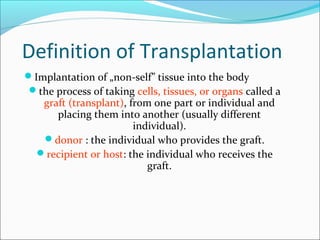
Definition of Transplantation
Implantation of „non-self” tissue into the body
the process of taking cells, tissues, or organs called a
graft (transplant), from one part or individual and
placing them into another (usually different
individual).
donor : the individual who provides the graft.
recipient or host: the individual who receives the
graft.
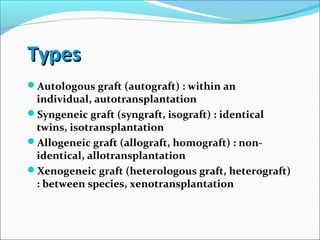
TypesTypes
Autologous graft (autograft) : within an
individual, autotransplantation
Syngeneic graft (syngraft, isograft) : identical
twins, isotransplantation
Allogeneic graft (allograft, homograft) : non-
identical, allotransplantation
Xenogeneic graft (heterologous graft, heterograft)
: between species, xenotransplantation
Basics of Transplantation
Kidney transplantation is the most effective therapy
for end-stage renal disease.
The transplanted organ can come from either a live
donor or deceased donor.
Most deceased donor organs come from brain dead
donors.
Non-standard criteria donors:
Expanded criteria donors (ECD).
Donation after cardiac death (DCD).
Classification of RenalClassification of Renal
TransplantationTransplantation
Auto-RT
Allograft RT
 Cadaveric
 Living Donor
Living unrelated
Living related
Xenograft RT (In experimental)
HISTORY OF THE RTHISTORY OF THE RT
1933 First clinical RT (Voronov);
1954 First long-term successful RT(Twin);
1958 Discovery of HLA(Human Lym Antigen);
1959 Radiation be used for immunosupp-
ression;
1961 Azathioprine (Aza);
1962 Prednisolone; Tissue Matching;
1966 Cross-Matching;
Late 1960’ Preservation the Kidney>24hr ;
1978 Clinical use of Cyclosporine(CsA).
CONTRAINDICATIONSCONTRAINDICATIONS
Active invasive infection;
Active malignance;
High probability of operative mortality;
Unsuitable anatomic situation for
technical success;
Severe psychological or financial
problem.
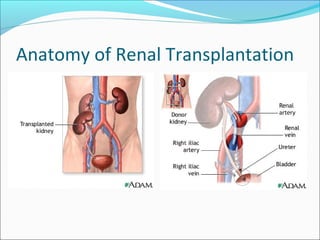
Anatomy of Renal Transplantation
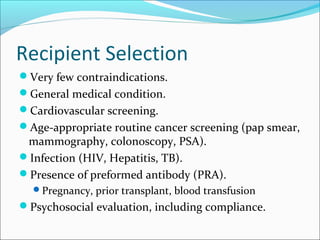
Recipient Selection
Very few contraindications.
General medical condition.
Cardiovascular screening.
Age-appropriate routine cancer screening (pap smear,
mammography, colonoscopy, PSA).
Infection (HIV, Hepatitis, TB).
Presence of preformed antibody (PRA).
Pregnancy, prior transplant, blood transfusion
Psychosocial evaluation, including compliance.
Benefits of Transplantation
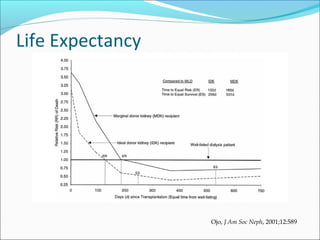
Life expectancy
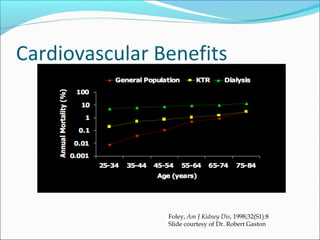
Cardiovascular benefits
Quality of life
Socioeconomic benefits
Life Expectancy
Ojo, J Am Soc Neph, 2001;12:589
Cardiovascular Benefits
Foley, Am J Kidney Dis, 1998;32(S1):8
Slide courtesy of Dr. Robert Gaston
Quality of Life
Numerous studies have detailed improved quality of
life.
Life satisfaction, physical and emotional well-being
and ability to return to work higher in transplant
recipients.
Uremic complications more fully reversed.
Fertility returns.
Socioeconomic Benefits
Increased rates of return to work.
Cost to society:
Annual cost of hemodialysis: $60,000-$80,000
First year after transplantation: >$100,000
Thereafter: $10,000 per year.
Mean cumulative costs of dialysis and transplantation
are equal for first 3-4 years, then lower for
transplantation.
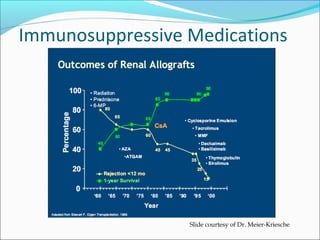
Immunosuppressive Medications
Slide courtesy of Dr. Meier-Kriesche
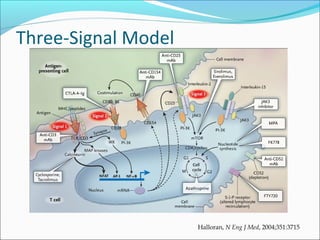
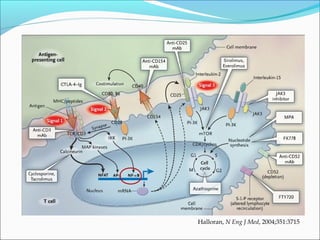
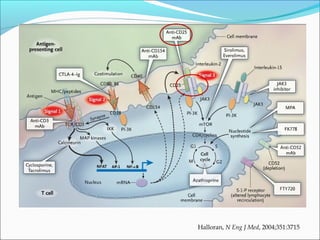
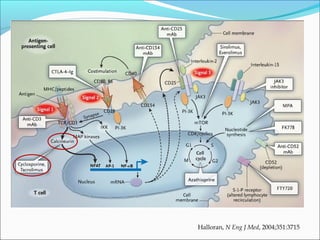
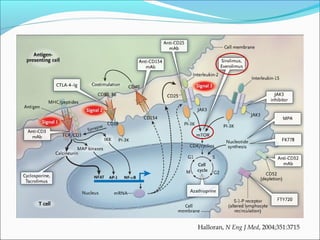
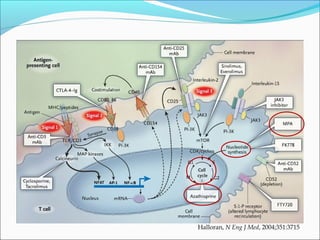
Three-Signal Model
Halloran, N Eng J Med, 2004;351:3715
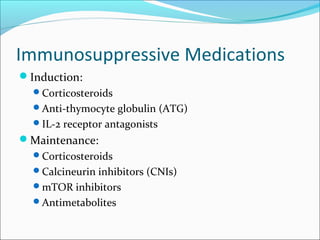
Immunosuppressive Medications
Induction:
Corticosteroids
Anti-thymocyte globulin (ATG)
IL-2 receptor antagonists
Maintenance:
Corticosteroids
Calcineurin inhibitors (CNIs)
mTOR inhibitors
Antimetabolites
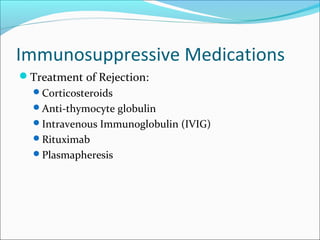
Immunosuppressive Medications
Treatment of Rejection:
Corticosteroids
Anti-thymocyte globulin
Intravenous Immunoglobulin (IVIG)
Rituximab
Plasmapheresis
Corticosteroids
Used for induction, maintenance and treatment of
rejection.
Mechanism of action:
Inhibit function of dendritic cells.
Inhibit translocation to nucleus of NF-κB.
Suppress production of IL-1, IL-2, IL-3, IL-6, TNF-α, and
γ-IFN.
Adverse effects numerous and well-known.
Halloran, N Eng J Med, 2004;351:3715
Corticosteroids
Component of >80% of transplant protocols.
Given IV at high doses (250-500 mg/day) for
induction or treatment of rejection.
Tapered to maintenance dose of 5-10 mg/day in early
post-transplant phase.
Should NOT be tapered off: increased risk of rejection
and graft loss!
Steroid free regimen: overall some benefits but graft
survival likely worse.
Anti-thymocyte Globulin
(Thymoglobulin®)
Used for induction and treatment of rejection.
Prepared by immunization of rabbits with human
lymphoid tissue.
Causes depletion of peripheral blood lymphocytes.
Administered generally via central line for 3-10 days.
Premedication required: acetaminophen,
corticosteroids and antihistamine.
Anti-thymocyte Globulin: Adverse
Effects
Infusion-related reactions: chills, fevers, arthralgias.
Lymphopenia.
Thrombocytopenia.
Prolonged immunosuppression: increased risk of
opportunistic infections (PCP, CMV, fungal).
Possibly increased risk of BK virus nephropathy.
IL-2 Receptor Blockers
Basiliximab (Simulect®
) and Daclizumab (Xenapax®
).
Block CD25 (IL-2 receptor) on activated T cells.
Used for induction only.
Almost no side effects, but also much less potent.
Halloran, N Eng J Med, 2004;351:3715
Calcineurin Inhibitors
Used for maintenance immunosuppression.
Two agents in clinical practice:
Cyclosporine (Sandimmune®
, Gengraf®
, Neoral®
, generic;
CysA)
Tacrolimus (Prograf®
, generic; FK506).
Generics NOT clinically therapeutically equivalent.
At present are key to maintenance
immunosuppression and a component of the majority
of transplant protocols.
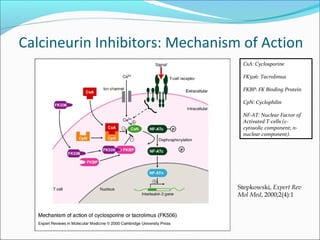
Calcineurin Inhibitors: Mechanism of Action
CsA: Cyclosporine
FK506: Tacrolimus
FKBP: FK Binding Protein
CpN: Cyclophilin
NF-AT: Nuclear Factor of
Activated T-cells (c-
cytosolic component; n-
nuclear component).
Stepkowski, Expert Rev
Mol Med, 2000;2(4):1
Halloran, N Eng J Med, 2004;351:3715
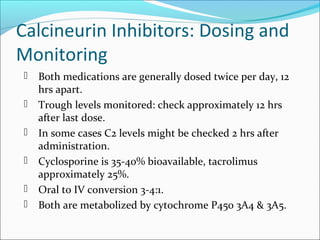
Calcineurin Inhibitors: Dosing and
Monitoring
 Both medications are generally dosed twice per day, 12
hrs apart.
 Trough levels monitored: check approximately 12 hrs
after last dose.
 In some cases C2 levels might be checked 2 hrs after
administration.
 Cyclosporine is 35-40% bioavailable, tacrolimus
approximately 25%.
 Oral to IV conversion 3-4:1.
 Both are metabolized by cytochrome P450 3A4 & 3A5.
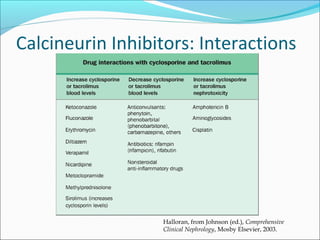
Calcineurin Inhibitors: Interactions
Halloran, from Johnson (ed.), Comprehensive
Clinical Nephrology, Mosby Elsevier, 2003.
Calcineurin Inhibitors: Interactions
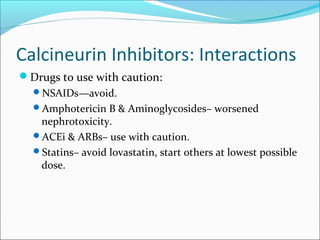
Drugs to use with caution:
NSAIDs—avoid.
Amphotericin B & Aminoglycosides– worsened
nephrotoxicity.
ACEi & ARBs– use with caution.
Statins– avoid lovastatin, start others at lowest possible
dose.
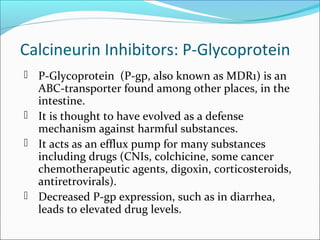
Calcineurin Inhibitors: P-Glycoprotein
 P-Glycoprotein (P-gp, also known as MDR1) is an
ABC-transporter found among other places, in the
intestine.
 It is thought to have evolved as a defense
mechanism against harmful substances.
 It acts as an efflux pump for many substances
including drugs (CNIs, colchicine, some cancer
chemotherapeutic agents, digoxin, corticosteroids,
antiretrovirals).
 Decreased P-gp expression, such as in diarrhea,
leads to elevated drug levels.
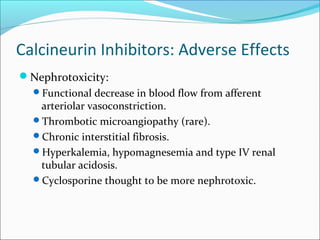
Calcineurin Inhibitors: Adverse Effects
Nephrotoxicity:
Functional decrease in blood flow from afferent
arteriolar vasoconstriction.
Thrombotic microangiopathy (rare).
Chronic interstitial fibrosis.
Hyperkalemia, hypomagnesemia and type IV renal
tubular acidosis.
Cyclosporine thought to be more nephrotoxic.
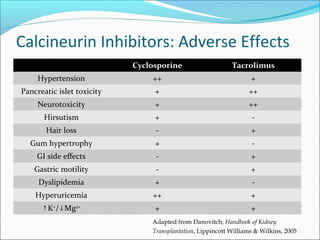
Calcineurin Inhibitors: Adverse Effects
Cyclosporine Tacrolimus
Hypertension ++ +
Pancreatic islet toxicity + ++
Neurotoxicity + ++
Hirsutism + -
Hair loss - +
Gum hypertrophy + -
GI side effects - +
Gastric motility - +
Dyslipidemia + -
Hyperuricemia ++ +
↑K+
/ Mg↓ 2+
+ +
Adapted from Danovitch, Handbook of Kidney
Transplantation, Lippincott Williams & Wilkins, 2005
mTOR Inhibitors
Target site is the mammalian target of rapamycin
(mTOR), a key regulatory kinase in cell division.
Sirolimus (Rapamune®
) only available mTOR inhibitor
in the US.
Administered once daily, 24-hour trough levels
monitored.
Also metabolized by P450 3A system, with
interactions similar to the CNIs.
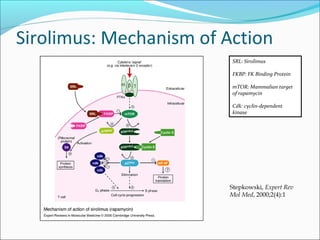
Sirolimus: Mechanism of Action
SRL: Sirolimus
FKBP: FK Binding Protein
mTOR: Mammalian target
of rapamycin
Cdk: cyclin-dependent
kinase
Stepkowski, Expert Rev
Mol Med, 2000;2(4):1
Halloran, N Eng J Med, 2004;351:3715
Sirolimus: Adverse Effects
Nephrotoxicity:
Delays recovery from ATN.
Potentiates cyclosporine nephrotoxicity.
Induces proteinuria.
Tubulotoxic.
Impairment of wound healing.
Dyslipidemia (increased LDL and TGs).
Pneumonitis.
Cytopenias and anemia.
Antimetabolites
Azathioprine (Imuran®
, generic) is a purine analogue
that is incorporated into RNA and inhibits cell
replication.
A mainstay of transplantation for 30 years, it has
largely been replaced by the below drugs.
Mycophenolate mofetil (Cellcept®
) and enteric-coated
mycophenolate sodium (Myfortic®
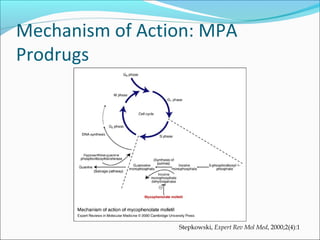
) are prodrugs of
mycophenolic acid (MPA), an inhibitor of inosine
monophosphate dehydrogenase (IMPDH).
Mechanism of Action: MPA
Prodrugs
Stepkowski, Expert Rev Mol Med, 2000;2(4):1
Halloran, N Eng J Med, 2004;351:3715
Antimetabolites: Adverse Effects
Azathioprine:
Bone marrow suppression.
Hepatitis.
Azathioprine is inactivated by xanthine oxidase,
therefore should not be used in combination with
allopurinol.
MPA prodrugs:
GI toxicity: diarrhea, nausea, esophagitis.
Leukopenia and anemia.
Not different between formulations.
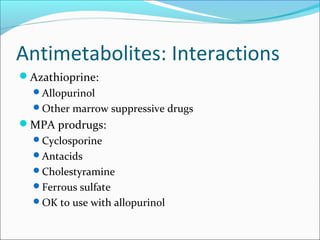
Antimetabolites: Interactions
Azathioprine:
Allopurinol
Other marrow suppressive drugs
MPA prodrugs:
Cyclosporine
Antacids
Cholestyramine
Ferrous sulfate
OK to use with allopurinol
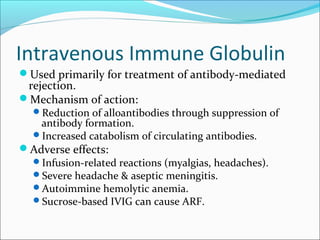
Intravenous Immune Globulin
Used primarily for treatment of antibody-mediated
rejection.
Mechanism of action:
Reduction of alloantibodies through suppression of
antibody formation.
Increased catabolism of circulating antibodies.
Adverse effects:
Infusion-related reactions (myalgias, headaches).
Severe headache & aseptic meningitis.
Autoimmine hemolytic anemia.
Sucrose-based IVIG can cause ARF.
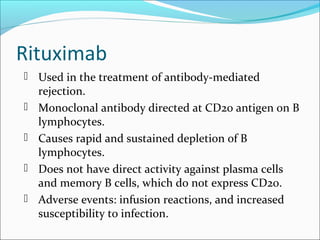
Rituximab
 Used in the treatment of antibody-mediated
rejection.
 Monoclonal antibody directed at CD20 antigen on B
lymphocytes.
 Causes rapid and sustained depletion of B
lymphocytes.
 Does not have direct activity against plasma cells
and memory B cells, which do not express CD20.
 Adverse events: infusion reactions, and increased
susceptibility to infection.
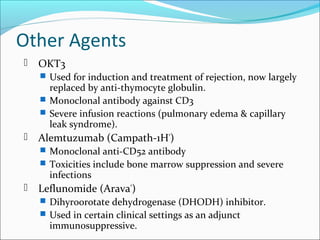
Other Agents
 OKT3
 Used for induction and treatment of rejection, now largely
replaced by anti-thymocyte globulin.
 Monoclonal antibody against CD3
 Severe infusion reactions (pulmonary edema & capillary
leak syndrome).
 Alemtuzumab (Campath-1H®
)
 Monoclonal anti-CD52 antibody
 Toxicities include bone marrow suppression and severe
infections
 Leflunomide (Arava®
)
 Dihyroorotate dehydrogenase (DHODH) inhibitor.
 Used in certain clinical settings as an adjunct
immunosuppressive.
Common Complications of
Transplantation
 Early complications
 Surgical complications
 Delayed or slow graft function
 Lymphocele
 Acute rejection
 Acute cellular rejection
 Antibody-mediated rejection
 Infectious complications
 Cytomegalovirus
 BK virus
 Others
 Malignancy
 Chronic allograft dysfunction
Surgical Complications
 Graft thrombosis:
 Caused by thrombosis of donor renal artery or vein.
 Usually happens in first week.
 Diagnosed by ultrasound with doppler studies.
 Almost always requires explant of kidney.
 Urine leak:
 Elevated creatinine.
 May or may not have abdominal pain.
 Diagnose with nuclear medicine scans (DTPA or MAG3).
 Surgical repair and/or relief of obstruction.
Delayed Graft Function
Need for dialysis in the first week after
transplantation.
Causes:
ATN from prolonged cold ischemia.
Acute rejection.
Recurrent disease.
Usually requires biopsy for diagnosis and
management.
Lymphocele
Collection of lymph caused by leakage from iliac
lymphatics.
Presents several weeks post-operatively.
Symptoms:
Compression of kidney, ureter, bladder: obstructive
uropathy and ARF.
Compression of iliac vessels: unilateral lower extremity
edema and DVT.
Abdominal mass.
Treatment is surgical.
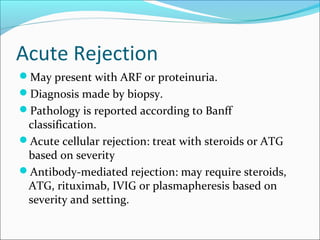
Acute Rejection
May present with ARF or proteinuria.
Diagnosis made by biopsy.
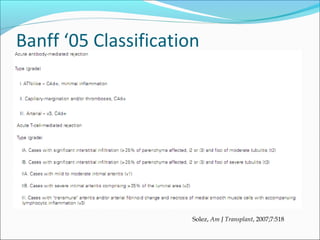
Pathology is reported according to Banff
classification.
Acute cellular rejection: treat with steroids or ATG
based on severity
Antibody-mediated rejection: may require steroids,
ATG, rituximab, IVIG or plasmapheresis based on
severity and setting.
Banff ‘05 Classification
Solez, Am J Transplant, 2007;7:518
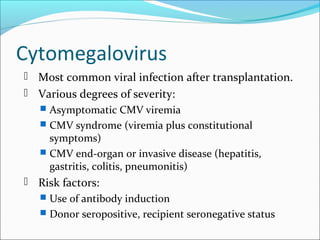
Cytomegalovirus
 Most common viral infection after transplantation.
 Various degrees of severity:
 Asymptomatic CMV viremia
 CMV syndrome (viremia plus constitutional
symptoms)
 CMV end-organ or invasive disease (hepatitis,
gastritis, colitis, pneumonitis)
 Risk factors:
 Use of antibody induction
 Donor seropositive, recipient seronegative status
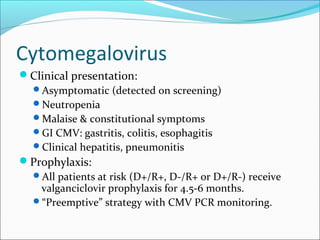
Cytomegalovirus
Clinical presentation:
Asymptomatic (detected on screening)
Neutropenia
Malaise & constitutional symptoms
GI CMV: gastritis, colitis, esophagitis
Clinical hepatitis, pneumonitis
Prophylaxis:
All patients at risk (D+/R+, D-/R+ or D+/R-) receive
valganciclovir prophylaxis for 4.5-6 months.
“Preemptive” strategy with CMV PCR monitoring.
Cytomegalovirus
CMV PCR assays have largely replaced pp65
antigenemia for diagnosis.
Low-level viremia can be treated with full-dose oral
valganciclovir (900 mg bid, dose-adjusted for renal
function).
High-grade viremia or invasive disease requires 2-4
week course of IV ganciclovir, which may be followed
by oral valganciclovir.
Ganciclovir-resistant cases might require foscarnet or
cidofovir.
BK Virus Disease
 BK virus is a member of the polyomavirus family.
 An increasingly important cause of allograft failure.
 Latent in genitourinary tract and reactivated by
immunosuppression.
 Usually presents in first year after transplantation.
 Asymptomatic viruria or viremia
 BK-associated interstitial nephritis
 BK virus nephropathy
BK Virus Disease
Screening is by BK viral PCR in blood or urine.
Presence of BK virus titers >10,000 is suggestive but
not diagnostic of BK nephropathy.
Diagnosis can only be established by biopsy.
Options for therapy:
Judiciously reduce immunosuppression
Use of leflunomide
IVIG (especially in simultaneous rejection & BK
nephropathy).
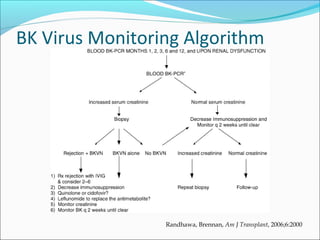
BK Virus Monitoring Algorithm
Randhawa, Brennan, Am J Transplant, 2006;6:2000
Other Infections
Transplant patients have increased susceptibility to
all other common infections.
Opportunistic infections can also be seen:
Pneumocystis jirovicii pneumonia
Candida infection
Toxoplasmosis
Nocardiosis
Cryptococcus infections
Malignancy
 Recipient of organ transplants are at higher risk of
developing malignancy.
 May be related to impaired immune surveillance as
a result of immunosuppression.
 Skin cancer most common: sun protection
mandatory.
 Routine cancer screening.
 Specific malignancies:
 Kaposi sarcoma
 Post-transplant lymphoproliferative disorder (PTLD)
Chronic Allograft Dysfunction
Persistent rise in serum creatinine and worsening
GFR over weeks to months is termed chronic allograft
dysfunction.
Histological counterpart is chronic allograft
nephropathy (CAN).
Characterized by nonspecific interstitial fibrosis and
tubular atrophy.
Usually irreversible and will lead to allograft failure
and need for dialysis or retransplantation.
Chronic Allograft Dysfunction: Why
Do Grafts Fail?
Chronic low-grade immune injury
Long-standing hypertension
Recurrent disease (diabetic nephropathy or
glomerulonephritis)
Repeated episodes of acute rejection
Donor disease
Calcineurin inhibitor nephrotoxicity
THANK YOU.
ANY QUESTIONS?

Kidney transplant and immunosupression

  • 2.
    Outline Basics of transplantation Benefitsof transplantation Immunosuppressive medications Common post-transplant problems
  • 3.
    Definition of Transplantation Implantationof „non-self” tissue into the body the process of taking cells, tissues, or organs called a graft (transplant), from one part or individual and placing them into another (usually different individual). donor : the individual who provides the graft. recipient or host: the individual who receives the graft.
  • 4.
    TypesTypes Autologous graft (autograft): within an individual, autotransplantation Syngeneic graft (syngraft, isograft) : identical twins, isotransplantation Allogeneic graft (allograft, homograft) : non- identical, allotransplantation Xenogeneic graft (heterologous graft, heterograft) : between species, xenotransplantation
  • 5.
    Basics of Transplantation Kidneytransplantation is the most effective therapy for end-stage renal disease. The transplanted organ can come from either a live donor or deceased donor. Most deceased donor organs come from brain dead donors. Non-standard criteria donors: Expanded criteria donors (ECD). Donation after cardiac death (DCD).
  • 6.
    Classification of RenalClassificationof Renal TransplantationTransplantation Auto-RT Allograft RT  Cadaveric  Living Donor Living unrelated Living related Xenograft RT (In experimental)
  • 7.
    HISTORY OF THERTHISTORY OF THE RT 1933 First clinical RT (Voronov); 1954 First long-term successful RT(Twin); 1958 Discovery of HLA(Human Lym Antigen); 1959 Radiation be used for immunosupp- ression; 1961 Azathioprine (Aza); 1962 Prednisolone; Tissue Matching; 1966 Cross-Matching; Late 1960’ Preservation the Kidney>24hr ; 1978 Clinical use of Cyclosporine(CsA).
  • 8.
    CONTRAINDICATIONSCONTRAINDICATIONS Active invasive infection; Activemalignance; High probability of operative mortality; Unsuitable anatomic situation for technical success; Severe psychological or financial problem.
  • 9.
    Anatomy of RenalTransplantation
  • 10.
    Recipient Selection Very fewcontraindications. General medical condition. Cardiovascular screening. Age-appropriate routine cancer screening (pap smear, mammography, colonoscopy, PSA). Infection (HIV, Hepatitis, TB). Presence of preformed antibody (PRA). Pregnancy, prior transplant, blood transfusion Psychosocial evaluation, including compliance.
  • 12.
    Benefits of Transplantation Lifeexpectancy Cardiovascular benefits Quality of life Socioeconomic benefits
  • 13.
    Life Expectancy Ojo, JAm Soc Neph, 2001;12:589
  • 14.
    Cardiovascular Benefits Foley, AmJ Kidney Dis, 1998;32(S1):8 Slide courtesy of Dr. Robert Gaston
  • 15.
    Quality of Life Numerousstudies have detailed improved quality of life. Life satisfaction, physical and emotional well-being and ability to return to work higher in transplant recipients. Uremic complications more fully reversed. Fertility returns.
  • 16.
    Socioeconomic Benefits Increased ratesof return to work. Cost to society: Annual cost of hemodialysis: $60,000-$80,000 First year after transplantation: >$100,000 Thereafter: $10,000 per year. Mean cumulative costs of dialysis and transplantation are equal for first 3-4 years, then lower for transplantation.
  • 17.
  • 18.
    Three-Signal Model Halloran, NEng J Med, 2004;351:3715
  • 19.
    Immunosuppressive Medications Induction: Corticosteroids Anti-thymocyte globulin(ATG) IL-2 receptor antagonists Maintenance: Corticosteroids Calcineurin inhibitors (CNIs) mTOR inhibitors Antimetabolites
  • 20.
    Immunosuppressive Medications Treatment ofRejection: Corticosteroids Anti-thymocyte globulin Intravenous Immunoglobulin (IVIG) Rituximab Plasmapheresis
  • 21.
    Corticosteroids Used for induction,maintenance and treatment of rejection. Mechanism of action: Inhibit function of dendritic cells. Inhibit translocation to nucleus of NF-κB. Suppress production of IL-1, IL-2, IL-3, IL-6, TNF-α, and γ-IFN. Adverse effects numerous and well-known.
  • 22.
    Halloran, N EngJ Med, 2004;351:3715
  • 23.
    Corticosteroids Component of >80%of transplant protocols. Given IV at high doses (250-500 mg/day) for induction or treatment of rejection. Tapered to maintenance dose of 5-10 mg/day in early post-transplant phase. Should NOT be tapered off: increased risk of rejection and graft loss! Steroid free regimen: overall some benefits but graft survival likely worse.
  • 24.
    Anti-thymocyte Globulin (Thymoglobulin®) Used forinduction and treatment of rejection. Prepared by immunization of rabbits with human lymphoid tissue. Causes depletion of peripheral blood lymphocytes. Administered generally via central line for 3-10 days. Premedication required: acetaminophen, corticosteroids and antihistamine.
  • 25.
    Anti-thymocyte Globulin: Adverse Effects Infusion-relatedreactions: chills, fevers, arthralgias. Lymphopenia. Thrombocytopenia. Prolonged immunosuppression: increased risk of opportunistic infections (PCP, CMV, fungal). Possibly increased risk of BK virus nephropathy.
  • 26.
    IL-2 Receptor Blockers Basiliximab(Simulect® ) and Daclizumab (Xenapax® ). Block CD25 (IL-2 receptor) on activated T cells. Used for induction only. Almost no side effects, but also much less potent.
  • 27.
    Halloran, N EngJ Med, 2004;351:3715
  • 28.
    Calcineurin Inhibitors Used formaintenance immunosuppression. Two agents in clinical practice: Cyclosporine (Sandimmune® , Gengraf® , Neoral® , generic; CysA) Tacrolimus (Prograf® , generic; FK506). Generics NOT clinically therapeutically equivalent. At present are key to maintenance immunosuppression and a component of the majority of transplant protocols.
  • 29.
    Calcineurin Inhibitors: Mechanismof Action CsA: Cyclosporine FK506: Tacrolimus FKBP: FK Binding Protein CpN: Cyclophilin NF-AT: Nuclear Factor of Activated T-cells (c- cytosolic component; n- nuclear component). Stepkowski, Expert Rev Mol Med, 2000;2(4):1
  • 30.
    Halloran, N EngJ Med, 2004;351:3715
  • 31.
    Calcineurin Inhibitors: Dosingand Monitoring  Both medications are generally dosed twice per day, 12 hrs apart.  Trough levels monitored: check approximately 12 hrs after last dose.  In some cases C2 levels might be checked 2 hrs after administration.  Cyclosporine is 35-40% bioavailable, tacrolimus approximately 25%.  Oral to IV conversion 3-4:1.  Both are metabolized by cytochrome P450 3A4 & 3A5.
  • 32.
    Calcineurin Inhibitors: Interactions Halloran,from Johnson (ed.), Comprehensive Clinical Nephrology, Mosby Elsevier, 2003.
  • 33.
    Calcineurin Inhibitors: Interactions Drugsto use with caution: NSAIDs—avoid. Amphotericin B & Aminoglycosides– worsened nephrotoxicity. ACEi & ARBs– use with caution. Statins– avoid lovastatin, start others at lowest possible dose.
  • 34.
    Calcineurin Inhibitors: P-Glycoprotein P-Glycoprotein (P-gp, also known as MDR1) is an ABC-transporter found among other places, in the intestine.  It is thought to have evolved as a defense mechanism against harmful substances.  It acts as an efflux pump for many substances including drugs (CNIs, colchicine, some cancer chemotherapeutic agents, digoxin, corticosteroids, antiretrovirals).  Decreased P-gp expression, such as in diarrhea, leads to elevated drug levels.
  • 35.
    Calcineurin Inhibitors: AdverseEffects Nephrotoxicity: Functional decrease in blood flow from afferent arteriolar vasoconstriction. Thrombotic microangiopathy (rare). Chronic interstitial fibrosis. Hyperkalemia, hypomagnesemia and type IV renal tubular acidosis. Cyclosporine thought to be more nephrotoxic.
  • 36.
    Calcineurin Inhibitors: AdverseEffects Cyclosporine Tacrolimus Hypertension ++ + Pancreatic islet toxicity + ++ Neurotoxicity + ++ Hirsutism + - Hair loss - + Gum hypertrophy + - GI side effects - + Gastric motility - + Dyslipidemia + - Hyperuricemia ++ + ↑K+ / Mg↓ 2+ + + Adapted from Danovitch, Handbook of Kidney Transplantation, Lippincott Williams & Wilkins, 2005
  • 37.
    mTOR Inhibitors Target siteis the mammalian target of rapamycin (mTOR), a key regulatory kinase in cell division. Sirolimus (Rapamune® ) only available mTOR inhibitor in the US. Administered once daily, 24-hour trough levels monitored. Also metabolized by P450 3A system, with interactions similar to the CNIs.
  • 38.
    Sirolimus: Mechanism ofAction SRL: Sirolimus FKBP: FK Binding Protein mTOR: Mammalian target of rapamycin Cdk: cyclin-dependent kinase Stepkowski, Expert Rev Mol Med, 2000;2(4):1
  • 39.
    Halloran, N EngJ Med, 2004;351:3715
  • 40.
    Sirolimus: Adverse Effects Nephrotoxicity: Delaysrecovery from ATN. Potentiates cyclosporine nephrotoxicity. Induces proteinuria. Tubulotoxic. Impairment of wound healing. Dyslipidemia (increased LDL and TGs). Pneumonitis. Cytopenias and anemia.
  • 41.
    Antimetabolites Azathioprine (Imuran® , generic)is a purine analogue that is incorporated into RNA and inhibits cell replication. A mainstay of transplantation for 30 years, it has largely been replaced by the below drugs. Mycophenolate mofetil (Cellcept® ) and enteric-coated mycophenolate sodium (Myfortic® ) are prodrugs of mycophenolic acid (MPA), an inhibitor of inosine monophosphate dehydrogenase (IMPDH).
  • 42.
    Mechanism of Action:MPA Prodrugs Stepkowski, Expert Rev Mol Med, 2000;2(4):1
  • 43.
    Halloran, N EngJ Med, 2004;351:3715
  • 44.
    Antimetabolites: Adverse Effects Azathioprine: Bonemarrow suppression. Hepatitis. Azathioprine is inactivated by xanthine oxidase, therefore should not be used in combination with allopurinol. MPA prodrugs: GI toxicity: diarrhea, nausea, esophagitis. Leukopenia and anemia. Not different between formulations.
  • 45.
    Antimetabolites: Interactions Azathioprine: Allopurinol Other marrowsuppressive drugs MPA prodrugs: Cyclosporine Antacids Cholestyramine Ferrous sulfate OK to use with allopurinol
  • 46.
    Intravenous Immune Globulin Usedprimarily for treatment of antibody-mediated rejection. Mechanism of action: Reduction of alloantibodies through suppression of antibody formation. Increased catabolism of circulating antibodies. Adverse effects: Infusion-related reactions (myalgias, headaches). Severe headache & aseptic meningitis. Autoimmine hemolytic anemia. Sucrose-based IVIG can cause ARF.
  • 47.
    Rituximab  Used inthe treatment of antibody-mediated rejection.  Monoclonal antibody directed at CD20 antigen on B lymphocytes.  Causes rapid and sustained depletion of B lymphocytes.  Does not have direct activity against plasma cells and memory B cells, which do not express CD20.  Adverse events: infusion reactions, and increased susceptibility to infection.
  • 48.
    Other Agents  OKT3 Used for induction and treatment of rejection, now largely replaced by anti-thymocyte globulin.  Monoclonal antibody against CD3  Severe infusion reactions (pulmonary edema & capillary leak syndrome).  Alemtuzumab (Campath-1H® )  Monoclonal anti-CD52 antibody  Toxicities include bone marrow suppression and severe infections  Leflunomide (Arava® )  Dihyroorotate dehydrogenase (DHODH) inhibitor.  Used in certain clinical settings as an adjunct immunosuppressive.
  • 49.
    Common Complications of Transplantation Early complications  Surgical complications  Delayed or slow graft function  Lymphocele  Acute rejection  Acute cellular rejection  Antibody-mediated rejection  Infectious complications  Cytomegalovirus  BK virus  Others  Malignancy  Chronic allograft dysfunction
  • 50.
    Surgical Complications  Graftthrombosis:  Caused by thrombosis of donor renal artery or vein.  Usually happens in first week.  Diagnosed by ultrasound with doppler studies.  Almost always requires explant of kidney.  Urine leak:  Elevated creatinine.  May or may not have abdominal pain.  Diagnose with nuclear medicine scans (DTPA or MAG3).  Surgical repair and/or relief of obstruction.
  • 51.
    Delayed Graft Function Needfor dialysis in the first week after transplantation. Causes: ATN from prolonged cold ischemia. Acute rejection. Recurrent disease. Usually requires biopsy for diagnosis and management.
  • 52.
    Lymphocele Collection of lymphcaused by leakage from iliac lymphatics. Presents several weeks post-operatively. Symptoms: Compression of kidney, ureter, bladder: obstructive uropathy and ARF. Compression of iliac vessels: unilateral lower extremity edema and DVT. Abdominal mass. Treatment is surgical.
  • 53.
    Acute Rejection May presentwith ARF or proteinuria. Diagnosis made by biopsy. Pathology is reported according to Banff classification. Acute cellular rejection: treat with steroids or ATG based on severity Antibody-mediated rejection: may require steroids, ATG, rituximab, IVIG or plasmapheresis based on severity and setting.
  • 54.
    Banff ‘05 Classification Solez,Am J Transplant, 2007;7:518
  • 55.
    Cytomegalovirus  Most commonviral infection after transplantation.  Various degrees of severity:  Asymptomatic CMV viremia  CMV syndrome (viremia plus constitutional symptoms)  CMV end-organ or invasive disease (hepatitis, gastritis, colitis, pneumonitis)  Risk factors:  Use of antibody induction  Donor seropositive, recipient seronegative status
  • 56.
    Cytomegalovirus Clinical presentation: Asymptomatic (detectedon screening) Neutropenia Malaise & constitutional symptoms GI CMV: gastritis, colitis, esophagitis Clinical hepatitis, pneumonitis Prophylaxis: All patients at risk (D+/R+, D-/R+ or D+/R-) receive valganciclovir prophylaxis for 4.5-6 months. “Preemptive” strategy with CMV PCR monitoring.
  • 57.
    Cytomegalovirus CMV PCR assayshave largely replaced pp65 antigenemia for diagnosis. Low-level viremia can be treated with full-dose oral valganciclovir (900 mg bid, dose-adjusted for renal function). High-grade viremia or invasive disease requires 2-4 week course of IV ganciclovir, which may be followed by oral valganciclovir. Ganciclovir-resistant cases might require foscarnet or cidofovir.
  • 58.
    BK Virus Disease BK virus is a member of the polyomavirus family.  An increasingly important cause of allograft failure.  Latent in genitourinary tract and reactivated by immunosuppression.  Usually presents in first year after transplantation.  Asymptomatic viruria or viremia  BK-associated interstitial nephritis  BK virus nephropathy
  • 59.
    BK Virus Disease Screeningis by BK viral PCR in blood or urine. Presence of BK virus titers >10,000 is suggestive but not diagnostic of BK nephropathy. Diagnosis can only be established by biopsy. Options for therapy: Judiciously reduce immunosuppression Use of leflunomide IVIG (especially in simultaneous rejection & BK nephropathy).
  • 60.
    BK Virus MonitoringAlgorithm Randhawa, Brennan, Am J Transplant, 2006;6:2000
  • 61.
    Other Infections Transplant patientshave increased susceptibility to all other common infections. Opportunistic infections can also be seen: Pneumocystis jirovicii pneumonia Candida infection Toxoplasmosis Nocardiosis Cryptococcus infections
  • 62.
    Malignancy  Recipient oforgan transplants are at higher risk of developing malignancy.  May be related to impaired immune surveillance as a result of immunosuppression.  Skin cancer most common: sun protection mandatory.  Routine cancer screening.  Specific malignancies:  Kaposi sarcoma  Post-transplant lymphoproliferative disorder (PTLD)
  • 63.
    Chronic Allograft Dysfunction Persistentrise in serum creatinine and worsening GFR over weeks to months is termed chronic allograft dysfunction. Histological counterpart is chronic allograft nephropathy (CAN). Characterized by nonspecific interstitial fibrosis and tubular atrophy. Usually irreversible and will lead to allograft failure and need for dialysis or retransplantation.
  • 64.
    Chronic Allograft Dysfunction:Why Do Grafts Fail? Chronic low-grade immune injury Long-standing hypertension Recurrent disease (diabetic nephropathy or glomerulonephritis) Repeated episodes of acute rejection Donor disease Calcineurin inhibitor nephrotoxicity
  • 65.