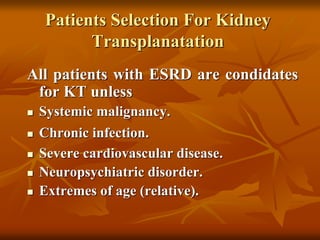
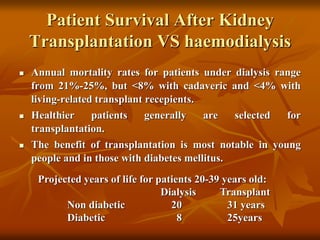
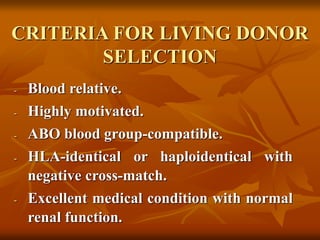
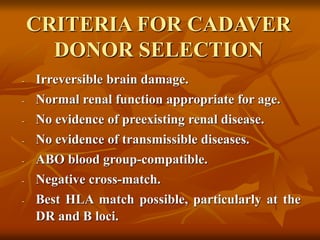
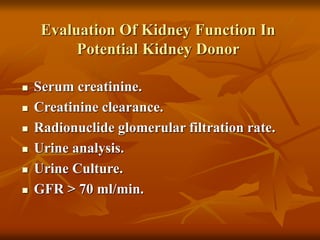
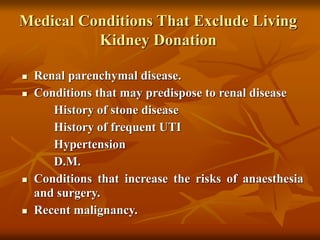
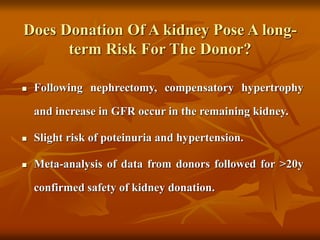
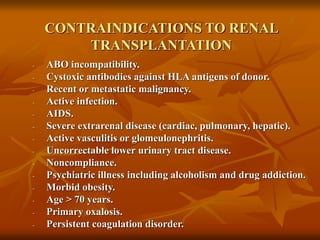
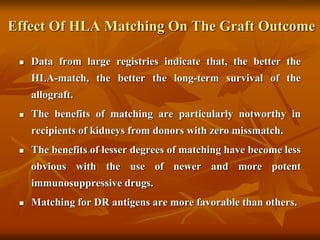
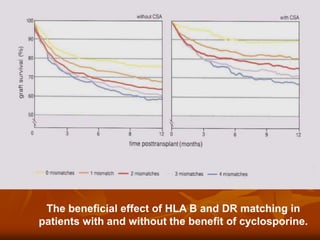
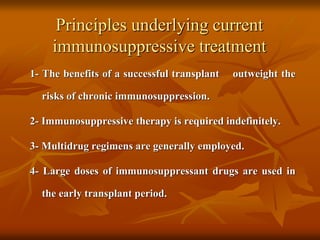
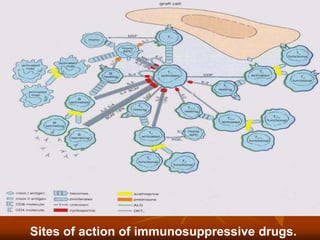
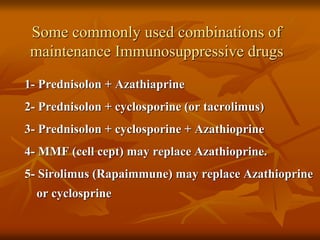
Renal transplantation provides better outcomes than dialysis for patients with end-stage renal disease. Candidates are evaluated for medical contraindications and kidney function is assessed in living donors. HLA matching and negative cross-matching between donor and recipient improve graft survival. While immunosuppression carries risks, multidrug regimens can prevent rejection and maximize allograft longevity. Long-term monitoring is needed due to potential complications. Overall, transplantation usually improves quality and length of life for eligible patients with kidney failure.






![Human Renal Transplantation [Dr. Edmond Wong]](https://cdn.slidesharecdn.com/ss_thumbnails/humanrenaltransplantationedmond-140716214736-phpapp02-thumbnail.jpg?width=640&height=640&fit=bounds)


