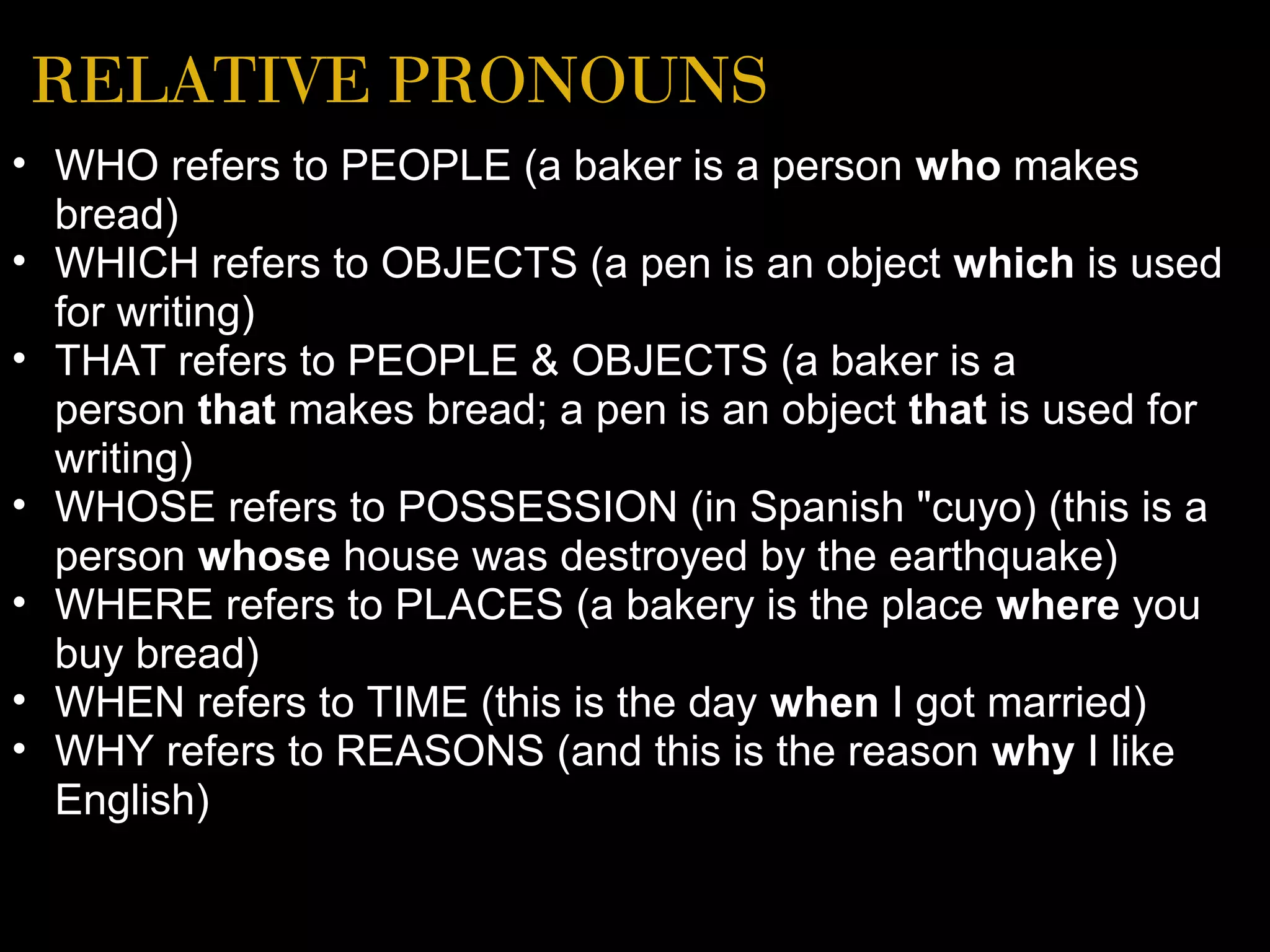
RELATIVE PRONOUNS
• WHO refers to PEOPLE (a baker is a person who makes
  bread)
• WHICH refers to OBJECTS (a pen is an object which is used
  for writing)
• THAT refers to PEOPLE & OBJECTS (a baker is a
  person that makes bread; a pen is an object that is used for
  writing)
• WHOSE refers to POSSESSION (in Spanish "cuyo) (this is a
  person whose house was destroyed by the earthquake)
• WHERE refers to PLACES (a bakery is the place where you
  buy bread)
• WHEN refers to TIME (this is the day when I got married)
• WHY refers to REASONS (and this is the reason why I like
  English)
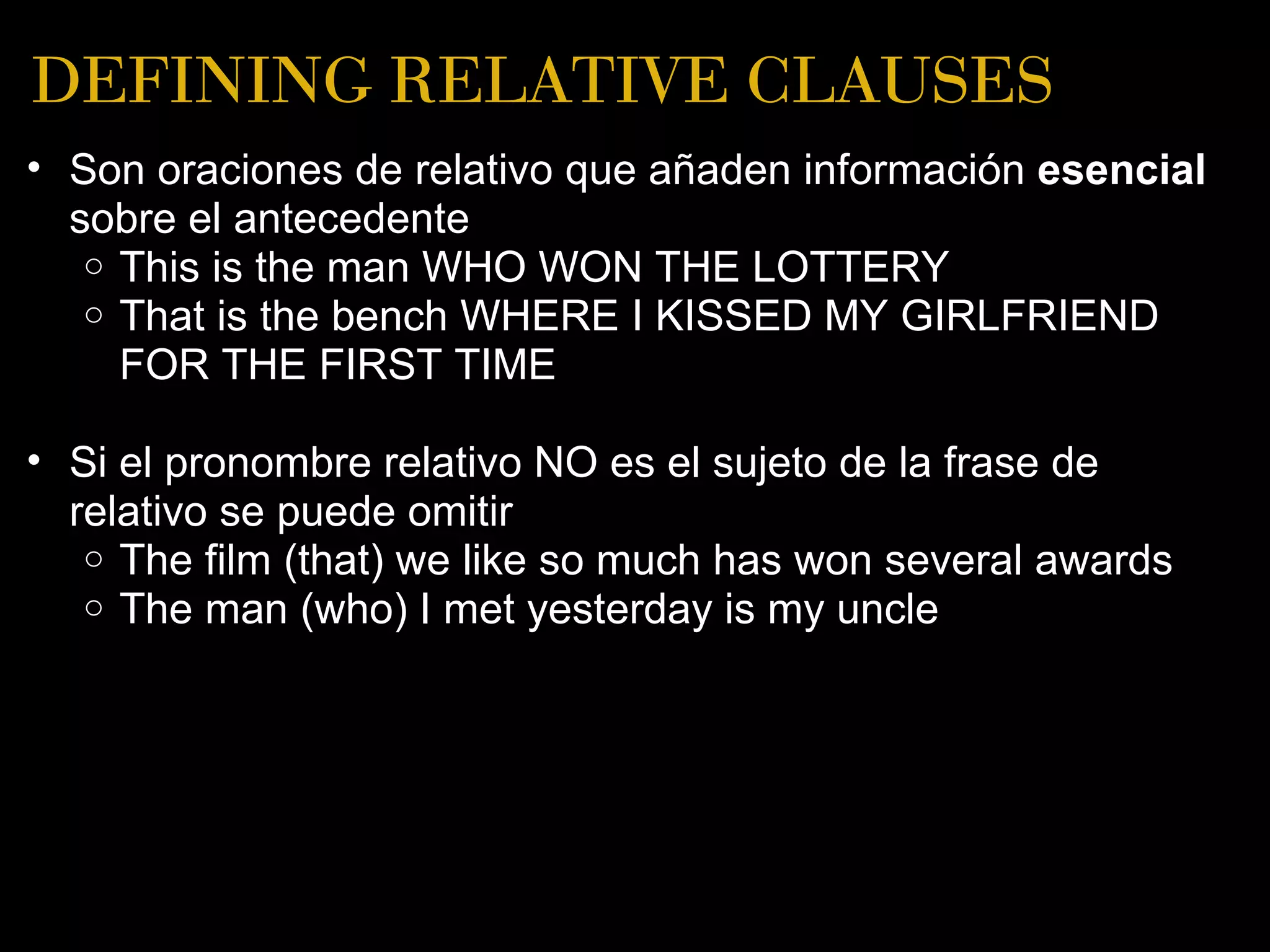
DEFINING RELATIVE CLAUSES
• Son oraciones de relativo que añaden información esencial
  sobre el antecedente
   o This is the man WHO WON THE LOTTERY
   o That is the bench WHERE I KISSED MY GIRLFRIEND
     FOR THE FIRST TIME

• Si el pronombre relativo NO es el sujeto de la frase de
  relativo se puede omitir
   o The film (that) we like so much has won several awards
   o The man (who) I met yesterday is my uncle
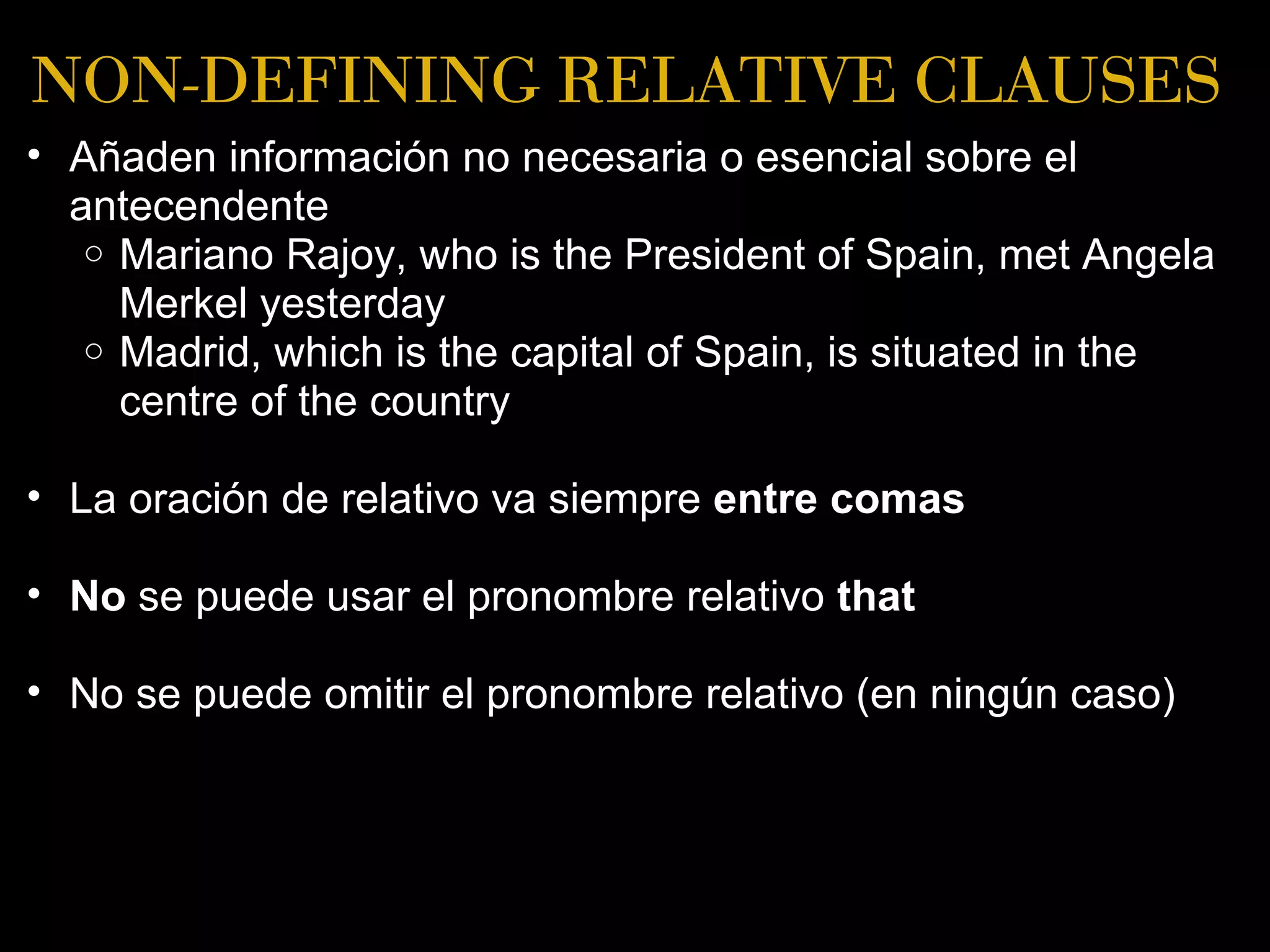
NON-DEFINING RELATIVE CLAUSES
• Añaden información no necesaria o esencial sobre el
  antecendente
   o Mariano Rajoy, who is the President of Spain, met Angela
     Merkel yesterday
   o Madrid, which is the capital of Spain, is situated in the
     centre of the country

• La oración de relativo va siempre entre comas

• No se puede usar el pronombre relativo that

• No se puede omitir el pronombre relativo (en ningún caso)
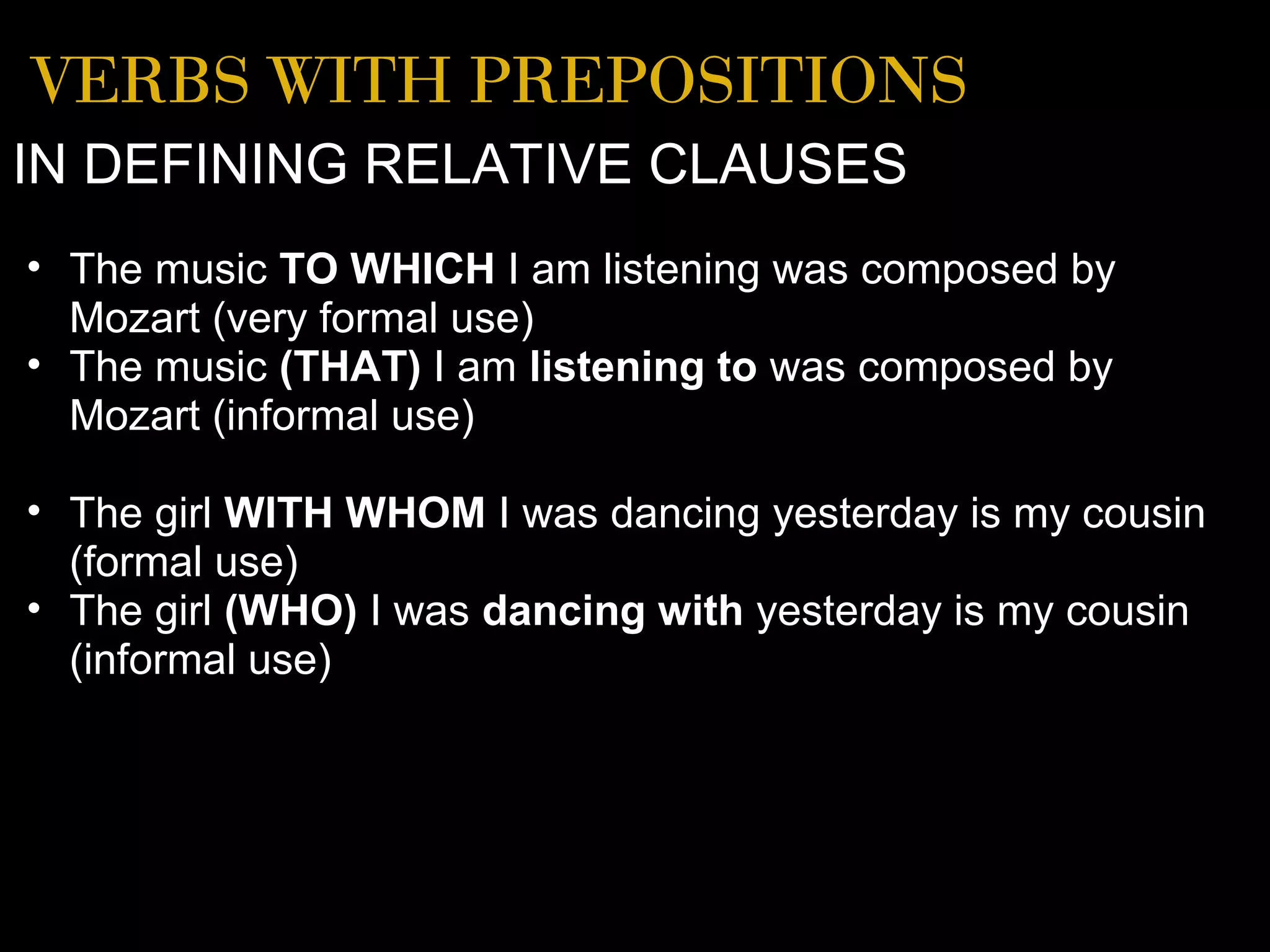
VERBS WITH PREPOSITIONS
IN DEFINING RELATIVE CLAUSES
• The music TO WHICH I am listening was composed by
  Mozart (very formal use)
• The music (THAT) I am listening to was composed by
  Mozart (informal use)

• The girl WITH WHOM I was dancing yesterday is my cousin
  (formal use)
• The girl (WHO) I was dancing with yesterday is my cousin
  (informal use)
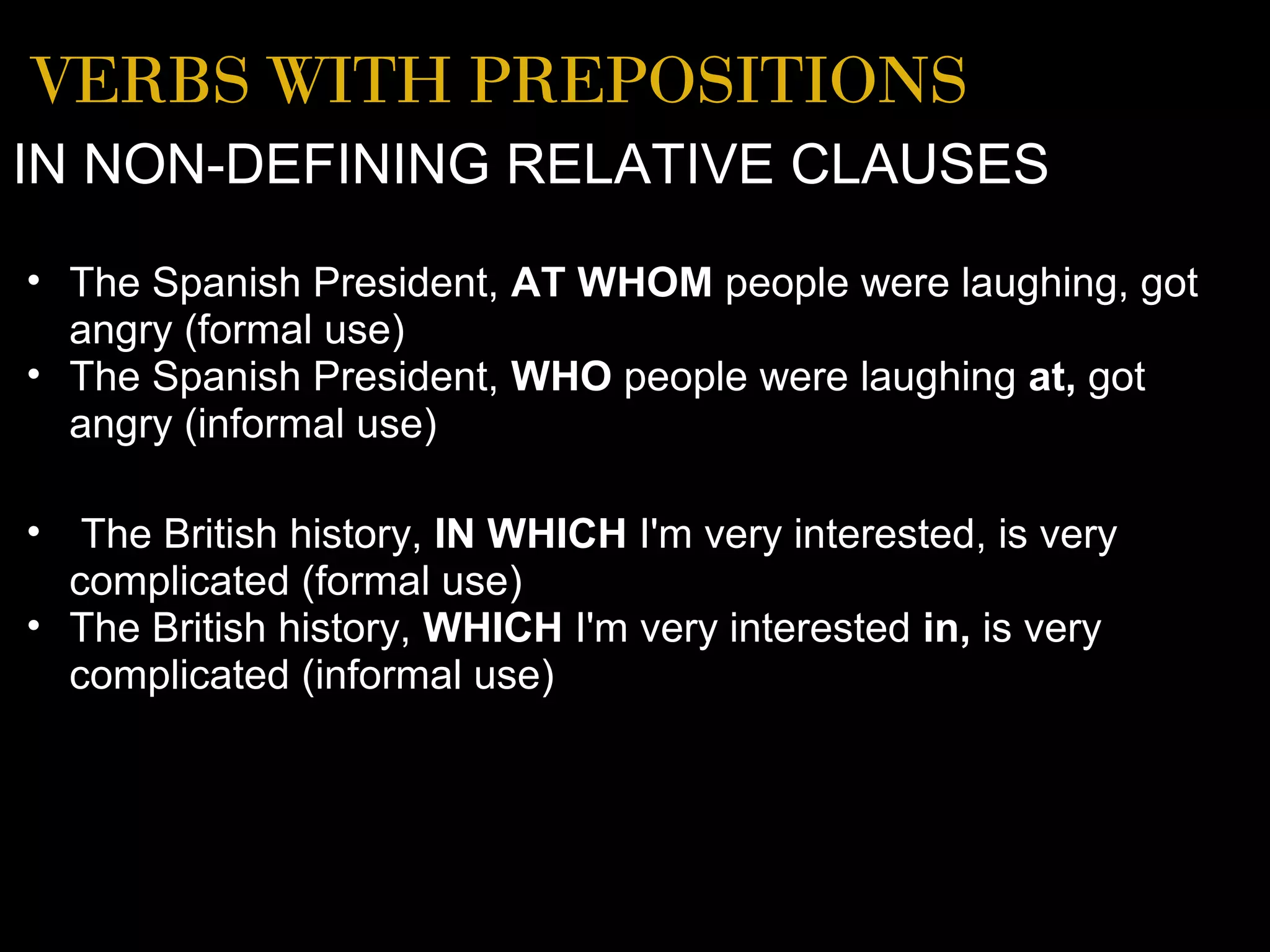
VERBS WITH PREPOSITIONS
IN NON-DEFINING RELATIVE CLAUSES
• The Spanish President, AT WHOM people were laughing, got
  angry (formal use)
• The Spanish President, WHO people were laughing at, got
  angry (informal use)

• The British history, IN WHICH I'm very interested, is very
  complicated (formal use)
• The British history, WHICH I'm very interested in, is very
  complicated (informal use)
EXERCISES
If you need more practice, you can try the following links

•   Click here
•   Click here
•   Click here
•   Click here
•   Click here
•   Click here
•   Click here
•   Click here
•   Click here
•   Click here
•   Click here

Relative clauses

  • 2.
    RELATIVE PRONOUNS • WHOrefers to PEOPLE (a baker is a person who makes bread) • WHICH refers to OBJECTS (a pen is an object which is used for writing) • THAT refers to PEOPLE & OBJECTS (a baker is a person that makes bread; a pen is an object that is used for writing) • WHOSE refers to POSSESSION (in Spanish "cuyo) (this is a person whose house was destroyed by the earthquake) • WHERE refers to PLACES (a bakery is the place where you buy bread) • WHEN refers to TIME (this is the day when I got married) • WHY refers to REASONS (and this is the reason why I like English)
  • 3.
    DEFINING RELATIVE CLAUSES •Son oraciones de relativo que añaden información esencial sobre el antecedente o This is the man WHO WON THE LOTTERY o That is the bench WHERE I KISSED MY GIRLFRIEND FOR THE FIRST TIME • Si el pronombre relativo NO es el sujeto de la frase de relativo se puede omitir o The film (that) we like so much has won several awards o The man (who) I met yesterday is my uncle
  • 4.
    NON-DEFINING RELATIVE CLAUSES •Añaden información no necesaria o esencial sobre el antecendente o Mariano Rajoy, who is the President of Spain, met Angela Merkel yesterday o Madrid, which is the capital of Spain, is situated in the centre of the country • La oración de relativo va siempre entre comas • No se puede usar el pronombre relativo that • No se puede omitir el pronombre relativo (en ningún caso)
  • 5.
    VERBS WITH PREPOSITIONS INDEFINING RELATIVE CLAUSES • The music TO WHICH I am listening was composed by Mozart (very formal use) • The music (THAT) I am listening to was composed by Mozart (informal use) • The girl WITH WHOM I was dancing yesterday is my cousin (formal use) • The girl (WHO) I was dancing with yesterday is my cousin (informal use)
  • 6.
    VERBS WITH PREPOSITIONS INNON-DEFINING RELATIVE CLAUSES • The Spanish President, AT WHOM people were laughing, got angry (formal use) • The Spanish President, WHO people were laughing at, got angry (informal use) • The British history, IN WHICH I'm very interested, is very complicated (formal use) • The British history, WHICH I'm very interested in, is very complicated (informal use)
  • 7.
    EXERCISES If you needmore practice, you can try the following links • Click here • Click here • Click here • Click here • Click here • Click here • Click here • Click here • Click here • Click here • Click here