By,
Miss. Rekha B. Marbate
PG- I
CONTENTS
• Introduction to Respiratory cycle
• Muscles of Respiration
• Mechanism of Respiration
•Pressure acting at rest
•Pressure changes during respiration
What is respiration?
Respiration is the process by which oxygen is
taken in and carbon dioxide is given out.
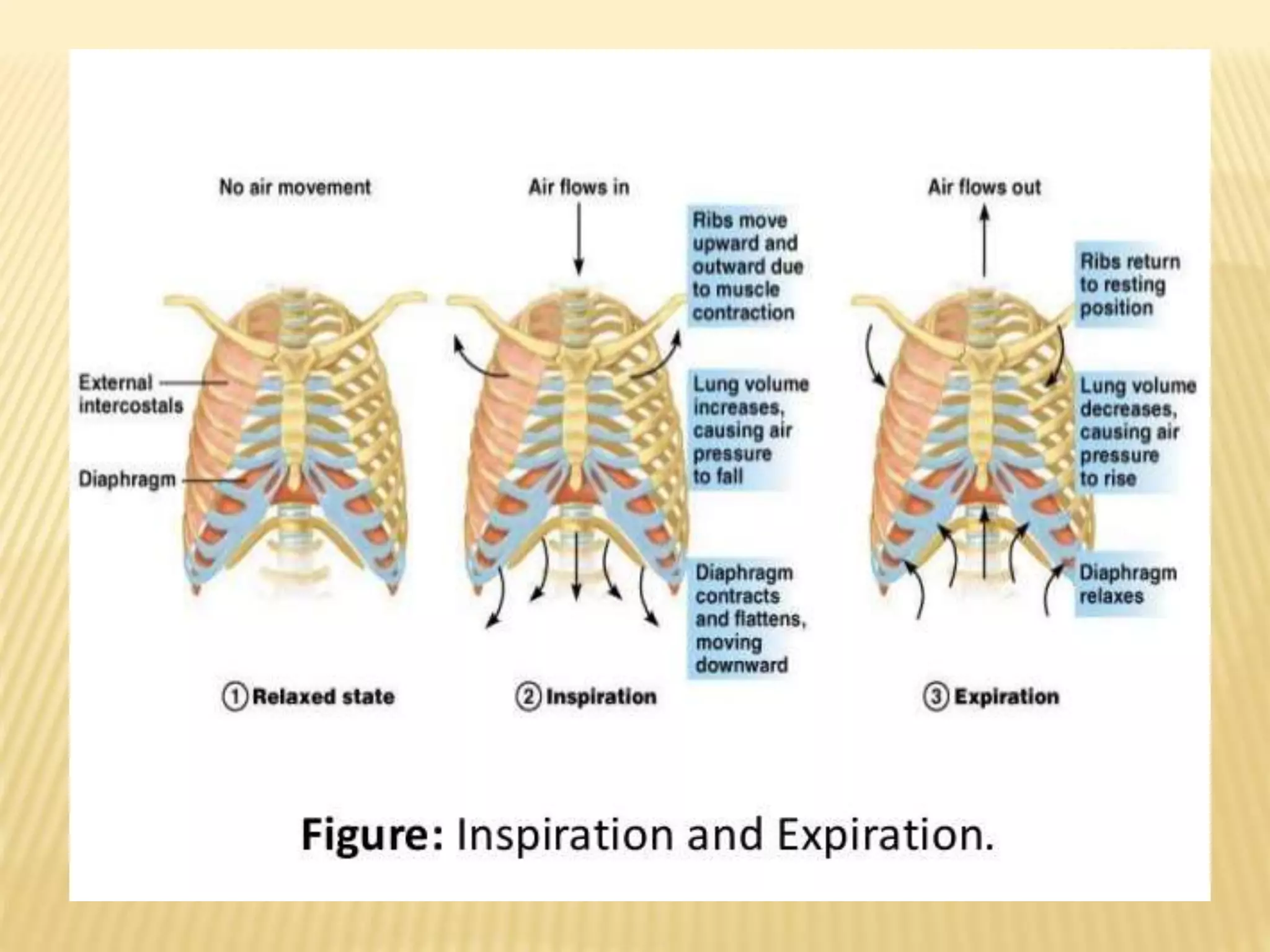
Phases of respiration
 Rest
 Inspiration
 Expiration
ORIGIN INSERTION NERVE
SUPPLY
FUNCTION
INSPIRATORY
MUSCLE
PRINCIPLE
MUSCLE
DIAPHRAGM LUMBAR
VERTEBRAE,COST
AL MARGIN AND
XIPHOID PROCESS
AS A CENTRAL
TENDON TO
COMBINE WITH
PERICARDIUN
PHRENIC
NERVE[
C3,C4,C5]
ABOUT 75%
WORK OF
BREATHING
INTERCOSTAL RIB 1-11 RIB2-12 INTERCOSTAL
NERVE
ELEVATE THE
RIBS,STABILIZ
E CHEST WALL
ACCESSORY
MUSCLE
STERNOCLEDO
MASTOID
B/L MANUBRIUM
AND MEDIAL END
OF CLAVICAL
MASTOID
PROCESS &
OCCIPLE BONE
CN 9,CERVIAL
PLEXUS
[C1,C2]
ELEVATE THE
FIRST RIB &
STERNUM
SCALENE LOER FIVE
CERVICAL
VERTEBRA
UPPER SURFACE
OF 1ST , 2ND RIB
CERVICAL
N,C6,C7,C8
FIXATION OF
RIB
PECTORALIS
MAJOR
CLAVICAL,STERNU
M & SIX COSTAL
CATILLAGE
HUMERUS MEDIAN
PECTORAL N.
LIFT RIBS &
CHEST
ABDOMINALS
EXPIRATORY
MUSCLE
PRINCIPLE
MUS LE
EXPIRATION IS
DONE
PASSIVELY BY
RECOILING
PROPORTY OF
LUNG & CHEST
WALL
ACCESSORY
MUSCLE
RECTUS
ABDOMINIS
PUBIC BONE COSTAL
CARTILAGE 7
ILIOINGUINAL DRIVE
DIAPHRAGM
UPWARD
MECHANICAL EFFECT OF DIAPHRAGM
What is respiratory cycle?
The respiratory cycle is a single cycle of
inhalation and exhalation. The respiratory cycle or
breathing cycle is a description of the changes in,
a) Pressure
b) Lung volume and
c) Airflow that occurs during single cycle of respiration.
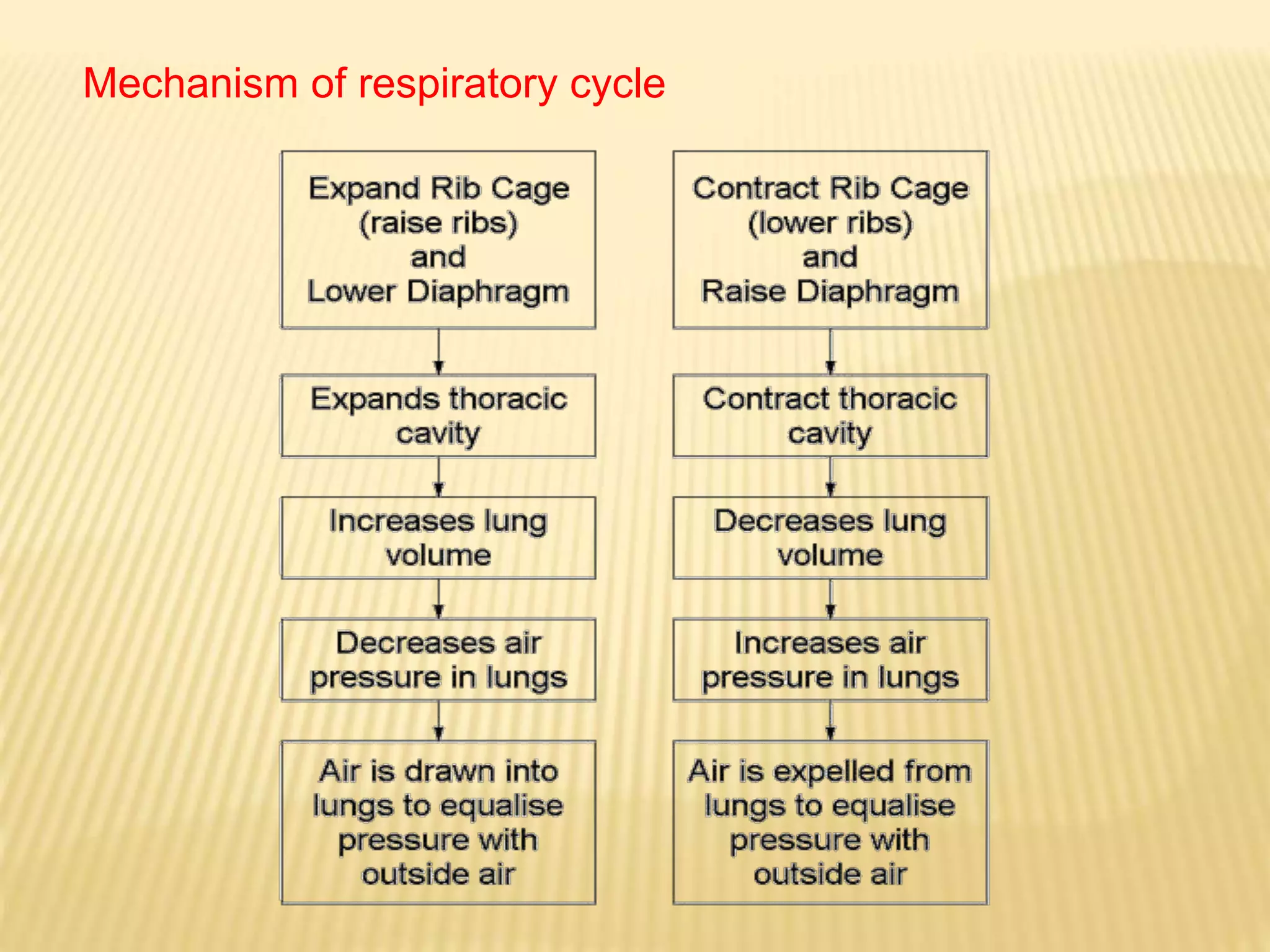
Mechanism of respiratory cycle
PRESSURE AT REST
PRESSURE CHANGES DURING RESPIRATION
Pressure at opening of airway [Pao] = Pressure at body
surface [Pbs]= 0
Alveolar pressure often reffered to intrapulmonary pressure
[Pav]
Pleural pressure is usually negative during quite breathing
[Ppl] ≈ -5
Difference between two pressure is called pressure gradient,
1. TRANSRESPIRATORY PRESSURE GRADIENT [Pts] =
difference in pressure between atmosphere and alveoli , Pts
= Pav-Pbs or Pts= Pav-Pao
2. TRANSPULMONARY PRESSURE GRADIENT [PL ] =
difference between alveoli and pleural space , PL =Pav-Ppl
3. TRANSTHORACIC PRESSURE GRADIENT = difference in
pressure between pleural space and body surface Pw= Ppl-
Pbs
SUMMARY
 Defination of respiration.
 Diaphragm is principle muscle of respiration
 alveolar pressure,pleural pressure and
atmospheric pressure are three main component
preessure
 ostructive and restrictive lung diseases can alters
the normal pressure values ,thereby cause alteration
in I:E ratio i,e 1:1.
REFERENCES
1. Essentials of Medical Physiology by K. sembulingam
, P. Sembulingam sixth edition, pg,682,700
2. Textbook pf Medical Physiology eleventh edition by
Guyton And Hall, pg 471,
3. Egans Fundamentals of Respiratory Care eight
edition by Robert L. wilkins , James K Stoller
pg,164,208,217,
Rekha topic[1]respiratory cycle

Rekha topic[1]respiratory cycle

  • 1.
    By, Miss. Rekha B.Marbate PG- I
  • 2.
    CONTENTS • Introduction toRespiratory cycle • Muscles of Respiration • Mechanism of Respiration •Pressure acting at rest •Pressure changes during respiration
  • 3.
    What is respiration? Respirationis the process by which oxygen is taken in and carbon dioxide is given out. Phases of respiration  Rest  Inspiration  Expiration
  • 5.
    ORIGIN INSERTION NERVE SUPPLY FUNCTION INSPIRATORY MUSCLE PRINCIPLE MUSCLE DIAPHRAGMLUMBAR VERTEBRAE,COST AL MARGIN AND XIPHOID PROCESS AS A CENTRAL TENDON TO COMBINE WITH PERICARDIUN PHRENIC NERVE[ C3,C4,C5] ABOUT 75% WORK OF BREATHING INTERCOSTAL RIB 1-11 RIB2-12 INTERCOSTAL NERVE ELEVATE THE RIBS,STABILIZ E CHEST WALL ACCESSORY MUSCLE STERNOCLEDO MASTOID B/L MANUBRIUM AND MEDIAL END OF CLAVICAL MASTOID PROCESS & OCCIPLE BONE CN 9,CERVIAL PLEXUS [C1,C2] ELEVATE THE FIRST RIB & STERNUM SCALENE LOER FIVE CERVICAL VERTEBRA UPPER SURFACE OF 1ST , 2ND RIB CERVICAL N,C6,C7,C8 FIXATION OF RIB PECTORALIS MAJOR CLAVICAL,STERNU M & SIX COSTAL CATILLAGE HUMERUS MEDIAN PECTORAL N. LIFT RIBS & CHEST ABDOMINALS EXPIRATORY MUSCLE PRINCIPLE MUS LE EXPIRATION IS DONE PASSIVELY BY RECOILING PROPORTY OF LUNG & CHEST WALL ACCESSORY MUSCLE RECTUS ABDOMINIS PUBIC BONE COSTAL CARTILAGE 7 ILIOINGUINAL DRIVE DIAPHRAGM UPWARD
  • 6.
  • 7.
    What is respiratorycycle? The respiratory cycle is a single cycle of inhalation and exhalation. The respiratory cycle or breathing cycle is a description of the changes in, a) Pressure b) Lung volume and c) Airflow that occurs during single cycle of respiration.
  • 8.
  • 9.
  • 10.
  • 11.
    Pressure at openingof airway [Pao] = Pressure at body surface [Pbs]= 0 Alveolar pressure often reffered to intrapulmonary pressure [Pav] Pleural pressure is usually negative during quite breathing [Ppl] ≈ -5 Difference between two pressure is called pressure gradient, 1. TRANSRESPIRATORY PRESSURE GRADIENT [Pts] = difference in pressure between atmosphere and alveoli , Pts = Pav-Pbs or Pts= Pav-Pao 2. TRANSPULMONARY PRESSURE GRADIENT [PL ] = difference between alveoli and pleural space , PL =Pav-Ppl 3. TRANSTHORACIC PRESSURE GRADIENT = difference in pressure between pleural space and body surface Pw= Ppl- Pbs
  • 12.
    SUMMARY  Defination ofrespiration.  Diaphragm is principle muscle of respiration  alveolar pressure,pleural pressure and atmospheric pressure are three main component preessure  ostructive and restrictive lung diseases can alters the normal pressure values ,thereby cause alteration in I:E ratio i,e 1:1.
  • 13.
    REFERENCES 1. Essentials ofMedical Physiology by K. sembulingam , P. Sembulingam sixth edition, pg,682,700 2. Textbook pf Medical Physiology eleventh edition by Guyton And Hall, pg 471, 3. Egans Fundamentals of Respiratory Care eight edition by Robert L. wilkins , James K Stoller pg,164,208,217,