An Introduction to Bolman & DealReframing Organizations
 Mental Models of Organizations:FactoriesFamiliesJunglesTemples
The Power of ReframingSmart people do dumb things when they misread things, or use the wrong frameWe need to use multiple lenses if we are to understand complex problemsOrganizational life is complicated, ambiguous, and unpredictableOrganizations need leadership AND managementOrganizational theory has implications for practice
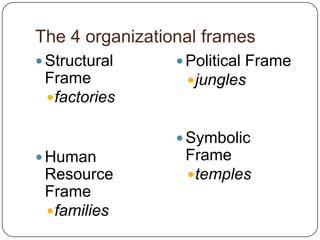
The 4 organizational framesStructural FramefactoriesHuman Resource FramefamiliesPolitical FramejunglesSymbolic Frame temples
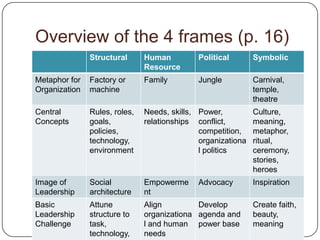
Overview of the 4 frames (p. 16)
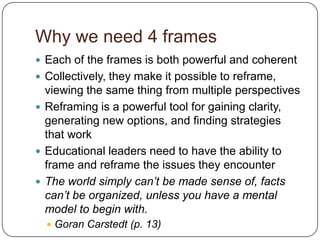
Why we need 4 framesEach of the frames is both powerful and coherentCollectively, they make it possible to reframe, viewing the same thing from multiple perspectivesReframing is a powerful tool for gaining clarity, generating new options, and finding strategies that workEducational leaders need to have the ability to frame and reframe the issues they encounterThe world simply can’t be made sense of, facts can’t be organized, unless you have a mental model to begin with.GoranCarstedt (p. 13)
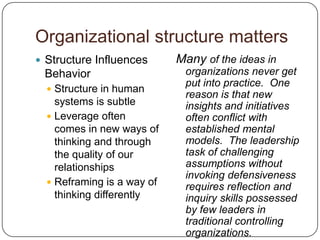
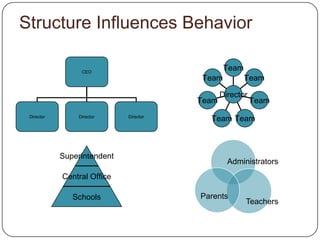
Organizational structure mattersStructure Influences BehaviorStructure in human systems is subtleLeverage often comes in new ways of thinking and through the quality of our relationshipsReframing is a way of thinking differentlyMany of the ideas in organizations never get put into practice.  One reason is that new insights and initiatives often conflict with established mental models.  The leadership task of challenging assumptions without invoking defensiveness requires reflection and inquiry skills possessed by few leaders in traditional controlling organizations.Peter Senge
Structure Influences BehaviorAdministratorsParentsTeachers
Reframing LeadershipTraditional “mental models” of leadership are limitingEffective leaders can be architects, servants, advocates, and prophetsLearning to apply all four frames deepens the appreciation for and understanding of the organizations we leadBolman & Deal have synthesized organizational theory into a useful set of frames or lenses through which we can better understand the complex organizations within which we work, and the challenges we currently faceThe 4 frames will expand our “mental models” of organizations and leadership

Reframing Organizations

  • 1.
    An Introduction toBolman & DealReframing Organizations
  • 2.
    Mental Modelsof Organizations:FactoriesFamiliesJunglesTemples
  • 3.
    The Power ofReframingSmart people do dumb things when they misread things, or use the wrong frameWe need to use multiple lenses if we are to understand complex problemsOrganizational life is complicated, ambiguous, and unpredictableOrganizations need leadership AND managementOrganizational theory has implications for practice
  • 4.
    The 4 organizationalframesStructural FramefactoriesHuman Resource FramefamiliesPolitical FramejunglesSymbolic Frame temples
  • 5.
    Overview of the4 frames (p. 16)
  • 6.
    Why we need4 framesEach of the frames is both powerful and coherentCollectively, they make it possible to reframe, viewing the same thing from multiple perspectivesReframing is a powerful tool for gaining clarity, generating new options, and finding strategies that workEducational leaders need to have the ability to frame and reframe the issues they encounterThe world simply can’t be made sense of, facts can’t be organized, unless you have a mental model to begin with.GoranCarstedt (p. 13)
  • 7.
    Organizational structure mattersStructureInfluences BehaviorStructure in human systems is subtleLeverage often comes in new ways of thinking and through the quality of our relationshipsReframing is a way of thinking differentlyMany of the ideas in organizations never get put into practice. One reason is that new insights and initiatives often conflict with established mental models. The leadership task of challenging assumptions without invoking defensiveness requires reflection and inquiry skills possessed by few leaders in traditional controlling organizations.Peter Senge
  • 8.
  • 9.
    Reframing LeadershipTraditional “mentalmodels” of leadership are limitingEffective leaders can be architects, servants, advocates, and prophetsLearning to apply all four frames deepens the appreciation for and understanding of the organizations we leadBolman & Deal have synthesized organizational theory into a useful set of frames or lenses through which we can better understand the complex organizations within which we work, and the challenges we currently faceThe 4 frames will expand our “mental models” of organizations and leadership