Reflective Writing is:
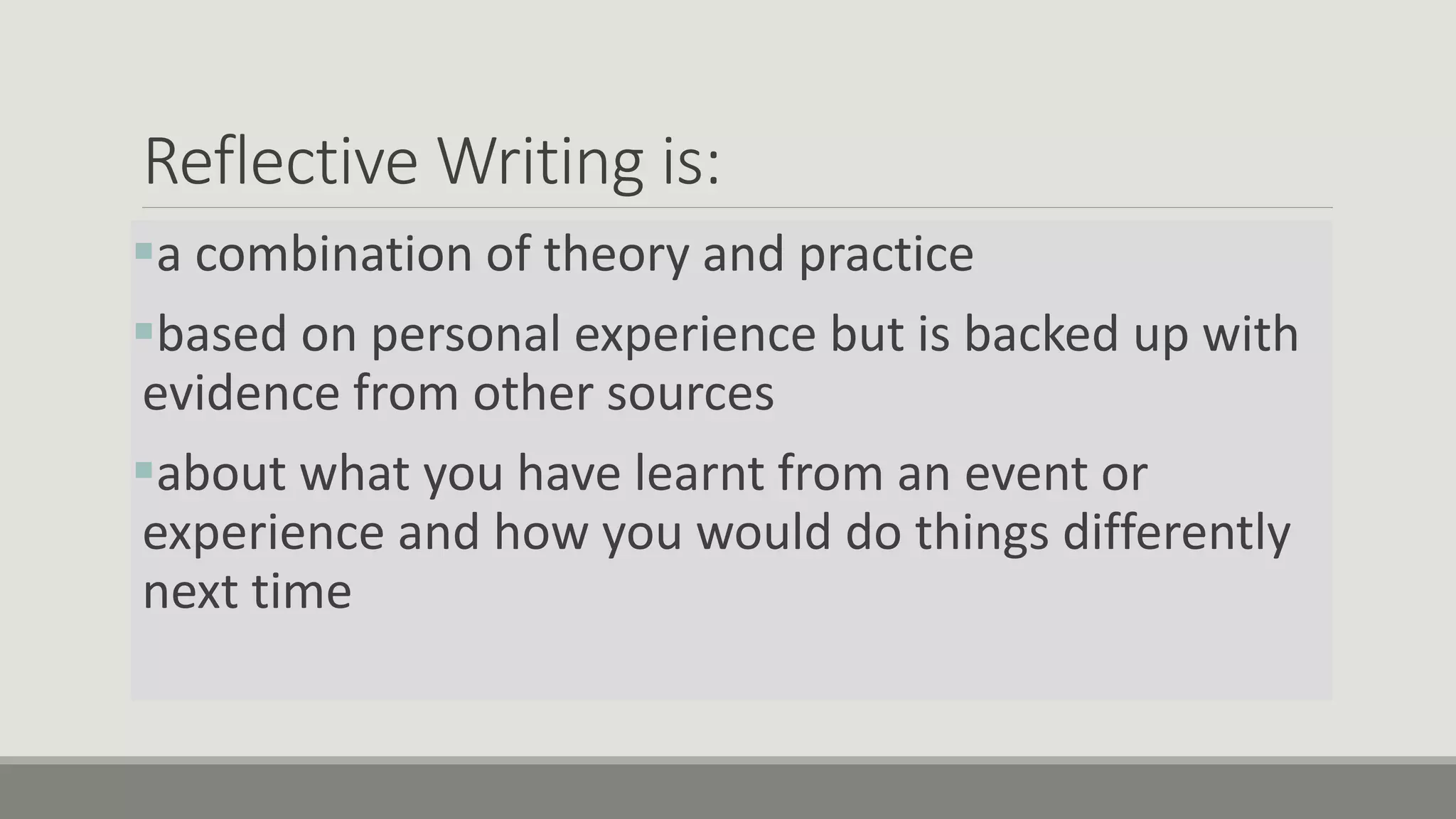
a combination of theory and practice
based on personal experience but is backed up with
evidence from other sources
about what you have learnt from an event or
experience and how you would do things differently
next time
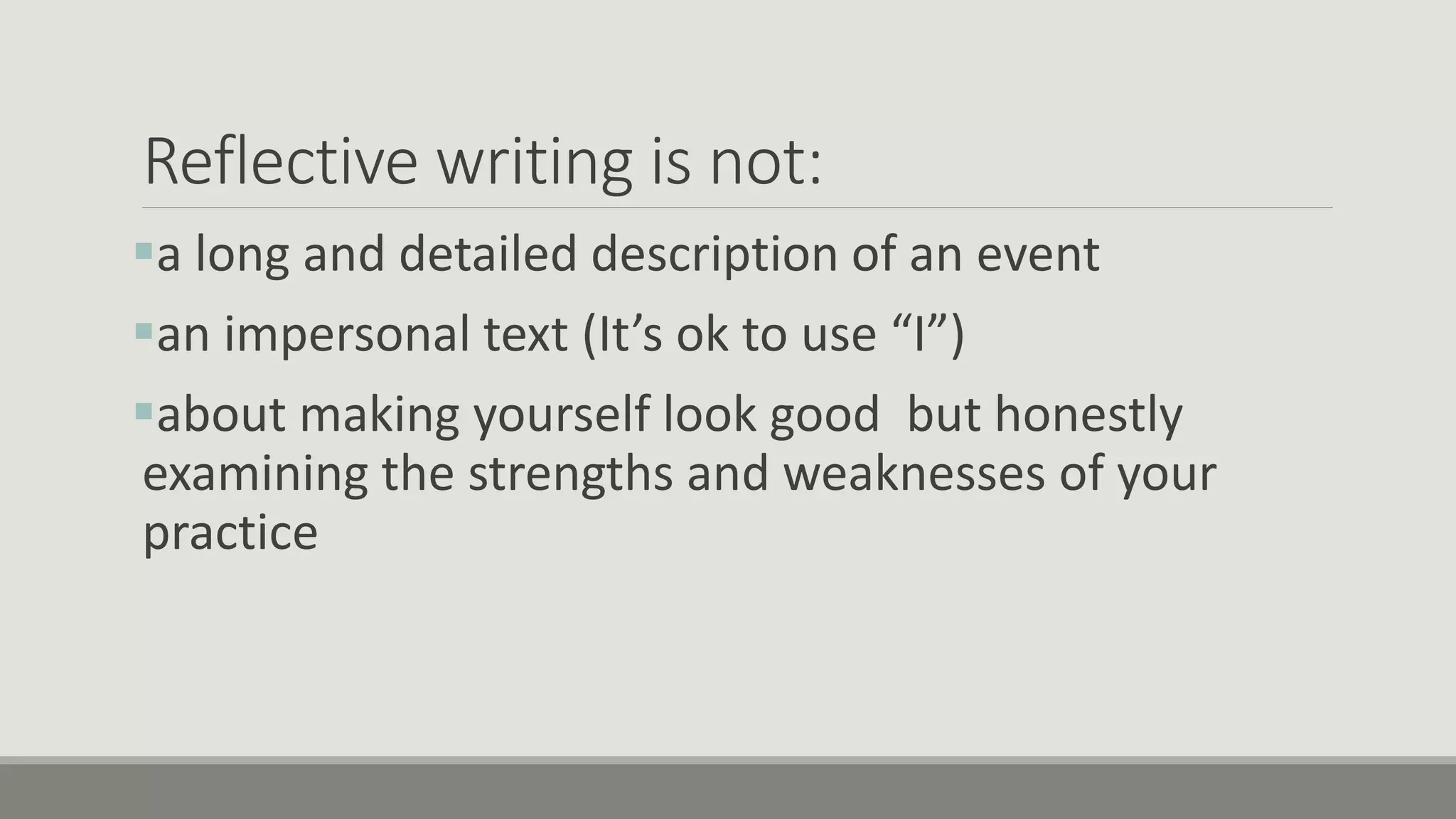
Reflective writing is not:
a long and detailed description of an event
an impersonal text (It’s ok to use “I”)
about making yourself look good but honestly
examining the strengths and weaknesses of your
practice
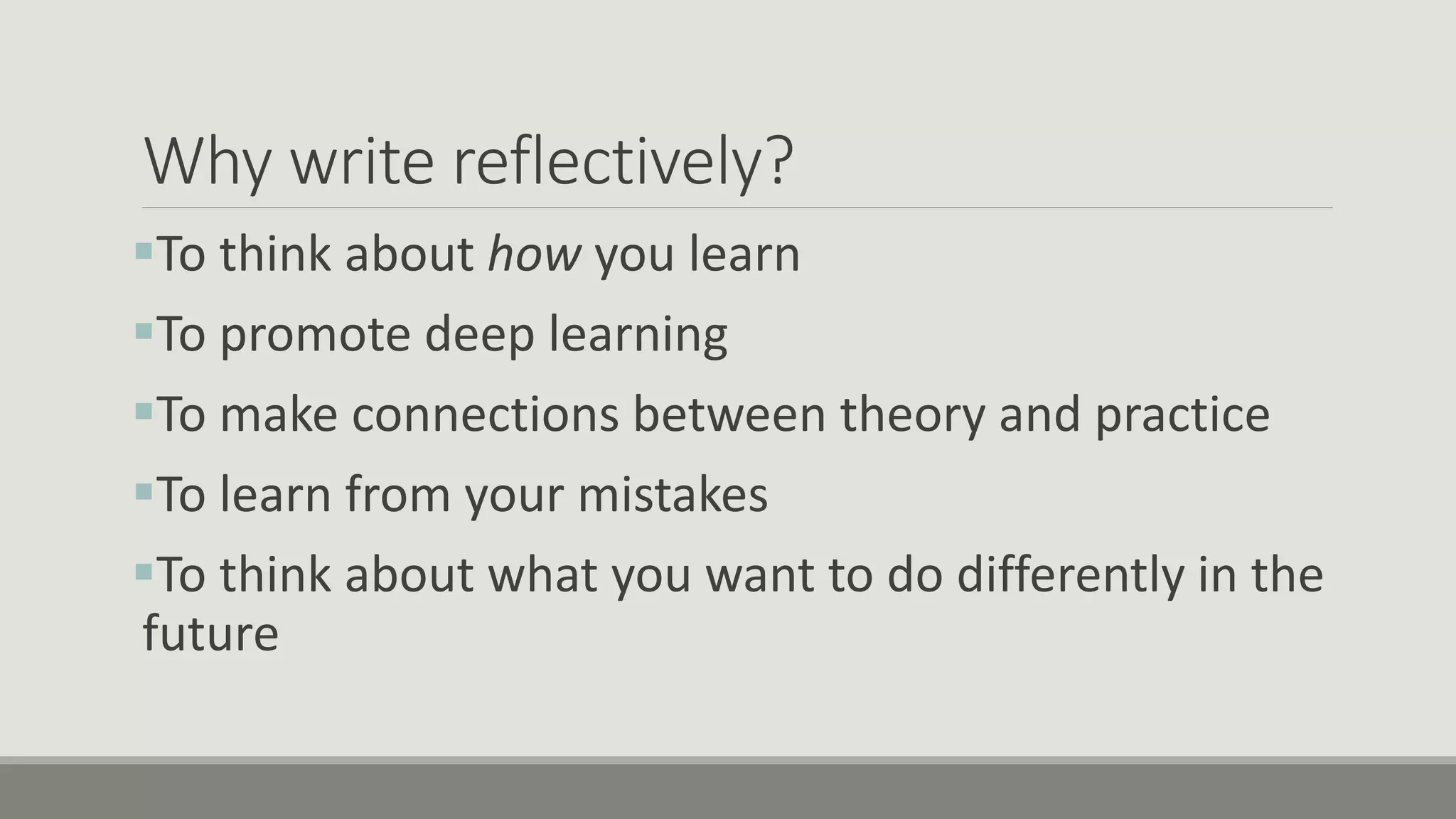
Why write reflectively?
To think about how you learn
To promote deep learning
To make connections between theory and practice
To learn from your mistakes
To think about what you want to do differently in the
future
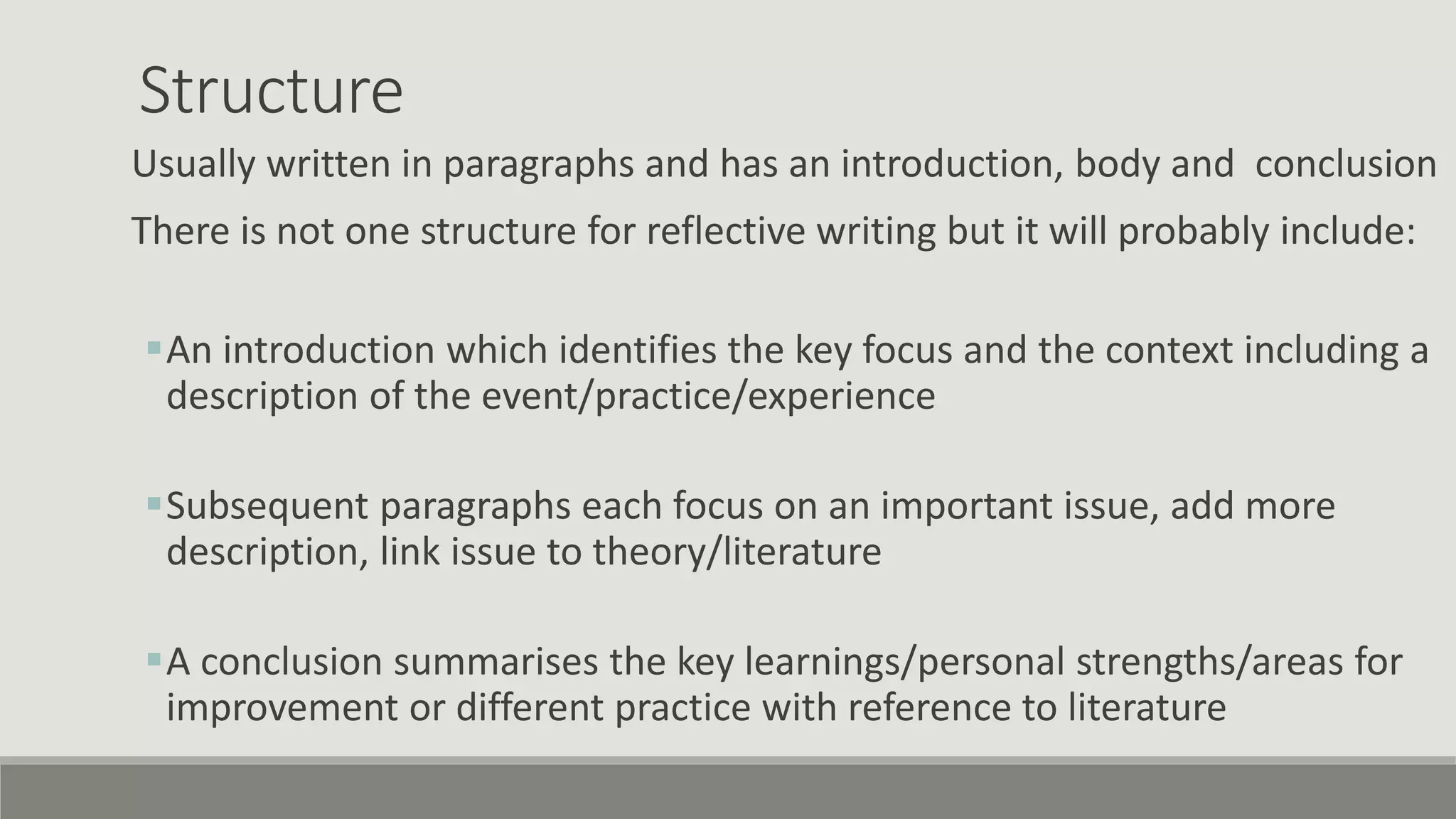
Structure
Usually written in paragraphs and has an introduction, body and conclusion
There is not one structure for reflective writing but it will probably include:
An introduction which identifies the key focus and the context including a
description of the event/practice/experience
Subsequent paragraphs each focus on an important issue, add more
description, link issue to theory/literature
A conclusion summarises the key learnings/personal strengths/areas for
improvement or different practice with reference to literature
Examples of reflective writing
Journal entries
Reflective reports
Diaries
Reflective portfolios
Reflective essays

Reflective Writing Basics

  • 1.
    Reflective Writing is: acombination of theory and practice based on personal experience but is backed up with evidence from other sources about what you have learnt from an event or experience and how you would do things differently next time
  • 2.
    Reflective writing isnot: a long and detailed description of an event an impersonal text (It’s ok to use “I”) about making yourself look good but honestly examining the strengths and weaknesses of your practice
  • 3.
    Why write reflectively? Tothink about how you learn To promote deep learning To make connections between theory and practice To learn from your mistakes To think about what you want to do differently in the future
  • 4.
    Structure Usually written inparagraphs and has an introduction, body and conclusion There is not one structure for reflective writing but it will probably include: An introduction which identifies the key focus and the context including a description of the event/practice/experience Subsequent paragraphs each focus on an important issue, add more description, link issue to theory/literature A conclusion summarises the key learnings/personal strengths/areas for improvement or different practice with reference to literature
  • 5.
    Examples of reflectivewriting Journal entries Reflective reports Diaries Reflective portfolios Reflective essays