Red Cell Alloimmunization
: https://t.me/OBGYN_Note_Book Or
https://t.me/Hanybal2021
: https://www.facebook.com/obgyn.books
: https://www.slideshare.net/bjlomsecond
: https://www.youtube.com/channel/UCXyr7omX-
DZ8cTixpQeYvcQ/videos
: bjlomsecond@gmail.com
Contents
Introduction
The Rhesus System
Prevalence
Pathogenesis
Screening Vs Diagnosis
Treatment & Management
– Unsensitized Mother
– First affected pregnancy
– Previously affected fetus/infant
Intrauterine fetal transfusion
Other Treatment Options
Special Issues
Hemolytic Disease due to non
RhD Antibodies
Introduction
• Rh (Rhesus) factor
– named after the monkeys in which it was first discovered
– is a RBC surface antigen
• Terminology
– red cell alloimmunization / sensitization (formerly - isoimmunization) : production of anti
RBC antibodies for foreign RBC antigens
• Hemolytic disease of fetus & newborn (HDFB)
– more appropriate to describe this disorder
– Also = erythroblastosis fetalis
• Because the peripheral blood smear of these infants demonstrated a large percentage of
circulating immature red cells known as erythroblasts
– mechanism of fetal anemia
• Sequestration & destruction of antibody-coated red cells in fetal liver and spleen
3
Historic Perspectives
• The first case of HDFN was probably
described by a midwife in 1609 in
the French literature
• Sir Albert William Liley
– a New Zealand medical practitioner
– committed suicide in 1983
– major contribution to the story of
rhesus disease was the introduction of
the fetal intraperitoneal transfusion (IPT)
4
12 March 1929 – 15 June 1983
The Rhesus System
• The International Society of BloodTransfusion currently recognizes
– 33 different blood group systems & 339 red cell antigens
• Any individual who lacks a specific red cell antigen may produce an antibody when exposed to that antigen
• Two important antigens are common as a cause of transfusion reaction
• OAB
– most important blood group system
– immediate spontaneous agglutinin response
• Rh system (6 Rh antigens : C,c,D,d,E,e)
– Second most important blood group system
– No immediate spontaneous agglutinin response from serum
– Two separate genes for the Rh system are found on short arm of chromosome 1
• RHD gene - encodes for D antigen
– Rh(D) status described - positive or negative [no d antigen]
– Rh Positive—95% (black American), 85% (whites), 100% (in Africans)
• RHCE gene, encodes for a combination of CE or ce antigens
– Severe fetal anemia requiring antenatal transfusion are due to anti-D, anti-Kell, anti-c, or anti-E
alloimmunization
5
• Which blood group is Universal Donor??
– Type O- Blood only
– Not Type O+ Blood
• Incidence: O – 47%;A – 41%; B – 9%;AB – 3%
• Du phenotype
– Du antigen is manifested by weak expression of the D gene on the RBC
envelope
– not considered candidates for Rh immunoprophylaxis
– Rh Du (+) is considered Rh (D) positive for transfusion
6
• Type A agglutinates
only in anti-A
• Type B agglutinates
only in anti-B
• Type AB agglutinates in
both
• Type O agglutinates in
neither of them
Determining B/G & Rh
• Alloimmunization is uncommon for the following reasons
– low prevalence of incompatible red cell antigens;
– insufficient transplacental passage of fetal antigens or maternal
antibodies;
– maternal-fetal ABO incompatibility, which leads to rapid clearance of
fetal erythrocytes before they elicit an immune response;
– variable antigenicity; and
– variable maternal immune response to the antigen
7
Prevalence
• Incidence of D positive
– varies according to racial and ethnic origin
– 85% of non-Hispanic white Americans
– 90% for Native Americans
– 93% for African Americans and Hispanic Americans
– 99% for Asians
• Frequency of "Rh-negative" individuals (Medscape)
– 6% of blacks; <1% of Asians
• With no apparent predisposing factors, fetal RBCs - detected in maternal blood in (ACOG 2018)
– 7% of women during 1st trimester,
– 16% during 2nd trimester, and
– 29% during 3rd trimester
• Prevalence of D alloimmunization complicating pregnancy: 0.5 to 0.9%
– In population-based screening studies: prevalence of red cell alloimmunization in pregnancy ~ 1 percent
8
Incidence of Rh incompatibility (ACOG 2018)
• varies by race and ethnicity
• Rh negative
– 15% of whites
• Rh-negative woman has an approximate 85% chance of mating with an Rh-
positive man,
– 60% of whom are heterozygous and
– 40% of whom are homozygous at the D locus
– 5–8% of African Americans
– 1–2% of Asians and Native Americans
9
D sensitization
• Without Anti D + ABO-compatible newborn
– W 25th: D alloimmunization risk = 16%
• 2% will become sensitized by the time of delivery,
• 7% by 6 months postpartum, and
• 7% will be “sensibilized”—producing detectable antibodies only in a subsequent
pregnancy
– G 7th: 13%
• Without Anti D + ABO-incompatible newborn
– D alloimmunization risk = 2% due to erythrocyte destruction of ABO-
incompatible cells, which thereby limits sensitizing opportunities
• Reduction with prophylactic Anti D
– Antepartum (from 16% to 2%) and post partum (from 2% to 0.1%)
10
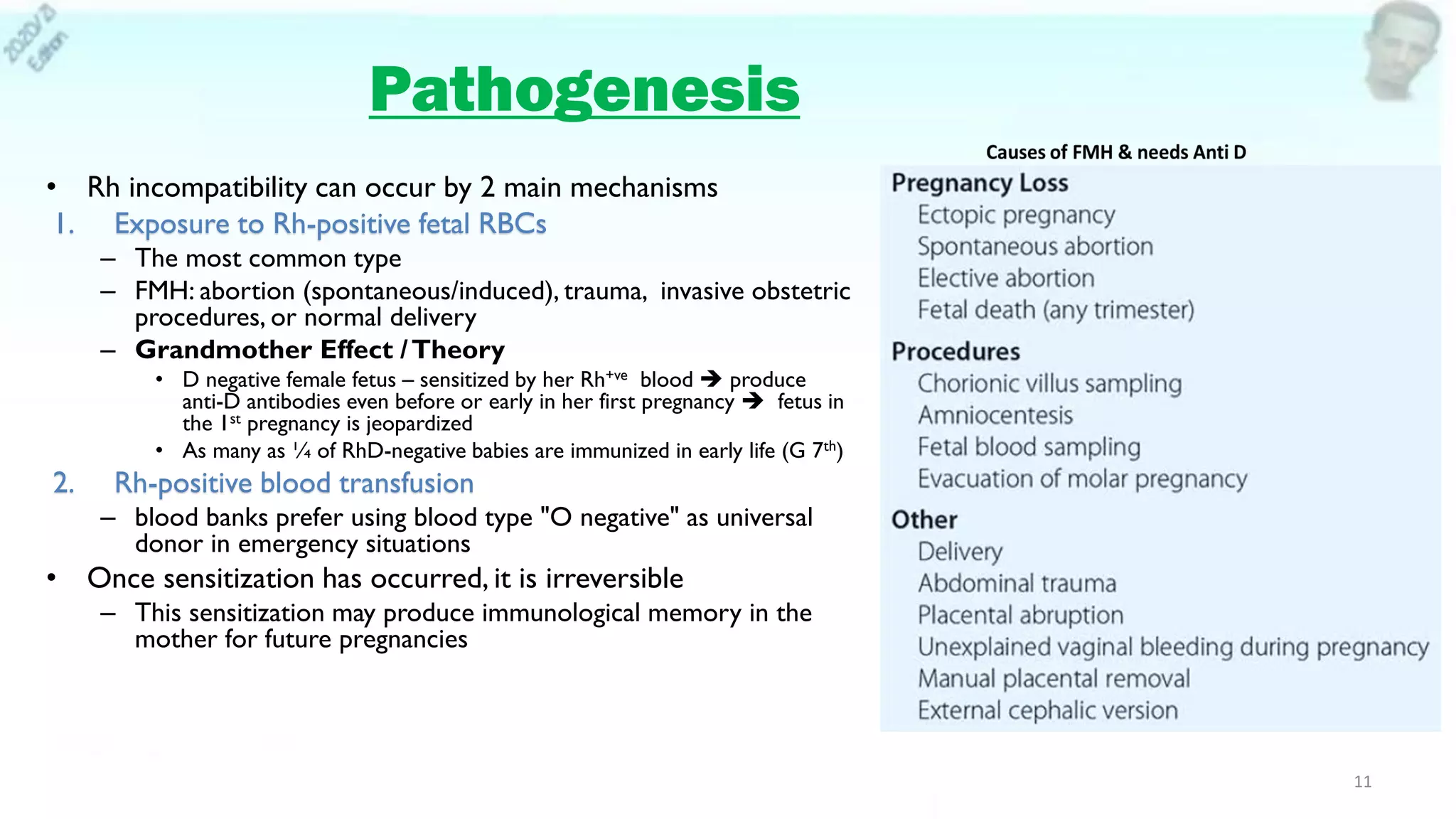
Pathogenesis
• Rh incompatibility can occur by 2 main mechanisms
1. Exposure to Rh-positive fetal RBCs
– The most common type
– FMH: abortion (spontaneous/induced), trauma, invasive obstetric
procedures, or normal delivery
– Grandmother Effect /Theory
• D negative female fetus – sensitized by her Rh+ve blood ➔ produce
anti-D antibodies even before or early in her first pregnancy ➔ fetus in
the 1st pregnancy is jeopardized
• As many as ¼ of RhD-negative babies are immunized in early life (G 7th)
2. Rh-positive blood transfusion
– blood banks prefer using blood type "O negative" as universal
donor in emergency situations
• Once sensitization has occurred, it is irreversible
– This sensitization may produce immunological memory in the
mother for future pregnancies
11
• Amount of fetal blood necessary to produce Rh incompatibility
– as little as 0.1 mL of fetal erythrocytes (ACOG, 2018)
• Risk of sensitization depends on
– Volume of transplacental hemorrhage
– Extent of the maternal immune response
– Concurrent presence of ABO incompatibility
• Fetal sex may also play a significant role in the fetal response to maternal
antibodies
– RhD-positive male fetuses (G 7th)
• 13 times more likely than their female counterparts to become hydropic
• 3 times more likely to die of their disease.
• In most cases of red cell alloimmunization, a FMH occurs in the antenatal
period or, more commonly, at the time of delivery
12
Maternal antibodies
• After a sensitizing event, the human antiglobulin anti-D titer can usually be detected after 5
to 16 weeks
– Once sensitized, it takes ~ 4 weks for Rh antibodies in the maternal circulation to equilibrate in
the fetal circulation
– approximately 50% of alloimmunized patients are sensibilized
• In this scenario, an antibody screen will be negative,
• but memory B lymphocytes are present that can create an anti-D antibody response
– With subsequent pregnancy involving an RhD-positive fetus, the antiD titer becomes detectable
• In 90% of cases, sensitization occurs during delivery
(initial response mostly) can cross placenta
– Mostly IgG1
– a non agglutinating antibody that does not bind complement
• So no intravascular hemolysis;
• Rather sequestration and subsequent destruction of antibody-coated red cells in the fetal liver and spleen →
fetal anemia
– hemolytic anemia → hyperbilirubinemia → ultimately hydrops fetalis
– can’t cross placenta
13
• Associated physiologic changes (G 7th)
– Reticulocytosis from the bone marrow (when Hb ↓ by > 2 g/dL)
– Erythroblasts are released from the fetal liver (when Hb ↓ by > 7
g/dL)
– 2-3 diphosphatidylglycerol (DPG) levels ↑
• In effort to increase oxygen delivery to peripheral tissues
– Increased umbilical artery lactate level (when Hb↓ < 8 g/dL)
– Increased venous lactate (when Hb 4 g/dL)
– Hydrops fetalis - in at least two body compartments (late finding)
14
• Immune response to D antigen - three groups (G 7th)
: 60% to 70%
• develop an antibody to relatively small volumes of red cells
• the probability of immunization increases with escalating volumes of cells
• A small percentage of responders can be called hyperresponders in that they will be
immunized by very small quantities of red cells
: 10% to 20%
• immunized only by exposure to very large volumes of cells
: 10% to 20%
• Totally nonresponders
• Sensitization to C, c, E, and e antigens
– have lower immunogenicity than the D antigen
– complicates ~ 0.3% of pregnancies in screening studies and accounts for about
30% of red cell alloimmunization cases
– Anti-E alloimmunization
• most common, but the need for fetal or neonatal transfusions is greater with anti-c
alloimmunization than with anti-E or anti-C
15
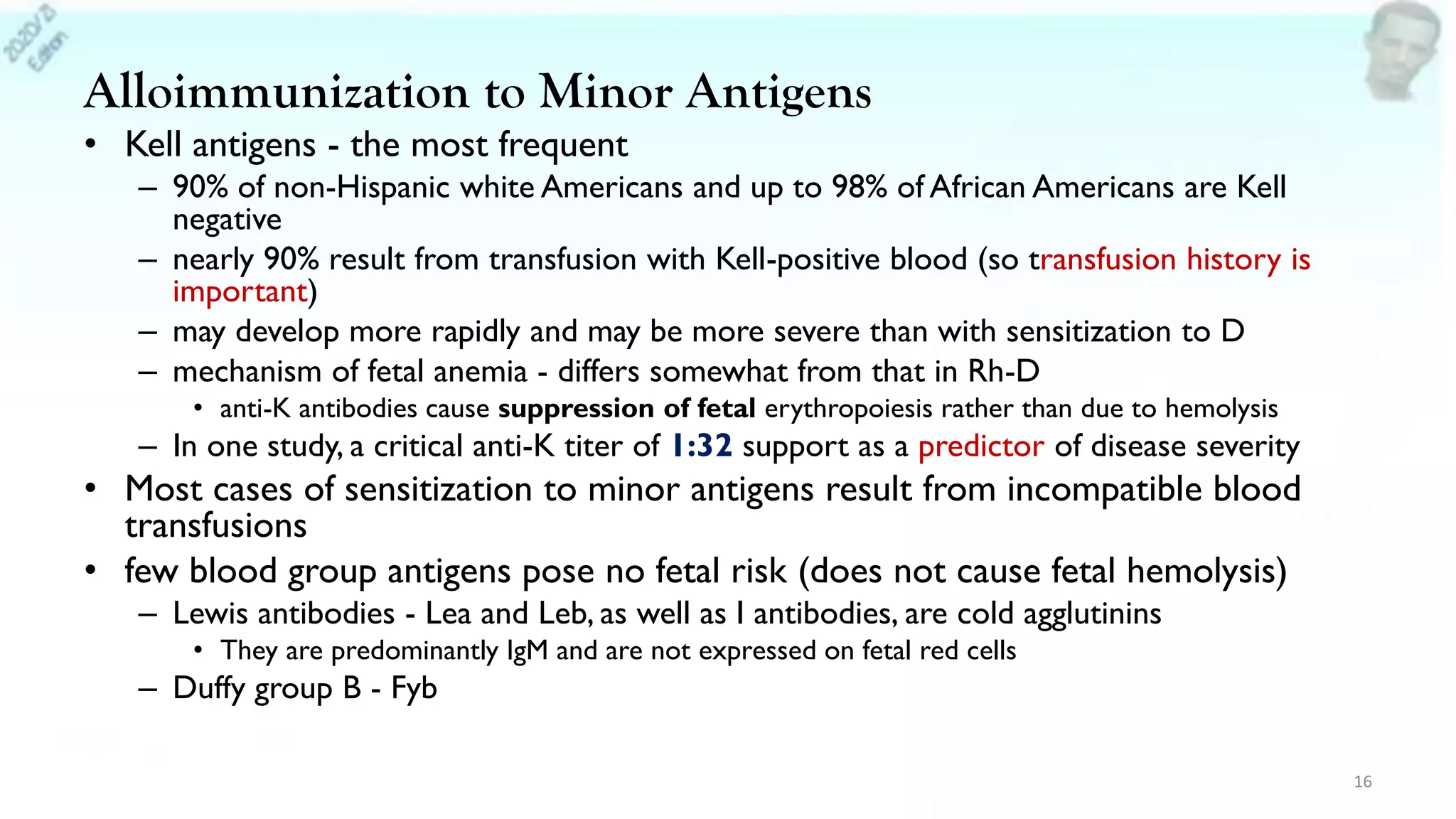
Alloimmunization to Minor Antigens
• Kell antigens - the most frequent
– 90% of non-Hispanic white Americans and up to 98% of African Americans are Kell
negative
– nearly 90% result from transfusion with Kell-positive blood (so transfusion history is
important)
– may develop more rapidly and may be more severe than with sensitization to D
– mechanism of fetal anemia - differs somewhat from that in Rh-D
• anti-K antibodies cause suppression of fetal erythropoiesis rather than due to hemolysis
– In one study, a critical anti-K titer of 1:32 support as a predictor of disease severity
• Most cases of sensitization to minor antigens result from incompatible blood
transfusions
• few blood group antigens pose no fetal risk (does not cause fetal hemolysis)
– Lewis antibodies - Lea and Leb, as well as I antibodies, are cold agglutinins
• They are predominantly IgM and are not expressed on fetal red cells
– Duffy group B - Fyb
16
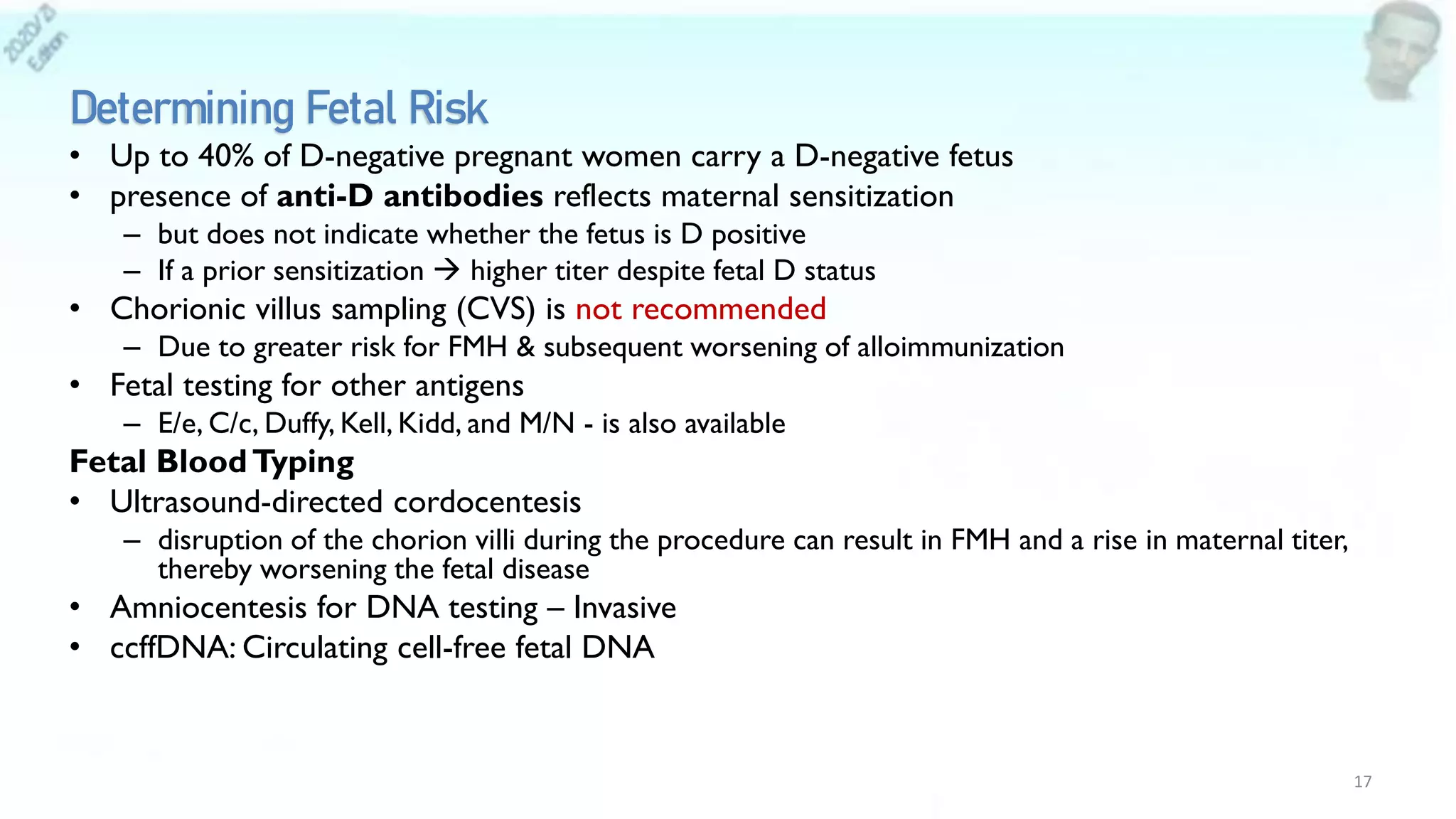
Determining Fetal Risk
• Up to 40% of D-negative pregnant women carry a D-negative fetus
• presence of anti-D antibodies reflects maternal sensitization
– but does not indicate whether the fetus is D positive
– If a prior sensitization → higher titer despite fetal D status
• Chorionic villus sampling (CVS) is not recommended
– Due to greater risk for FMH & subsequent worsening of alloimmunization
• Fetal testing for other antigens
– E/e, C/c, Duffy, Kell, Kidd, and M/N - is also available
Fetal BloodTyping
• Ultrasound-directed cordocentesis
– disruption of the chorion villi during the procedure can result in FMH and a rise in maternal titer,
thereby worsening the fetal disease
• Amniocentesis for DNA testing – Invasive
• ccffDNA: Circulating cell-free fetal DNA
17
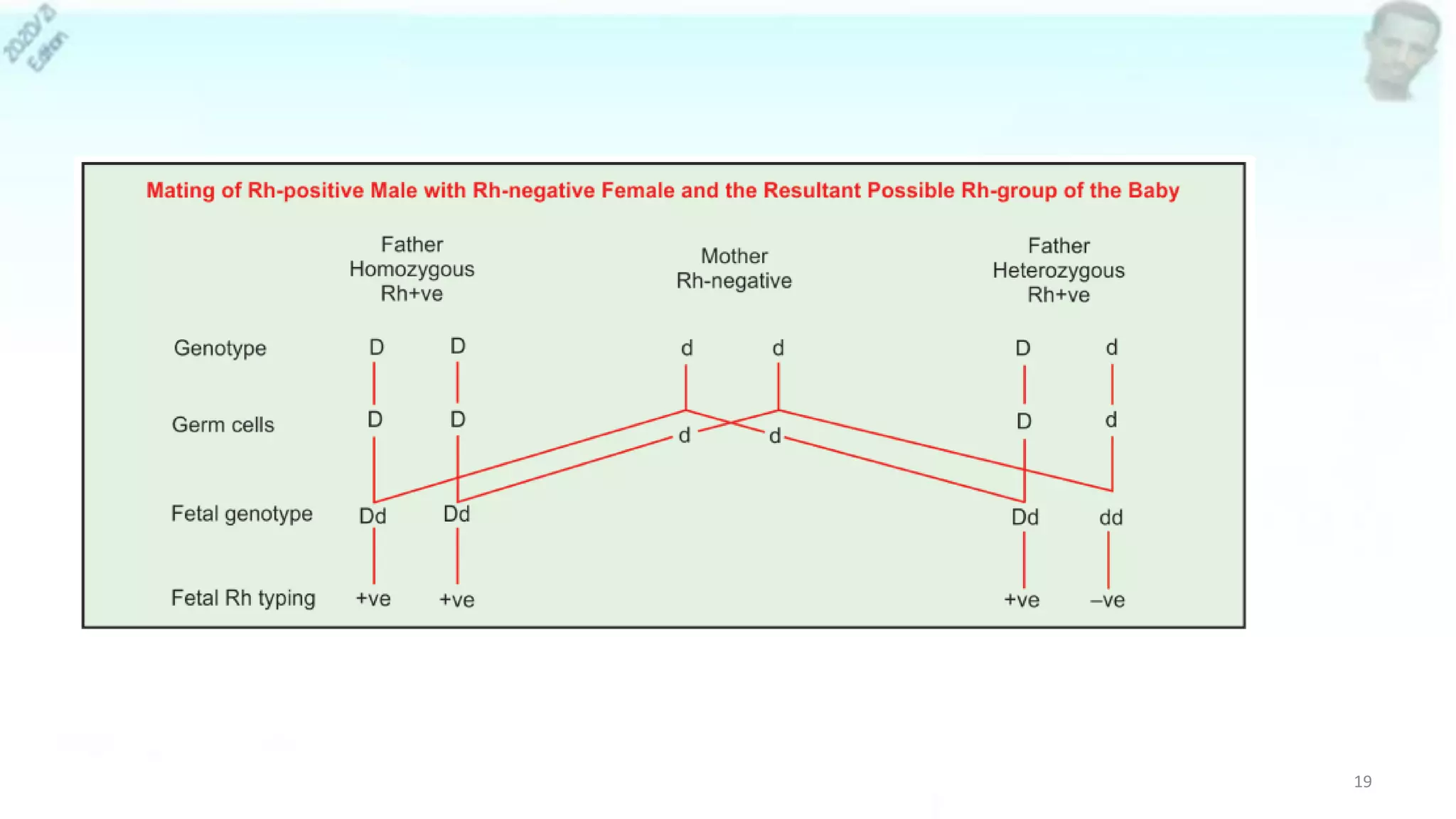
Rh positive father
• Homozygous father (45%)
– all of his children will be
Rh positive
• Heterozygous father
(55%)
– Children: 50% chance of
being Rh positive
• By way of contrast the
Rh-negative individual is
always homozygous
18
Circulating free DNA (cfDNA)
19
ccffDNA: Circulating cell-free fetal DNA
• Early studies in pregnant women carrying a male fetus indicated that
– 3% of ccffDNA in the maternal circulation in the first trimester is fetal in origin;
– this increases to 6% by the third trimester
• Source of this DNA appears to be
• Noninvasive assessment: sample from maternal plasma after 10 weeks for PCR
• can be performed with reliable results at as early as 10 weeks’ gestation
• Sensitivity > 99, specificity > 95%, and P/N PPV - very high
• Indications
– ACOG: does not recommend routinely (Since it is costly)
– To identify fetuses that are D Negative and do not require anemia surveillance, and
– To withheld anti-D immune globulin if the fetus is D negative
• Fetal DNA is rapidly cleared from the maternal circulation with a mean half-life
of 16 minutes after cesarean delivery; after vaginal delivery,
– fetal free DNA is cleared by 100 hours
20
Fetomaternal Hemorrhage
• a large blood loss & true fetomaternal hemorrhage is rare
– In one series of > 30,000 pregnancies,
• FMH ≥150 mL occurred in 1 per 2800 births
• Prevalence of FMH of
– at least 30 mL of fetal blood (which can be covered by a standard
300-μg dose of anti-D immune globulin)
• is estimated to occur - 3 per 1000 pregnancies
– in > 80 percent of cases, no cause is identified
21
ABO blood group incompatibility
• Incompatibility for antigens A and B - most common cause
of hemolytic disease in newborns,
– but it does not cause appreciable hemolysis in the fetus
• ~ 20% of newborns have ABO blood group incompatibility
– yet only 5 percent are affected clinically (mild anemia)
• often seen in firstborn neonates
• Rarely becomes more severe in successive pregnancies
• considered a pediatric disease - rarely of obstetrical concern
– because most anti-A and anti-B antibodies are IgM and do not
cross the placenta.
– Fetal red cells also have fewer A and B antigenic sites than adult
cells and are thus less immunogenic
• No need fetal surveillance and early delivery
• neonatal observation for hyperbilirubinemia - ?
phototherapy
CDE incompatibility
• Seen in successive
newborns
• More severe in successive
pregnancies
• obstetrical concern
• fetal surveillance and early
delivery is mandatory if
mother is sensitized
22
Differences in ABO & CDE incompatibility
Screening Vs Diagnosis
• Screening
– Blood type: ± D antigen?
– Antibody screen:
• Coombs test (  maternal blood &  fetal/neonatal blood)
– Rosette Test (Fetal RBC Screen [Qualitative])
– Kleihauer-Betke test
• Diagnostic
– Sonography:
• MCA peak systolic velocity (most accurate predictor)
• Hydrops (ominous finding)
– CTG: sinusoidal FHR pattern
23
Coombs test
Indirect
• For prenatal detection of Rh Antibodies
• Take maternal blood → serum → then
• In a test tube:
– Maternal serum + Animal/human Rh+ve RBCs +
coombs reagent (antihuman globulin) → if
– Agglutination: mother has produced antibodies against
fetal Rh +ve RBCs
• -ve (No Agglutination): Give Anti D
• +ve (Agglutination): No need to give Anti D
– determine antibody titers
– critical titer:The level at which significant fetal anemia
could potentially develop
• Usually ranges between 1:8 and 1:32
• If the critical titer for anti-D antibodies is 1:16, a titer ≥1:16
indicates the possibility of severe hemolytic disease
• Exception → Kell sensitization
• Kell sensitization
– since there is less hemolysis, and severe
anemia may not be predicted by the
maternal Kell antibody titer
• Ancillary tests that should follow titer
– Paternal Genotype
– Fetal Genotype:Amniocentesis is the
primary modality (PCR)
• 2 mL of amniotic fluid.
• sensitivity and specificity - 98.7% and 100
• Positive and negative predictive values of 100%
and 96.9%
• in 2nd trimester with > 99% accuracy
Direct
• To detect anemia 20 to Hemolytic
disease of the newborn
• Take fetal blood → serum → then
• In a test tube mix this serum with
coombs reagent → if
– Agglutination: neonate’s blood has Abs from
mother destroying its blood
24
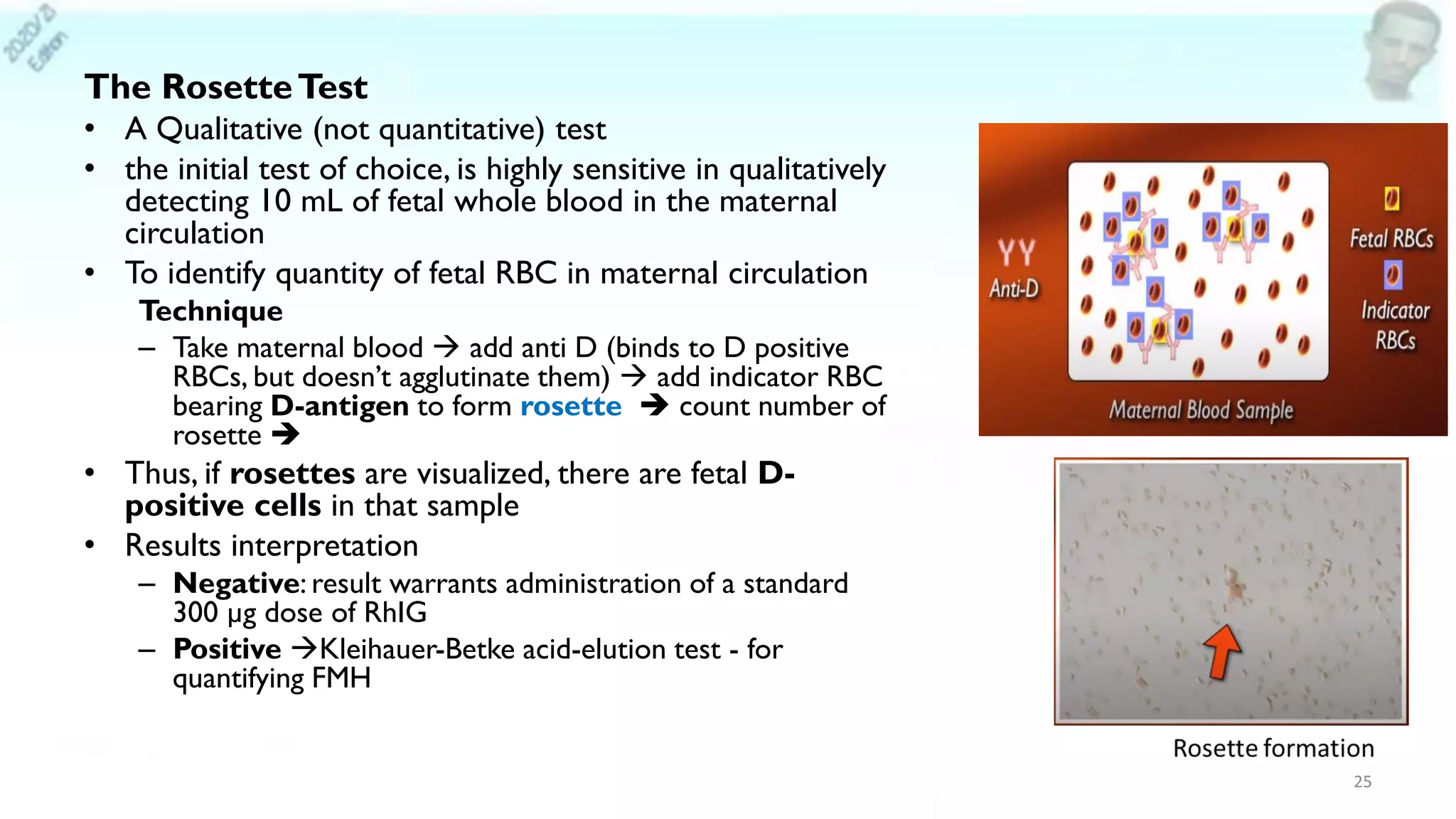
The RosetteTest
• A Qualitative (not quantitative) test
• the initial test of choice, is highly sensitive in qualitatively
detecting 10 mL of fetal whole blood in the maternal
circulation
• To identify quantity of fetal RBC in maternal circulation
Technique
– Take maternal blood → add anti D (binds to D positive
RBCs, but doesn’t agglutinate them) → add indicator RBC
bearing D-antigen to form rosette ➔ count number of
rosette ➔
• Thus, if rosettes are visualized, there are fetal D-
positive cells in that sample
• Results interpretation
– Negative: result warrants administration of a standard
300 µg dose of RhIG
– Positive →Kleihauer-Betke acid-elution test - for
quantifying FMH
25
Quantitative Tests
Kleihauer-Betke acid-elution test
• the most widely used confirmatory test for quantifying FMH
• inexpensive and requires no special equipment
– it lacks standardization and precision, and may not be accurate in conditions with elevated F-cells
• Principle: fetal hemoglobin (HbF) is resistant to acid-elution whereas adult hemoglobin is acid-
sensitive
• Technique
– smears are prepared from maternal capillary / venous blood → Ehrlich's acid hematoxylin → examined
under light microscopy
– fetal erythrocytes appear red and adult erythrocytes appear as “ghosts”
– fetal cells are then counted and expressed as a percentage of adult cells
FMH (ml) = KB % X Estimated maternal blood volume (usually 5000 ml)
RhIG vial = (Calculated FMH (ml) ÷ 30 ml)
• used for calculating qty o FMH & determining dose o anti D
• two scenarios in which it may not be accurate:
– Maternal hemoglobinopathies such as β- thalassemia in which the fetal hemoglobin level is elevated and
– pregnancies at or near term, when the fetus has already started to produce hemoglobin A
Anti-HbF flow cytometry
• is a promising alternative, although its use is limited by equipment and staffing costs
26
MCA Doppler Velocimetry (PSV)
• for detection of fetal anemia
• anemic fetus shunts blood preferentially to the brain to maintain adequate oxygenation
– So velocity rises because of increased cardiac output and decreased blood viscosity
• MCA peak systolic velocity
– ≤ 1.5 MoM ➔ begin antenatal testing at 32 weeks
• A value > 1.5 MoM for the corresponding GA predicts moderate to severe fetal anemia with a sensitivity of
88% and a negative predictive rate of 89%
• Deliver at 37 – 38 weeks
– > 1.5 MoM ➔ check fetal Hct by fetal blood sampling
• sensitivity of 100% and a false-positive rate of 12% (ACOG 2018)
• < 30%
 < 35 wk → IUT and for ≥ 35 wk → Deliver
• ≥ 30% → begin antenatal testing at 32 weeks → Deliver at 37 – 38 weeks
• false positive rate of MCA PSV increases significantly beyond 34 - 35 weeks (ACOG 2018)
– due to the normal augmentation in cardiac output that develops at this gestational age
27
28
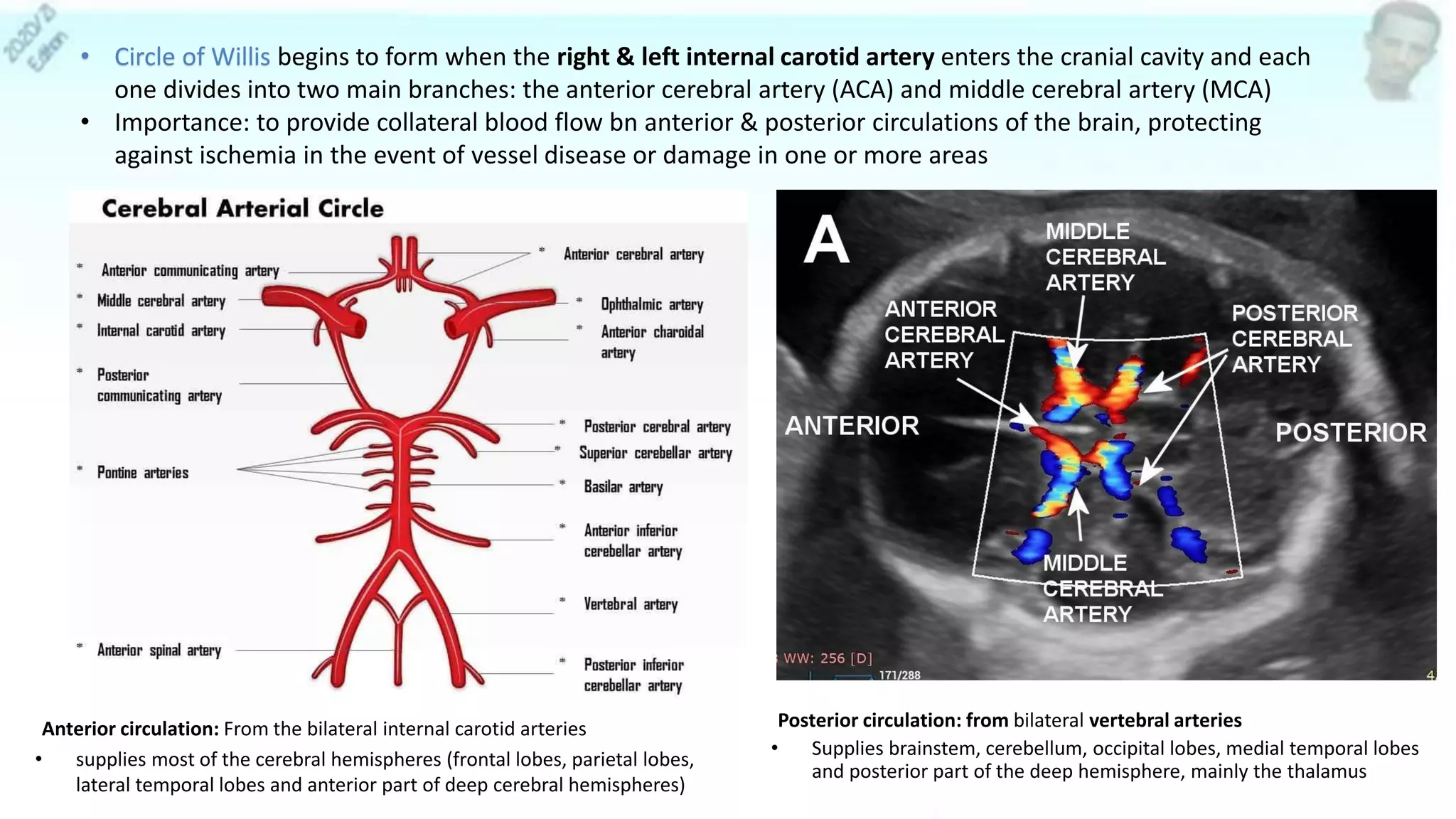
• Circle of Willis begins to form when the right & left internal carotid artery enters the cranial cavity and each
one divides into two main branches: the anterior cerebral artery (ACA) and middle cerebral artery (MCA)
• Importance: to provide collateral blood flow bn anterior & posterior circulations of the brain, protecting
against ischemia in the event of vessel disease or damage in one or more areas
Anterior circulation: From the bilateral internal carotid arteries
• supplies most of the cerebral hemispheres (frontal lobes, parietal lobes,
lateral temporal lobes and anterior part of deep cerebral hemispheres)
Posterior circulation: from bilateral vertebral arteries
• Supplies brainstem, cerebellum, occipital lobes, medial temporal lobes
and posterior part of the deep hemisphere, mainly the thalamus
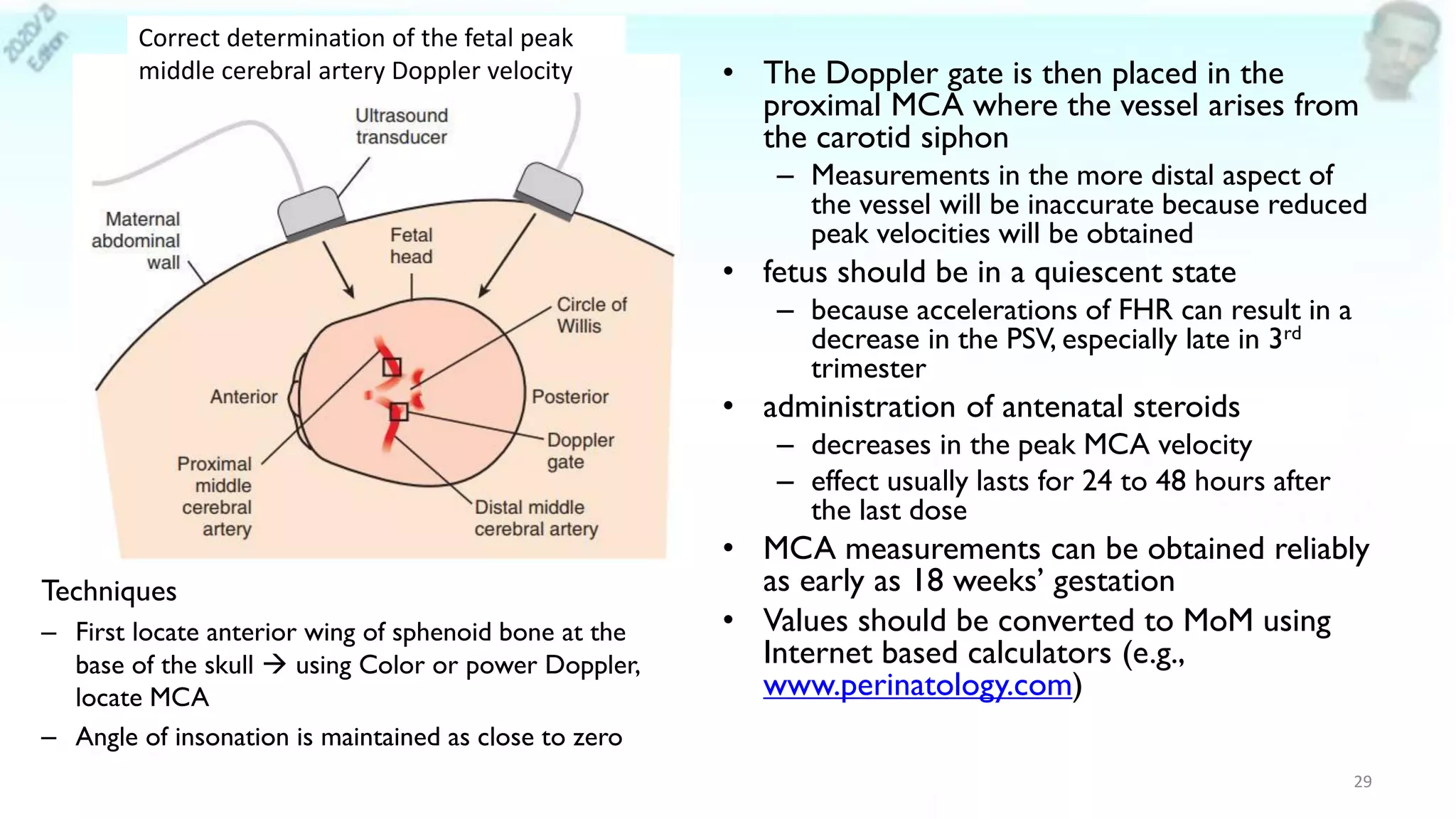
• The Doppler gate is then placed in the
proximal MCA where the vessel arises from
the carotid siphon
– Measurements in the more distal aspect of
the vessel will be inaccurate because reduced
peak velocities will be obtained
• fetus should be in a quiescent state
– because accelerations of FHR can result in a
decrease in the PSV, especially late in 3rd
trimester
• administration of antenatal steroids
– decreases in the peak MCA velocity
– effect usually lasts for 24 to 48 hours after
the last dose
• MCA measurements can be obtained reliably
as early as 18 weeks’ gestation
• Values should be converted to MoM using
Internet based calculators (e.g.,
www.perinatology.com)
29
Correct determination of the fetal peak
middle cerebral artery Doppler velocity
Techniques
– First locate anterior wing of sphenoid bone at the
base of the skull → using Color or power Doppler,
locate MCA
– Angle of insonation is maintained as close to zero
Amnionic Fluid Spectral Analysis
• This test is included for historical interest –
demonstrated by Liley (1961)
• Amnionic fluid bilirubin concentration
– indirect indication of the degree of fetal hemolysis
– measured by a spectrophotometer (represented as
change in optical density absorbance at 450 nm =
ΔOD450)
• likelihood of fetal anemia – 3 zone (by plotting the
ΔOD450 value)
– zones roughly correlated with fetal hemoglobin
concentration (anemia severity)
– The original Liley graph
• valid from 27 to 42 weeks’ gestation
– Modified by Queenan (1993)
• include gestational ages as early as 14 weeks
• NB: amnionic fluid bilirubin level is normally high in mid pregnancy,
limiting the reliability of this technique
• Currently replace with MCA PSV
– Due to its less accuracy & invasiveness
30
• Liley Curve
– Zone I – fetus very low risk of severe fetal anemia
– Zone II – mild to moderate fetal hemolysis
– Zone III – severe fetal anemia with high
probability of fetal death 7-10 days
• Liley good after 27 weeks
• 98% sensitive for detecting anemia in upper zone
2/ zone 3
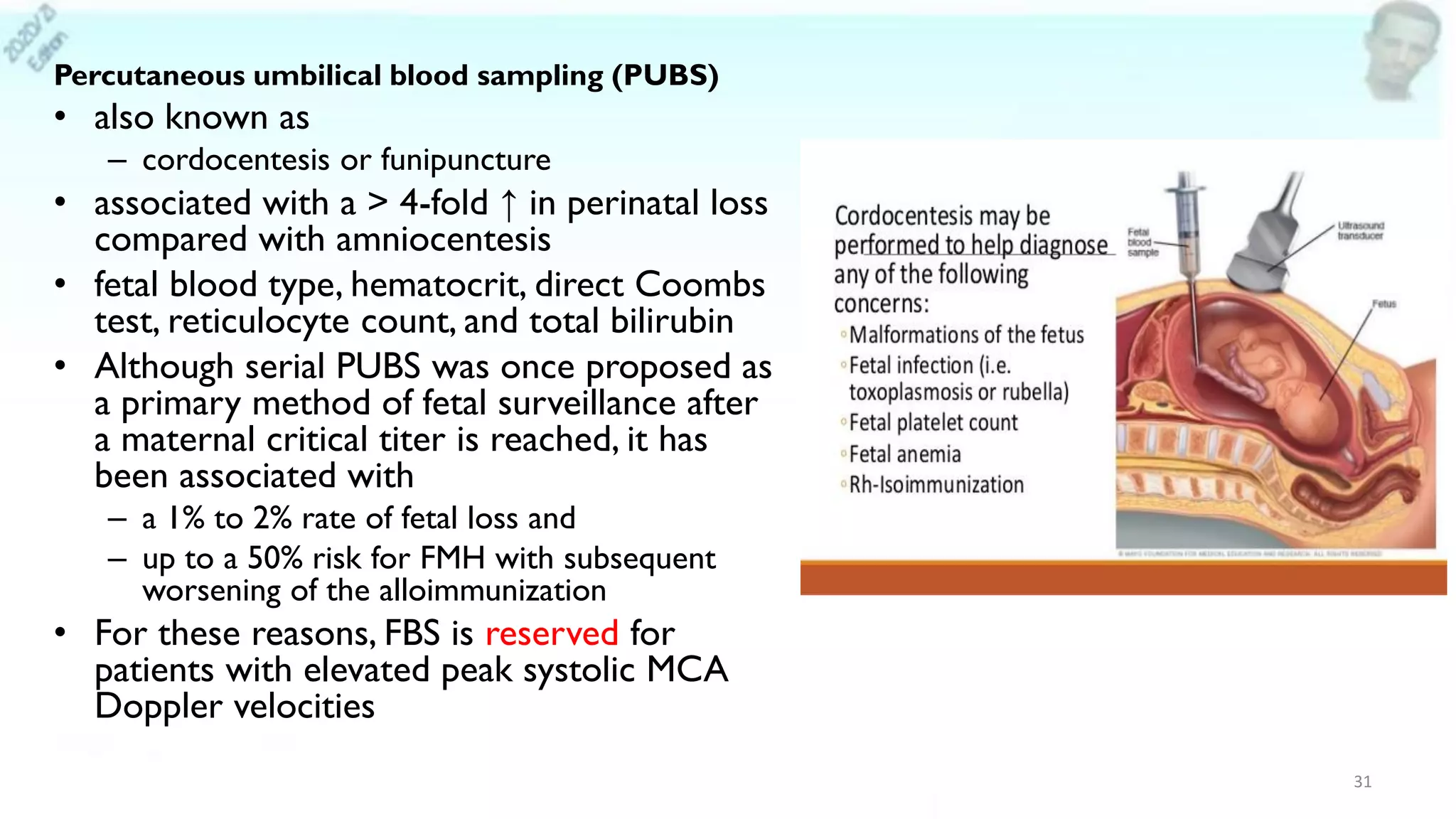
Percutaneous umbilical blood sampling (PUBS)
• also known as
– cordocentesis or funipuncture
• associated with a > 4-fold ↑ in perinatal loss
compared with amniocentesis
• fetal blood type, hematocrit, direct Coombs
test, reticulocyte count, and total bilirubin
• Although serial PUBS was once proposed as
a primary method of fetal surveillance after
a maternal critical titer is reached, it has
been associated with
– a 1% to 2% rate of fetal loss and
– up to a 50% risk for FMH with subsequent
worsening of the alloimmunization
• For these reasons, FBS is reserved for
patients with elevated peak systolic MCA
Doppler velocities
31
Hydrops fetalis
• is defined as the presence of extracellular fluid in at least
two fetal compartments
• When hydrops is present, fetal hemoglobin deficits of 7 to 10
g/dL from the mean hemoglobin value for the corresponding
gestational age can be expected
• the early second-trimester fetus can be severely anemic
without signs of hydrops
32
Treatment & Management
• Issue to consider
– Status of sensitization
– GA
– Severity
33
Unsensitized Mother
• Criteria to provide prophylaxis
– Rh-ve Mother
– no evidence of anti-D alloimmunization : Indirect – Negative;
RosetteTest - Negative
• Omit prophylaxis & screening at 28 weeks
– if biologic father: certainly D-negative
– if cell-free DNA suggest D-negative fetus
• Mini dose vial (50 µg) - Covers fetal 5 ml of fetal blood (2.5 ml
of fetal RBC
34
1st Dose: at approximately 28 weeks’ gestation: 300 µg
• 1 full dose = 300 µg (1500 IU): Covers fetal 30 ml of fetal blood (15 ml of
fetal RBC, since Hct is 50%)
• Reduces risk from 16% (ABO compatible newborn) to 2% or from 2%
(ABO incompatible newborn) to 0.1%
• If both antepartum & postpartum: risk of alloimmunization is reduced to
0.1% [Current 12th]
• repeat antibody screening is recommended to identify individuals who have
become alloimmunized (AAP, 2017).
• Duration: Suppression of Rh isoimmunization: ~ 12 weeks
• If > 12 weeks have elapsed since anti-D immunoglobulin administration,
consideration should be given to administering 300 µg of anti-D
immunoglobulin at 40 weeks of gestation
35
2nd Dose: after delivery if the newborn is D-positive
• given within 72 hours (some protection up to 28 days postpartum )
• If delivery occurs < 3 weeks from the administration of RhIG used
for antenatal indications such as external cephalic version, a repeat
dose is unnecessary unless a large FMH is detected at the time of
delivery
• Failed prophylaxis after the appropriate dose of RhIG is rare
• anti-D antibody screen may remain positive for up to 6 months.
– may produce a weekly positive 1:1 to 1:4 indirect Coombs titer in the
mother
– Persistence after 6 months is likely to be the result of sensitization
36
Anti D Immunoglobulin (Pregnancy risk factor: C)
• used to prevent hemolytic disease of the fetus and newborn
• Anti-D is a polyclonal IgG product purified from the plasma of D alloimmunized individuals
• Half life of RhIG is approximately 16 days
• Mechanism of action - Unproven
– Possibilities
• rapid macrophage-mediated clearance of anti-D-coated red cells and/or
• down-regulation of antigen-specific B cells before an immune response occurs
• Its MoA in Rx of ITP
– Not completely characterized
– Rho(D) immune globulin is thought to form anti-D-coated red blood cell complexes which
bind to macrophage Fc receptors within the spleen → blocking or saturating the spleens
ability to clear antibody-coated cells, including platelets
– In this manner, platelets are spared from destruction
• Risks
– Infection: hepatitis C virus, human immunodeficiency viruses, hepatitis B virus, and parvovirus B19
– Allergic reaction
– Serious adverse reactions are rare
37
Formulations prepared by
• Cold ethanol fractionation and ultrafiltration
– must be administered IM
– because they contain plasma proteins that could result in anaphylaxis if given
intravenously
– Two products: RhoGAM & HyperRho
• Using ion exchange chromatography
– may be administered either IV or IM
– This is important for treatment of significant fetomaternal hemorrhage
– two products:WinRho-SDF & Rhophlac
• Both preparation methods effectively remove viral particles, including
hepatitis and human immunodeficiency viruses
38
39
Special Fetomaternal Risk States
Condition & anti D dose Risk of sensitization Remark
Abortion
o 1st trimester = 50 µg
o 300-µg (usually)
• 2% - spontaneous
• 4-5% - induced
o A dose of 50 µg of RhIG is effective until 13 wk due to small volume of
RBCs in the fetoplacental circulation
Amniocentesis, chorionic villus
sampling: 300 µg
• 11% o procedures are performed in the unsensitized patient
Antepartum bleeding: 300 µg
o If there is evidence of a subchorionic hematoma or placenta abruption
o If the pregnancy is carried > 12 weeks from the time of RhlgG
administration, a repeat prophylactic dose is recommended
External cephalic version: 300 µg o Fetomaternal hemorrhage occurs in 2 - 6% of patients
Delivery With extensive FMH
o Quantify dose based on KB
test estimation
o occurs in ~ 0.4% of patients
o in 2 – 3 per 1000 pregnancies, the volume of FMH exceeds 30 mL of whole
blood (ACOG, 2017)
o No > 5 vial RhIG should be administered by the intramuscular route in one
24-hour period
o Doses of up to 600 µg (3000 IU) can be given 8 hourly till total dose
has been achieved
o The rule of thumb should be to administer RhIG when in doubt, rather
than to withhold it
Classification of Indications for RhIG
A = high
 Spontaneous miscarriage
 Elective abortion
 Ectopic pregnancy
 Genetic amniocentesis
 Chorion villus biopsy
 Fetal blood sampling (FBS)
 At 28 weeks’ gestation unless father of
fetus is RhD negative
 Amniocentesis for fetal lung maturity
 Within 72 hours of delivery of an RhD
positive infant
B = moderate
 Hydatidiform mole
C = low
 Threatened miscarriage
 Placenta previa with bleeding
 Suspected abruption
 Intrauterine fetal demise
 Blunt trauma to the abdomen
 External cephalic version
 After administration of RhD-positive
blood component
40
LEVEL OF EVIDENCE: A, B, C
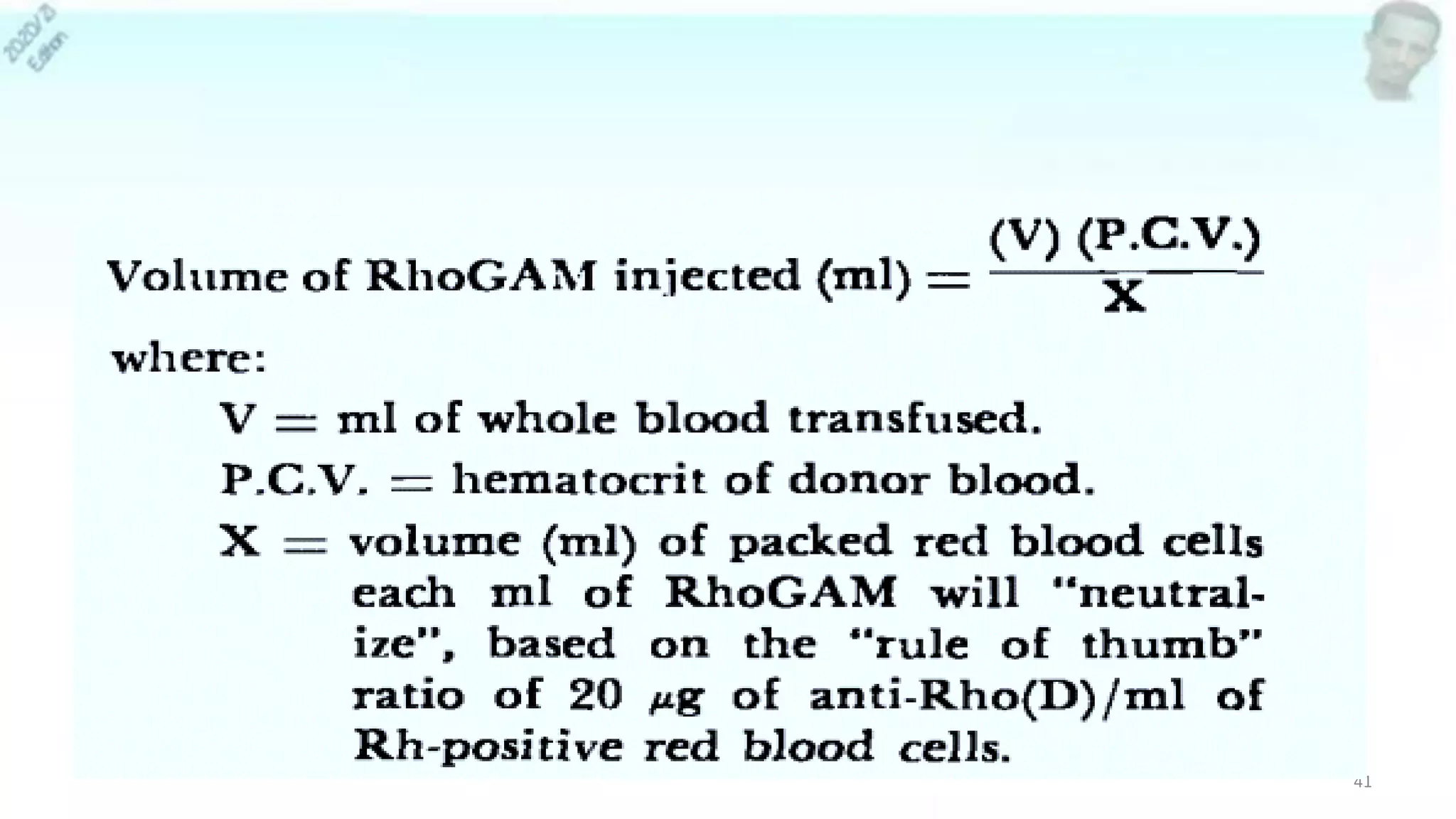
• Volume of RhoGAM injected (ml)
• (ml of whole blood transfused) (HCT of donor blood)
• Volume (ml) of packed RBCs each ml of RhoGAM will
“neutralize”, based on the “rule of thumb” ratio of 20 µg of
anti-Rho(D)/ml of Rh-positive red blood cells
41
First affected pregnancy
• ~ 25 to 30% of fetuses from D-
alloimmunized pregnancies will have
mild-to-moderate hemolytic anemia
– And without treatment, up to 25 percent
will develop hydrops
• Management of 1st alloimmunized
pregnancy is individualized and may
consist of
 Determine antibody titers at 20 weeks
– titer < critical value → titer is repeated
every 4 weeks till 24th wk → every 2 wk
– titer ≥ critical value → no benefit to
repeating it ➔ US (hydrops), MCA PSV & ?
IUT
• Doppler @ circle ofWillis & blood flow in
the proximal third of MCA
• PSV > 1.5 multiples of the median - severe
fetal anemia
 MCA peak systolic velocity: 1.5 MoM
– MCA-PSVs <1.5 MoMs → induce labor at
37 to 38 weeks of gestation
– MCA-PSV ≥1.5 MoM → severe anemia →
management depends on gestational age
• < 35 weeks: fetal blood sampling → if fetal
hematocrit <30 percent (< 2 SD) IUT
• 35 to 37 weeks: amniocentesis to assess fetal
lung maturity →
– If matured induce labor (CD for obstetrical
indication)
– If immature & reassuring BPP → continue to
monitor fetal well-being and delay delivery
until fetal lung maturity is likely
 Fetal blood sampling (Fetal HCT)
 Gestational age
 Amnionic fluid bilirubin (Currently not
used)
42
43
• No need of serial fetal surveillance
– In cases of a heterozygous paternal phenotype or questionable paternity →
ccffDNA testing should be sent to a DNA → RhD negative paternal blood or
fetal RHD negative genotype
• serial fetal surveillance indicated
– If - RHD positive fetus, homozygous paternal phenotype or RHD positive fetus
by DNA testing
• When is the best time to deliver the infant of an alloimmunized patient?
– Mild fetal hemolysis
• induction of labor at 37–38 weeks of gestation
– Severely sensitized pregnancies requiring multiple invasive procedures
• Weigh risk of continued cord blood sampling and transfusionsVs neonatal risks associated
with early delivery
• delivery at 32–34 weeks of gestation after maternal steroid administration to enhance fetal
pulmonary maturity
44
Previously affected fetus/infant
• The management of the second (or more) affected pregnancy is similar,
except maternal antibody titers are not helpful in following the degree of
fetal anemia
– Because maternal titers are not predictive of the degree of fetal anemia
– after a first affected pregnancy, future pregnancies tend to manifest with more
severe disease and at an earlier gestational age
• No need of antibody titers
– the pregnancy is assumed to be at risk regardless of titer
– because fetal surveillance is indicated by the history of prior affected fetus
• a prior pregnancy in which fetal transfusions were required,
• a prior stillbirth related to alloirnmunization, or
• a prior neonate who required exchange transfusion after delivery
45
• measure MCA-PSV weekly, beginning at 16 to 18 weeks gestation
– Serial every 1 to 2 weeks
• In the case of a heterozygous paternal phenotype or questionable paternity,
ccffDNA analysis to determine the fetal RHD status is indicated.
• Amniocentesis
– to determine fetal genotype when father is heterozygous for D ➔
• Fetus with D antigen - at risk of hemolytic disease and severe anemia regardless of maternal
antibody titers
– MCA PSV initiated at 18 weeks → repeated every 1-2 weeks
• Fetus with no D antigen: No risk of hemolytic disease
– Amniocentesis can be used after 15 weeks’ gestation to determine the status of
the fetal red cell antigen in cases of other maternal antibodies such as anti-Kell
46
• Ultrasound parameters that could predict the early onset of anemia
– enlargement of fetal liver and spleen
– Since these are sites of extramedullary hematopoiesis and the destruction
and sequestration of sensitized red cells in cases of severe HDFN
• Both splenic perimeter and hepatic length correlate with the degree of fetal anemia
– increased cardiac output
• in an effort to enhance oxygen delivery to peripheral tissues
– Lower blood viscosity
• ➔ produces fewer shearing forces in blood vessels increased blood velocities
47
• Results of MCA Dopplers will place the fetus into 1 of 3 categories:
– normal MCA Doppler
– Repeat doppler study every 2 weeks
– Delivery - at term or near term (after fetus has achieved pulmonary maturity.
– MCA PSV nearing 1.5 MoM
– Repeat every 1-2 weeks
– Delivery - may be before term & as soon as pulmonary maturity is reached.
– Sometimes enhancement of pulmonary maturity by use of corticosteroids may be
necessary.
– MCA PSV > 1.55 MoM or frank evidence of hydrops {ascites, pleural or pericardia!
effusion, subcutaneous edema)
– Delivery – when fetus reach a GA at which delivery and neonatal risks are fewer than
the risks of in utero therapy
48
• If the fetus is preterm
– Determine fetal HCT
• cordocentesis or percutaneous umbilical cord blood sampling (PUBS)
• Intrauterine transfusions (IUT)
– between 18 and 35 weeks
– Before 18 weeks, access to the umbilical vein is limited due to the small caliber of the vessel
– After 35 weeks, the risk/benefit ratio favors delivery of a fetus with evidence of severe anemia
– After transfusion,
• repeat transfusions or delivery usually will be necessary, as production of fetal blood
markedly decreases or ceases
• Timing of these transfusions may be assisted by MCA Doppler studies
• Delivery should take place when the fetus has documented pulmonary maturity
49
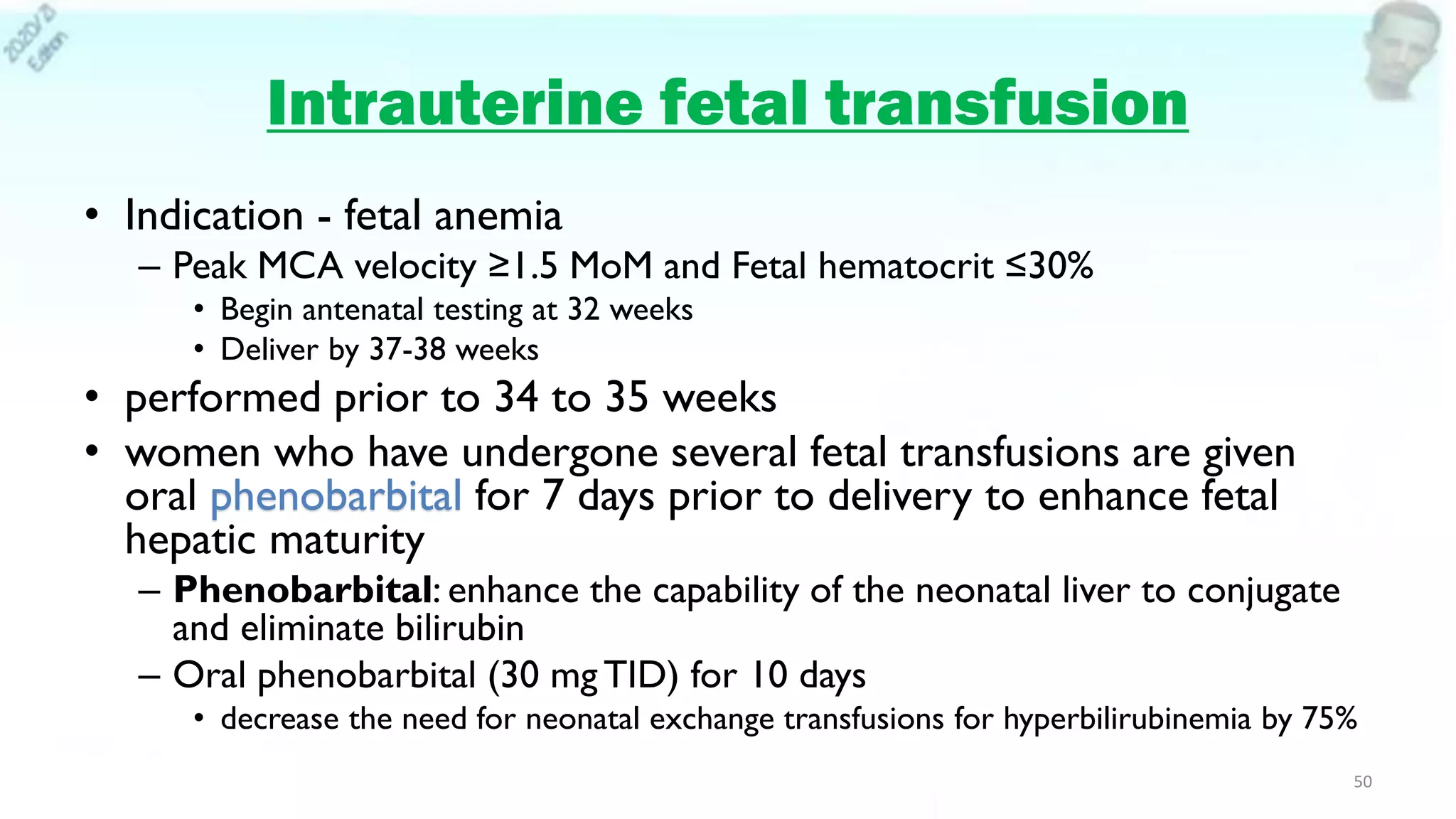
Intrauterine fetal transfusion
• Indication - fetal anemia
– Peak MCA velocity ≥1.5 MoM and Fetal hematocrit ≤30%
• Begin antenatal testing at 32 weeks
• Deliver by 37-38 weeks
• performed prior to 34 to 35 weeks
• women who have undergone several fetal transfusions are given
oral phenobarbital for 7 days prior to delivery to enhance fetal
hepatic maturity
– Phenobarbital: enhance the capability of the neonatal liver to conjugate
and eliminate bilirubin
– Oral phenobarbital (30 mg TID) for 10 days
• decrease the need for neonatal exchange transfusions for hyperbilirubinemia by 75%
50
• Target hematocrit
– In a nonhydropic fetus - 40 to 50%
• Severely anemic fetuses
– in the early second trimester do not tolerate the acute correction of their hematocrit
to normal values
– less blood is transfused initially, and another transfusion may be planned for
approximately 2 days later.
• initial hematocrit should not be increased by > 4X at the time of the first procedure
• A repeat IUT is then performed within 48 hours to correct the fetal hematocrit into the normal
range
• Before transfusion, a paralytic agent may be given to the fetus
– Vecuronium - 0.01 mg/kg administered into the umbilical vein
– Fentanyl (2 to 3 µg/kg EFW) can also be used and can be mixed with the vecuronium
– Paralysis is almost immediate and lasts 2 to 3 hours
• Subsequent transfusions usually take place every 2 to 4 weeks, depending on the
hematocrit
51
• Route
– Intravascular transfusion
• into the umbilical vein under sonographic guidance
– Puncture UV in the portion of umbilical cord near its insertion into the placenta
• preferred method of fetal transfusion
– Intraperitoneal transfusion
• may be necessary with severe, early-onset hemolytic disease in the early second trimester, a
time when the umbilical vein is too narrow to readily permit needle entry
• With hydrops, although peritoneal absorption is impaired, some prefer to transfuse into both
the fetal peritoneal cavity and the umbilical vein
• In the case of
– Anterior placenta
• needle is passed through the placental mass into the cord root
– Posterior placentation
• the cord insertion into the placenta is preferred because this represents a site of immobility
compared with a “floating” loop of cord
– A sample of fetal blood is obtained for an initial hematocrit
52
• Red cells transfused are
o Type O
o D negative
o Cytomegalovirus-negative
o Washed and packed to a final hematocrit of approximately 75% to 80% to prevent
volume overload in the fetus
o Irradiated to prevent fetal graft-versus-host reaction
o Leukocyte poor
• Leukoreduced PRBCs should be used in all neonatal transfusions because it reduces febrile non-
hemolytic transfusion reactions, prevents alloimmunization, and reduces the transmission of certain
infections (notably CMV) (Grade 2C)
• irradiated RBCs - prevent transfusion-associated-graft-versus-host disease
• The patient is admitted to the labor and delivery unit as an
• skin is prepped with hexachlorophene, and sterile drapes are applied
• A 20 gauge procedure needle (a 22-gauge needle is used for gestations <22
weeks) is introduced into the amniotic cavity and then into the umbilical vein
under continuous ultrasound guidance
53
Methods to EstimateVolume
transfused
• Method 1
– (Transfusion coefficient) X EFW
• Method 2
– The fetoplacental volume (mL) is
calculated from the ultrasound estimate of
the fetal weight according to the formula
= (1.046 + EFW in grams x 0.14)
54
Target - beginning HCT =
Desired increment in HCT
Transfusion
coefficient
10 0.02
15 0.03
20 0.04
25 0.05
30 0.06
Transfusion coefficient for
calculating transfusion volume
for fetal transfusion
• MCA peak systolic velocity threshold for severe anemia
– is higher following an initial transfusion
• 1.70 MoM rather than 1.50 MoM
• It has been shown to be useful in timing the second IUT
• After the second procedure, the MCA Doppler loses its validity in predicting fetal anemia
– Why?
• It is hypothesized that the change in threshold compensates for the contribution of donor cells in
the initial transfusion, because donor cells (from adults) have a smaller mean corpuscular volume
• Alternately, the timing of subsequent transfusions is based on anemia severity
and posttransfusion hematocrit
• Following transfusion, the fetal hematocrit generally drops by approximately 1%
per day
– A more rapid initial decline may be encountered in the setting of fetal hydrops
55
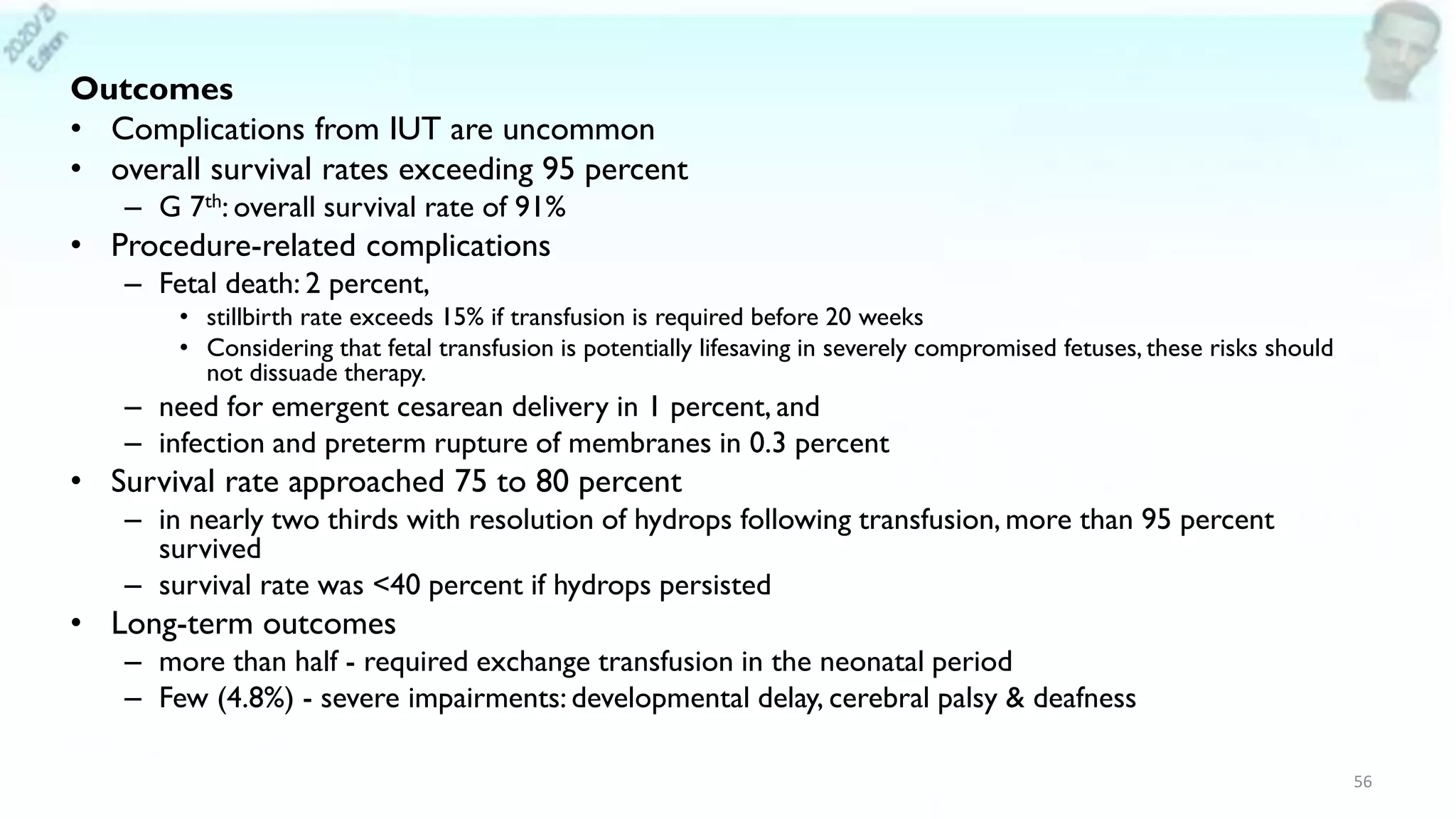
Outcomes
• Complications from IUT are uncommon
• overall survival rates exceeding 95 percent
– G 7th: overall survival rate of 91%
• Procedure-related complications
– Fetal death: 2 percent,
• stillbirth rate exceeds 15% if transfusion is required before 20 weeks
• Considering that fetal transfusion is potentially lifesaving in severely compromised fetuses, these risks should
not dissuade therapy.
– need for emergent cesarean delivery in 1 percent, and
– infection and preterm rupture of membranes in 0.3 percent
• Survival rate approached 75 to 80 percent
– in nearly two thirds with resolution of hydrops following transfusion, more than 95 percent
survived
– survival rate was <40 percent if hydrops persisted
• Long-term outcomes
– more than half - required exchange transfusion in the neonatal period
– Few (4.8%) - severe impairments: developmental delay, cerebral palsy & deafness
56
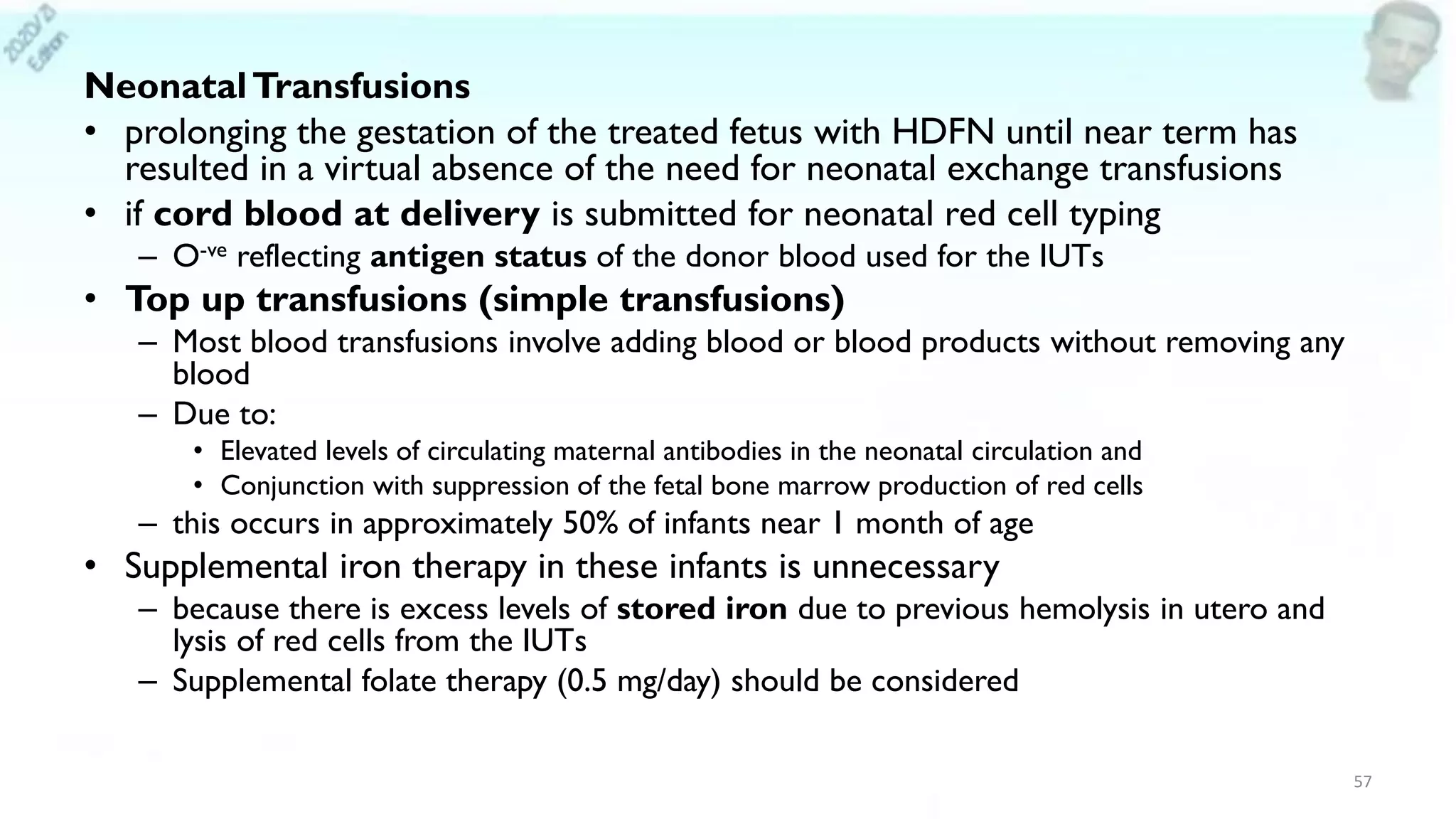
NeonatalTransfusions
• prolonging the gestation of the treated fetus with HDFN until near term has
resulted in a virtual absence of the need for neonatal exchange transfusions
• if cord blood at delivery is submitted for neonatal red cell typing
– O-ve reflecting antigen status of the donor blood used for the IUTs
• Top up transfusions (simple transfusions)
– Most blood transfusions involve adding blood or blood products without removing any
blood
– Due to:
• Elevated levels of circulating maternal antibodies in the neonatal circulation and
• Conjunction with suppression of the fetal bone marrow production of red cells
– this occurs in approximately 50% of infants near 1 month of age
• Supplemental iron therapy in these infants is unnecessary
– because there is excess levels of stored iron due to previous hemolysis in utero and
lysis of red cells from the IUTs
– Supplemental folate therapy (0.5 mg/day) should be considered
57
Other Treatment Options
• Maternal plasmapheresis (Gabbe 7th )
– Perinatal survival rate of 69%
– Plasmapheresis is started at 12 weeks’ gestation and repeated three times in that week.
– The maternal titer should be expected to be reduced by 50%.
• Intravenous immune globulin (IVIG) (Gabbe 7th )
– has also been used effectively as the sole antenatal treatment for HDFN
– given to replace the globulin fraction removed by plasmapheresis in the form of a 2 g/kg loading dose after
the 3rd plasmapheresis;
• this is followed by 1 g/kg/week of IVIG until 20 weeks’ gestation
FutureTherapeutic Options
• Patients with
– High anti red cell titers and recurrent perinatal loss in the second trimester have few options
• Artificial insemination with red cell antigen – negative donor semen
• Surrogate pregnancy, or
• Preimplantation diagnosis (if the father is heterozygous)
• Proteasome inhibitors
58
Special Issues
59
Special Issues
Condition Remark
Positive titer at delivery
• After dose at 28th week, low titer at term (≤4) may exist, still give anti D if infant is D-positive
• But, if IgM antibody is present or IgG titer >1:4 - alloimmunization is proven
D positive mother at
delivery
• Large FMH ? → KB test / flow cytometry and to determine the appropriate dose of anti-D
immunoglobulin
• See prior D antigen typing
Inadvertently omitted
Anti-D
• Give as soon as possible after recognition of the omission
• Partial protection is afforded with administration within 13 days of the birth or potentially
sensitizing event, and some experts recommend giving it as late as 28 days
anti-D given shortly
before delivery
• Women who deliver < three weeks from the administration of anti-D immunoglobulin for the
usual indications do not require a post partum dose (unless a large FMH )
Postpartum sterilization
procedures
• Controversial
• ACOG considers women undergoing postpartum sterilization procedures candidates for anti-D
immune globulin
60
Special Issues
Condition Remark
Women undergoing
intraoperative cell salvage
• maternal blood sample should be obtained 30 to 45 minutes after reinfusion to estimate the
volume of fetal red cells in the maternal circulation in case more anti-D immunoglobulin is
indicated
False-positive anti-D
antibody screen
• a typical D-sensitized patient, the anti-D antibody titer exceeds that of anti-C antibody
• If the anti-C titer equals or exceeds the anti-D titer, the clinician should consider the
possibility that the anti-D antibody is actually anti-G antibody
• G antigen is present on almost all D+ or C+ cells and absent from virtually all red cells which
lack D and C antigens.Anti-G antibody serologically mimics a combination of Anti-C and Anti
D.The challenge of anti G in the antenatal setting is to identify whether Anti D is present or
not
Weak / discordant D typing
• treated as negative & provide antenatal and postpartum anti – D
• For the purposes of
• blood donation, they are categorized as D positive
• transfusion recipients with weak D are considered D negative
Inadvertent administration
of anti-D to a +ve woman
• not harmful
61
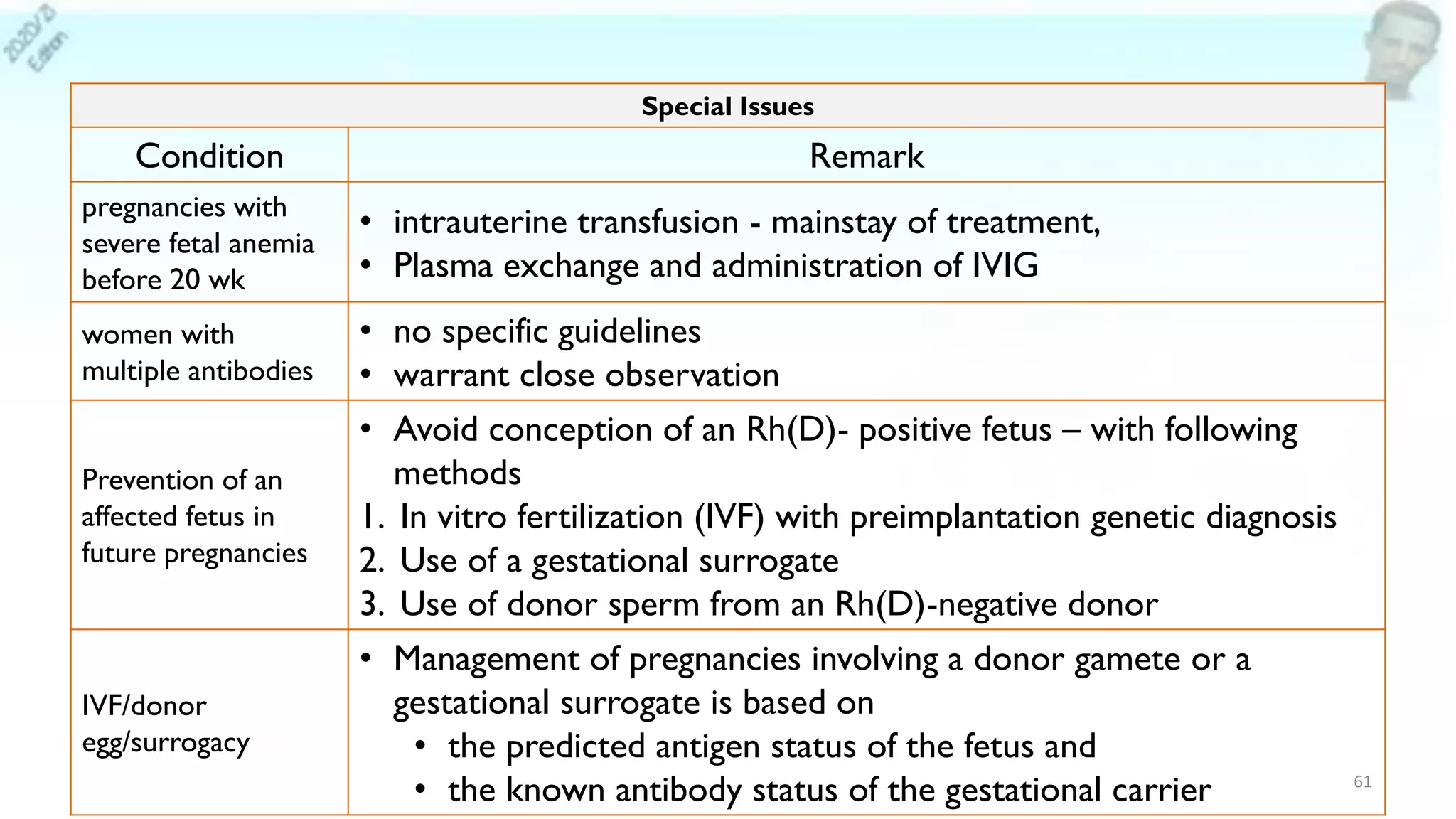
Special Issues
Condition Remark
pregnancies with
severe fetal anemia
before 20 wk
• intrauterine transfusion - mainstay of treatment,
• Plasma exchange and administration of IVIG
women with
multiple antibodies
• no specific guidelines
• warrant close observation
Prevention of an
affected fetus in
future pregnancies
• Avoid conception of an Rh(D)- positive fetus – with following
methods
1. In vitro fertilization (IVF) with preimplantation genetic diagnosis
2. Use of a gestational surrogate
3. Use of donor sperm from an Rh(D)-negative donor
IVF/donor
egg/surrogacy
• Management of pregnancies involving a donor gamete or a
gestational surrogate is based on
• the predicted antigen status of the fetus and
• the known antibody status of the gestational carrier
Hemolytic Disease due to non RhD Antibodies
• antibodies to minor antigens occur in 1.5–2.5% of obstetric patients
• Most cases of alloimmunization due to these minor antigens are caused by
incompatible blood transfusion
• antibodies to > 50 other red cell antigens have been reported to be
associated with HDFN
– only three antibodies
• anti-RhD, antiRhc, and anti-Kell (K1) ➔ cause significant enough fetal hemolysis that
treatment with IUT is considered necessary
• In one series from a tertiary care center for IUT in the Netherlands,
– 85% of cases involved anti-D;
– 10%, anti-K1; and
– 3.5%, anti-c
62
• care of the pregnant patient with antibodies to one of the clinically
significant minor antigens is similar to care of Rh-D alloimmunized
pregnant women
• Exception
– alloimmunization to the K or K1 antigens of the Kell blood group system
– Kell alloimmunization appears to be less predictable and often results in more
severe fetal anemia than alloimmunization due to other erythrocyte antigens.
– mechanism of anemia due to Kell alloimmunization to be different than with Rh-
D alloimmunization
• So maternal Kell antibody titers and amniotic fluid ΔOD450 values are not as predictive of
the degree of fetal anemia as with Rh-D sensitization
• Doppler measurements, however, appear to be accurate in predicting severe fetal anemia
63
64

Red cell alloimmunization (JUNE 2021)

  • 1.
    Red Cell Alloimmunization :https://t.me/OBGYN_Note_Book Or https://t.me/Hanybal2021 : https://www.facebook.com/obgyn.books : https://www.slideshare.net/bjlomsecond : https://www.youtube.com/channel/UCXyr7omX- DZ8cTixpQeYvcQ/videos : bjlomsecond@gmail.com
  • 2.
    Contents Introduction The Rhesus System Prevalence Pathogenesis ScreeningVs Diagnosis Treatment & Management – Unsensitized Mother – First affected pregnancy – Previously affected fetus/infant Intrauterine fetal transfusion Other Treatment Options Special Issues Hemolytic Disease due to non RhD Antibodies
  • 3.
    Introduction • Rh (Rhesus)factor – named after the monkeys in which it was first discovered – is a RBC surface antigen • Terminology – red cell alloimmunization / sensitization (formerly - isoimmunization) : production of anti RBC antibodies for foreign RBC antigens • Hemolytic disease of fetus & newborn (HDFB) – more appropriate to describe this disorder – Also = erythroblastosis fetalis • Because the peripheral blood smear of these infants demonstrated a large percentage of circulating immature red cells known as erythroblasts – mechanism of fetal anemia • Sequestration & destruction of antibody-coated red cells in fetal liver and spleen 3
  • 4.
    Historic Perspectives • Thefirst case of HDFN was probably described by a midwife in 1609 in the French literature • Sir Albert William Liley – a New Zealand medical practitioner – committed suicide in 1983 – major contribution to the story of rhesus disease was the introduction of the fetal intraperitoneal transfusion (IPT) 4 12 March 1929 – 15 June 1983
  • 5.
    The Rhesus System •The International Society of BloodTransfusion currently recognizes – 33 different blood group systems & 339 red cell antigens • Any individual who lacks a specific red cell antigen may produce an antibody when exposed to that antigen • Two important antigens are common as a cause of transfusion reaction • OAB – most important blood group system – immediate spontaneous agglutinin response • Rh system (6 Rh antigens : C,c,D,d,E,e) – Second most important blood group system – No immediate spontaneous agglutinin response from serum – Two separate genes for the Rh system are found on short arm of chromosome 1 • RHD gene - encodes for D antigen – Rh(D) status described - positive or negative [no d antigen] – Rh Positive—95% (black American), 85% (whites), 100% (in Africans) • RHCE gene, encodes for a combination of CE or ce antigens – Severe fetal anemia requiring antenatal transfusion are due to anti-D, anti-Kell, anti-c, or anti-E alloimmunization 5
  • 6.
    • Which bloodgroup is Universal Donor?? – Type O- Blood only – Not Type O+ Blood • Incidence: O – 47%;A – 41%; B – 9%;AB – 3% • Du phenotype – Du antigen is manifested by weak expression of the D gene on the RBC envelope – not considered candidates for Rh immunoprophylaxis – Rh Du (+) is considered Rh (D) positive for transfusion 6 • Type A agglutinates only in anti-A • Type B agglutinates only in anti-B • Type AB agglutinates in both • Type O agglutinates in neither of them Determining B/G & Rh
  • 7.
    • Alloimmunization isuncommon for the following reasons – low prevalence of incompatible red cell antigens; – insufficient transplacental passage of fetal antigens or maternal antibodies; – maternal-fetal ABO incompatibility, which leads to rapid clearance of fetal erythrocytes before they elicit an immune response; – variable antigenicity; and – variable maternal immune response to the antigen 7
  • 8.
    Prevalence • Incidence ofD positive – varies according to racial and ethnic origin – 85% of non-Hispanic white Americans – 90% for Native Americans – 93% for African Americans and Hispanic Americans – 99% for Asians • Frequency of "Rh-negative" individuals (Medscape) – 6% of blacks; <1% of Asians • With no apparent predisposing factors, fetal RBCs - detected in maternal blood in (ACOG 2018) – 7% of women during 1st trimester, – 16% during 2nd trimester, and – 29% during 3rd trimester • Prevalence of D alloimmunization complicating pregnancy: 0.5 to 0.9% – In population-based screening studies: prevalence of red cell alloimmunization in pregnancy ~ 1 percent 8
  • 9.
    Incidence of Rhincompatibility (ACOG 2018) • varies by race and ethnicity • Rh negative – 15% of whites • Rh-negative woman has an approximate 85% chance of mating with an Rh- positive man, – 60% of whom are heterozygous and – 40% of whom are homozygous at the D locus – 5–8% of African Americans – 1–2% of Asians and Native Americans 9
  • 10.
    D sensitization • WithoutAnti D + ABO-compatible newborn – W 25th: D alloimmunization risk = 16% • 2% will become sensitized by the time of delivery, • 7% by 6 months postpartum, and • 7% will be “sensibilized”—producing detectable antibodies only in a subsequent pregnancy – G 7th: 13% • Without Anti D + ABO-incompatible newborn – D alloimmunization risk = 2% due to erythrocyte destruction of ABO- incompatible cells, which thereby limits sensitizing opportunities • Reduction with prophylactic Anti D – Antepartum (from 16% to 2%) and post partum (from 2% to 0.1%) 10
  • 11.
    Pathogenesis • Rh incompatibilitycan occur by 2 main mechanisms 1. Exposure to Rh-positive fetal RBCs – The most common type – FMH: abortion (spontaneous/induced), trauma, invasive obstetric procedures, or normal delivery – Grandmother Effect /Theory • D negative female fetus – sensitized by her Rh+ve blood ➔ produce anti-D antibodies even before or early in her first pregnancy ➔ fetus in the 1st pregnancy is jeopardized • As many as ¼ of RhD-negative babies are immunized in early life (G 7th) 2. Rh-positive blood transfusion – blood banks prefer using blood type "O negative" as universal donor in emergency situations • Once sensitization has occurred, it is irreversible – This sensitization may produce immunological memory in the mother for future pregnancies 11
  • 12.
    • Amount offetal blood necessary to produce Rh incompatibility – as little as 0.1 mL of fetal erythrocytes (ACOG, 2018) • Risk of sensitization depends on – Volume of transplacental hemorrhage – Extent of the maternal immune response – Concurrent presence of ABO incompatibility • Fetal sex may also play a significant role in the fetal response to maternal antibodies – RhD-positive male fetuses (G 7th) • 13 times more likely than their female counterparts to become hydropic • 3 times more likely to die of their disease. • In most cases of red cell alloimmunization, a FMH occurs in the antenatal period or, more commonly, at the time of delivery 12
  • 13.
    Maternal antibodies • Aftera sensitizing event, the human antiglobulin anti-D titer can usually be detected after 5 to 16 weeks – Once sensitized, it takes ~ 4 weks for Rh antibodies in the maternal circulation to equilibrate in the fetal circulation – approximately 50% of alloimmunized patients are sensibilized • In this scenario, an antibody screen will be negative, • but memory B lymphocytes are present that can create an anti-D antibody response – With subsequent pregnancy involving an RhD-positive fetus, the antiD titer becomes detectable • In 90% of cases, sensitization occurs during delivery (initial response mostly) can cross placenta – Mostly IgG1 – a non agglutinating antibody that does not bind complement • So no intravascular hemolysis; • Rather sequestration and subsequent destruction of antibody-coated red cells in the fetal liver and spleen → fetal anemia – hemolytic anemia → hyperbilirubinemia → ultimately hydrops fetalis – can’t cross placenta 13
  • 14.
    • Associated physiologicchanges (G 7th) – Reticulocytosis from the bone marrow (when Hb ↓ by > 2 g/dL) – Erythroblasts are released from the fetal liver (when Hb ↓ by > 7 g/dL) – 2-3 diphosphatidylglycerol (DPG) levels ↑ • In effort to increase oxygen delivery to peripheral tissues – Increased umbilical artery lactate level (when Hb↓ < 8 g/dL) – Increased venous lactate (when Hb 4 g/dL) – Hydrops fetalis - in at least two body compartments (late finding) 14
  • 15.
    • Immune responseto D antigen - three groups (G 7th) : 60% to 70% • develop an antibody to relatively small volumes of red cells • the probability of immunization increases with escalating volumes of cells • A small percentage of responders can be called hyperresponders in that they will be immunized by very small quantities of red cells : 10% to 20% • immunized only by exposure to very large volumes of cells : 10% to 20% • Totally nonresponders • Sensitization to C, c, E, and e antigens – have lower immunogenicity than the D antigen – complicates ~ 0.3% of pregnancies in screening studies and accounts for about 30% of red cell alloimmunization cases – Anti-E alloimmunization • most common, but the need for fetal or neonatal transfusions is greater with anti-c alloimmunization than with anti-E or anti-C 15
  • 16.
    Alloimmunization to MinorAntigens • Kell antigens - the most frequent – 90% of non-Hispanic white Americans and up to 98% of African Americans are Kell negative – nearly 90% result from transfusion with Kell-positive blood (so transfusion history is important) – may develop more rapidly and may be more severe than with sensitization to D – mechanism of fetal anemia - differs somewhat from that in Rh-D • anti-K antibodies cause suppression of fetal erythropoiesis rather than due to hemolysis – In one study, a critical anti-K titer of 1:32 support as a predictor of disease severity • Most cases of sensitization to minor antigens result from incompatible blood transfusions • few blood group antigens pose no fetal risk (does not cause fetal hemolysis) – Lewis antibodies - Lea and Leb, as well as I antibodies, are cold agglutinins • They are predominantly IgM and are not expressed on fetal red cells – Duffy group B - Fyb 16
  • 17.
    Determining Fetal Risk •Up to 40% of D-negative pregnant women carry a D-negative fetus • presence of anti-D antibodies reflects maternal sensitization – but does not indicate whether the fetus is D positive – If a prior sensitization → higher titer despite fetal D status • Chorionic villus sampling (CVS) is not recommended – Due to greater risk for FMH & subsequent worsening of alloimmunization • Fetal testing for other antigens – E/e, C/c, Duffy, Kell, Kidd, and M/N - is also available Fetal BloodTyping • Ultrasound-directed cordocentesis – disruption of the chorion villi during the procedure can result in FMH and a rise in maternal titer, thereby worsening the fetal disease • Amniocentesis for DNA testing – Invasive • ccffDNA: Circulating cell-free fetal DNA 17
  • 18.
    Rh positive father •Homozygous father (45%) – all of his children will be Rh positive • Heterozygous father (55%) – Children: 50% chance of being Rh positive • By way of contrast the Rh-negative individual is always homozygous 18 Circulating free DNA (cfDNA)
  • 19.
  • 20.
    ccffDNA: Circulating cell-freefetal DNA • Early studies in pregnant women carrying a male fetus indicated that – 3% of ccffDNA in the maternal circulation in the first trimester is fetal in origin; – this increases to 6% by the third trimester • Source of this DNA appears to be • Noninvasive assessment: sample from maternal plasma after 10 weeks for PCR • can be performed with reliable results at as early as 10 weeks’ gestation • Sensitivity > 99, specificity > 95%, and P/N PPV - very high • Indications – ACOG: does not recommend routinely (Since it is costly) – To identify fetuses that are D Negative and do not require anemia surveillance, and – To withheld anti-D immune globulin if the fetus is D negative • Fetal DNA is rapidly cleared from the maternal circulation with a mean half-life of 16 minutes after cesarean delivery; after vaginal delivery, – fetal free DNA is cleared by 100 hours 20
  • 21.
    Fetomaternal Hemorrhage • alarge blood loss & true fetomaternal hemorrhage is rare – In one series of > 30,000 pregnancies, • FMH ≥150 mL occurred in 1 per 2800 births • Prevalence of FMH of – at least 30 mL of fetal blood (which can be covered by a standard 300-μg dose of anti-D immune globulin) • is estimated to occur - 3 per 1000 pregnancies – in > 80 percent of cases, no cause is identified 21
  • 22.
    ABO blood groupincompatibility • Incompatibility for antigens A and B - most common cause of hemolytic disease in newborns, – but it does not cause appreciable hemolysis in the fetus • ~ 20% of newborns have ABO blood group incompatibility – yet only 5 percent are affected clinically (mild anemia) • often seen in firstborn neonates • Rarely becomes more severe in successive pregnancies • considered a pediatric disease - rarely of obstetrical concern – because most anti-A and anti-B antibodies are IgM and do not cross the placenta. – Fetal red cells also have fewer A and B antigenic sites than adult cells and are thus less immunogenic • No need fetal surveillance and early delivery • neonatal observation for hyperbilirubinemia - ? phototherapy CDE incompatibility • Seen in successive newborns • More severe in successive pregnancies • obstetrical concern • fetal surveillance and early delivery is mandatory if mother is sensitized 22 Differences in ABO & CDE incompatibility
  • 23.
    Screening Vs Diagnosis •Screening – Blood type: ± D antigen? – Antibody screen: • Coombs test (  maternal blood &  fetal/neonatal blood) – Rosette Test (Fetal RBC Screen [Qualitative]) – Kleihauer-Betke test • Diagnostic – Sonography: • MCA peak systolic velocity (most accurate predictor) • Hydrops (ominous finding) – CTG: sinusoidal FHR pattern 23
  • 24.
    Coombs test Indirect • Forprenatal detection of Rh Antibodies • Take maternal blood → serum → then • In a test tube: – Maternal serum + Animal/human Rh+ve RBCs + coombs reagent (antihuman globulin) → if – Agglutination: mother has produced antibodies against fetal Rh +ve RBCs • -ve (No Agglutination): Give Anti D • +ve (Agglutination): No need to give Anti D – determine antibody titers – critical titer:The level at which significant fetal anemia could potentially develop • Usually ranges between 1:8 and 1:32 • If the critical titer for anti-D antibodies is 1:16, a titer ≥1:16 indicates the possibility of severe hemolytic disease • Exception → Kell sensitization • Kell sensitization – since there is less hemolysis, and severe anemia may not be predicted by the maternal Kell antibody titer • Ancillary tests that should follow titer – Paternal Genotype – Fetal Genotype:Amniocentesis is the primary modality (PCR) • 2 mL of amniotic fluid. • sensitivity and specificity - 98.7% and 100 • Positive and negative predictive values of 100% and 96.9% • in 2nd trimester with > 99% accuracy Direct • To detect anemia 20 to Hemolytic disease of the newborn • Take fetal blood → serum → then • In a test tube mix this serum with coombs reagent → if – Agglutination: neonate’s blood has Abs from mother destroying its blood 24
  • 25.
    The RosetteTest • AQualitative (not quantitative) test • the initial test of choice, is highly sensitive in qualitatively detecting 10 mL of fetal whole blood in the maternal circulation • To identify quantity of fetal RBC in maternal circulation Technique – Take maternal blood → add anti D (binds to D positive RBCs, but doesn’t agglutinate them) → add indicator RBC bearing D-antigen to form rosette ➔ count number of rosette ➔ • Thus, if rosettes are visualized, there are fetal D- positive cells in that sample • Results interpretation – Negative: result warrants administration of a standard 300 µg dose of RhIG – Positive →Kleihauer-Betke acid-elution test - for quantifying FMH 25
  • 26.
    Quantitative Tests Kleihauer-Betke acid-elutiontest • the most widely used confirmatory test for quantifying FMH • inexpensive and requires no special equipment – it lacks standardization and precision, and may not be accurate in conditions with elevated F-cells • Principle: fetal hemoglobin (HbF) is resistant to acid-elution whereas adult hemoglobin is acid- sensitive • Technique – smears are prepared from maternal capillary / venous blood → Ehrlich's acid hematoxylin → examined under light microscopy – fetal erythrocytes appear red and adult erythrocytes appear as “ghosts” – fetal cells are then counted and expressed as a percentage of adult cells FMH (ml) = KB % X Estimated maternal blood volume (usually 5000 ml) RhIG vial = (Calculated FMH (ml) ÷ 30 ml) • used for calculating qty o FMH & determining dose o anti D • two scenarios in which it may not be accurate: – Maternal hemoglobinopathies such as β- thalassemia in which the fetal hemoglobin level is elevated and – pregnancies at or near term, when the fetus has already started to produce hemoglobin A Anti-HbF flow cytometry • is a promising alternative, although its use is limited by equipment and staffing costs 26
  • 27.
    MCA Doppler Velocimetry(PSV) • for detection of fetal anemia • anemic fetus shunts blood preferentially to the brain to maintain adequate oxygenation – So velocity rises because of increased cardiac output and decreased blood viscosity • MCA peak systolic velocity – ≤ 1.5 MoM ➔ begin antenatal testing at 32 weeks • A value > 1.5 MoM for the corresponding GA predicts moderate to severe fetal anemia with a sensitivity of 88% and a negative predictive rate of 89% • Deliver at 37 – 38 weeks – > 1.5 MoM ➔ check fetal Hct by fetal blood sampling • sensitivity of 100% and a false-positive rate of 12% (ACOG 2018) • < 30%  < 35 wk → IUT and for ≥ 35 wk → Deliver • ≥ 30% → begin antenatal testing at 32 weeks → Deliver at 37 – 38 weeks • false positive rate of MCA PSV increases significantly beyond 34 - 35 weeks (ACOG 2018) – due to the normal augmentation in cardiac output that develops at this gestational age 27
  • 28.
    28 • Circle ofWillis begins to form when the right & left internal carotid artery enters the cranial cavity and each one divides into two main branches: the anterior cerebral artery (ACA) and middle cerebral artery (MCA) • Importance: to provide collateral blood flow bn anterior & posterior circulations of the brain, protecting against ischemia in the event of vessel disease or damage in one or more areas Anterior circulation: From the bilateral internal carotid arteries • supplies most of the cerebral hemispheres (frontal lobes, parietal lobes, lateral temporal lobes and anterior part of deep cerebral hemispheres) Posterior circulation: from bilateral vertebral arteries • Supplies brainstem, cerebellum, occipital lobes, medial temporal lobes and posterior part of the deep hemisphere, mainly the thalamus
  • 29.
    • The Dopplergate is then placed in the proximal MCA where the vessel arises from the carotid siphon – Measurements in the more distal aspect of the vessel will be inaccurate because reduced peak velocities will be obtained • fetus should be in a quiescent state – because accelerations of FHR can result in a decrease in the PSV, especially late in 3rd trimester • administration of antenatal steroids – decreases in the peak MCA velocity – effect usually lasts for 24 to 48 hours after the last dose • MCA measurements can be obtained reliably as early as 18 weeks’ gestation • Values should be converted to MoM using Internet based calculators (e.g., www.perinatology.com) 29 Correct determination of the fetal peak middle cerebral artery Doppler velocity Techniques – First locate anterior wing of sphenoid bone at the base of the skull → using Color or power Doppler, locate MCA – Angle of insonation is maintained as close to zero
  • 30.
    Amnionic Fluid SpectralAnalysis • This test is included for historical interest – demonstrated by Liley (1961) • Amnionic fluid bilirubin concentration – indirect indication of the degree of fetal hemolysis – measured by a spectrophotometer (represented as change in optical density absorbance at 450 nm = ΔOD450) • likelihood of fetal anemia – 3 zone (by plotting the ΔOD450 value) – zones roughly correlated with fetal hemoglobin concentration (anemia severity) – The original Liley graph • valid from 27 to 42 weeks’ gestation – Modified by Queenan (1993) • include gestational ages as early as 14 weeks • NB: amnionic fluid bilirubin level is normally high in mid pregnancy, limiting the reliability of this technique • Currently replace with MCA PSV – Due to its less accuracy & invasiveness 30 • Liley Curve – Zone I – fetus very low risk of severe fetal anemia – Zone II – mild to moderate fetal hemolysis – Zone III – severe fetal anemia with high probability of fetal death 7-10 days • Liley good after 27 weeks • 98% sensitive for detecting anemia in upper zone 2/ zone 3
  • 31.
    Percutaneous umbilical bloodsampling (PUBS) • also known as – cordocentesis or funipuncture • associated with a > 4-fold ↑ in perinatal loss compared with amniocentesis • fetal blood type, hematocrit, direct Coombs test, reticulocyte count, and total bilirubin • Although serial PUBS was once proposed as a primary method of fetal surveillance after a maternal critical titer is reached, it has been associated with – a 1% to 2% rate of fetal loss and – up to a 50% risk for FMH with subsequent worsening of the alloimmunization • For these reasons, FBS is reserved for patients with elevated peak systolic MCA Doppler velocities 31
  • 32.
    Hydrops fetalis • isdefined as the presence of extracellular fluid in at least two fetal compartments • When hydrops is present, fetal hemoglobin deficits of 7 to 10 g/dL from the mean hemoglobin value for the corresponding gestational age can be expected • the early second-trimester fetus can be severely anemic without signs of hydrops 32
  • 33.
    Treatment & Management •Issue to consider – Status of sensitization – GA – Severity 33
  • 34.
    Unsensitized Mother • Criteriato provide prophylaxis – Rh-ve Mother – no evidence of anti-D alloimmunization : Indirect – Negative; RosetteTest - Negative • Omit prophylaxis & screening at 28 weeks – if biologic father: certainly D-negative – if cell-free DNA suggest D-negative fetus • Mini dose vial (50 µg) - Covers fetal 5 ml of fetal blood (2.5 ml of fetal RBC 34
  • 35.
    1st Dose: atapproximately 28 weeks’ gestation: 300 µg • 1 full dose = 300 µg (1500 IU): Covers fetal 30 ml of fetal blood (15 ml of fetal RBC, since Hct is 50%) • Reduces risk from 16% (ABO compatible newborn) to 2% or from 2% (ABO incompatible newborn) to 0.1% • If both antepartum & postpartum: risk of alloimmunization is reduced to 0.1% [Current 12th] • repeat antibody screening is recommended to identify individuals who have become alloimmunized (AAP, 2017). • Duration: Suppression of Rh isoimmunization: ~ 12 weeks • If > 12 weeks have elapsed since anti-D immunoglobulin administration, consideration should be given to administering 300 µg of anti-D immunoglobulin at 40 weeks of gestation 35
  • 36.
    2nd Dose: afterdelivery if the newborn is D-positive • given within 72 hours (some protection up to 28 days postpartum ) • If delivery occurs < 3 weeks from the administration of RhIG used for antenatal indications such as external cephalic version, a repeat dose is unnecessary unless a large FMH is detected at the time of delivery • Failed prophylaxis after the appropriate dose of RhIG is rare • anti-D antibody screen may remain positive for up to 6 months. – may produce a weekly positive 1:1 to 1:4 indirect Coombs titer in the mother – Persistence after 6 months is likely to be the result of sensitization 36
  • 37.
    Anti D Immunoglobulin(Pregnancy risk factor: C) • used to prevent hemolytic disease of the fetus and newborn • Anti-D is a polyclonal IgG product purified from the plasma of D alloimmunized individuals • Half life of RhIG is approximately 16 days • Mechanism of action - Unproven – Possibilities • rapid macrophage-mediated clearance of anti-D-coated red cells and/or • down-regulation of antigen-specific B cells before an immune response occurs • Its MoA in Rx of ITP – Not completely characterized – Rho(D) immune globulin is thought to form anti-D-coated red blood cell complexes which bind to macrophage Fc receptors within the spleen → blocking or saturating the spleens ability to clear antibody-coated cells, including platelets – In this manner, platelets are spared from destruction • Risks – Infection: hepatitis C virus, human immunodeficiency viruses, hepatitis B virus, and parvovirus B19 – Allergic reaction – Serious adverse reactions are rare 37
  • 38.
    Formulations prepared by •Cold ethanol fractionation and ultrafiltration – must be administered IM – because they contain plasma proteins that could result in anaphylaxis if given intravenously – Two products: RhoGAM & HyperRho • Using ion exchange chromatography – may be administered either IV or IM – This is important for treatment of significant fetomaternal hemorrhage – two products:WinRho-SDF & Rhophlac • Both preparation methods effectively remove viral particles, including hepatitis and human immunodeficiency viruses 38
  • 39.
    39 Special Fetomaternal RiskStates Condition & anti D dose Risk of sensitization Remark Abortion o 1st trimester = 50 µg o 300-µg (usually) • 2% - spontaneous • 4-5% - induced o A dose of 50 µg of RhIG is effective until 13 wk due to small volume of RBCs in the fetoplacental circulation Amniocentesis, chorionic villus sampling: 300 µg • 11% o procedures are performed in the unsensitized patient Antepartum bleeding: 300 µg o If there is evidence of a subchorionic hematoma or placenta abruption o If the pregnancy is carried > 12 weeks from the time of RhlgG administration, a repeat prophylactic dose is recommended External cephalic version: 300 µg o Fetomaternal hemorrhage occurs in 2 - 6% of patients Delivery With extensive FMH o Quantify dose based on KB test estimation o occurs in ~ 0.4% of patients o in 2 – 3 per 1000 pregnancies, the volume of FMH exceeds 30 mL of whole blood (ACOG, 2017) o No > 5 vial RhIG should be administered by the intramuscular route in one 24-hour period o Doses of up to 600 µg (3000 IU) can be given 8 hourly till total dose has been achieved o The rule of thumb should be to administer RhIG when in doubt, rather than to withhold it
  • 40.
    Classification of Indicationsfor RhIG A = high  Spontaneous miscarriage  Elective abortion  Ectopic pregnancy  Genetic amniocentesis  Chorion villus biopsy  Fetal blood sampling (FBS)  At 28 weeks’ gestation unless father of fetus is RhD negative  Amniocentesis for fetal lung maturity  Within 72 hours of delivery of an RhD positive infant B = moderate  Hydatidiform mole C = low  Threatened miscarriage  Placenta previa with bleeding  Suspected abruption  Intrauterine fetal demise  Blunt trauma to the abdomen  External cephalic version  After administration of RhD-positive blood component 40 LEVEL OF EVIDENCE: A, B, C
  • 41.
    • Volume ofRhoGAM injected (ml) • (ml of whole blood transfused) (HCT of donor blood) • Volume (ml) of packed RBCs each ml of RhoGAM will “neutralize”, based on the “rule of thumb” ratio of 20 µg of anti-Rho(D)/ml of Rh-positive red blood cells 41
  • 42.
    First affected pregnancy •~ 25 to 30% of fetuses from D- alloimmunized pregnancies will have mild-to-moderate hemolytic anemia – And without treatment, up to 25 percent will develop hydrops • Management of 1st alloimmunized pregnancy is individualized and may consist of  Determine antibody titers at 20 weeks – titer < critical value → titer is repeated every 4 weeks till 24th wk → every 2 wk – titer ≥ critical value → no benefit to repeating it ➔ US (hydrops), MCA PSV & ? IUT • Doppler @ circle ofWillis & blood flow in the proximal third of MCA • PSV > 1.5 multiples of the median - severe fetal anemia  MCA peak systolic velocity: 1.5 MoM – MCA-PSVs <1.5 MoMs → induce labor at 37 to 38 weeks of gestation – MCA-PSV ≥1.5 MoM → severe anemia → management depends on gestational age • < 35 weeks: fetal blood sampling → if fetal hematocrit <30 percent (< 2 SD) IUT • 35 to 37 weeks: amniocentesis to assess fetal lung maturity → – If matured induce labor (CD for obstetrical indication) – If immature & reassuring BPP → continue to monitor fetal well-being and delay delivery until fetal lung maturity is likely  Fetal blood sampling (Fetal HCT)  Gestational age  Amnionic fluid bilirubin (Currently not used) 42
  • 43.
  • 44.
    • No needof serial fetal surveillance – In cases of a heterozygous paternal phenotype or questionable paternity → ccffDNA testing should be sent to a DNA → RhD negative paternal blood or fetal RHD negative genotype • serial fetal surveillance indicated – If - RHD positive fetus, homozygous paternal phenotype or RHD positive fetus by DNA testing • When is the best time to deliver the infant of an alloimmunized patient? – Mild fetal hemolysis • induction of labor at 37–38 weeks of gestation – Severely sensitized pregnancies requiring multiple invasive procedures • Weigh risk of continued cord blood sampling and transfusionsVs neonatal risks associated with early delivery • delivery at 32–34 weeks of gestation after maternal steroid administration to enhance fetal pulmonary maturity 44
  • 45.
    Previously affected fetus/infant •The management of the second (or more) affected pregnancy is similar, except maternal antibody titers are not helpful in following the degree of fetal anemia – Because maternal titers are not predictive of the degree of fetal anemia – after a first affected pregnancy, future pregnancies tend to manifest with more severe disease and at an earlier gestational age • No need of antibody titers – the pregnancy is assumed to be at risk regardless of titer – because fetal surveillance is indicated by the history of prior affected fetus • a prior pregnancy in which fetal transfusions were required, • a prior stillbirth related to alloirnmunization, or • a prior neonate who required exchange transfusion after delivery 45
  • 46.
    • measure MCA-PSVweekly, beginning at 16 to 18 weeks gestation – Serial every 1 to 2 weeks • In the case of a heterozygous paternal phenotype or questionable paternity, ccffDNA analysis to determine the fetal RHD status is indicated. • Amniocentesis – to determine fetal genotype when father is heterozygous for D ➔ • Fetus with D antigen - at risk of hemolytic disease and severe anemia regardless of maternal antibody titers – MCA PSV initiated at 18 weeks → repeated every 1-2 weeks • Fetus with no D antigen: No risk of hemolytic disease – Amniocentesis can be used after 15 weeks’ gestation to determine the status of the fetal red cell antigen in cases of other maternal antibodies such as anti-Kell 46
  • 47.
    • Ultrasound parametersthat could predict the early onset of anemia – enlargement of fetal liver and spleen – Since these are sites of extramedullary hematopoiesis and the destruction and sequestration of sensitized red cells in cases of severe HDFN • Both splenic perimeter and hepatic length correlate with the degree of fetal anemia – increased cardiac output • in an effort to enhance oxygen delivery to peripheral tissues – Lower blood viscosity • ➔ produces fewer shearing forces in blood vessels increased blood velocities 47
  • 48.
    • Results ofMCA Dopplers will place the fetus into 1 of 3 categories: – normal MCA Doppler – Repeat doppler study every 2 weeks – Delivery - at term or near term (after fetus has achieved pulmonary maturity. – MCA PSV nearing 1.5 MoM – Repeat every 1-2 weeks – Delivery - may be before term & as soon as pulmonary maturity is reached. – Sometimes enhancement of pulmonary maturity by use of corticosteroids may be necessary. – MCA PSV > 1.55 MoM or frank evidence of hydrops {ascites, pleural or pericardia! effusion, subcutaneous edema) – Delivery – when fetus reach a GA at which delivery and neonatal risks are fewer than the risks of in utero therapy 48
  • 49.
    • If thefetus is preterm – Determine fetal HCT • cordocentesis or percutaneous umbilical cord blood sampling (PUBS) • Intrauterine transfusions (IUT) – between 18 and 35 weeks – Before 18 weeks, access to the umbilical vein is limited due to the small caliber of the vessel – After 35 weeks, the risk/benefit ratio favors delivery of a fetus with evidence of severe anemia – After transfusion, • repeat transfusions or delivery usually will be necessary, as production of fetal blood markedly decreases or ceases • Timing of these transfusions may be assisted by MCA Doppler studies • Delivery should take place when the fetus has documented pulmonary maturity 49
  • 50.
    Intrauterine fetal transfusion •Indication - fetal anemia – Peak MCA velocity ≥1.5 MoM and Fetal hematocrit ≤30% • Begin antenatal testing at 32 weeks • Deliver by 37-38 weeks • performed prior to 34 to 35 weeks • women who have undergone several fetal transfusions are given oral phenobarbital for 7 days prior to delivery to enhance fetal hepatic maturity – Phenobarbital: enhance the capability of the neonatal liver to conjugate and eliminate bilirubin – Oral phenobarbital (30 mg TID) for 10 days • decrease the need for neonatal exchange transfusions for hyperbilirubinemia by 75% 50
  • 51.
    • Target hematocrit –In a nonhydropic fetus - 40 to 50% • Severely anemic fetuses – in the early second trimester do not tolerate the acute correction of their hematocrit to normal values – less blood is transfused initially, and another transfusion may be planned for approximately 2 days later. • initial hematocrit should not be increased by > 4X at the time of the first procedure • A repeat IUT is then performed within 48 hours to correct the fetal hematocrit into the normal range • Before transfusion, a paralytic agent may be given to the fetus – Vecuronium - 0.01 mg/kg administered into the umbilical vein – Fentanyl (2 to 3 µg/kg EFW) can also be used and can be mixed with the vecuronium – Paralysis is almost immediate and lasts 2 to 3 hours • Subsequent transfusions usually take place every 2 to 4 weeks, depending on the hematocrit 51
  • 52.
    • Route – Intravasculartransfusion • into the umbilical vein under sonographic guidance – Puncture UV in the portion of umbilical cord near its insertion into the placenta • preferred method of fetal transfusion – Intraperitoneal transfusion • may be necessary with severe, early-onset hemolytic disease in the early second trimester, a time when the umbilical vein is too narrow to readily permit needle entry • With hydrops, although peritoneal absorption is impaired, some prefer to transfuse into both the fetal peritoneal cavity and the umbilical vein • In the case of – Anterior placenta • needle is passed through the placental mass into the cord root – Posterior placentation • the cord insertion into the placenta is preferred because this represents a site of immobility compared with a “floating” loop of cord – A sample of fetal blood is obtained for an initial hematocrit 52
  • 53.
    • Red cellstransfused are o Type O o D negative o Cytomegalovirus-negative o Washed and packed to a final hematocrit of approximately 75% to 80% to prevent volume overload in the fetus o Irradiated to prevent fetal graft-versus-host reaction o Leukocyte poor • Leukoreduced PRBCs should be used in all neonatal transfusions because it reduces febrile non- hemolytic transfusion reactions, prevents alloimmunization, and reduces the transmission of certain infections (notably CMV) (Grade 2C) • irradiated RBCs - prevent transfusion-associated-graft-versus-host disease • The patient is admitted to the labor and delivery unit as an • skin is prepped with hexachlorophene, and sterile drapes are applied • A 20 gauge procedure needle (a 22-gauge needle is used for gestations <22 weeks) is introduced into the amniotic cavity and then into the umbilical vein under continuous ultrasound guidance 53
  • 54.
    Methods to EstimateVolume transfused •Method 1 – (Transfusion coefficient) X EFW • Method 2 – The fetoplacental volume (mL) is calculated from the ultrasound estimate of the fetal weight according to the formula = (1.046 + EFW in grams x 0.14) 54 Target - beginning HCT = Desired increment in HCT Transfusion coefficient 10 0.02 15 0.03 20 0.04 25 0.05 30 0.06 Transfusion coefficient for calculating transfusion volume for fetal transfusion
  • 55.
    • MCA peaksystolic velocity threshold for severe anemia – is higher following an initial transfusion • 1.70 MoM rather than 1.50 MoM • It has been shown to be useful in timing the second IUT • After the second procedure, the MCA Doppler loses its validity in predicting fetal anemia – Why? • It is hypothesized that the change in threshold compensates for the contribution of donor cells in the initial transfusion, because donor cells (from adults) have a smaller mean corpuscular volume • Alternately, the timing of subsequent transfusions is based on anemia severity and posttransfusion hematocrit • Following transfusion, the fetal hematocrit generally drops by approximately 1% per day – A more rapid initial decline may be encountered in the setting of fetal hydrops 55
  • 56.
    Outcomes • Complications fromIUT are uncommon • overall survival rates exceeding 95 percent – G 7th: overall survival rate of 91% • Procedure-related complications – Fetal death: 2 percent, • stillbirth rate exceeds 15% if transfusion is required before 20 weeks • Considering that fetal transfusion is potentially lifesaving in severely compromised fetuses, these risks should not dissuade therapy. – need for emergent cesarean delivery in 1 percent, and – infection and preterm rupture of membranes in 0.3 percent • Survival rate approached 75 to 80 percent – in nearly two thirds with resolution of hydrops following transfusion, more than 95 percent survived – survival rate was <40 percent if hydrops persisted • Long-term outcomes – more than half - required exchange transfusion in the neonatal period – Few (4.8%) - severe impairments: developmental delay, cerebral palsy & deafness 56
  • 57.
    NeonatalTransfusions • prolonging thegestation of the treated fetus with HDFN until near term has resulted in a virtual absence of the need for neonatal exchange transfusions • if cord blood at delivery is submitted for neonatal red cell typing – O-ve reflecting antigen status of the donor blood used for the IUTs • Top up transfusions (simple transfusions) – Most blood transfusions involve adding blood or blood products without removing any blood – Due to: • Elevated levels of circulating maternal antibodies in the neonatal circulation and • Conjunction with suppression of the fetal bone marrow production of red cells – this occurs in approximately 50% of infants near 1 month of age • Supplemental iron therapy in these infants is unnecessary – because there is excess levels of stored iron due to previous hemolysis in utero and lysis of red cells from the IUTs – Supplemental folate therapy (0.5 mg/day) should be considered 57
  • 58.
    Other Treatment Options •Maternal plasmapheresis (Gabbe 7th ) – Perinatal survival rate of 69% – Plasmapheresis is started at 12 weeks’ gestation and repeated three times in that week. – The maternal titer should be expected to be reduced by 50%. • Intravenous immune globulin (IVIG) (Gabbe 7th ) – has also been used effectively as the sole antenatal treatment for HDFN – given to replace the globulin fraction removed by plasmapheresis in the form of a 2 g/kg loading dose after the 3rd plasmapheresis; • this is followed by 1 g/kg/week of IVIG until 20 weeks’ gestation FutureTherapeutic Options • Patients with – High anti red cell titers and recurrent perinatal loss in the second trimester have few options • Artificial insemination with red cell antigen – negative donor semen • Surrogate pregnancy, or • Preimplantation diagnosis (if the father is heterozygous) • Proteasome inhibitors 58
  • 59.
    Special Issues 59 Special Issues ConditionRemark Positive titer at delivery • After dose at 28th week, low titer at term (≤4) may exist, still give anti D if infant is D-positive • But, if IgM antibody is present or IgG titer >1:4 - alloimmunization is proven D positive mother at delivery • Large FMH ? → KB test / flow cytometry and to determine the appropriate dose of anti-D immunoglobulin • See prior D antigen typing Inadvertently omitted Anti-D • Give as soon as possible after recognition of the omission • Partial protection is afforded with administration within 13 days of the birth or potentially sensitizing event, and some experts recommend giving it as late as 28 days anti-D given shortly before delivery • Women who deliver < three weeks from the administration of anti-D immunoglobulin for the usual indications do not require a post partum dose (unless a large FMH ) Postpartum sterilization procedures • Controversial • ACOG considers women undergoing postpartum sterilization procedures candidates for anti-D immune globulin
  • 60.
    60 Special Issues Condition Remark Womenundergoing intraoperative cell salvage • maternal blood sample should be obtained 30 to 45 minutes after reinfusion to estimate the volume of fetal red cells in the maternal circulation in case more anti-D immunoglobulin is indicated False-positive anti-D antibody screen • a typical D-sensitized patient, the anti-D antibody titer exceeds that of anti-C antibody • If the anti-C titer equals or exceeds the anti-D titer, the clinician should consider the possibility that the anti-D antibody is actually anti-G antibody • G antigen is present on almost all D+ or C+ cells and absent from virtually all red cells which lack D and C antigens.Anti-G antibody serologically mimics a combination of Anti-C and Anti D.The challenge of anti G in the antenatal setting is to identify whether Anti D is present or not Weak / discordant D typing • treated as negative & provide antenatal and postpartum anti – D • For the purposes of • blood donation, they are categorized as D positive • transfusion recipients with weak D are considered D negative Inadvertent administration of anti-D to a +ve woman • not harmful
  • 61.
    61 Special Issues Condition Remark pregnancieswith severe fetal anemia before 20 wk • intrauterine transfusion - mainstay of treatment, • Plasma exchange and administration of IVIG women with multiple antibodies • no specific guidelines • warrant close observation Prevention of an affected fetus in future pregnancies • Avoid conception of an Rh(D)- positive fetus – with following methods 1. In vitro fertilization (IVF) with preimplantation genetic diagnosis 2. Use of a gestational surrogate 3. Use of donor sperm from an Rh(D)-negative donor IVF/donor egg/surrogacy • Management of pregnancies involving a donor gamete or a gestational surrogate is based on • the predicted antigen status of the fetus and • the known antibody status of the gestational carrier
  • 62.
    Hemolytic Disease dueto non RhD Antibodies • antibodies to minor antigens occur in 1.5–2.5% of obstetric patients • Most cases of alloimmunization due to these minor antigens are caused by incompatible blood transfusion • antibodies to > 50 other red cell antigens have been reported to be associated with HDFN – only three antibodies • anti-RhD, antiRhc, and anti-Kell (K1) ➔ cause significant enough fetal hemolysis that treatment with IUT is considered necessary • In one series from a tertiary care center for IUT in the Netherlands, – 85% of cases involved anti-D; – 10%, anti-K1; and – 3.5%, anti-c 62
  • 63.
    • care ofthe pregnant patient with antibodies to one of the clinically significant minor antigens is similar to care of Rh-D alloimmunized pregnant women • Exception – alloimmunization to the K or K1 antigens of the Kell blood group system – Kell alloimmunization appears to be less predictable and often results in more severe fetal anemia than alloimmunization due to other erythrocyte antigens. – mechanism of anemia due to Kell alloimmunization to be different than with Rh- D alloimmunization • So maternal Kell antibody titers and amniotic fluid ΔOD450 values are not as predictive of the degree of fetal anemia as with Rh-D sensitization • Doppler measurements, however, appear to be accurate in predicting severe fetal anemia 63
  • 64.