Alma P. Claveria, MD
Third Year
OB-GYN Resident
FIGO updates
on AUB
Reference:
• Comprehensive Gynecology 7th edition, 2017
(Lobo RA, Gershenson DM, Lentz GM, Valea FA editors) chapter 26, pp 621-633.
• Munro MG, Critchley HO, Fraser I, FIGO Menstrual Disorders Committee.
The Two FIGO Systems for Normal and Abnormal Uterine Bleeding
Symptoms and Classification of Causes of Abnormal Uterine Bleeding
in the Reproductive Years: 2018 Revisions. Int J Gynaecol
Obstet. 2018 Dec;143(3):393-408. doi: 10.1002/ijgo.12666. Epub 2018 Oct 10
1. Definition: 2018
Updates
2. Classification and
Pathophysiology
3. Diagnosis
4. Treatment of acute and
chronicAUB
3
OUTLINE:
4
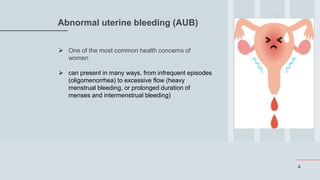
Abnormal uterine bleeding (AUB)
 One of the most common health concerns of
women
 can present in many ways, from infrequent episodes
(oligomenorrhea) to excessive flow (heavy
menstrual bleeding, or prolonged duration of
menses and intermenstrual bleeding)
5
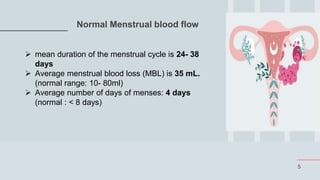
Normal Menstrual blood flow
 mean duration of the menstrual cycle is 24- 38
days
 Average menstrual blood loss (MBL) is 35 mL.
(normal range: 10- 80ml)
 Average number of days of menses: 4 days
(normal : < 8 days)
6
Abnormal uterine bleeding (AUB)
Bleeding is abnormal if:
 it occurs at intervals of less than 24
days,
 or more than 38 days;
 Lasts longer than 8 days;
 MBL of 80 mL or greater
dysfunctional uterine bleeding (DUB) is no longer
favored and should be discarded
7
Heavy Menstrual Bleeding (HMB)
FIGO 2018 update:
 Heavy menstrual bleeding is
defined as excessive menstrual blood
loss which interfere with the woman’s
physical, social , emotional and /or
material quality of life
8
Updated definitions: Acute vs chronic
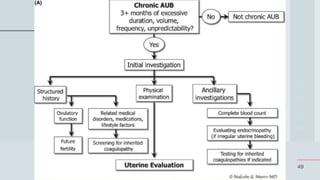
Chronic nongestational AUB in the reproductive
years is defined as bleeding from the uterine corpus
that is abnormal in duration, volume, frequency, and/or
regularity, and has been present for the majority of the
preceding 6 months.
Acute AUB is defined as an episode of heavy bleeding
that, in the opinion of the clinician, is of sufficient
quantity to require immediate intervention to minimize
or prevent further blood loss.
Acute heavy menstrual bleeding may present in the
context of existing chronic AUB or can occur in the
absence of such a background history.
9
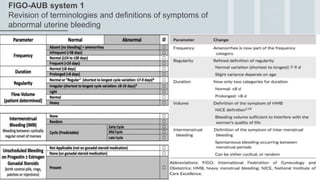
FIGO-AUB system 1
Revision of terminologies and definitions of symptoms of
abnormal uterine bleeding
10
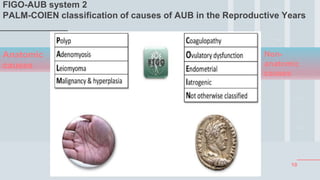
FIGO-AUB system 2
PALM-COIEN classification of causes of AUB in the Reproductive Years
Anatomic
causes
Non-
anatomic
causes
Diagnosis Notation
 the acronym AUB is followed by the letters
PALM-COEIN and a subscript 0 or 1
associated with each letter to indicate the
absence or presence, respectively, of the
abnormality.
Diagnosis Notation
Example #1: A patient with abnormal
bleeding due to a polyp :
AUB-P1A0L0M0-C0O0E0I0N0
or
AUB - P
Diagnosis Notation
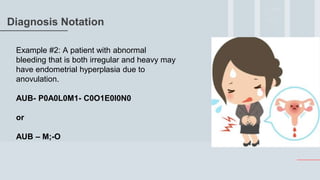
Example #2: A patient with abnormal
bleeding that is both irregular and heavy may
have endometrial hyperplasia due to
anovulation.
AUB- P0A0L0M1- C0O1E0I0N0
or
AUB – M;-O
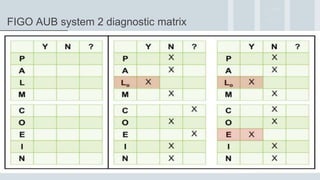
FIGO AUB system 2 diagnostic matrix
15
PATHOPHYSIOLOGY
16
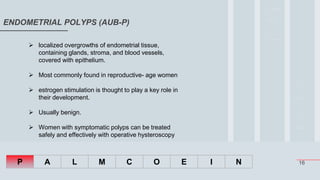
ENDOMETRIAL POLYPS (AUB-P)
P A L M C O E I N
 localized overgrowths of endometrial tissue,
containing glands, stroma, and blood vessels,
covered with epithelium.
 Most commonly found in reproductive- age women
 estrogen stimulation is thought to play a key role in
their development.
 Usually benign.
 Women with symptomatic polyps can be treated
safely and effectively with operative hysteroscopy
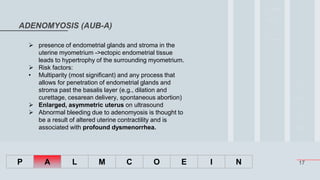
17
ADENOMYOSIS (AUB-A)
P A L M C O E I N
 presence of endometrial glands and stroma in the
uterine myometrium ->ectopic endometrial tissue
leads to hypertrophy of the surrounding myometrium.
 Risk factors:
• Multiparity (most significant) and any process that
allows for penetration of endometrial glands and
stroma past the basalis layer (e.g., dilation and
curettage, cesarean delivery, spontaneous abortion)
 Enlarged, asymmetric uterus on ultrasound
 Abnormal bleeding due to adenomyosis is thought to
be a result of altered uterine contractility and is
associated with profound dysmenorrhea.
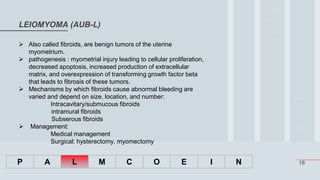
18
LEIOMYOMA (AUB-L)
P A L M C O E I N
 Also called fibroids, are benign tumors of the uterine
myometrium.
 pathogenesis : myometrial injury leading to cellular proliferation,
decreased apoptosis, increased production of extracellular
matrix, and overexpression of transforming growth factor beta
that leads to fibrosis of these tumors.
 Mechanisms by which fibroids cause abnormal bleeding are
varied and depend on size, location, and number:
Intracavitary/submucous fibroids
intramural fibroids
Subserous fibroids
 Management:
Medical management
Surgical: hysterectomy, myomectomy
19
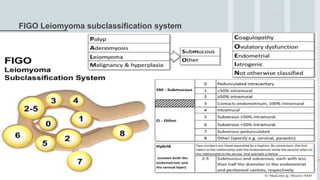
FIGO Leiomyoma subclassification system
P A L M C O E I N
20
COAGULOPATHY (AUB-C)
P A L M C O E I N
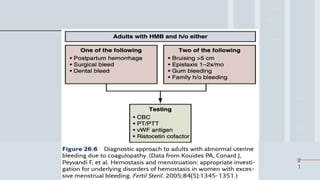
 disorders of blood coagulation such as von Willebrand disease (most
common), prothrombin deficiency, hemophilia, leukemia, severe sepsis,
idiopathic thrombocytopenic purpura, and hypersplenism
 Routine screening mainly indicated for the adolescent who has
prolonged heavy menses beginning at menarche.
 In adults, screening for these disorders indicated by clinical signs such
as bleeding gums, epistaxis, or ecchymosis.
 Other disorders that produce platelet deficiency, such as Chronic
anticoagulation as a result of heparin, low-molecular- weight heparin,
direct thrombin inhibitors, and direct factor Xa inhibitors
2
1
22
OVULATORY DYSFUNCTION (AUB-O)
P A L M C O E I N
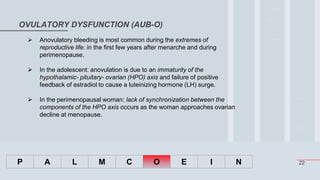
 Anovulatory bleeding is most common during the extremes of
reproductive life: in the first few years after menarche and during
perimenopause.
 In the adolescent: anovulation is due to an immaturity of the
hypothalamic- pituitary- ovarian (HPO) axis and failure of positive
feedback of estradiol to cause a luteinizing hormone (LH) surge.
 In the perimenopausal woman: lack of synchronization between the
components of the HPO axis occurs as the woman approaches ovarian
decline at menopause.
23
OVULATORY DYSFUNCTION (AUB-O)
P A L M C O E I N
 the predominant cause of ovulatory dysfunction postmenarchal and
premenopausal women is secondary to alterations in neuroendocrine
function.
 there is continuous estradiol production without corpus luteum
formation and progesterone productioncontinuously proliferating
endometrium, which may outgrow its blood supply  necrosis.
 uniform slough to the basalis layer does not occur, which produces
excessive uterine bleeding.
24
ENDOMETRIAL (AUB-E)
P A L M C O E I N
 heavy menstrual bleeding in the absence of other abnormalities are
thought to have underlying disorders of the endometrium or are
otherwise unclassified.
 In the past, this category has been called “ovulatory dysfunctional
uterine bleeding.”
 the primary line of defense to excessive bleeding during normal menses
is the formation of the platelet plug, followed by uterine contractility,
largely mediated by prostaglandin F2α (PGF2α)
25
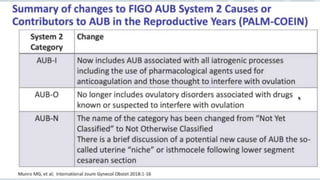
IATROGENIC(AUB-I)
P A L M C O E I N
 abnormal bleeding resulting from medications
 most common of these are hormonal preparations, including
selective estrogen receptor modulators, and gonadotropic
releasing hormone agonists and antagonists.
 Hyperprolactinemia can result from central nervous system
dopamine antagonism of certain antipsychotic drugs (eg
risperidone)
 combined and progesterone-only oral contraceptives may result
in breakthrough bleeding (BTB).
 interactions between oral contraceptives and other
medications, such as antibiotics and anticonvulsants may alter
circulating levels of steroids, allowing follicular recruitment and
increased endogenous levels of estrogen.
26
NOT OTHERWISE CLASSIFIED (AUB-N)
P A L M C O E I N
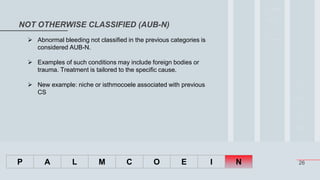
 Abnormal bleeding not classified in the previous categories is
considered AUB-N.
 Examples of such conditions may include foreign bodies or
trauma. Treatment is tailored to the specific cause.
 New example: niche or isthmocoele associated with previous
CS
2
7
2
8
29
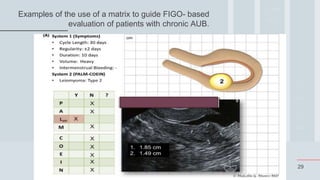
Examples of the use of a matrix to guide FIGO- based
evaluation of patients with chronic AUB.
30
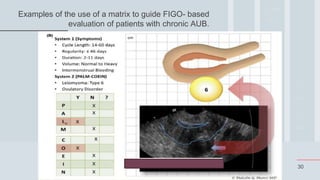
Examples of the use of a matrix to guide FIGO- based
evaluation of patients with chronic AUB.
31
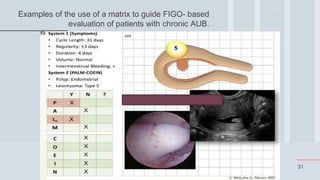
Examples of the use of a matrix to guide FIGO- based
evaluation of patients with chronic AUB.
32
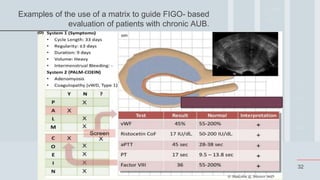
Examples of the use of a matrix to guide FIGO- based
evaluation of patients with chronic AUB.
3
3
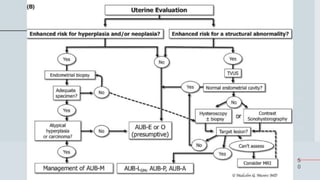
Diagnostic approach
History, Physical examination, and Laboratory exams
34
1. Medical History
Menstrual history: frequency, duration, and amount of bleeding
inquire whether and when the menstrual pattern
changed.
 Describe the menstrual abnormality as oligomenorrhea,
polymenorrhea, heavy menstrual bleeding, or intermenstrual
bleeding.
 Menstrual calendar to record her bleeding episodes helpful
way to characterize definitively the bleeding episodes.
 Symptoms present for the majority of the preceding 6 months
are considered chronic
35
36
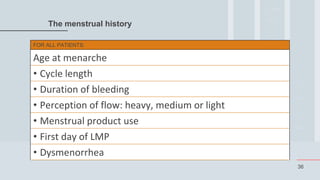
The menstrual history
FOR ALL PATIENTS:
Age at menarche
• Cycle length
• Duration of bleeding
• Perception of flow: heavy, medium or light
• Menstrual product use
• First day of LMP
• Dysmenorrhea
37
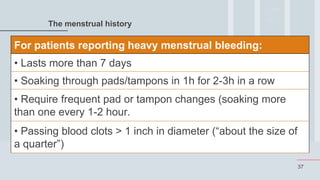
The menstrual history
For patients reporting heavy menstrual bleeding:
• Lasts more than 7 days
• Soaking through pads/tampons in 1h for 2-3h in a row
• Require frequent pad or tampon changes (soaking more
than one every 1-2 hour.
• Passing blood clots > 1 inch in diameter (“about the size of
a quarter”)
38
The menstrual history
For patients reporting heavy menstrual bleeding:
• Using “double protection” (pad plus tampon or 2 pads
together)
• Flooding or gushing sensation
• Frequent “accidents” or leaking through protection
• Hemorrhage from a corpus luteum
• Diagnosed with anemia
• Associated with history of excessive bruising or bleeding or
a family history of bleeding disorder
39
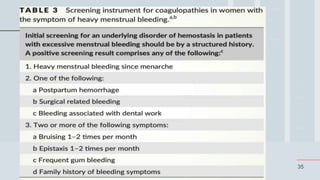
MEDICAL history
For patients reporting personal history of >1 of the
following symptoms:
• Epistaxis (>10min, or requiring medical attention),
spontaneous bruising (>2cm), or minor wound bleeding
(>5min)
• Bleeding from oral cavity or GI tract without an obvious
anatomic lesion
• Prolonged or excessive bleeding after dental extraction or
surgery
• Hemorrhage that required transfusion
40
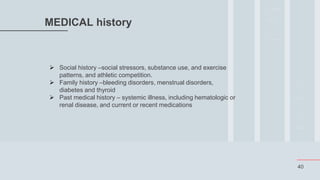
MEDICAL history
 Social history –social stressors, substance use, and exercise
patterns, and athletic competition.
 Family history –bleeding disorders, menstrual disorders,
diabetes and thyroid
 Past medical history – systemic illness, including hematologic or
renal disease, and current or recent medications
41
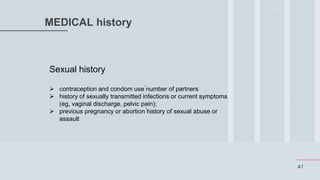
MEDICAL history
Sexual history
 contraception and condom use ́number of partners
 history of sexually transmitted infections or current symptoms
(eg, vaginal discharge, pelvic pain);
 previous pregnancy or abortion ́history of sexual abuse or
assault
42
Physical Exam
Vital signs
 tachycardia and hypotension may signal acute hemodynamic
instability and the need for rapid intervention
 The presence of tachycardia, pallor, or a heart murmur suggests
anemia
43
Physical Exam
 Petechiae or excessive bruising: may suggest a platelet defect
or another bleeding disorder.
 Obesity, acne, hirsutism, and acanthosis nigricans : may be
present in a patient with PCOS.
44
Physical Exam
 Palpation of the thyroid gland for enlargement or other
abnormalities.
 Examination of the optic fundi and visual field testing (pituitary
tumor)
 Sexual maturity rating of the breasts and assessment for
galactorrhea.
 Palpation of the abdomen (pregnancy, uterine/ovarian mass).
45
Physical Exam
 External inspection of the genitalia is sufficient for diagnosis in
most patients.
 A sexually active patient may warrant a complete pelvic
examination (speculum and bimanual exams).
46
Laboratory evaluation
 Pregnancy test
 Complete blood count including differential and platelet count;
blood typing
 Measure of iron stores
 prothrombin time and activated partial thromboplastin time
47
Laboratory evaluation
 von Willebrand studies (factor VIII, von Willebrand factor antigen
(VWF:Ag), and ristocetin cofactor (VWF:RCo) activities.)
 TSH
 Test for Chlamydia trachomatis and Neisseria gonorrhea
 pelvic ultrasound
48
Laboratory evaluation
 Patients with a history of amenorrhea or irregular bleeding prior
to the onset of heavy bleeding should have:
 FSH and LH
 Total and free testosterone levels
 Dehydroepiandrosterone
 prolactin level
49
5
0
51
TREATMENT
5
2
Management
The management of AUB depends on:
 assessment of whether or not the patient is hemodynamically stable
 determination of the underlying cause
 medical management based on etiology and the severity of anemia.
5
3
The goals of treatment are to:
 Establish and/or maintain hemodynamic stability
 Correct acute or chronic anemia ́Return to a pattern of normal
menstrual cycles
 Prevention of recurrence
 Prevent long-term consequences of anovulation (eg, anemia,
infertility, endometrial cancer)
5
4
Medical treatment
 The goal of medical therapy is to stabilize the endometrium with
estrogen that will provide initial hemostasis, followed by progestins
for endometrial stability.
 Typically, this is achieved with combined oral contraceptive pills
(OCPs) taken continuously for several months until hemodynamically
stable, as withdrawal of either hormone will cause recurrent bleeding.
5
5
A definitive diagnosis is required before instituting long-term treatment,
and should be
made on the basis of hysteroscopy, sonohysterography, or directed
endometrial biopsies
5
6
ABNORMAL UTERINE BLEEDING: OVULATORY
DYSFUNCTION
A. Adolescents:
 after ruling out coagulation disorders, the main direction of therapy
is to temporize because once the HPO axis matures, the problem
will be corrected.
 cyclic progestogen (medroxyprogesterone acetate, 10 mg for 10
days each month for a few months) to produce reliable and controlled
menstrual cycles.
 oral contraceptive (OC)may be an option if the problem persist
beyond 6 months.
5
7
ABNORMAL UTERINE BLEEDING: OVULATORY
DYSFUNCTION
B. Perimenopausal woman:
 low-dose (20-μg) combined oral contraceptives( in a nonsmoking woman).
Cyclic Progestogens
C. Reproductive-aged women:
 chronic anovulatory bleeding is primarily caused by hypothalamic
dysfunction or PCOS.
 Combined oral contraceptives
 cyclic progestogens
58
NONSTEROIDAL ANTI-INFLAMMATORY DRUGS
•prostaglandin synthetase inhibitors that inhibit the biosynthesis of the cyclic
endoperoxides, which convert arachidonic acid to prostaglandins.
• block the action of prostaglandins by interfering directly at their receptor
sites..
• All NSAIDs are cyclooxygenase inhibitors and thus block the formation of
both thromboxane and the prostacyclin pathway. Nevertheless, NSAIDs have
been shown to reduce MBL, primarily in women who ovulate.
• Examples: (Given in the first 3 days of menses or whole duration of
bleeding)
•mefenamic acid (500 mg, three times daily)
•ibuprofen (400 mg, three times daily),
•naproxen sodium (275 mg, every 6 hours after a loading dose of 550 mg)
59
Anti-fibrinolytic Agents
 ε-Aminocaproic acid (EACA), tranexamic acid (AMCA),
and para-aminomethyl benzoic acid (PAMBA) are potent
inhibitors of fibrinolysis
 their use is somewhat limited by side effects mainly GI side
effects and can be minimized by reducing the
dose and limiting therapy to the first 3 to 5 days of bleeding.
 Due to the increased risks of thrombosis and myocardial infarction,
antifibrinolytic agents should not be combined with oral
contraceptives. Combined treatment with tranexamic acid and the oral
contraceptive pill has been implicated in coronary ulcerated plaque and
acute myocardial infarction
60
Gonadotropin-Releasing Hormone Agonists
 GnRH agonists may be used to inhibit ovarian steroid production, as
estrogen production is necessary for endometrial proliferation.
 Because of the expense and menopausal side effects of these agents, their
use is limited to women with severe MBL who fail to respond to other
methods of medical management and wish to retain their childbearing
capacity.
 More commonly, GnRH agonists are an effective means of bridging patients
to surgical treatment, allowing for correction of anemia.
 Use of an estrogen or progestogen (add-back therapy) together with the
agonist will help prevent bone loss.
61
Gonadotropin-Releasing Hormone Agonists
 GnRH agonists may be used to inhibit ovarian steroid production, as
estrogen production is necessary for endometrial proliferation.
 Because of the expense and menopausal side effects of these agents, their
use is limited to women with severe MBL who fail to respond to other
methods of medical management and wish to retain their childbearing
capacity.
 More commonly, GnRH agonists are an effective means of bridging patients
to surgical treatment, allowing for correction of anemia.
 Use of an estrogen or progestogen (add-back therapy) together with the
agonist will help prevent bone loss.
6
2
◂ MANAGEMENT OF ACUTE
BLEEDING
6
3
Acute AUB
 In women who are bleeding heavily and are hemodynamically unstable,
the quickest way to stop acute bleeding is with curettage.
 Curettage should also be the preferred approach for older women and
those with medical risk factors for whom high-dose hormonal therapy
may pose a great risk.
 May also be managed medically (pharmacologic agents)...
6
4
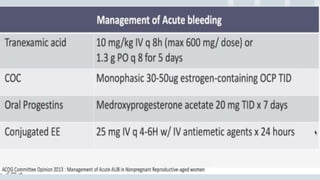
PHARMACOLOGIC AGENTS FOR ACUTE BLEEDING
 To stop acute bleeding that does not require
curettage, the most effective regimen involves high-
dose estrogen.
 High-dose estrogen is aimed at stopping acute
bleeding, and is merely a temporary measure.
6
5
Estrogens
 estrogen in pharmacologic doses causes rapid growth of the
endometrium.
 a rapid growth of endometrial tissue occurs over the denuded
and raw epithelial surfaces
 large doses of estrogen may alter platelet activity, thus
promoting platelet adhesiveness.
1.oralconjugatedequineestrogen(CEE)10mg/day,infourdivided doses
2.IVconjugatedestrogen:25mgq4-6huntilthebleedingstops.(No more than six doses
should be administered)
3.combinationoralcontraceptive(bothestrogenandprogestin).Four tablets of an oral
contraceptive containing 30 to 35 μg of estrogen taken every 24 hours in divided
doses.
66
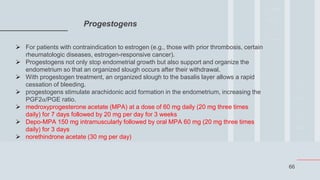
Progestogens
 For patients with contraindication to estrogen (e.g., those with prior thrombosis, certain
rheumatologic diseases, estrogen-responsive cancer).
 Progestogens not only stop endometrial growth but also support and organize the
endometrium so that an organized slough occurs after their withdrawal.
 With progestogen treatment, an organized slough to the basalis layer allows a rapid
cessation of bleeding.
 progestogens stimulate arachidonic acid formation in the endometrium, increasing the
PGF2α/PGE ratio.
 medroxyprogesterone acetate (MPA) at a dose of 60 mg daily (20 mg three times
daily) for 7 days followed by 20 mg per day for 3 weeks
 Depo-MPA 150 mg intramuscularly followed by oral MPA 60 mg (20 mg three times
daily) for 3 days
 norethindrone acetate (30 mg per day)
67
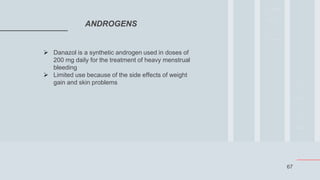
ANDROGENS
 Danazol is a synthetic androgen used in doses of
200 mg daily for the treatment of heavy menstrual
bleeding
 Limited use because of the side effects of weight
gain and skin problems
6
8
6
9
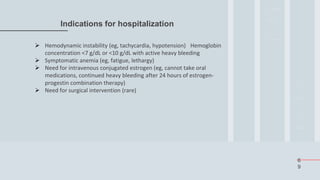
Indications for hospitalization
 Hemodynamic instability (eg, tachycardia, hypotension) Hemoglobin
concentration <7 g/dL or <10 g/dL with active heavy bleeding
 Symptomatic anemia (eg, fatigue, lethargy)
 Need for intravenous conjugated estrogen (eg, cannot take oral
medications, continued heavy bleeding after 24 hours of estrogen-
progestin combination therapy)
 Need for surgical intervention (rare)
7
0
Surgical management of Acute AUB
71
1. Dilatation and curettage (D&C)
 Both diagnostic and is therapeutic for the immediate
management of severe bleeding.
 For women with markedly excessive uterine bleeding who
may be hypovolemic, a D&C is the quickest way to
stop acute bleeding  treatment of choice in hypovolemic
women
 D&C may be preferred as an approach to stop an acute
bleeding episode in women older than 35 when the
incidence of pathologic findings increases.
72
1. Dilatation and curettage (D&C)
 D&C is only indicated for women with acute bleeding
resulting in hypovolemia and for older women who are at
higher risk of having endometrial neoplasia.
 All other women, after having an endometrial biopsy,
sonohysterography, or diagnostic hysteroscopy to rule out
organic disease, are best treated with medical therapy,
without D&C.
73
74
2. Endometrial Ablation
 if medical therapy is not effective or is
contraindicated.
 Exceptions are women who have very large uteri
caused by fibroids or abnormal pathology, such as
endometrial hyperplasia or cancer.
 Alternative to hysterectomy
75
3. Hysterectomy
 Surgical removal of the uterus.
 reserved for the woman with other indications for
hysterectomy, such as leiomyoma or uterine prolapse.
 Usually offered to women with completed family
size (no longer desirous of pregnancy)
 used to treat persistent abnormal uterine bleeding
after all medical therapy has failed, or medical
therapy is contraindicated.
76
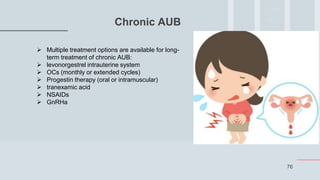
Chronic AUB
 Multiple treatment options are available for long-
term treatment of chronic AUB:
 levonorgestrel intrauterine system
 OCs (monthly or extended cycles)
 Progestin therapy (oral or intramuscular)
 tranexamic acid
 NSAIDs
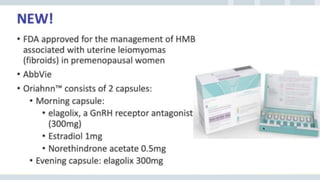
 GnRHa
7
7
7
8
“Jupiter is a gas giant and the
biggest planet in our Solar
System. It’s the fourth-
brightest object in the sky”
“Despite being red, Mars is a
cold place, not hot. It’s full of
iron oxide dust, which gives
the planet its reddish cast”
“Mercury is the closest planet
to the Sun and the smallest
one in our Solar System. It’s
only a bit larger than our
Moon”
DR. JOHN DOE
DR. JENNA JAMES
DR. DANIEL
PATTERSON
DISCUSSION
7
9
THANKS
Does anyone have any questions?
addyouremail@freepik.com
+91 620 421 838
yourcompany.com

AUB FIGO

  • 1.
    Alma P. Claveria,MD Third Year OB-GYN Resident FIGO updates on AUB
  • 2.
    Reference: • Comprehensive Gynecology7th edition, 2017 (Lobo RA, Gershenson DM, Lentz GM, Valea FA editors) chapter 26, pp 621-633. • Munro MG, Critchley HO, Fraser I, FIGO Menstrual Disorders Committee. The Two FIGO Systems for Normal and Abnormal Uterine Bleeding Symptoms and Classification of Causes of Abnormal Uterine Bleeding in the Reproductive Years: 2018 Revisions. Int J Gynaecol Obstet. 2018 Dec;143(3):393-408. doi: 10.1002/ijgo.12666. Epub 2018 Oct 10
  • 3.
    1. Definition: 2018 Updates 2.Classification and Pathophysiology 3. Diagnosis 4. Treatment of acute and chronicAUB 3 OUTLINE:
  • 4.
    4 Abnormal uterine bleeding(AUB)  One of the most common health concerns of women  can present in many ways, from infrequent episodes (oligomenorrhea) to excessive flow (heavy menstrual bleeding, or prolonged duration of menses and intermenstrual bleeding)
  • 5.
    5 Normal Menstrual bloodflow  mean duration of the menstrual cycle is 24- 38 days  Average menstrual blood loss (MBL) is 35 mL. (normal range: 10- 80ml)  Average number of days of menses: 4 days (normal : < 8 days)
  • 6.
    6 Abnormal uterine bleeding(AUB) Bleeding is abnormal if:  it occurs at intervals of less than 24 days,  or more than 38 days;  Lasts longer than 8 days;  MBL of 80 mL or greater dysfunctional uterine bleeding (DUB) is no longer favored and should be discarded
  • 7.
    7 Heavy Menstrual Bleeding(HMB) FIGO 2018 update:  Heavy menstrual bleeding is defined as excessive menstrual blood loss which interfere with the woman’s physical, social , emotional and /or material quality of life
  • 8.
    8 Updated definitions: Acutevs chronic Chronic nongestational AUB in the reproductive years is defined as bleeding from the uterine corpus that is abnormal in duration, volume, frequency, and/or regularity, and has been present for the majority of the preceding 6 months. Acute AUB is defined as an episode of heavy bleeding that, in the opinion of the clinician, is of sufficient quantity to require immediate intervention to minimize or prevent further blood loss. Acute heavy menstrual bleeding may present in the context of existing chronic AUB or can occur in the absence of such a background history.
  • 9.
    9 FIGO-AUB system 1 Revisionof terminologies and definitions of symptoms of abnormal uterine bleeding
  • 10.
    10 FIGO-AUB system 2 PALM-COIENclassification of causes of AUB in the Reproductive Years Anatomic causes Non- anatomic causes
  • 11.
    Diagnosis Notation  theacronym AUB is followed by the letters PALM-COEIN and a subscript 0 or 1 associated with each letter to indicate the absence or presence, respectively, of the abnormality.
  • 12.
    Diagnosis Notation Example #1:A patient with abnormal bleeding due to a polyp : AUB-P1A0L0M0-C0O0E0I0N0 or AUB - P
  • 13.
    Diagnosis Notation Example #2:A patient with abnormal bleeding that is both irregular and heavy may have endometrial hyperplasia due to anovulation. AUB- P0A0L0M1- C0O1E0I0N0 or AUB – M;-O
  • 14.
    FIGO AUB system2 diagnostic matrix
  • 15.
  • 16.
    16 ENDOMETRIAL POLYPS (AUB-P) PA L M C O E I N  localized overgrowths of endometrial tissue, containing glands, stroma, and blood vessels, covered with epithelium.  Most commonly found in reproductive- age women  estrogen stimulation is thought to play a key role in their development.  Usually benign.  Women with symptomatic polyps can be treated safely and effectively with operative hysteroscopy
  • 17.
    17 ADENOMYOSIS (AUB-A) P AL M C O E I N  presence of endometrial glands and stroma in the uterine myometrium ->ectopic endometrial tissue leads to hypertrophy of the surrounding myometrium.  Risk factors: • Multiparity (most significant) and any process that allows for penetration of endometrial glands and stroma past the basalis layer (e.g., dilation and curettage, cesarean delivery, spontaneous abortion)  Enlarged, asymmetric uterus on ultrasound  Abnormal bleeding due to adenomyosis is thought to be a result of altered uterine contractility and is associated with profound dysmenorrhea.
  • 18.
    18 LEIOMYOMA (AUB-L) P AL M C O E I N  Also called fibroids, are benign tumors of the uterine myometrium.  pathogenesis : myometrial injury leading to cellular proliferation, decreased apoptosis, increased production of extracellular matrix, and overexpression of transforming growth factor beta that leads to fibrosis of these tumors.  Mechanisms by which fibroids cause abnormal bleeding are varied and depend on size, location, and number: Intracavitary/submucous fibroids intramural fibroids Subserous fibroids  Management: Medical management Surgical: hysterectomy, myomectomy
  • 19.
    19 FIGO Leiomyoma subclassificationsystem P A L M C O E I N
  • 20.
    20 COAGULOPATHY (AUB-C) P AL M C O E I N  disorders of blood coagulation such as von Willebrand disease (most common), prothrombin deficiency, hemophilia, leukemia, severe sepsis, idiopathic thrombocytopenic purpura, and hypersplenism  Routine screening mainly indicated for the adolescent who has prolonged heavy menses beginning at menarche.  In adults, screening for these disorders indicated by clinical signs such as bleeding gums, epistaxis, or ecchymosis.  Other disorders that produce platelet deficiency, such as Chronic anticoagulation as a result of heparin, low-molecular- weight heparin, direct thrombin inhibitors, and direct factor Xa inhibitors
  • 21.
  • 22.
    22 OVULATORY DYSFUNCTION (AUB-O) PA L M C O E I N  Anovulatory bleeding is most common during the extremes of reproductive life: in the first few years after menarche and during perimenopause.  In the adolescent: anovulation is due to an immaturity of the hypothalamic- pituitary- ovarian (HPO) axis and failure of positive feedback of estradiol to cause a luteinizing hormone (LH) surge.  In the perimenopausal woman: lack of synchronization between the components of the HPO axis occurs as the woman approaches ovarian decline at menopause.
  • 23.
    23 OVULATORY DYSFUNCTION (AUB-O) PA L M C O E I N  the predominant cause of ovulatory dysfunction postmenarchal and premenopausal women is secondary to alterations in neuroendocrine function.  there is continuous estradiol production without corpus luteum formation and progesterone productioncontinuously proliferating endometrium, which may outgrow its blood supply  necrosis.  uniform slough to the basalis layer does not occur, which produces excessive uterine bleeding.
  • 24.
    24 ENDOMETRIAL (AUB-E) P AL M C O E I N  heavy menstrual bleeding in the absence of other abnormalities are thought to have underlying disorders of the endometrium or are otherwise unclassified.  In the past, this category has been called “ovulatory dysfunctional uterine bleeding.”  the primary line of defense to excessive bleeding during normal menses is the formation of the platelet plug, followed by uterine contractility, largely mediated by prostaglandin F2α (PGF2α)
  • 25.
    25 IATROGENIC(AUB-I) P A LM C O E I N  abnormal bleeding resulting from medications  most common of these are hormonal preparations, including selective estrogen receptor modulators, and gonadotropic releasing hormone agonists and antagonists.  Hyperprolactinemia can result from central nervous system dopamine antagonism of certain antipsychotic drugs (eg risperidone)  combined and progesterone-only oral contraceptives may result in breakthrough bleeding (BTB).  interactions between oral contraceptives and other medications, such as antibiotics and anticonvulsants may alter circulating levels of steroids, allowing follicular recruitment and increased endogenous levels of estrogen.
  • 26.
    26 NOT OTHERWISE CLASSIFIED(AUB-N) P A L M C O E I N  Abnormal bleeding not classified in the previous categories is considered AUB-N.  Examples of such conditions may include foreign bodies or trauma. Treatment is tailored to the specific cause.  New example: niche or isthmocoele associated with previous CS
  • 27.
  • 28.
  • 29.
    29 Examples of theuse of a matrix to guide FIGO- based evaluation of patients with chronic AUB.
  • 30.
    30 Examples of theuse of a matrix to guide FIGO- based evaluation of patients with chronic AUB.
  • 31.
    31 Examples of theuse of a matrix to guide FIGO- based evaluation of patients with chronic AUB.
  • 32.
    32 Examples of theuse of a matrix to guide FIGO- based evaluation of patients with chronic AUB.
  • 33.
    3 3 Diagnostic approach History, Physicalexamination, and Laboratory exams
  • 34.
    34 1. Medical History Menstrualhistory: frequency, duration, and amount of bleeding inquire whether and when the menstrual pattern changed.  Describe the menstrual abnormality as oligomenorrhea, polymenorrhea, heavy menstrual bleeding, or intermenstrual bleeding.  Menstrual calendar to record her bleeding episodes helpful way to characterize definitively the bleeding episodes.  Symptoms present for the majority of the preceding 6 months are considered chronic
  • 35.
  • 36.
    36 The menstrual history FORALL PATIENTS: Age at menarche • Cycle length • Duration of bleeding • Perception of flow: heavy, medium or light • Menstrual product use • First day of LMP • Dysmenorrhea
  • 37.
    37 The menstrual history Forpatients reporting heavy menstrual bleeding: • Lasts more than 7 days • Soaking through pads/tampons in 1h for 2-3h in a row • Require frequent pad or tampon changes (soaking more than one every 1-2 hour. • Passing blood clots > 1 inch in diameter (“about the size of a quarter”)
  • 38.
    38 The menstrual history Forpatients reporting heavy menstrual bleeding: • Using “double protection” (pad plus tampon or 2 pads together) • Flooding or gushing sensation • Frequent “accidents” or leaking through protection • Hemorrhage from a corpus luteum • Diagnosed with anemia • Associated with history of excessive bruising or bleeding or a family history of bleeding disorder
  • 39.
    39 MEDICAL history For patientsreporting personal history of >1 of the following symptoms: • Epistaxis (>10min, or requiring medical attention), spontaneous bruising (>2cm), or minor wound bleeding (>5min) • Bleeding from oral cavity or GI tract without an obvious anatomic lesion • Prolonged or excessive bleeding after dental extraction or surgery • Hemorrhage that required transfusion
  • 40.
    40 MEDICAL history  Socialhistory –social stressors, substance use, and exercise patterns, and athletic competition.  Family history –bleeding disorders, menstrual disorders, diabetes and thyroid  Past medical history – systemic illness, including hematologic or renal disease, and current or recent medications
  • 41.
    41 MEDICAL history Sexual history contraception and condom use ́number of partners  history of sexually transmitted infections or current symptoms (eg, vaginal discharge, pelvic pain);  previous pregnancy or abortion ́history of sexual abuse or assault
  • 42.
    42 Physical Exam Vital signs tachycardia and hypotension may signal acute hemodynamic instability and the need for rapid intervention  The presence of tachycardia, pallor, or a heart murmur suggests anemia
  • 43.
    43 Physical Exam  Petechiaeor excessive bruising: may suggest a platelet defect or another bleeding disorder.  Obesity, acne, hirsutism, and acanthosis nigricans : may be present in a patient with PCOS.
  • 44.
    44 Physical Exam  Palpationof the thyroid gland for enlargement or other abnormalities.  Examination of the optic fundi and visual field testing (pituitary tumor)  Sexual maturity rating of the breasts and assessment for galactorrhea.  Palpation of the abdomen (pregnancy, uterine/ovarian mass).
  • 45.
    45 Physical Exam  Externalinspection of the genitalia is sufficient for diagnosis in most patients.  A sexually active patient may warrant a complete pelvic examination (speculum and bimanual exams).
  • 46.
    46 Laboratory evaluation  Pregnancytest  Complete blood count including differential and platelet count; blood typing  Measure of iron stores  prothrombin time and activated partial thromboplastin time
  • 47.
    47 Laboratory evaluation  vonWillebrand studies (factor VIII, von Willebrand factor antigen (VWF:Ag), and ristocetin cofactor (VWF:RCo) activities.)  TSH  Test for Chlamydia trachomatis and Neisseria gonorrhea  pelvic ultrasound
  • 48.
    48 Laboratory evaluation  Patientswith a history of amenorrhea or irregular bleeding prior to the onset of heavy bleeding should have:  FSH and LH  Total and free testosterone levels  Dehydroepiandrosterone  prolactin level
  • 49.
  • 50.
  • 51.
  • 52.
    5 2 Management The management ofAUB depends on:  assessment of whether or not the patient is hemodynamically stable  determination of the underlying cause  medical management based on etiology and the severity of anemia.
  • 53.
    5 3 The goals oftreatment are to:  Establish and/or maintain hemodynamic stability  Correct acute or chronic anemia ́Return to a pattern of normal menstrual cycles  Prevention of recurrence  Prevent long-term consequences of anovulation (eg, anemia, infertility, endometrial cancer)
  • 54.
    5 4 Medical treatment  Thegoal of medical therapy is to stabilize the endometrium with estrogen that will provide initial hemostasis, followed by progestins for endometrial stability.  Typically, this is achieved with combined oral contraceptive pills (OCPs) taken continuously for several months until hemodynamically stable, as withdrawal of either hormone will cause recurrent bleeding.
  • 55.
    5 5 A definitive diagnosisis required before instituting long-term treatment, and should be made on the basis of hysteroscopy, sonohysterography, or directed endometrial biopsies
  • 56.
    5 6 ABNORMAL UTERINE BLEEDING:OVULATORY DYSFUNCTION A. Adolescents:  after ruling out coagulation disorders, the main direction of therapy is to temporize because once the HPO axis matures, the problem will be corrected.  cyclic progestogen (medroxyprogesterone acetate, 10 mg for 10 days each month for a few months) to produce reliable and controlled menstrual cycles.  oral contraceptive (OC)may be an option if the problem persist beyond 6 months.
  • 57.
    5 7 ABNORMAL UTERINE BLEEDING:OVULATORY DYSFUNCTION B. Perimenopausal woman:  low-dose (20-μg) combined oral contraceptives( in a nonsmoking woman). Cyclic Progestogens C. Reproductive-aged women:  chronic anovulatory bleeding is primarily caused by hypothalamic dysfunction or PCOS.  Combined oral contraceptives  cyclic progestogens
  • 58.
    58 NONSTEROIDAL ANTI-INFLAMMATORY DRUGS •prostaglandinsynthetase inhibitors that inhibit the biosynthesis of the cyclic endoperoxides, which convert arachidonic acid to prostaglandins. • block the action of prostaglandins by interfering directly at their receptor sites.. • All NSAIDs are cyclooxygenase inhibitors and thus block the formation of both thromboxane and the prostacyclin pathway. Nevertheless, NSAIDs have been shown to reduce MBL, primarily in women who ovulate. • Examples: (Given in the first 3 days of menses or whole duration of bleeding) •mefenamic acid (500 mg, three times daily) •ibuprofen (400 mg, three times daily), •naproxen sodium (275 mg, every 6 hours after a loading dose of 550 mg)
  • 59.
    59 Anti-fibrinolytic Agents  ε-Aminocaproicacid (EACA), tranexamic acid (AMCA), and para-aminomethyl benzoic acid (PAMBA) are potent inhibitors of fibrinolysis  their use is somewhat limited by side effects mainly GI side effects and can be minimized by reducing the dose and limiting therapy to the first 3 to 5 days of bleeding.  Due to the increased risks of thrombosis and myocardial infarction, antifibrinolytic agents should not be combined with oral contraceptives. Combined treatment with tranexamic acid and the oral contraceptive pill has been implicated in coronary ulcerated plaque and acute myocardial infarction
  • 60.
    60 Gonadotropin-Releasing Hormone Agonists GnRH agonists may be used to inhibit ovarian steroid production, as estrogen production is necessary for endometrial proliferation.  Because of the expense and menopausal side effects of these agents, their use is limited to women with severe MBL who fail to respond to other methods of medical management and wish to retain their childbearing capacity.  More commonly, GnRH agonists are an effective means of bridging patients to surgical treatment, allowing for correction of anemia.  Use of an estrogen or progestogen (add-back therapy) together with the agonist will help prevent bone loss.
  • 61.
    61 Gonadotropin-Releasing Hormone Agonists GnRH agonists may be used to inhibit ovarian steroid production, as estrogen production is necessary for endometrial proliferation.  Because of the expense and menopausal side effects of these agents, their use is limited to women with severe MBL who fail to respond to other methods of medical management and wish to retain their childbearing capacity.  More commonly, GnRH agonists are an effective means of bridging patients to surgical treatment, allowing for correction of anemia.  Use of an estrogen or progestogen (add-back therapy) together with the agonist will help prevent bone loss.
  • 62.
    6 2 ◂ MANAGEMENT OFACUTE BLEEDING
  • 63.
    6 3 Acute AUB  Inwomen who are bleeding heavily and are hemodynamically unstable, the quickest way to stop acute bleeding is with curettage.  Curettage should also be the preferred approach for older women and those with medical risk factors for whom high-dose hormonal therapy may pose a great risk.  May also be managed medically (pharmacologic agents)...
  • 64.
    6 4 PHARMACOLOGIC AGENTS FORACUTE BLEEDING  To stop acute bleeding that does not require curettage, the most effective regimen involves high- dose estrogen.  High-dose estrogen is aimed at stopping acute bleeding, and is merely a temporary measure.
  • 65.
    6 5 Estrogens  estrogen inpharmacologic doses causes rapid growth of the endometrium.  a rapid growth of endometrial tissue occurs over the denuded and raw epithelial surfaces  large doses of estrogen may alter platelet activity, thus promoting platelet adhesiveness. 1.oralconjugatedequineestrogen(CEE)10mg/day,infourdivided doses 2.IVconjugatedestrogen:25mgq4-6huntilthebleedingstops.(No more than six doses should be administered) 3.combinationoralcontraceptive(bothestrogenandprogestin).Four tablets of an oral contraceptive containing 30 to 35 μg of estrogen taken every 24 hours in divided doses.
  • 66.
    66 Progestogens  For patientswith contraindication to estrogen (e.g., those with prior thrombosis, certain rheumatologic diseases, estrogen-responsive cancer).  Progestogens not only stop endometrial growth but also support and organize the endometrium so that an organized slough occurs after their withdrawal.  With progestogen treatment, an organized slough to the basalis layer allows a rapid cessation of bleeding.  progestogens stimulate arachidonic acid formation in the endometrium, increasing the PGF2α/PGE ratio.  medroxyprogesterone acetate (MPA) at a dose of 60 mg daily (20 mg three times daily) for 7 days followed by 20 mg per day for 3 weeks  Depo-MPA 150 mg intramuscularly followed by oral MPA 60 mg (20 mg three times daily) for 3 days  norethindrone acetate (30 mg per day)
  • 67.
    67 ANDROGENS  Danazol isa synthetic androgen used in doses of 200 mg daily for the treatment of heavy menstrual bleeding  Limited use because of the side effects of weight gain and skin problems
  • 68.
  • 69.
    6 9 Indications for hospitalization Hemodynamic instability (eg, tachycardia, hypotension) Hemoglobin concentration <7 g/dL or <10 g/dL with active heavy bleeding  Symptomatic anemia (eg, fatigue, lethargy)  Need for intravenous conjugated estrogen (eg, cannot take oral medications, continued heavy bleeding after 24 hours of estrogen- progestin combination therapy)  Need for surgical intervention (rare)
  • 70.
  • 71.
    71 1. Dilatation andcurettage (D&C)  Both diagnostic and is therapeutic for the immediate management of severe bleeding.  For women with markedly excessive uterine bleeding who may be hypovolemic, a D&C is the quickest way to stop acute bleeding  treatment of choice in hypovolemic women  D&C may be preferred as an approach to stop an acute bleeding episode in women older than 35 when the incidence of pathologic findings increases.
  • 72.
    72 1. Dilatation andcurettage (D&C)  D&C is only indicated for women with acute bleeding resulting in hypovolemia and for older women who are at higher risk of having endometrial neoplasia.  All other women, after having an endometrial biopsy, sonohysterography, or diagnostic hysteroscopy to rule out organic disease, are best treated with medical therapy, without D&C.
  • 73.
  • 74.
    74 2. Endometrial Ablation if medical therapy is not effective or is contraindicated.  Exceptions are women who have very large uteri caused by fibroids or abnormal pathology, such as endometrial hyperplasia or cancer.  Alternative to hysterectomy
  • 75.
    75 3. Hysterectomy  Surgicalremoval of the uterus.  reserved for the woman with other indications for hysterectomy, such as leiomyoma or uterine prolapse.  Usually offered to women with completed family size (no longer desirous of pregnancy)  used to treat persistent abnormal uterine bleeding after all medical therapy has failed, or medical therapy is contraindicated.
  • 76.
    76 Chronic AUB  Multipletreatment options are available for long- term treatment of chronic AUB:  levonorgestrel intrauterine system  OCs (monthly or extended cycles)  Progestin therapy (oral or intramuscular)  tranexamic acid  NSAIDs  GnRHa
  • 77.
  • 78.
    7 8 “Jupiter is agas giant and the biggest planet in our Solar System. It’s the fourth- brightest object in the sky” “Despite being red, Mars is a cold place, not hot. It’s full of iron oxide dust, which gives the planet its reddish cast” “Mercury is the closest planet to the Sun and the smallest one in our Solar System. It’s only a bit larger than our Moon” DR. JOHN DOE DR. JENNA JAMES DR. DANIEL PATTERSON DISCUSSION
  • 79.
    7 9 THANKS Does anyone haveany questions? addyouremail@freepik.com +91 620 421 838 yourcompany.com

Editor's Notes

  • #5 This lecture will focus only on heavy menstrual bleeding
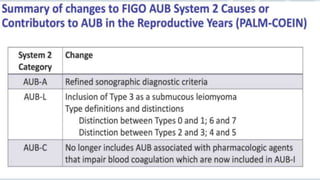
  • #11 AUB‐A- Refined sonographic diagnostic criteria AUB‐L- Inclusion of Type 3 as a submucous leiomyoma -Type definitions and distinctionsDistinction between Types 0 and 1; 6 and 7Distinction between Types 2 and 3; 4 and 5 AUB‐C- No longer includes AUB associated with pharmacologic agents that impair blood coagulation which are now included in AUB‐I AUB‐I. Now includes AUB associated with all iatrogenic processes including the use of pharmacological agents used for anticoagulation and those thought to interfere with ovulation AUB‐O. Diagnostic threshold changes based upon the revisions of System 1, described aboveNo longer includes ovulatory disorders associated with drugs known or suspected to interfere with ovulation AUB‐N. The name of the category has been changed from “Not Yet Classified” to Not Otherwise Classified There is a brief discussion of a potential new cause of AUB the so‐called uterine “niche” or isthmocele following lower segment cesarean section
  • #15 FIGO now encourages clinicians and investigators to consider the use of a matrix for the evaluation of patients with AUB in the reproductive years A simplified diagnostic matrix is illustrated in the left pane. Each of the primary classification system elements are listed. If a patient has not been completely evaluated for a potential cause it is listed in the “?” column, if evaluation has demonstrated no evidence of the abnormality the “N” column is checked, and if assessment is positive, an X is placed in the appropriate box. An example is shown in the panel on the right. The patient has the symptom of HMB, and interim assessment, including contrast hysterosonography documented in the left matrix has revealed a subserosal leiomyoma designated as Lo. However, the patient had a positive historical screening result for coagulopathy and hematological assessments for coagulation disorders are not yet available. Consequently, the “C” and “E” rows remain in the “?” category. The hematological assessment demonstrates that there is no evidence of coagulopathy, so the diagnosis of a primary disorder of endometrial hemostasis is made. The C row can now be assigned an “N” while the E category can be checked as “Y”
  • #20 FIGO leiomyoma subclassification system. System 2 classification system including the FIGO leiomyoma subclassification system. The system that includes the tertiary classification of leiomyomas categorizes the submucous group according to the original Wamsteker et al. system68 and adds categorizations for intramural, subserosal, and transmural lesions. Intracavitary lesions are attached to the endometrium by a narrow stalk (≤10% or the mean of three diameters of the leiomyoma) and are classified as Type 0, whereas Types 1 and 2 require a portion of the lesion to be intramural—with Type 1 being less than 50% of the mean diameter and Type 2 at least 50%. Type 3 lesions are totally intramural but also about the endometrium. Type 3 are formally distinguished from Type 2 with hysteroscopy using the lowest possible intrauterine pressure necessary to allow visualization. Type 4 lesions are intramural leiomyomas that are entirely within the myometrium, with no extension to the endometrial surface or to the serosa. Subserous (Types 5, 6, and 7) leiomyomas represent the mirror image of the submucous leiomyomas—with Type 5 being at least 50% intramural, Type 6 being less than 50% intramural, and Type 7 being attached to the serosa by a stalk that is also ≤10% or the mean of three diameters of the leiomyoma. Classification of lesions that are transmural are categorized by their relationship to both the endometrial and the serosal surfaces. The endometrial relationship is noted first, with the serosal relationship second (e.g. Type 2–5). An additional category, Type 8, is reserved for leiomyomas that do not relate to the myometrium at all, and would include cervical lesions (demonstrated), those that exist in the round or broad ligaments without direct attachment to the uterus, and other so‐called “parasitic” lesions. 
  • #21 Once thought to be extremely rare as a cause for abnormal bleeding, studies have found a fairly high preva- lence of coagulation disorders in women presenting with heavy menstrual bleeding. Most abnormalities are platelet related. The single most common abnormality is a form of von Willebrand disease. It has been estimated that the preva- lence of von Willebrand disease, the most common of these bleeding disorders, is 11% in women with heavy menstrual bleeding (Dilley, 2001). von Willebrand factor is responsible for proper platelet adhesion and protects against coagulant factor degradation. In the new FIGO classification system, AUB-C No longer includes AUB associated with pharmacologic agents that impair blood coagulation which are now included in AUB‐I
  • #22 History is essential before a comprehen- sive hematologic workup is undertaken. This includes a his- tory of menorrhagia, family history of bleeding, epistaxis, bruising, gum bleeding, postpartum hemorrhage, and surgi- cal bleeding. In the absence of these clues, a comprehensive workup is probably unnecessary at the outset but should be considered in cases refractory to treatment. A hematologist should be consulted to assist in confirming the diagnosis and to suggest possible treatment
  • #23 Anovulatory bleeding is most common during the extremes of reproductive life: in the first few years after menarche and during perimenopause. In the adolescent: anovulation is due to an immaturity of the hypothalamic- pituitary- ovarian (HPO) axis and failure of positive feedback of estradiol to cause a luteinizing hormone (LH) surge. n adolescents, after ruling out coagulation disorders, the main direction of therapy is to temporize because with time and matu- rity of the HPO axis, the problem will be corrected. In the perimenopausal woman: lack of synchronization between the components of the HPO axis occurs as the woman approaches ovarian decline at menopause. In the perimenopausal woman who has dysregulation of the HPO axis, there is much variability and unpredictability of cycles because the HPO axis is in flux, moving toward ovarian failure. Although most of the bleeding in this setting is caused by anovulation, occasional ovulation can occur, with or with- out a normal luteal phase, which is highly variable and erratic.
  • #25 Women who present with heavy menstrual bleeding in the absence of other abnormalities are thought to have underlying disorders of the endometrium (AUB-E) or are otherwise unclas- sified. In the past, this category has been called “ovulatory dys- functional uterine bleeding.” The primary line of defense to excessive bleeding during nor- mal menses is the formation of the platelet plug. This is followed by uterine contractility, largely mediated by prostaglandin F2α (PGF2α). Thus prolonged and heavy bleeding can occur with abnormalities of the platelet plug or inadequate uterine levels of PGF2α. It has been shown that in some women with heavy menstrual bleeding, there is excessive uterine production of pros- tacyclin, a vasodilatory prostaglandin that opposes platelet adhe- sion and may also interfere with uterine contractility.
  • #26 It is well known that commonly combined and progester- one-only oral contraceptives may result in breakthrough bleed- ing (BTB). BTB most likely reflects alterations in the structural integrity, vascular density, and vascular morphology of the endo- metrial vasculature due to alterations in the expression of steroid receptors and the integrity of the endometrial epithelial layer (Smith, 2005). Compliance issues and interactions between oral contraceptives and other medications, such as antibiotics and anticonvulsants may alter circulating levels of steroids, allowing follicular recruitment and increased endogenous levels of estro- gen. These variations are a common cause of irregular bleeding in contraceptive users.
  • #28 Again, here is the summary of changes to FIGO AUB system 2 causes
  • #30 Patient with the symptom of heavy menstrual bleeding (duration of menses 10 d and perceived and affecting the patient's quality of life). Contrast sonohysterography demonstrates a posterior Type 2 leiomyoma 1.85 by 1.49 cm in diameter. All other investigations have been completed and are negative. Diagnosis: AUB‐LSM.
  • #31 Here the cycle length varies from 14 to 60 d, the duration of menstrual bleeding from 2 to 11 d, and the volume ranging from light to heavy. Transvaginal sonography shows a posterior Type 6 leiomyoma. Other investigations are normal save the thyroid‐stimulating hormone, which is elevated. Diagnosis: AUB‐Lo; ‐O with the primary cause of AUB the ovulatory disorder secondary to hypothyroidism.
  • #32  In this example the patient's menstrual parameters are normal with the exception of her complaint of intermittent intermenstrual bleeding. Contrast sonohysterography shows an endometrial polyp and a Type 5 leiomyoma (not shown). The hysteroscopic view at the time of the polypectomy is shown. Diagnosis: AUB‐P; ‐Lo with the primary cause of the AUB the endometrial polyp.
  • #33 This patient has the complaint of lifelong heavy menstrual bleeding that is becoming heavier, with clots, and associated with worsening dysmenorrhea that lasts the entire period. She has a history of easy bruising and frequently bleeds when brushing her teeth. Her menses are cyclically predictable with a normal cycle length of 33 d. Transvaginal ultrasonography shows a globular uterus, an asymmetrically thickened posterior myometrium, and fan‐shaped shadowing. All of the coagulation parameters measured were abnormal, and consistent with vWD Type 1. Diagnosis: AUB‐A, ‐C.