MARKETING
MANAGEMENT
PRESTIGE INSTITUTE OF
MANAGEMENT AND RESEARCH
INDORE
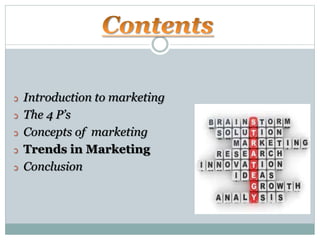
ↄ Introduction to marketing
ↄ The 4 P’s
ↄ Concepts of marketing
ↄ Trends in Marketing
ↄ Conclusion
Introduction
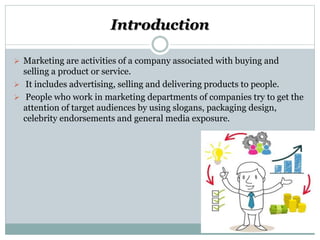
 Marketing are activities of a company associated with buying and
selling a product or service.
 It includes advertising, selling and delivering products to people.
 People who work in marketing departments of companies try to get the
attention of target audiences by using slogans, packaging design,
celebrity endorsements and general media exposure.
BREAKING DOWN 'Four Ps'
The four Ps were popularized in the 1950s by Neil
Borden. Before the advent of the internet and greater
integration between businesses and consumers, the
marketing mix helped companies take into account
the physical barriers that prevented widespread
adoption of a product.
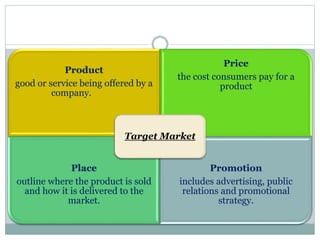
Product
good or service being offered by a
company.
Price
the cost consumers pay for a
product
Place
outline where the product is sold
and how it is delivered to the
market.
Promotion
includes advertising, public
relations and promotional
strategy.
Target Market
Marketing Concepts
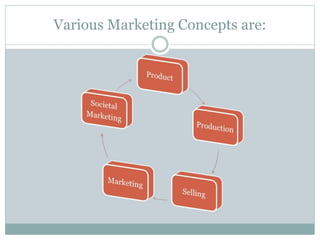
 There are 5 different concepts of marketing, each
of which varies in the function that they deal with.
For example – production concept deals with
production and selling concept deals with selling.
Each of the concepts was developed as per the need
of the market. As the market changed, so did the
concepts of marketing.
Various Marketing Concepts are:
Introduction (Recent Trends of Marketing)
Recent developments in manufacturing technologies
have made significant changes possible in the way
firms respond to market opportunities. There are,
however, clear trends in the way in which markets
are developing that point to the need for further
developments in manufacturing technologies, and
for marketing management to develop a greater
understanding of what manufacturing can offer.
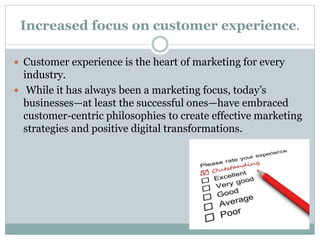
Increased focus on customer experience.
 Customer experience is the heart of marketing for every
industry.
 While it has always been a marketing focus, today’s
businesses—at least the successful ones—have embraced
customer-centric philosophies to create effective marketing
strategies and positive digital transformations.
Engaged and effective measuring
 Talk of measuring marketing has been on an endless
loop lately.
 With confessions from Facebook and others about
how their data doesn’t tell a complete story, what we
do have is less than stellar.
 Now—and in the upcoming year—measurement will
be done with purpose. Expect business objectives to
tie back to profit, revenue, customer retention, and
satisfaction.
Lean on the new marketing lieutenants
 To make the first two trends on our list work,
executives must be data-driven.
 As companies aim to connect email, social media,
and paid, owned, and earned marketing strategies
(among others), they must incorporate technology
needed to implement and support it.
Personalized Everything
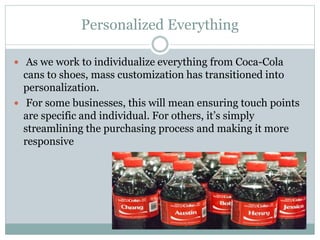
 As we work to individualize everything from Coca-Cola
cans to shoes, mass customization has transitioned into
personalization.
 For some businesses, this will mean ensuring touch points
are specific and individual. For others, it’s simply
streamlining the purchasing process and making it more
responsive
Share a Coke Campaign
Better video content…and more of it.
 Yes, content is still king, but the kind of content that
rules the web is changing.
 Social content, reviews, blogs, papers, and eBooks
are all still crucial aspects of marketing, but video
will be the rage moving forward.
 Considering the success of games like Pokémon Go,
expect virtual and augmented reality to take us into
the future. Brands that fail to incorporate visuals and
videos will be left by the wayside.
Coke’s Drinkable advertising Campaign
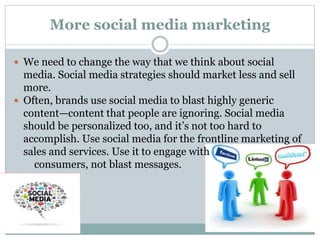
More social media marketing
 We need to change the way that we think about social
media. Social media strategies should market less and sell
more.
 Often, brands use social media to blast highly generic
content—content that people are ignoring. Social media
should be personalized too, and it’s not too hard to
accomplish. Use social media for the frontline marketing of
sales and services. Use it to engage with
consumers, not blast messages.
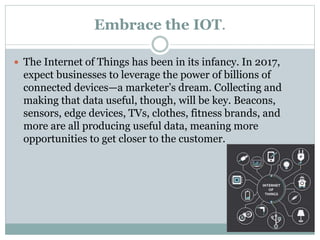
Embrace the IOT.
 The Internet of Things has been in its infancy. In 2017,
expect businesses to leverage the power of billions of
connected devices—a marketer’s dream. Collecting and
making that data useful, though, will be key. Beacons,
sensors, edge devices, TVs, clothes, fitness brands, and
more are all producing useful data, meaning more
opportunities to get closer to the customer.
Chatbots and AI go mainstream
Providing positive customer experience and service means
leveraging the power of technology. Asking locals for advice
on where to eat is good, but they don’t know whether you
like spicy food or have a gluten intolerance. Imagine a
chatbot who knows your likes, dislikes, and needs and can
guide you on where to eat, how to travel, or where to shop.
Chatbots can use AI, deep learning, and data crumbs from
across the web to understand and guide consumer
behavior.
Right-time marketing instead of real-time
marketing.
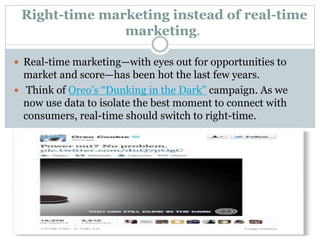
 Real-time marketing—with eyes out for opportunities to
market and score—has been hot the last few years.
 Think of Oreo’s “Dunking in the Dark” campaign. As we
now use data to isolate the best moment to connect with
consumers, real-time should switch to right-time.
Prepare for marketing to own digital
transformation campaigns.
 Many are suggesting that CMOs own digital transformation. I
staunchly disagree. What CMOs should actually own is the
digital transformation “campaign”—the process of showing
the market and your teams that a company is transforming.
Do this by clearly explaining how these trends, along with
digital initiatives, affect consumer experience and how the
company is executing it.
Conclusion
 It gave us analysis of the target market
 Through various examples we learned how organizations
plan about their product to be marketed
 Trying to grab an influence on customers is a challenging
and creative task that involves extensive research.
 Enormous amount of money is spent on marketing ever
year and it seems to grow rapidly with each year
 Our society is flooded with advertisements every place we
look, thus needing companies to find new and unique
ways to stay ahead of the competition.
YouTube
digitalmarketingphilippines.com
socialmediaexaminer.com
salesforce.com
ihs.com
wordstream.com
blog.clientheartbeat.com
marketing91.com
investopedia.com
Recent Trends in Marketing

Recent Trends in Marketing

  • 2.
  • 3.
    ↄ Introduction tomarketing ↄ The 4 P’s ↄ Concepts of marketing ↄ Trends in Marketing ↄ Conclusion
  • 4.
    Introduction  Marketing areactivities of a company associated with buying and selling a product or service.  It includes advertising, selling and delivering products to people.  People who work in marketing departments of companies try to get the attention of target audiences by using slogans, packaging design, celebrity endorsements and general media exposure.
  • 5.
    BREAKING DOWN 'FourPs' The four Ps were popularized in the 1950s by Neil Borden. Before the advent of the internet and greater integration between businesses and consumers, the marketing mix helped companies take into account the physical barriers that prevented widespread adoption of a product.
  • 6.
    Product good or servicebeing offered by a company. Price the cost consumers pay for a product Place outline where the product is sold and how it is delivered to the market. Promotion includes advertising, public relations and promotional strategy. Target Market
  • 7.
    Marketing Concepts  Thereare 5 different concepts of marketing, each of which varies in the function that they deal with. For example – production concept deals with production and selling concept deals with selling. Each of the concepts was developed as per the need of the market. As the market changed, so did the concepts of marketing.
  • 8.
  • 9.
    Introduction (Recent Trendsof Marketing) Recent developments in manufacturing technologies have made significant changes possible in the way firms respond to market opportunities. There are, however, clear trends in the way in which markets are developing that point to the need for further developments in manufacturing technologies, and for marketing management to develop a greater understanding of what manufacturing can offer.
  • 10.
    Increased focus oncustomer experience.  Customer experience is the heart of marketing for every industry.  While it has always been a marketing focus, today’s businesses—at least the successful ones—have embraced customer-centric philosophies to create effective marketing strategies and positive digital transformations.
  • 11.
    Engaged and effectivemeasuring  Talk of measuring marketing has been on an endless loop lately.  With confessions from Facebook and others about how their data doesn’t tell a complete story, what we do have is less than stellar.  Now—and in the upcoming year—measurement will be done with purpose. Expect business objectives to tie back to profit, revenue, customer retention, and satisfaction.
  • 12.
    Lean on thenew marketing lieutenants  To make the first two trends on our list work, executives must be data-driven.  As companies aim to connect email, social media, and paid, owned, and earned marketing strategies (among others), they must incorporate technology needed to implement and support it.
  • 13.
    Personalized Everything  Aswe work to individualize everything from Coca-Cola cans to shoes, mass customization has transitioned into personalization.  For some businesses, this will mean ensuring touch points are specific and individual. For others, it’s simply streamlining the purchasing process and making it more responsive
  • 14.
    Share a CokeCampaign
  • 15.
    Better video content…andmore of it.  Yes, content is still king, but the kind of content that rules the web is changing.  Social content, reviews, blogs, papers, and eBooks are all still crucial aspects of marketing, but video will be the rage moving forward.  Considering the success of games like Pokémon Go, expect virtual and augmented reality to take us into the future. Brands that fail to incorporate visuals and videos will be left by the wayside.
  • 16.
  • 17.
    More social mediamarketing  We need to change the way that we think about social media. Social media strategies should market less and sell more.  Often, brands use social media to blast highly generic content—content that people are ignoring. Social media should be personalized too, and it’s not too hard to accomplish. Use social media for the frontline marketing of sales and services. Use it to engage with consumers, not blast messages.
  • 18.
    Embrace the IOT. The Internet of Things has been in its infancy. In 2017, expect businesses to leverage the power of billions of connected devices—a marketer’s dream. Collecting and making that data useful, though, will be key. Beacons, sensors, edge devices, TVs, clothes, fitness brands, and more are all producing useful data, meaning more opportunities to get closer to the customer.
  • 19.
    Chatbots and AIgo mainstream Providing positive customer experience and service means leveraging the power of technology. Asking locals for advice on where to eat is good, but they don’t know whether you like spicy food or have a gluten intolerance. Imagine a chatbot who knows your likes, dislikes, and needs and can guide you on where to eat, how to travel, or where to shop. Chatbots can use AI, deep learning, and data crumbs from across the web to understand and guide consumer behavior.
  • 20.
    Right-time marketing insteadof real-time marketing.  Real-time marketing—with eyes out for opportunities to market and score—has been hot the last few years.  Think of Oreo’s “Dunking in the Dark” campaign. As we now use data to isolate the best moment to connect with consumers, real-time should switch to right-time.
  • 21.
    Prepare for marketingto own digital transformation campaigns.  Many are suggesting that CMOs own digital transformation. I staunchly disagree. What CMOs should actually own is the digital transformation “campaign”—the process of showing the market and your teams that a company is transforming. Do this by clearly explaining how these trends, along with digital initiatives, affect consumer experience and how the company is executing it.
  • 22.
    Conclusion  It gaveus analysis of the target market  Through various examples we learned how organizations plan about their product to be marketed  Trying to grab an influence on customers is a challenging and creative task that involves extensive research.  Enormous amount of money is spent on marketing ever year and it seems to grow rapidly with each year  Our society is flooded with advertisements every place we look, thus needing companies to find new and unique ways to stay ahead of the competition.
  • 24.

Editor's Notes

  • #23 For those who label their food for fear of fridge thievery, Coca-Cola’s latest campaign ”Share a coke” could save them the hassle, and give them the chance to pick up a personalized bottle for a friend too. Supported by a multi-platform campaign, the “Share a Coke”  program 
  • #24 .For those who label their food for fear of fridge thievery, Coca-Cola’s latest campaign”Share a coke” could save them the hassle, and give them the chance to pick up a personalized bottle for a friend too. Supported by a multi-platform campaign, the “Share a Coke”