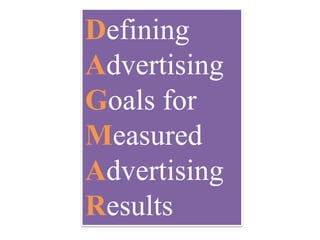
Defining
Advertising
Goals for
Measured
Advertising
Results
DAGMAR was an advertising model proposed by Russel H. Colley
in 1961.
According to DAGMAR, each purchase prospect goes through 4
steps:
1. Awareness
2. Comprehension
3. Conviction
4. Action
These steps are also known as ACCA advertising formula.
ACCA/DAGMAR is a descendant of AIDA advertising formula and
considered to be more popular and comprehensive than AIDA.
Developed for the measurement of advertising effectiveness it maps
the states of mind that a consumer passes through.
Important parts of the DAGMAR model are definitions of target
audience, (people whom the advertising message is addressed to) and
objectives (goals of advertising message).
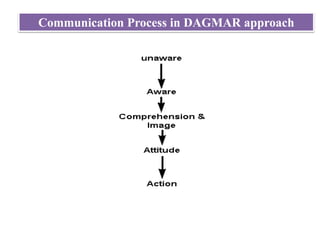
Communication Process in DAGMAR approach
1. Awareness
Before the purchase behaviour is expected from target
audience it is necessary to make the audience aware with the
product or company. The initial communication task of the
advertising activity is to increase the consumer awareness of
the product or offer.

2. Comprehension
Only Awareness is not be sufficient to stimulate a purchase,
sufficient knowledge and information about product or
organization is necessary. This step involves the target
audience to learn something about product, organisation, or
offer. Here communication task of advertising activity is to
make consumer learn about product - product characteristics,
benefits, or uses.
3. Attitude or Conviction
At this step a sense of conviction is established. By creating
interest and preference, buyers are moved to a position where
they are convinced that a particular product in the class should
be tried at the next opportunity. At this step communication task
of advertising activity is to mould the audience’s beliefs about
the product and this is often done through messages that
demonstrate the product’s superiority over a rival or by talking
about the rewards as a result of using the product.
4. Action
Finally, communication must encourage buyer to engage in
purchase activity.
Dagmar Approach

Dagmar Approach

  • 2.
  • 3.
    DAGMAR was anadvertising model proposed by Russel H. Colley in 1961. According to DAGMAR, each purchase prospect goes through 4 steps: 1. Awareness 2. Comprehension 3. Conviction 4. Action These steps are also known as ACCA advertising formula. ACCA/DAGMAR is a descendant of AIDA advertising formula and considered to be more popular and comprehensive than AIDA. Developed for the measurement of advertising effectiveness it maps the states of mind that a consumer passes through. Important parts of the DAGMAR model are definitions of target audience, (people whom the advertising message is addressed to) and objectives (goals of advertising message).
  • 4.
    Communication Process inDAGMAR approach
  • 5.
    1. Awareness Before thepurchase behaviour is expected from target audience it is necessary to make the audience aware with the product or company. The initial communication task of the advertising activity is to increase the consumer awareness of the product or offer. 2. Comprehension Only Awareness is not be sufficient to stimulate a purchase, sufficient knowledge and information about product or organization is necessary. This step involves the target audience to learn something about product, organisation, or offer. Here communication task of advertising activity is to make consumer learn about product - product characteristics, benefits, or uses.
  • 6.
    3. Attitude orConviction At this step a sense of conviction is established. By creating interest and preference, buyers are moved to a position where they are convinced that a particular product in the class should be tried at the next opportunity. At this step communication task of advertising activity is to mould the audience’s beliefs about the product and this is often done through messages that demonstrate the product’s superiority over a rival or by talking about the rewards as a result of using the product. 4. Action Finally, communication must encourage buyer to engage in purchase activity.