Realtime Classroom Analytics
Powered By Apache Druid
Karthik Deivasigamani, Chief Architect, Noon - The Social Learning Platform
Agenda
● Who We Are
● Live Online Classroom
● Quality Of Experience
● Why Apache Druid
● Realtime Classroom Monitoring
● Key Lessons
● Q & A
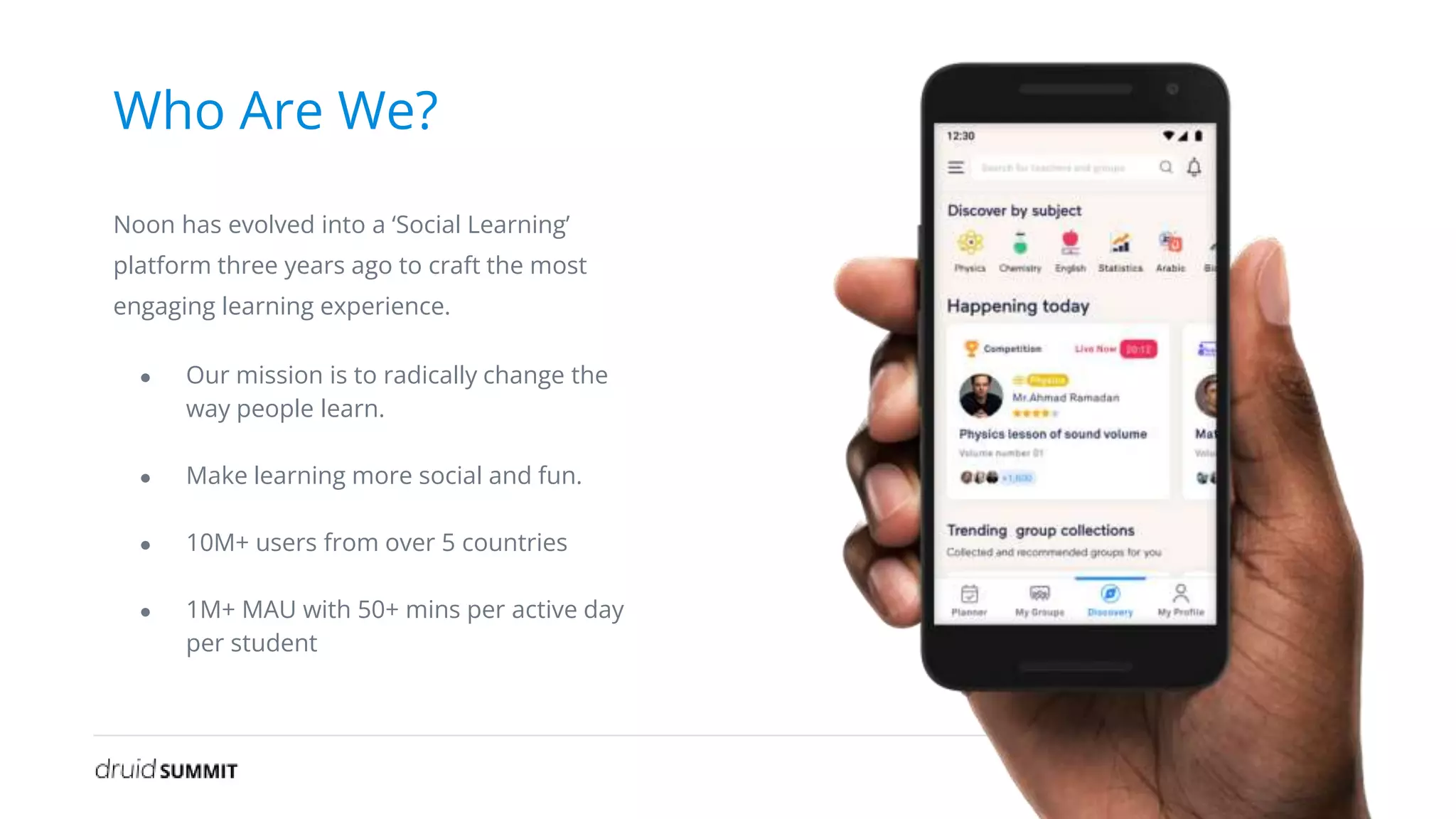
Who Are We?
Noon has evolved into a ‘Social Learning’
platform three years ago to craft the most
engaging learning experience.
● Our mission is to radically change the
way people learn.
● Make learning more social and fun.
● 10M+ users from over 5 countries
● 1M+ MAU with 50+ mins per active day
per student
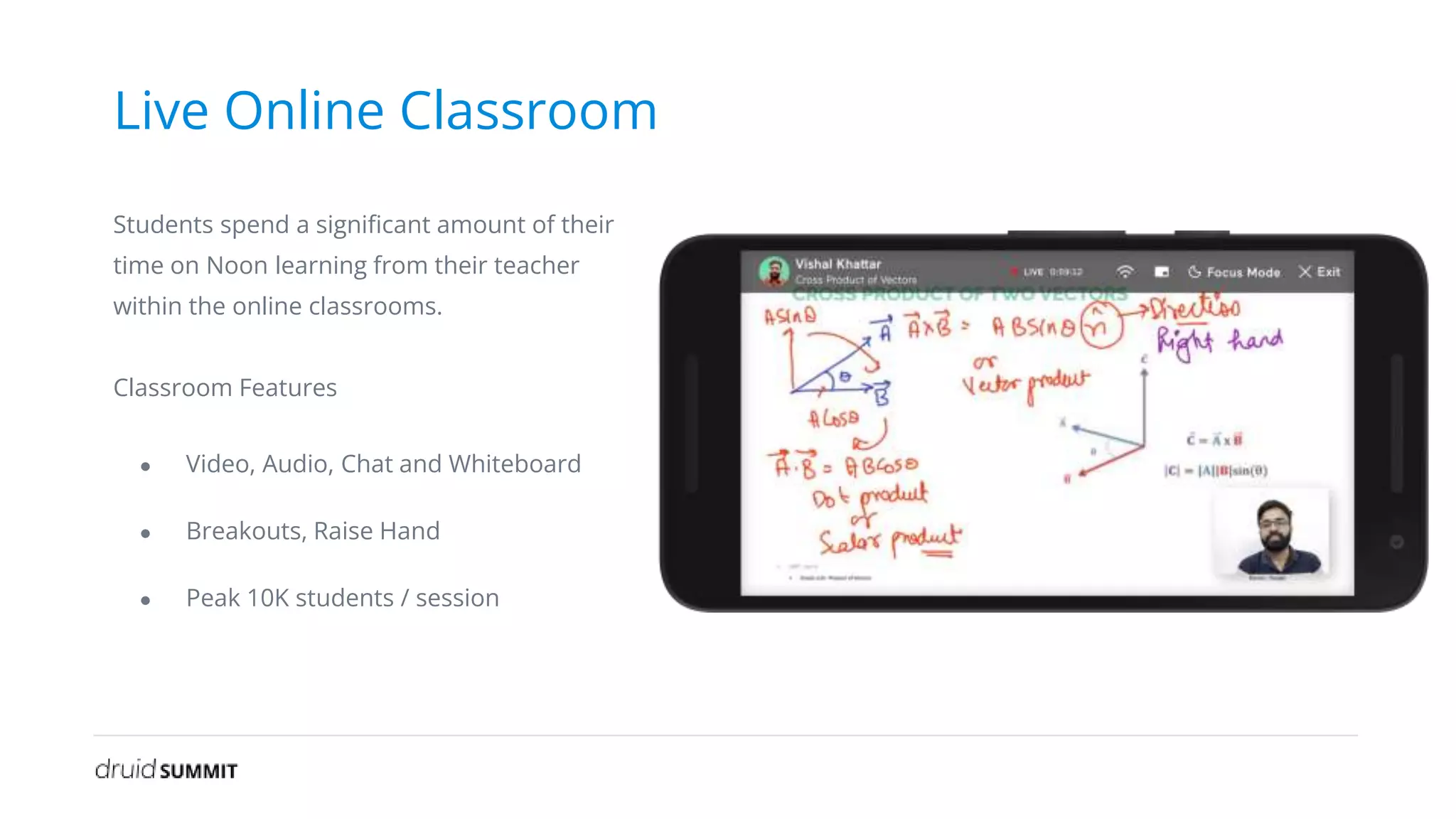
Live Online Classroom
Students spend a significant amount of their
time on Noon learning from their teacher
within the online classrooms.
Classroom Features
● Video, Audio, Chat and Whiteboard
● Breakouts, Raise Hand
● Peak 10K students / session
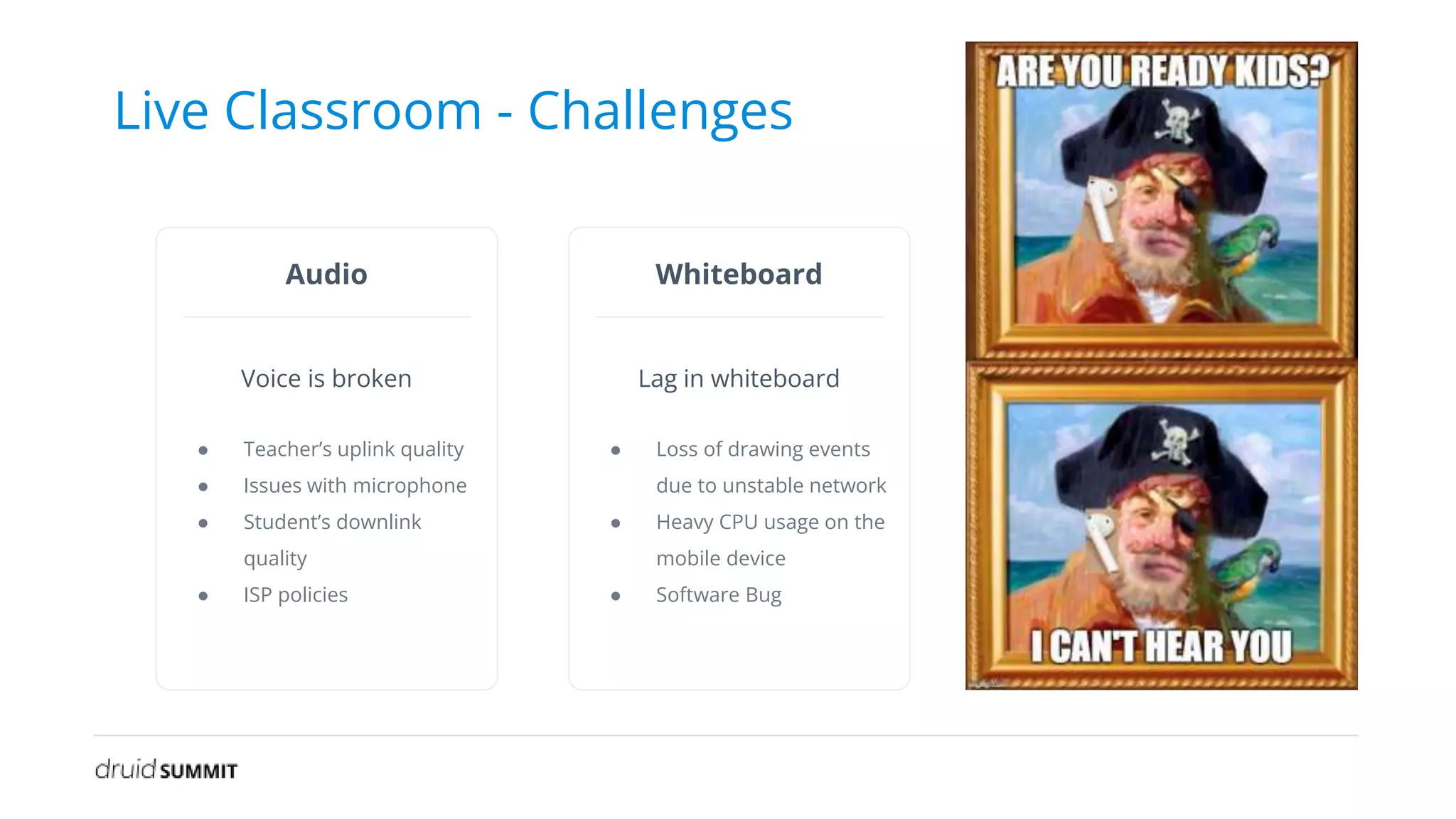
Live Classroom - Challenges
Audio
Voice is broken
● Teacher’s uplink quality
● Issues with microphone
● Student’s downlink
quality
● ISP policies
Whiteboard
Lag in whiteboard
● Loss of drawing events
due to unstable network
● Heavy CPU usage on the
mobile device
● Software Bug
Quality Of Experience
“Quality of experience is a measure
of the delight or annoyance of a
customer's experiences with a
service.” - Wikipedia
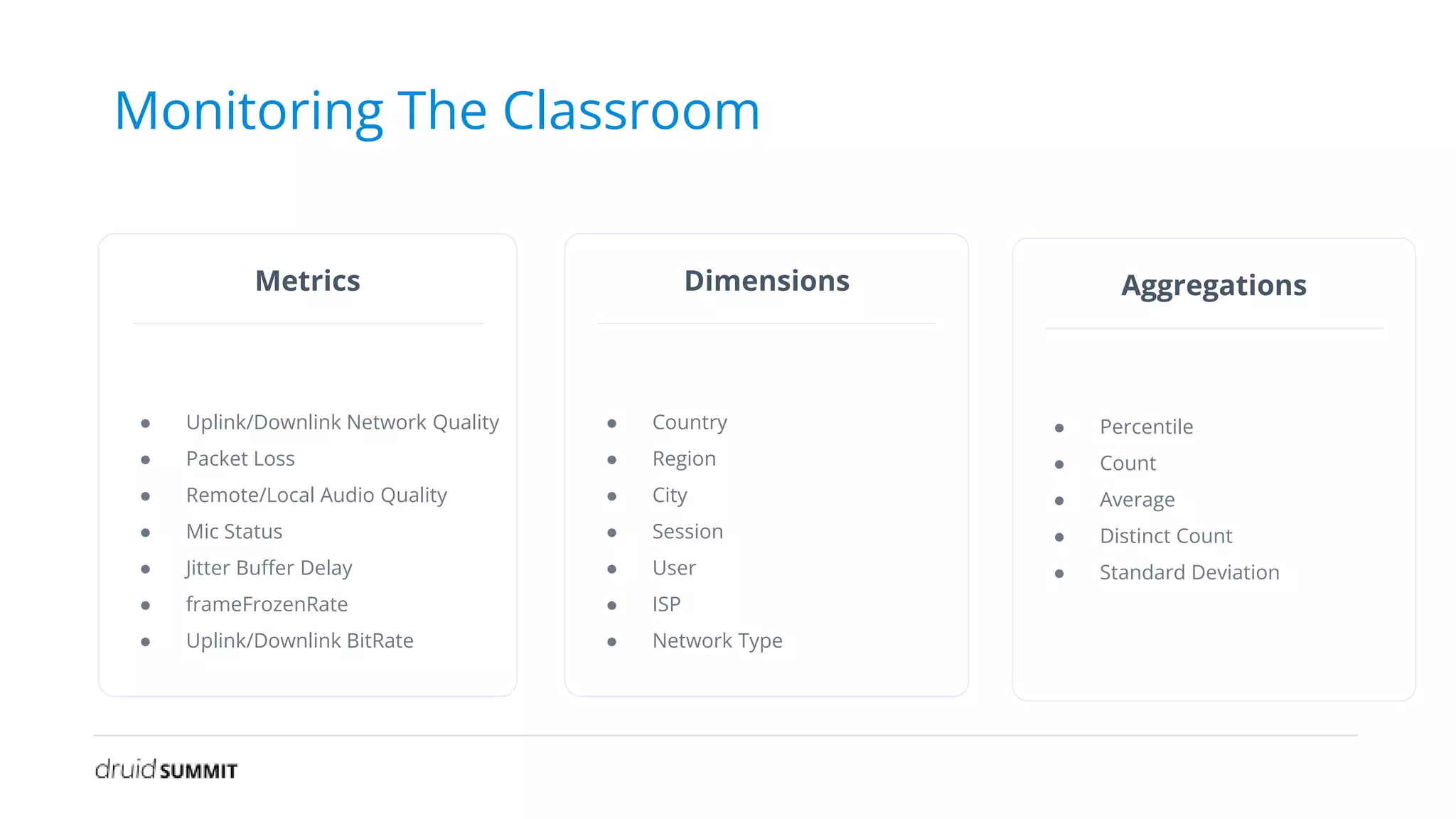
Monitoring The Classroom
Metrics
● Uplink/Downlink Network Quality
● Packet Loss
● Remote/Local Audio Quality
● Mic Status
● Jitter Buffer Delay
● frameFrozenRate
● Uplink/Downlink BitRate
Dimensions
● Country
● Region
● City
● Session
● User
● ISP
● Network Type
Aggregations
● Percentile
● Count
● Average
● Distinct Count
● Standard Deviation
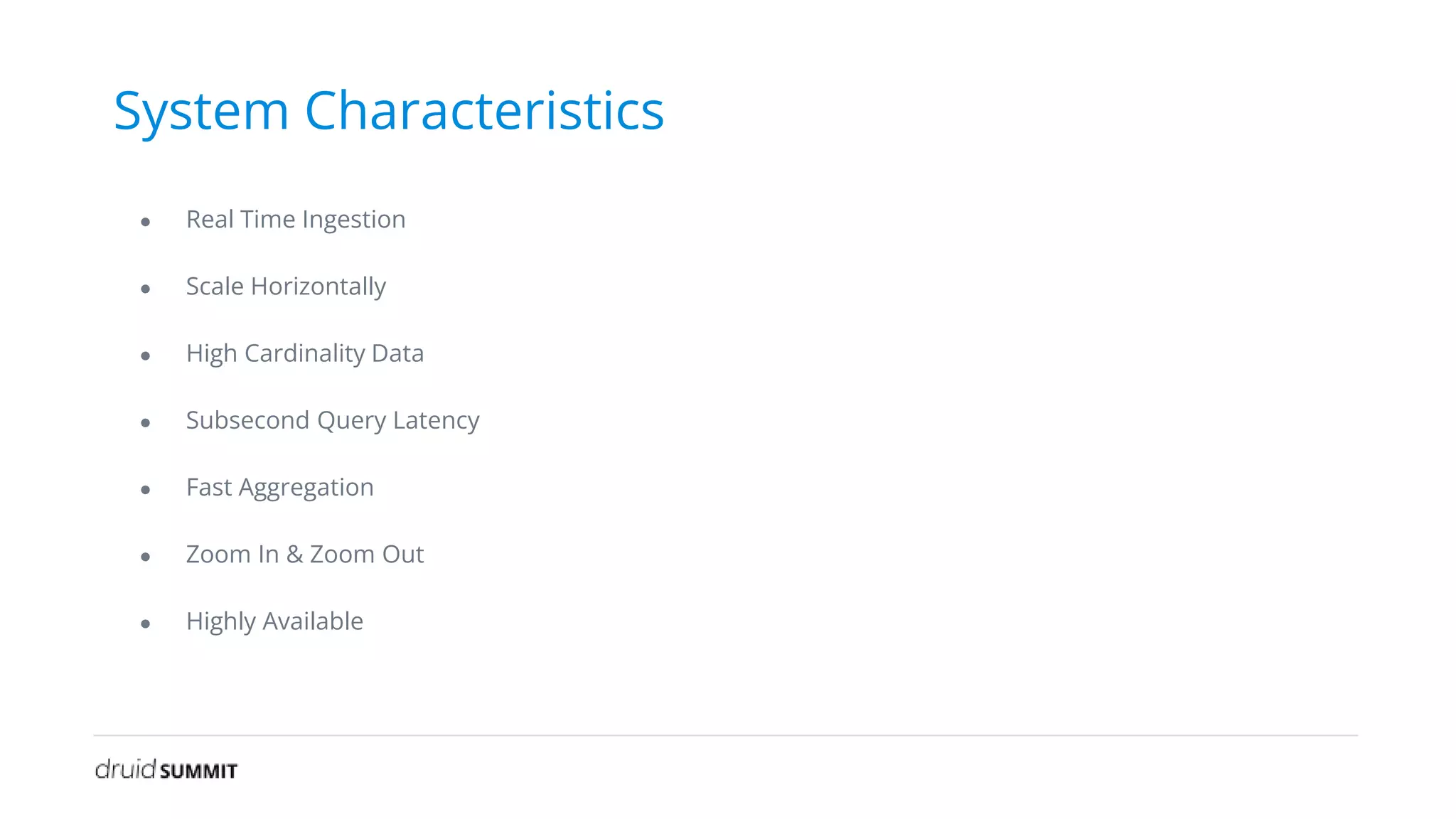
System Characteristics
● Real Time Ingestion
● Scale Horizontally
● High Cardinality Data
● Subsecond Query Latency
● Fast Aggregation
● Zoom In & Zoom Out
● Highly Available
Why Apache Druid
● Real Time Ingestion From Kafka Through Spec Files
● Data & Query Nodes Allows For Horizontal Scaling
● Sketches For High Cardinality Columns
● Low-Latency Querying
● Rich Built In Capabilities For Exact & Approx Aggregation
● Data Rollups
● Fault Tolerance At Multiple Levels
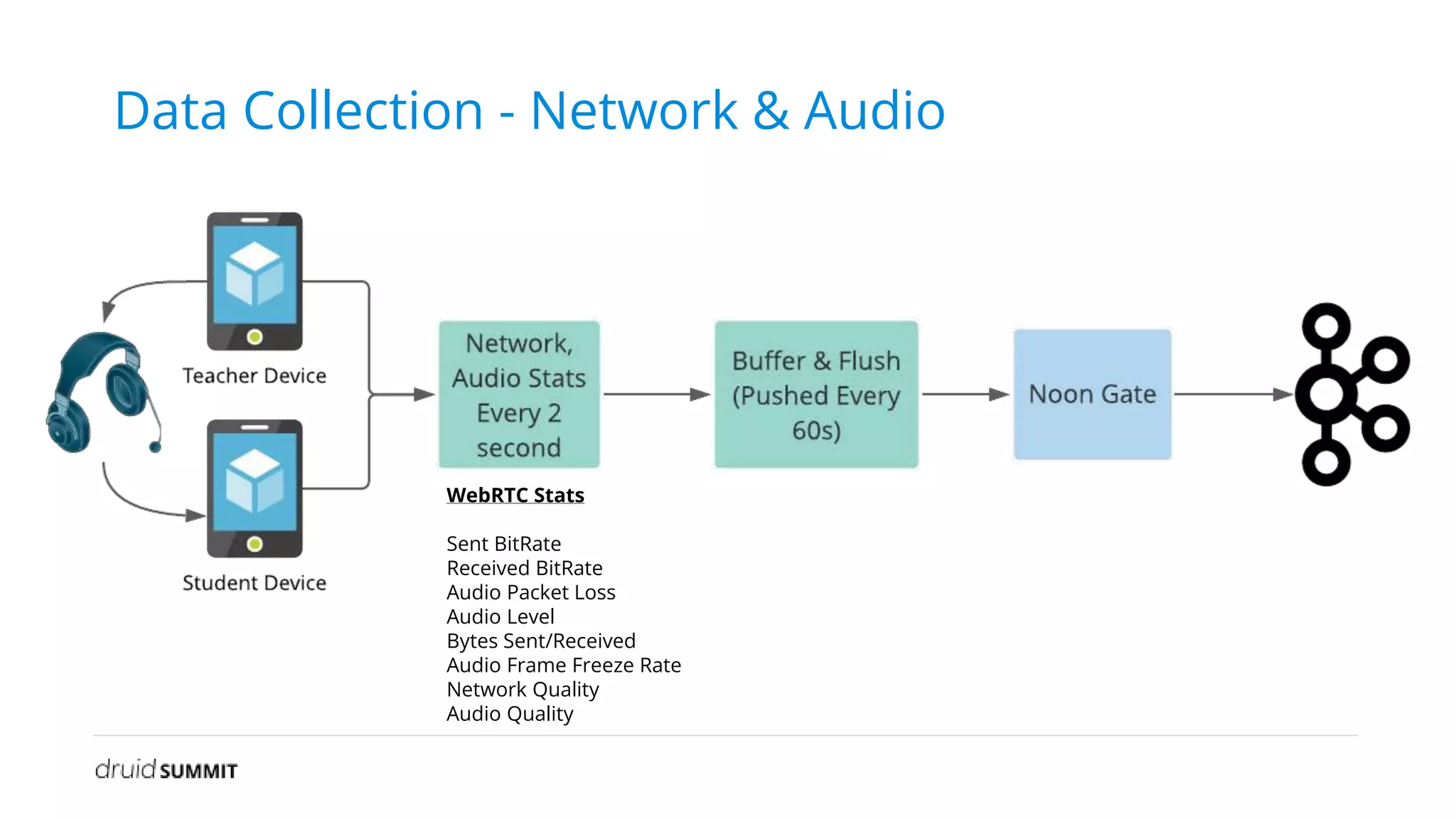
Data Collection - Network & Audio
WebRTC Stats
Sent BitRate
Received BitRate
Audio Packet Loss
Audio Level
Bytes Sent/Received
Audio Frame Freeze Rate
Network Quality
Audio Quality
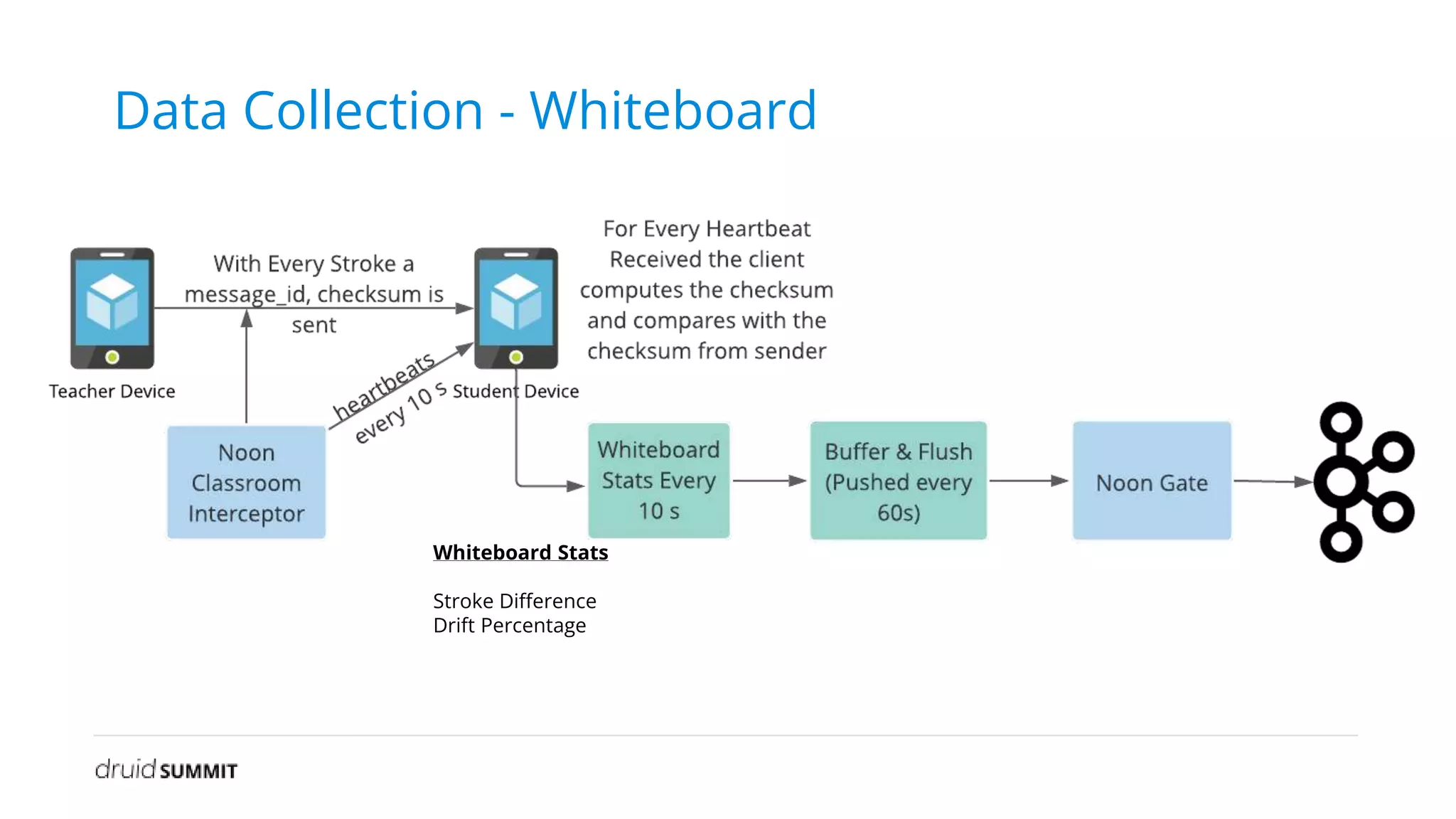
Data Collection - Whiteboard
Whiteboard Stats
Stroke Difference
Drift Percentage
Ingestion
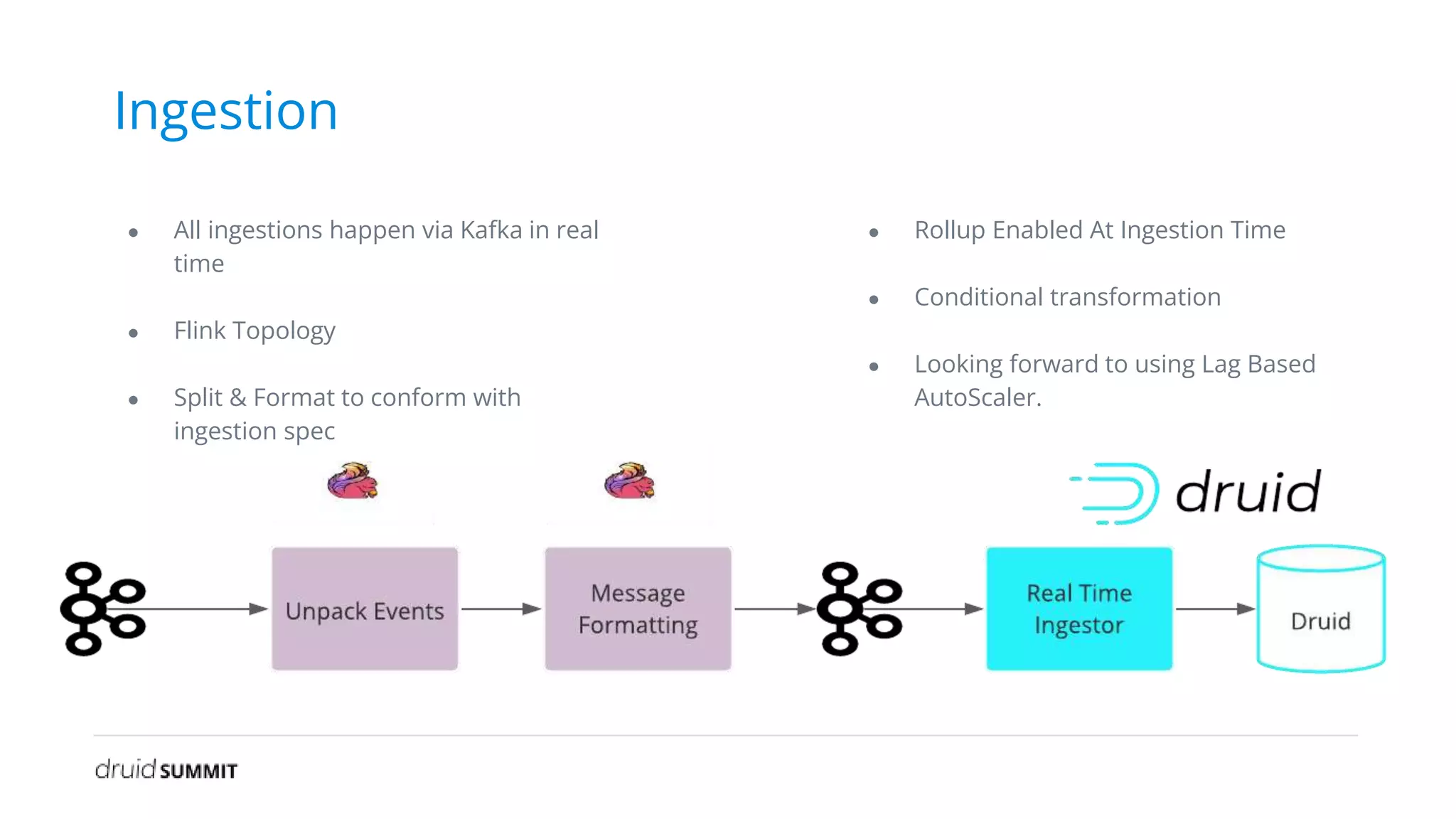
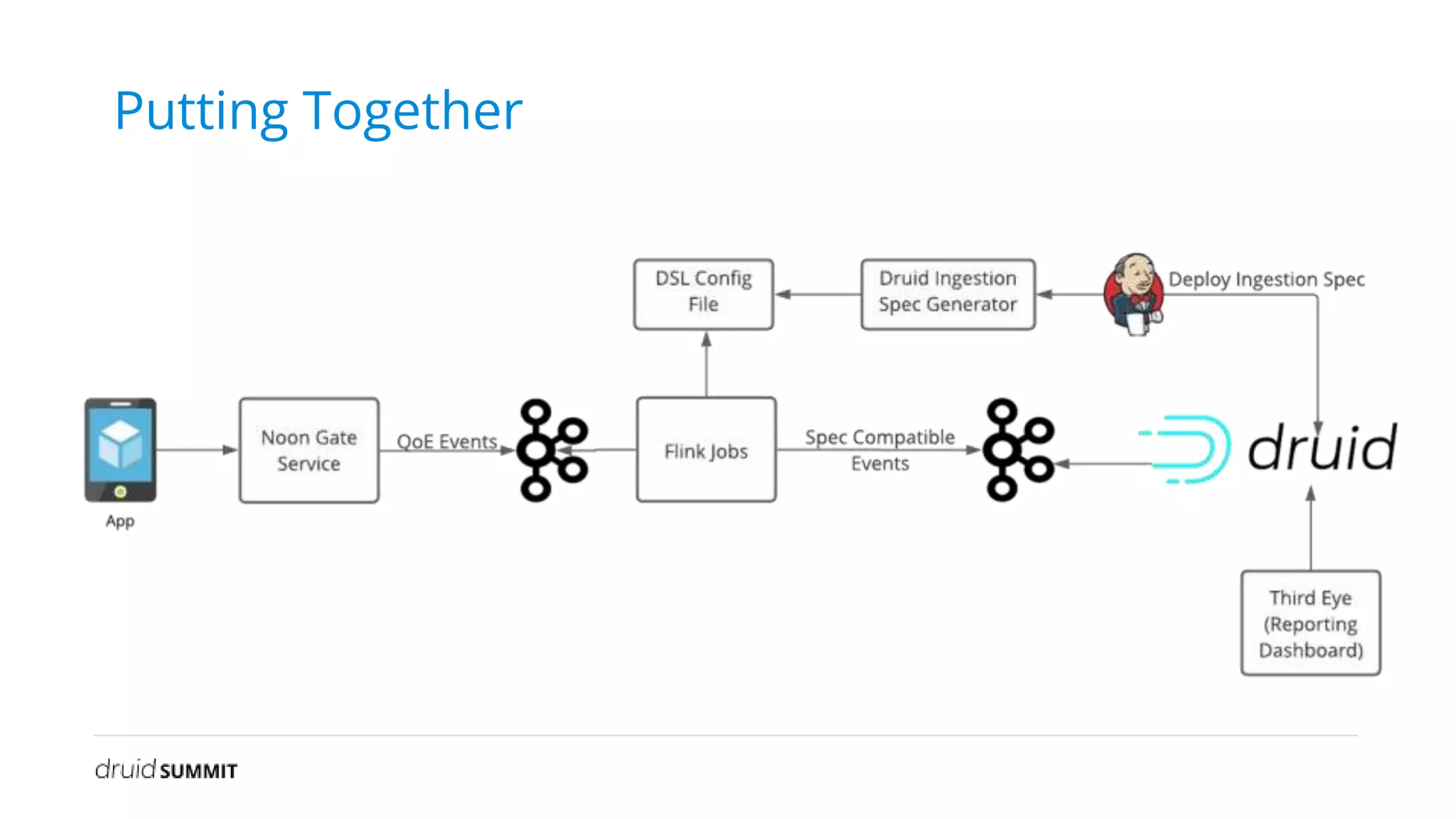
● All ingestions happen via Kafka in real
time
● Flink Topology
● Split & Format to conform with
ingestion spec
● Rollup Enabled At Ingestion Time
● Conditional transformation
● Looking forward to using Lag Based
AutoScaler.
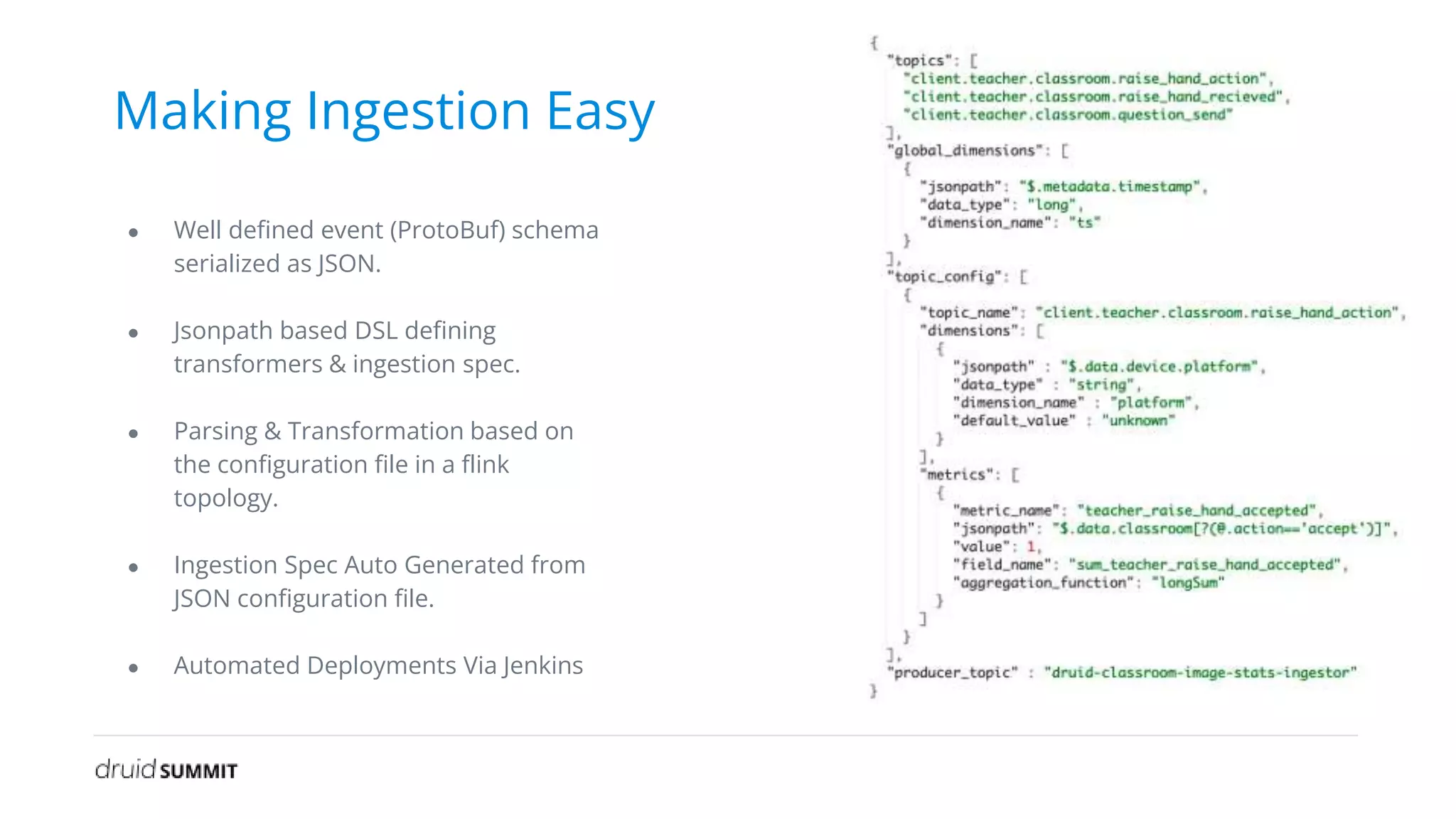
Making Ingestion Easy
● Well defined event (ProtoBuf) schema
serialized as JSON.
● Jsonpath based DSL defining
transformers & ingestion spec.
● Parsing & Transformation based on
the configuration file in a flink
topology.
● Ingestion Spec Auto Generated from
JSON configuration file.
● Automated Deployments Via Jenkins
Schema Design
● Always start from your use-cases.
● Identify Dimensions & Metrics
● Aggregations & Approximation (hyperloglog,
quantiles sketches)
● Query Granularity
● Partitions
● Deep Storage
● Data Retention
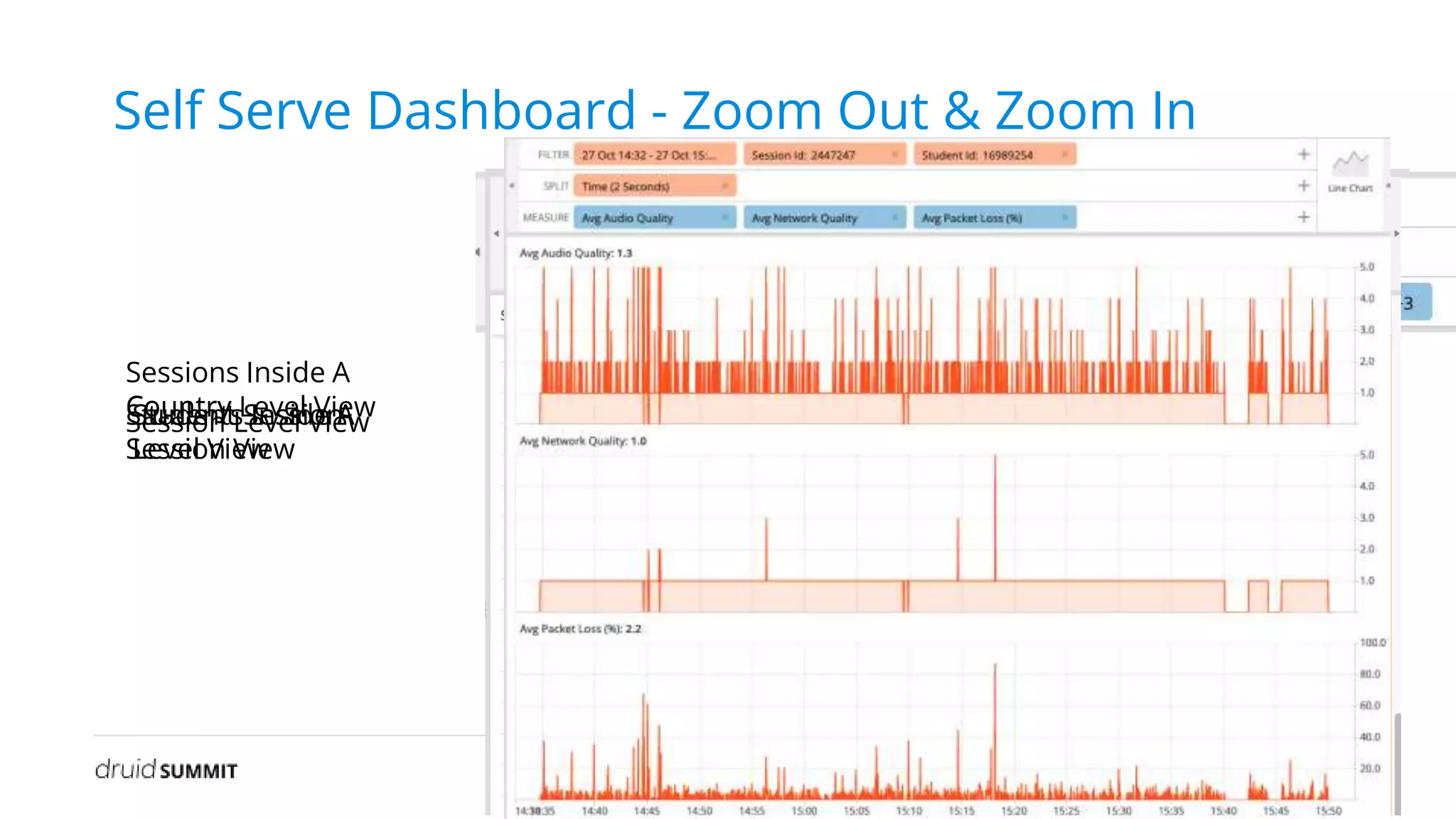
Self Serve Dashboard - Zoom Out & Zoom In
Country Level View
Sessions Inside A
Country
Session Level View
Students Inside A
Session View
Student Session
Level View
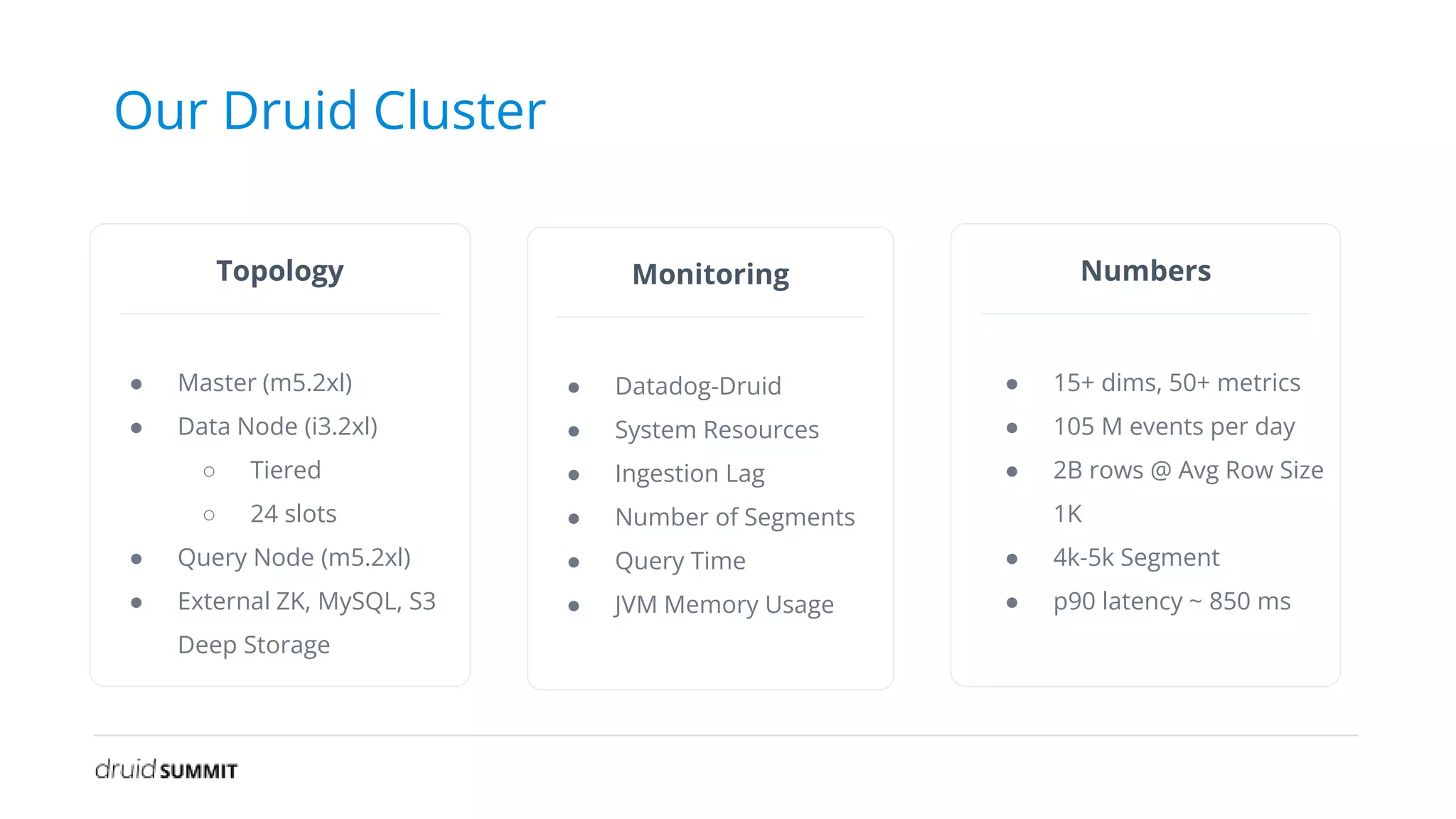
Our Druid Cluster
Topology
● Master (m5.2xl)
● Data Node (i3.2xl)
○ Tiered
○ 24 slots
● Query Node (m5.2xl)
● External ZK, MySQL, S3
Deep Storage
Monitoring Numbers
● Datadog-Druid
● System Resources
● Ingestion Lag
● Number of Segments
● Query Time
● JVM Memory Usage
● 15+ dims, 50+ metrics
● 105 M events per day
● 2B rows @ Avg Row Size
1K
● 4k-5k Segment
● p90 latency ~ 850 ms
Putting Together
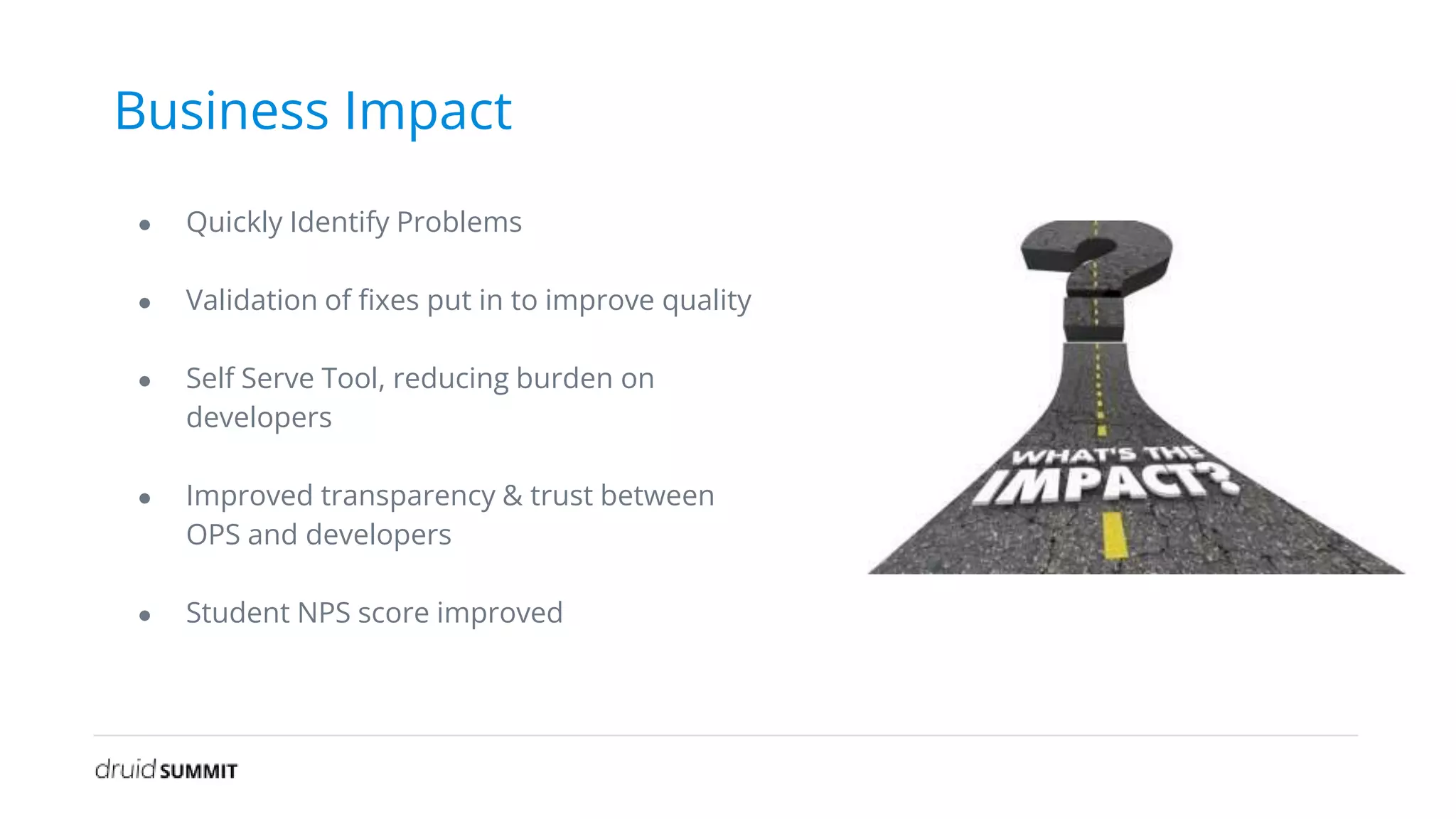
Business Impact
● Quickly Identify Problems
● Validation of fixes put in to improve quality
● Self Serve Tool, reducing burden on
developers
● Improved transparency & trust between
OPS and developers
● Student NPS score improved
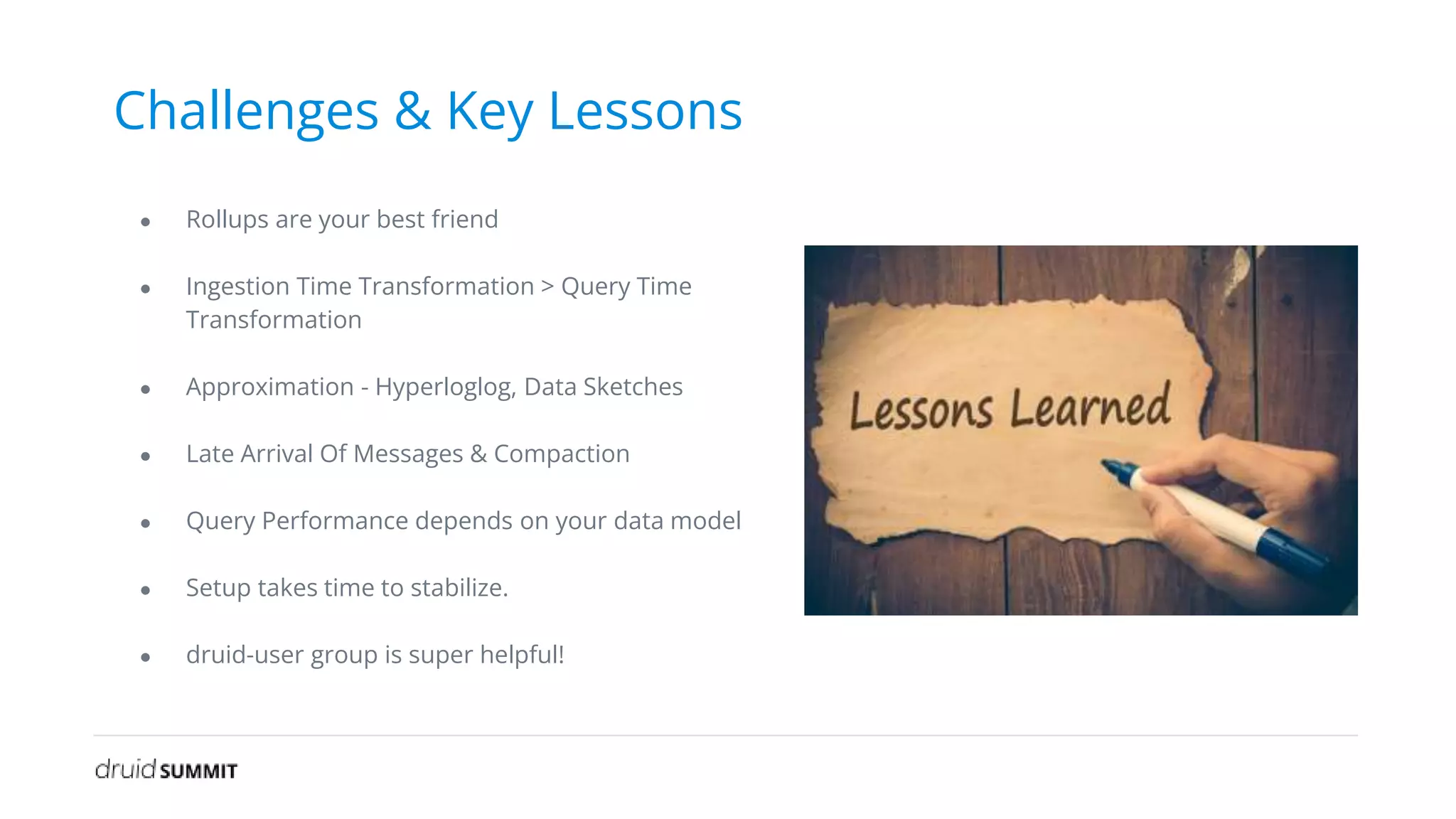
Challenges & Key Lessons
● Rollups are your best friend
● Ingestion Time Transformation > Query Time
Transformation
● Approximation - Hyperloglog, Data Sketches
● Late Arrival Of Messages & Compaction
● Query Performance depends on your data model
● Setup takes time to stabilize.
● druid-user group is super helpful!
Questions?
Thank you
Contact: karthik@noonacademy.com

Realtime classroom analytics powered by apache druid

  • 1.
    Realtime Classroom Analytics PoweredBy Apache Druid Karthik Deivasigamani, Chief Architect, Noon - The Social Learning Platform
  • 2.
    Agenda ● Who WeAre ● Live Online Classroom ● Quality Of Experience ● Why Apache Druid ● Realtime Classroom Monitoring ● Key Lessons ● Q & A
  • 3.
    Who Are We? Noonhas evolved into a ‘Social Learning’ platform three years ago to craft the most engaging learning experience. ● Our mission is to radically change the way people learn. ● Make learning more social and fun. ● 10M+ users from over 5 countries ● 1M+ MAU with 50+ mins per active day per student
  • 4.
    Live Online Classroom Studentsspend a significant amount of their time on Noon learning from their teacher within the online classrooms. Classroom Features ● Video, Audio, Chat and Whiteboard ● Breakouts, Raise Hand ● Peak 10K students / session
  • 5.
    Live Classroom -Challenges Audio Voice is broken ● Teacher’s uplink quality ● Issues with microphone ● Student’s downlink quality ● ISP policies Whiteboard Lag in whiteboard ● Loss of drawing events due to unstable network ● Heavy CPU usage on the mobile device ● Software Bug
  • 6.
    Quality Of Experience “Qualityof experience is a measure of the delight or annoyance of a customer's experiences with a service.” - Wikipedia
  • 7.
    Monitoring The Classroom Metrics ●Uplink/Downlink Network Quality ● Packet Loss ● Remote/Local Audio Quality ● Mic Status ● Jitter Buffer Delay ● frameFrozenRate ● Uplink/Downlink BitRate Dimensions ● Country ● Region ● City ● Session ● User ● ISP ● Network Type Aggregations ● Percentile ● Count ● Average ● Distinct Count ● Standard Deviation
  • 8.
    System Characteristics ● RealTime Ingestion ● Scale Horizontally ● High Cardinality Data ● Subsecond Query Latency ● Fast Aggregation ● Zoom In & Zoom Out ● Highly Available
  • 9.
    Why Apache Druid ●Real Time Ingestion From Kafka Through Spec Files ● Data & Query Nodes Allows For Horizontal Scaling ● Sketches For High Cardinality Columns ● Low-Latency Querying ● Rich Built In Capabilities For Exact & Approx Aggregation ● Data Rollups ● Fault Tolerance At Multiple Levels
  • 10.
    Data Collection -Network & Audio WebRTC Stats Sent BitRate Received BitRate Audio Packet Loss Audio Level Bytes Sent/Received Audio Frame Freeze Rate Network Quality Audio Quality
  • 11.
    Data Collection -Whiteboard Whiteboard Stats Stroke Difference Drift Percentage
  • 12.
    Ingestion ● All ingestionshappen via Kafka in real time ● Flink Topology ● Split & Format to conform with ingestion spec ● Rollup Enabled At Ingestion Time ● Conditional transformation ● Looking forward to using Lag Based AutoScaler.
  • 13.
    Making Ingestion Easy ●Well defined event (ProtoBuf) schema serialized as JSON. ● Jsonpath based DSL defining transformers & ingestion spec. ● Parsing & Transformation based on the configuration file in a flink topology. ● Ingestion Spec Auto Generated from JSON configuration file. ● Automated Deployments Via Jenkins
  • 14.
    Schema Design ● Alwaysstart from your use-cases. ● Identify Dimensions & Metrics ● Aggregations & Approximation (hyperloglog, quantiles sketches) ● Query Granularity ● Partitions ● Deep Storage ● Data Retention
  • 15.
    Self Serve Dashboard- Zoom Out & Zoom In Country Level View Sessions Inside A Country Session Level View Students Inside A Session View Student Session Level View
  • 16.
    Our Druid Cluster Topology ●Master (m5.2xl) ● Data Node (i3.2xl) ○ Tiered ○ 24 slots ● Query Node (m5.2xl) ● External ZK, MySQL, S3 Deep Storage Monitoring Numbers ● Datadog-Druid ● System Resources ● Ingestion Lag ● Number of Segments ● Query Time ● JVM Memory Usage ● 15+ dims, 50+ metrics ● 105 M events per day ● 2B rows @ Avg Row Size 1K ● 4k-5k Segment ● p90 latency ~ 850 ms
  • 17.
  • 18.
    Business Impact ● QuicklyIdentify Problems ● Validation of fixes put in to improve quality ● Self Serve Tool, reducing burden on developers ● Improved transparency & trust between OPS and developers ● Student NPS score improved
  • 19.
    Challenges & KeyLessons ● Rollups are your best friend ● Ingestion Time Transformation > Query Time Transformation ● Approximation - Hyperloglog, Data Sketches ● Late Arrival Of Messages & Compaction ● Query Performance depends on your data model ● Setup takes time to stabilize. ● druid-user group is super helpful!
  • 20.
  • 21.