Real and Unreal Conditionals
Experiences of an International Traveler
CONDITIONAL
SENTENCES:
If something happens,
then another thing
happens , or will happen
as a result.
Conditionals
REAL
RULE 1: express situations that can
happen in the present, past or the
future. They are often used when
stating facts, general knowledge,
habits, predictions, advice, or
instructions.
Conditionals
REAL
present/past
Conditional Clause
If + subject + present
simple
If + subject + past simple
Main Clause
subject+ present simple
If + subject + past simple
NOTE: You can use WHEN in the IF clause, the meaning
does not change.
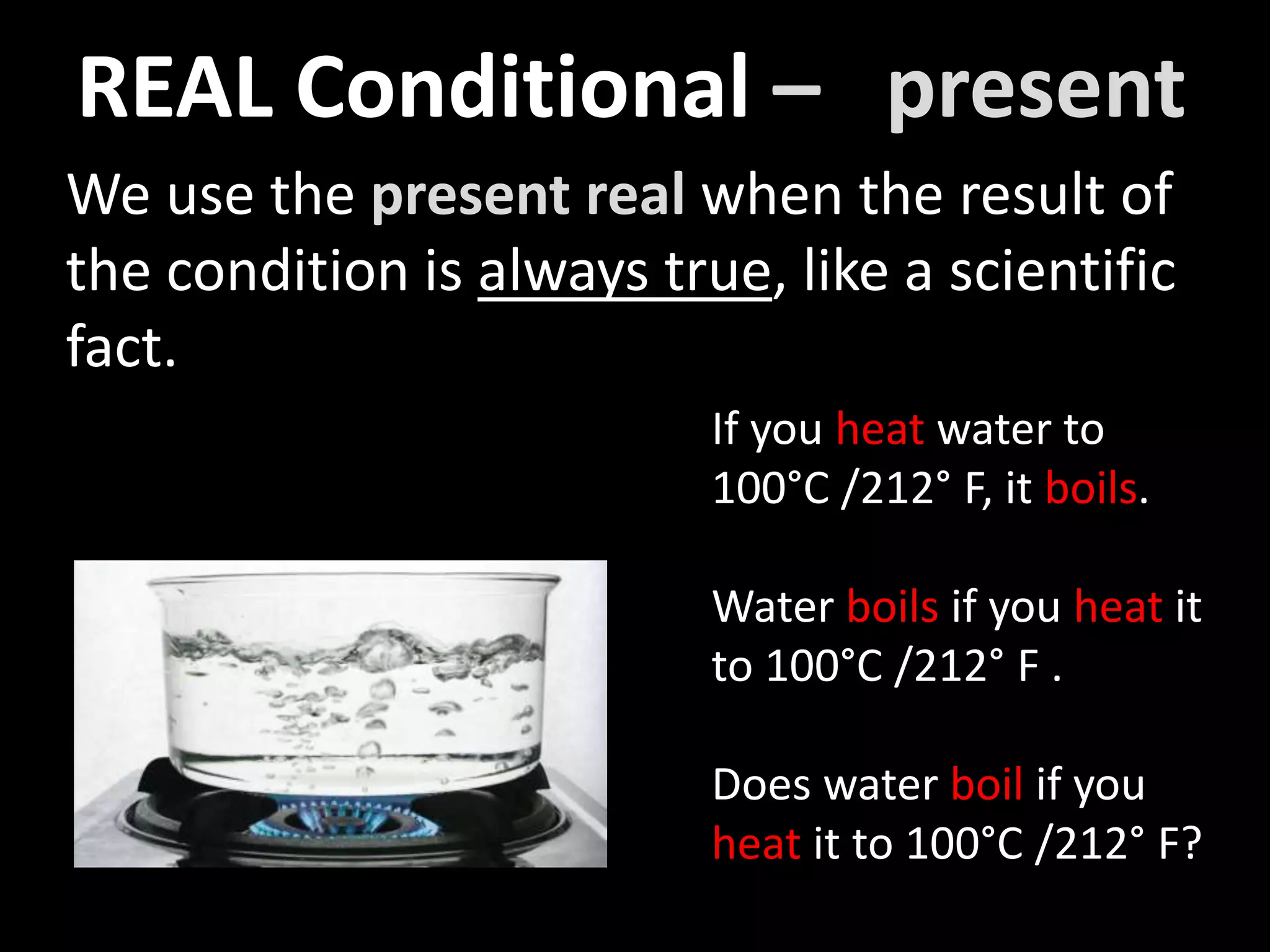
We use the present real when the result of
the condition is always true, like a scientific
fact.
If you heat water to
100°C /212° F, it boils.
Water boils if you heat it
to 100°C /212° F .
Does water boil if you
heat it to 100°C /212° F?
REAL Conditional – present
We use the present real when the result of
the condition is always true.
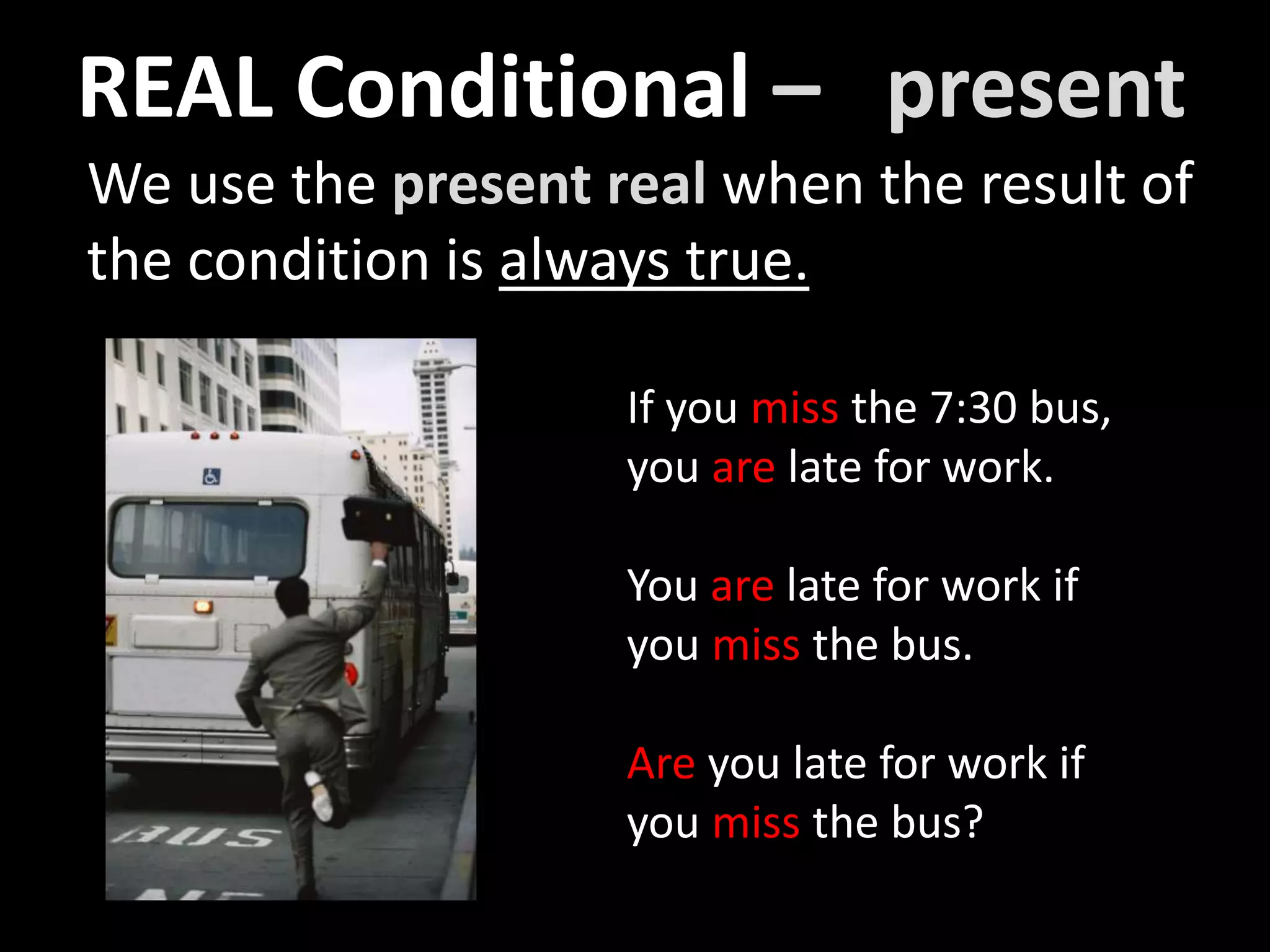
If you miss the 7:30 bus,
you are late for work.
You are late for work if
you miss the bus.
Are you late for work if
you miss the bus?
REAL Conditional – present
We use the present real when the result of
the condition is always true cont…
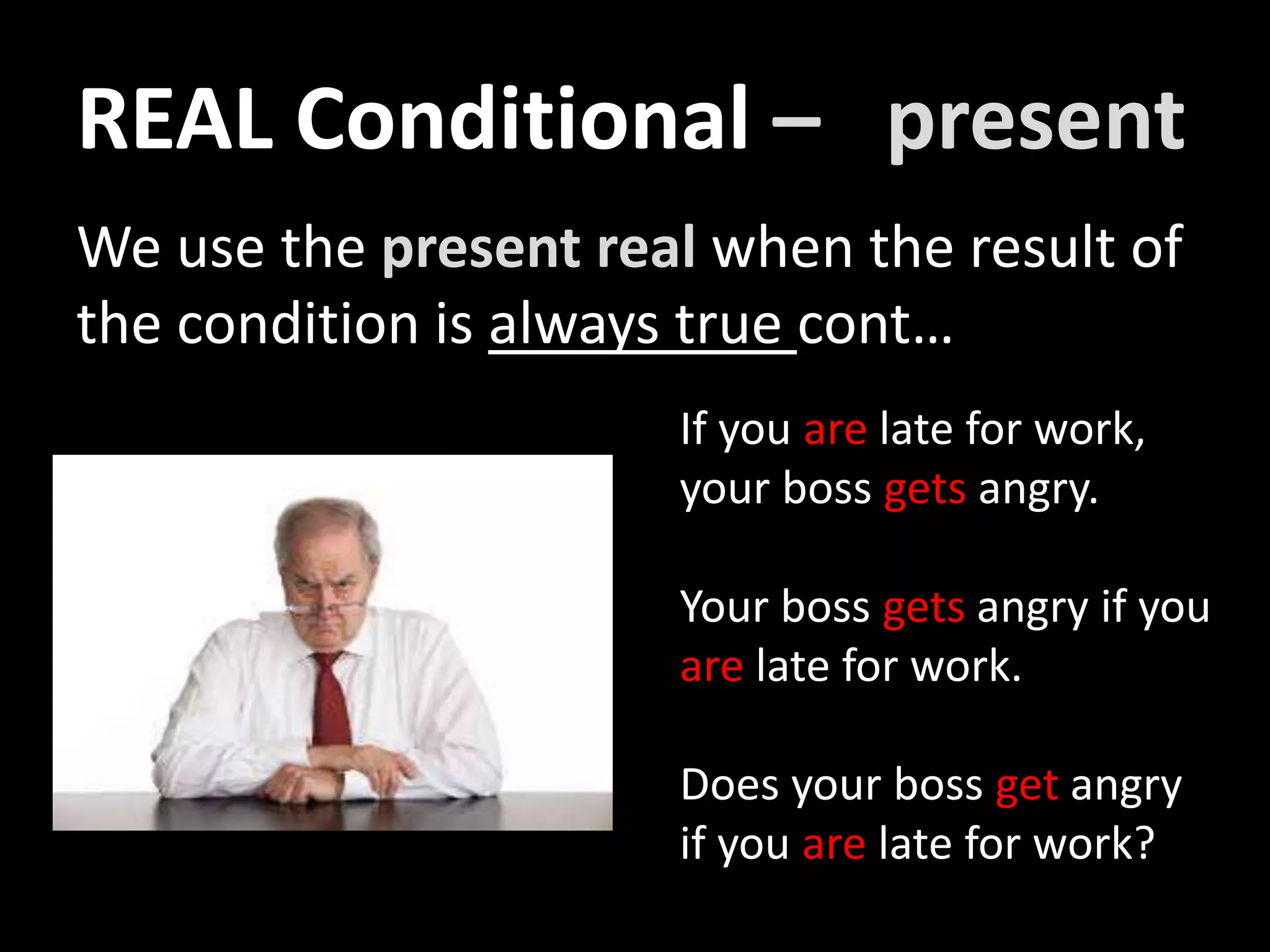
If you are late for work,
your boss gets angry.
Your boss gets angry if you
are late for work.
Does your boss get angry
if you are late for work?
REAL Conditional – present
We can also use the past real when the
result of the condition is always true.
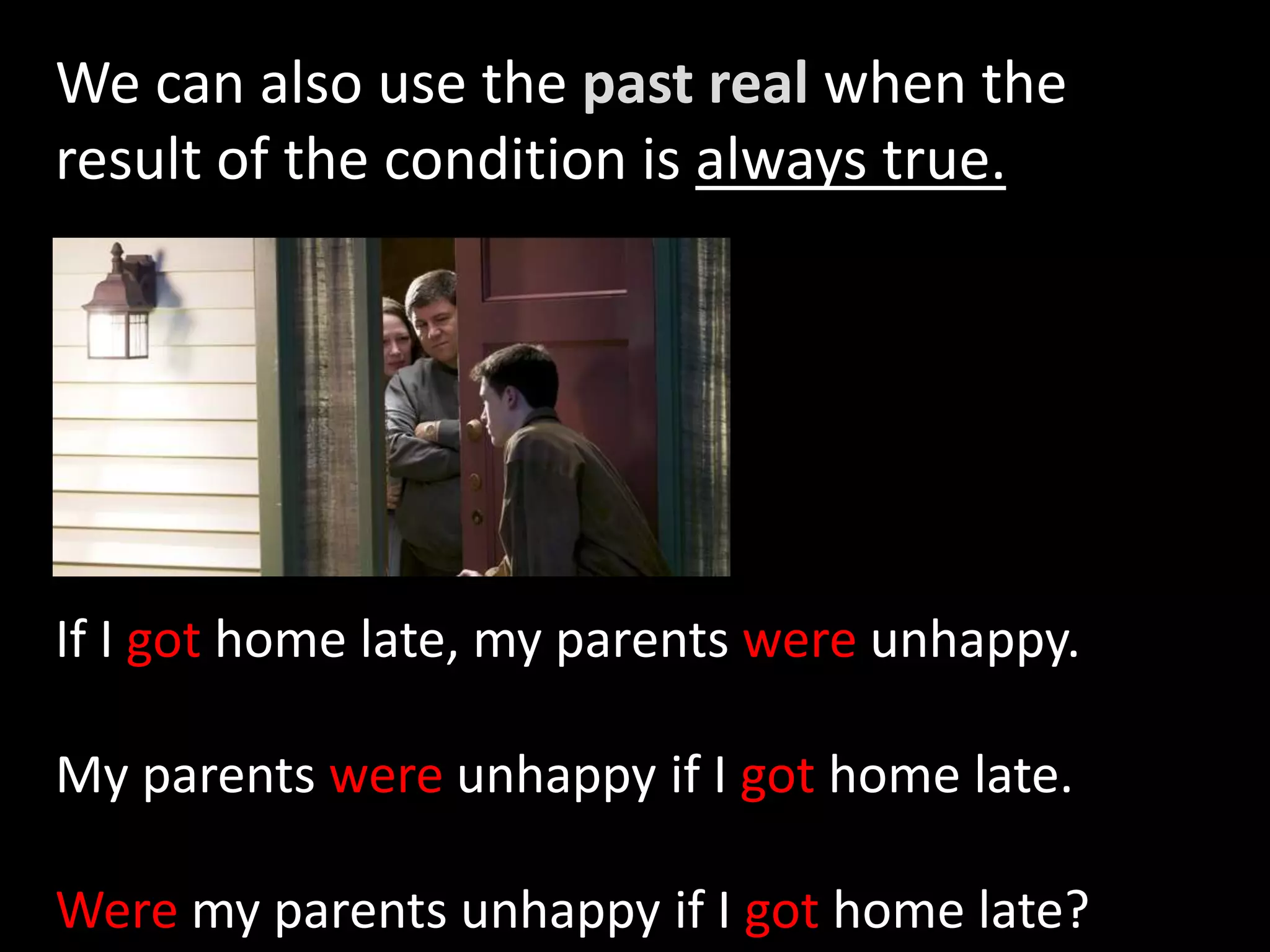
If I got home late, my parents were unhappy.
My parents were unhappy if I got home late.
Were my parents unhappy if I got home late?
First Conditional – Type 1
We use the First Conditional
to talk about future events
that are likely to happen.
Conditional Clause
If + subject + present
simple
Main Clause
subject + will (future)
OR
subject + will + modal (be
going to, can, may, must) +
base form of the verb
NOTE: You can use WHEN in the IF clause, the meaning
does not change.
future
REAL
First Conditional – Type 1
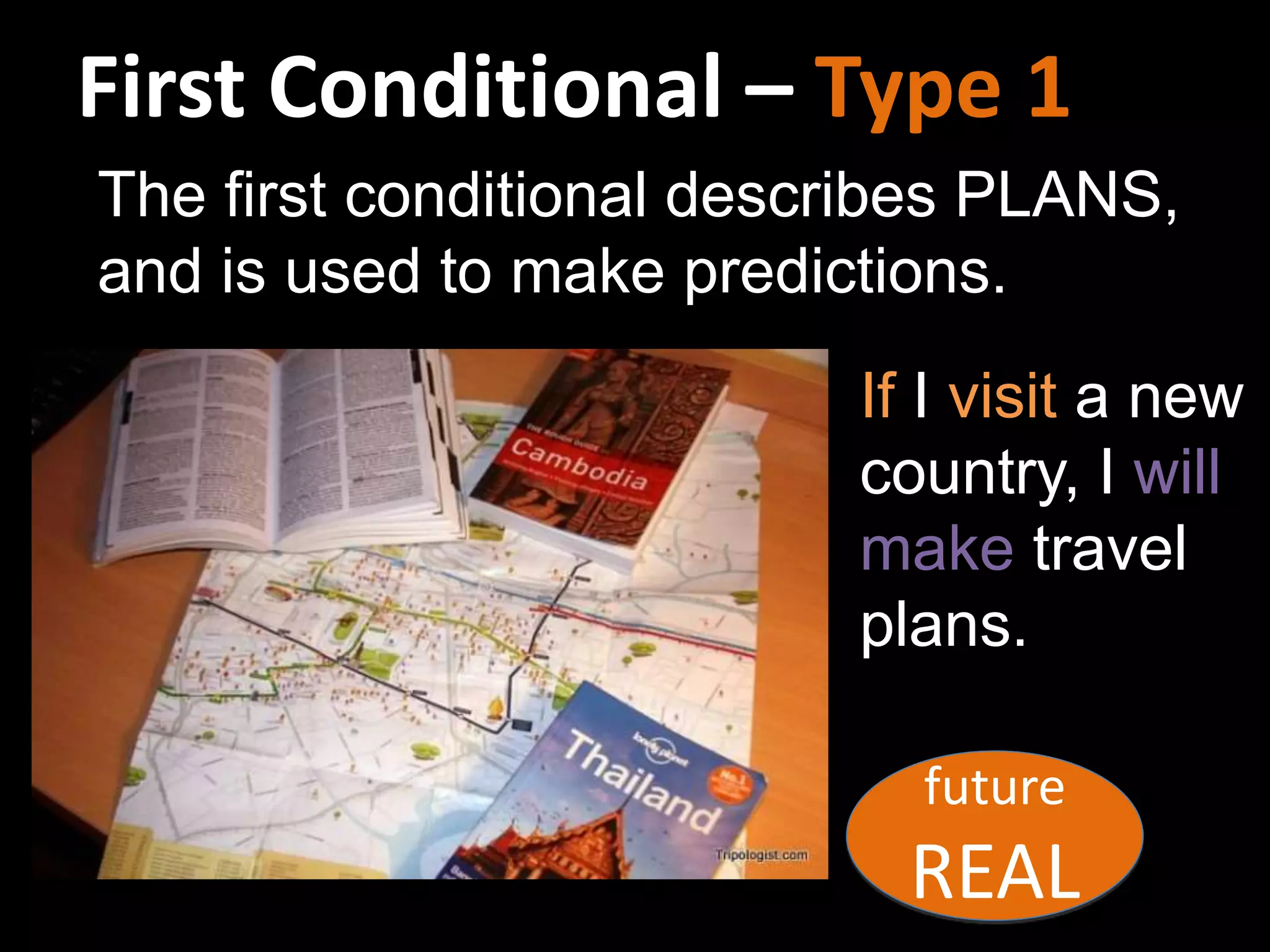
If I visit a new
country, I will
make travel
plans.
future
REAL
The first conditional describes PLANS,
and is used to make predictions.
First Conditional – Type 1
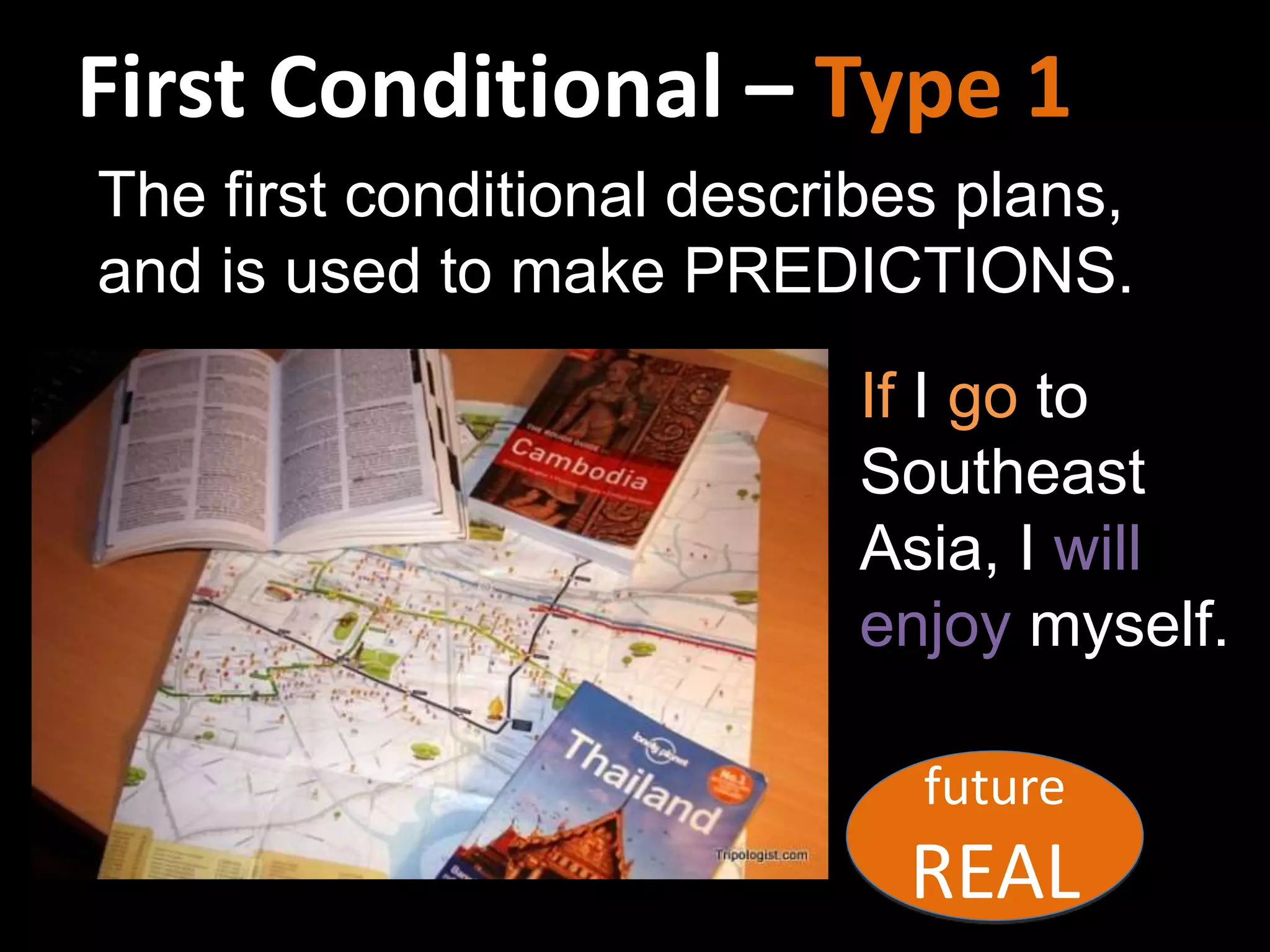
If I go to
Southeast
Asia, I will
enjoy myself.
The first conditional describes plans,
and is used to make PREDICTIONS.
future
REAL
First Conditional – Type 1
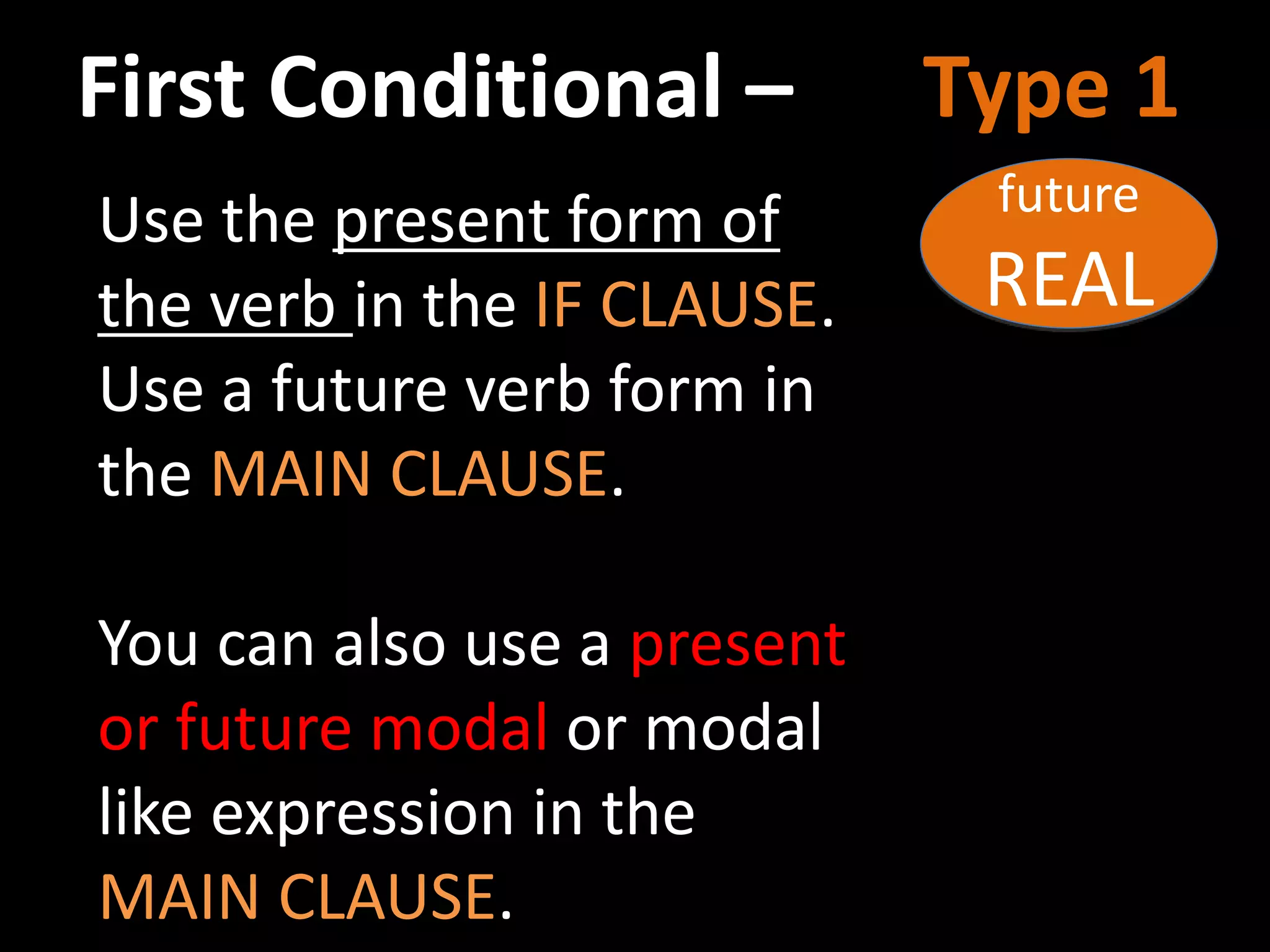
Use the present form of
the verb in the IF CLAUSE.
Use a future verb form in
the MAIN CLAUSE.
You can also use a present
or future modal or modal
like expression in the
MAIN CLAUSE.
future
REAL
First Conditional – Type 1
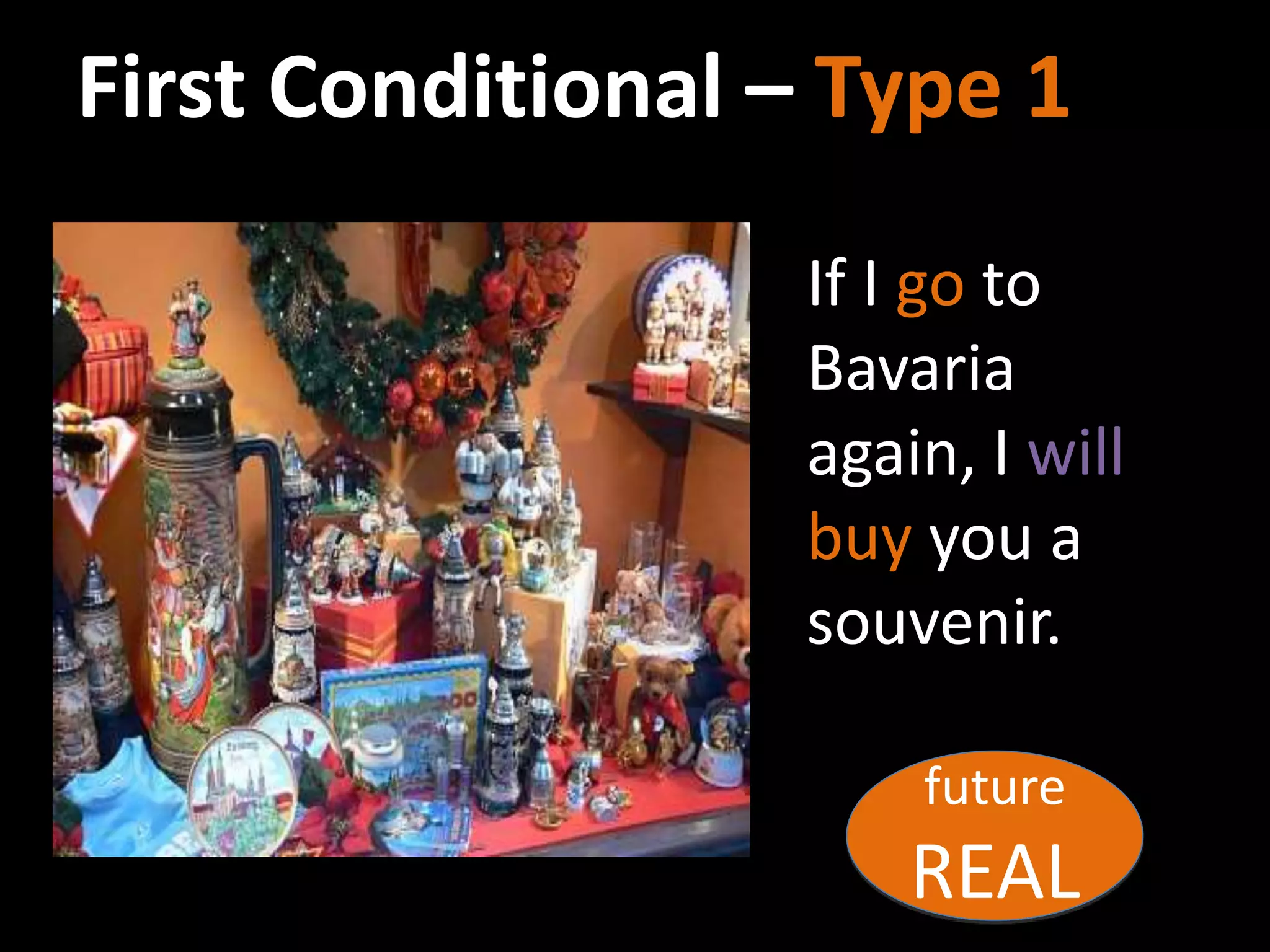
If I go to
Bavaria
again, I will
buy you a
souvenir.
future
REAL
First Conditional – Type 1
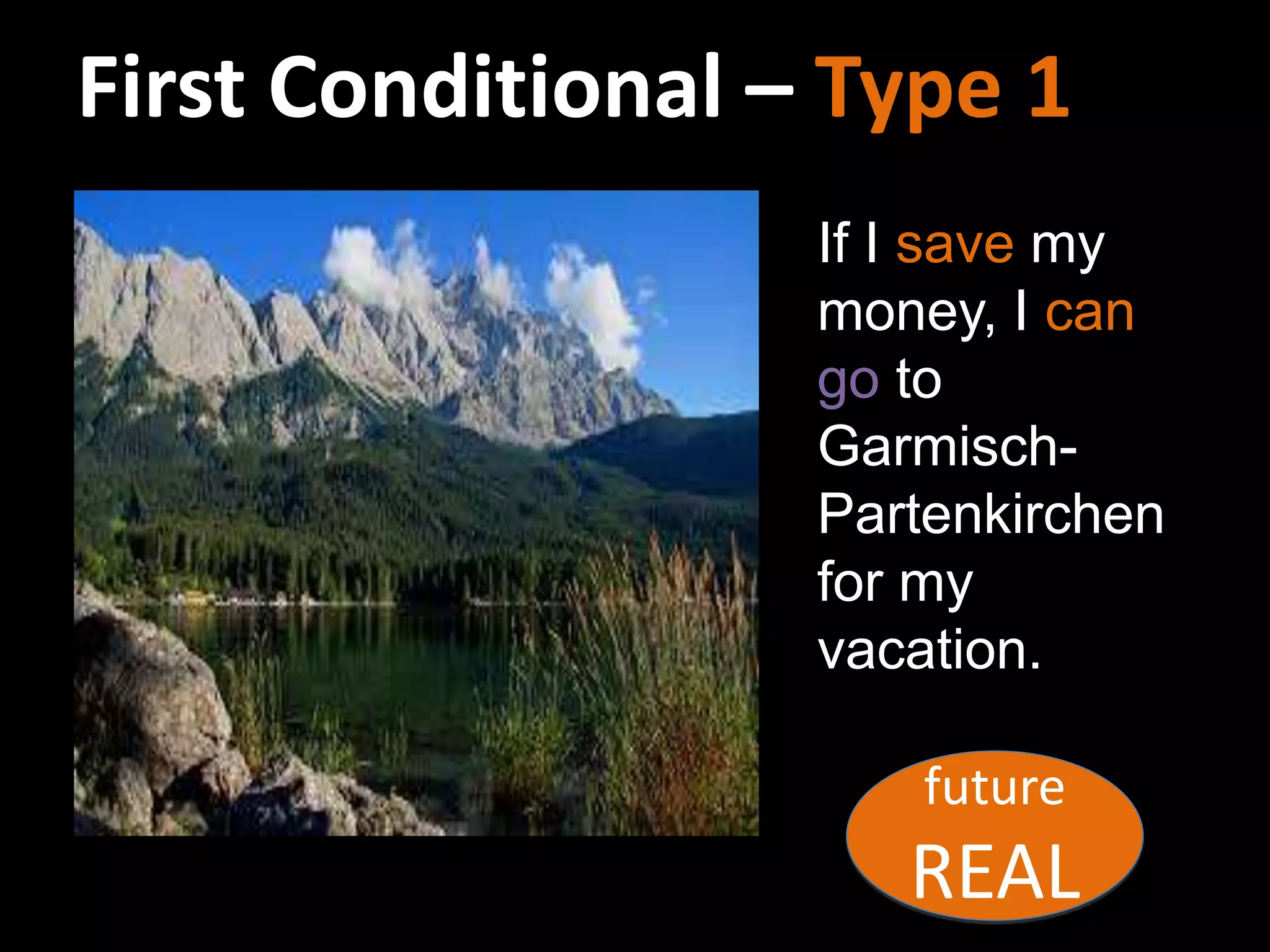
If I save my
money, I can
go to
Garmisch-
Partenkirchen
for my
vacation.
future
REAL
First Conditional – Type 1
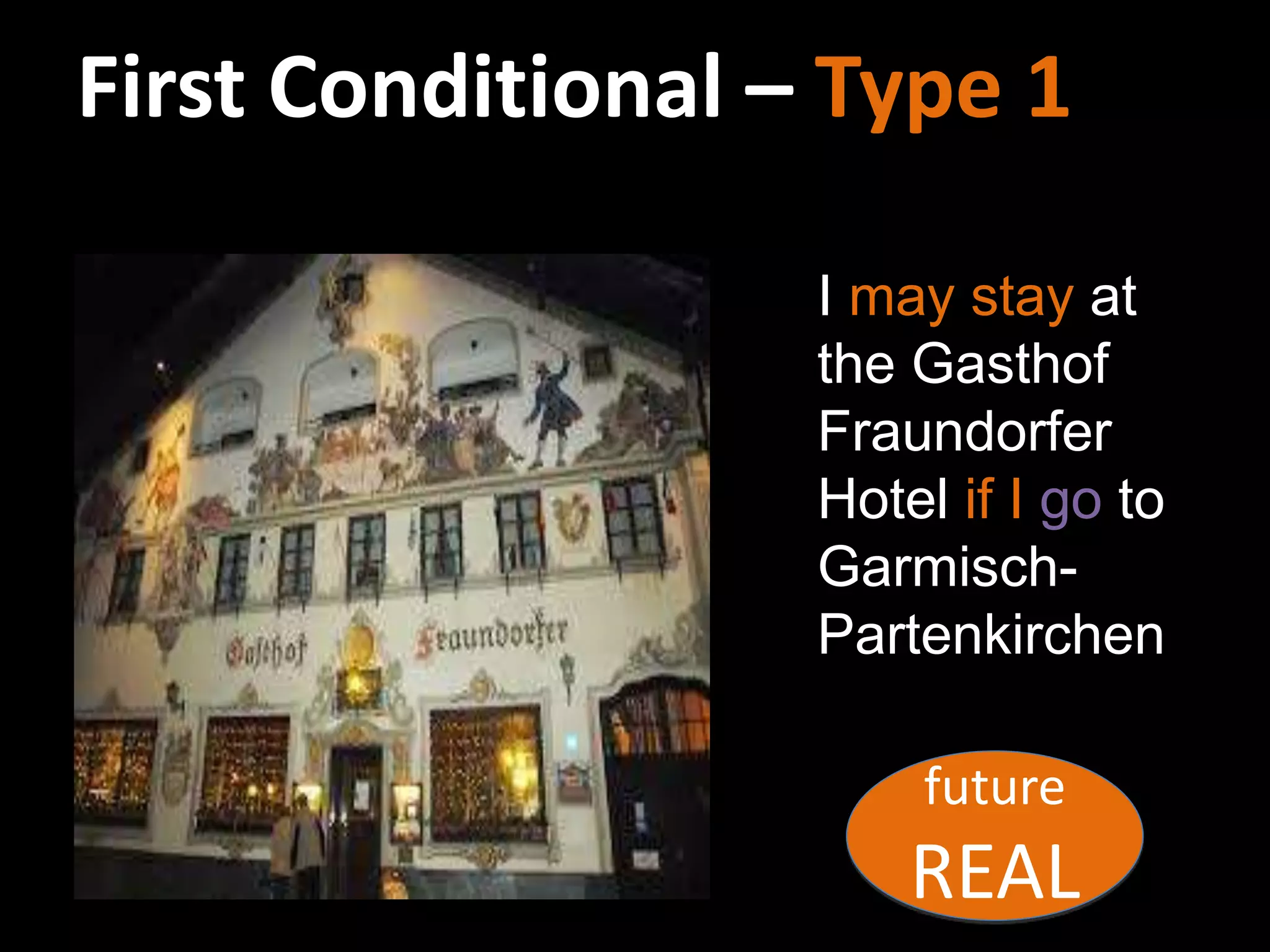
I may stay at
the Gasthof
Fraundorfer
Hotel if I go to
Garmisch-
Partenkirchen
future
REAL
First Conditional – Type 1
If you eat at
the Gasthof
Fraundorfer
Hotel, you
must try the
roast goose!
future
REAL

Real conditional type 1

  • 1.
    Real and UnrealConditionals Experiences of an International Traveler CONDITIONAL SENTENCES: If something happens, then another thing happens , or will happen as a result.
  • 2.
    Conditionals REAL RULE 1: expresssituations that can happen in the present, past or the future. They are often used when stating facts, general knowledge, habits, predictions, advice, or instructions.
  • 3.
    Conditionals REAL present/past Conditional Clause If +subject + present simple If + subject + past simple Main Clause subject+ present simple If + subject + past simple NOTE: You can use WHEN in the IF clause, the meaning does not change.
  • 4.
    We use thepresent real when the result of the condition is always true, like a scientific fact. If you heat water to 100°C /212° F, it boils. Water boils if you heat it to 100°C /212° F . Does water boil if you heat it to 100°C /212° F? REAL Conditional – present
  • 5.
    We use thepresent real when the result of the condition is always true. If you miss the 7:30 bus, you are late for work. You are late for work if you miss the bus. Are you late for work if you miss the bus? REAL Conditional – present
  • 6.
    We use thepresent real when the result of the condition is always true cont… If you are late for work, your boss gets angry. Your boss gets angry if you are late for work. Does your boss get angry if you are late for work? REAL Conditional – present
  • 7.
    We can alsouse the past real when the result of the condition is always true. If I got home late, my parents were unhappy. My parents were unhappy if I got home late. Were my parents unhappy if I got home late?
  • 8.
    First Conditional –Type 1 We use the First Conditional to talk about future events that are likely to happen. Conditional Clause If + subject + present simple Main Clause subject + will (future) OR subject + will + modal (be going to, can, may, must) + base form of the verb NOTE: You can use WHEN in the IF clause, the meaning does not change. future REAL
  • 9.
    First Conditional –Type 1 If I visit a new country, I will make travel plans. future REAL The first conditional describes PLANS, and is used to make predictions.
  • 10.
    First Conditional –Type 1 If I go to Southeast Asia, I will enjoy myself. The first conditional describes plans, and is used to make PREDICTIONS. future REAL
  • 11.
    First Conditional –Type 1 Use the present form of the verb in the IF CLAUSE. Use a future verb form in the MAIN CLAUSE. You can also use a present or future modal or modal like expression in the MAIN CLAUSE. future REAL
  • 12.
    First Conditional –Type 1 If I go to Bavaria again, I will buy you a souvenir. future REAL
  • 13.
    First Conditional –Type 1 If I save my money, I can go to Garmisch- Partenkirchen for my vacation. future REAL
  • 14.
    First Conditional –Type 1 I may stay at the Gasthof Fraundorfer Hotel if I go to Garmisch- Partenkirchen future REAL
  • 15.
    First Conditional –Type 1 If you eat at the Gasthof Fraundorfer Hotel, you must try the roast goose! future REAL