Downloaded 11 times
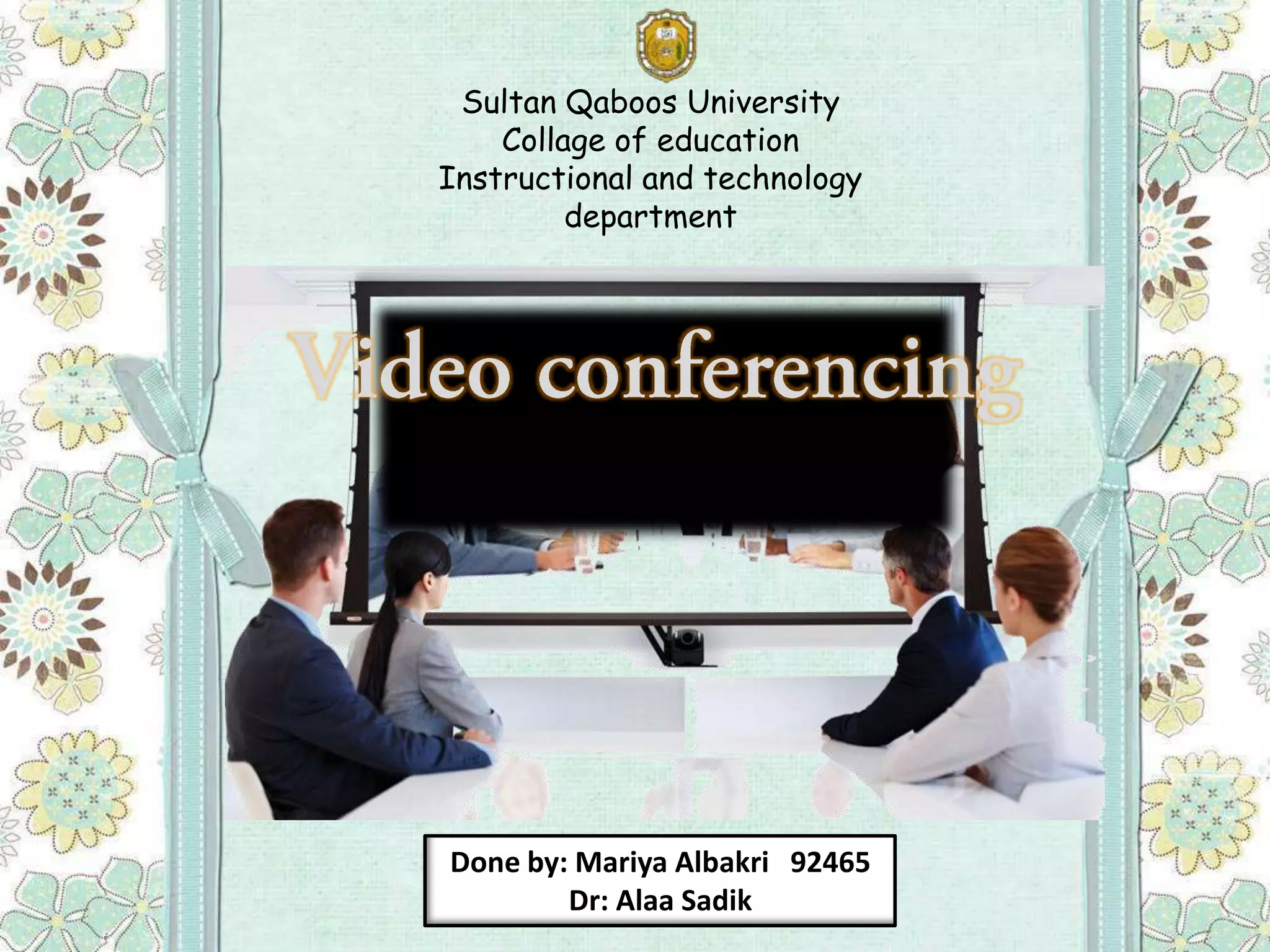

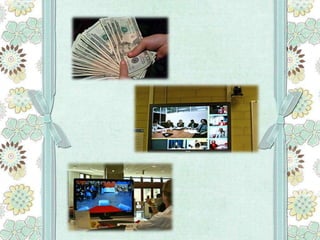

Video conferencing allows for real-time two-way video and audio communication between two or more locations. It can be used to deliver distance education by enabling interaction between teachers and remote students. Some benefits are reducing travel costs, increasing class sizes, and providing access to experts anywhere. However, video conferencing also faces limitations such as high setup costs, technical issues, and lack of in-person interaction. It works best when teachers and students initially meet in person before using the technology. Universities like the University of Alaska use video conferencing to connect classrooms, conduct interviews, and collaborate across institutions.


![Videoconferencing%5 B1%5 D[1]](https://cdn.slidesharecdn.com/ss_thumbnails/videoconferencing5b15d1-090318112551-phpapp02-thumbnail.jpg?width=640&height=640&fit=bounds)


