Camera Culture Ramesh  Raskar Camera Culture Associate Professor, MIT Media Lab
 
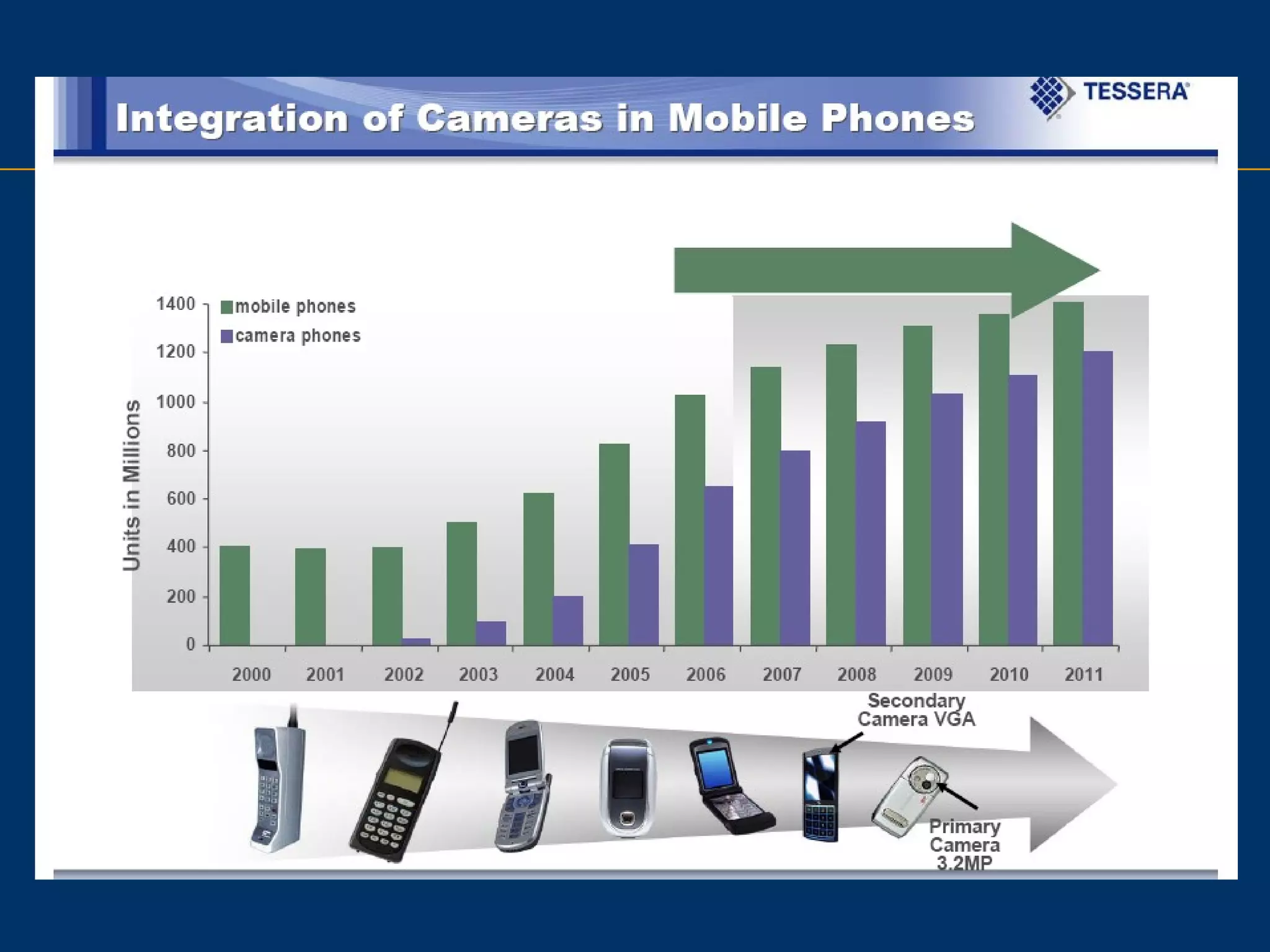
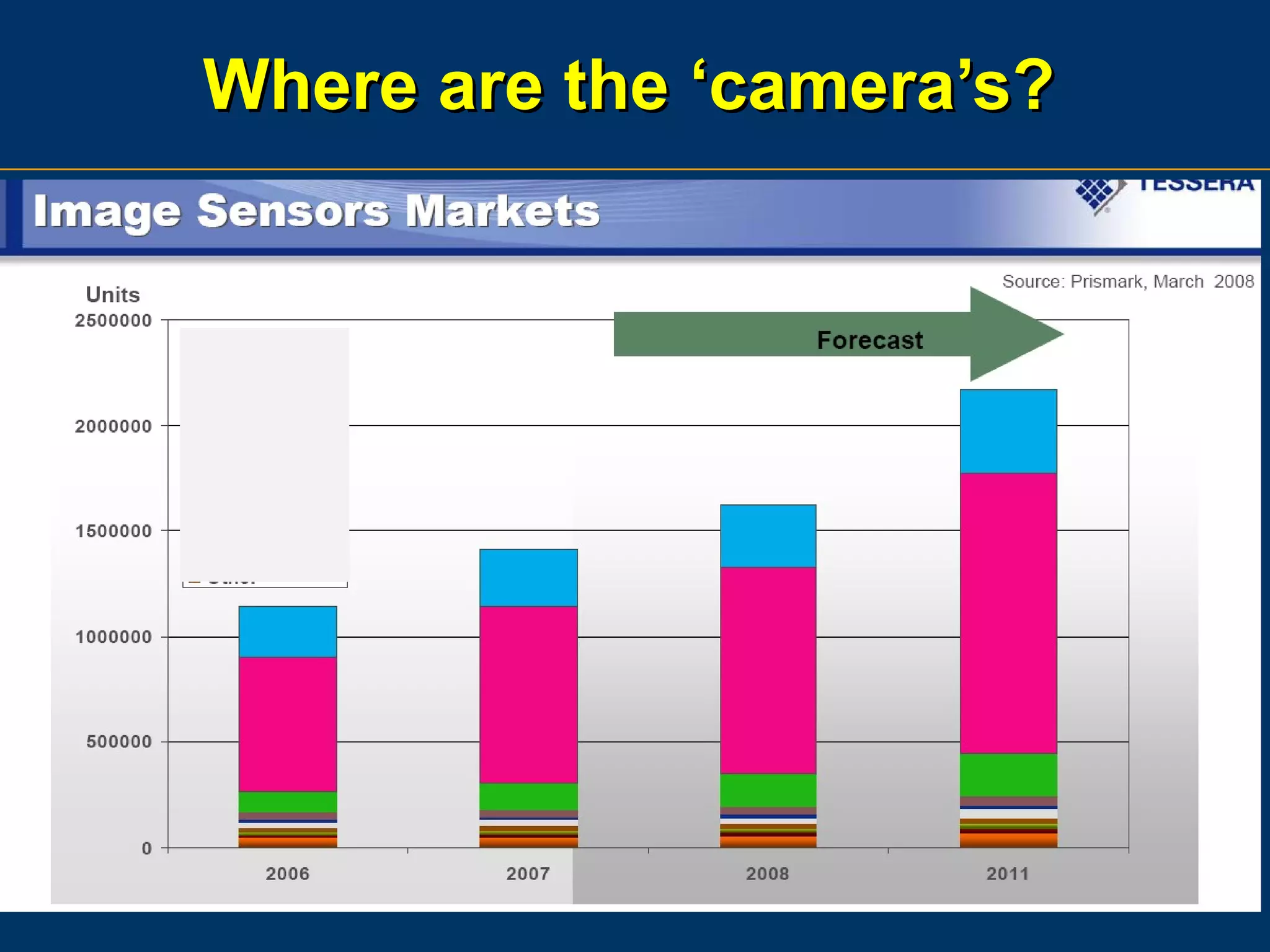
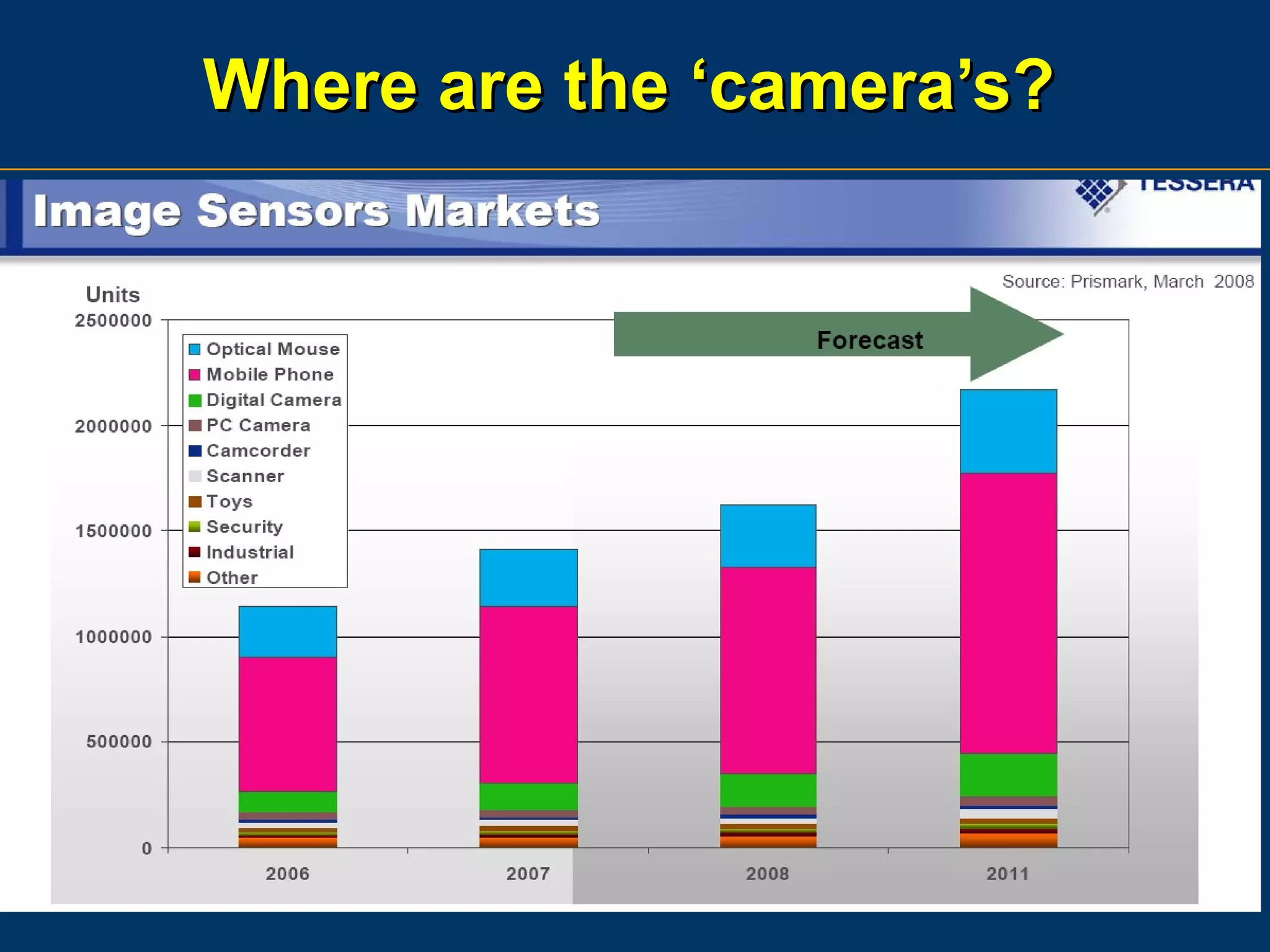
Where are the ‘camera’s?
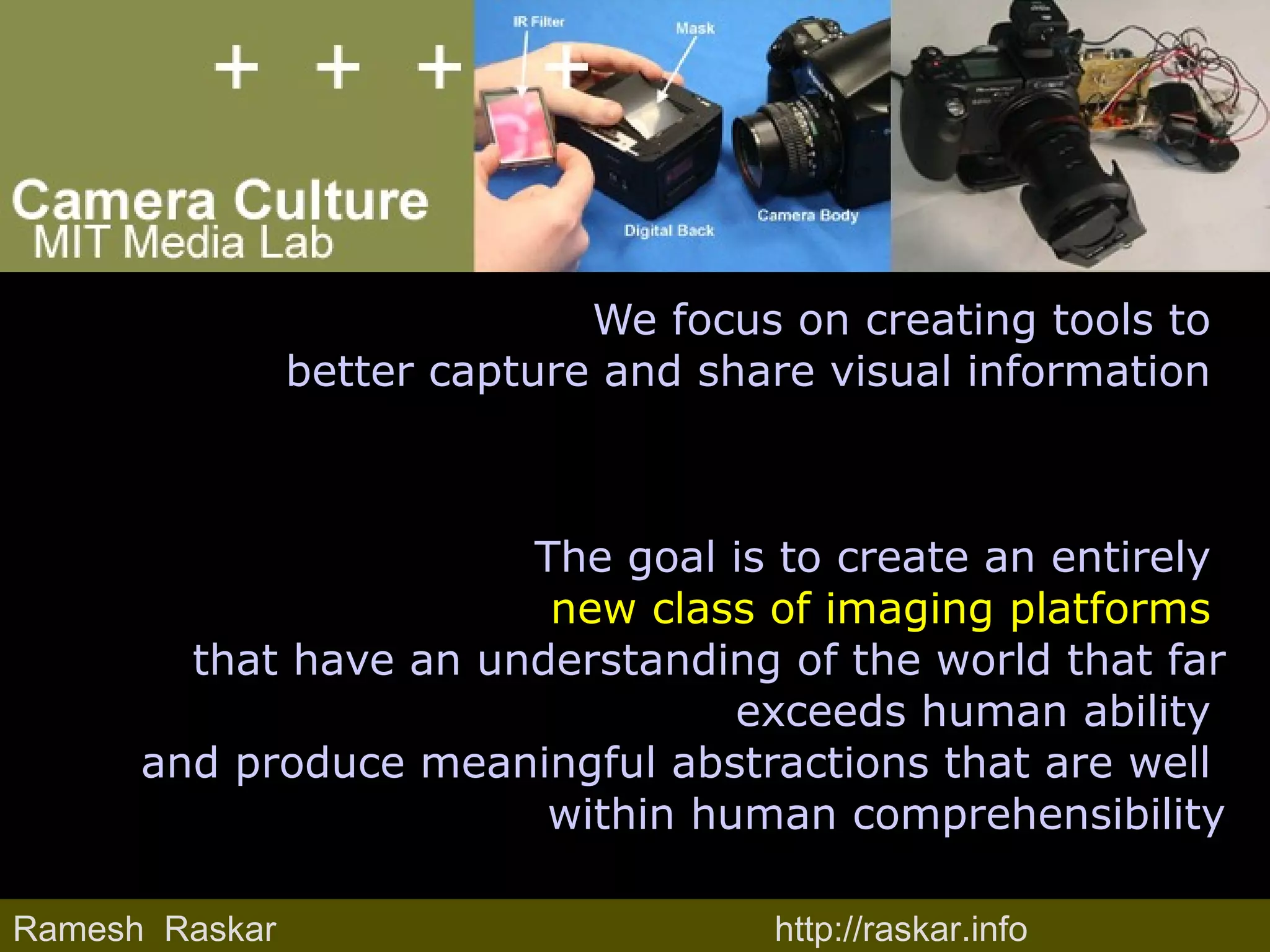
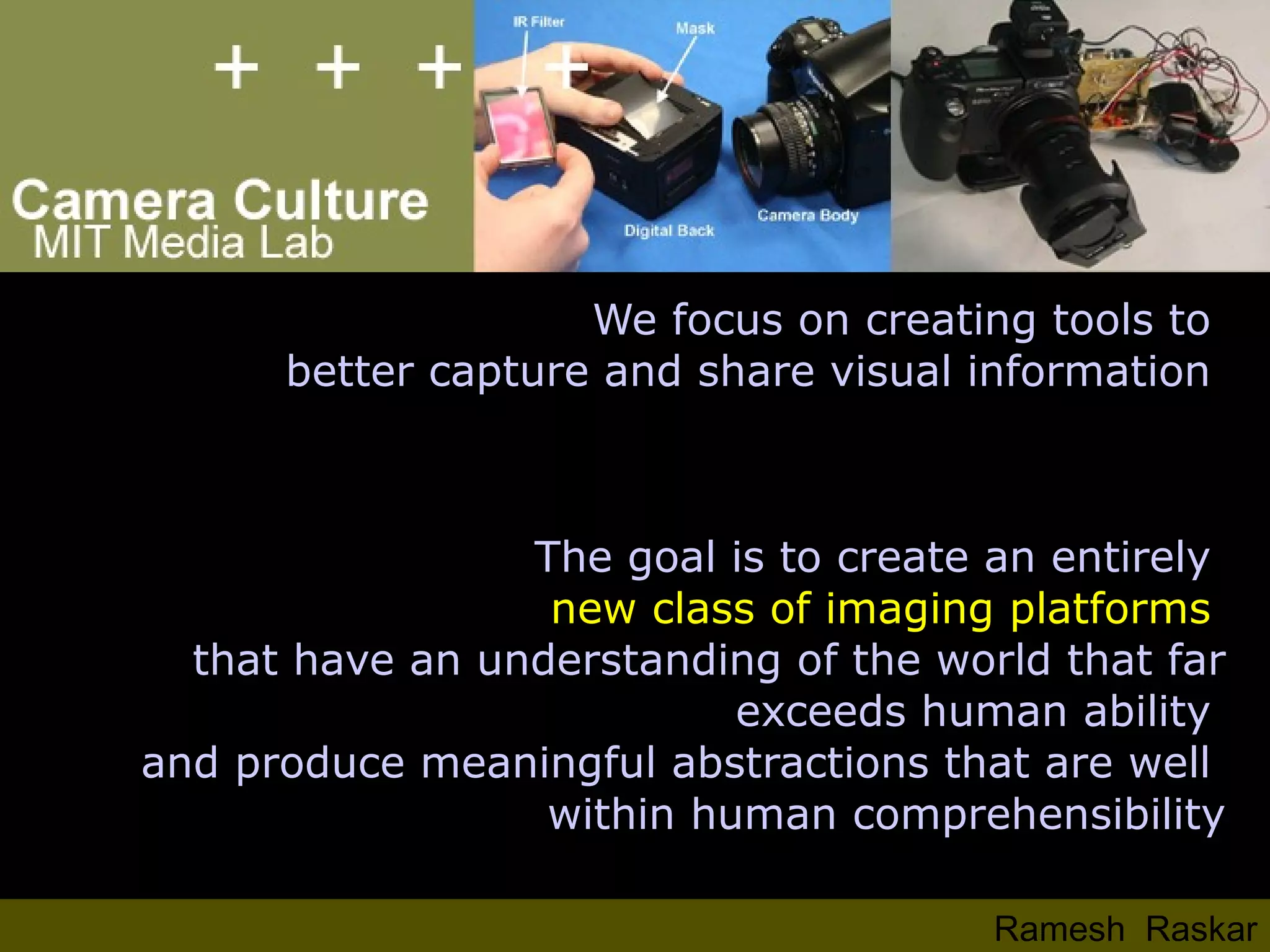
We focus on creating tools to  better capture and share visual information  The goal is to create an entirely  new class of imaging platforms  that have an understanding of the world that far exceeds human ability  and produce meaningful abstractions that are well  within human comprehensibility Ramesh  Raskar
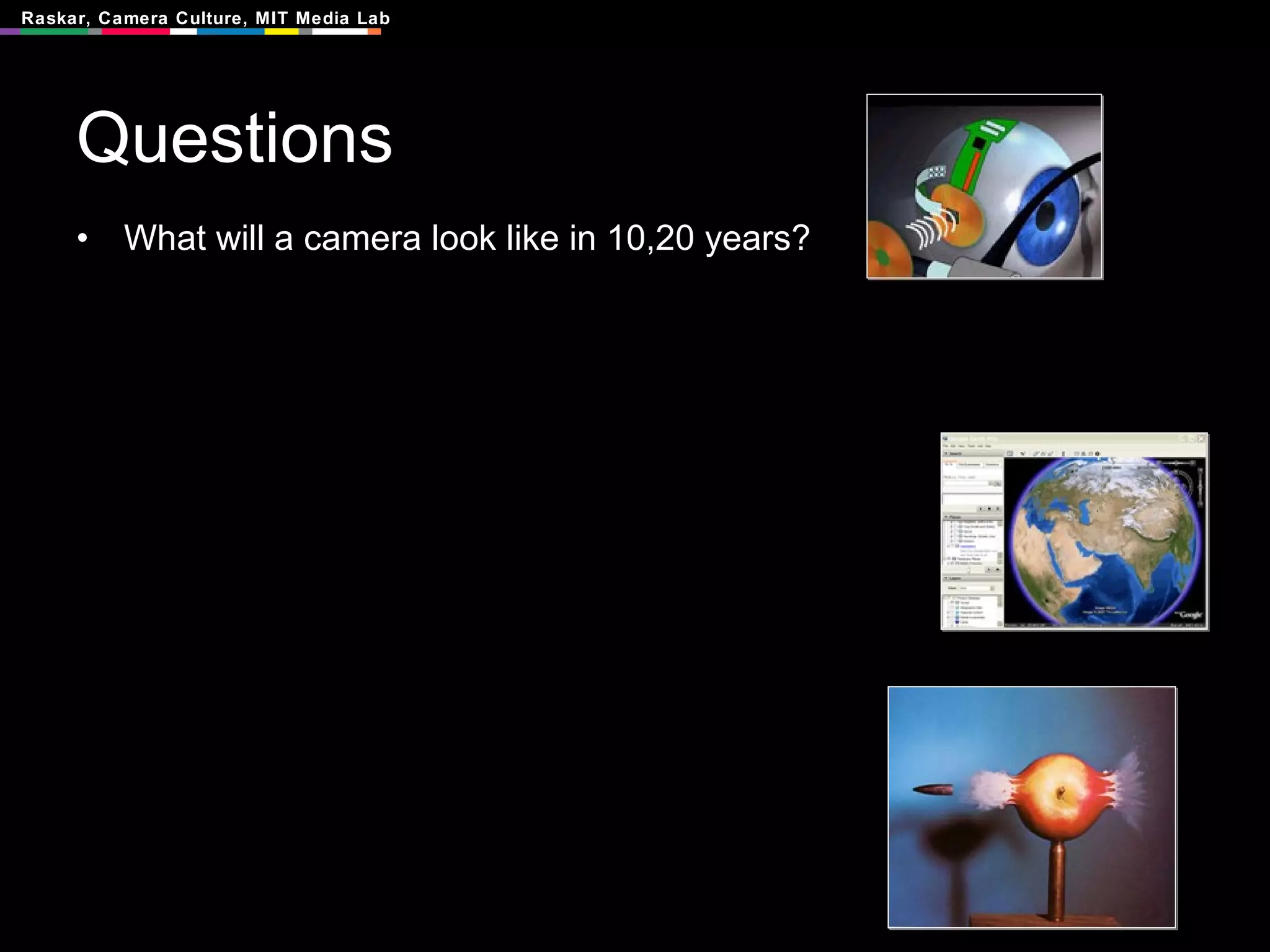
Questions What will a camera look like in 10,20 years?
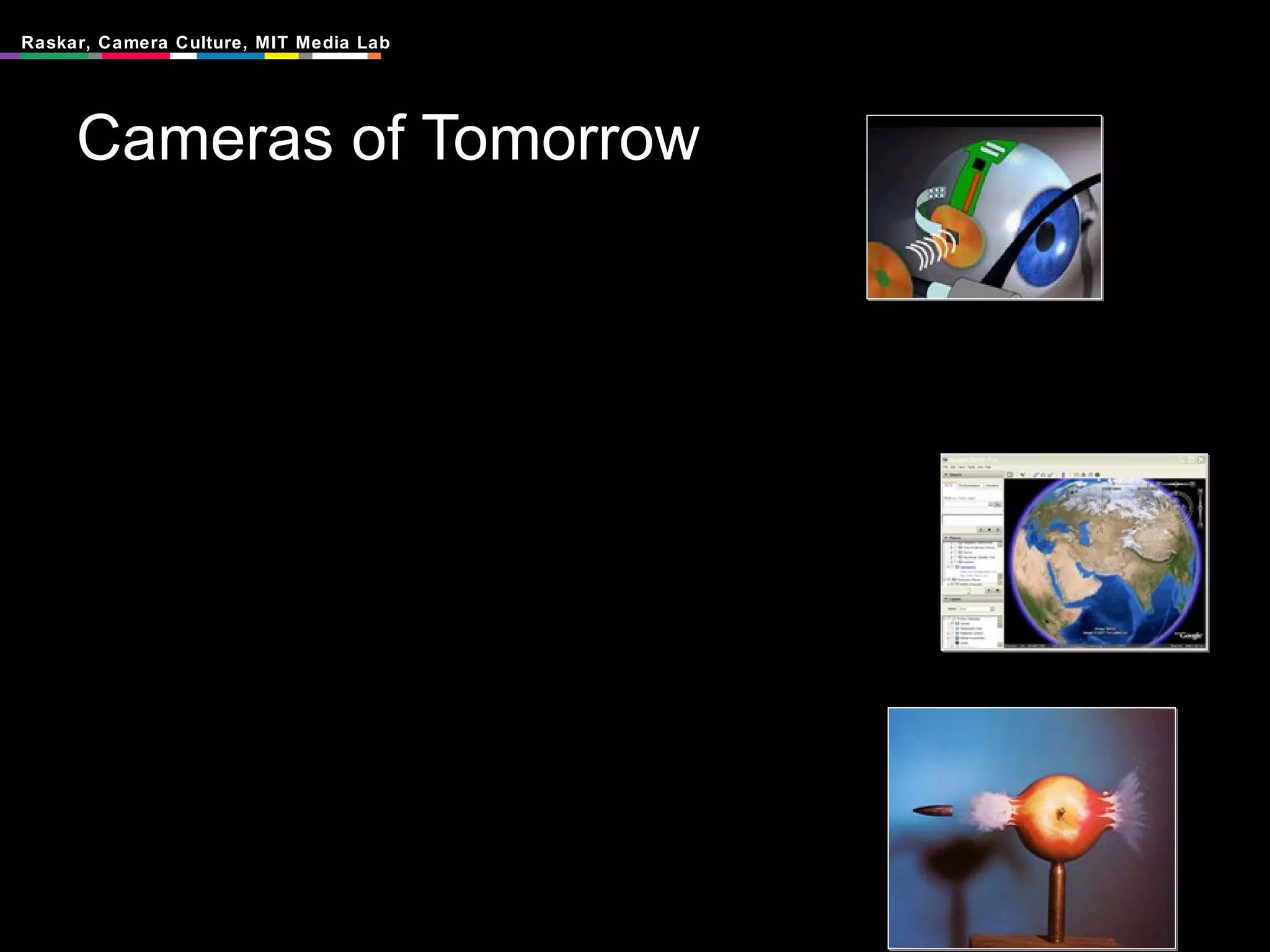
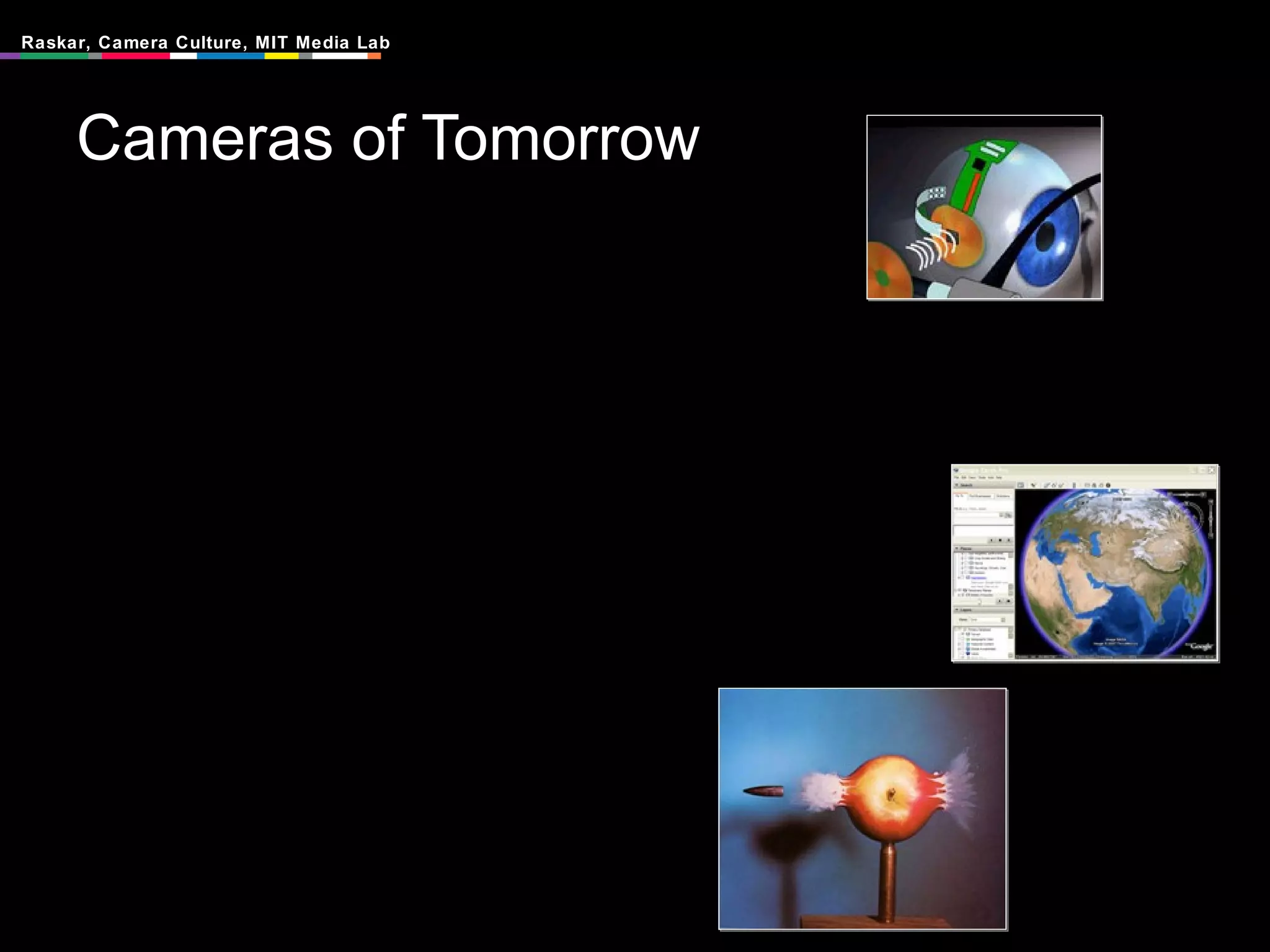
Cameras of Tomorrow
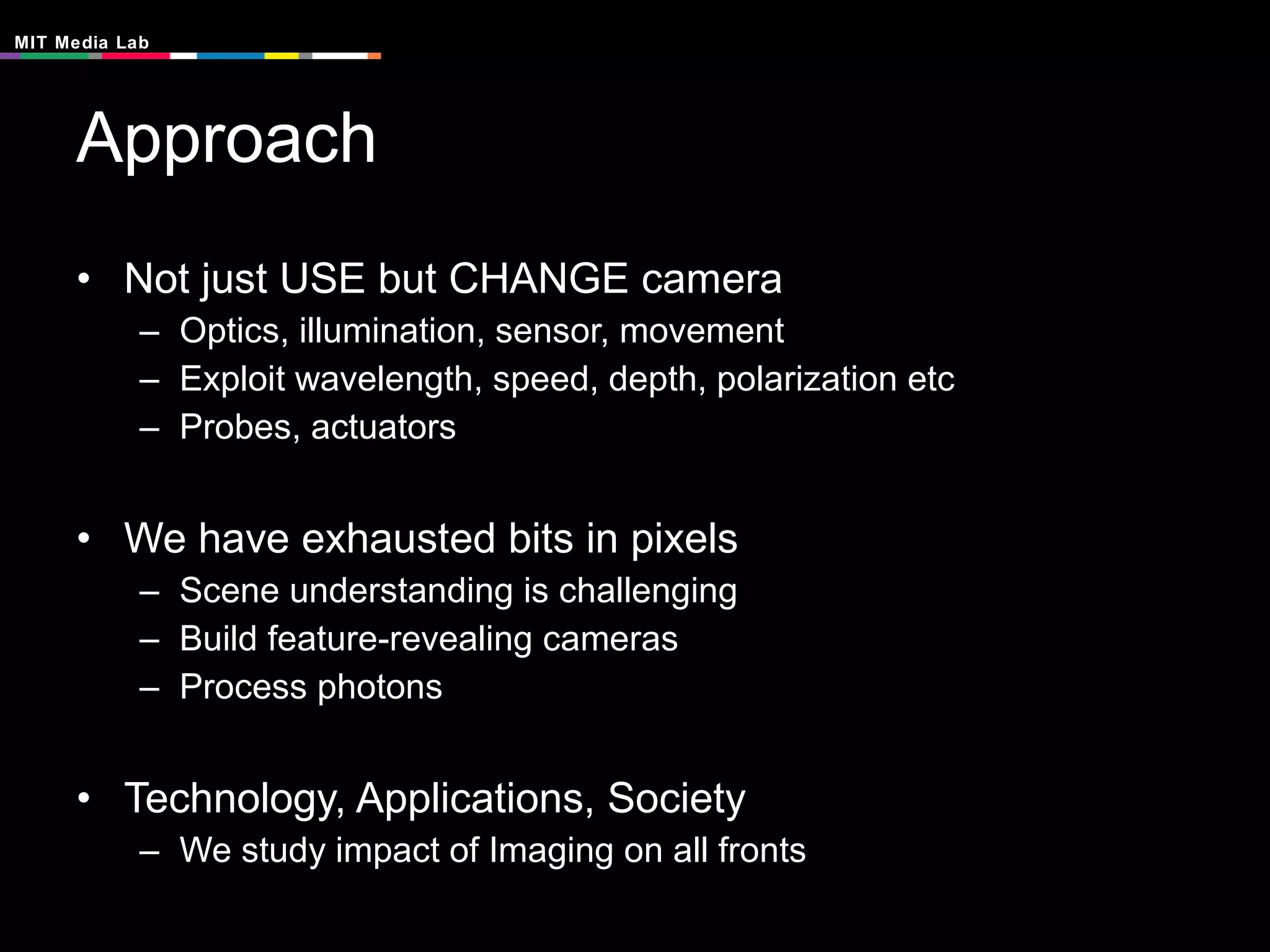
Approach Not just USE but CHANGE camera Optics, illumination, sensor, movement Exploit wavelength, speed, depth, polarization etc Probes, actuators We have exhausted bits in pixels Scene understanding is challenging Build feature-revealing cameras Process photons Technology, Applications, Society We study impact of Imaging on all fronts
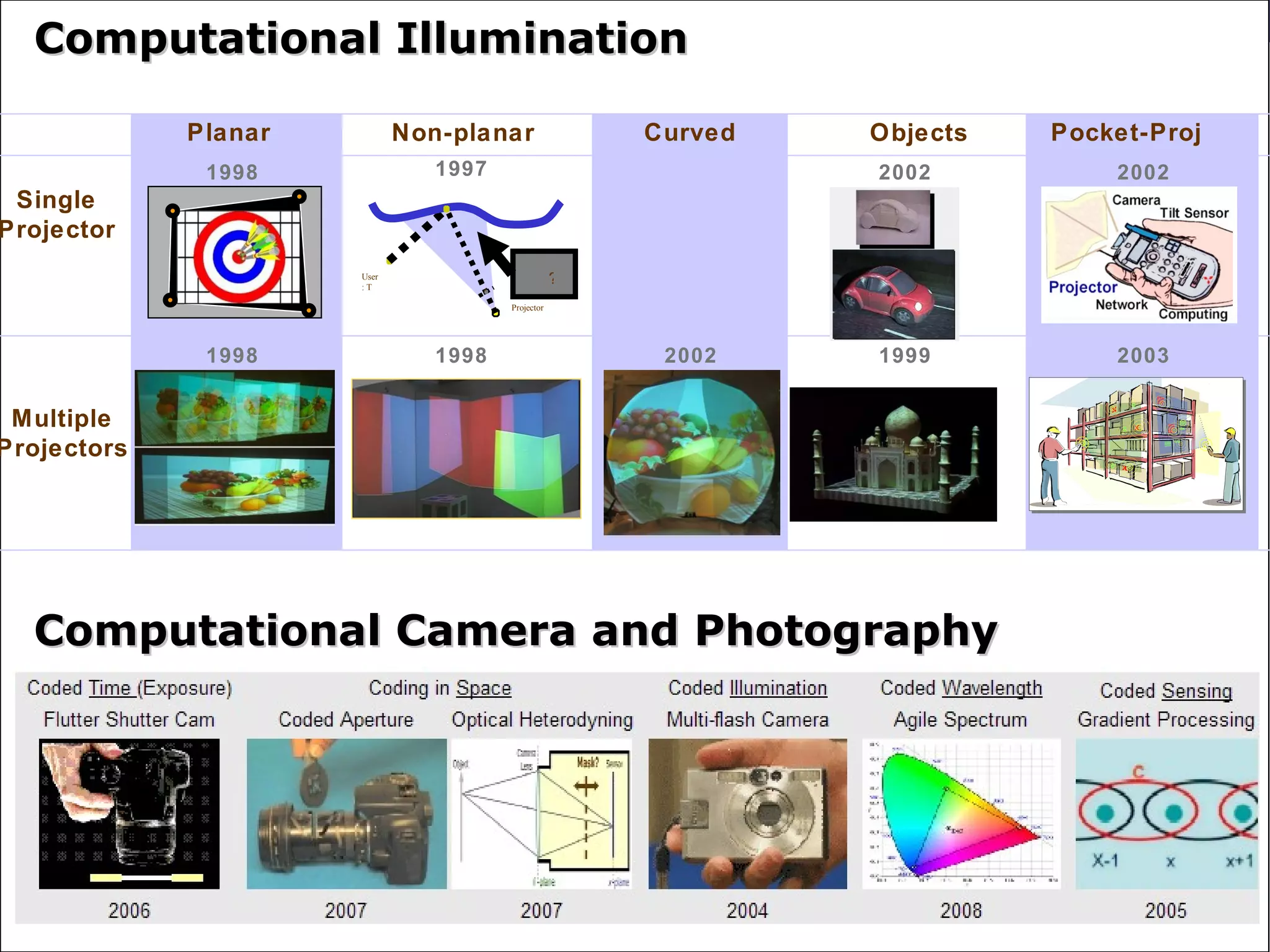
Computational Illumination Curved Planar Non-planar Single Projector Multiple Projectors Pocket-Proj Objects 1998 1998 2002 2002 1999 2002 2003 1998 1997 Computational Camera and Photography Projector j User : T ?
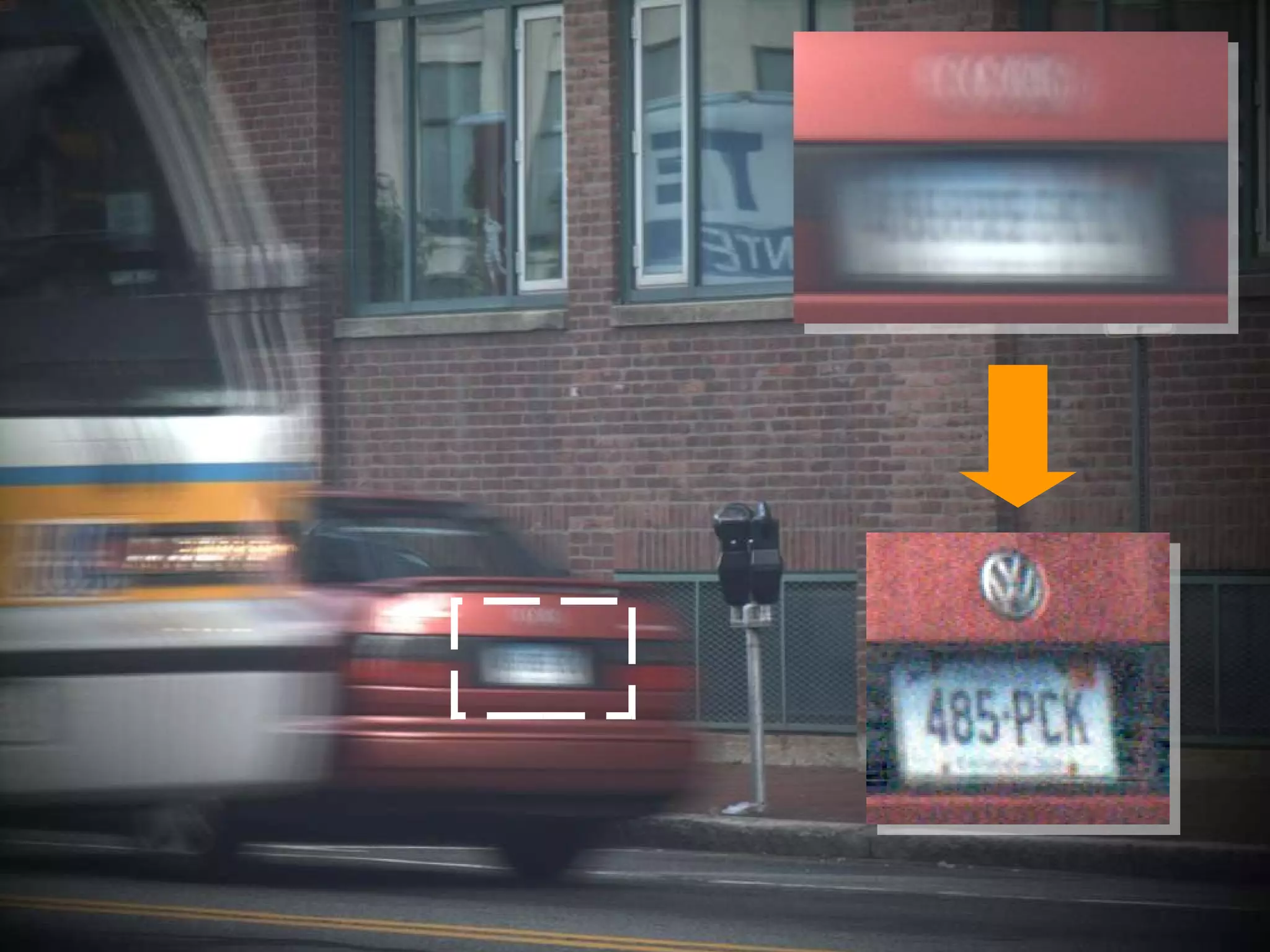
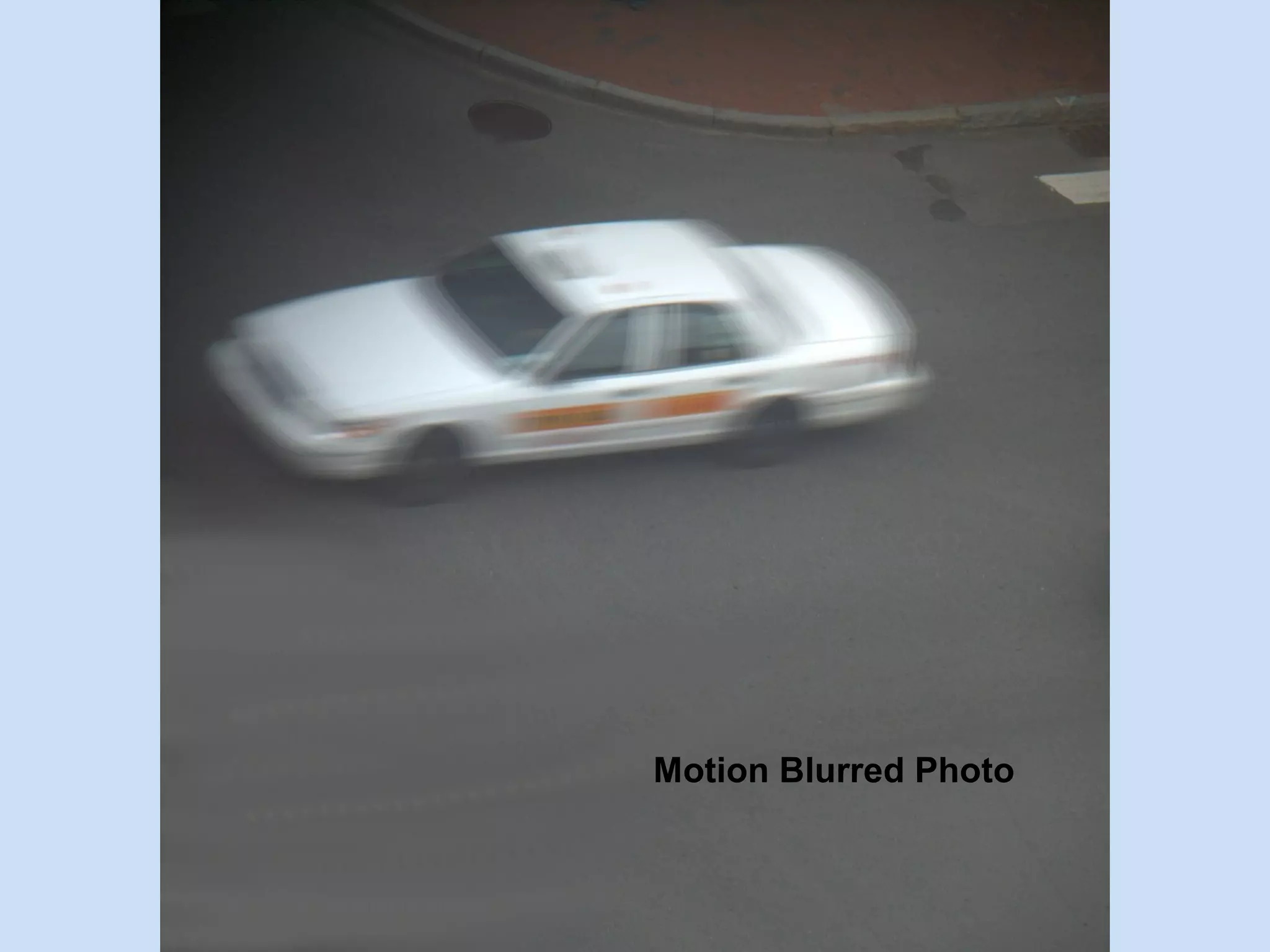
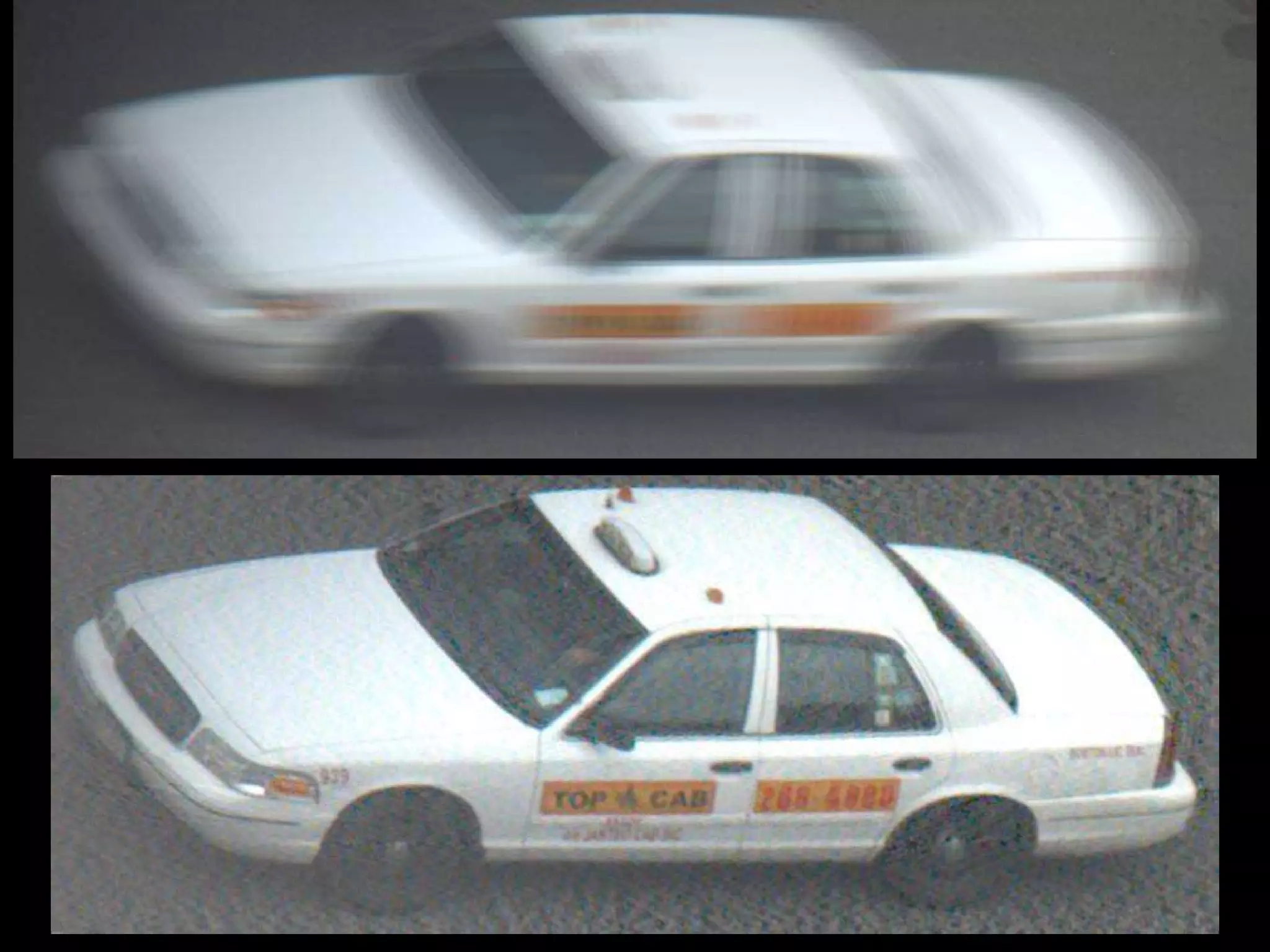
Motion Blurred Photo
 
Flutter Shutter Camera Raskar, Agrawal, Tumblin [Siggraph2006] LCD opacity switched  in coded sequence
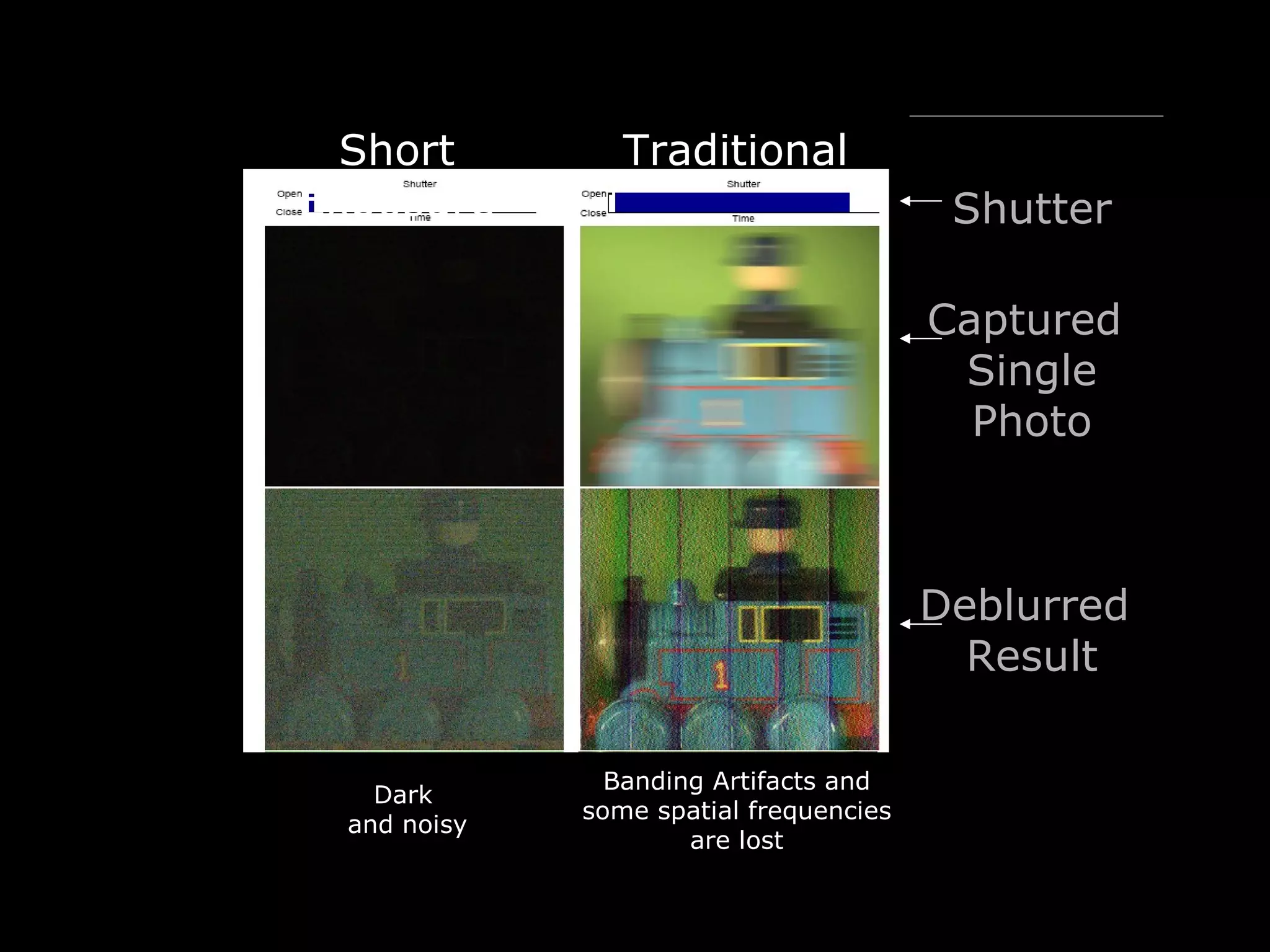
Short Exposure Traditional MURA Coded Deblurred  Result Captured  Single Photo Shutter Banding Artifacts and some spatial frequencies are lost Dark  and noisy
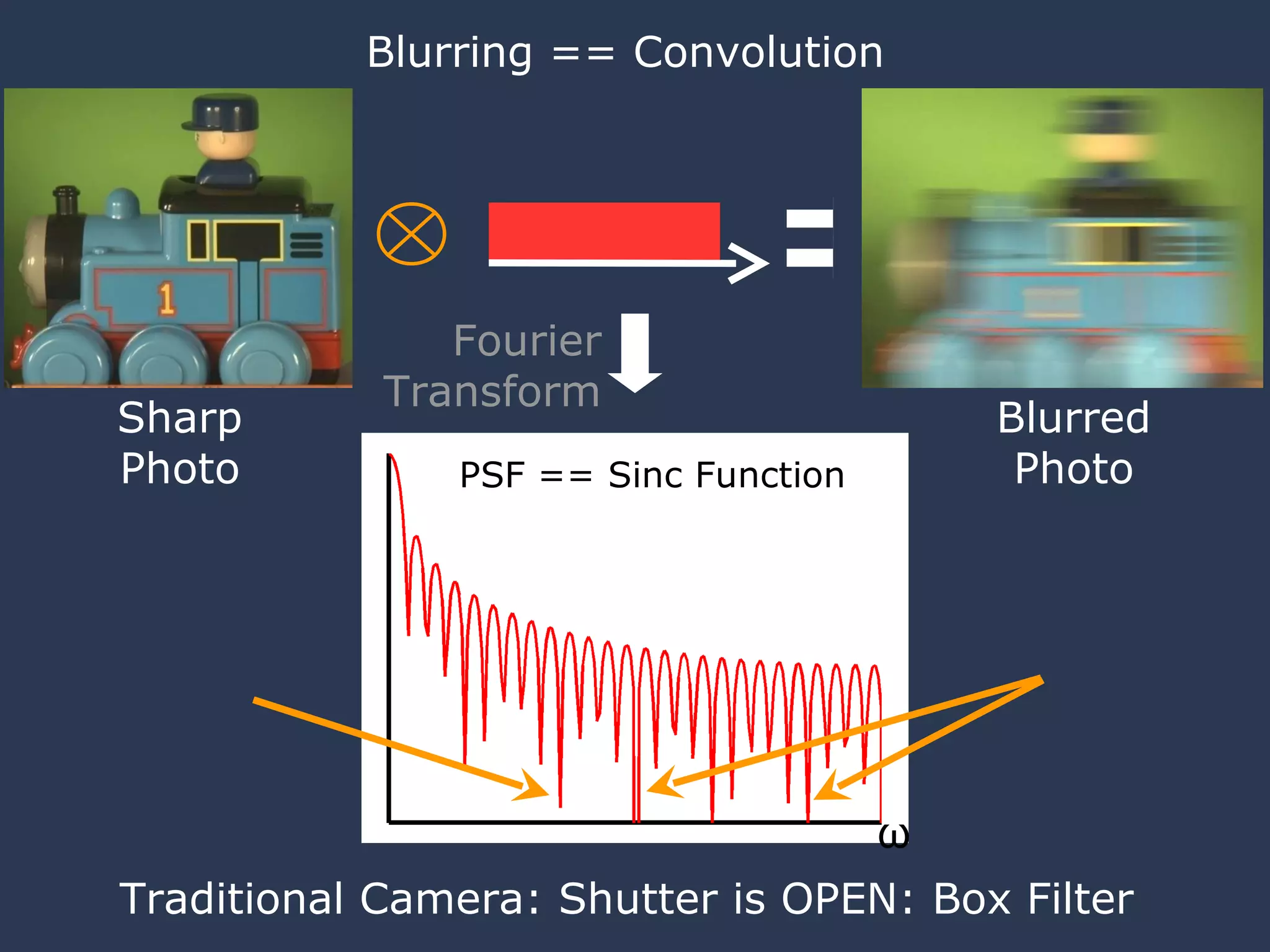
Blurring == Convolution Traditional Camera: Shutter is OPEN: Box Filter PSF == Sinc Function ω Sharp Photo Blurred Photo Fourier Transform
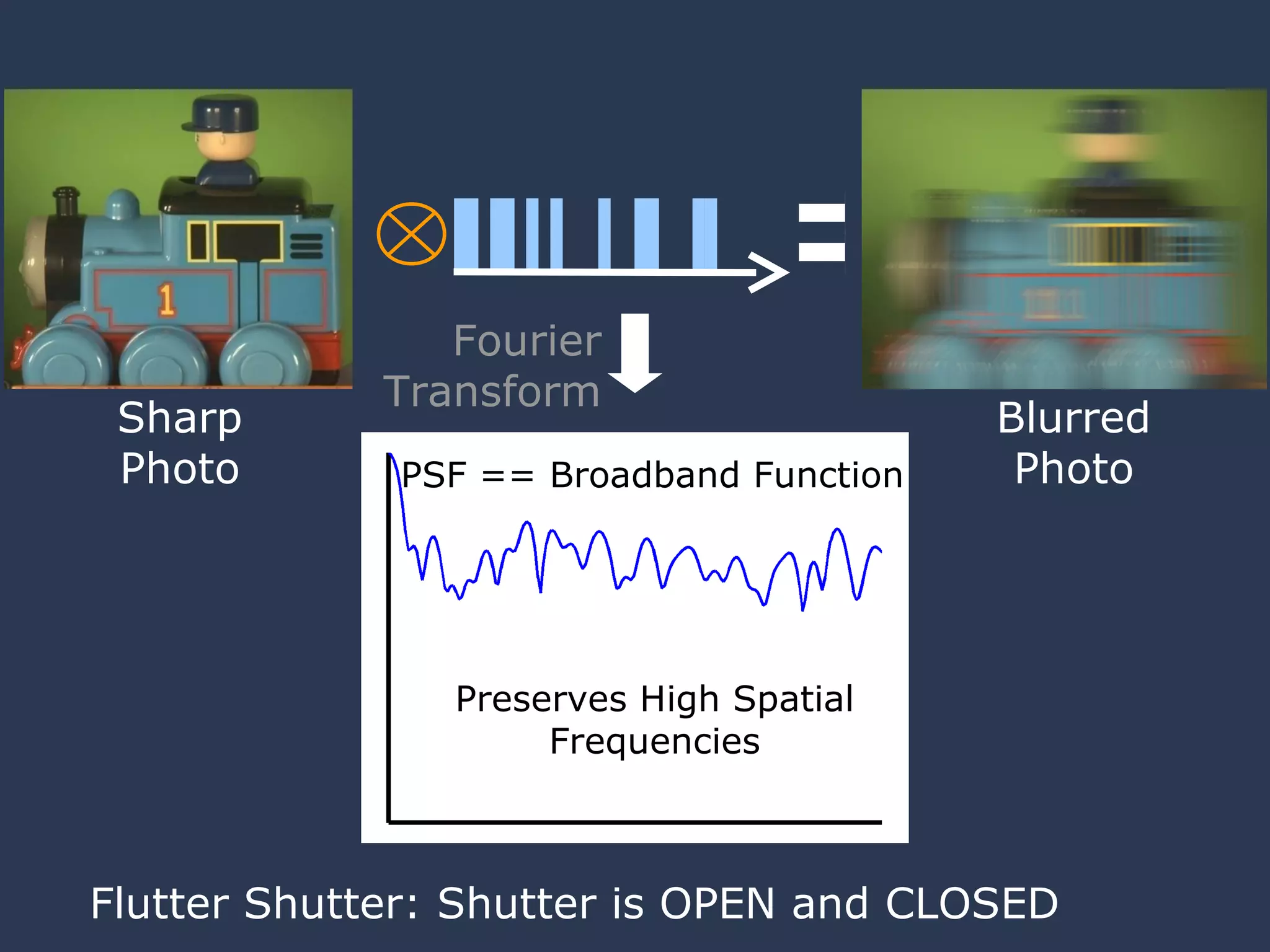
Flutter Shutter: Shutter is OPEN and CLOSED Sharp Photo Blurred Photo PSF == Broadband Function Fourier Transform Preserves High Spatial Frequencies
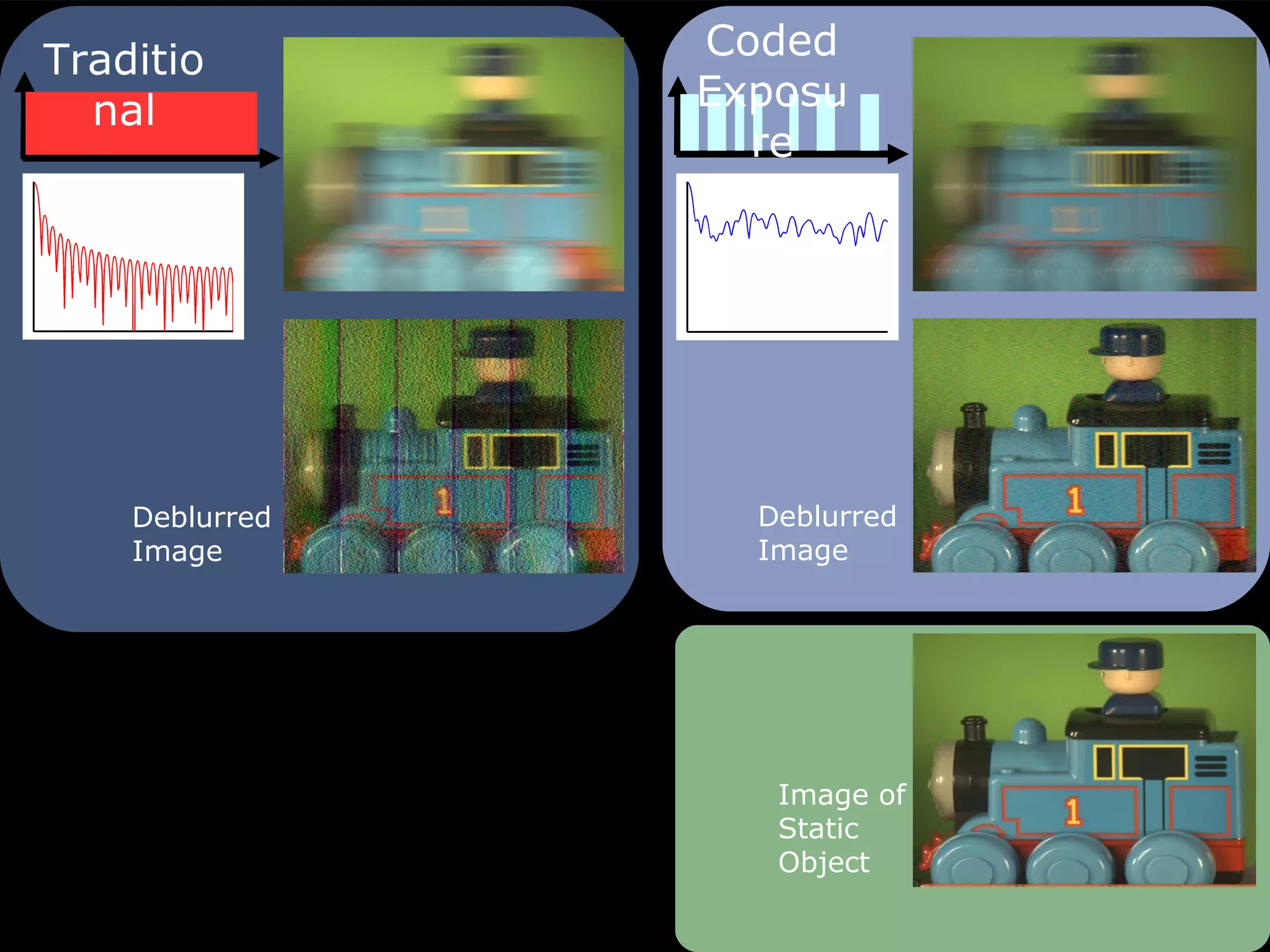
Traditional Coded Exposure Image of Static Object Deblurred Image Deblurred Image
 
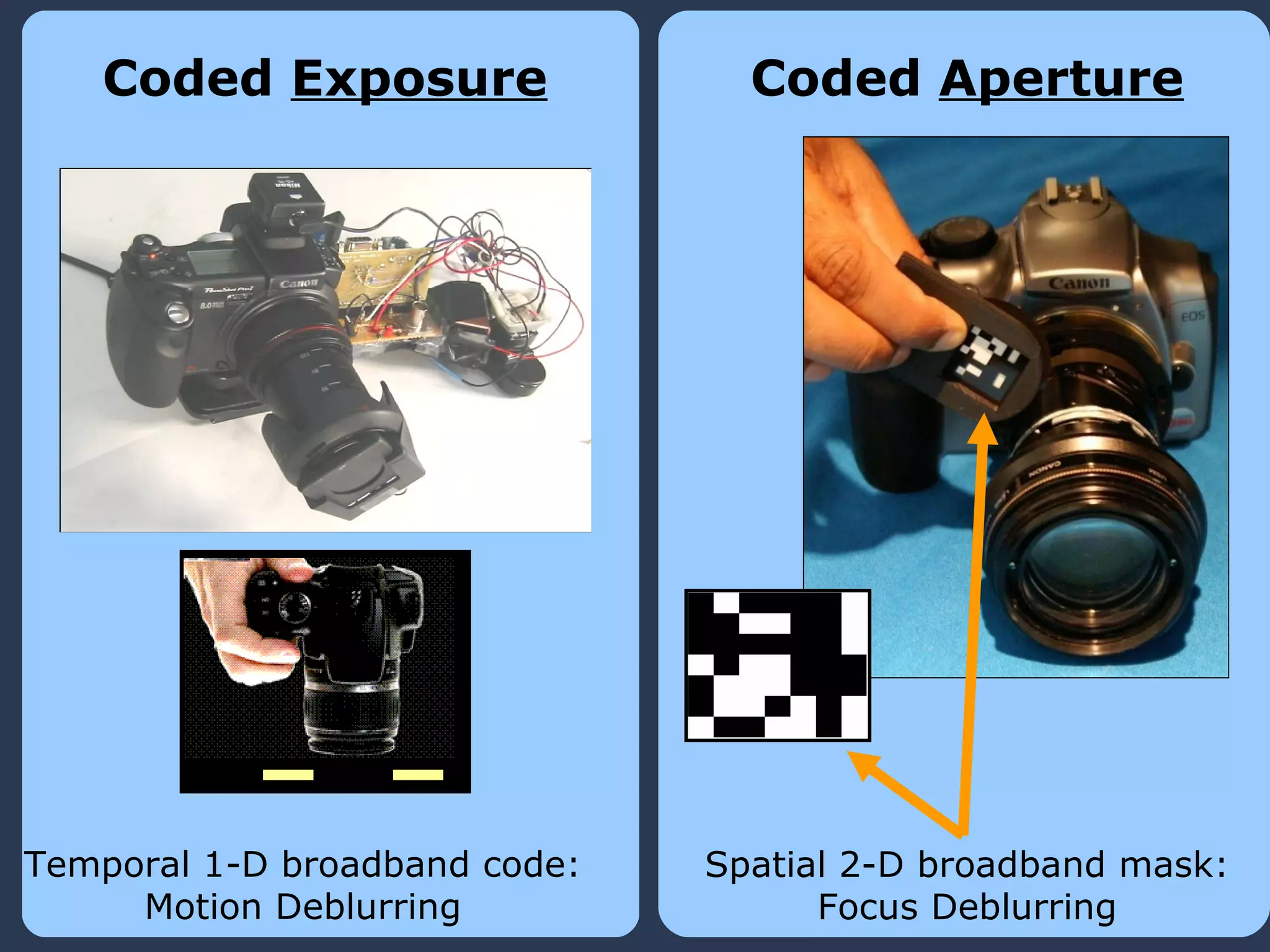
Coded  Exposure Temporal 1-D broadband code: Motion Deblurring Coded  Aperture Spatial 2-D broadband mask: Focus Deblurring
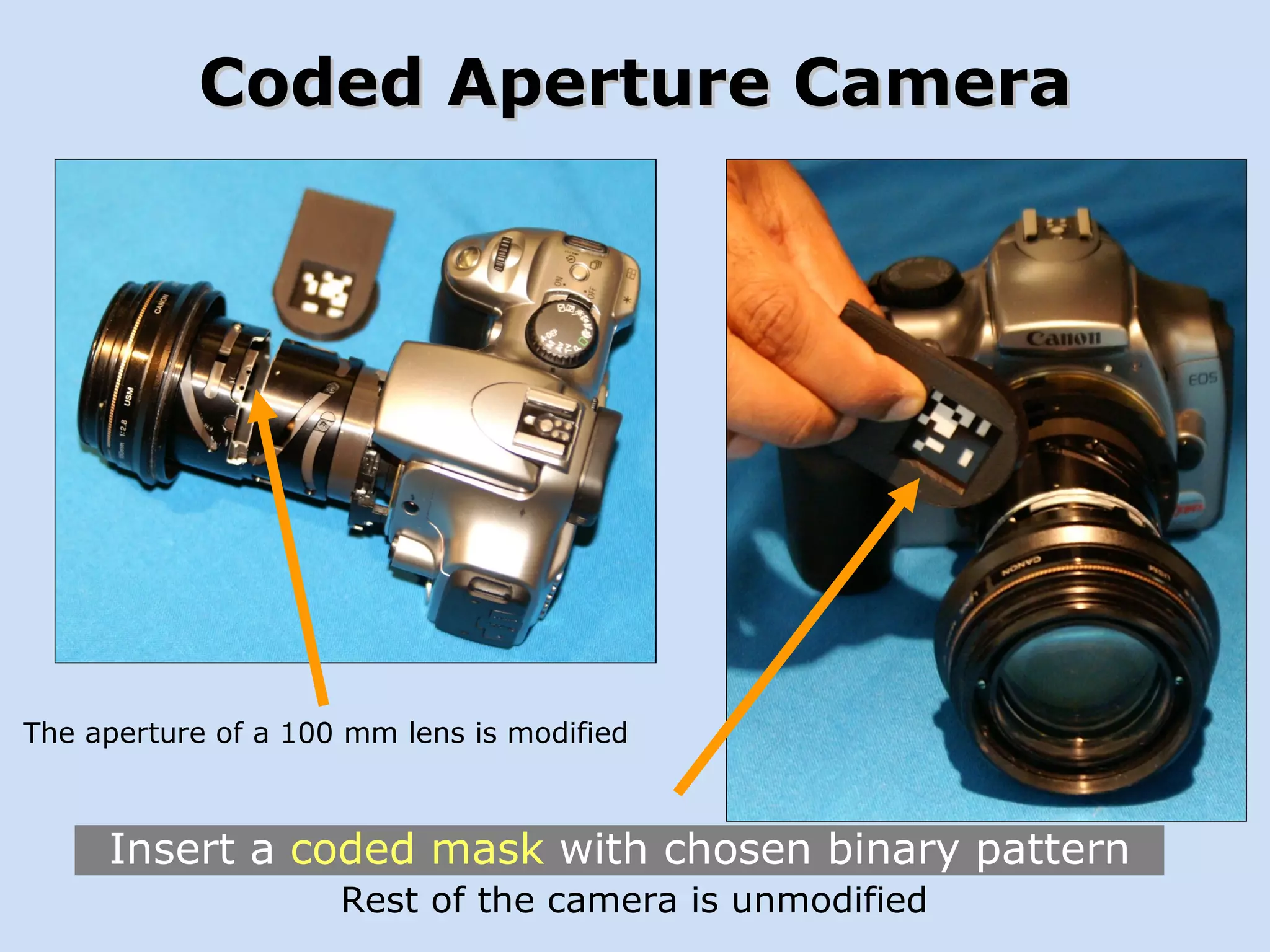
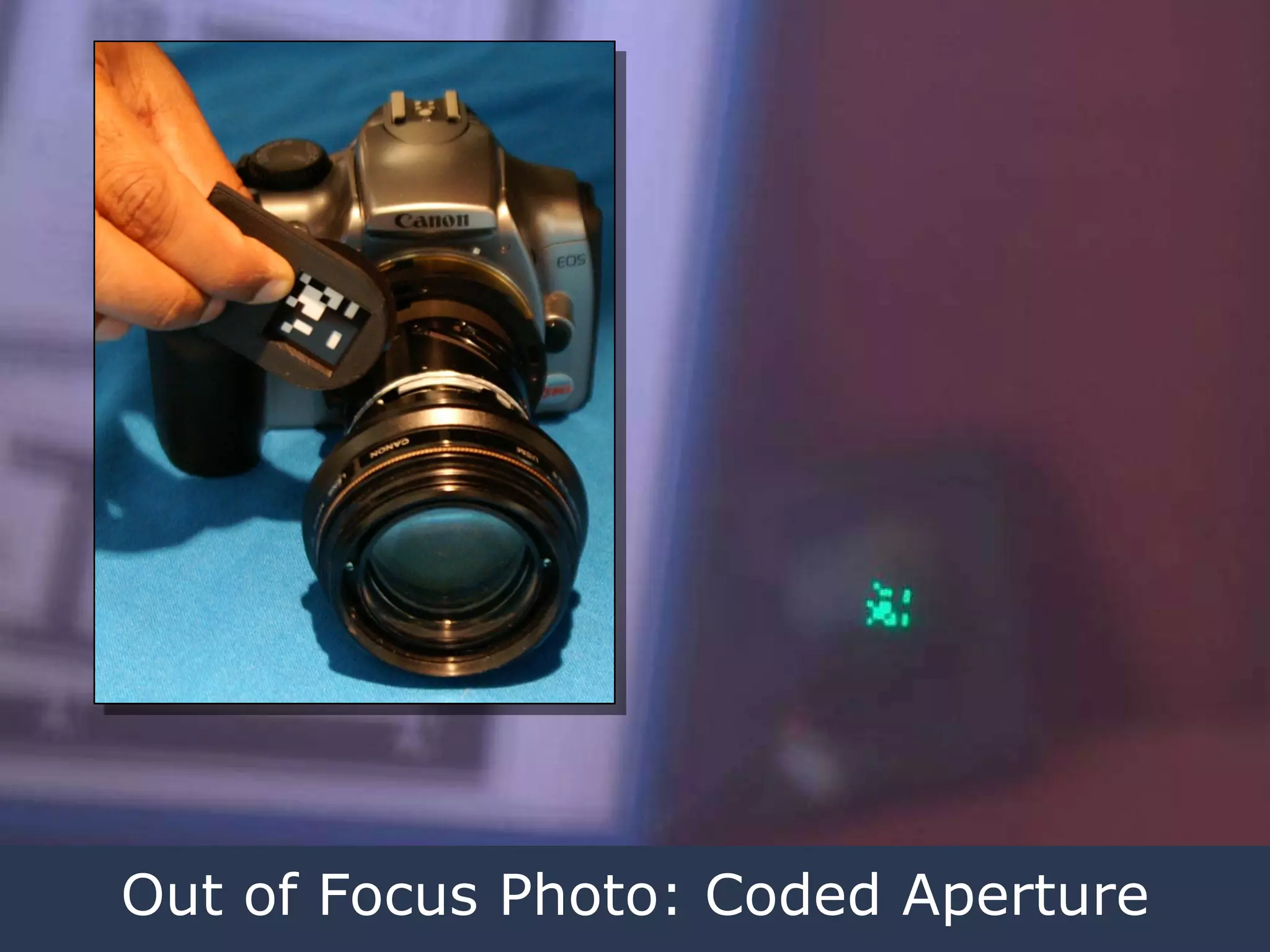
Coded Aperture Camera The aperture of a 100 mm lens is modified Rest of the camera is unmodified Insert a  coded mask  with chosen binary pattern
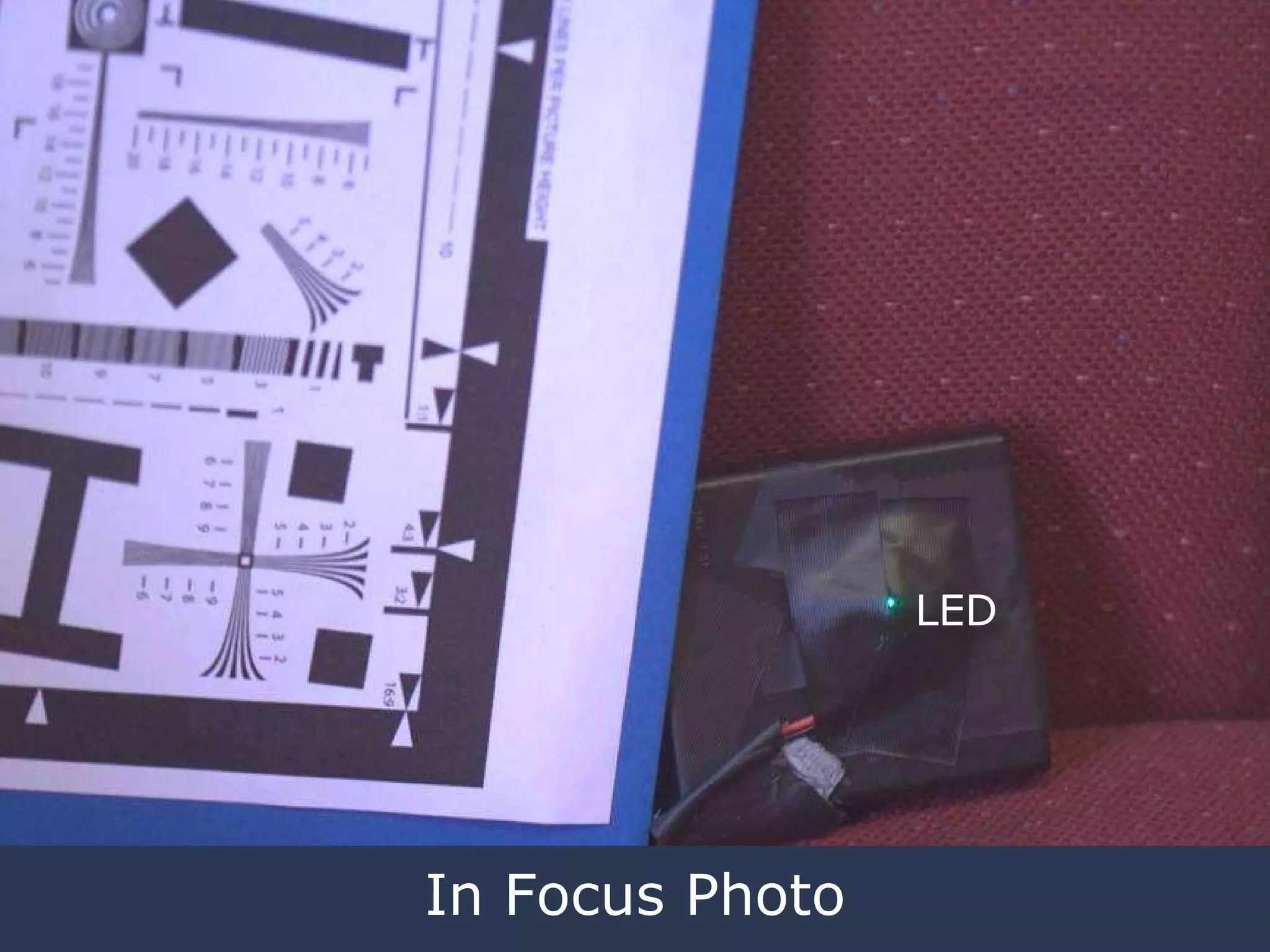
In Focus Photo LED
Out of Focus Photo: Open Aperture
Out of Focus Photo: Coded Aperture
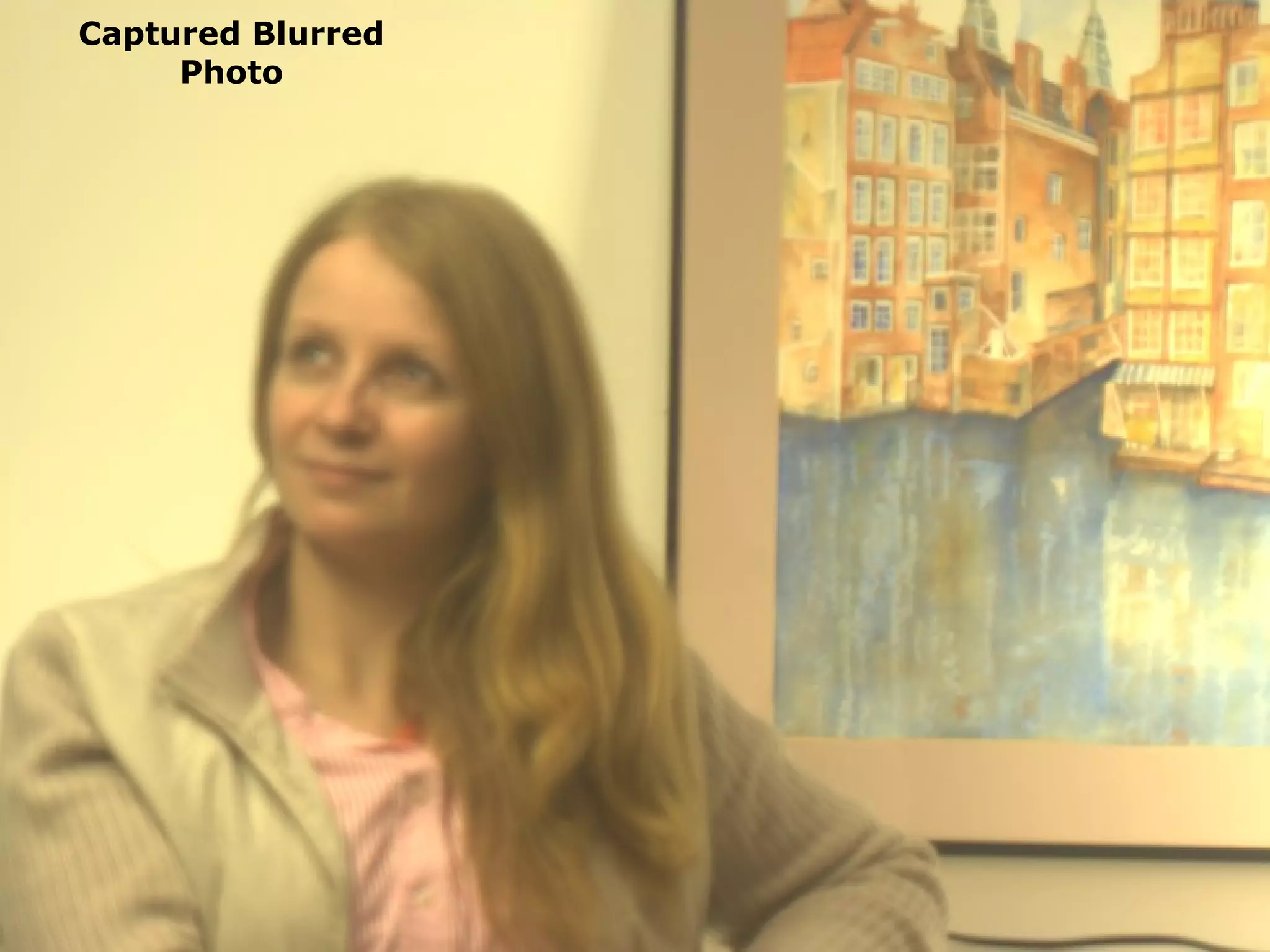
Captured Blurred Photo
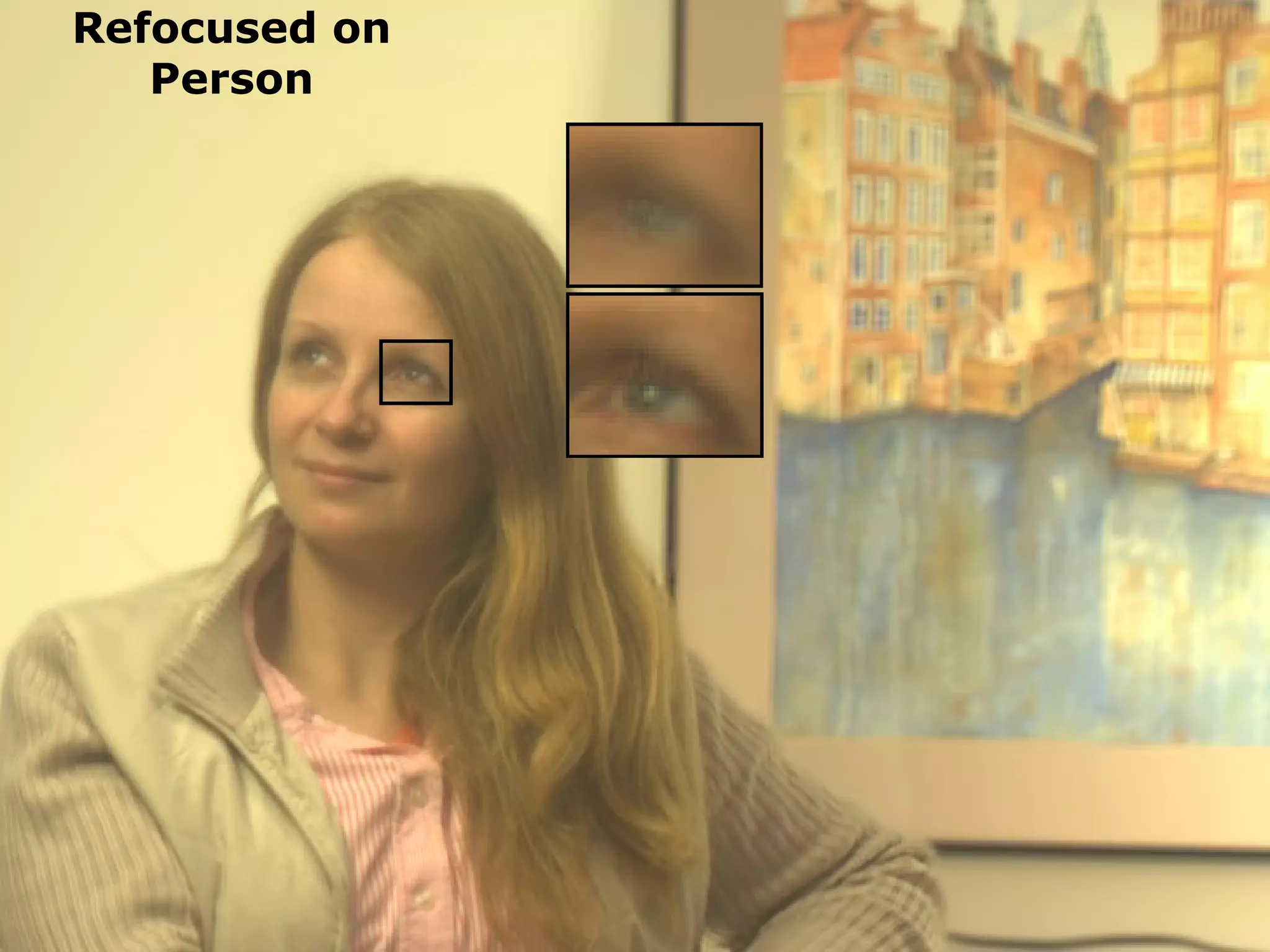
Refocused on Person
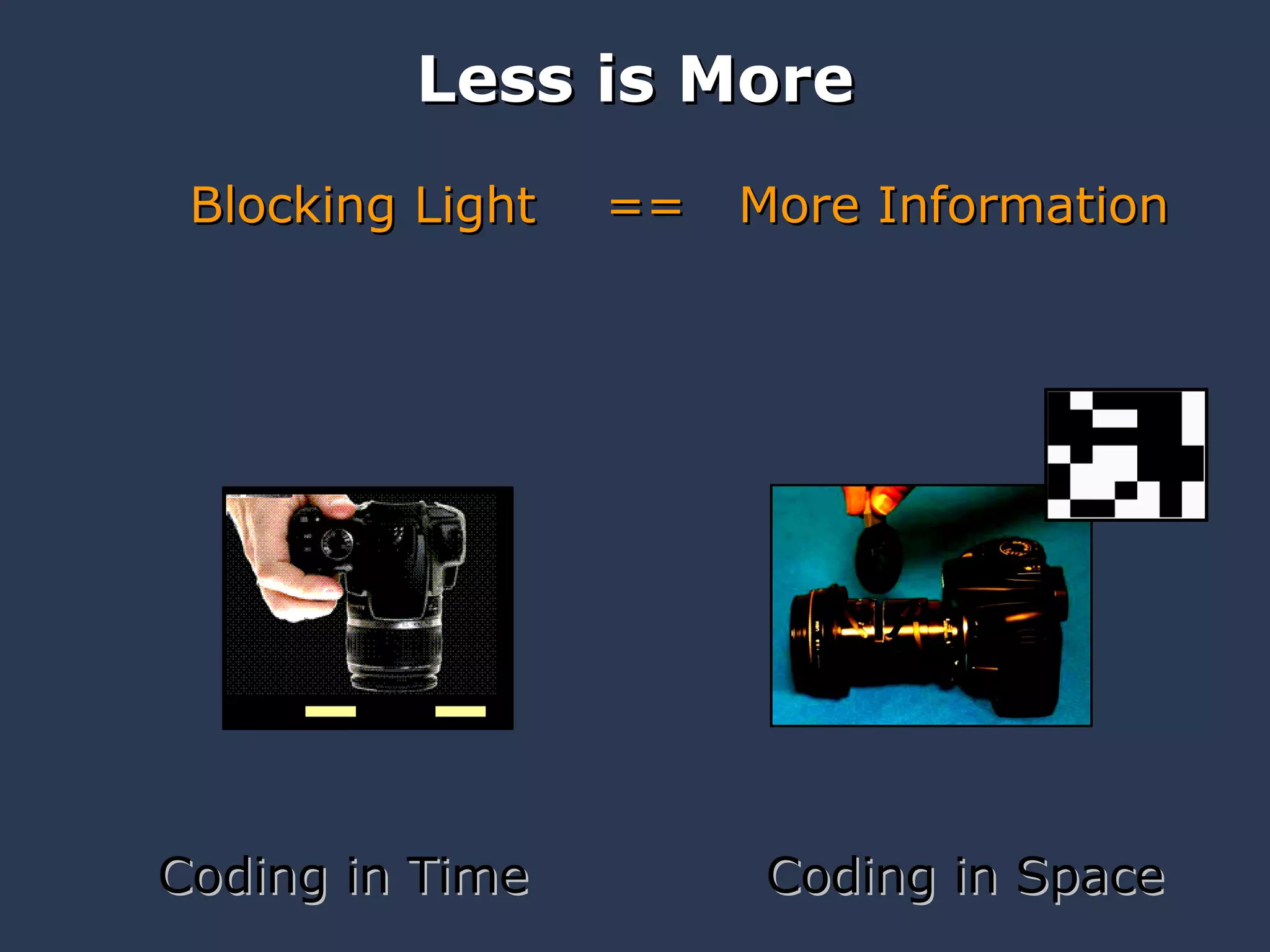
Less is More Blocking Light  ==  More Information Coding in Time  Coding in Space
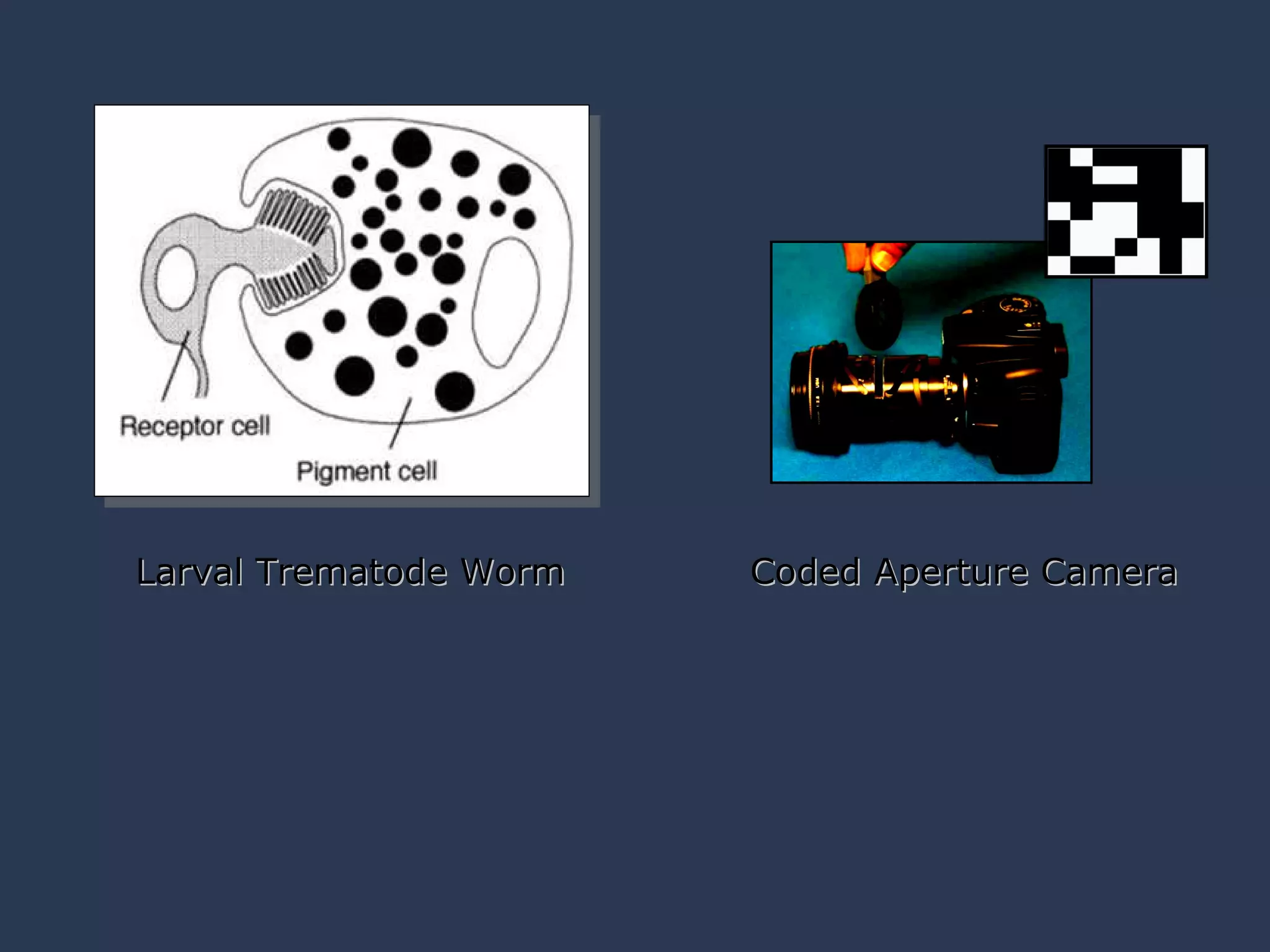
Larval Trematode Worm Coded Aperture Camera “ Photography is the Art of Exclusion”
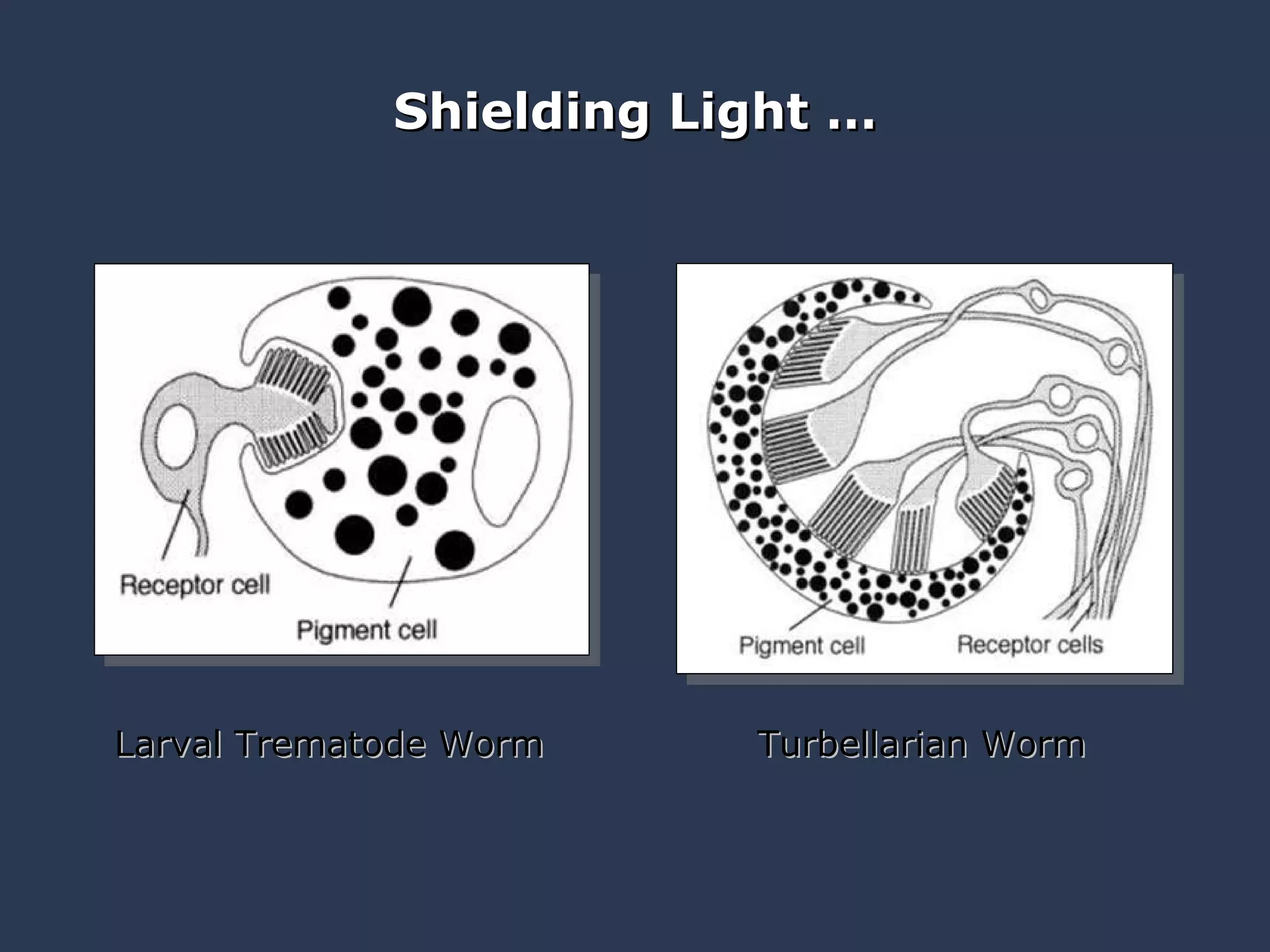
Shielding Light … Larval Trematode Worm Turbellarian Worm
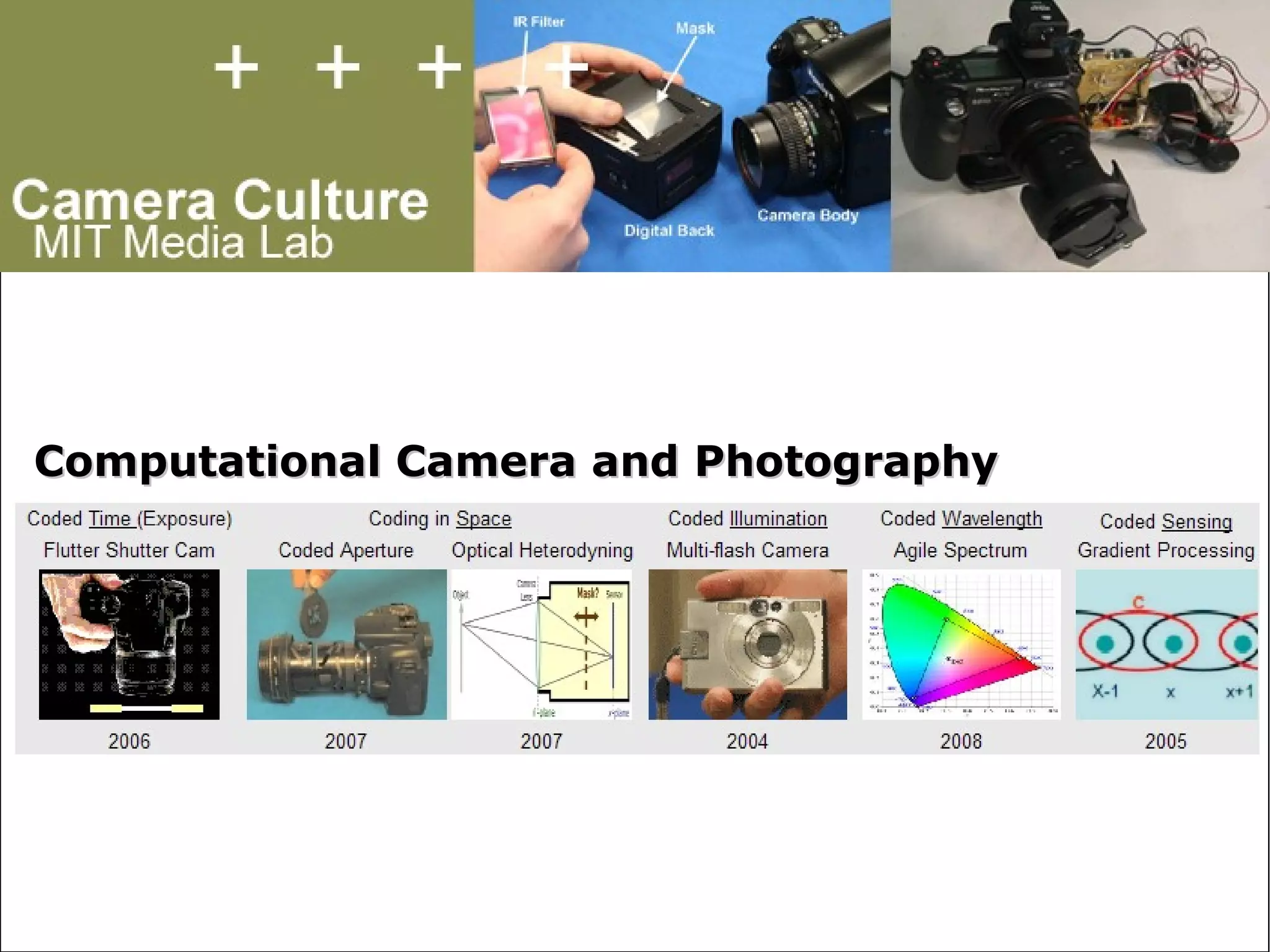
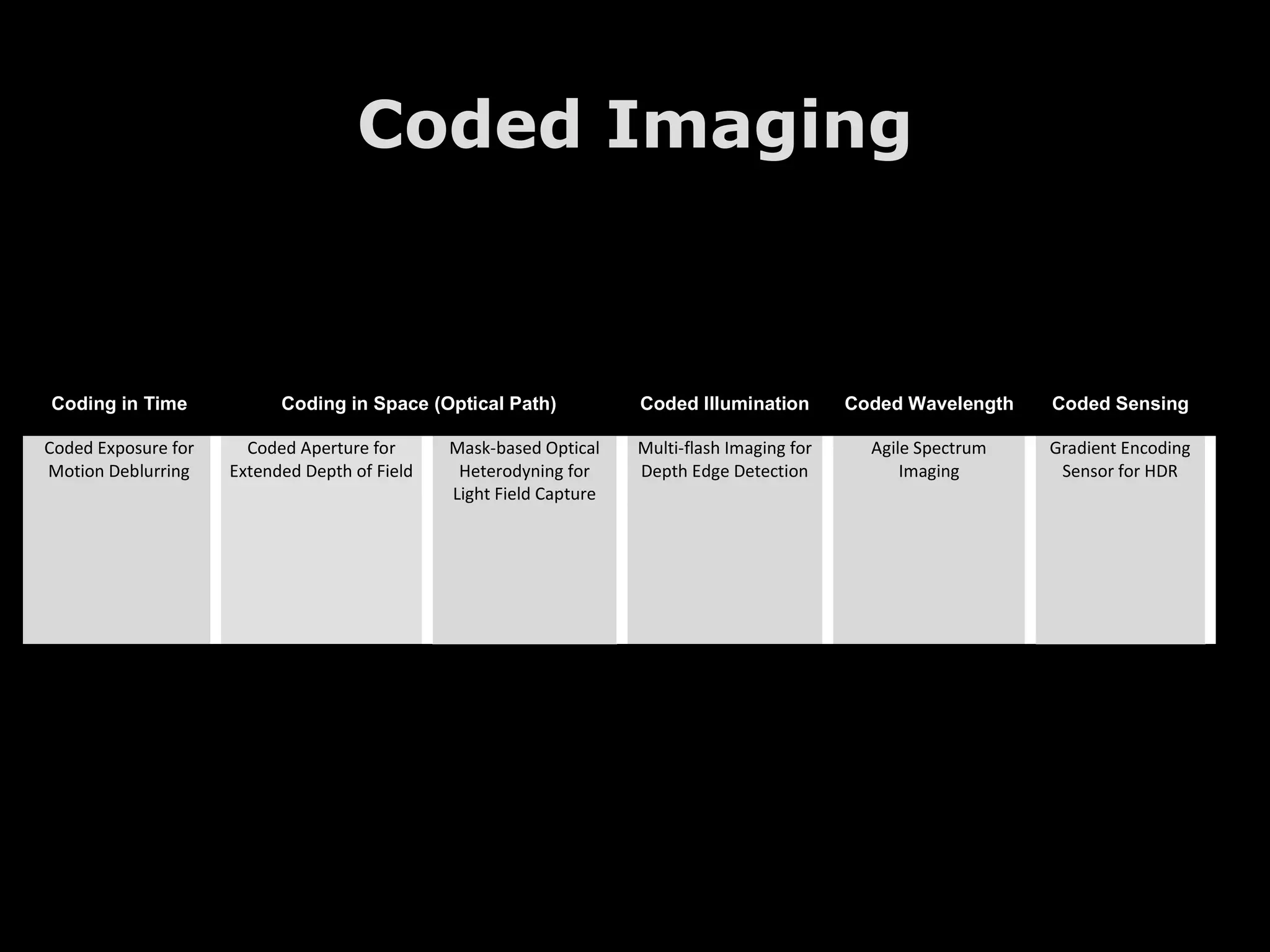
Coded Computational Photography Coded Exposure Motion Deblurring  [2006] Coded Aperture Focus Deblurring  [2007] Glare reduction  [2008] Optical Heterodyning Light Field Capture  [2007] Coded Illumination Motion Capture  [2007] Multi-flash: Shape Contours [2004] Coded Spectrum Agile Wavelength Profile  [2008] Epsilon-> Coded ->Essence Photography http://raskar.info
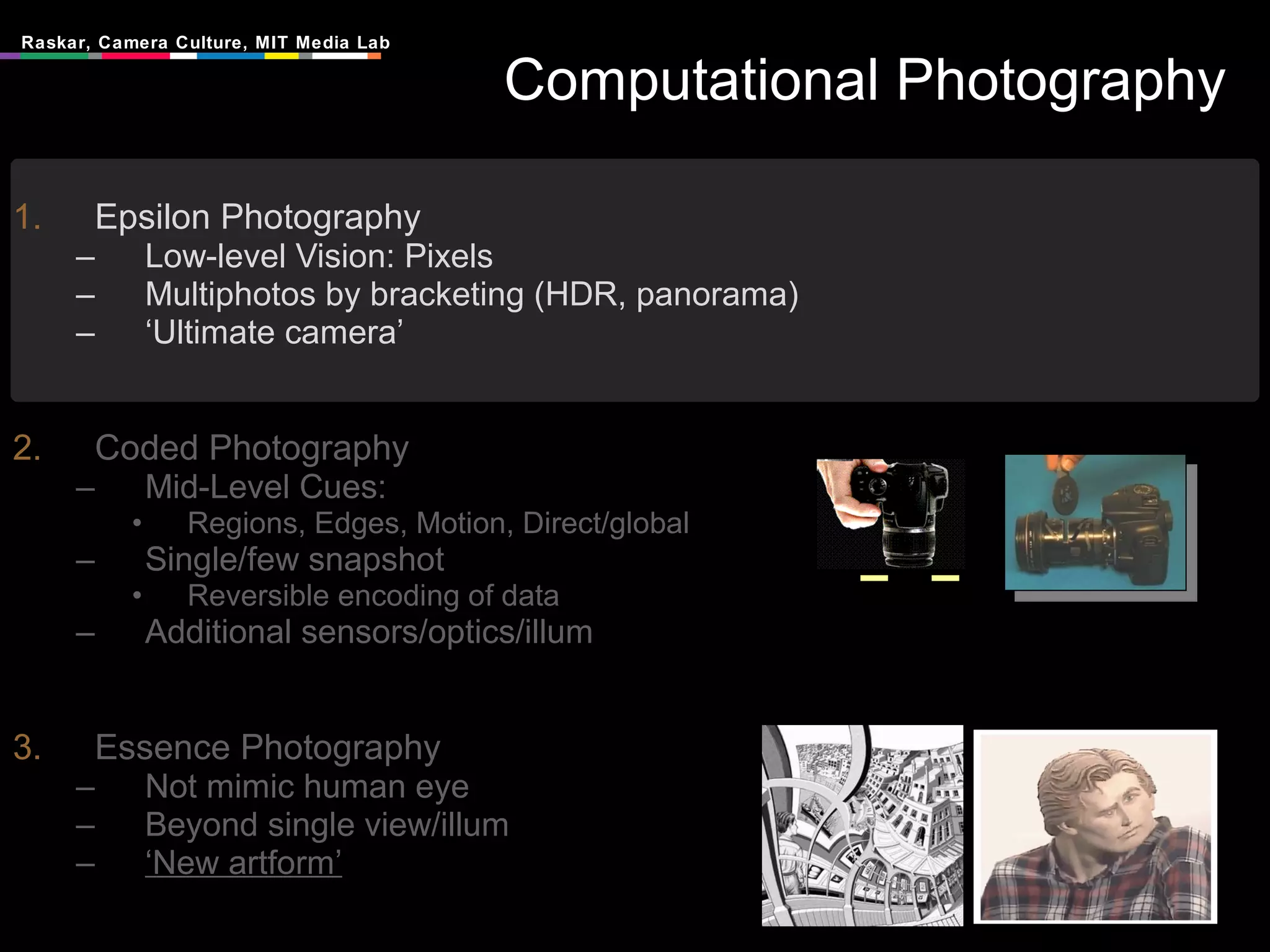
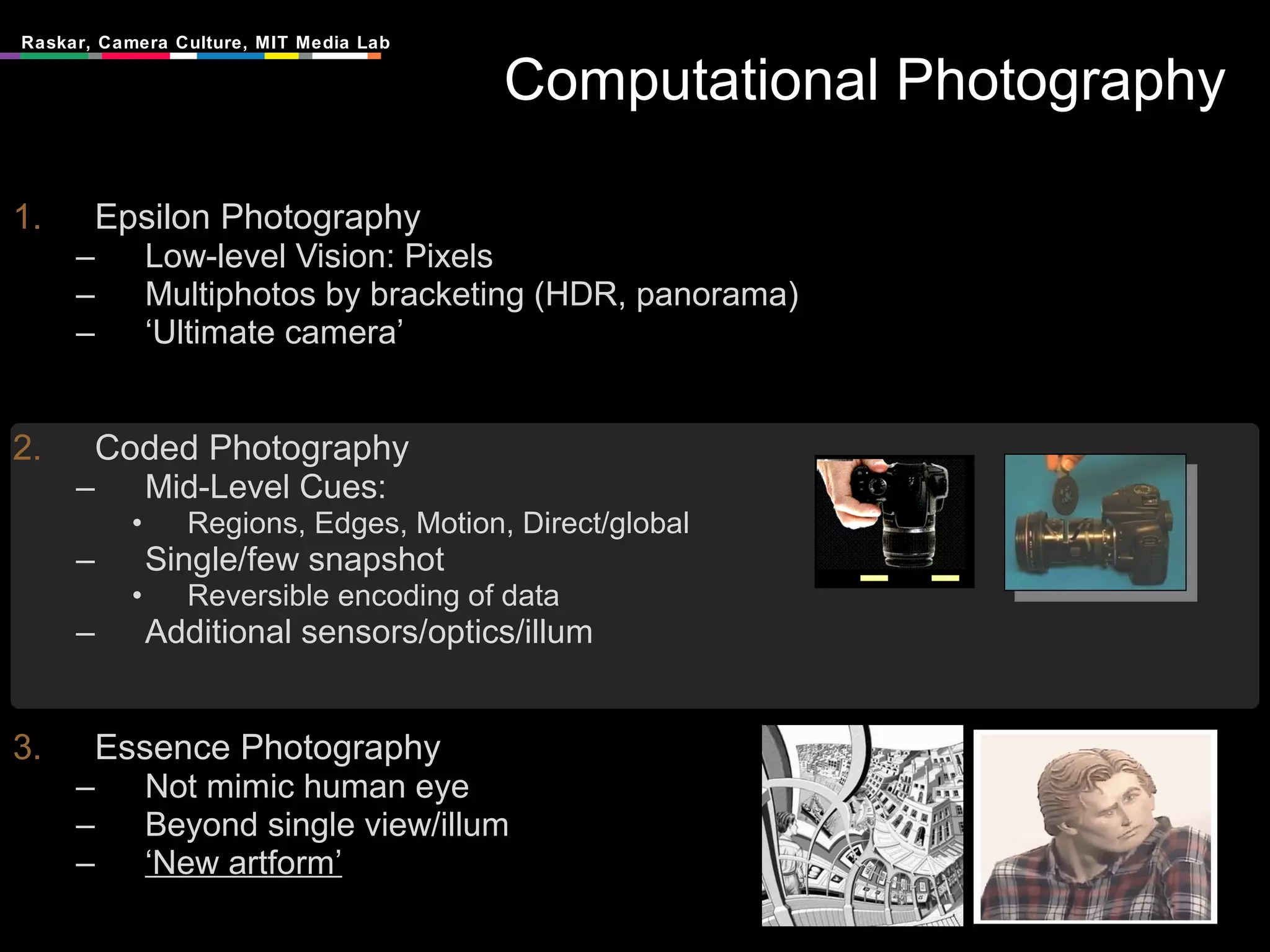
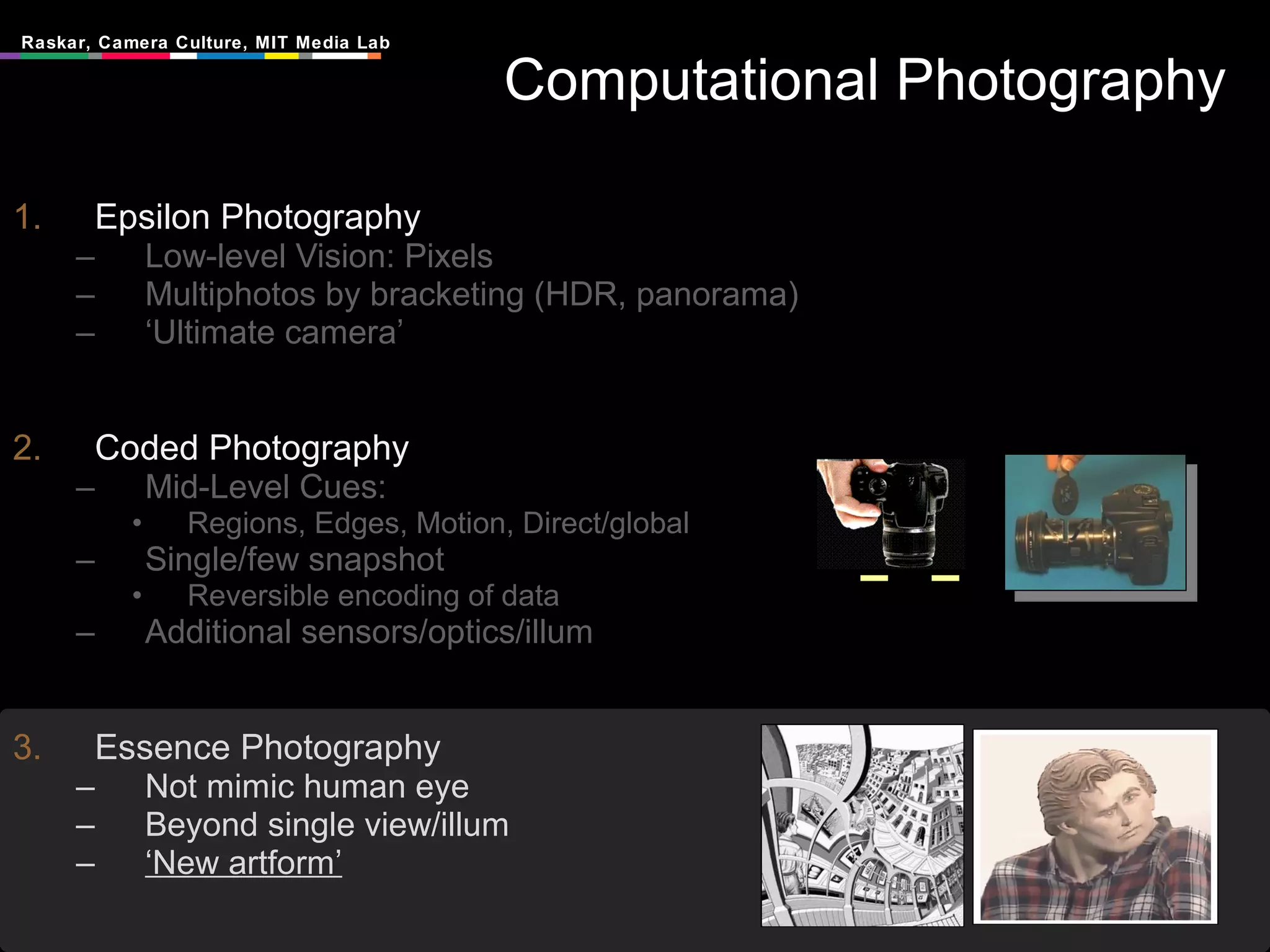
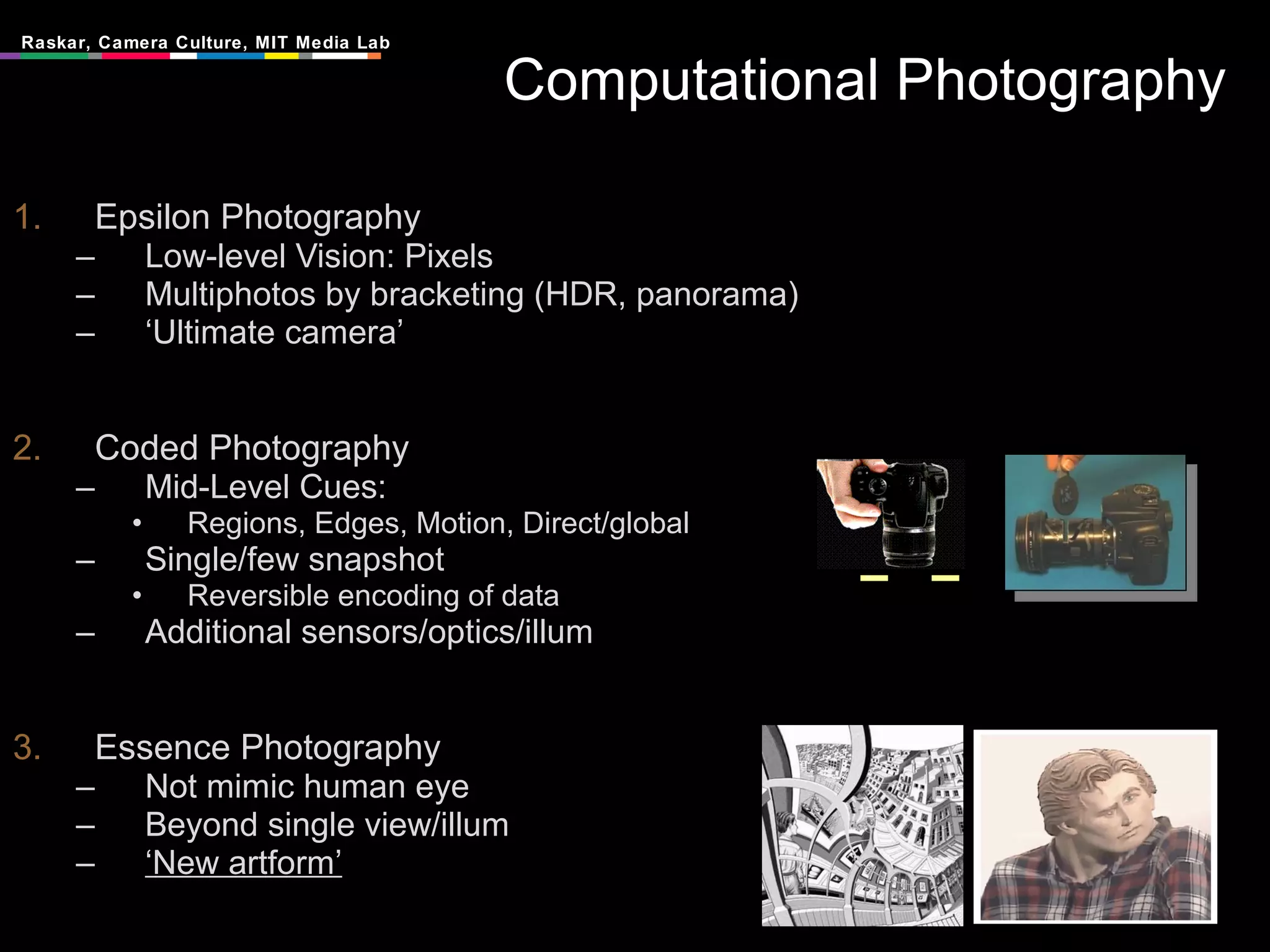
Computational Photography Epsilon Photography Low-level Vision: Pixels Multiphotos by bracketing (HDR, panorama) ‘ Ultimate camera’ Coded Photography Mid-Level Cues:  Regions, Edges, Motion, Direct/global Single/few snapshot Reversible encoding of data Additional sensors/optics/illum Essence Photography Not mimic human eye Beyond single view/illum ‘ New artform’
Epsilon Photography Dynamic range Exposure braketing  [Mann-Picard, Debevec] Wider FoV  Stitching a panorama Depth of field  Fusion of photos with limited DoF  [Agrawala04] Noise Flash/no-flash image pairs  [ Petschnigg04, Eisemann04] Frame rate Triggering multiple cameras  [Wilburn05, Shechtman02]
Computational Photography Epsilon Photography Low-level Vision: Pixels Multiphotos by bracketing (HDR, panorama) ‘ Ultimate camera’ Coded Photography Mid-Level Cues:  Regions, Edges, Motion, Direct/global Single/few snapshot Reversible encoding of data Additional sensors/optics/illum Essence Photography Not mimic human eye Beyond single view/illum ‘ New artform’
3D Stereo of multiple cameras Higher dimensional LF Light Field Capture lenslet array  [Adelson92, Ng05] , ‘3D lens’  [Georgiev05] , heterodyne masks  [Veeraraghavan07] Boundaries and Regions Multi-flash camera with shadows  [Raskar08] Fg/bg matting  [Chuang01,Sun06] Deblurring Engineered PSF Motion: Flutter shutter [Raskar06] , Camera Motion  [Levin08] Defocus: Coded aperture, Wavefront coding  [Cathey95]  Global vs direct illumination High frequency illumination  [Nayar06] Glare decomposition  [Talvala07, Raskar08] Coded Sensor Gradient camera  [Tumblin05]
Computational Photography Epsilon Photography Low-level Vision: Pixels Multiphotos by bracketing (HDR, panorama) ‘ Ultimate camera’ Coded Photography Mid-Level Cues:  Regions, Edges, Motion, Direct/global Single/few snapshot Reversible encoding of data Additional sensors/optics/illum Essence Photography Not mimic human eye Beyond single view/illum ‘ New artform’
Capturing the  Essence  of Visual Experience Exploiting online collections Photo-tourism [Snavely2006] Scene Completion [Hays2007] Multi-perspective Images Multi-linear Perspective [Jingyi Yu, McMillan 2004] Unwrap Mosaics [Rav-Acha et al 2008] Video texture panoramas [Agrawal et al 2005] Non-photorealistic synthesis Motion magnification [Liu05] Image Priors Learned features  and natural statistics Face Swapping: [Bitouk et al 2008] Data-driven enhancement of facial attractiveness [Leyvand et al 2008] Deblurring [Fergus et al 2006, Jia et al 2008]
Computational Photography Epsilon Photography Low-level Vision: Pixels Multiphotos by bracketing (HDR, panorama) ‘ Ultimate camera’ Coded Photography Mid-Level Cues:  Regions, Edges, Motion, Direct/global Single/few snapshot Reversible encoding of data Additional sensors/optics/illum Essence Photography Not mimic human eye Beyond single view/illum ‘ New artform’
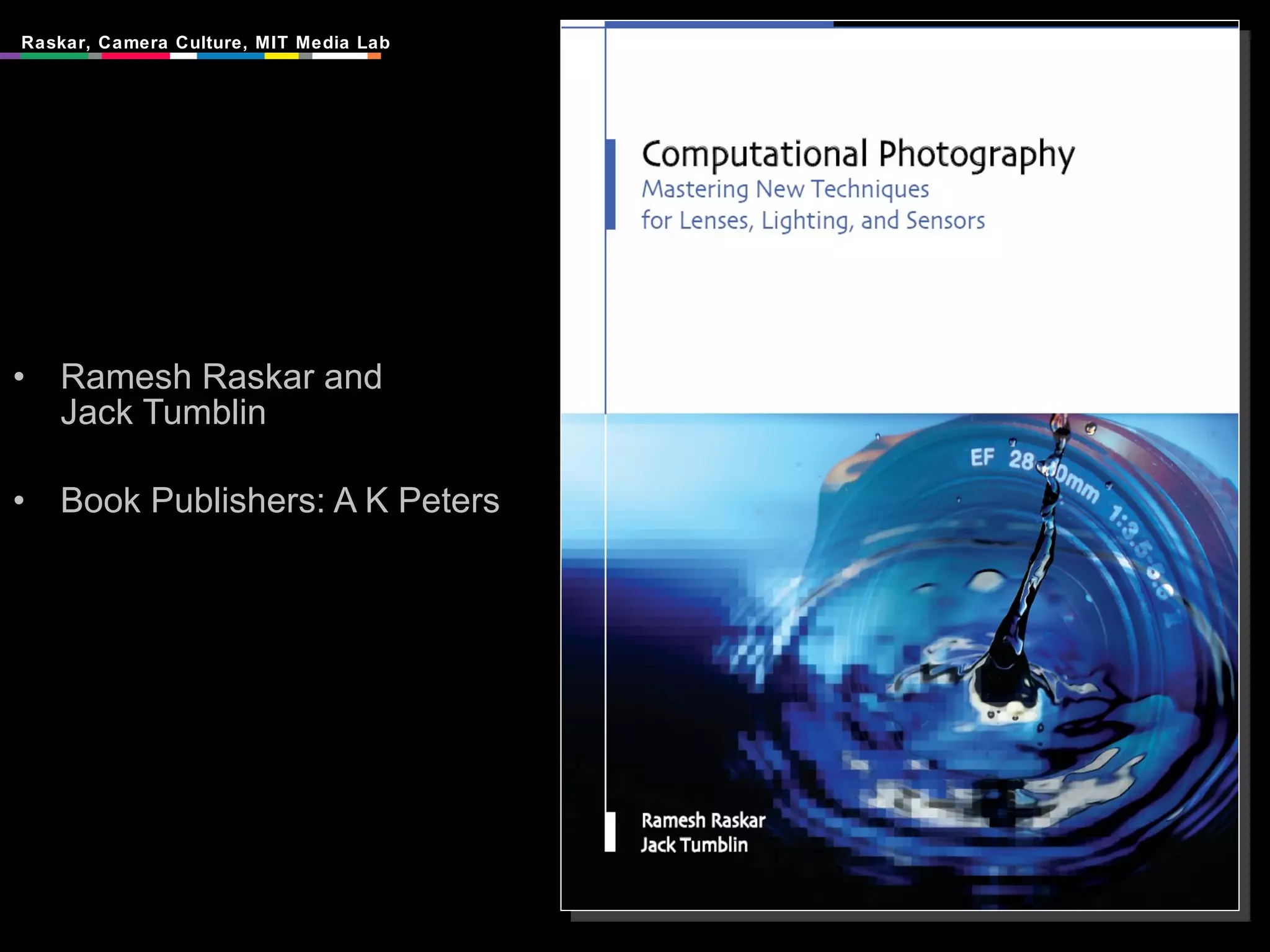
Ramesh Raskar and  Jack Tumblin Book Publishers: A K Peters
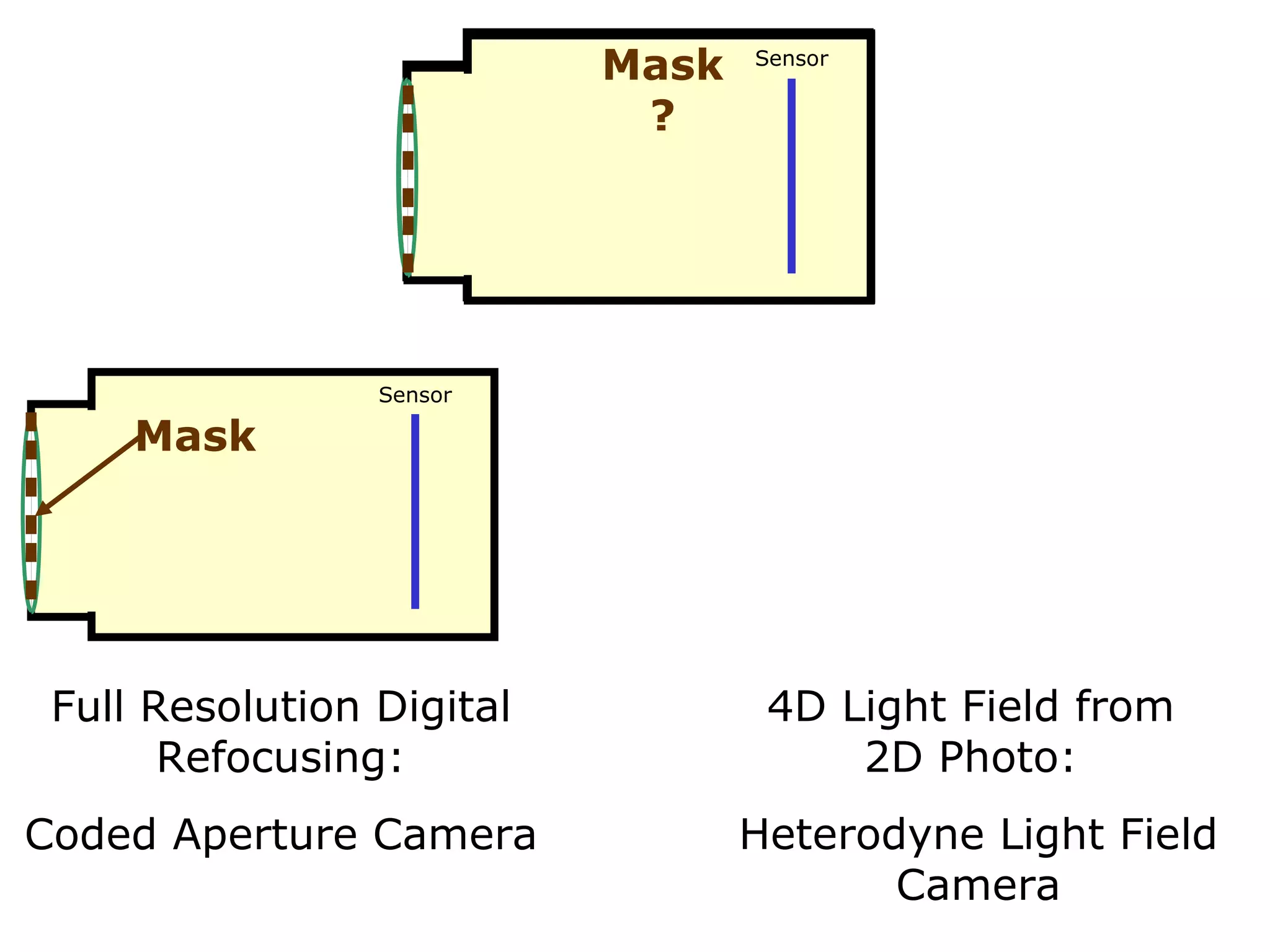
Mask? Sensor 4D Light Field from  2D Photo:  Heterodyne Light Field Camera Full Resolution Digital Refocusing: Coded Aperture Camera Mask? Sensor Mask Sensor Mask? Sensor Mask Sensor
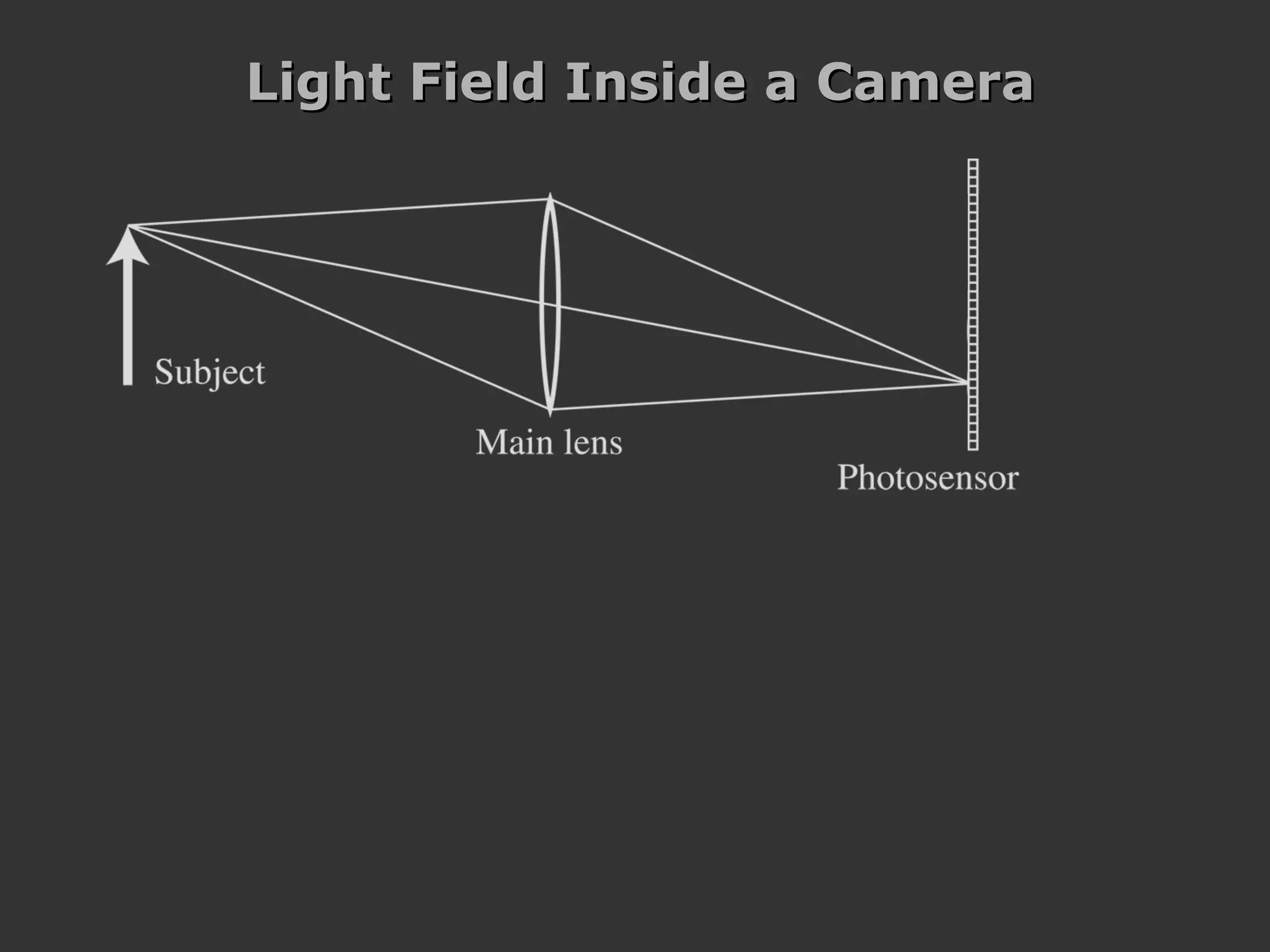
Light Field Inside a Camera
Lenslet-based Light Field camera [Adelson and Wang, 1992, Ng et al. 2005 ] Light Field Inside a Camera
Stanford Plenoptic Camera  [Ng et al 2005] 4000  × 4000 pixels  ÷  292 × 292 lenses  =  14 × 14 pixels per lens Contax medium format camera Kodak 16-megapixel sensor Adaptive Optics microlens array 125 μ  square-sided microlenses
Digital  Refocusing [Ng et al 2005] Can we achieve this with a  Mask  alone?
Mask based Light Field Camera [Veeraraghavan, Raskar, Agrawal, Tumblin, Mohan, Siggraph 2007 ] Mask Sensor
How to Capture  4D  Light Field with  2D  Sensor ? What should be the  pattern  of the mask ?
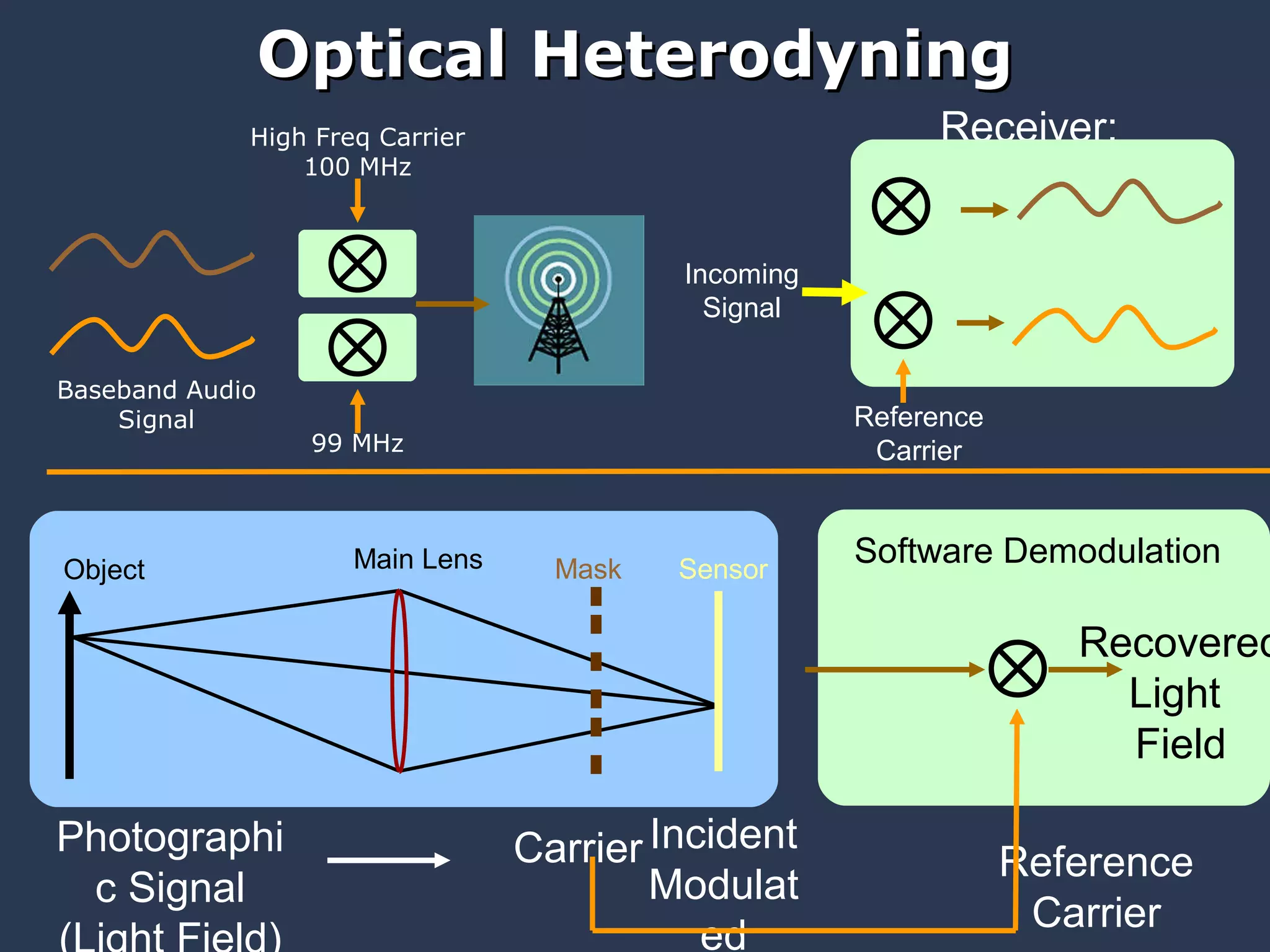
Optical Heterodyning Photographic Signal (Light Field) Carrier  Incident Modulated Signal Reference Carrier Main Lens Object Mask Sensor Recovered Light  Field Software Demodulation Baseband Audio Signal Receiver: Demodulation High Freq Carrier 100 MHz Reference Carrier Incoming Signal 99 MHz
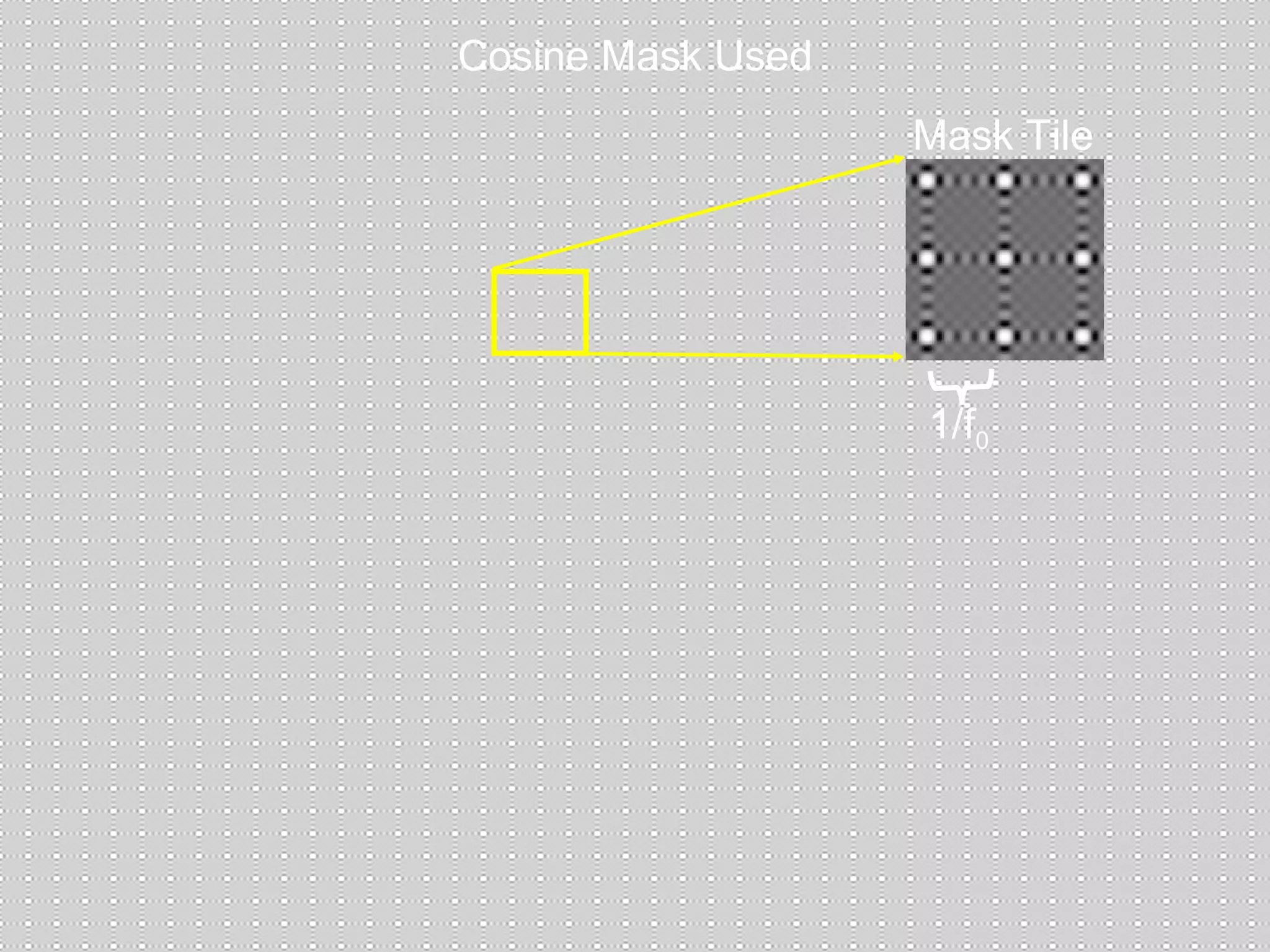
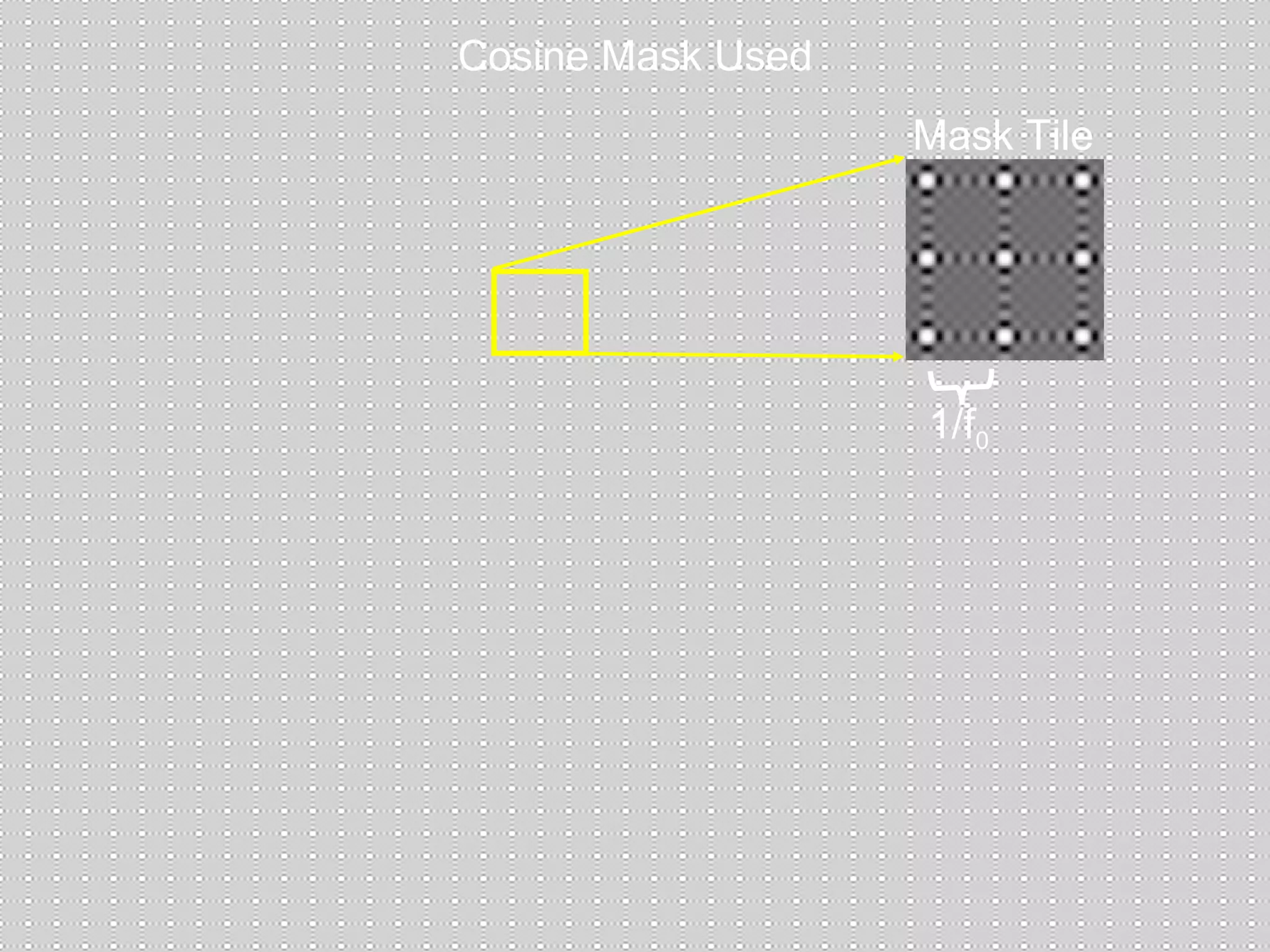
1/f 0 Mask Tile Cosine Mask Used
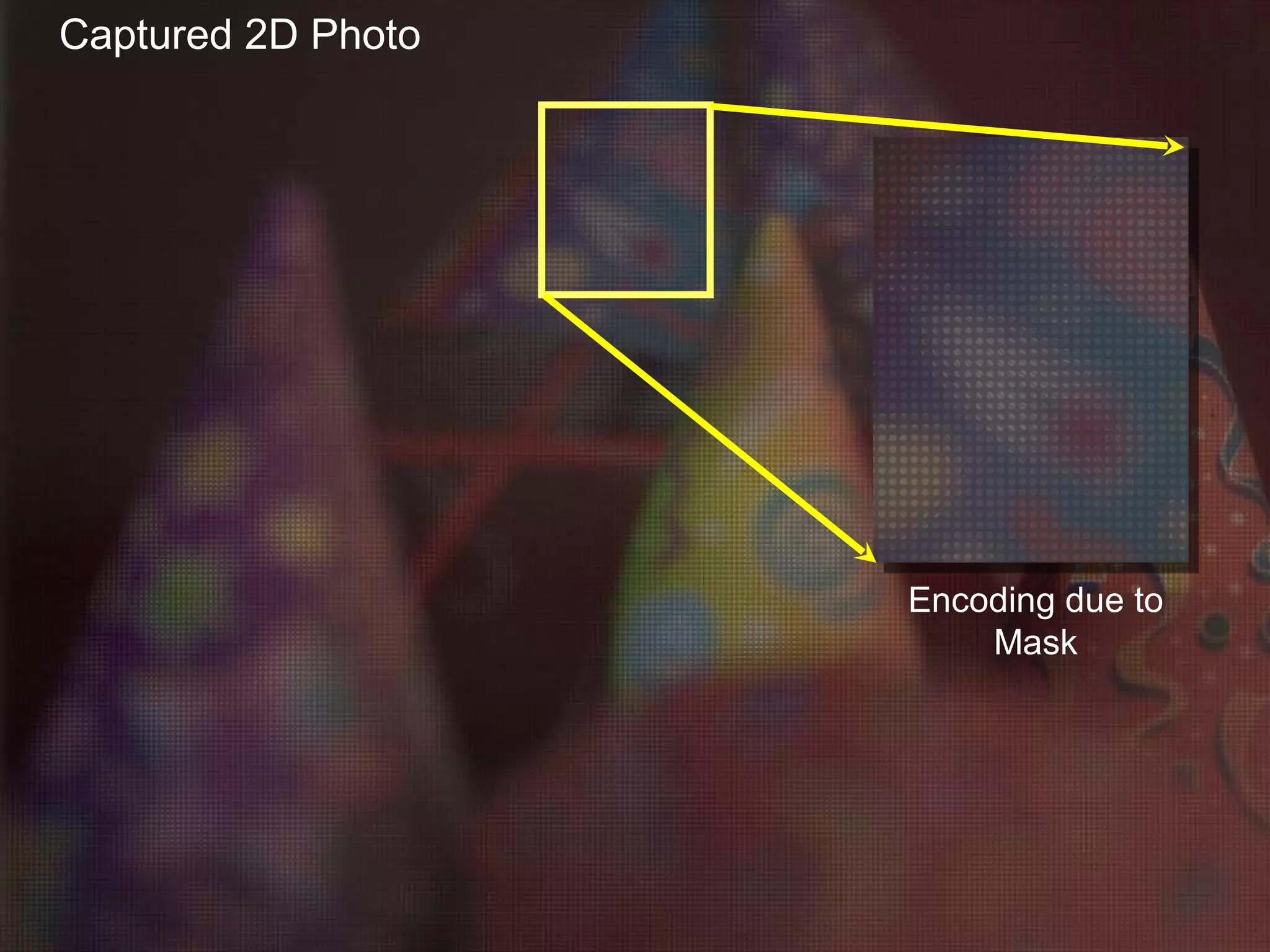
Captured 2D Photo Encoding due to Mask
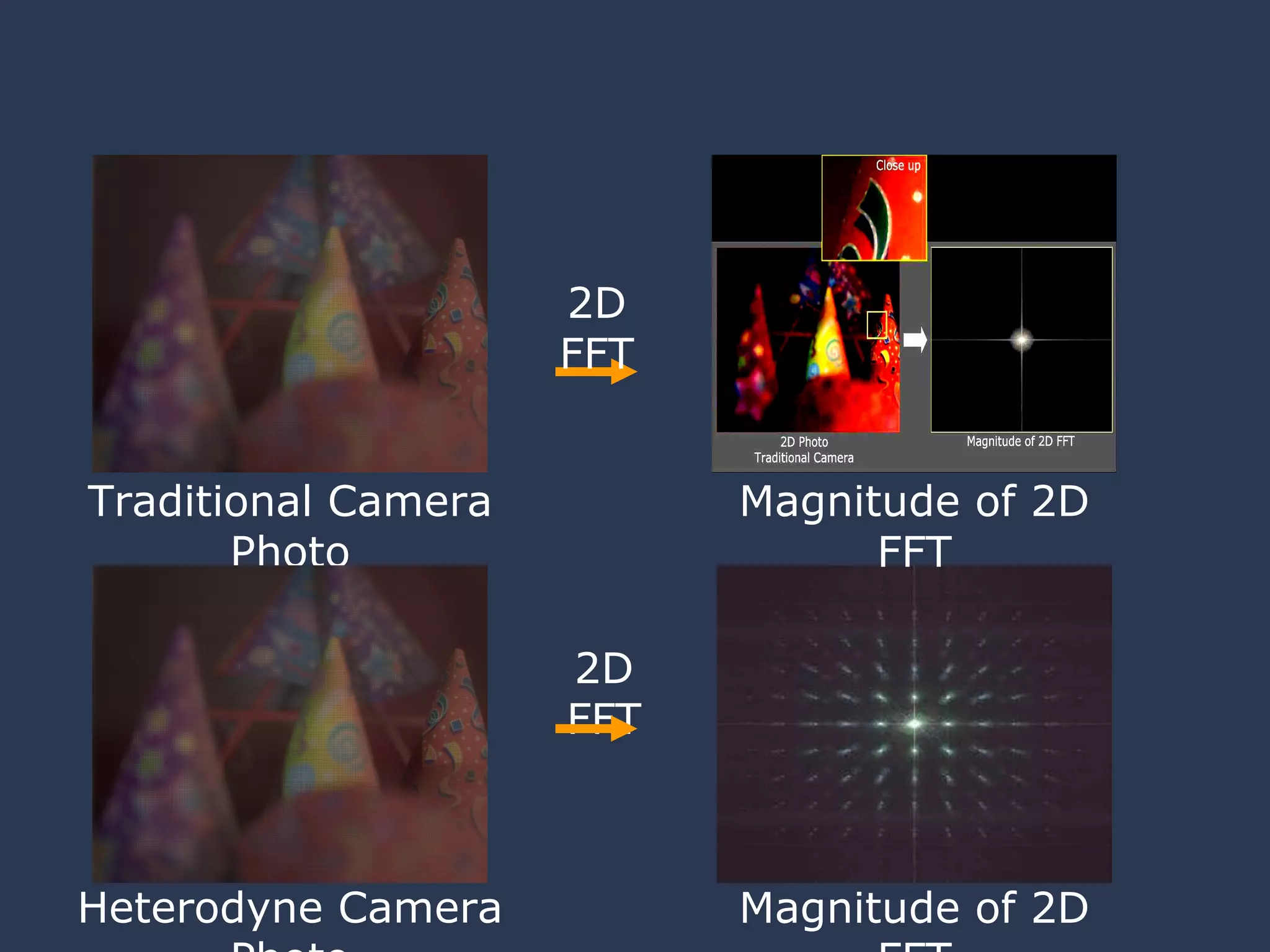
2D FFT Traditional Camera Photo Heterodyne Camera Photo Magnitude of 2D FFT 2D FFT Magnitude of 2D FFT
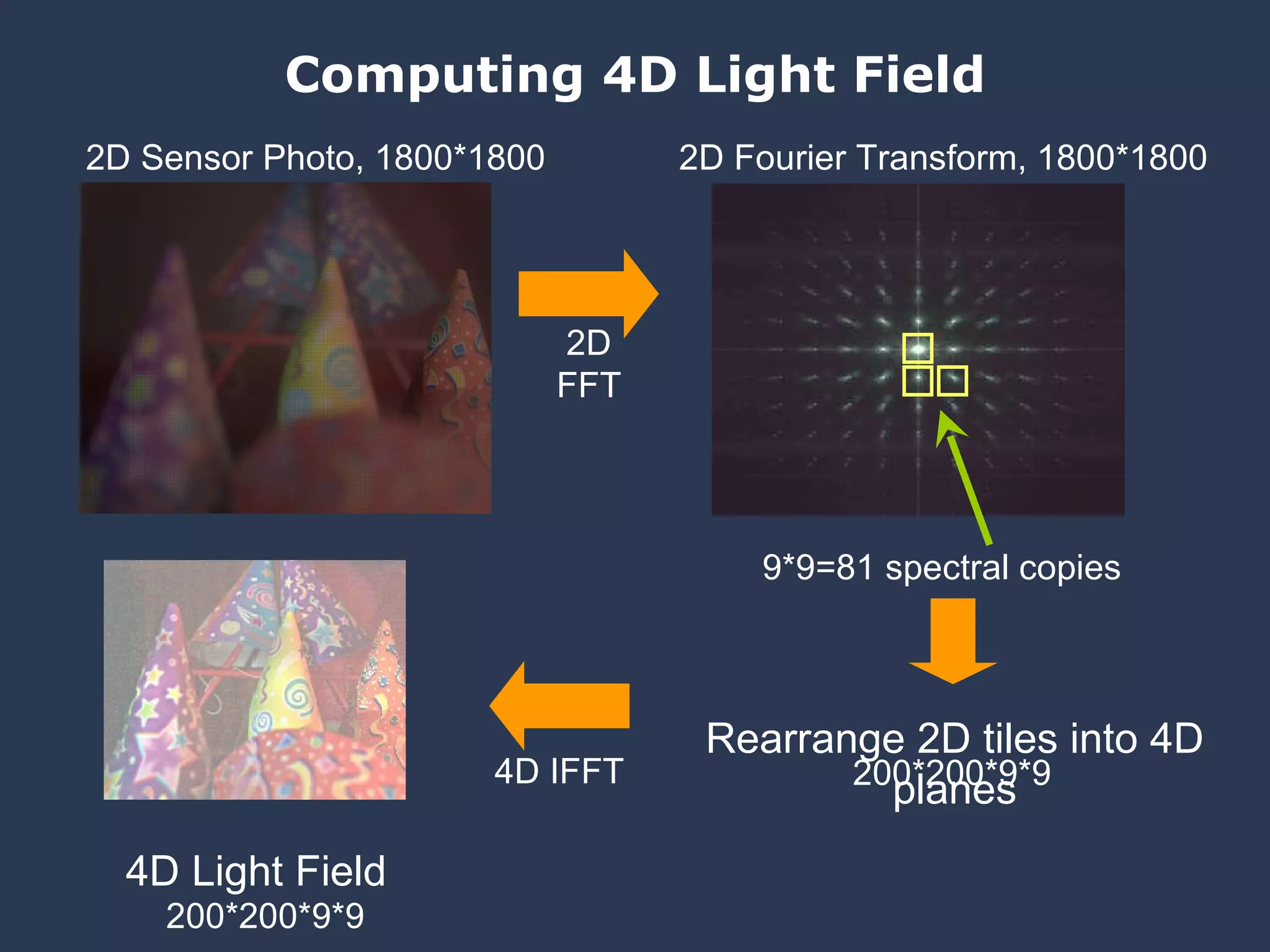
Computing 4D Light Field 2D Sensor Photo, 1800*1800 2D Fourier Transform, 1800*1800 2D FFT Rearrange 2D tiles into 4D planes 200*200*9*9 4D IFFT 4D Light Field 9*9=81 spectral copies 200*200*9*9
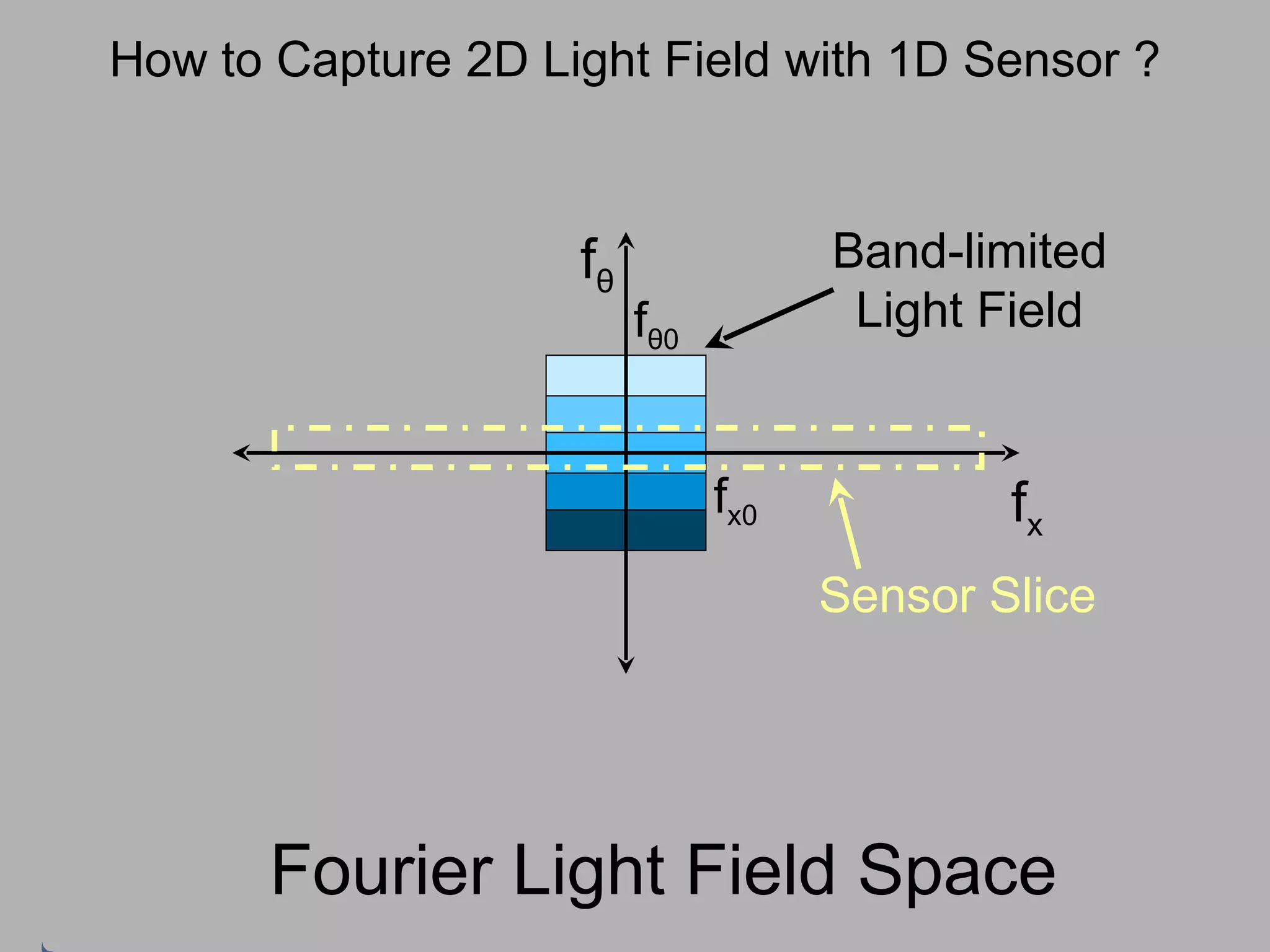
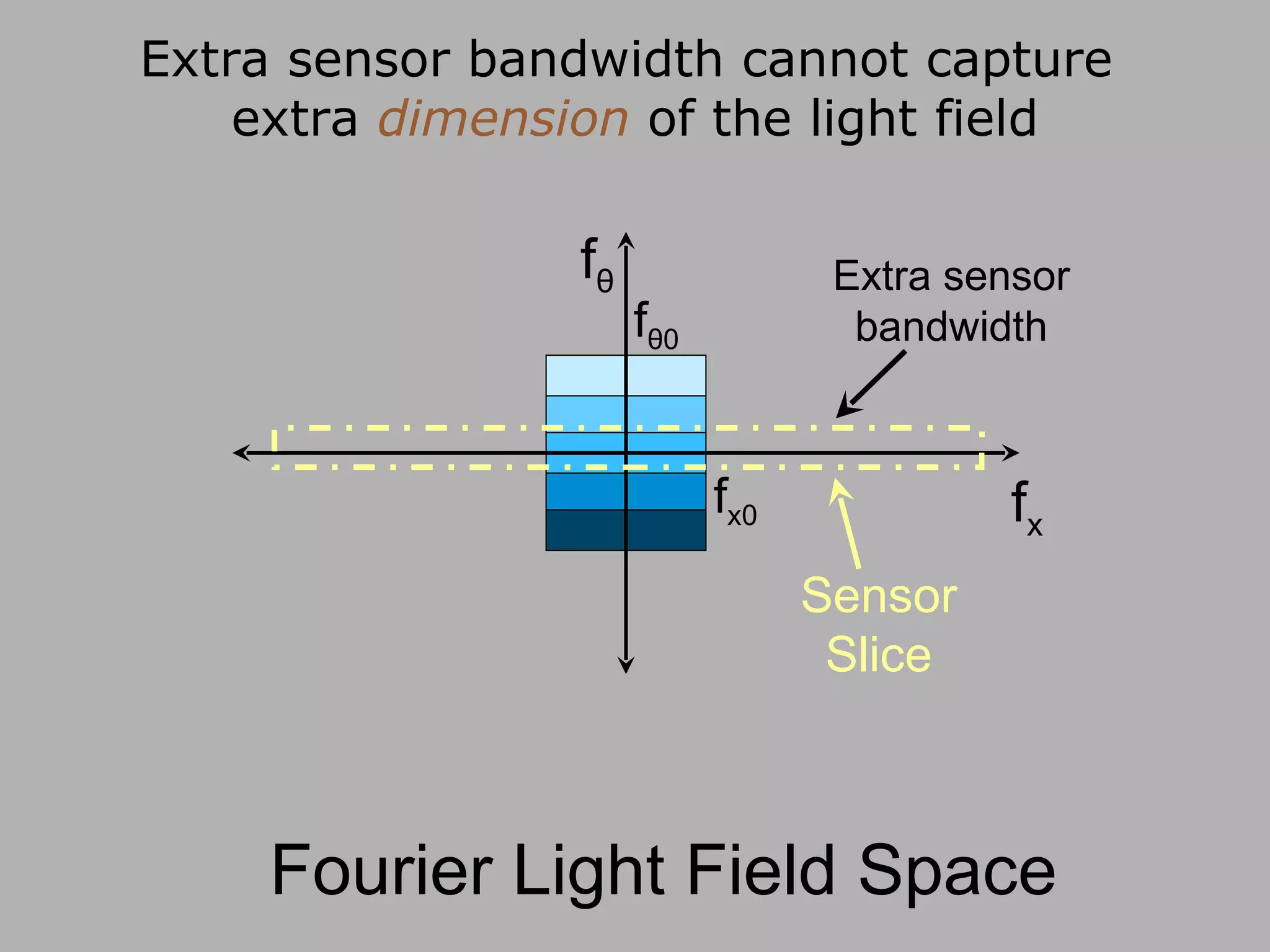
How to Capture 2D Light Field with 1D Sensor ? f θ f x f θ 0 f x0 Band-limited Light Field Sensor Slice Fourier Light Field Space
Extra sensor bandwidth cannot capture  extra  dimension  of the light field f θ f x f θ 0 f x0 Sensor Slice Extra sensor bandwidth Fourier Light Field Space
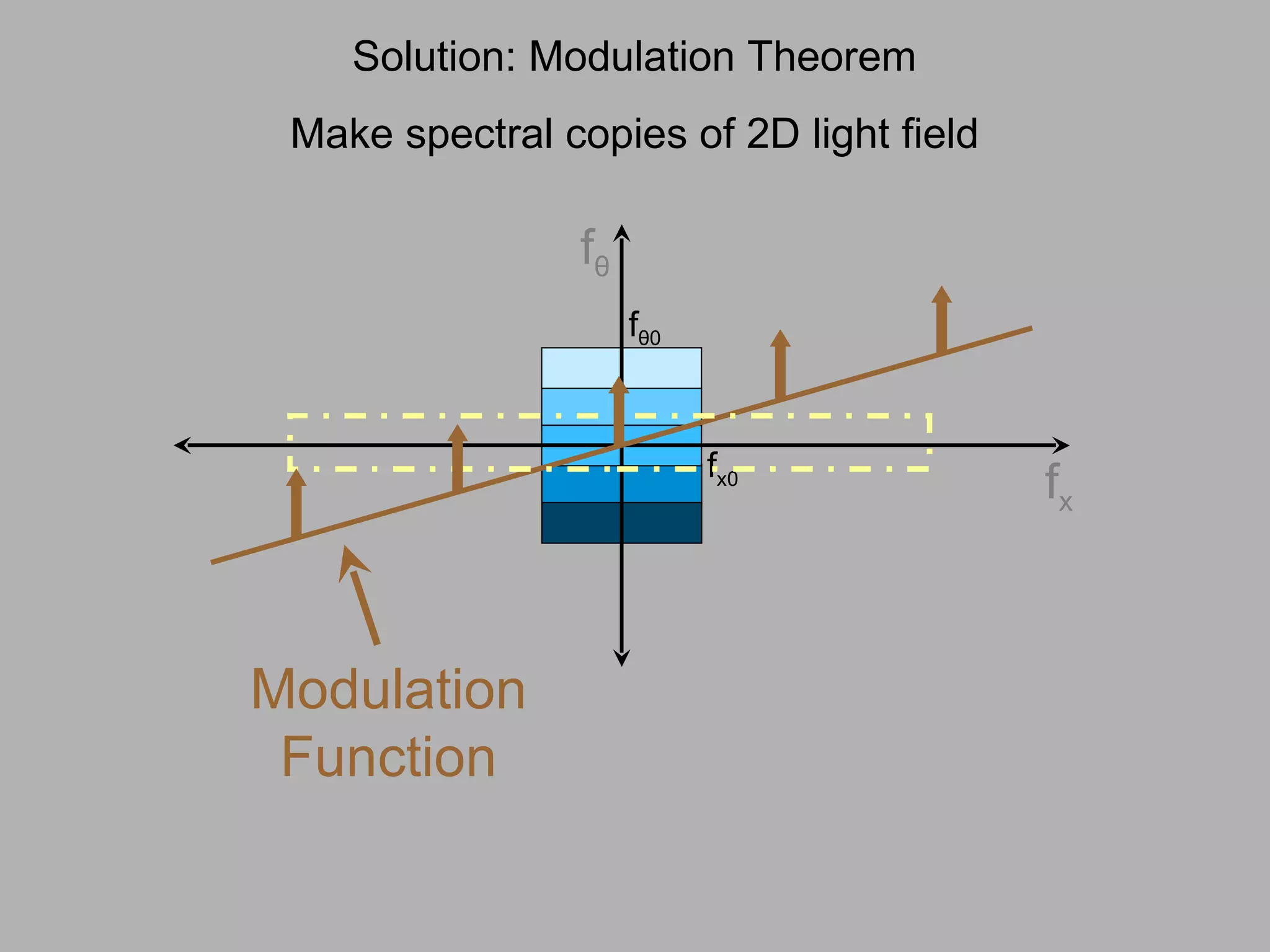
Solution: Modulation Theorem Make spectral copies of 2D light field f θ f x f θ 0 f x0 Modulation Function
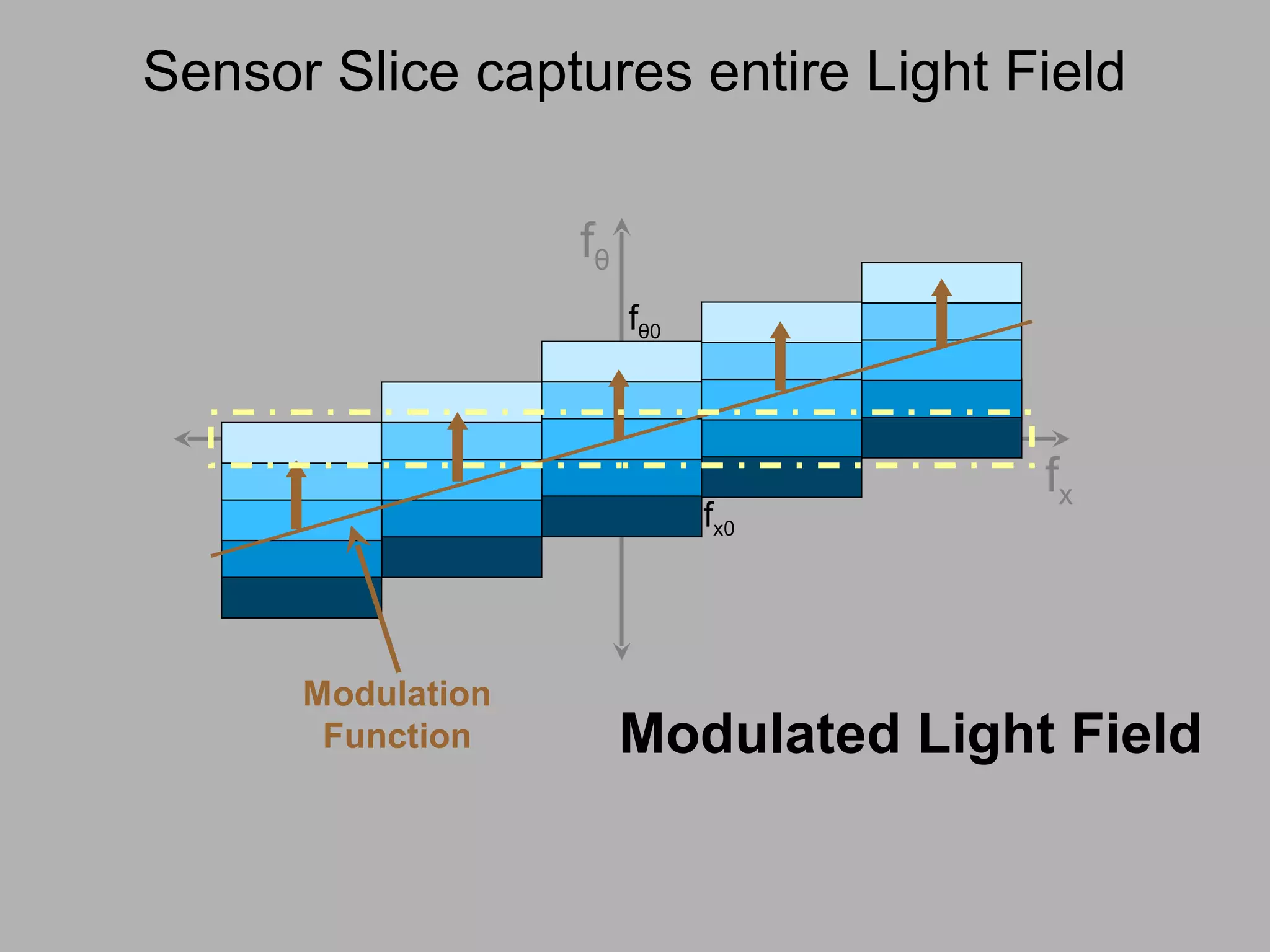
f θ Modulated Light Field f x f θ 0 f x0 Modulation Function Sensor Slice captures entire Light Field
1/f 0 Mask Tile Cosine Mask Used
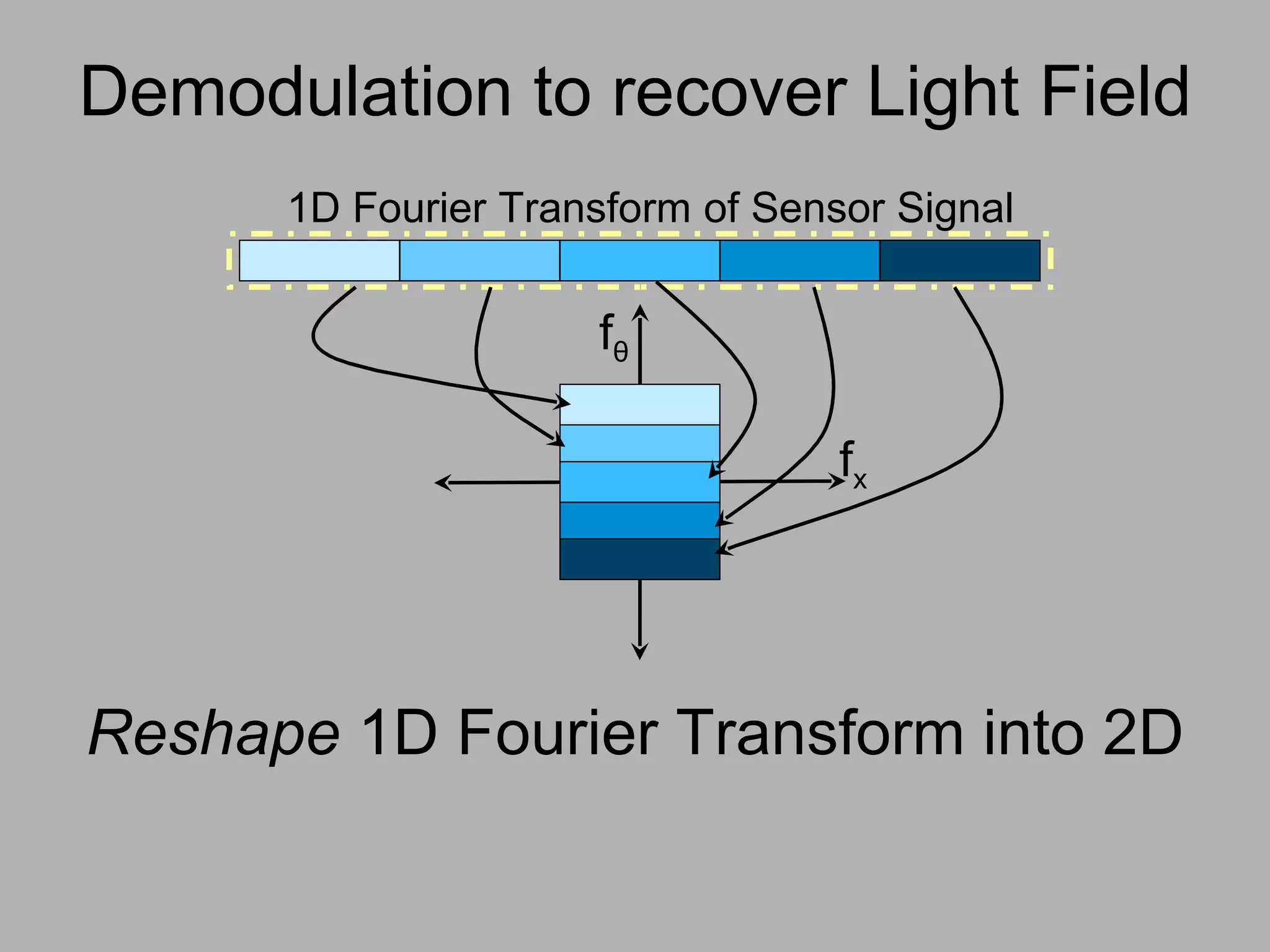
Demodulation to recover Light Field f θ f x Reshape  1D Fourier Transform into 2D 1D Fourier Transform of Sensor Signal
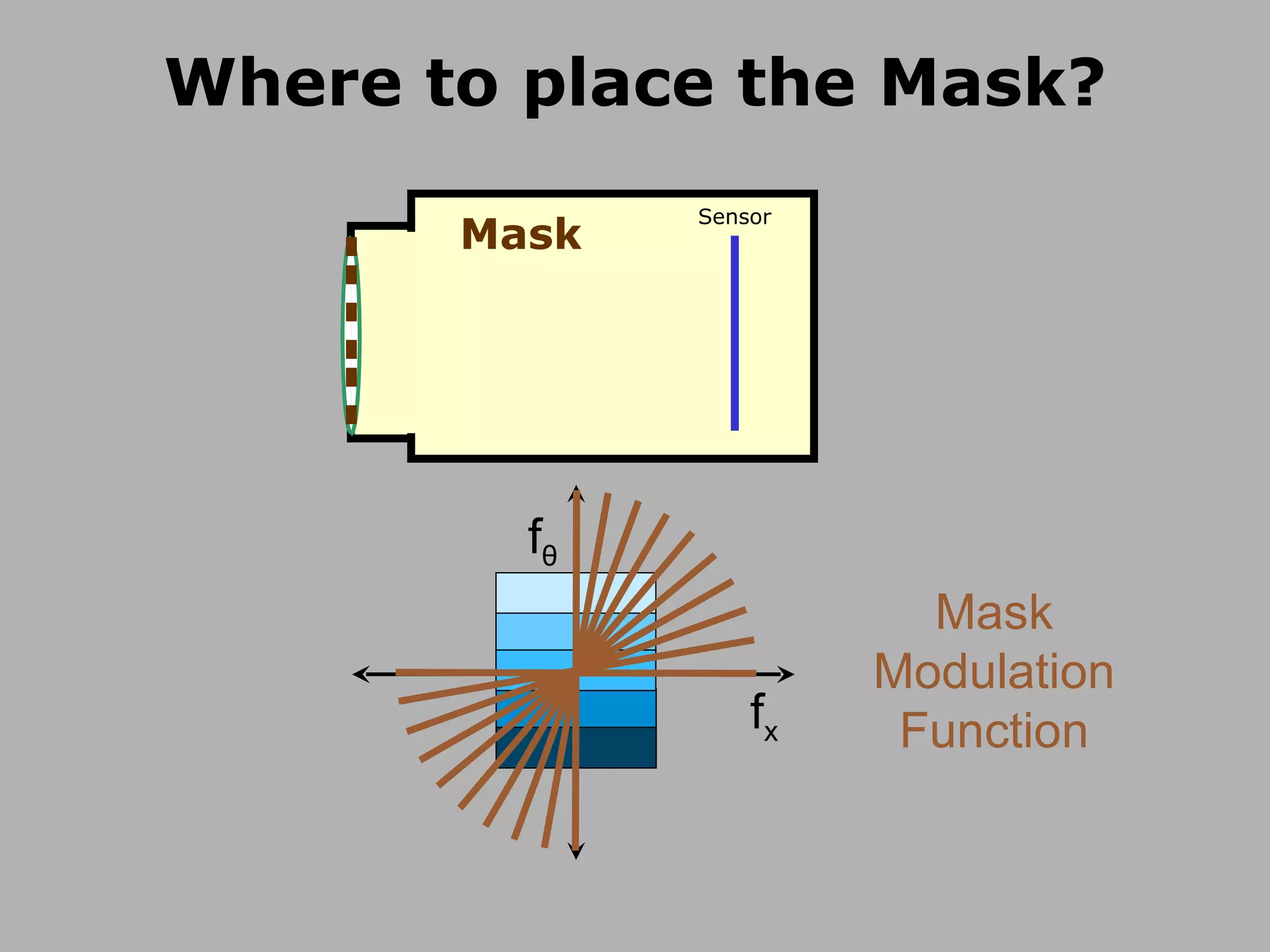
Mask Sensor Where to place the Mask? Mask Modulation Function f x f θ
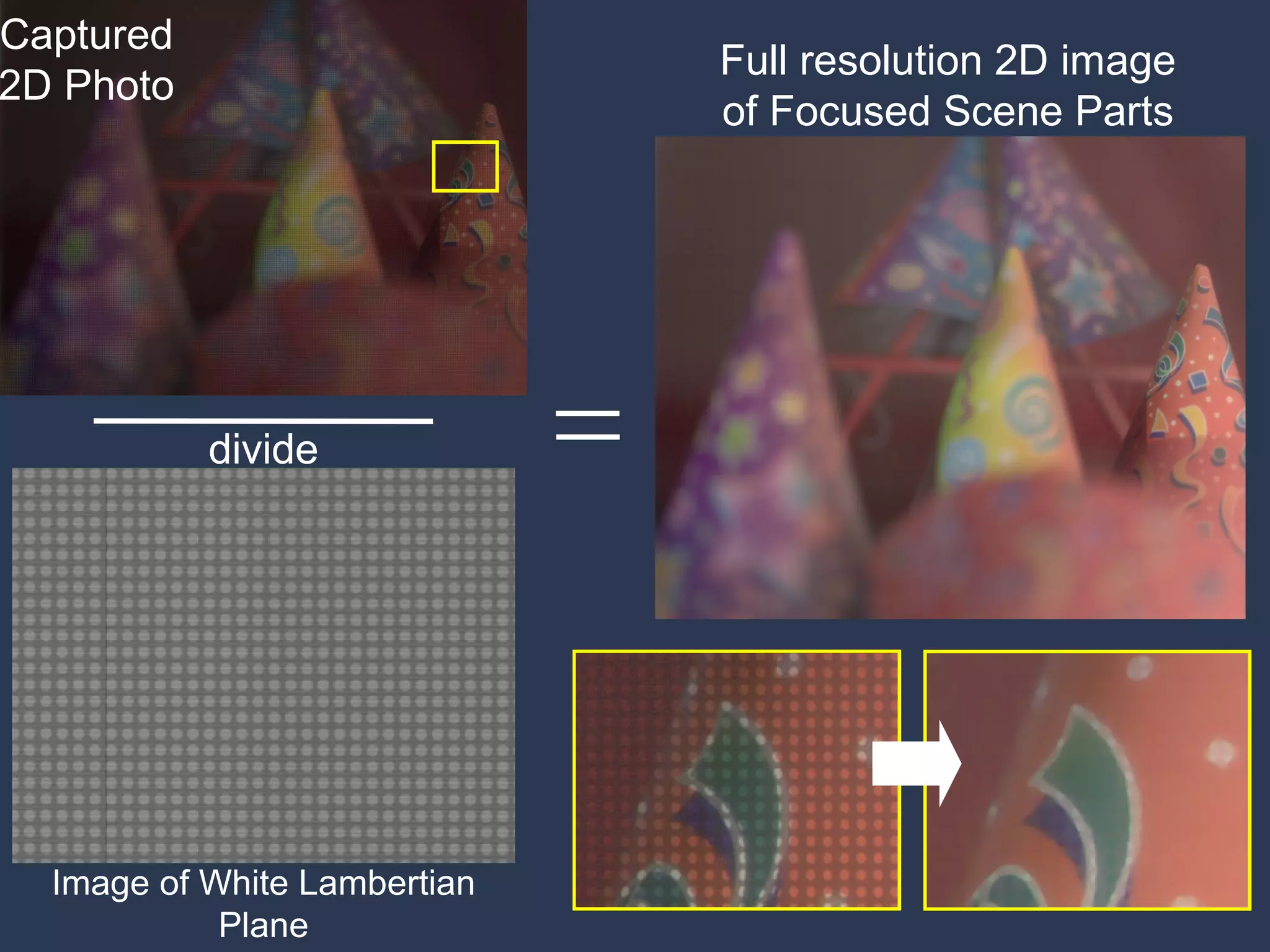
Full resolution 2D image of Focused Scene Parts Captured 2D Photo Image of White Lambertian Plane divide
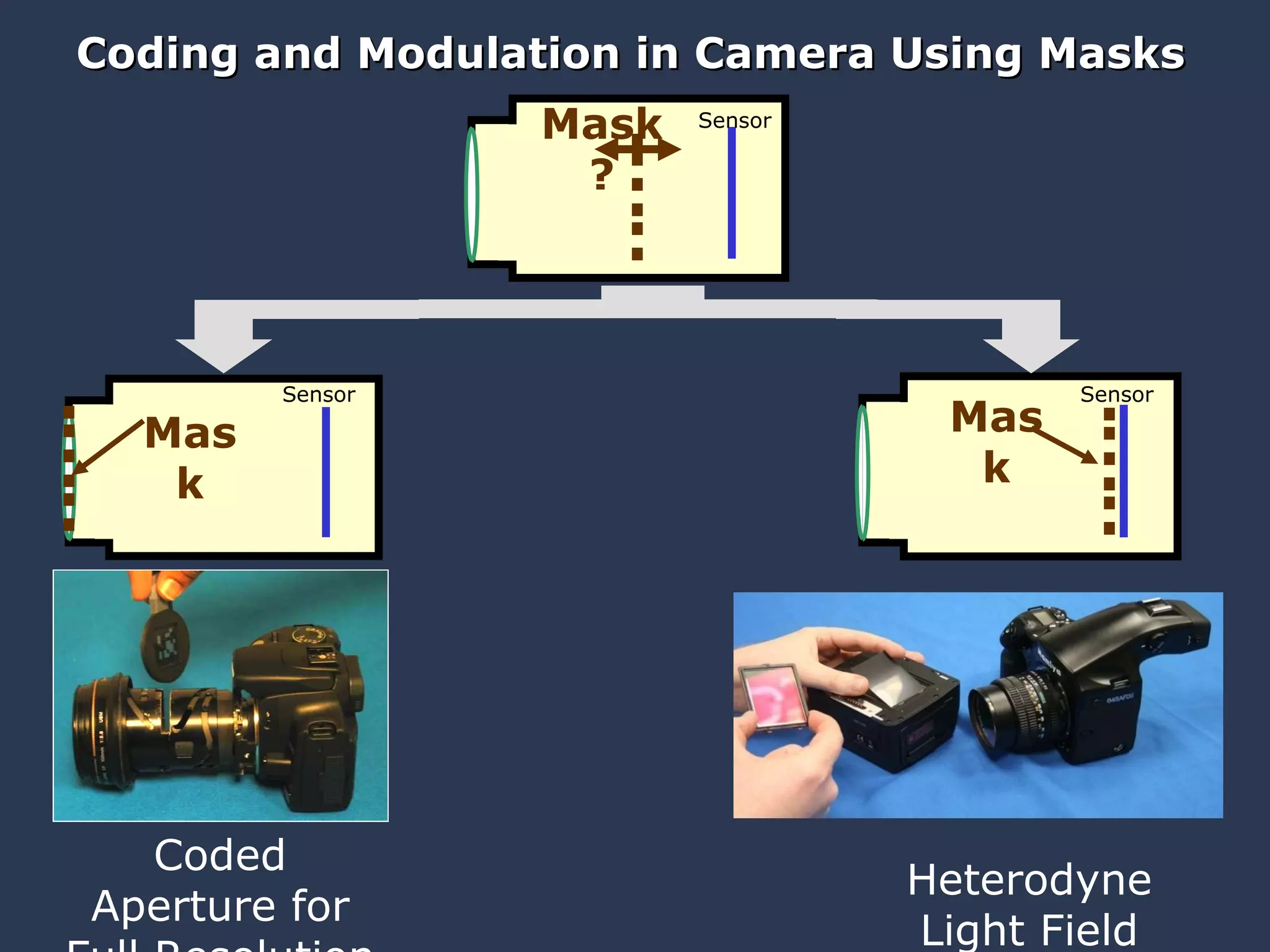
Coding and Modulation in Camera Using Masks Coded Aperture for Full Resolution Digital Refocusing Heterodyne Light Field Camera Mask? Sensor Mask Sensor Mask Sensor
Agile Spectrum Imaging Programmable Color Gamut for Sensor With Ankit Mohan, Jack Tumblin [Eurographics 2008]
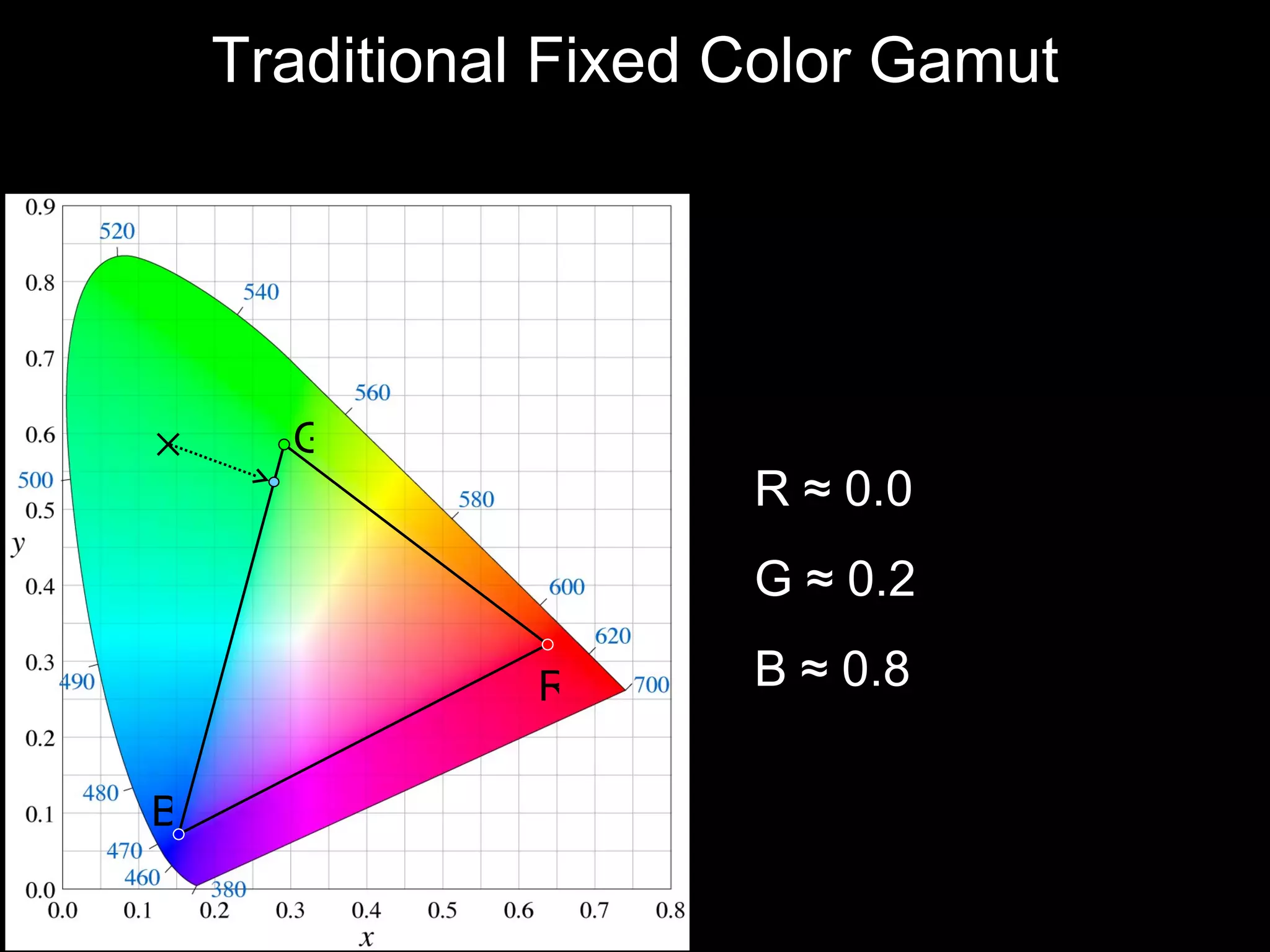
R  ≈  0.0 G ≈ 0.2 B ≈ 0.8 Traditional Fixed Color Gamut B G R
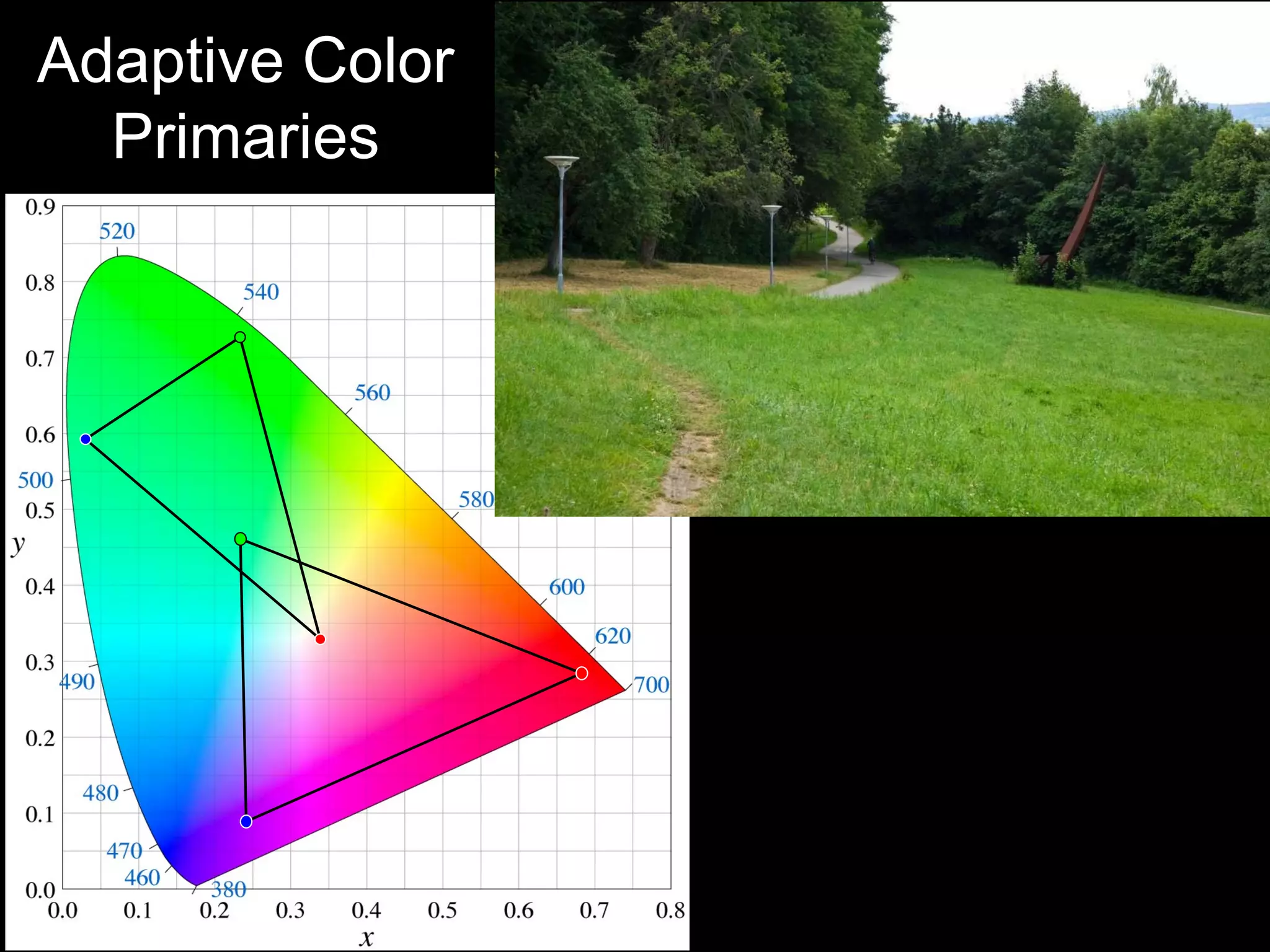
Adaptive Color Primaries
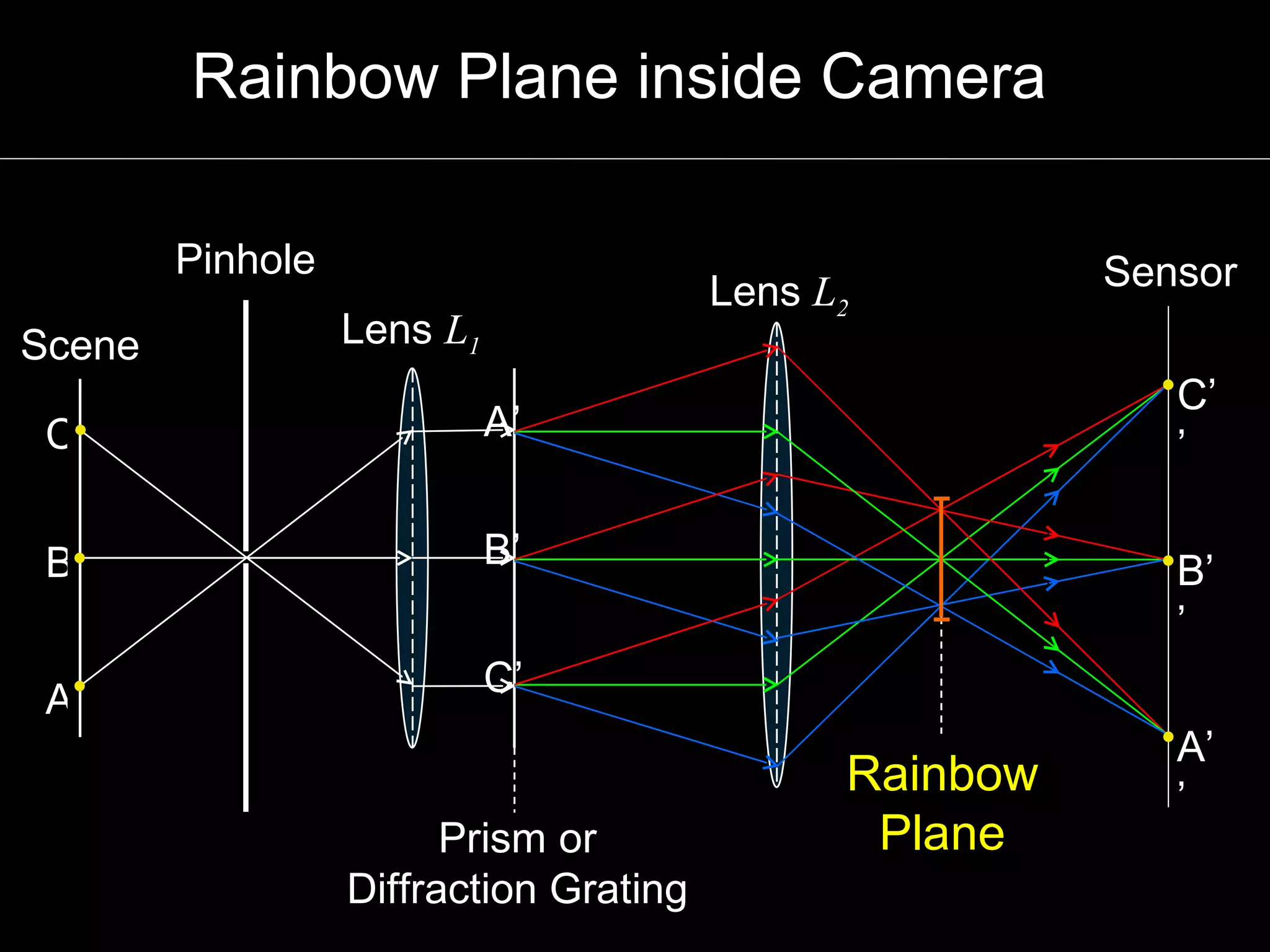
C B A A’ B’ C’ Pinhole Lens  L 1 Prism or Diffraction Grating Lens  L 2 Sensor Rainbow Plane C’’ B’’ A’’ Scene Rainbow Plane inside Camera
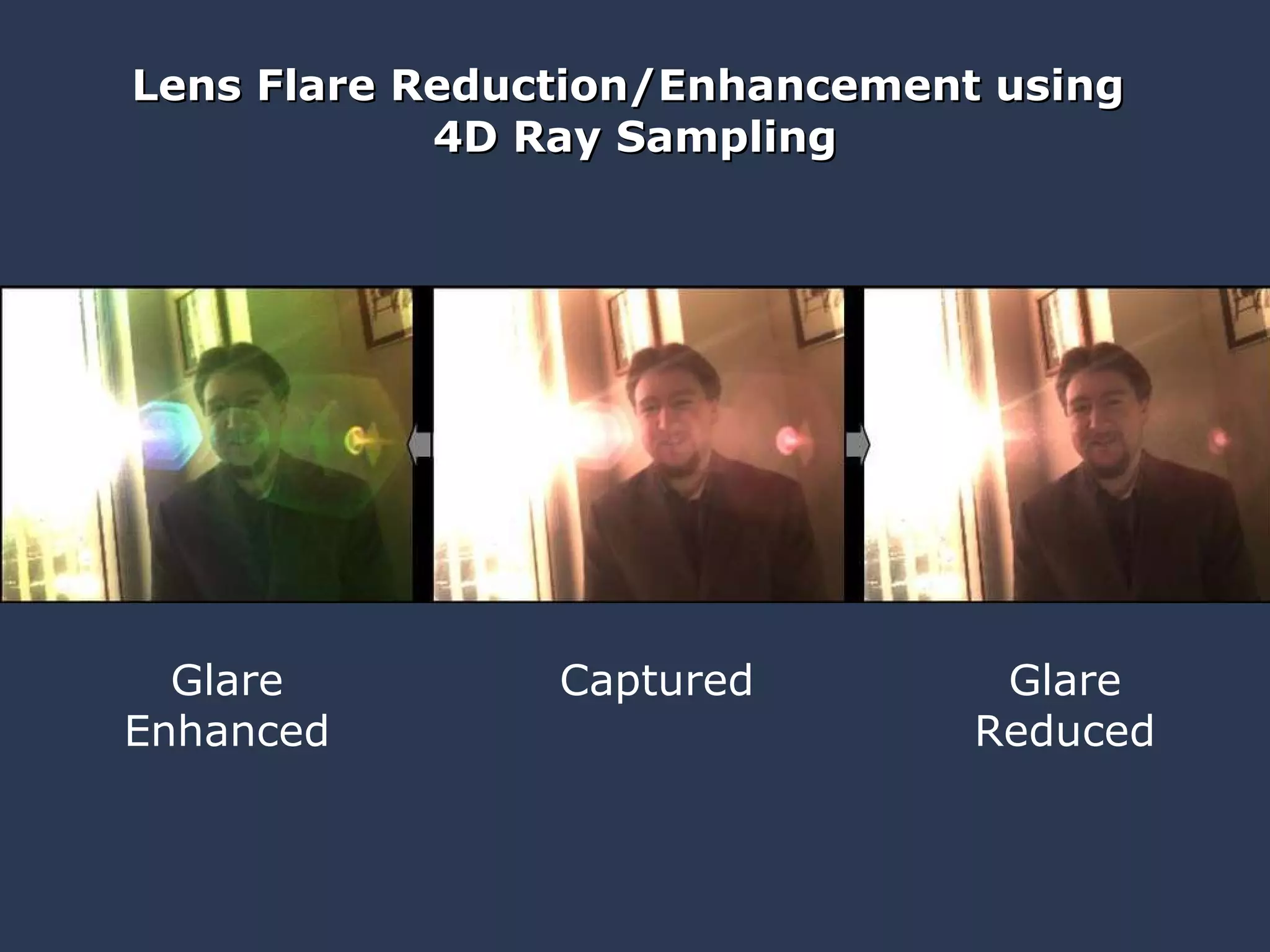
Lens Flare Reduction/Enhancement using  4D Ray Sampling Captured Glare Reduced Glare Enhanced
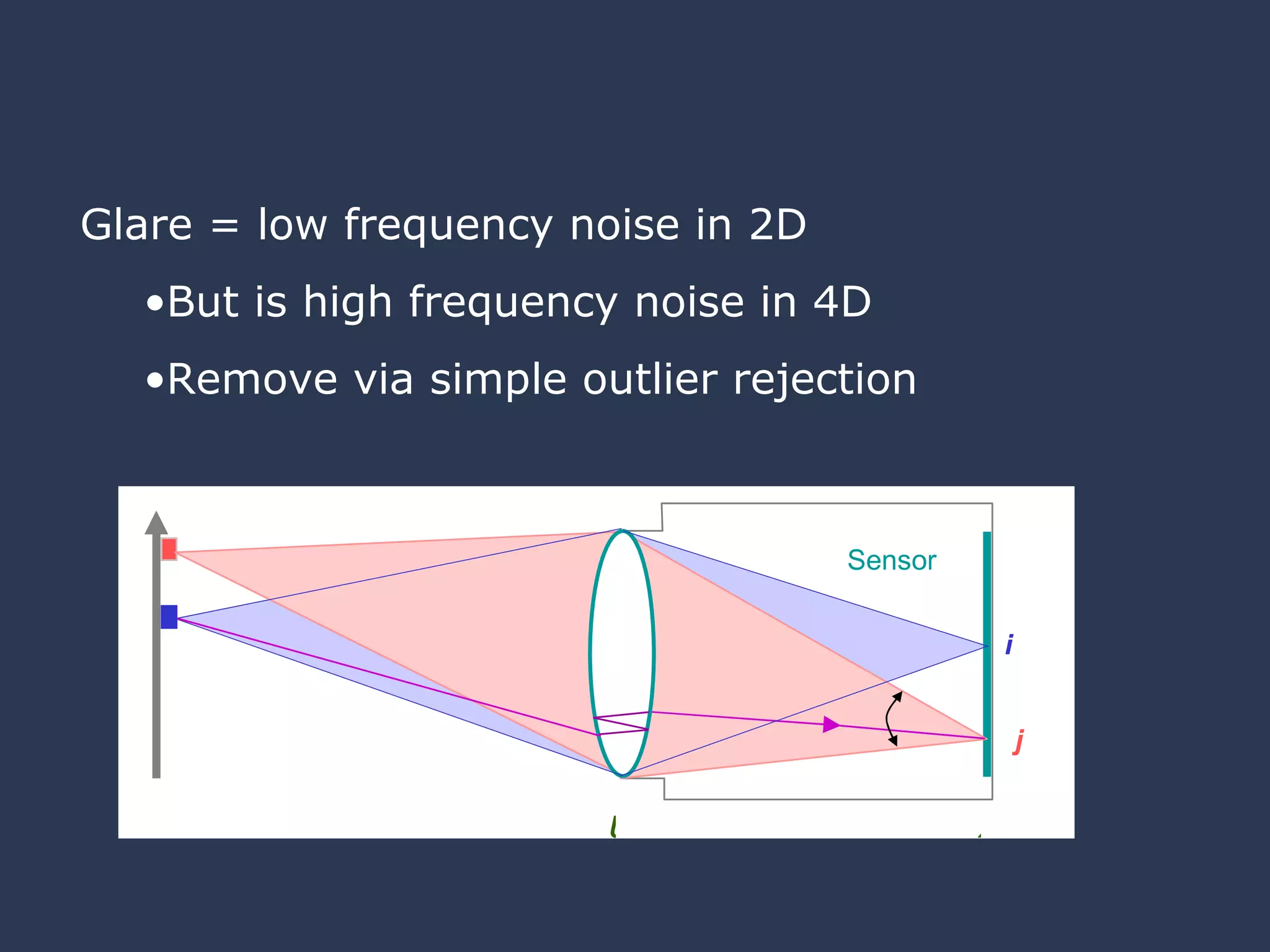
Glare = low frequency noise in 2D But is high frequency noise in 4D Remove via simple outlier rejection i j x Sensor u
Computational Camera and Photography
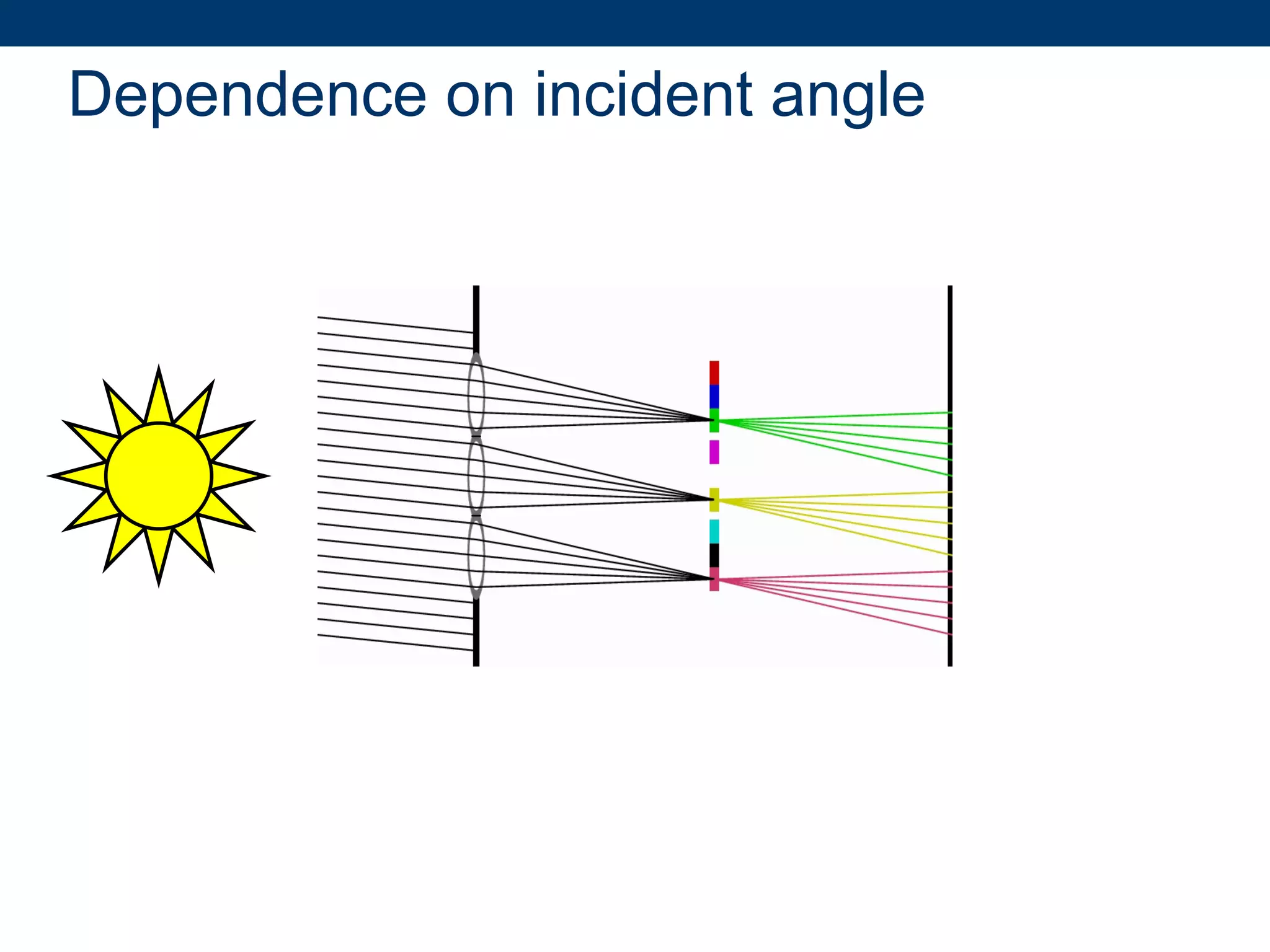
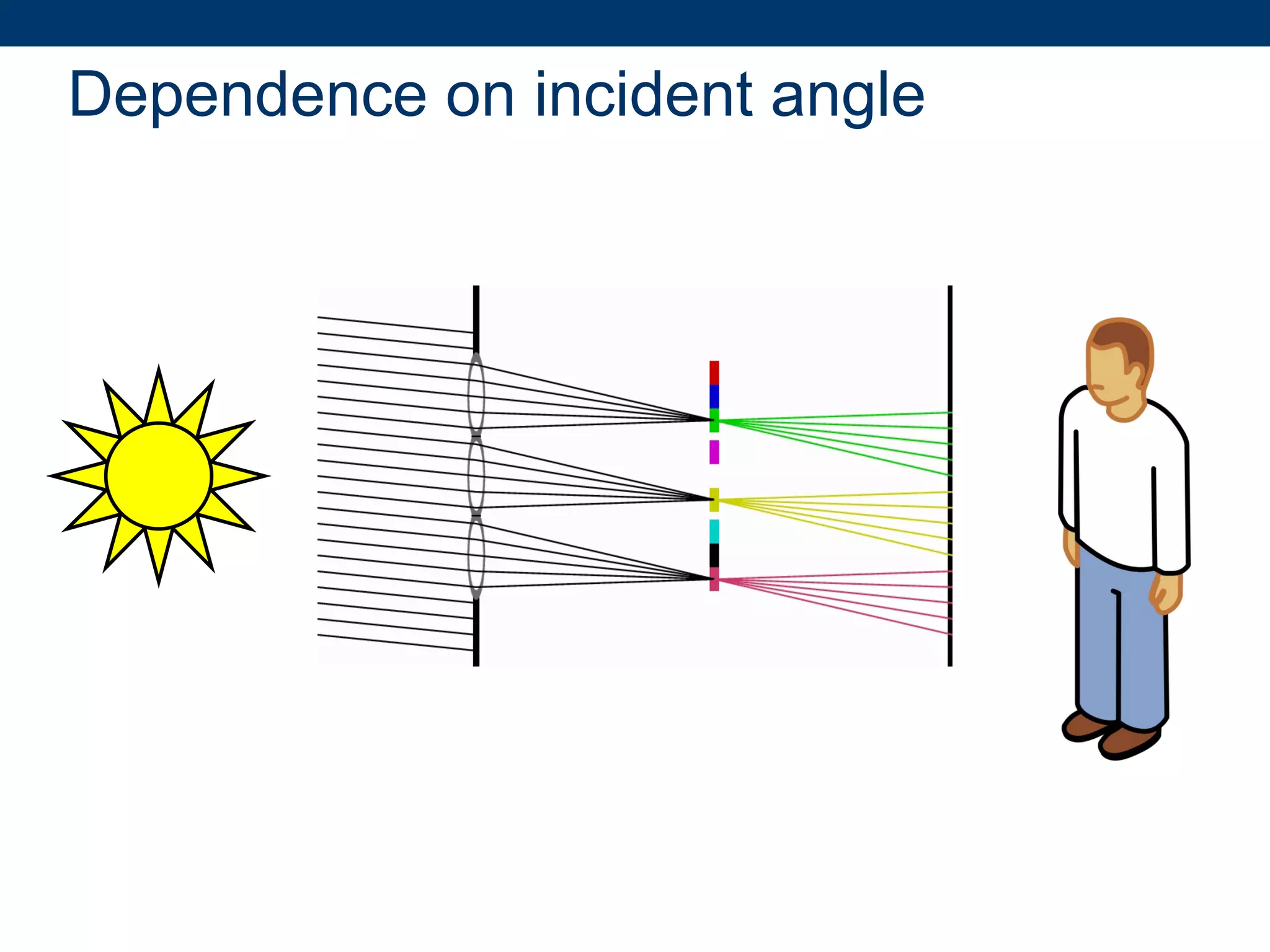
Dependence on incident angle
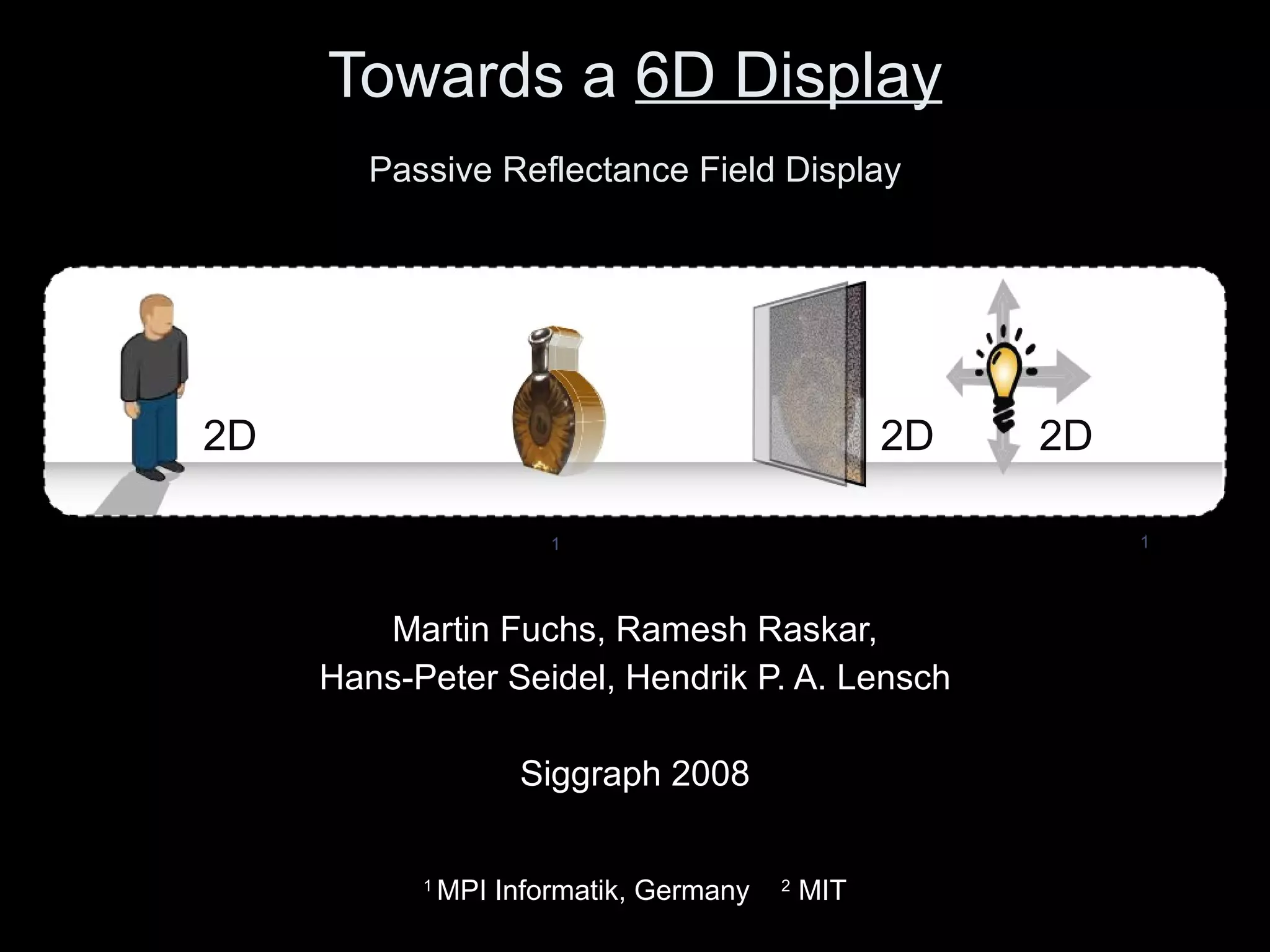
Towards a  6D Display Passive Reflectance Field Display Martin Fuchs, Ramesh Raskar, Hans-Peter Seidel, Hendrik P. A. Lensch Siggraph 2008 1 2 1 1 1  MPI Informatik, Germany  2  MIT 2D 2D 2D
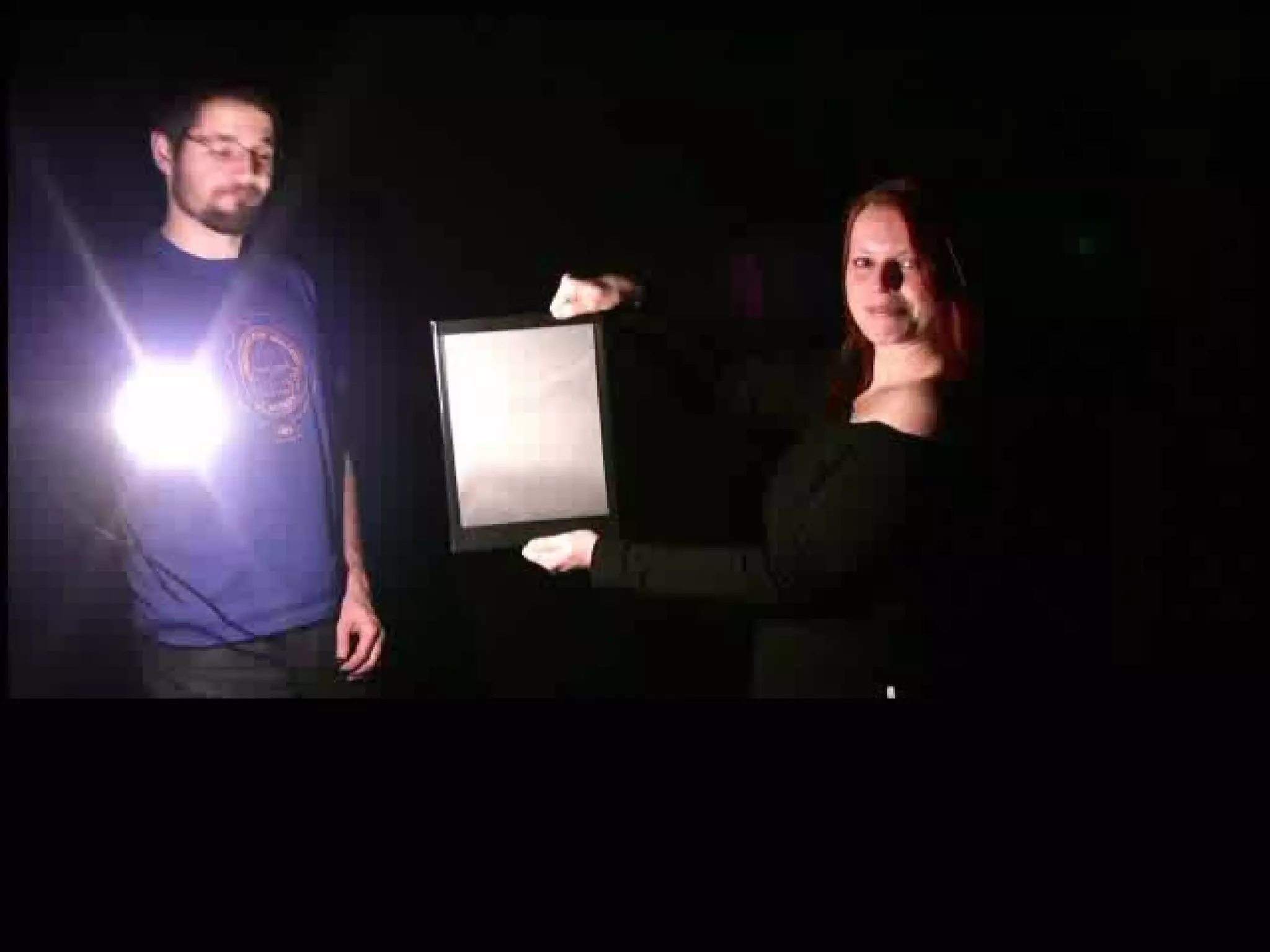
View dependent 4D Display
 
 
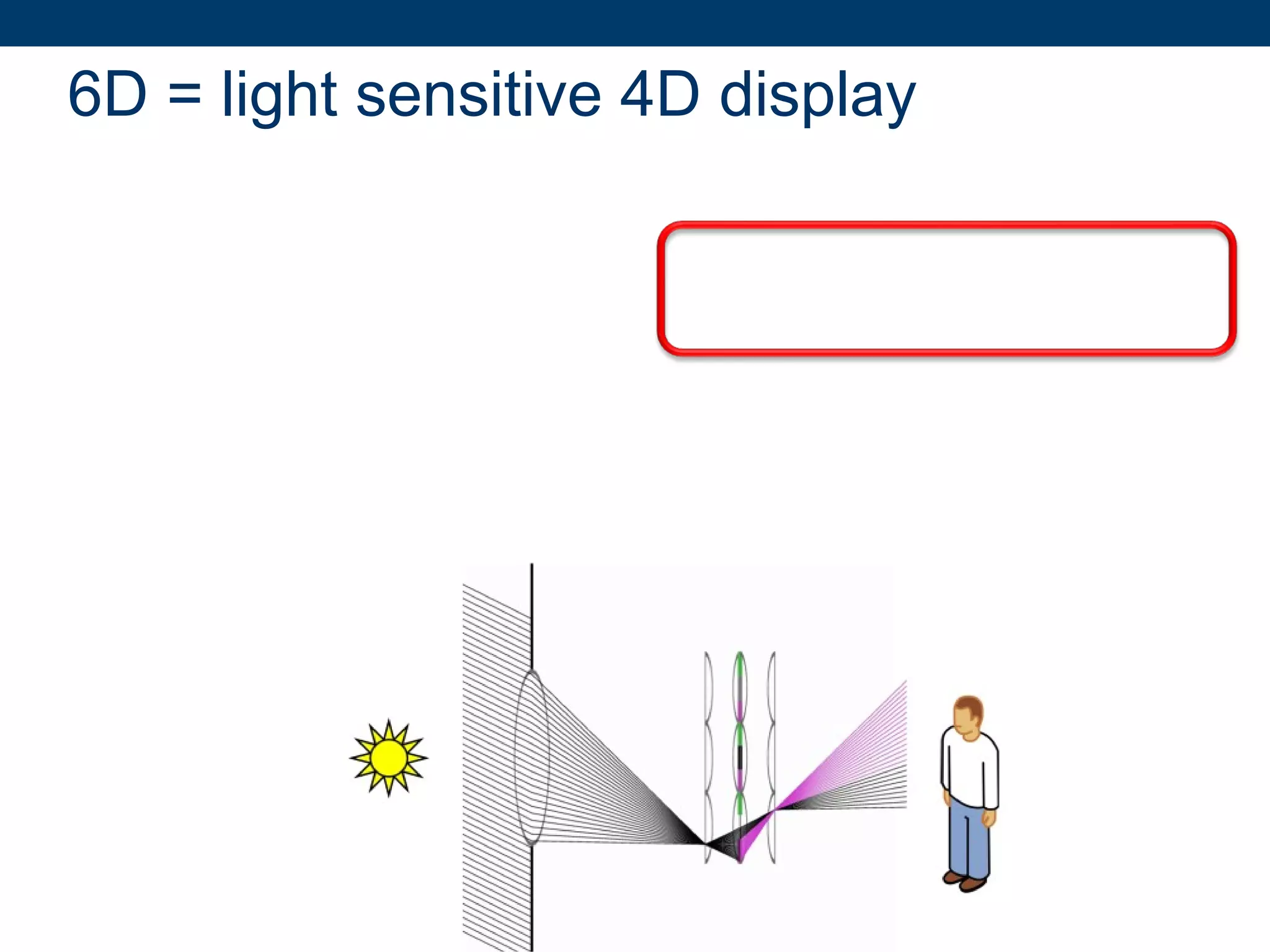
6D = light sensitive 4D display
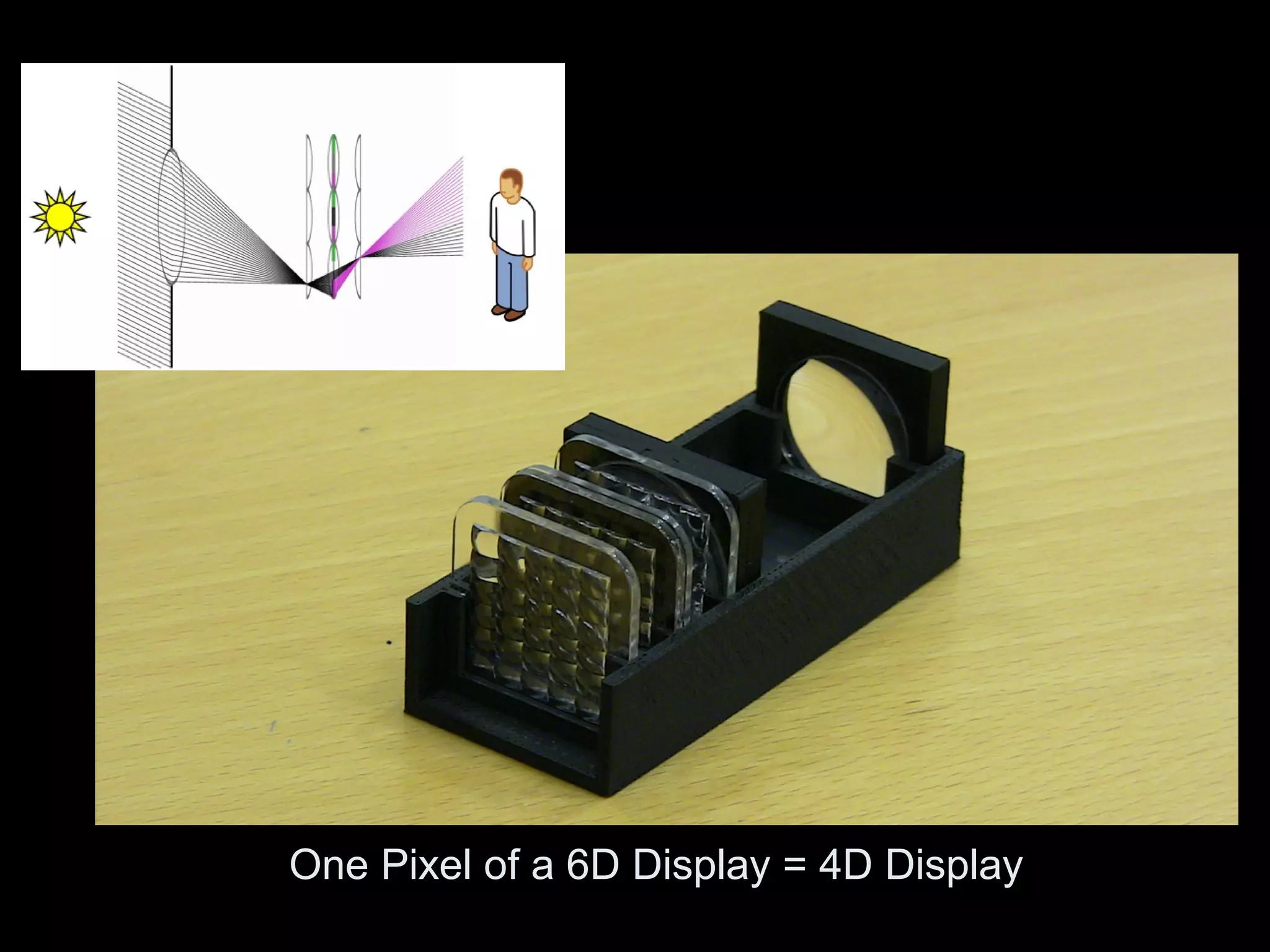
One Pixel of a 6D Display = 4D Display
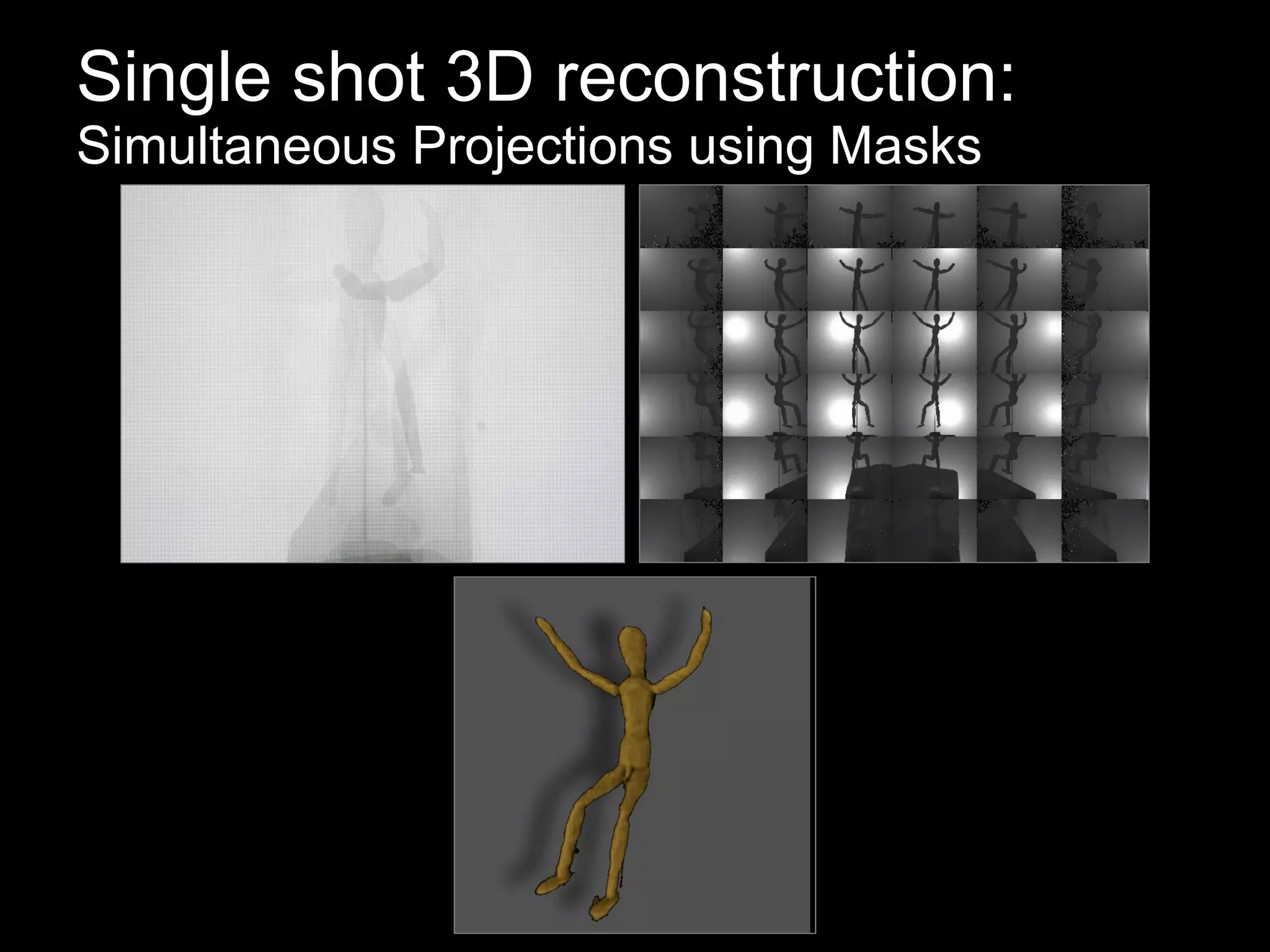
Single shot visual hull Lanman, Raskar, Agrawal, Taubin [Siggraph Asia 2008]
Single shot 3D reconstruction:  Simultaneous Projections using Masks
Barcode size : 3mm x 3mm Distance from camera : 5 meter Long Distance Bar-codes Woo, Mohan, Raskar, [2008]
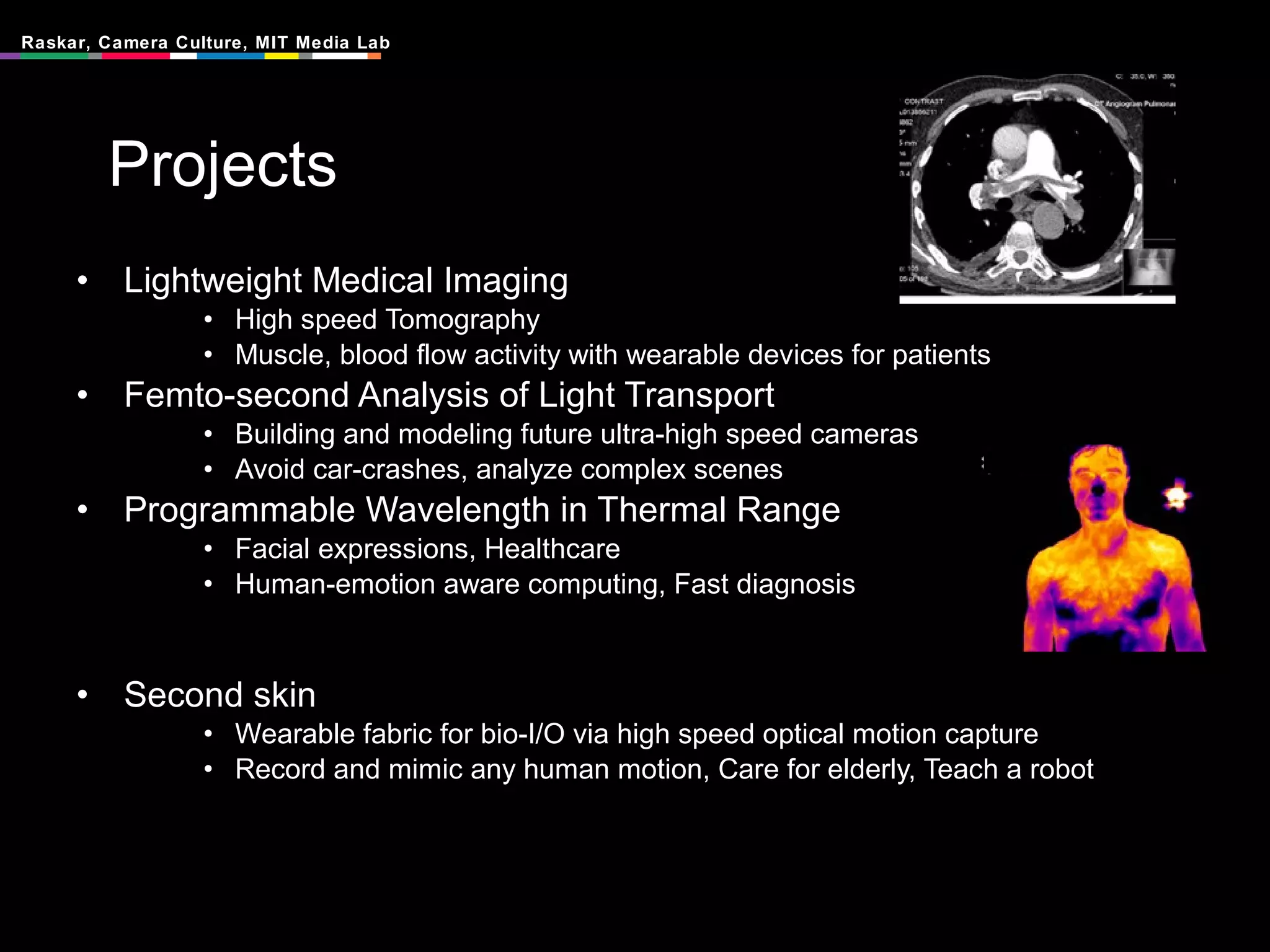
Projects Lightweight Medical Imaging High speed Tomography Muscle, blood flow activity with wearable devices for patients Femto-second Analysis of Light Transport Building and modeling future ultra-high speed cameras Avoid car-crashes, analyze complex scenes Programmable Wavelength in Thermal Range Facial expressions, Healthcare Human-emotion aware computing, Fast diagnosis Second skin Wearable fabric for bio-I/O via high speed optical motion capture Record and mimic any human motion, Care for elderly, Teach a robot
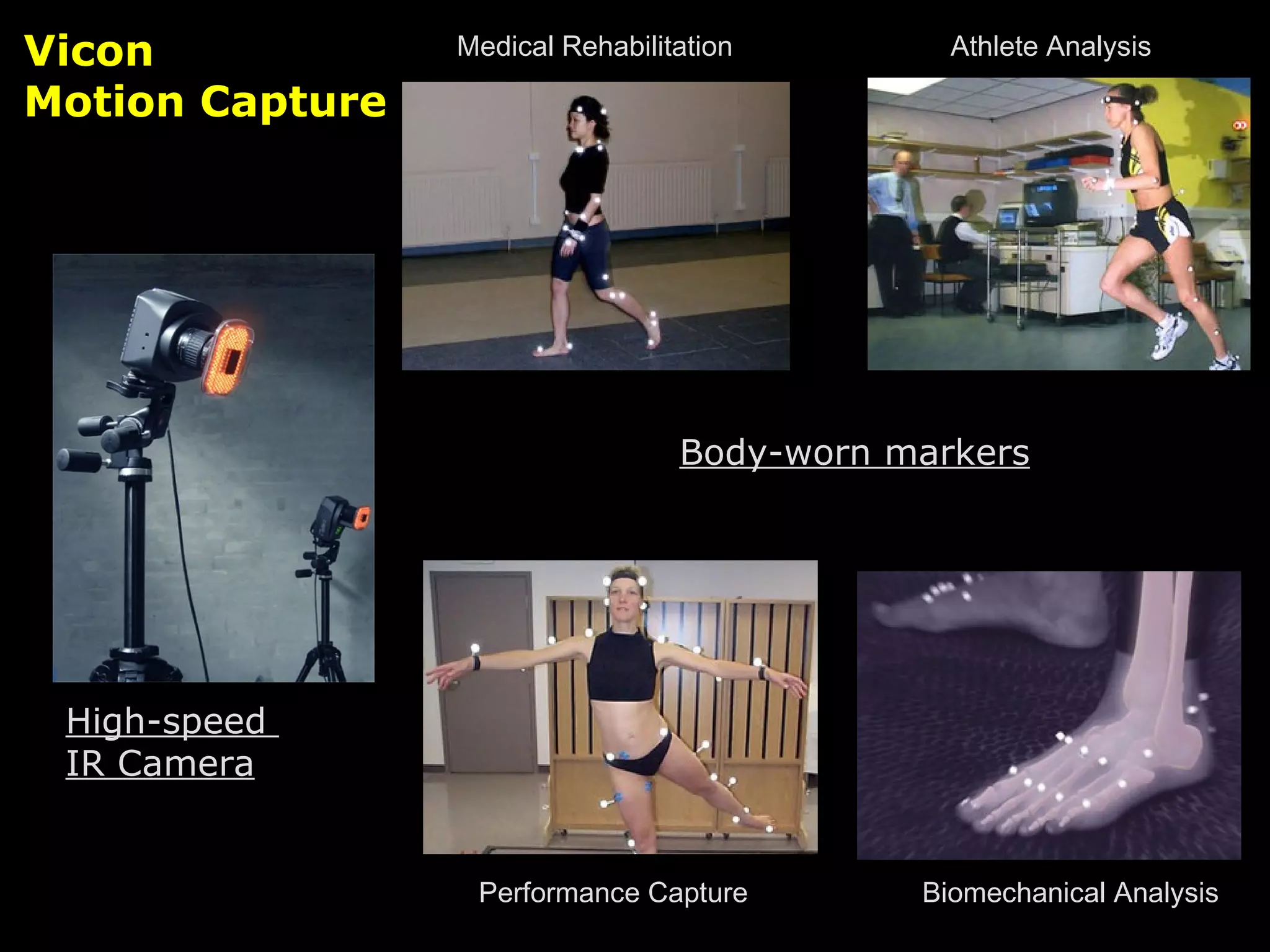
Vicon  Motion Capture High-speed  IR Camera Body-worn markers Medical Rehabilitation Athlete Analysis Performance Capture Biomechanical Analysis
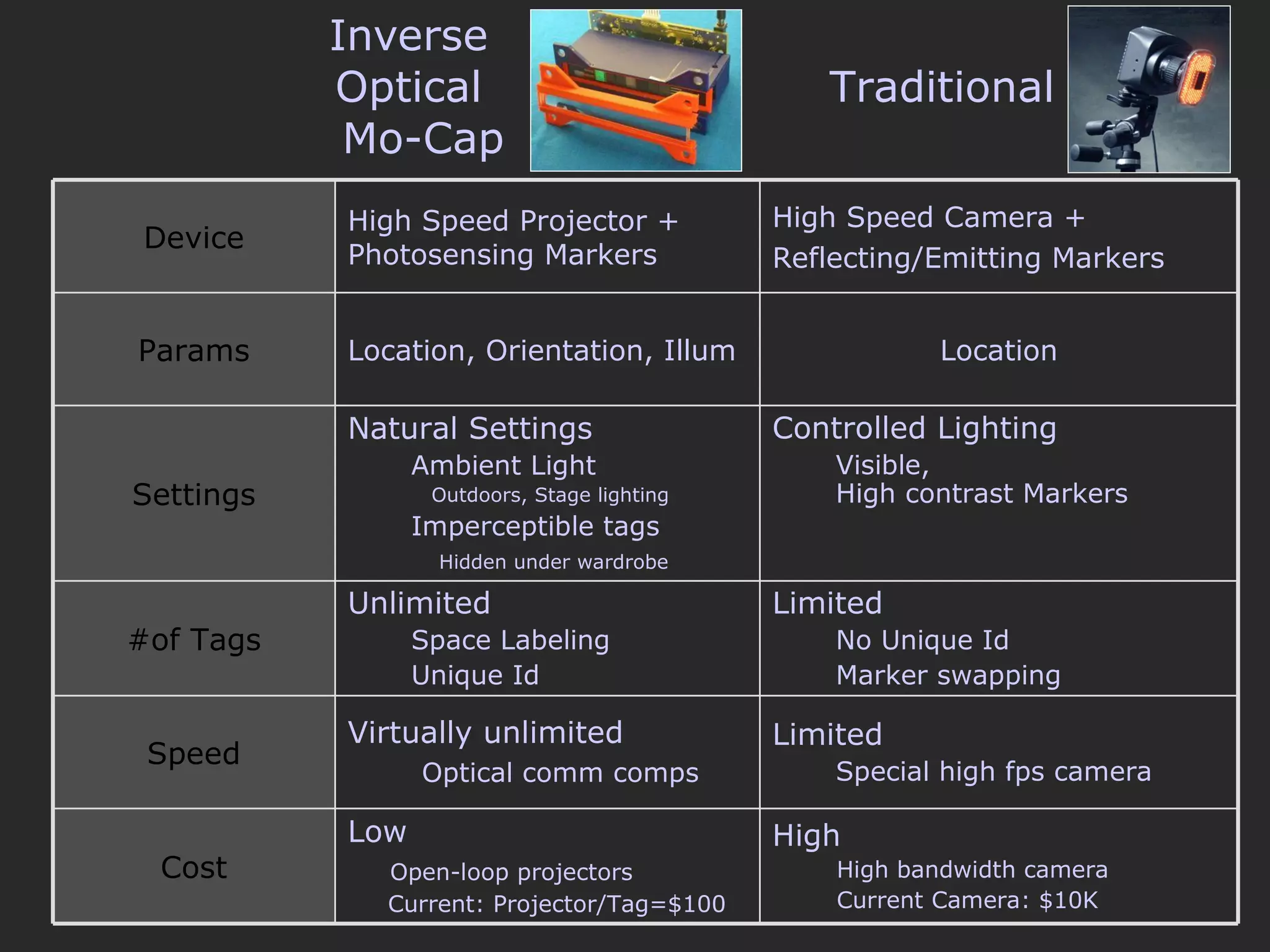
Inverse  Optical  Mo-Cap Traditional Device High Speed Projector + Photosensing Markers High Speed Camera +  Reflecting/Emitting Markers Params Location, Orientation, Illum Location Settings Natural Settings Ambient Light Outdoors, Stage lighting Imperceptible tags Hidden under wardrobe Controlled Lighting Visible,  High contrast Markers #of Tags Unlimited Space Labeling Unique Id Limited No Unique Id  Marker swapping Speed Virtually unlimited Optical comm comps Limited Special high fps camera Cost Low Open-loop projectors Current: Projector/Tag=$100 High High bandwidth camera Current Camera: $10K
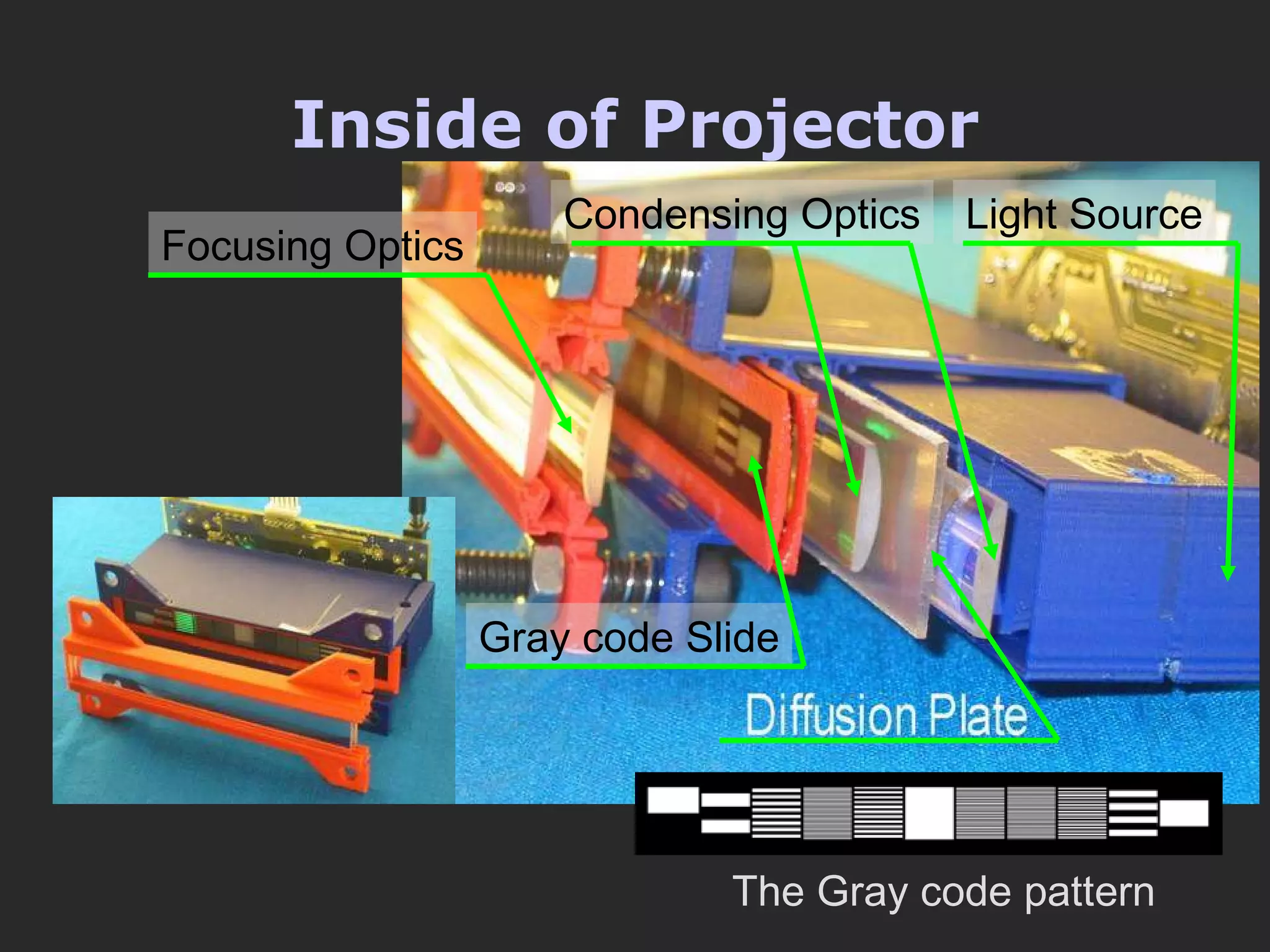
Inside of Projector The Gray code pattern Focusing Optics Gray code Slide Condensing Optics Light Source
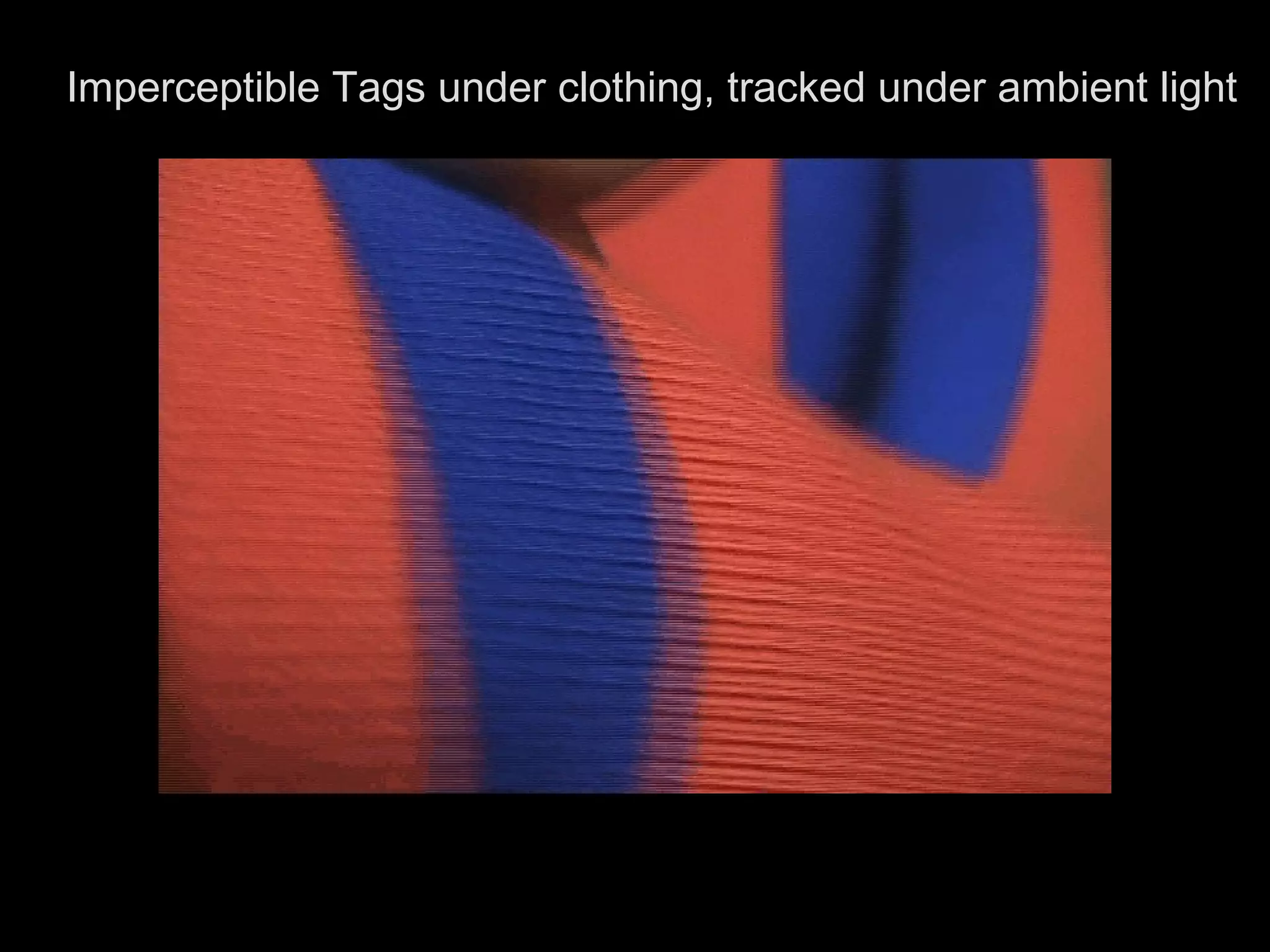
Imperceptible Tags under clothing, tracked under ambient light
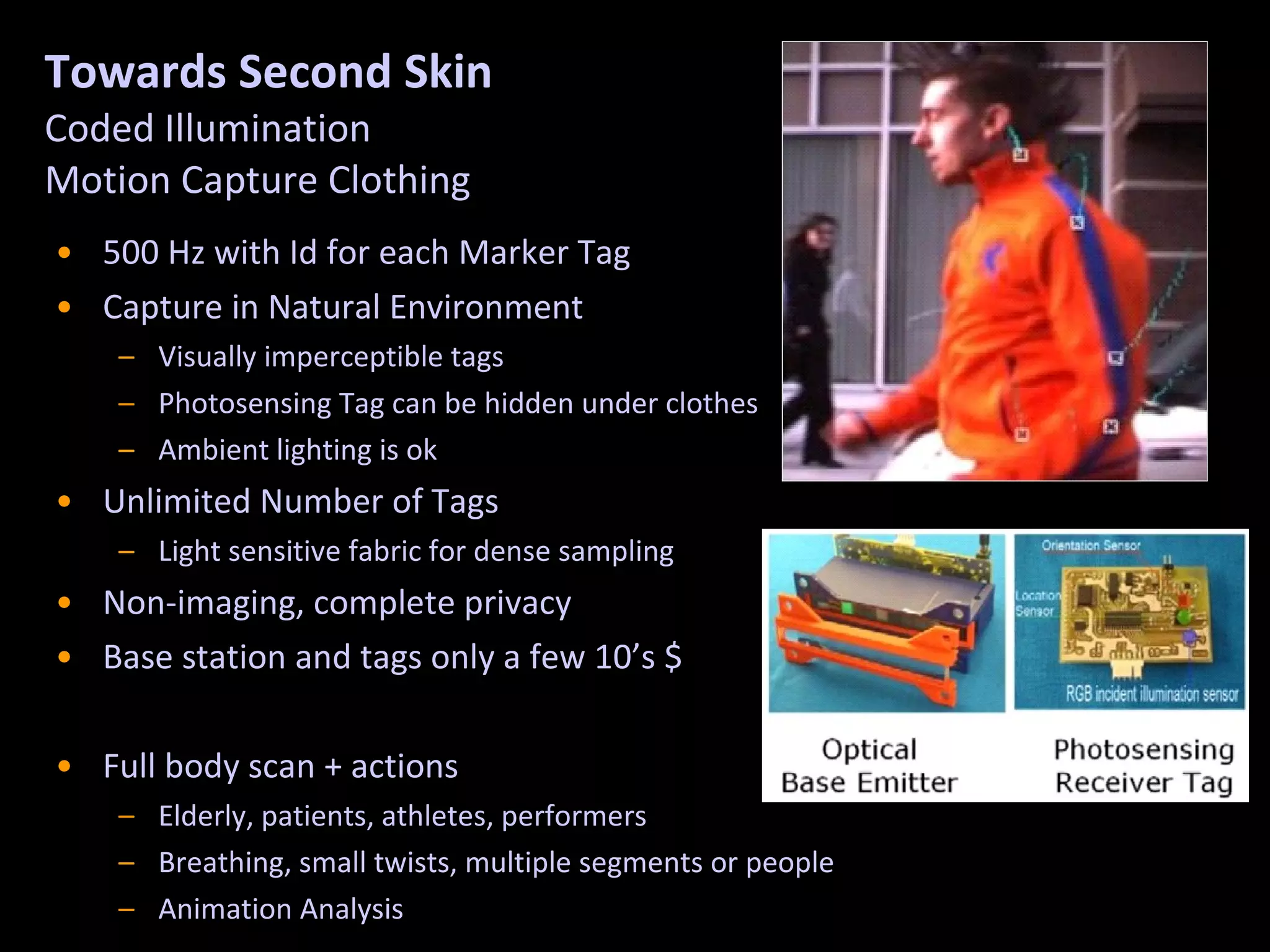
Towards Second Skin Coded Illumination  Motion Capture Clothing 500 Hz with Id for each Marker Tag Capture in Natural Environment Visually imperceptible tags Photosensing Tag can be hidden under clothes Ambient lighting is ok Unlimited Number of Tags Light sensitive fabric for dense sampling Non-imaging, complete privacy Base station and tags only a few 10’s $ Full body scan + actions Elderly, patients, athletes, performers Breathing, small twists, multiple segments or people Animation Analysis
Coded Imaging
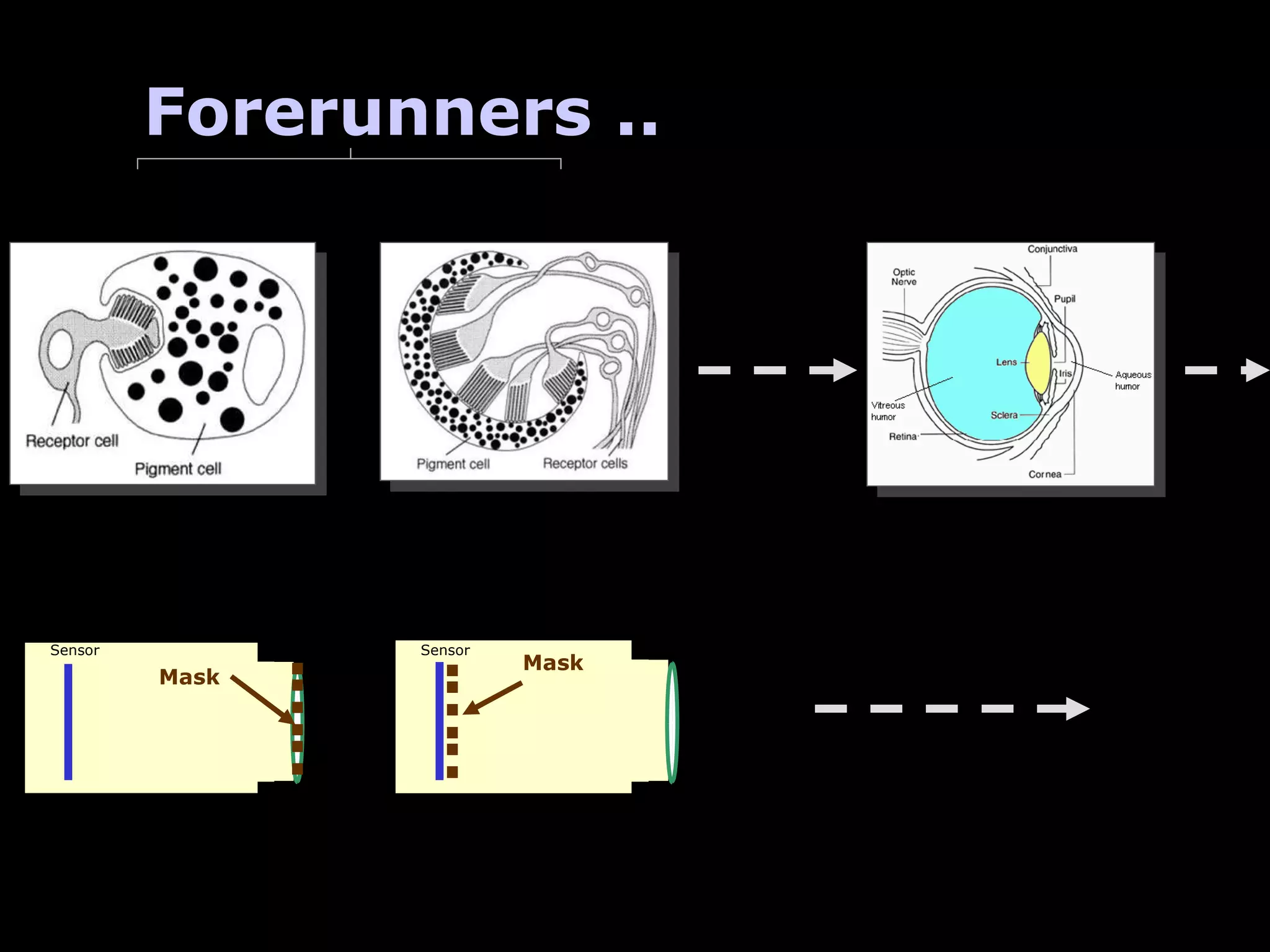
Forerunners .. Mask Sensor Mask Sensor
Fernald,  Science [Sept 2006] Shadow Refractive Reflective Tools  for Visual Computing
 
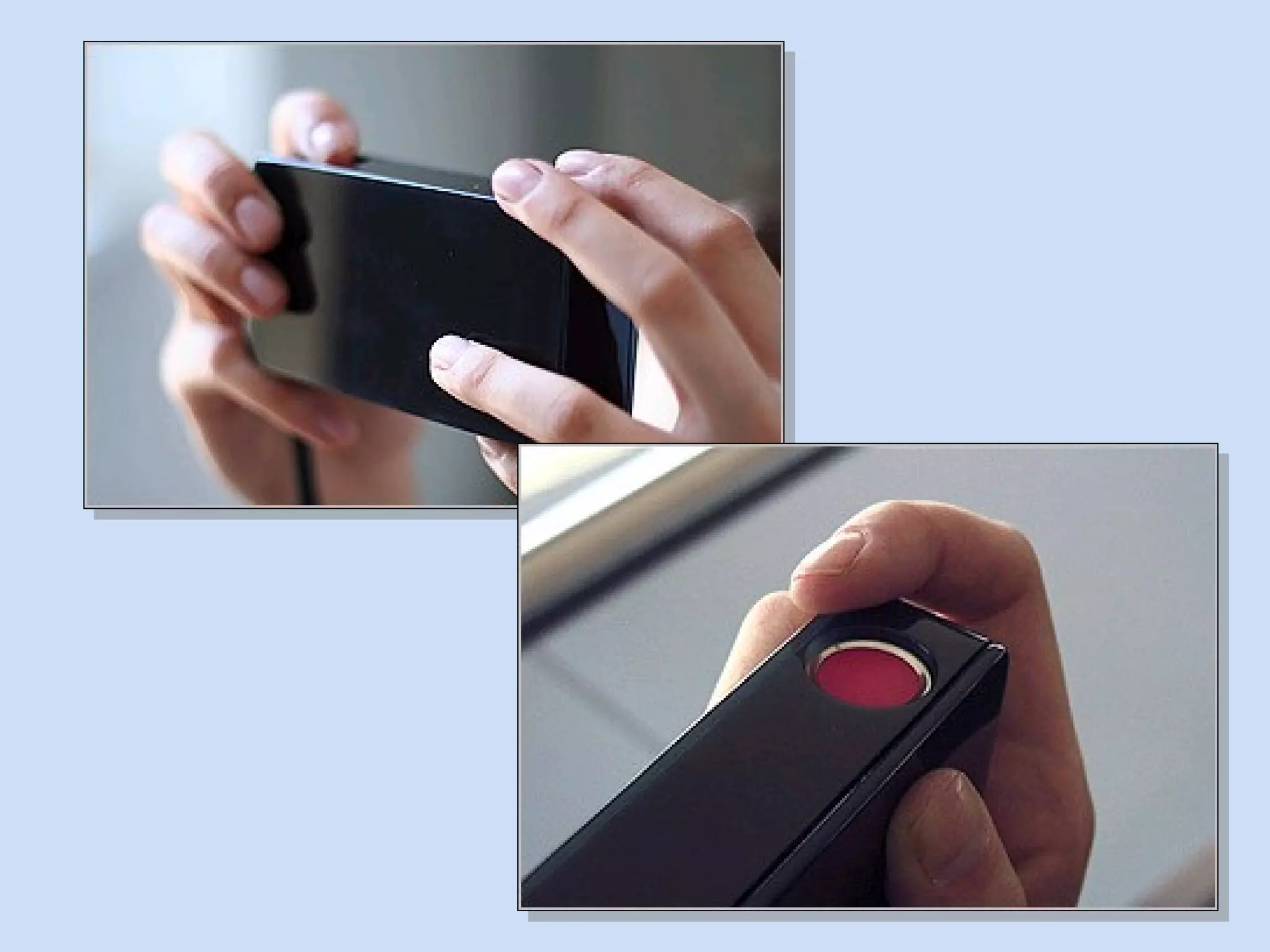
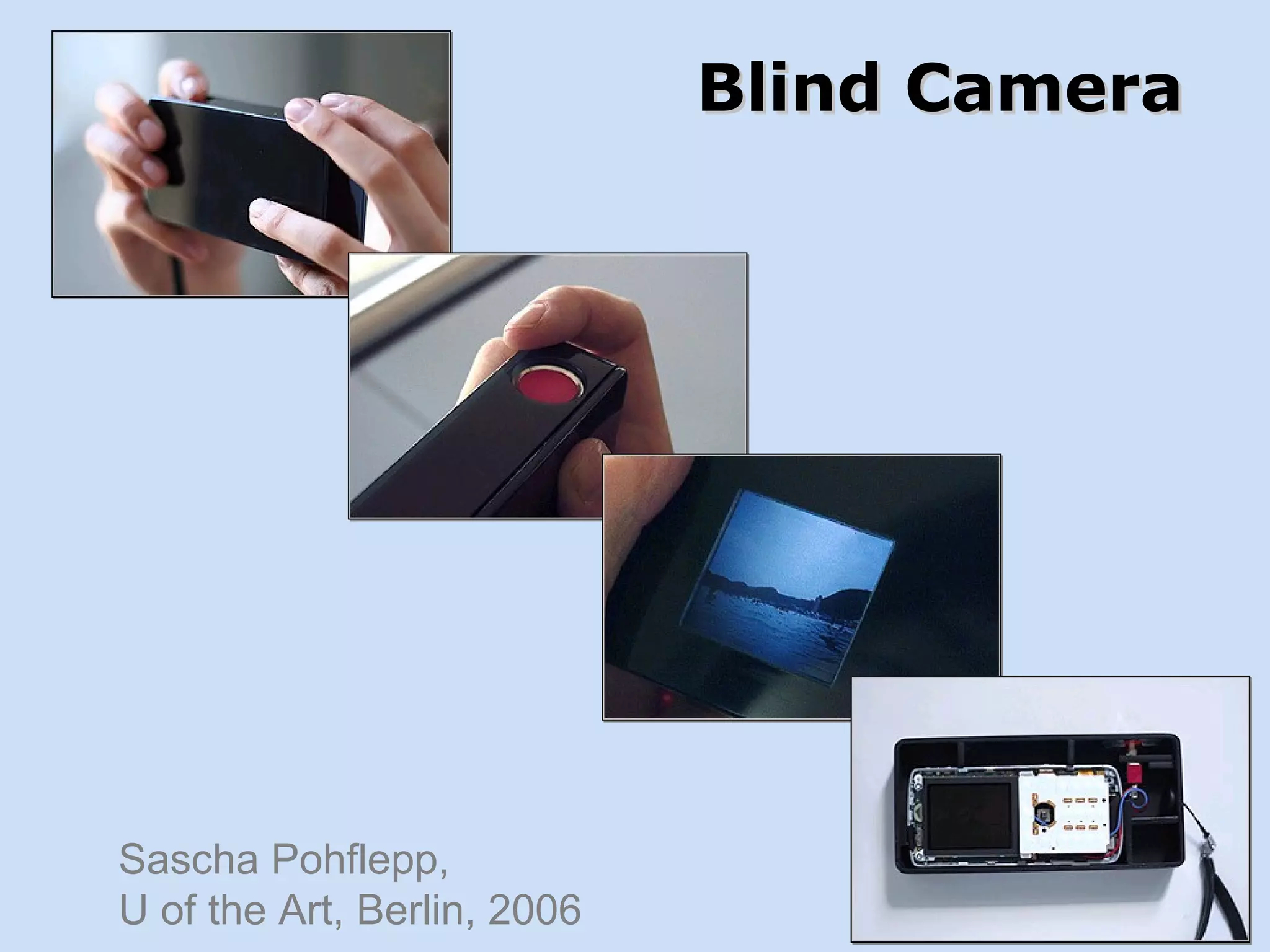
Blind Camera Sascha Pohflepp,  U of the Art, Berlin, 2006
Cameras of Tomorrow
Cameras of Tomorrow Coded Exposure Motion Deblurring  [2006] Coded Aperture Focus Deblurring  [2007] Glare reduction  [2008] Optical Heterodyning Light Field Capture  [2007] Coded Illumination Motion Capture  [2007] Multi-flash: Shape Contours [2004] Coded Spectrum Agile Wavelength Profile  [2008] Epsilon-> Coded ->Essence Photography http://raskar.info
We focus on creating tools to  better capture and share visual information  The goal is to create an entirely  new class of imaging platforms  that have an understanding of the world that far exceeds human ability  and produce meaningful abstractions that are well  within human comprehensibility Ramesh  Raskar http://raskar.info
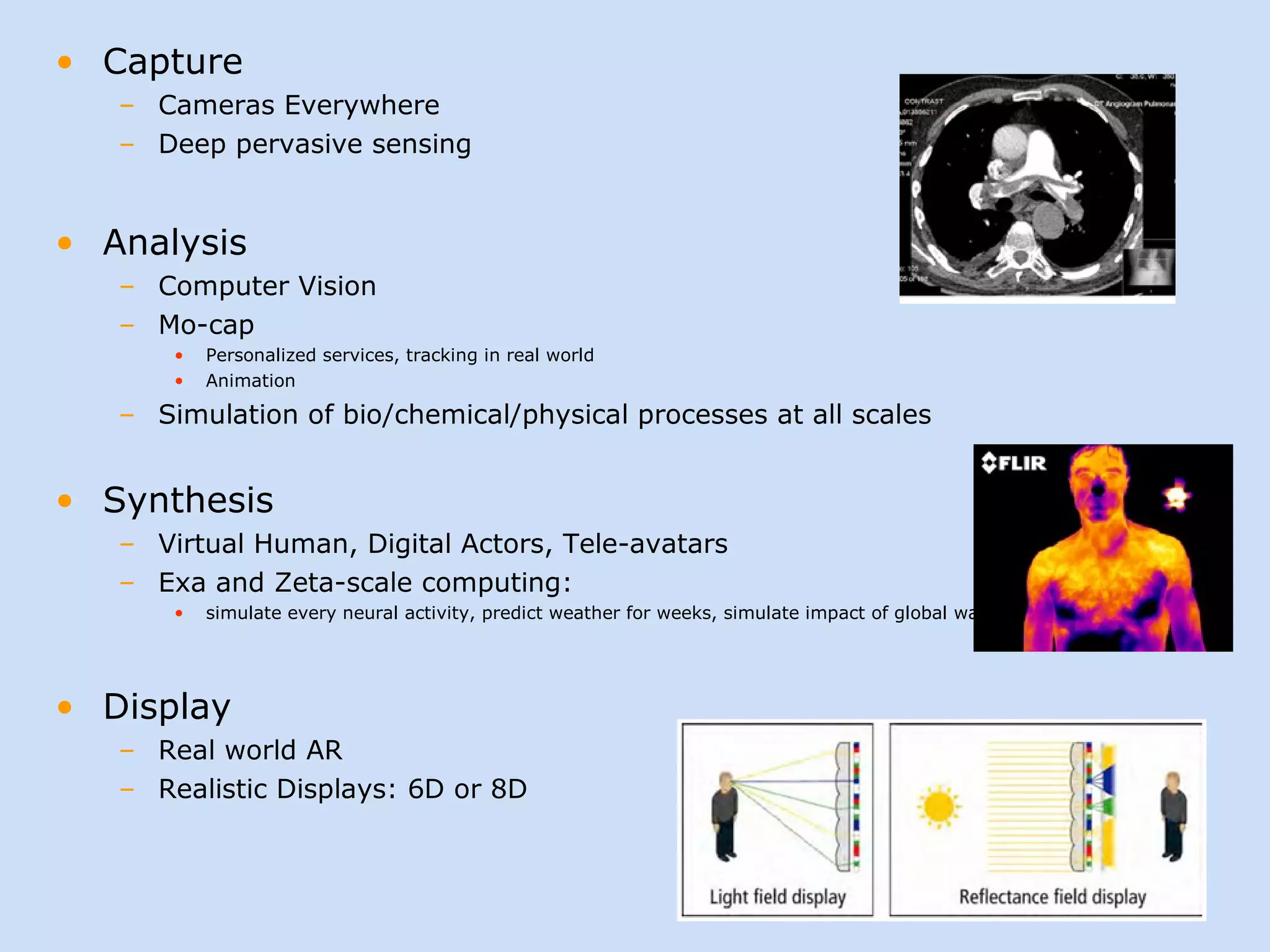
Capture Cameras Everywhere Deep pervasive sensing Analysis Computer Vision Mo-cap  Personalized services, tracking in real world Animation Simulation of bio/chemical/physical processes at all scales Synthesis Virtual Human, Digital Actors, Tele-avatars Exa and Zeta-scale computing:  simulate every neural activity, predict weather for weeks, simulate impact of global warming Display Real world AR Realistic Displays: 6D or 8D

Raskar Ilp Oct08 Web

  • 1.
    Camera Culture Ramesh Raskar Camera Culture Associate Professor, MIT Media Lab
  • 2.
  • 3.
    Where are the‘camera’s?
  • 4.
    Where are the‘camera’s?
  • 5.
    We focus oncreating tools to better capture and share visual information The goal is to create an entirely new class of imaging platforms that have an understanding of the world that far exceeds human ability and produce meaningful abstractions that are well within human comprehensibility Ramesh Raskar
  • 6.
    Questions What willa camera look like in 10,20 years?
  • 7.
  • 8.
    Approach Not justUSE but CHANGE camera Optics, illumination, sensor, movement Exploit wavelength, speed, depth, polarization etc Probes, actuators We have exhausted bits in pixels Scene understanding is challenging Build feature-revealing cameras Process photons Technology, Applications, Society We study impact of Imaging on all fronts
  • 9.
    Computational Illumination CurvedPlanar Non-planar Single Projector Multiple Projectors Pocket-Proj Objects 1998 1998 2002 2002 1999 2002 2003 1998 1997 Computational Camera and Photography Projector j User : T ?
  • 10.
  • 11.
  • 12.
    Flutter Shutter CameraRaskar, Agrawal, Tumblin [Siggraph2006] LCD opacity switched in coded sequence
  • 13.
    Short Exposure TraditionalMURA Coded Deblurred Result Captured Single Photo Shutter Banding Artifacts and some spatial frequencies are lost Dark and noisy
  • 14.
    Blurring == ConvolutionTraditional Camera: Shutter is OPEN: Box Filter PSF == Sinc Function ω Sharp Photo Blurred Photo Fourier Transform
  • 15.
    Flutter Shutter: Shutteris OPEN and CLOSED Sharp Photo Blurred Photo PSF == Broadband Function Fourier Transform Preserves High Spatial Frequencies
  • 16.
    Traditional Coded ExposureImage of Static Object Deblurred Image Deblurred Image
  • 17.
  • 18.
    Coded ExposureTemporal 1-D broadband code: Motion Deblurring Coded Aperture Spatial 2-D broadband mask: Focus Deblurring
  • 19.
    Coded Aperture CameraThe aperture of a 100 mm lens is modified Rest of the camera is unmodified Insert a coded mask with chosen binary pattern
  • 20.
  • 21.
    Out of FocusPhoto: Open Aperture
  • 22.
    Out of FocusPhoto: Coded Aperture
  • 23.
  • 24.
  • 25.
    Less is MoreBlocking Light == More Information Coding in Time Coding in Space
  • 26.
    Larval Trematode WormCoded Aperture Camera “ Photography is the Art of Exclusion”
  • 27.
    Shielding Light …Larval Trematode Worm Turbellarian Worm
  • 28.
    Coded Computational PhotographyCoded Exposure Motion Deblurring [2006] Coded Aperture Focus Deblurring [2007] Glare reduction [2008] Optical Heterodyning Light Field Capture [2007] Coded Illumination Motion Capture [2007] Multi-flash: Shape Contours [2004] Coded Spectrum Agile Wavelength Profile [2008] Epsilon-> Coded ->Essence Photography http://raskar.info
  • 29.
    Computational Photography EpsilonPhotography Low-level Vision: Pixels Multiphotos by bracketing (HDR, panorama) ‘ Ultimate camera’ Coded Photography Mid-Level Cues: Regions, Edges, Motion, Direct/global Single/few snapshot Reversible encoding of data Additional sensors/optics/illum Essence Photography Not mimic human eye Beyond single view/illum ‘ New artform’
  • 30.
    Epsilon Photography Dynamicrange Exposure braketing [Mann-Picard, Debevec] Wider FoV Stitching a panorama Depth of field Fusion of photos with limited DoF [Agrawala04] Noise Flash/no-flash image pairs [ Petschnigg04, Eisemann04] Frame rate Triggering multiple cameras [Wilburn05, Shechtman02]
  • 31.
    Computational Photography EpsilonPhotography Low-level Vision: Pixels Multiphotos by bracketing (HDR, panorama) ‘ Ultimate camera’ Coded Photography Mid-Level Cues: Regions, Edges, Motion, Direct/global Single/few snapshot Reversible encoding of data Additional sensors/optics/illum Essence Photography Not mimic human eye Beyond single view/illum ‘ New artform’
  • 32.
    3D Stereo ofmultiple cameras Higher dimensional LF Light Field Capture lenslet array [Adelson92, Ng05] , ‘3D lens’ [Georgiev05] , heterodyne masks [Veeraraghavan07] Boundaries and Regions Multi-flash camera with shadows [Raskar08] Fg/bg matting [Chuang01,Sun06] Deblurring Engineered PSF Motion: Flutter shutter [Raskar06] , Camera Motion [Levin08] Defocus: Coded aperture, Wavefront coding [Cathey95] Global vs direct illumination High frequency illumination [Nayar06] Glare decomposition [Talvala07, Raskar08] Coded Sensor Gradient camera [Tumblin05]
  • 33.
    Computational Photography EpsilonPhotography Low-level Vision: Pixels Multiphotos by bracketing (HDR, panorama) ‘ Ultimate camera’ Coded Photography Mid-Level Cues: Regions, Edges, Motion, Direct/global Single/few snapshot Reversible encoding of data Additional sensors/optics/illum Essence Photography Not mimic human eye Beyond single view/illum ‘ New artform’
  • 34.
    Capturing the Essence of Visual Experience Exploiting online collections Photo-tourism [Snavely2006] Scene Completion [Hays2007] Multi-perspective Images Multi-linear Perspective [Jingyi Yu, McMillan 2004] Unwrap Mosaics [Rav-Acha et al 2008] Video texture panoramas [Agrawal et al 2005] Non-photorealistic synthesis Motion magnification [Liu05] Image Priors Learned features and natural statistics Face Swapping: [Bitouk et al 2008] Data-driven enhancement of facial attractiveness [Leyvand et al 2008] Deblurring [Fergus et al 2006, Jia et al 2008]
  • 35.
    Computational Photography EpsilonPhotography Low-level Vision: Pixels Multiphotos by bracketing (HDR, panorama) ‘ Ultimate camera’ Coded Photography Mid-Level Cues: Regions, Edges, Motion, Direct/global Single/few snapshot Reversible encoding of data Additional sensors/optics/illum Essence Photography Not mimic human eye Beyond single view/illum ‘ New artform’
  • 36.
    Ramesh Raskar and Jack Tumblin Book Publishers: A K Peters
  • 37.
    Mask? Sensor 4DLight Field from 2D Photo: Heterodyne Light Field Camera Full Resolution Digital Refocusing: Coded Aperture Camera Mask? Sensor Mask Sensor Mask? Sensor Mask Sensor
  • 38.
  • 39.
    Lenslet-based Light Fieldcamera [Adelson and Wang, 1992, Ng et al. 2005 ] Light Field Inside a Camera
  • 40.
    Stanford Plenoptic Camera [Ng et al 2005] 4000 × 4000 pixels ÷ 292 × 292 lenses = 14 × 14 pixels per lens Contax medium format camera Kodak 16-megapixel sensor Adaptive Optics microlens array 125 μ square-sided microlenses
  • 41.
    Digital Refocusing[Ng et al 2005] Can we achieve this with a Mask alone?
  • 42.
    Mask based LightField Camera [Veeraraghavan, Raskar, Agrawal, Tumblin, Mohan, Siggraph 2007 ] Mask Sensor
  • 43.
    How to Capture 4D Light Field with 2D Sensor ? What should be the pattern of the mask ?
  • 44.
    Optical Heterodyning PhotographicSignal (Light Field) Carrier Incident Modulated Signal Reference Carrier Main Lens Object Mask Sensor Recovered Light Field Software Demodulation Baseband Audio Signal Receiver: Demodulation High Freq Carrier 100 MHz Reference Carrier Incoming Signal 99 MHz
  • 45.
    1/f 0 MaskTile Cosine Mask Used
  • 46.
    Captured 2D PhotoEncoding due to Mask
  • 47.
    2D FFT TraditionalCamera Photo Heterodyne Camera Photo Magnitude of 2D FFT 2D FFT Magnitude of 2D FFT
  • 48.
    Computing 4D LightField 2D Sensor Photo, 1800*1800 2D Fourier Transform, 1800*1800 2D FFT Rearrange 2D tiles into 4D planes 200*200*9*9 4D IFFT 4D Light Field 9*9=81 spectral copies 200*200*9*9
  • 49.
    How to Capture2D Light Field with 1D Sensor ? f θ f x f θ 0 f x0 Band-limited Light Field Sensor Slice Fourier Light Field Space
  • 50.
    Extra sensor bandwidthcannot capture extra dimension of the light field f θ f x f θ 0 f x0 Sensor Slice Extra sensor bandwidth Fourier Light Field Space
  • 51.
    Solution: Modulation TheoremMake spectral copies of 2D light field f θ f x f θ 0 f x0 Modulation Function
  • 52.
    f θ ModulatedLight Field f x f θ 0 f x0 Modulation Function Sensor Slice captures entire Light Field
  • 53.
    1/f 0 MaskTile Cosine Mask Used
  • 54.
    Demodulation to recoverLight Field f θ f x Reshape 1D Fourier Transform into 2D 1D Fourier Transform of Sensor Signal
  • 55.
    Mask Sensor Whereto place the Mask? Mask Modulation Function f x f θ
  • 56.
    Full resolution 2Dimage of Focused Scene Parts Captured 2D Photo Image of White Lambertian Plane divide
  • 57.
    Coding and Modulationin Camera Using Masks Coded Aperture for Full Resolution Digital Refocusing Heterodyne Light Field Camera Mask? Sensor Mask Sensor Mask Sensor
  • 58.
    Agile Spectrum ImagingProgrammable Color Gamut for Sensor With Ankit Mohan, Jack Tumblin [Eurographics 2008]
  • 59.
    R ≈ 0.0 G ≈ 0.2 B ≈ 0.8 Traditional Fixed Color Gamut B G R
  • 60.
  • 61.
    C B AA’ B’ C’ Pinhole Lens L 1 Prism or Diffraction Grating Lens L 2 Sensor Rainbow Plane C’’ B’’ A’’ Scene Rainbow Plane inside Camera
  • 62.
    Lens Flare Reduction/Enhancementusing 4D Ray Sampling Captured Glare Reduced Glare Enhanced
  • 63.
    Glare = lowfrequency noise in 2D But is high frequency noise in 4D Remove via simple outlier rejection i j x Sensor u
  • 64.
  • 65.
  • 66.
  • 67.
    Towards a 6D Display Passive Reflectance Field Display Martin Fuchs, Ramesh Raskar, Hans-Peter Seidel, Hendrik P. A. Lensch Siggraph 2008 1 2 1 1 1 MPI Informatik, Germany 2 MIT 2D 2D 2D
  • 68.
  • 69.
  • 70.
  • 71.
    6D = lightsensitive 4D display
  • 72.
    One Pixel ofa 6D Display = 4D Display
  • 73.
    Single shot visualhull Lanman, Raskar, Agrawal, Taubin [Siggraph Asia 2008]
  • 74.
    Single shot 3Dreconstruction: Simultaneous Projections using Masks
  • 75.
    Barcode size :3mm x 3mm Distance from camera : 5 meter Long Distance Bar-codes Woo, Mohan, Raskar, [2008]
  • 76.
    Projects Lightweight MedicalImaging High speed Tomography Muscle, blood flow activity with wearable devices for patients Femto-second Analysis of Light Transport Building and modeling future ultra-high speed cameras Avoid car-crashes, analyze complex scenes Programmable Wavelength in Thermal Range Facial expressions, Healthcare Human-emotion aware computing, Fast diagnosis Second skin Wearable fabric for bio-I/O via high speed optical motion capture Record and mimic any human motion, Care for elderly, Teach a robot
  • 77.
    Vicon MotionCapture High-speed IR Camera Body-worn markers Medical Rehabilitation Athlete Analysis Performance Capture Biomechanical Analysis
  • 78.
    Inverse Optical Mo-Cap Traditional Device High Speed Projector + Photosensing Markers High Speed Camera + Reflecting/Emitting Markers Params Location, Orientation, Illum Location Settings Natural Settings Ambient Light Outdoors, Stage lighting Imperceptible tags Hidden under wardrobe Controlled Lighting Visible, High contrast Markers #of Tags Unlimited Space Labeling Unique Id Limited No Unique Id Marker swapping Speed Virtually unlimited Optical comm comps Limited Special high fps camera Cost Low Open-loop projectors Current: Projector/Tag=$100 High High bandwidth camera Current Camera: $10K
  • 79.
    Inside of ProjectorThe Gray code pattern Focusing Optics Gray code Slide Condensing Optics Light Source
  • 80.
    Imperceptible Tags underclothing, tracked under ambient light
  • 81.
    Towards Second SkinCoded Illumination Motion Capture Clothing 500 Hz with Id for each Marker Tag Capture in Natural Environment Visually imperceptible tags Photosensing Tag can be hidden under clothes Ambient lighting is ok Unlimited Number of Tags Light sensitive fabric for dense sampling Non-imaging, complete privacy Base station and tags only a few 10’s $ Full body scan + actions Elderly, patients, athletes, performers Breathing, small twists, multiple segments or people Animation Analysis
  • 82.
  • 83.
    Forerunners .. MaskSensor Mask Sensor
  • 84.
    Fernald, Science[Sept 2006] Shadow Refractive Reflective Tools for Visual Computing
  • 85.
  • 86.
    Blind Camera SaschaPohflepp, U of the Art, Berlin, 2006
  • 87.
  • 88.
    Cameras of TomorrowCoded Exposure Motion Deblurring [2006] Coded Aperture Focus Deblurring [2007] Glare reduction [2008] Optical Heterodyning Light Field Capture [2007] Coded Illumination Motion Capture [2007] Multi-flash: Shape Contours [2004] Coded Spectrum Agile Wavelength Profile [2008] Epsilon-> Coded ->Essence Photography http://raskar.info
  • 89.
    We focus oncreating tools to better capture and share visual information The goal is to create an entirely new class of imaging platforms that have an understanding of the world that far exceeds human ability and produce meaningful abstractions that are well within human comprehensibility Ramesh Raskar http://raskar.info
  • 90.
    Capture Cameras EverywhereDeep pervasive sensing Analysis Computer Vision Mo-cap Personalized services, tracking in real world Animation Simulation of bio/chemical/physical processes at all scales Synthesis Virtual Human, Digital Actors, Tele-avatars Exa and Zeta-scale computing: simulate every neural activity, predict weather for weeks, simulate impact of global warming Display Real world AR Realistic Displays: 6D or 8D