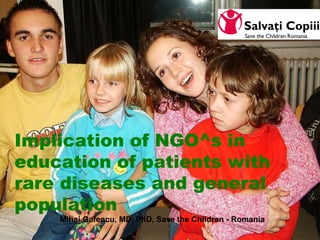
Implication of NGO^s in education of patients with rare diseases and general population Mihai Gafencu, MD, PhD, Save the Children - Romania
Introduction In the absence of a governmental strategy for rare diseases in the 18 years after 1990, the most neglected group of diseases in Romania, the social inclusion of these children remains to the private initiative of NGO’s.  The new approach include reduced direct state involvement   and searched for alternative sources of funding with a wider participation of the non-governmental sector, involving other social actors  Aim of our work was to focus on the changes in life quality of children with these diseases, after a teamwork and a multidisciplinary approach.
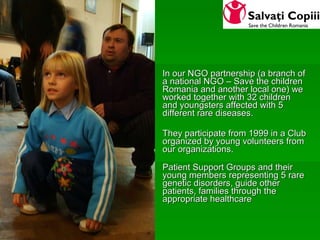
In our NGO partnership (a branch of a national NGO – Save the children Romania and another local one) we worked together with 32 children and youngsters affected with 5 different rare diseases.  They participate from 1999 in a Club organized by young volunteers from our organizations. Patient Support Groups and their young members representing 5 rare genetic disorders, guide other patients, families through the appropriate healthcare
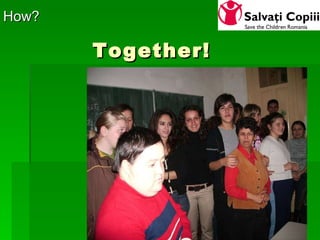
Together! How?
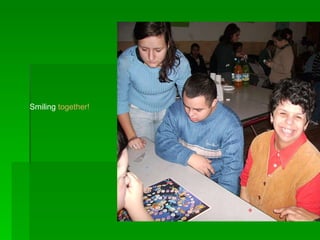
Smiling  together!
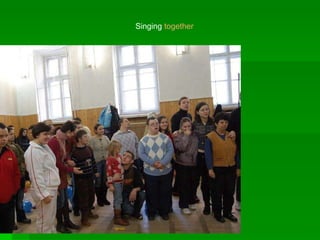
Singing  together
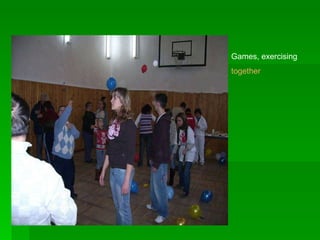
Games, exercising together
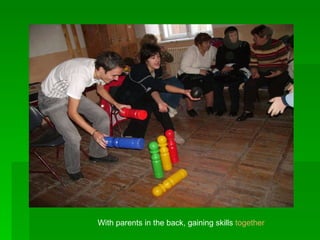
With parents in the back, gaining skills  together
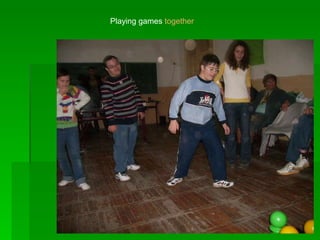
Playing games  together
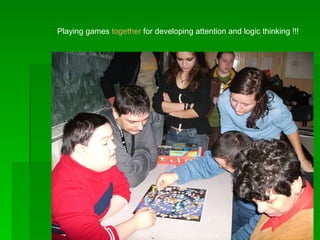
Playing games  together  for developing attention and logic thinking !!!
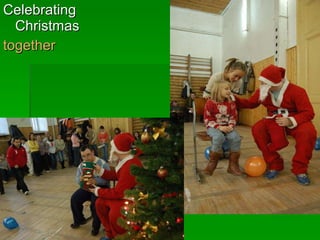
Celebrating Christmas together
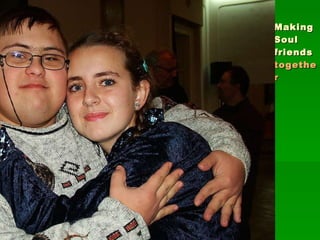
Making Soul friends together
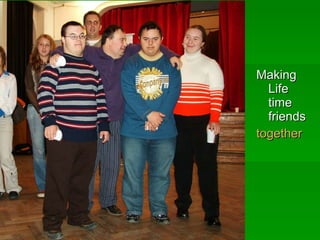
Making Life time friends together
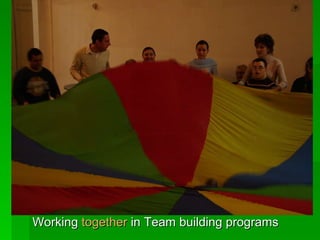
Working  together  in Team building programs
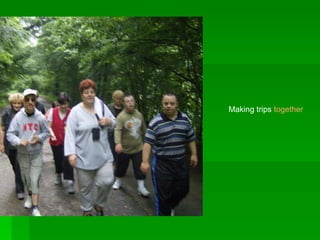
Making trips  together
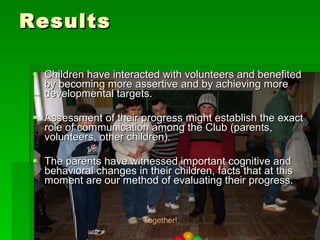
Results Children have interacted with volunteers and benefited by becoming more assertive and by achieving more developmental targets. Assessment of their progress might establish the exact role of communication among the Club (parents, volunteers, other children).  The parents have witnessed important cognitive and behavioral changes in their children, facts that at this moment are our method of evaluating their progress. Together!
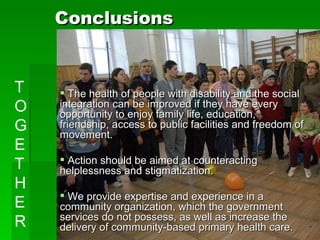
Conclusions The health of people with disability and the social integration can be improved if they have every opportunity to enjoy family life, education, friendship, access to public facilities and freedom of movement.  Action should be aimed at counteracting helplessness and stigmatization.  We provide expertise and experience in a community organization, which the government services do not possess, as well as increase the delivery of community-based primary health care. TOGETHER
Thank U all! TOGETHER!

Rare Dis 09

  • 1.
    Implication of NGO^sin education of patients with rare diseases and general population Mihai Gafencu, MD, PhD, Save the Children - Romania
  • 2.
    Introduction In theabsence of a governmental strategy for rare diseases in the 18 years after 1990, the most neglected group of diseases in Romania, the social inclusion of these children remains to the private initiative of NGO’s. The new approach include reduced direct state involvement and searched for alternative sources of funding with a wider participation of the non-governmental sector, involving other social actors Aim of our work was to focus on the changes in life quality of children with these diseases, after a teamwork and a multidisciplinary approach.
  • 3.
    In our NGOpartnership (a branch of a national NGO – Save the children Romania and another local one) we worked together with 32 children and youngsters affected with 5 different rare diseases. They participate from 1999 in a Club organized by young volunteers from our organizations. Patient Support Groups and their young members representing 5 rare genetic disorders, guide other patients, families through the appropriate healthcare
  • 4.
  • 5.
  • 6.
  • 7.
  • 8.
    With parents inthe back, gaining skills together
  • 9.
  • 10.
    Playing games together for developing attention and logic thinking !!!
  • 11.
  • 12.
  • 13.
    Making Life timefriends together
  • 14.
    Working together in Team building programs
  • 15.
    Making trips together
  • 16.
    Results Children haveinteracted with volunteers and benefited by becoming more assertive and by achieving more developmental targets. Assessment of their progress might establish the exact role of communication among the Club (parents, volunteers, other children). The parents have witnessed important cognitive and behavioral changes in their children, facts that at this moment are our method of evaluating their progress. Together!
  • 17.
    Conclusions The healthof people with disability and the social integration can be improved if they have every opportunity to enjoy family life, education, friendship, access to public facilities and freedom of movement. Action should be aimed at counteracting helplessness and stigmatization. We provide expertise and experience in a community organization, which the government services do not possess, as well as increase the delivery of community-based primary health care. TOGETHER
  • 18.
    Thank U all!TOGETHER!