



A PASSION FOR
COMMUNITY ENGAGEMENT
The macro-level of wrangling policies into social service
program design and delivery at the micro-level.
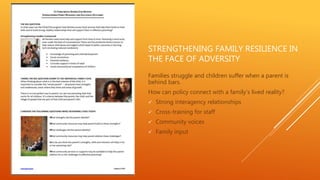
STRENGTHENING FAMILY RESILIENCE IN
THE FACE OF ADVERSITY
Families struggle and children suffer when a parent is
behind bars.
How can policy connect with a family’s lived reality?
 Strong interagency relationships
 Cross-training for staff
 Community voices
 Family input
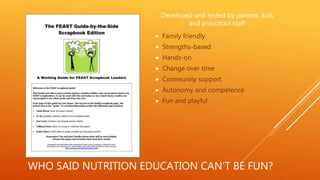
WHO SAID NUTRITION EDUCATION CAN’T BE FUN?
Developed and tested by parents, kids
and preschool staff
 Family friendly
 Strengths-based
 Hands-on
 Change over time
 Community support
 Autonomy and competence
 Fun and playful
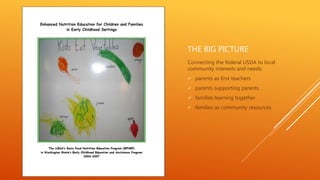
THE BIG PICTURE
Connecting the federal USDA to local
community interests and needs:
 parents as first teachers
 parents supporting parents
 families learning together
 families as community resources
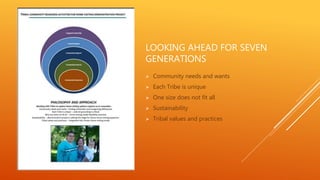
LOOKING AHEAD FOR SEVEN
GENERATIONS
 Community needs and wants
 Each Tribe is unique
 One size does not fit all
 Sustainability
 Tribal values and practices
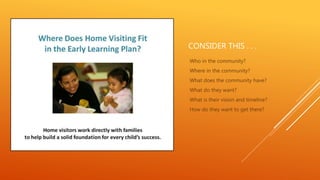
CONSIDER THIS . . .
Who in the community?
Where in the community?
What does the community have?
What do they want?
What is their vision and timeline?
How do they want to get there?
ACCOUNTABILITY DOES NOT NEED TO BE PROHIBITIVE
TO LOCAL COMMUNITY ORGANIZATIONS . . .
 Simple
 Streamlined
 Accessible
 Approachable
 Clear
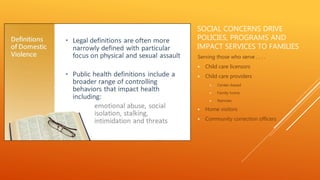
SOCIAL CONCERNS DRIVE
POLICIES, PROGRAMS AND
IMPACT SERVICES TO FAMILIES
Serving those who serve . . . .
 Child care licensors
 Child care providers
 Center-based
 Family home
 Nannies
 Home visitors
 Community correction officers
GATHERING VOICES THAT CARE
For the legislative ear.
Links to complete work samples can be found here:
https://shannonblood.wordpress.com/about/professional-work-samples/

Shannon Blood professional work samples

  • 1.
    A PASSION FOR COMMUNITYENGAGEMENT The macro-level of wrangling policies into social service program design and delivery at the micro-level.
  • 2.
    STRENGTHENING FAMILY RESILIENCEIN THE FACE OF ADVERSITY Families struggle and children suffer when a parent is behind bars. How can policy connect with a family’s lived reality?  Strong interagency relationships  Cross-training for staff  Community voices  Family input
  • 3.
    WHO SAID NUTRITIONEDUCATION CAN’T BE FUN? Developed and tested by parents, kids and preschool staff  Family friendly  Strengths-based  Hands-on  Change over time  Community support  Autonomy and competence  Fun and playful
  • 4.
    THE BIG PICTURE Connectingthe federal USDA to local community interests and needs:  parents as first teachers  parents supporting parents  families learning together  families as community resources
  • 5.
    LOOKING AHEAD FORSEVEN GENERATIONS  Community needs and wants  Each Tribe is unique  One size does not fit all  Sustainability  Tribal values and practices
  • 6.
    CONSIDER THIS .. . Who in the community? Where in the community? What does the community have? What do they want? What is their vision and timeline? How do they want to get there?
  • 7.
    ACCOUNTABILITY DOES NOTNEED TO BE PROHIBITIVE TO LOCAL COMMUNITY ORGANIZATIONS . . .  Simple  Streamlined  Accessible  Approachable  Clear
  • 8.
    SOCIAL CONCERNS DRIVE POLICIES,PROGRAMS AND IMPACT SERVICES TO FAMILIES Serving those who serve . . . .  Child care licensors  Child care providers  Center-based  Family home  Nannies  Home visitors  Community correction officers
  • 9.
    GATHERING VOICES THATCARE For the legislative ear.
  • 10.
    Links to completework samples can be found here: https://shannonblood.wordpress.com/about/professional-work-samples/