Radionuclide
Imaging & Its
Applications
SUDARSAN AGARWAL
sushiagarwal@gmail.com
PINNAMANENI MEDICAL
COLLEGE, VIJAYAWADA
Atom
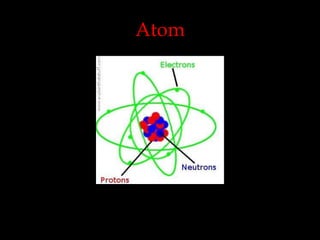
Atom
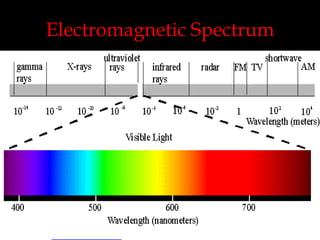
Electromagnetic Spectrum
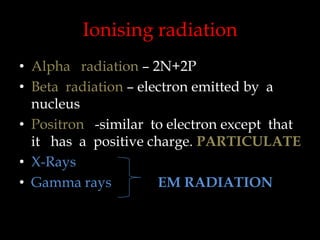
Ionising radiation
• Alpha radiation – 2N+2P
• Beta radiation – electron emitted by a
nucleus
• Positron -similar to electron except that
it has a positive charge. PARTICULATE
• X-Rays
• Gamma rays
EM RADIATION
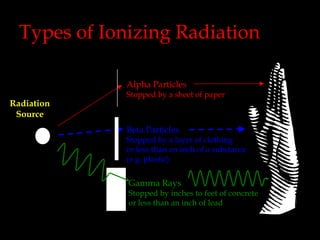
Types of Ionizing Radiation
Alpha Particles
Radiation
Source

Stopped by a sheet of paper

Beta Particles

Stopped by a layer of clothing
or less than an inch of a substance
(e.g. plastic)

Gamma Rays

Stopped by inches to feet of concrete
or less than an inch of lead
Gamma rays are not charged particles like
particles.

and

Gamma rays are electromagnetic radiation with high
frequency.
When atoms decay by emitting or particles to form a
new atom, the nuclei of the new atom formed may still
have too much energy to be completely stable.

This excess energy is emitted as gamma rays
Accurate Diagnosis is key to
Surgical practice
Accurate Diagnosis is key to
Surgical practice
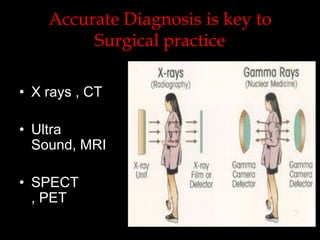
• X rays , CT
• Ultra
Sound, MRI
• SPECT
, PET
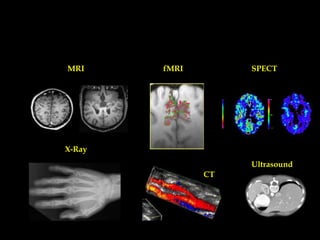
MRI

fMRI

SPECT

X-Ray
Ultrasound
CT
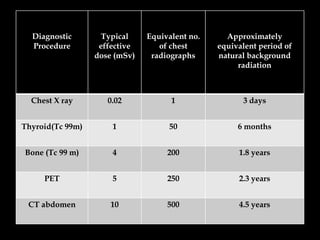
Diagnostic
Procedure

Typical
effective
dose (mSv)

Equivalent no.
of chest
radiographs

Approximately
equivalent period of
natural background
radiation

Chest X ray

0.02

1

3 days

Thyroid(Tc 99m)

1

50

6 months

Bone (Tc 99 m)

4

200

1.8 years

PET

5

250

2.3 years

CT abdomen

10

500

4.5 years
Hybrid Imaging
Hybrid Imaging
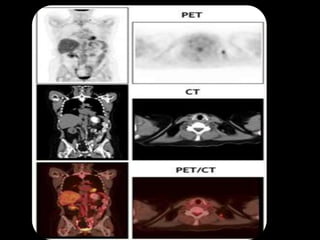
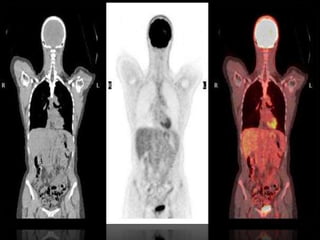
• PET-CT: radionuclide imaging devices
are combined with CT in a single
imaging system
• The resulting images display the
functional data obtained from the
radionuclide distribution (usually in
color) overlaid on the anatomical
information from CT (usually in grey
scale)
Radiotherapy
x
Nuclear Medicine
Nuclear medicine
• Nuclear medicine is a subspecialty within
the field of radiology that uses very small
amounts of radioactive material to
diagnose or treat disease
• We need a short-lived radio nuclide which
has to be combined to a pharmaceutical of
interest and injected iv and this radio
pharmaceutical goes and attaches to the
organ of interest and we can catch the
gamma rays emitted by it with help of
gamma cameras and pictures are
reconstructed in computer
• (in amounts of Pico molar concentrations
thus not having any effect on the process
being studied)
SPECT
1. RADIONUCLIDE
2. PHARMACEUTICAL
3. GAMMA CAMERA
1. RADIONUCLIDE
2. PHARMACEUTICAL
3. GAMMA CAMERA
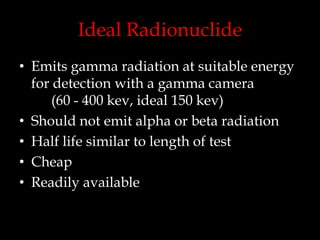
Ideal Radionuclide
• Emits gamma radiation at suitable energy
for detection with a gamma camera
(60 - 400 kev, ideal 150 kev)
• Should not emit alpha or beta radiation
• Half life similar to length of test
• Cheap
• Readily available
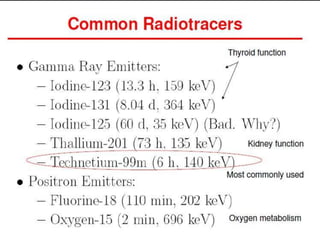
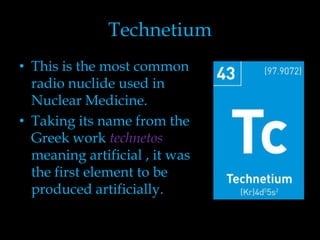
Technetium
• This is the most common
radio nuclide used in
Nuclear Medicine.
• Taking its name from the
Greek work technetos
meaning artificial , it was
the first element to be
produced artificially.
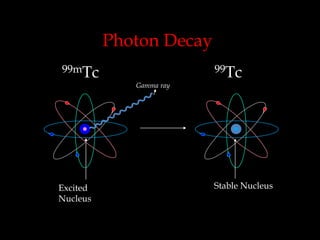
Photon Decay
99mTc

Excited
Nucleus

Gamma ray

99Tc

Stable Nucleus
1. RADIONUCLIDE
2. PHARMACEUTICAL
3. GAMMA CAMERA
1. RADIONUCLIDE
2. PHARMACEUTICAL
3. GAMMA CAMERA
Ideal radiopharmaceutical
• Cheap and readily available
• Radionuclide easily incorporated without
altering biological behavior
• Radiopharmaceutical easy to prepare
• Localizes only in organ of interest
• t1/2 of elimination from body similar to
duration of test
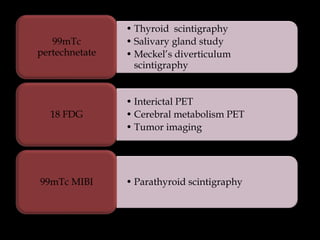
99mTc
pertechnetate

• Thyroid scintigraphy
• Salivary gland study
• Meckel’s diverticulum
scintigraphy

18 FDG

• Interictal PET
• Cerebral metabolism PET
• Tumor imaging

99mTc MIBI

• Parathyroid scintigraphy
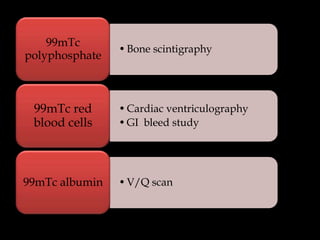
99mTc
polyphosphate

99mTc red
blood cells

99mTc albumin

• Bone scintigraphy

• Cardiac ventriculography
• GI bleed study

• V/Q scan
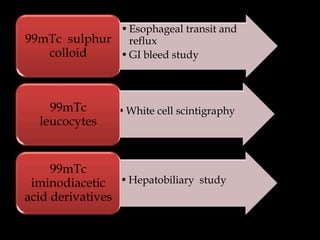
• Esophageal transit and
99mTc sulphur reflux
colloid
• GI bleed study

99mTc
leucocytes

• White cell scintigraphy

99mTc
iminodiacetic • Hepatobiliary study
acid derivatives
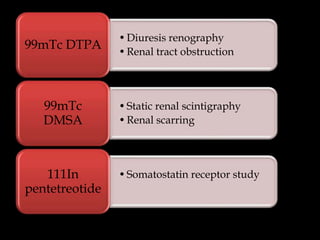
99mTc DTPA

99mTc
DMSA

111In
pentetreotide

• Diuresis renography
• Renal tract obstruction

• Static renal scintigraphy
• Renal scarring

• Somatostatin receptor study
1. RADIONUCLIDE
2. PHARMACEUTICAL
3. GAMMA CAMERA
1. RADIONUCLIDE
2. PHARMACEUTICAL
3. GAMMA CAMERA
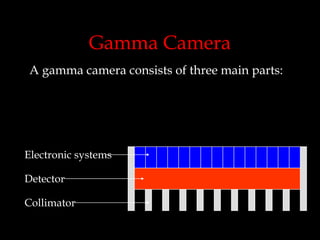
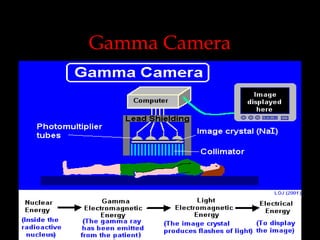
Gamma Camera
A gamma camera consists of three main parts:

Electronic systems
Detector
Collimator
Gamma Camera
Positron Emission Tomography
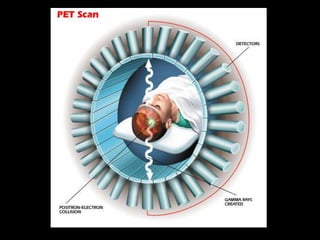
• PET is a nuclear medicine imaging technique that
provides high-resolution tomographic images of
the bio-distribution of a radiopharmaceutical in
vivo .
• A PET scan measures important body
functions, such as blood flow, oxygen use &
glucose metabolism
• Radiopharmaceutical consists of positronemitters, usually very short-lived and produced in
cyclotrons.
• 18 F being one of the most optimal positron
emitters for imaging
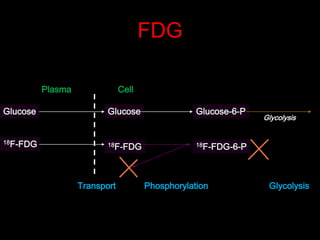
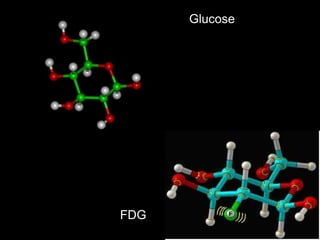
Glucose

FDG
FDG
Plasma

Cell

Glucose

Glucose

Glucose-6-P

18F-FDG

18F-FDG

18F-FDG-6-P

Transport

Phosphorylation

Glycolysis

Glycolysis
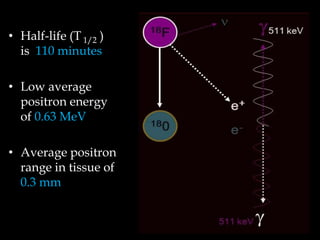
• Half-life (T 1/2 )
is 110 minutes

• Low average
positron energy
of 0.63 MeV
• Average positron
range in tissue of
0.3 mm
• Delay a PET scan by 2 -3 weeks after surgical
intervention
• 2 -3 weeks interval after chemotherapy.
• 3 months after radiation therapy,
• 6 to 8 weeks post-radiation therapy-surgery.
• Should not be performed on pregnant and breast
feeding patients.
• Malignant cells show an increased rate of
glucose metabolism ,probably due to presence
on cell surfaces of an abnormally large number
of glucose transporters, along with increased
hexokinase-mediated glycolysis and a reduced
level of dephosphorylating by glucose -6phosphate.
Uses
Detect primary , secondary cancer and metastasis
Assess the effectiveness Cancer chemo therapy
Cancer recurrence
Mapping of brain and heart function
Evaluate brain abnormalities, such as tumors, memory
disorders and seizures and other central nervous system
disorders
• Determine blood flow to the heart muscle and thus
determine the effects of a heart attack, or myocardial
infarction
•
•
•
•
•
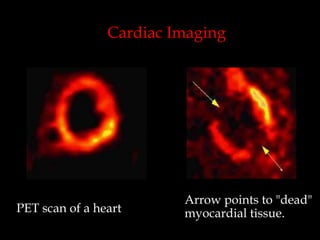
Cardiac Imaging

PET scan of a heart

Arrow points to "dead"
myocardial tissue.
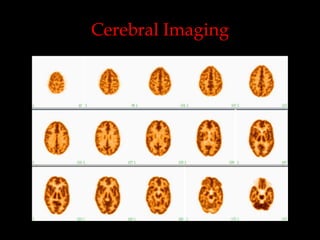
Cerebral Imaging
•
•
•
•

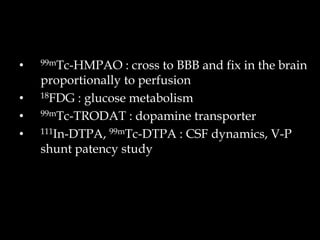
99mTc-HMPAO

: cross to BBB and fix in the brain
proportionally to perfusion
18FDG : glucose metabolism
99mTc-TRODAT : dopamine transporter
111In-DTPA, 99mTc-DTPA : CSF dynamics, V-P
shunt patency study
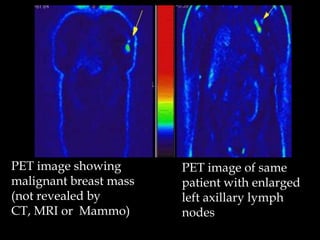
PET image showing
malignant breast mass
(not revealed by
CT, MRI or Mammo)

PET image of same
patient with enlarged
left axillary lymph
nodes
The role of PET after chemotherapy
• Many neoplasms have an enhanced glucose
metabolism compared to normal tissue.
• FDG provides functional data on tumor
metabolism, complementary to morphologic
imaging studies.
• Standard tool for decision making in
lymphoma, Hodgkin`s disease, different solid
tumors post chemotherapy.

• Germ cell tumors (GCT) are characterized by a
high FDG uptake.
• Advantages
• Disadvantages
• Safety and Risk
Advantages
• Assesses body function and in monitoring
flow rate
• Can measure body composition using
dilution analysis.
• Whole body scanning
• Response to radiotherapy and
chemotherapy
Disadvantages
• Generally poor resolution compared with
other imaging modalities
• Radiation risks due to administered
radionuclide
• Can be invasive, usually requiring an
injection into the blood stream.
• Disposal of radio activity waste.
• Relatively high costs associated with radio
tracer production and administration.
Safety and risk
• Nuclear medicine is not safe for the use of
human beings, so therefore should not be
used on healthy people.

• Also the procedure is not recommended
for pregnant women because unborn
babies have a greater sensitivity to
radiation than children or adults.
Safety and risk
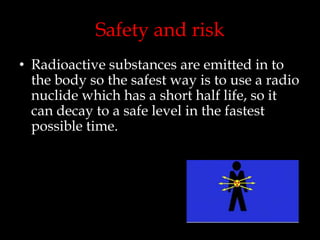
• Radioactive substances are emitted in to
the body so the safest way is to use a radio
nuclide which has a short half life, so it
can decay to a safe level in the fastest
possible time.
Safety and risk
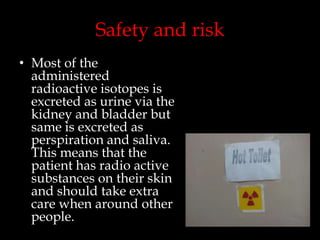
• Most of the
administered
radioactive isotopes is
excreted as urine via the
kidney and bladder but
same is excreted as
perspiration and saliva.
This means that the
patient has radio active
substances on their skin
and should take extra
care when around other
people.
Safety and risk
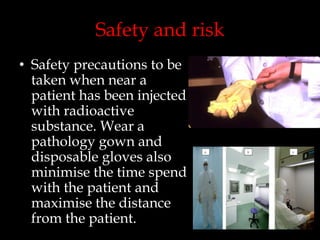
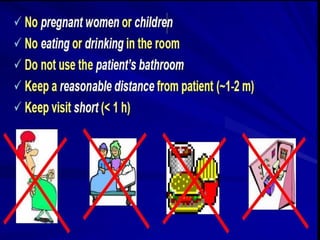
• Safety precautions to be
taken when near a
patient has been injected
with radioactive
substance. Wear a
pathology gown and
disposable gloves also
minimise the time spend
with the patient and
maximise the distance
from the patient.
GIT
Hepato biliary Imaging
• Evaluates hepatocellular function and patency of
the biliary system
• Performed with a variety of compounds that
share the common iminodiacetate moiety
• Although it is an excellent test to decide whether
the common bile and cystic ducts are
patent, biliary scintigraphy does not identify gall
stones or give any anatomic information
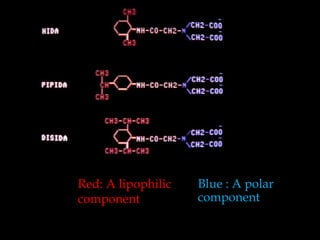
Red: A lipophilic
component

Blue : A polar
component
IDA Derivatives
• HIDA - Little used today
• DISIDA (Disofenin) -85% extracted by the
hepatocytes
• BRIDA (Mebrofenin) -98% extracted by
the hepatocytes
Pathways of IDA derivatives
• The lipophilic component : binding to
hepatocyte receptors for bilirubin
• Transported through the same pathways
as bilirubin, except for conjugation
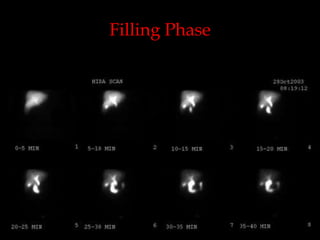
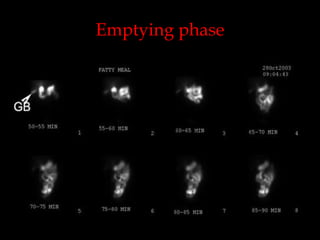
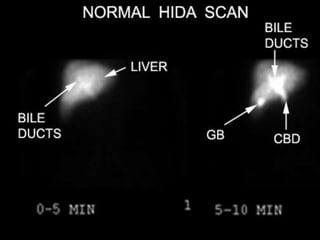
Normal Study
• Immediate demonstration of Hepatic Parenchyma
• Normal Liver (5 mins),
• Intrahepatic Bile ducts (10-15 mins),
• CBD, GB & Duodenum (15-30 mins),

• Small Intestine (>30 mins)
Filling Phase
Emptying phase
Indications
• Functional assessment of the hepatobiliary
system
• Integrity of the hepatobiliary tree
– Evaluation of suspected acute Cholecystitis
– Evaluation of suspected chronic biliary tract
disorders
– Evaluation of common bile duct obstruction
– Detection of bile extravasation
– Evaluation of congenital abnormalities
Contraindications
• Hypersensitivity to
– IDA derivative
– Local anesthetics of the amide type

• Cardiac arrhythmias
• Pregnancy
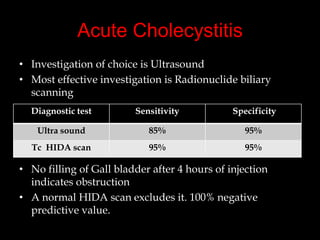
Acute Cholecystitis
• Investigation of choice is Ultrasound
• Most effective investigation is Radionuclide biliary
scanning
Diagnostic test

Sensitivity

Specificity

Ultra sound

85%

95%

Tc HIDA scan

95%

95%

• No filling of Gall bladder after 4 hours of injection
indicates obstruction
• A normal HIDA scan excludes it. 100% negative
predictive value.
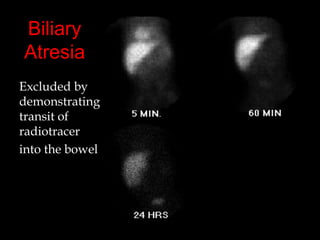
Biliary
Atresia
Excluded by
demonstrating
transit of
radiotracer
into the bowel
Bile Leaks
• Most appropriate non-invasive imaging
technique for evaluation of bile leaks
• Sensitivity: 87%,
• Specificity: 100%
Liver & Spleen
• Radionuclide imaging of liver and spleen depends
on the function common to both i.e, phagocytosis.
• The most commonly used agent is 99m Tc Sulphur
colloid.
• In normal scan there is homogenous distribution
of 99m Tc Sulphur colloid through out the organ
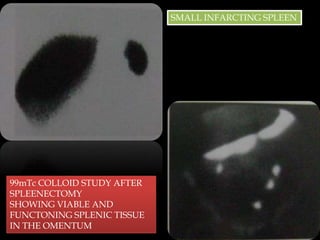
SMALL INFARCTING SPLEEN

99mTc COLLOID STUDY AFTER
SPLEENECTOMY
SHOWING VIABLE AND
FUNCTONING SPLENIC TISSUE
IN THE OMENTUM
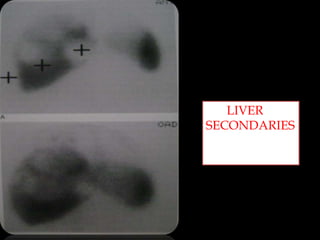
LIVLIVER
SECONDARIES
ER
SECONDARIES
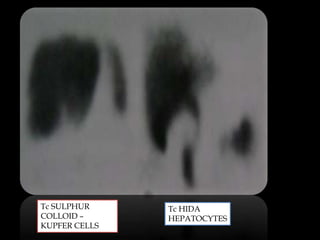
Tc SULPHUR
COLLOID –
KUPFER CELLS

Tc HIDA
HEPATOCYTES
Meckel’s Scan
• The Meckel ’s scan is performed by giving
Tc Pertechnetate , which is taken up by the
ectopic gastric mucosa in the diverticulum
and localized with scintigraphy
• The diagnosis of Meckel’s diverticulum is
difficult.
• Plain abdominal radiographs, CT, US are
rarely helpful.
Meckel’s in Children
• Single most accurate diagnostic test for
Meckel’s is scintigraphy with Tc
Pertechnetate
• Its preferentially taken up by the mucus
secreting cells of gastric mucosa and
ectopic gastric tissue in the diverticulum
Meckel’s in Adults
• As ectopic gastric mucosa is reduced, agents like
pentagastrin, glucagon and cimetidine are used
• Pentagastrin indirectly increases the metabolism
of mucus producing cells
• Glucagon inhibits peristaltic dilution and washout
of intraluminal radionuclide
• Cimetidine decreases the peptic secretion and
therefore retards the release of pertechnetate from
the diverticular lumen, thus resulting in higher
radionuclide concentrations in wall of
diverticulum
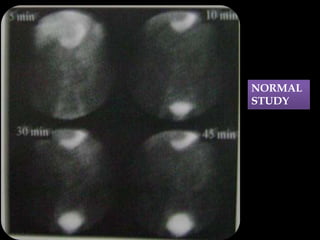
NORMAL
STUDY
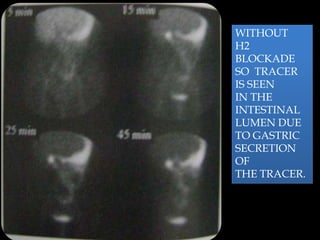
WITHOUT
H2
BLOCKADE
SO TRACER
IS SEEN
IN THE
INTESTINAL
LUMEN DUE
TO GASTRIC
SECRETION
OF
THE TRACER.
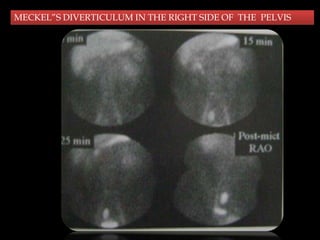
MECKEL”S DIVERTICULUM IN THE RIGHT SIDE OF THE PELVIS
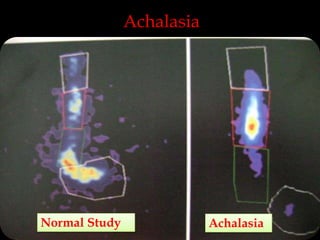
Achalasia

Normal Study

Achalasia
GI Bleed
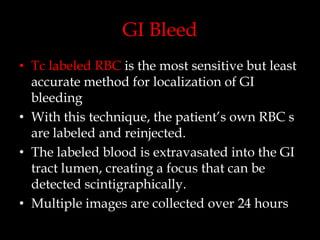
• Tc labeled RBC is the most sensitive but least
accurate method for localization of GI
bleeding
• With this technique, the patient’s own RBC s
are labeled and reinjected.
• The labeled blood is extravasated into the GI
tract lumen, creating a focus that can be
detected scintigraphically.
• Multiple images are collected over 24 hours
GI Bleed
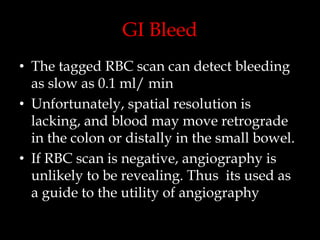
• The tagged RBC scan can detect bleeding
as slow as 0.1 ml/ min
• Unfortunately, spatial resolution is
lacking, and blood may move retrograde
in the colon or distally in the small bowel.
• If RBC scan is negative, angiography is
unlikely to be revealing. Thus its used as
a guide to the utility of angiography
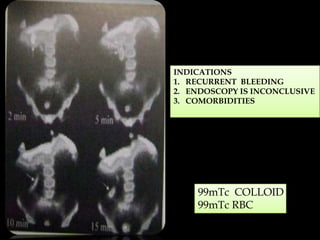
INDICATIONS
1. RECURRENT BLEEDING
2. ENDOSCOPY IS INCONCLUSIVE
3. COMORBIDITIES

99mTc COLLOID
99mTc RBC
Renal System
The main tracers used in evaluation of the kidney:
• DMSA : Di Mercapto Succinic Acid

• DTPA : Di-ethylene Tri-amine Penta-Acetic acid
• MAG3 : Mercapto Acetyl triGlycine
99mTc-DMSA :

is cleared by both filtration
and secretion, but the clearance is
relatively complex and it does bind to
parenchymal tissues.
• It is useful as a renal cortical imaging agent.
•

99mTc-DMSA
99mTc-DTPA:

is primarily a glomerular
filtration agent.
• It is also useful for evaluation of
obstruction and renal function.
• It is less useful in patients with renal
failure.
•

99mTc-DTPA
99m

Tc-MAG3:

Tc-MAG3 is cleared by tubular
secretion, and no glomerular filtration
occurs.
• The tracer is well suited for evaluation of
renal function and diuretic scintigraphy
• Also, it is an excellent tracer to evaluate
renal plasma flow.
•

99m
Procedure
• After a bolus injection of the
tracer, images are obtained that can be
used to estimate relative renal function.
• When the tracer reaches the collecting
system, a diuretic is given and half-life
is calculated based on the slope of the
curve in response to the diuretic.
Renal Cortical Scintigraphy
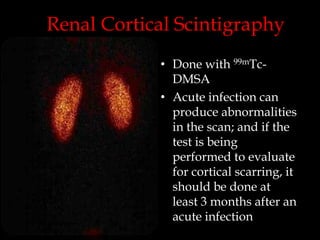
• Done with 99mTcDMSA
• Acute infection can
produce abnormalities
in the scan; and if the
test is being
performed to evaluate
for cortical scarring, it
should be done at
least 3 months after an
acute infection
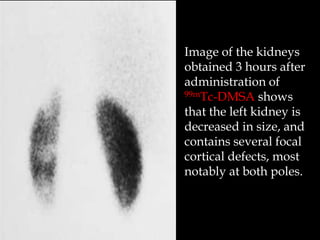
Image of the kidneys
obtained 3 hours after
administration of
99mTc-DMSA shows
that the left kidney is
decreased in size, and
contains several focal
cortical defects, most
notably at both poles.
Diuretic Scintigraphy:
• Diuretic scintigraphy is performed with
DTPA or MAG3.
• MAG3 is more useful in patients with
renal insufficiency, but DTPA is more
economical.
• Diuretic scinitigraphy offers a
quantitative assessment of obstruction
and does not require an invasive
procedure, intravenous iodinated
contrast medium, or anesthesia.
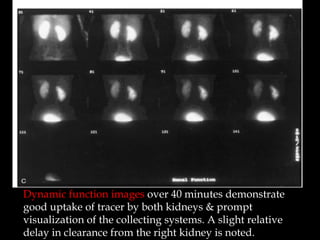
Dynamic function images over 40 minutes demonstrate
good uptake of tracer by both kidneys & prompt
visualization of the collecting systems. A slight relative
delay in clearance from the right kidney is noted.
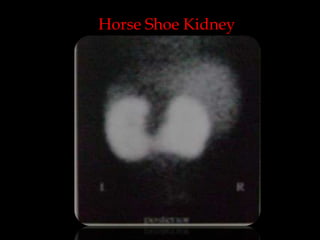
Horse Shoe Kidney
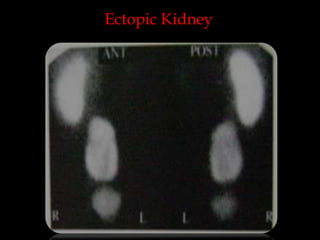
Ectopic Kidney
Radioactive Iodine Uptake test
• Is less widely used because of more precise
biochemical measurements of T3 T4 TSH
• This test in the past involved oral administration of
Iodine 123
• A normal result is 15-30% uptake of the radionuclide
after about 24 hours.
• Use of Iodine 123 is preferable over Iodine 131(8 days)
because of a shorter half life(12 hours) and lesser
radiation exposure
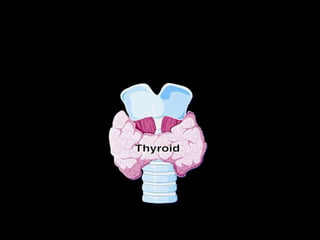
Thyroid - scintigraphy
99m PERTECHNETATE

Trapped but not organified
Competes with iodide for uptake
Cheap and readily available
IODINE (123I or 131 I)
Trapped and organified
Better for retrosternal goitres
Expensive, cyclotron generated
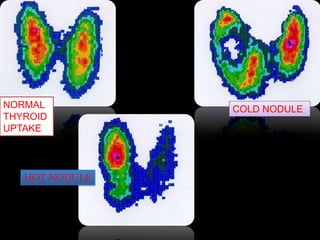
NORMAL
THYROID
UPTAKE

HOT NODULE

COLD NODULE
• 20% of cold nodules are Malignant
• 5% of hot nodules are Malignant
• Thus routine isotope scanning is no longer
used to distinguish Benign from
Malignant
Mechanism of Action
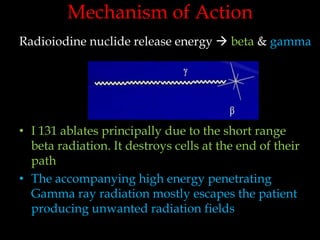
Radioiodine nuclide release energy  beta & gamma

• I 131 ablates principally due to the short range
beta radiation. It destroys cells at the end of their
path
• The accompanying high energy penetrating
Gamma ray radiation mostly escapes the patient
producing unwanted radiation fields
Indications for Thyroid
Scintigraphy
1. Thyroid nodules
2. Thyrotoxicosis
3. Goiter
4. Ectopic thyroid
5. Thyroid cancer
6. Retrosternal mass
7. Work up of neonates with low T4 and/or high TSH
8. Occult thyroid malignancy
9. Metastasis
10.Swellings in thyroid region
Contraindications
Absolute
1. Pregnancy
2. Breastfeeding
Relative

1. Bone marrow depression
2. Pulmonary function restriction.

3. Salivary gland function restriction.
4. Presence of neurological symptoms.
Short-term complications
•
•
•
•
•
•
•

Radiation thyroiditis(transient)
Sialadenitis
Gastritis 30%
Bone marrow depression
Xerostomia
Nausea/vomiting
Hypospermia
Long-term complications
•
•
•
•
•
•

Radiation pulmonary fibrosis
Permanent bone marrow depression
Chronic hypospermia or azoospermia
Early onset of menopause
Chronic dry eye
Hypoparathyroidism (rare and transient)
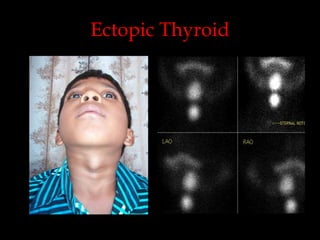
Ectopic Thyroid
Radio Iodine Ablation
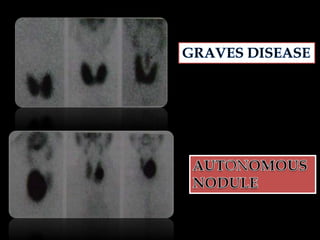
Graves
Thyroid cancer
Radio Iodine Ablation
Graves
Thyroid cancer
Graves disease
• RAI has been used since 1940 (more than 50 years) for
treating thyroid disease
• High rate of success with permanent cures affected
and few undesirable effects for hyperthyroid &
thyroid cancer

• The majority of patient receive anti thyroid drug but
the success rate is limited
• Anti thyroid therapy failed, prime candidate for
radioiodine therapy
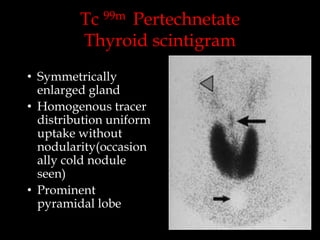
Tc 99m Pertechnetate
Thyroid scintigram
• Symmetrically
enlarged gland
• Homogenous tracer
distribution uniform
uptake without
nodularity(occasion
ally cold nodule
seen)
• Prominent
pyramidal lobe
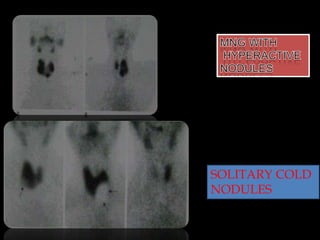
SOLITARY COLD
NODULES
Treatment
• 3 option :
– medical therapy  antithyroid drugs
– radioactive iodine
– surgery  thyroidectomy, partial or complete
surgical

• None is the best treatment
• USA  radioactive is the first choice (69%)

115
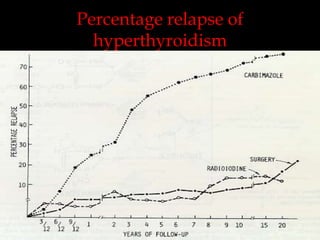
Percentage relapse of
hyperthyroidism
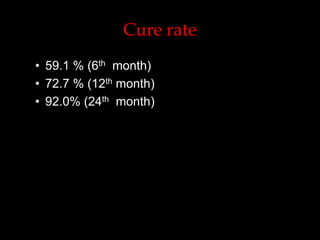
Cure rate
• 59.1 % (6th month)
• 72.7 % (12th month)
• 92.0% (24th month)
• Return to normal T4  Take 2-6 months
• During interval  May need to continue
antithyroid drugs
• Monitored  Hypothyroidism and recurrent
hyperthyroidism
• There is no optimal dose for RAI ~
controversial
• Goals for RAI treatment vary from inducing
hypothyroidism to restoring euthyroidism
Before radioiodine therapy :
• Stop Antithyroid drugs 3-4 wks before
• Shall not have iodine containing
injection/tablets for 4 months
• Patient have to fast overnight & an hour
afterwards
Take home message (Graves)
• Iodine-131 therapy has been available for over
50 years
• There is no standard treatment for Graves’
hyperthyroidism (medical, surgical and
radioactive iodine)
• RAI is Proven to be save, effective and
economical form of treatment for thyroid
diseases
• Appropriate patient selection & explanation the
expected outcomes are essential
Radio Iodine Ablation
Graves
Thyroid cancer
Radio Iodine Ablation
Graves
Thyroid cancer
Thyroid cancer
• Incidence of thyroid cancer is increasing
--Mortality rate of 2-5%
--Recurrence rate post-lobectomy 5% - 20%
• No doubt that surgery is the primary treatment
Total thyroidectomy is the choice
• Surgery alone has remained inadequate to
ensure complete cure
RAI Decreased recurrence and death rates in the
following ways:
1.Destroyed remaining normal thyroid tissue
2.Destroys occult microscopic cancer
3.The use of higher doses of I-131 treatment
permits post-ablative total body scanning
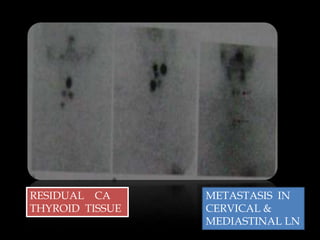
RESIDUAL CA
THYROID TISSUE

METASTASIS IN
CERVICAL &
MEDIASTINAL LN
• Follicular thyroid cancer demonstrate a capability of taking
up iodine, although less than that of normal thyroid cells.
• 50% of papillary carcinomas are also able to take up iodine
and the presence of follicular elements on histology is an
indicator of iodine uptake capabilities.
• Medullary, anaplastic carcinomas and lymphomas of the
thyroid do not take up I-131, which therefore has no role in
therapy following ablation of remnant thyroid tissue.
• Medullary thyroid cancer could be treated with I-131 MIBG
(metaiodobenzylguanidine)
Optimal dose
•
•
•
•

Ablation dose : 30 – 200 mCi
Metastatic lesions : 150 – 300 mCi
Conservative approach 150 mCi
Repeated treatments were given but
not exceeding a cumulative dose of
1000 mCi
Elimination
• I 131 leaves through
saliva, sweat, blood, urine, faeces
• Majority of administered RAI has been
extracted after 48 hours
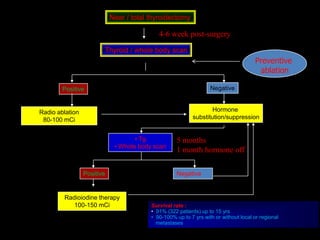
Near / total thyroidectomy

4-6 week post-surgery
Thyroid / whole body scan

Preventive
ablation
Negative

Positive

Hormone
substitution/suppression

Radio ablation
80-100 mCi
• Tg
• Whole body scan

Positive

Radioiodine therapy
100-150 mCi

5 months
1 month hormone off
Negative

Survival rate :
• 91% (322 patients) up to 15 yrs
• 90-100% up to 7 yrs with or without local or regional
metastases
Key to success in thyroid Cancer

•
•
•
•

Early detection
Adequate thyroidectomy
Post operative radioiodine therapy
Meticulous follow-up surveillance
Take home message( Ca Thyroid)
• Radioactive Iodine recommended as an
adjunctive therapy (ablation / preventive) for
thyroid cancer after thyroidectomy for the
complete management of well-differentiated
thyroid cancer
• External beam radiotherapy for Anaplastic ca
• Radiation exposure after a latent period of 30
years can cause Papillary cancer
• RIA is best for Follicular cancer
Future Trends
• Monoclonal antibodies or
their fragments are
potentially ideal vehicles to
carry radioisotopes to
specific sites within the body
• But radiolabel has to be
inserted without affecting
the binding site
Thank you…

Radionuclide imaging

  • 1.
    Radionuclide Imaging & Its Applications SUDARSANAGARWAL sushiagarwal@gmail.com PINNAMANENI MEDICAL COLLEGE, VIJAYAWADA
  • 2.
  • 3.
  • 4.
  • 5.
    Ionising radiation • Alpharadiation – 2N+2P • Beta radiation – electron emitted by a nucleus • Positron -similar to electron except that it has a positive charge. PARTICULATE • X-Rays • Gamma rays EM RADIATION
  • 6.
    Types of IonizingRadiation Alpha Particles Radiation Source Stopped by a sheet of paper Beta Particles Stopped by a layer of clothing or less than an inch of a substance (e.g. plastic) Gamma Rays Stopped by inches to feet of concrete or less than an inch of lead
  • 7.
    Gamma rays arenot charged particles like particles. and Gamma rays are electromagnetic radiation with high frequency. When atoms decay by emitting or particles to form a new atom, the nuclei of the new atom formed may still have too much energy to be completely stable. This excess energy is emitted as gamma rays
  • 9.
    Accurate Diagnosis iskey to Surgical practice
  • 10.
    Accurate Diagnosis iskey to Surgical practice • X rays , CT • Ultra Sound, MRI • SPECT , PET
  • 11.
  • 12.
    Diagnostic Procedure Typical effective dose (mSv) Equivalent no. ofchest radiographs Approximately equivalent period of natural background radiation Chest X ray 0.02 1 3 days Thyroid(Tc 99m) 1 50 6 months Bone (Tc 99 m) 4 200 1.8 years PET 5 250 2.3 years CT abdomen 10 500 4.5 years
  • 13.
  • 14.
    Hybrid Imaging • PET-CT:radionuclide imaging devices are combined with CT in a single imaging system • The resulting images display the functional data obtained from the radionuclide distribution (usually in color) overlaid on the anatomical information from CT (usually in grey scale)
  • 17.
  • 18.
    Nuclear medicine • Nuclearmedicine is a subspecialty within the field of radiology that uses very small amounts of radioactive material to diagnose or treat disease
  • 19.
    • We needa short-lived radio nuclide which has to be combined to a pharmaceutical of interest and injected iv and this radio pharmaceutical goes and attaches to the organ of interest and we can catch the gamma rays emitted by it with help of gamma cameras and pictures are reconstructed in computer • (in amounts of Pico molar concentrations thus not having any effect on the process being studied)
  • 20.
  • 21.
  • 22.
    Ideal Radionuclide • Emitsgamma radiation at suitable energy for detection with a gamma camera (60 - 400 kev, ideal 150 kev) • Should not emit alpha or beta radiation • Half life similar to length of test • Cheap • Readily available
  • 24.
    Technetium • This isthe most common radio nuclide used in Nuclear Medicine. • Taking its name from the Greek work technetos meaning artificial , it was the first element to be produced artificially.
  • 25.
  • 26.
  • 27.
  • 28.
    Ideal radiopharmaceutical • Cheapand readily available • Radionuclide easily incorporated without altering biological behavior • Radiopharmaceutical easy to prepare • Localizes only in organ of interest • t1/2 of elimination from body similar to duration of test
  • 29.
    99mTc pertechnetate • Thyroid scintigraphy •Salivary gland study • Meckel’s diverticulum scintigraphy 18 FDG • Interictal PET • Cerebral metabolism PET • Tumor imaging 99mTc MIBI • Parathyroid scintigraphy
  • 30.
    99mTc polyphosphate 99mTc red blood cells 99mTcalbumin • Bone scintigraphy • Cardiac ventriculography • GI bleed study • V/Q scan
  • 31.
    • Esophageal transitand 99mTc sulphur reflux colloid • GI bleed study 99mTc leucocytes • White cell scintigraphy 99mTc iminodiacetic • Hepatobiliary study acid derivatives
  • 32.
    99mTc DTPA 99mTc DMSA 111In pentetreotide • Diuresisrenography • Renal tract obstruction • Static renal scintigraphy • Renal scarring • Somatostatin receptor study
  • 33.
  • 34.
  • 35.
    Gamma Camera A gammacamera consists of three main parts: Electronic systems Detector Collimator
  • 36.
  • 37.
    Positron Emission Tomography •PET is a nuclear medicine imaging technique that provides high-resolution tomographic images of the bio-distribution of a radiopharmaceutical in vivo . • A PET scan measures important body functions, such as blood flow, oxygen use & glucose metabolism • Radiopharmaceutical consists of positronemitters, usually very short-lived and produced in cyclotrons. • 18 F being one of the most optimal positron emitters for imaging
  • 38.
  • 39.
  • 40.
    • Half-life (T1/2 ) is 110 minutes • Low average positron energy of 0.63 MeV • Average positron range in tissue of 0.3 mm
  • 42.
    • Delay aPET scan by 2 -3 weeks after surgical intervention • 2 -3 weeks interval after chemotherapy. • 3 months after radiation therapy, • 6 to 8 weeks post-radiation therapy-surgery. • Should not be performed on pregnant and breast feeding patients.
  • 43.
    • Malignant cellsshow an increased rate of glucose metabolism ,probably due to presence on cell surfaces of an abnormally large number of glucose transporters, along with increased hexokinase-mediated glycolysis and a reduced level of dephosphorylating by glucose -6phosphate.
  • 44.
    Uses Detect primary ,secondary cancer and metastasis Assess the effectiveness Cancer chemo therapy Cancer recurrence Mapping of brain and heart function Evaluate brain abnormalities, such as tumors, memory disorders and seizures and other central nervous system disorders • Determine blood flow to the heart muscle and thus determine the effects of a heart attack, or myocardial infarction • • • • •
  • 45.
    Cardiac Imaging PET scanof a heart Arrow points to "dead" myocardial tissue.
  • 46.
  • 47.
    • • • • 99mTc-HMPAO : cross toBBB and fix in the brain proportionally to perfusion 18FDG : glucose metabolism 99mTc-TRODAT : dopamine transporter 111In-DTPA, 99mTc-DTPA : CSF dynamics, V-P shunt patency study
  • 48.
    PET image showing malignantbreast mass (not revealed by CT, MRI or Mammo) PET image of same patient with enlarged left axillary lymph nodes
  • 49.
    The role ofPET after chemotherapy • Many neoplasms have an enhanced glucose metabolism compared to normal tissue. • FDG provides functional data on tumor metabolism, complementary to morphologic imaging studies. • Standard tool for decision making in lymphoma, Hodgkin`s disease, different solid tumors post chemotherapy. • Germ cell tumors (GCT) are characterized by a high FDG uptake.
  • 50.
  • 51.
    Advantages • Assesses bodyfunction and in monitoring flow rate • Can measure body composition using dilution analysis. • Whole body scanning • Response to radiotherapy and chemotherapy
  • 52.
    Disadvantages • Generally poorresolution compared with other imaging modalities • Radiation risks due to administered radionuclide • Can be invasive, usually requiring an injection into the blood stream. • Disposal of radio activity waste. • Relatively high costs associated with radio tracer production and administration.
  • 53.
    Safety and risk •Nuclear medicine is not safe for the use of human beings, so therefore should not be used on healthy people. • Also the procedure is not recommended for pregnant women because unborn babies have a greater sensitivity to radiation than children or adults.
  • 54.
    Safety and risk •Radioactive substances are emitted in to the body so the safest way is to use a radio nuclide which has a short half life, so it can decay to a safe level in the fastest possible time.
  • 55.
    Safety and risk •Most of the administered radioactive isotopes is excreted as urine via the kidney and bladder but same is excreted as perspiration and saliva. This means that the patient has radio active substances on their skin and should take extra care when around other people.
  • 56.
    Safety and risk •Safety precautions to be taken when near a patient has been injected with radioactive substance. Wear a pathology gown and disposable gloves also minimise the time spend with the patient and maximise the distance from the patient.
  • 58.
  • 59.
    Hepato biliary Imaging •Evaluates hepatocellular function and patency of the biliary system • Performed with a variety of compounds that share the common iminodiacetate moiety • Although it is an excellent test to decide whether the common bile and cystic ducts are patent, biliary scintigraphy does not identify gall stones or give any anatomic information
  • 60.
  • 61.
    IDA Derivatives • HIDA- Little used today • DISIDA (Disofenin) -85% extracted by the hepatocytes • BRIDA (Mebrofenin) -98% extracted by the hepatocytes
  • 62.
    Pathways of IDAderivatives • The lipophilic component : binding to hepatocyte receptors for bilirubin • Transported through the same pathways as bilirubin, except for conjugation
  • 63.
    Normal Study • Immediatedemonstration of Hepatic Parenchyma • Normal Liver (5 mins), • Intrahepatic Bile ducts (10-15 mins), • CBD, GB & Duodenum (15-30 mins), • Small Intestine (>30 mins)
  • 64.
  • 65.
  • 67.
    Indications • Functional assessmentof the hepatobiliary system • Integrity of the hepatobiliary tree – Evaluation of suspected acute Cholecystitis – Evaluation of suspected chronic biliary tract disorders – Evaluation of common bile duct obstruction – Detection of bile extravasation – Evaluation of congenital abnormalities
  • 68.
    Contraindications • Hypersensitivity to –IDA derivative – Local anesthetics of the amide type • Cardiac arrhythmias • Pregnancy
  • 69.
    Acute Cholecystitis • Investigationof choice is Ultrasound • Most effective investigation is Radionuclide biliary scanning Diagnostic test Sensitivity Specificity Ultra sound 85% 95% Tc HIDA scan 95% 95% • No filling of Gall bladder after 4 hours of injection indicates obstruction • A normal HIDA scan excludes it. 100% negative predictive value.
  • 70.
  • 71.
    Bile Leaks • Mostappropriate non-invasive imaging technique for evaluation of bile leaks • Sensitivity: 87%, • Specificity: 100%
  • 72.
    Liver & Spleen •Radionuclide imaging of liver and spleen depends on the function common to both i.e, phagocytosis. • The most commonly used agent is 99m Tc Sulphur colloid. • In normal scan there is homogenous distribution of 99m Tc Sulphur colloid through out the organ
  • 73.
    SMALL INFARCTING SPLEEN 99mTcCOLLOID STUDY AFTER SPLEENECTOMY SHOWING VIABLE AND FUNCTONING SPLENIC TISSUE IN THE OMENTUM
  • 74.
  • 75.
    Tc SULPHUR COLLOID – KUPFERCELLS Tc HIDA HEPATOCYTES
  • 76.
    Meckel’s Scan • TheMeckel ’s scan is performed by giving Tc Pertechnetate , which is taken up by the ectopic gastric mucosa in the diverticulum and localized with scintigraphy • The diagnosis of Meckel’s diverticulum is difficult. • Plain abdominal radiographs, CT, US are rarely helpful.
  • 77.
    Meckel’s in Children •Single most accurate diagnostic test for Meckel’s is scintigraphy with Tc Pertechnetate • Its preferentially taken up by the mucus secreting cells of gastric mucosa and ectopic gastric tissue in the diverticulum
  • 78.
    Meckel’s in Adults •As ectopic gastric mucosa is reduced, agents like pentagastrin, glucagon and cimetidine are used • Pentagastrin indirectly increases the metabolism of mucus producing cells • Glucagon inhibits peristaltic dilution and washout of intraluminal radionuclide • Cimetidine decreases the peptic secretion and therefore retards the release of pertechnetate from the diverticular lumen, thus resulting in higher radionuclide concentrations in wall of diverticulum
  • 79.
  • 80.
    WITHOUT H2 BLOCKADE SO TRACER IS SEEN INTHE INTESTINAL LUMEN DUE TO GASTRIC SECRETION OF THE TRACER.
  • 81.
    MECKEL”S DIVERTICULUM INTHE RIGHT SIDE OF THE PELVIS
  • 82.
  • 83.
    GI Bleed • Tclabeled RBC is the most sensitive but least accurate method for localization of GI bleeding • With this technique, the patient’s own RBC s are labeled and reinjected. • The labeled blood is extravasated into the GI tract lumen, creating a focus that can be detected scintigraphically. • Multiple images are collected over 24 hours
  • 84.
    GI Bleed • Thetagged RBC scan can detect bleeding as slow as 0.1 ml/ min • Unfortunately, spatial resolution is lacking, and blood may move retrograde in the colon or distally in the small bowel. • If RBC scan is negative, angiography is unlikely to be revealing. Thus its used as a guide to the utility of angiography
  • 85.
    INDICATIONS 1. RECURRENT BLEEDING 2.ENDOSCOPY IS INCONCLUSIVE 3. COMORBIDITIES 99mTc COLLOID 99mTc RBC
  • 86.
  • 87.
    The main tracersused in evaluation of the kidney: • DMSA : Di Mercapto Succinic Acid • DTPA : Di-ethylene Tri-amine Penta-Acetic acid • MAG3 : Mercapto Acetyl triGlycine
  • 88.
    99mTc-DMSA : is clearedby both filtration and secretion, but the clearance is relatively complex and it does bind to parenchymal tissues. • It is useful as a renal cortical imaging agent. • 99mTc-DMSA
  • 89.
    99mTc-DTPA: is primarily aglomerular filtration agent. • It is also useful for evaluation of obstruction and renal function. • It is less useful in patients with renal failure. • 99mTc-DTPA
  • 90.
    99m Tc-MAG3: Tc-MAG3 is clearedby tubular secretion, and no glomerular filtration occurs. • The tracer is well suited for evaluation of renal function and diuretic scintigraphy • Also, it is an excellent tracer to evaluate renal plasma flow. • 99m
  • 91.
    Procedure • After abolus injection of the tracer, images are obtained that can be used to estimate relative renal function. • When the tracer reaches the collecting system, a diuretic is given and half-life is calculated based on the slope of the curve in response to the diuretic.
  • 92.
    Renal Cortical Scintigraphy •Done with 99mTcDMSA • Acute infection can produce abnormalities in the scan; and if the test is being performed to evaluate for cortical scarring, it should be done at least 3 months after an acute infection
  • 93.
    Image of thekidneys obtained 3 hours after administration of 99mTc-DMSA shows that the left kidney is decreased in size, and contains several focal cortical defects, most notably at both poles.
  • 94.
    Diuretic Scintigraphy: • Diureticscintigraphy is performed with DTPA or MAG3. • MAG3 is more useful in patients with renal insufficiency, but DTPA is more economical. • Diuretic scinitigraphy offers a quantitative assessment of obstruction and does not require an invasive procedure, intravenous iodinated contrast medium, or anesthesia.
  • 95.
    Dynamic function imagesover 40 minutes demonstrate good uptake of tracer by both kidneys & prompt visualization of the collecting systems. A slight relative delay in clearance from the right kidney is noted.
  • 96.
  • 97.
  • 99.
    Radioactive Iodine Uptaketest • Is less widely used because of more precise biochemical measurements of T3 T4 TSH • This test in the past involved oral administration of Iodine 123 • A normal result is 15-30% uptake of the radionuclide after about 24 hours. • Use of Iodine 123 is preferable over Iodine 131(8 days) because of a shorter half life(12 hours) and lesser radiation exposure
  • 100.
    Thyroid - scintigraphy 99mPERTECHNETATE Trapped but not organified Competes with iodide for uptake Cheap and readily available IODINE (123I or 131 I) Trapped and organified Better for retrosternal goitres Expensive, cyclotron generated
  • 101.
  • 102.
    • 20% ofcold nodules are Malignant • 5% of hot nodules are Malignant • Thus routine isotope scanning is no longer used to distinguish Benign from Malignant
  • 103.
    Mechanism of Action Radioiodinenuclide release energy  beta & gamma • I 131 ablates principally due to the short range beta radiation. It destroys cells at the end of their path • The accompanying high energy penetrating Gamma ray radiation mostly escapes the patient producing unwanted radiation fields
  • 104.
    Indications for Thyroid Scintigraphy 1.Thyroid nodules 2. Thyrotoxicosis 3. Goiter 4. Ectopic thyroid 5. Thyroid cancer 6. Retrosternal mass 7. Work up of neonates with low T4 and/or high TSH 8. Occult thyroid malignancy 9. Metastasis 10.Swellings in thyroid region
  • 105.
    Contraindications Absolute 1. Pregnancy 2. Breastfeeding Relative 1.Bone marrow depression 2. Pulmonary function restriction. 3. Salivary gland function restriction. 4. Presence of neurological symptoms.
  • 106.
  • 107.
    Long-term complications • • • • • • Radiation pulmonaryfibrosis Permanent bone marrow depression Chronic hypospermia or azoospermia Early onset of menopause Chronic dry eye Hypoparathyroidism (rare and transient)
  • 108.
  • 109.
  • 110.
  • 111.
    Graves disease • RAIhas been used since 1940 (more than 50 years) for treating thyroid disease • High rate of success with permanent cures affected and few undesirable effects for hyperthyroid & thyroid cancer • The majority of patient receive anti thyroid drug but the success rate is limited • Anti thyroid therapy failed, prime candidate for radioiodine therapy
  • 112.
    Tc 99m Pertechnetate Thyroidscintigram • Symmetrically enlarged gland • Homogenous tracer distribution uniform uptake without nodularity(occasion ally cold nodule seen) • Prominent pyramidal lobe
  • 114.
  • 115.
    Treatment • 3 option: – medical therapy  antithyroid drugs – radioactive iodine – surgery  thyroidectomy, partial or complete surgical • None is the best treatment • USA  radioactive is the first choice (69%) 115
  • 116.
  • 117.
    Cure rate • 59.1% (6th month) • 72.7 % (12th month) • 92.0% (24th month)
  • 118.
    • Return tonormal T4  Take 2-6 months • During interval  May need to continue antithyroid drugs • Monitored  Hypothyroidism and recurrent hyperthyroidism • There is no optimal dose for RAI ~ controversial • Goals for RAI treatment vary from inducing hypothyroidism to restoring euthyroidism
  • 119.
    Before radioiodine therapy: • Stop Antithyroid drugs 3-4 wks before • Shall not have iodine containing injection/tablets for 4 months • Patient have to fast overnight & an hour afterwards
  • 120.
    Take home message(Graves) • Iodine-131 therapy has been available for over 50 years • There is no standard treatment for Graves’ hyperthyroidism (medical, surgical and radioactive iodine) • RAI is Proven to be save, effective and economical form of treatment for thyroid diseases • Appropriate patient selection & explanation the expected outcomes are essential
  • 121.
  • 122.
  • 123.
    Thyroid cancer • Incidenceof thyroid cancer is increasing --Mortality rate of 2-5% --Recurrence rate post-lobectomy 5% - 20% • No doubt that surgery is the primary treatment Total thyroidectomy is the choice • Surgery alone has remained inadequate to ensure complete cure
  • 124.
    RAI Decreased recurrenceand death rates in the following ways: 1.Destroyed remaining normal thyroid tissue 2.Destroys occult microscopic cancer 3.The use of higher doses of I-131 treatment permits post-ablative total body scanning
  • 125.
    RESIDUAL CA THYROID TISSUE METASTASISIN CERVICAL & MEDIASTINAL LN
  • 126.
    • Follicular thyroidcancer demonstrate a capability of taking up iodine, although less than that of normal thyroid cells. • 50% of papillary carcinomas are also able to take up iodine and the presence of follicular elements on histology is an indicator of iodine uptake capabilities. • Medullary, anaplastic carcinomas and lymphomas of the thyroid do not take up I-131, which therefore has no role in therapy following ablation of remnant thyroid tissue. • Medullary thyroid cancer could be treated with I-131 MIBG (metaiodobenzylguanidine)
  • 127.
    Optimal dose • • • • Ablation dose: 30 – 200 mCi Metastatic lesions : 150 – 300 mCi Conservative approach 150 mCi Repeated treatments were given but not exceeding a cumulative dose of 1000 mCi
  • 128.
    Elimination • I 131leaves through saliva, sweat, blood, urine, faeces • Majority of administered RAI has been extracted after 48 hours
  • 129.
    Near / totalthyroidectomy 4-6 week post-surgery Thyroid / whole body scan Preventive ablation Negative Positive Hormone substitution/suppression Radio ablation 80-100 mCi • Tg • Whole body scan Positive Radioiodine therapy 100-150 mCi 5 months 1 month hormone off Negative Survival rate : • 91% (322 patients) up to 15 yrs • 90-100% up to 7 yrs with or without local or regional metastases
  • 130.
    Key to successin thyroid Cancer • • • • Early detection Adequate thyroidectomy Post operative radioiodine therapy Meticulous follow-up surveillance
  • 131.
    Take home message(Ca Thyroid) • Radioactive Iodine recommended as an adjunctive therapy (ablation / preventive) for thyroid cancer after thyroidectomy for the complete management of well-differentiated thyroid cancer • External beam radiotherapy for Anaplastic ca • Radiation exposure after a latent period of 30 years can cause Papillary cancer • RIA is best for Follicular cancer
  • 132.
    Future Trends • Monoclonalantibodies or their fragments are potentially ideal vehicles to carry radioisotopes to specific sites within the body • But radiolabel has to be inserted without affecting the binding site
  • 133.

Editor's Notes

  • #5 Gamma photons are the most energetic photons in the electromagnetic spectrum. Gamma rays (gamma photons) are emitted from the nucleus of some unstable (radioactive) atoms.Gamma rays originate in the nucleus. X-rays originate in the electron fields surrounding the nucleus.
  • #10 One n two are mainly for anatomyThird one is mainly for physiology
  • #11 One n two are mainly for anatomyThird one is mainly for physiology
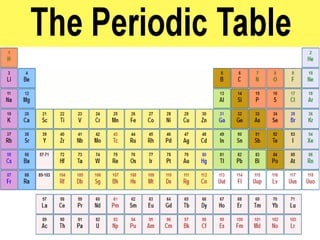
  • #24 Moseleys periodic tableMendeleef old one
  • #61 Pro iso propyl IDA
  • #100 For ablation I 131For diagnosis I 123
  • #102 Normally,………… warm. Tsh is responsible for normal thyroid uptakeNonfunctioning tissue …… don’t take…. So cold. Vigorously workers,……… hot…. This hot nodule is hyper functioning and produces high t3t4 which supressestshSo surrounding normal thy tissue wont take up iodine.