Racemization in peptide
synthesis
Othman Al Musaimi1
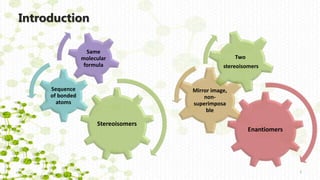
Stereoisomers
Sequence
of bonded
atoms
Same
molecular
formula
Enantiomers
Mirror image,
non-
superimposa
ble
Two
stereoisomers
Introduction
2
Introduction
3
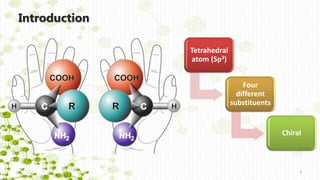
Tetrahedral
atom (Sp3)
Four
different
substituents
Chiral
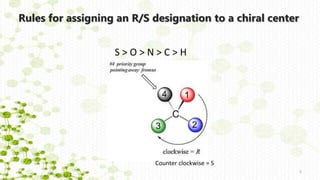
Rules for assigning an R/S designation to a chiral center
4
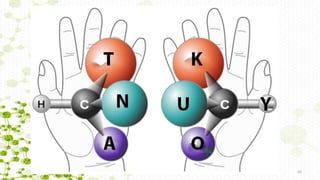
S > O > N > C > H
Counter clockwise = S
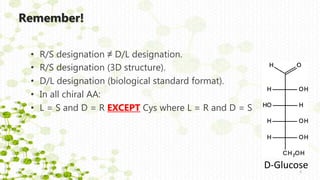
Remember!
• R/S designation ≠ D/L designation.
• R/S designation (3D structure).
• D/L designation (biological standard format).
• In all chiral AA:
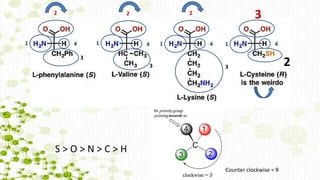
• L = S and D = R EXCEPT Cys where L = R and D = S
5
D-Glucose
S > O > N > C > H
Counter clockwise = R
2
1 1 1 1
2 2
3
3
3 3 2
4 4 4 4
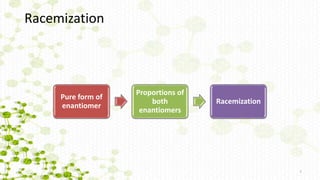
Racemization
Pure form of
enantiomer
Proportions of
both
enantiomers
Racemization
7
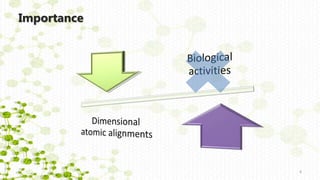
Importance
8
Chiral integrity
• Racemization measures the fraction of racemate that is formed.
• Epimerization measures only the fraction of D-epimer.
9
Tolerable limit at a single amino acid residue
• Synthesis strategy.
10
• Reliability of purification procedures; the number of stages.
• Intended use of the final product.
Racemization in Strongly Acidic Aqueous
Solution
• Behavior of amino acids under the conditions used for protein
and peptide hydrolysis, prior to amino acid analysis.
11
Racemization in Acetic Acid Solution
• Several groups have established that vulnerable amino acids
racemize unusually easily if heated in acetic acid as solvent.
12
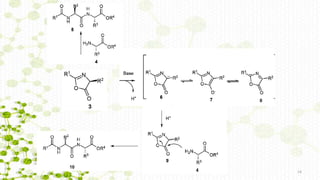
a) Racemization through azlactones [5(4 H)-oxazolones].
Distinct racemization pathways
13
Nα group of the activated amino acid is acylated
14
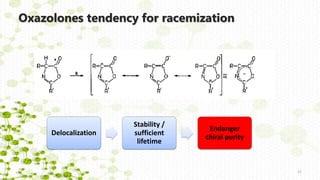
Oxazolones tendency for racemization
15
Delocalization
Stability /
sufficient
lifetime
Endanger
chiral purity
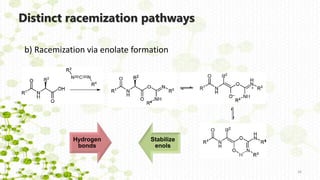
b) Racemization via enolate formation
Distinct racemization pathways
16
Hydrogen
bonds
Stabilize
enols
Distinct racemization pathways
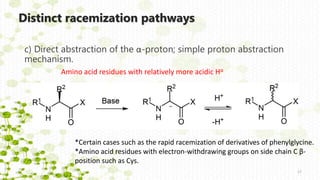
c) Direct abstraction of the α-proton; simple proton abstraction
mechanism.
17
*Certain cases such as the rapid racemization of derivatives of phenylglycine.
*Amino acid residues with electron-withdrawing groups on side chain C β-
position such as Cys.
Amino acid residues with relatively more acidic Hα
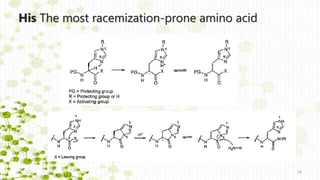
His The most racemization-prone amino acid
18
Factors affecting Racemization mechanism
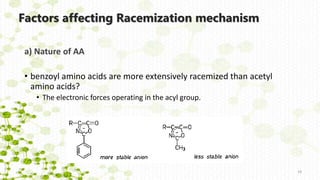
a) Nature of AA
19
• benzoyl amino acids are more extensively racemized than acetyl
amino acids?
• The electronic forces operating in the acyl group.
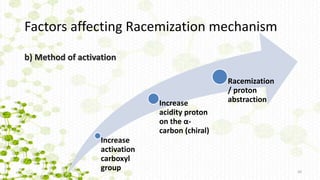
b) Method of activation
20
Increase
activation
carboxyl
group
Increase
acidity proton
on the α-
carbon (chiral)
Racemization
/ proton
abstraction
Factors affecting Racemization mechanism
21
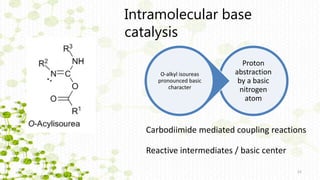
Intramolecular base
catalysis
21
Proton
abstraction
by a basic
nitrogen
atom
O-alkyl isoureas
pronounced basic
character
Carbodiimide mediated coupling reactions
Reactive intermediates / basic center
22
• Racemization is fast in highly polar solvents.
• Non-polar solvents.
• Peptide intermediates are not sufficiently soluble in non-polar
solvents.
Factors affecting Racemization mechanism
c) Solvent
d) Amount and chemical character of the base.
• Steric hindrance in diisopropylethylamine is insufficient to
interfere with proton abstraction from azlactone intermediates.
23
• Tribenzylamine seems to be more efficient in this respect.
• Bulkiness
• Basic strength.
Factors affecting Racemization mechanism
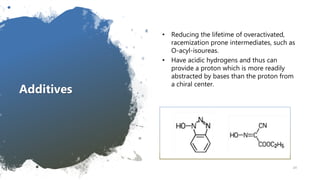
Additives
• Reducing the lifetime of overactivated,
racemization prone intermediates, such as
O-acyl-isoureas.
• Have acidic hydrogens and thus can
provide a proton which is more readily
abstracted by bases than the proton from
a chiral center.
24
References
• M. Bodanszky, Principles of Peptide Synthesis. Second ed. 1993:
Springer-Verlag, 10.1007/978-3-642-78056-1
• Y. Yang, 257-292 (2016), 10.1016/b978-0-12-801009-9.00011-2.
25
26

Racemization in peptide synthesis