Downloaded 58 times
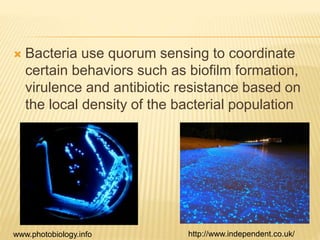
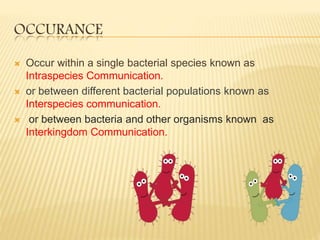
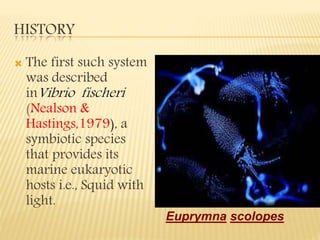
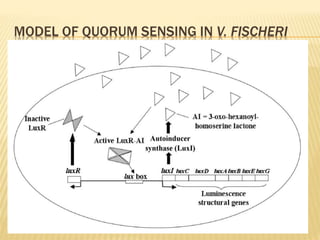

Bacteria use a process called quorum sensing to communicate with each other using chemical signal molecules called autoinducers. As the population density of bacteria increases, the concentration of autoinducers rises, allowing the bacteria to coordinate behaviors such as bioluminescence and biofilm formation. In the marine bacterium Vibrio fischeri, quorum sensing regulates genes that produce luciferase, the enzyme responsible for bioluminescence. LuxI synthesizes autoinducers that bind to LuxR, activating transcription of genes in the lux operon and producing light when the bacterial population is dense enough.


