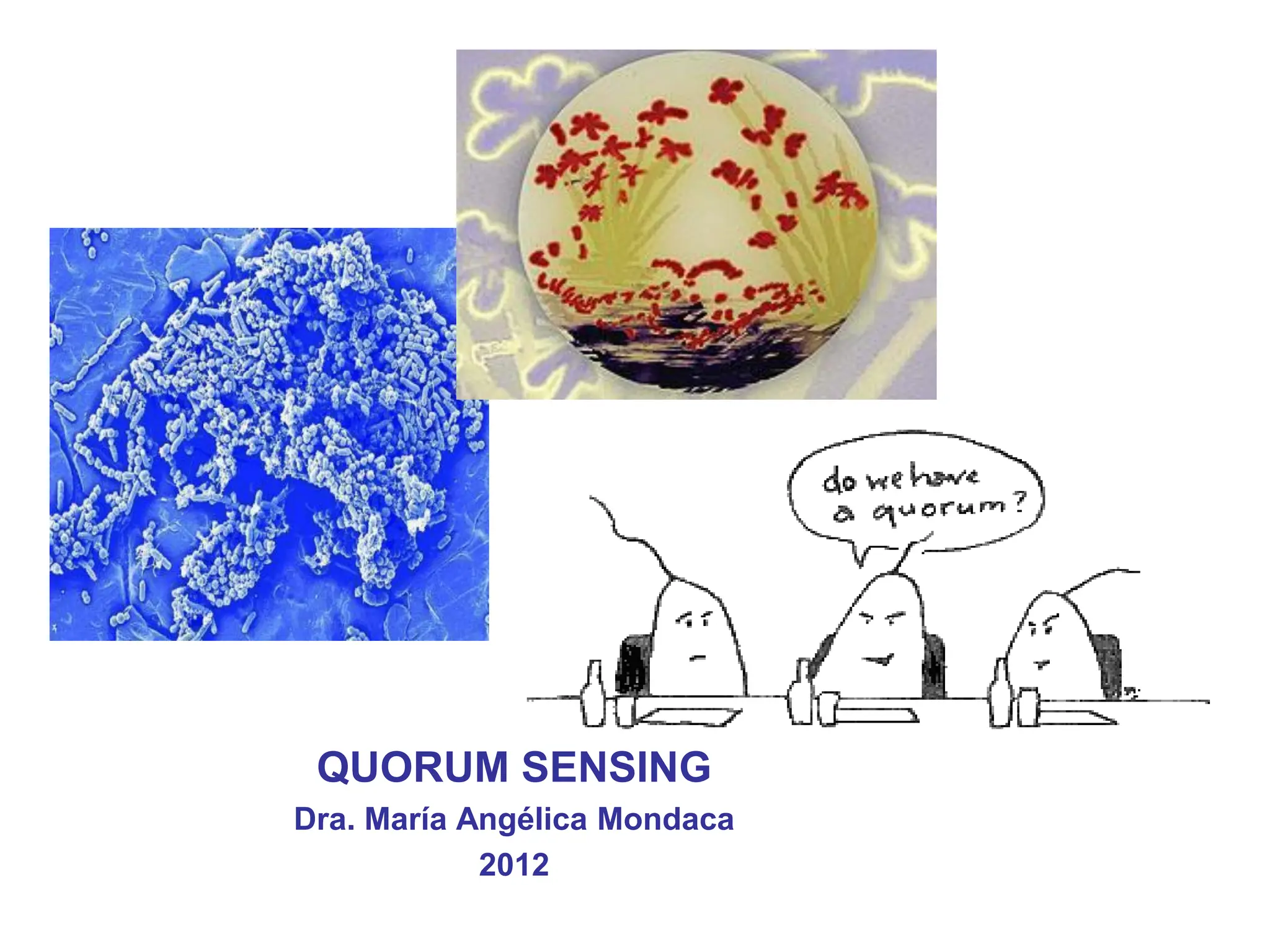
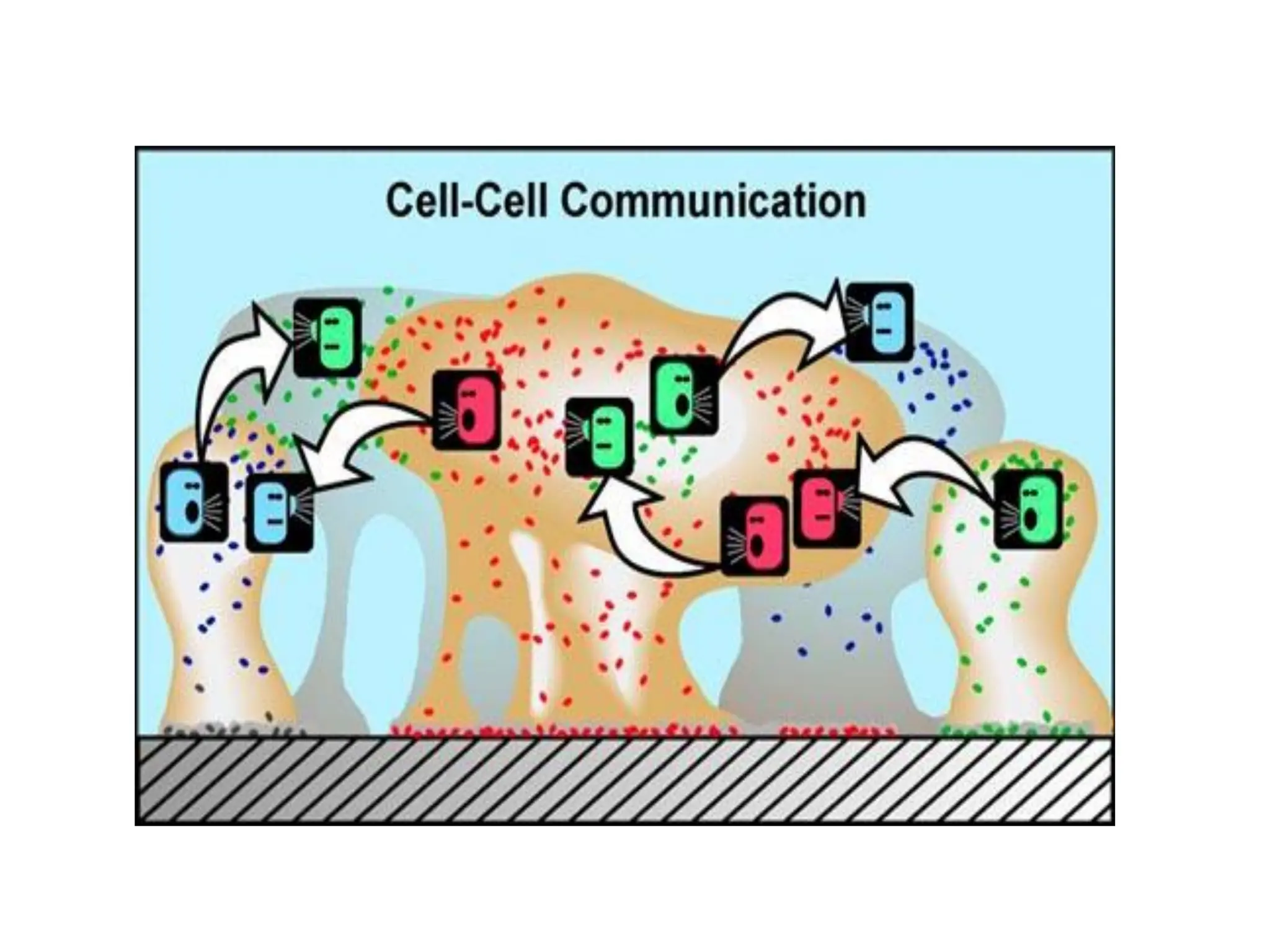
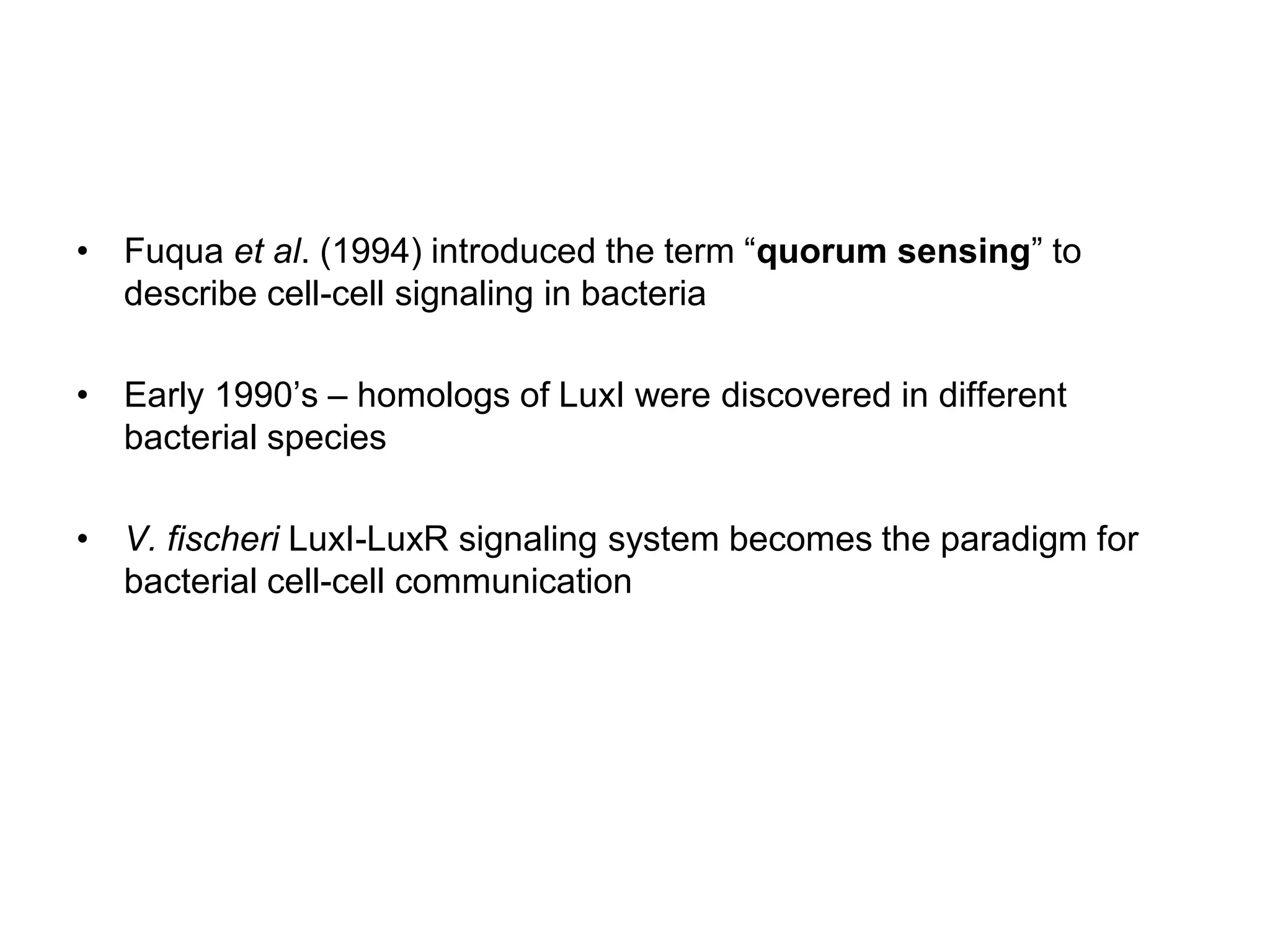
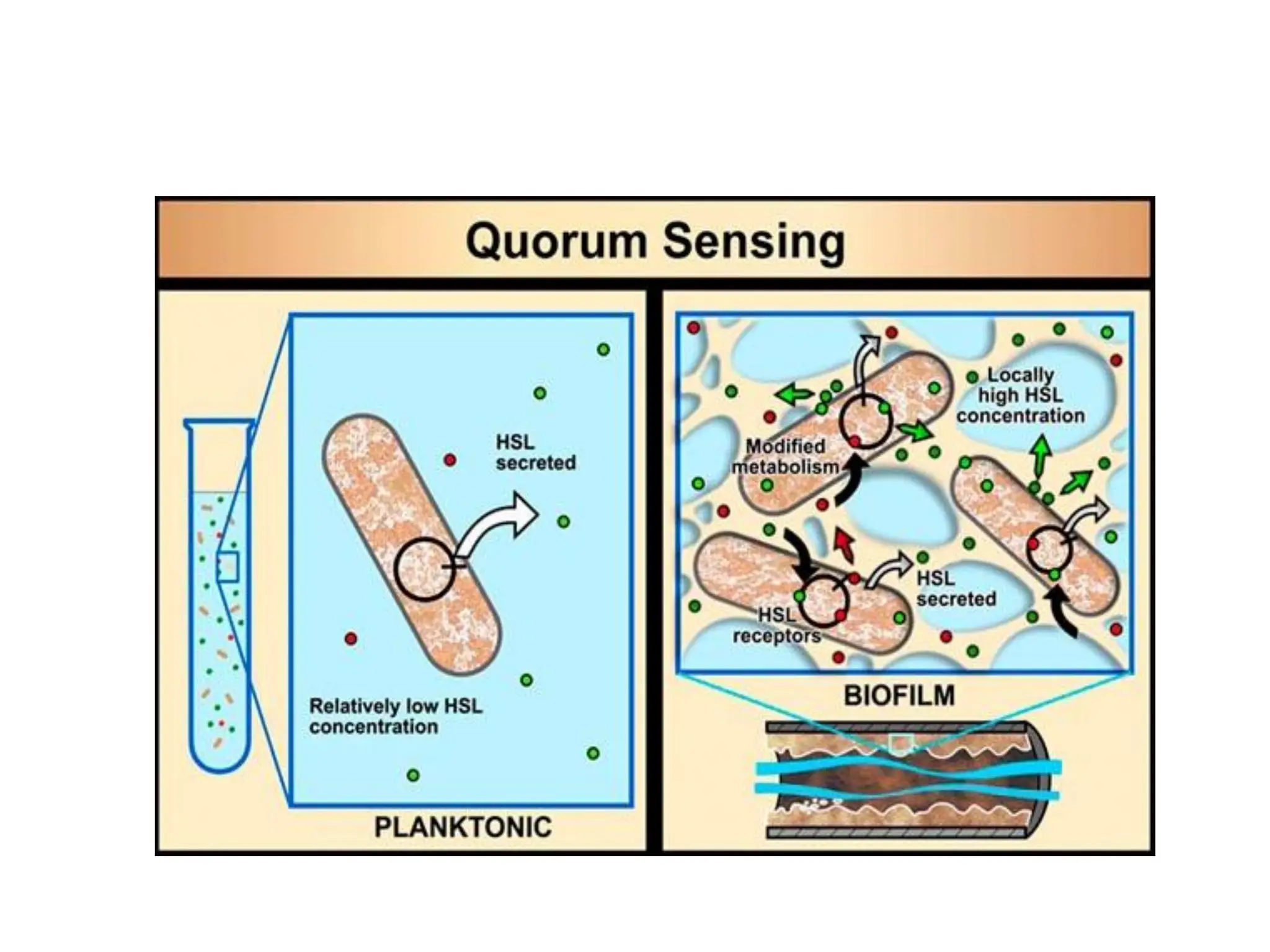
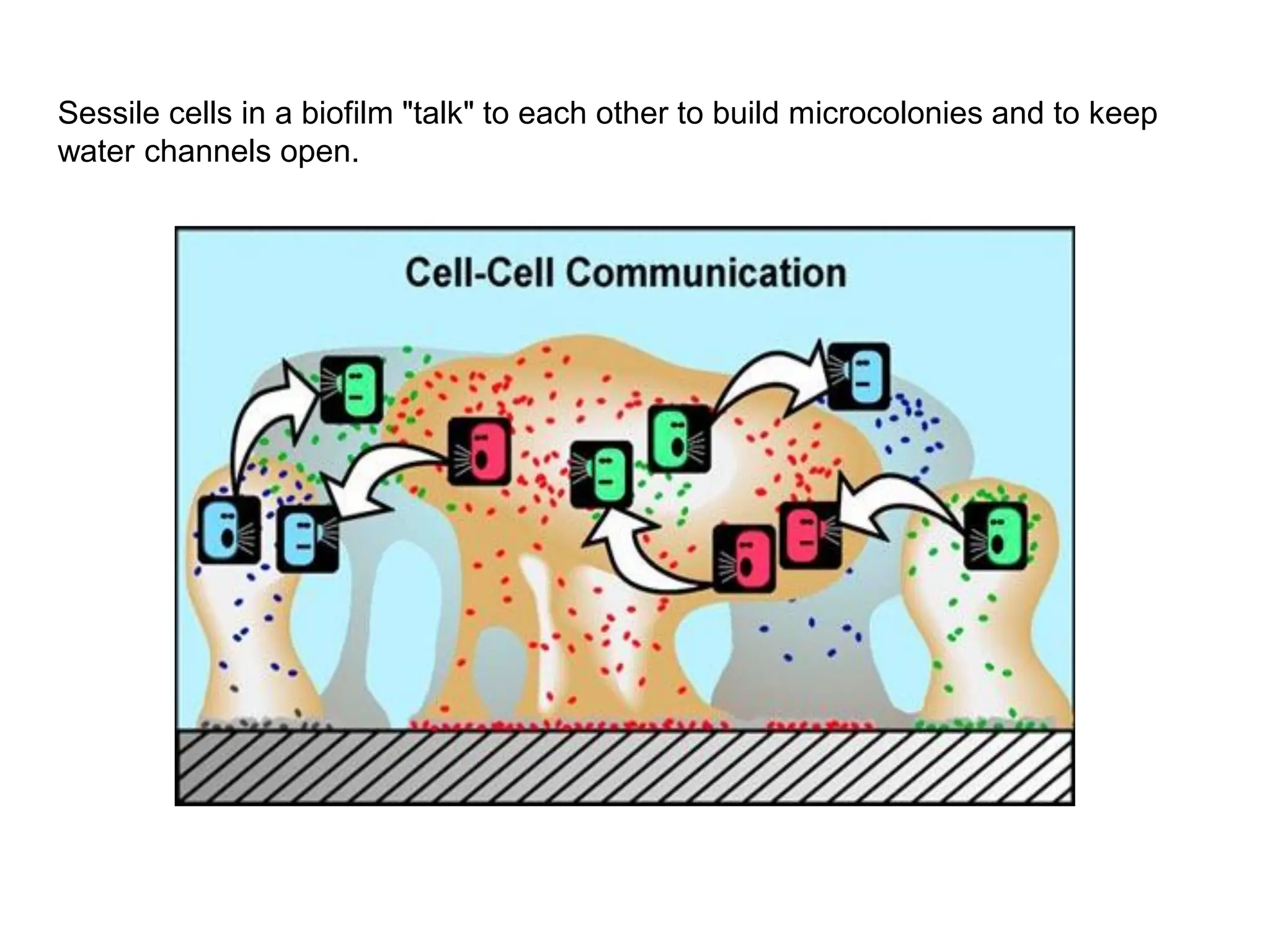
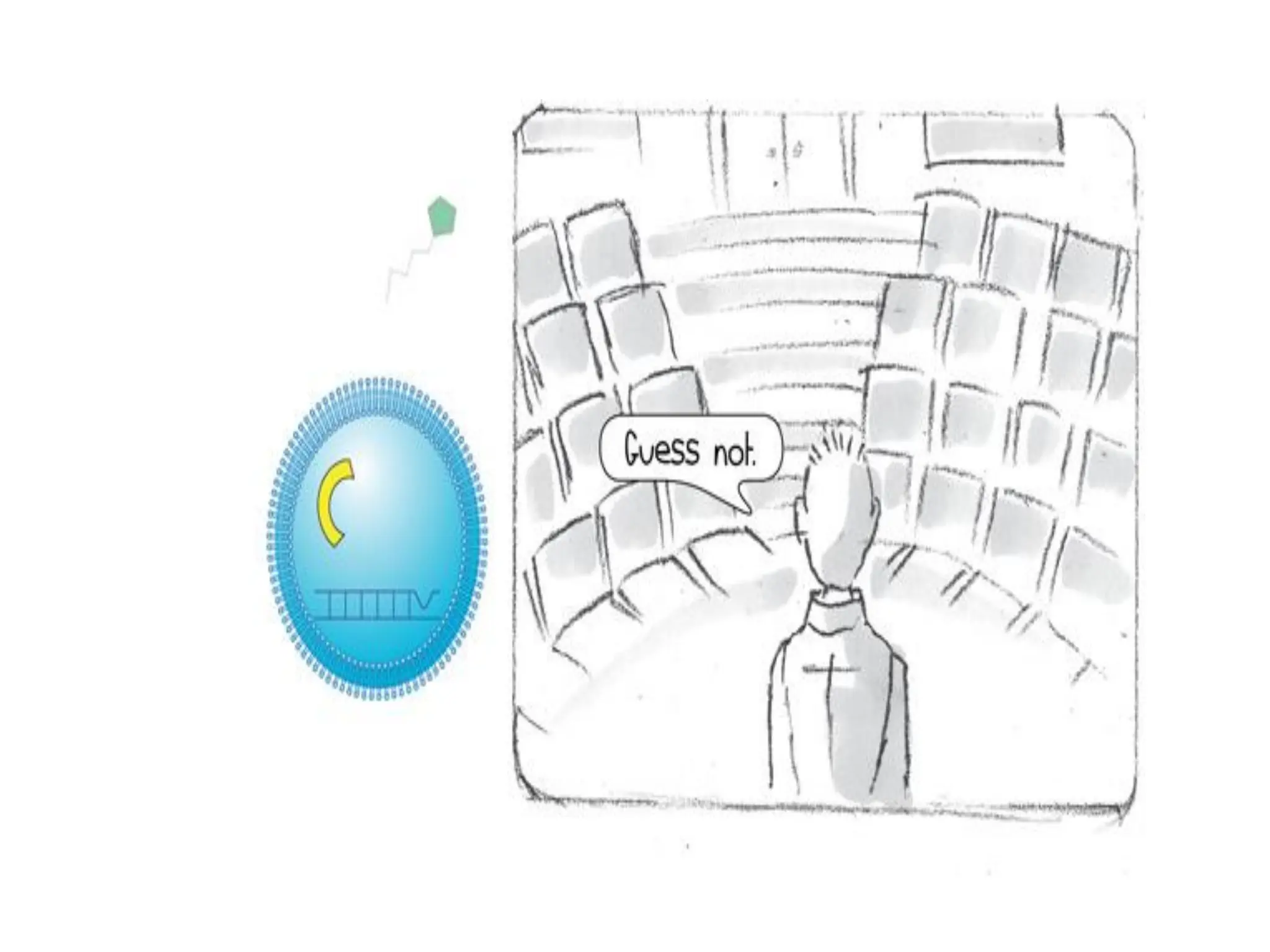
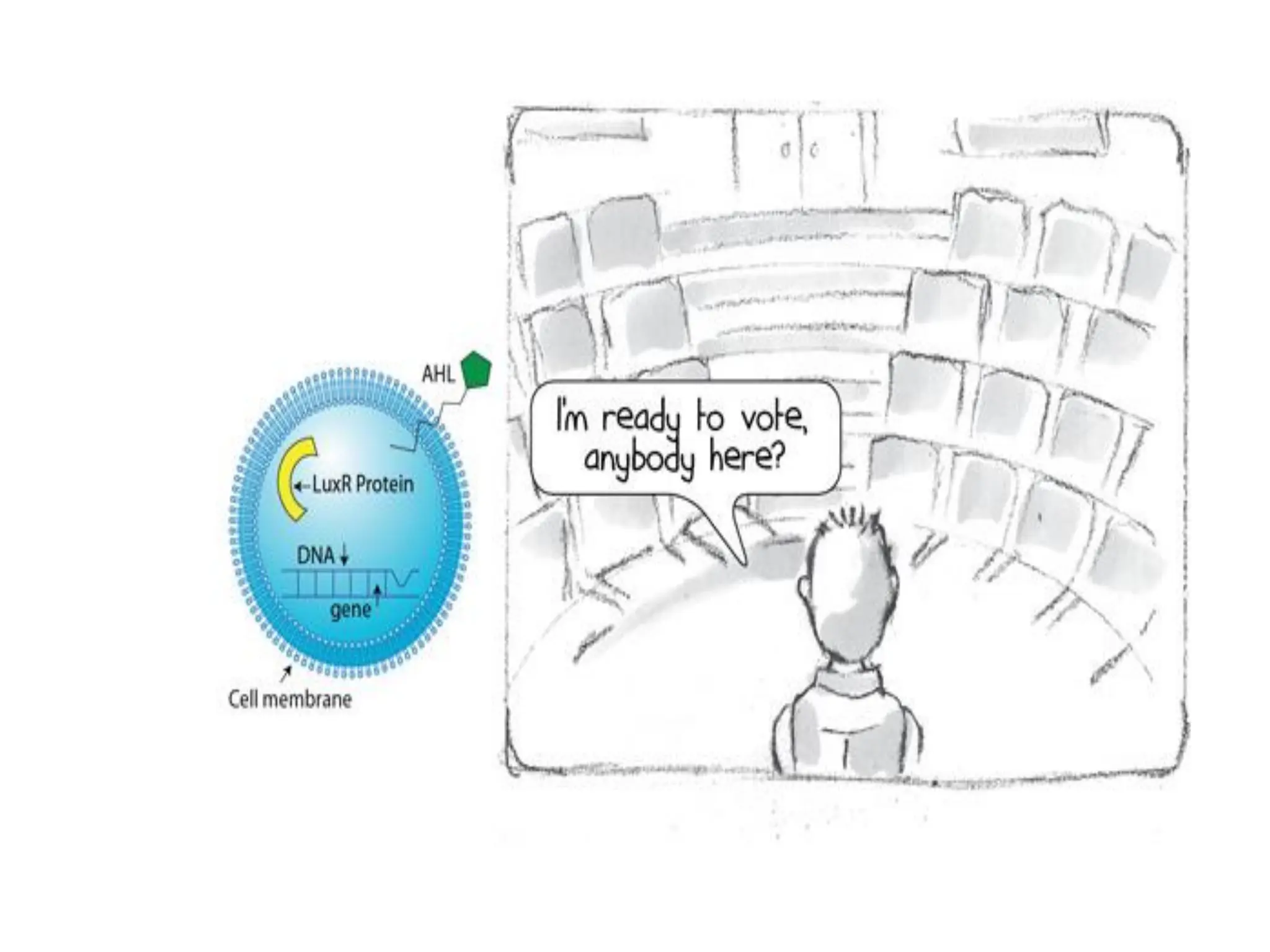
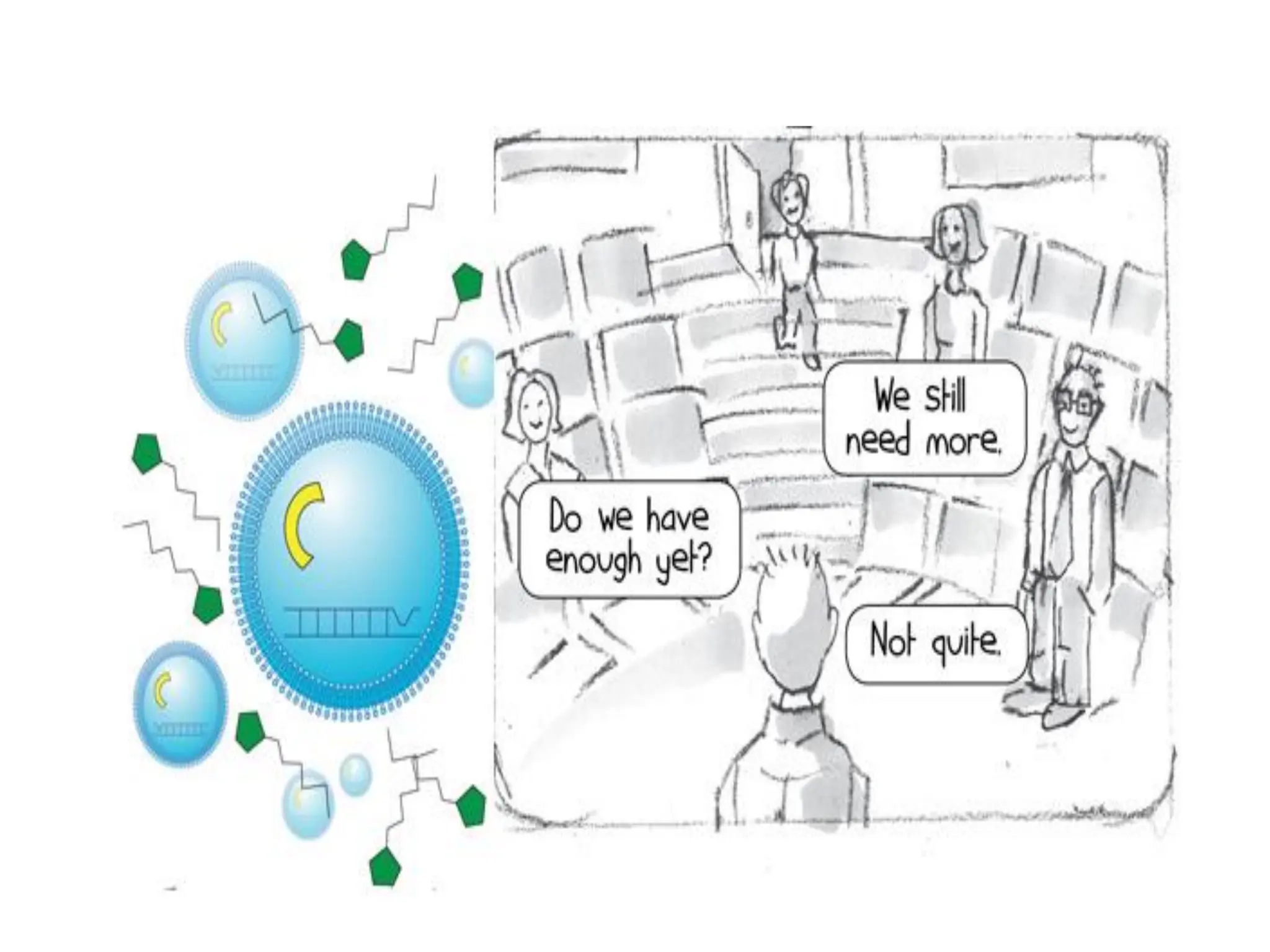
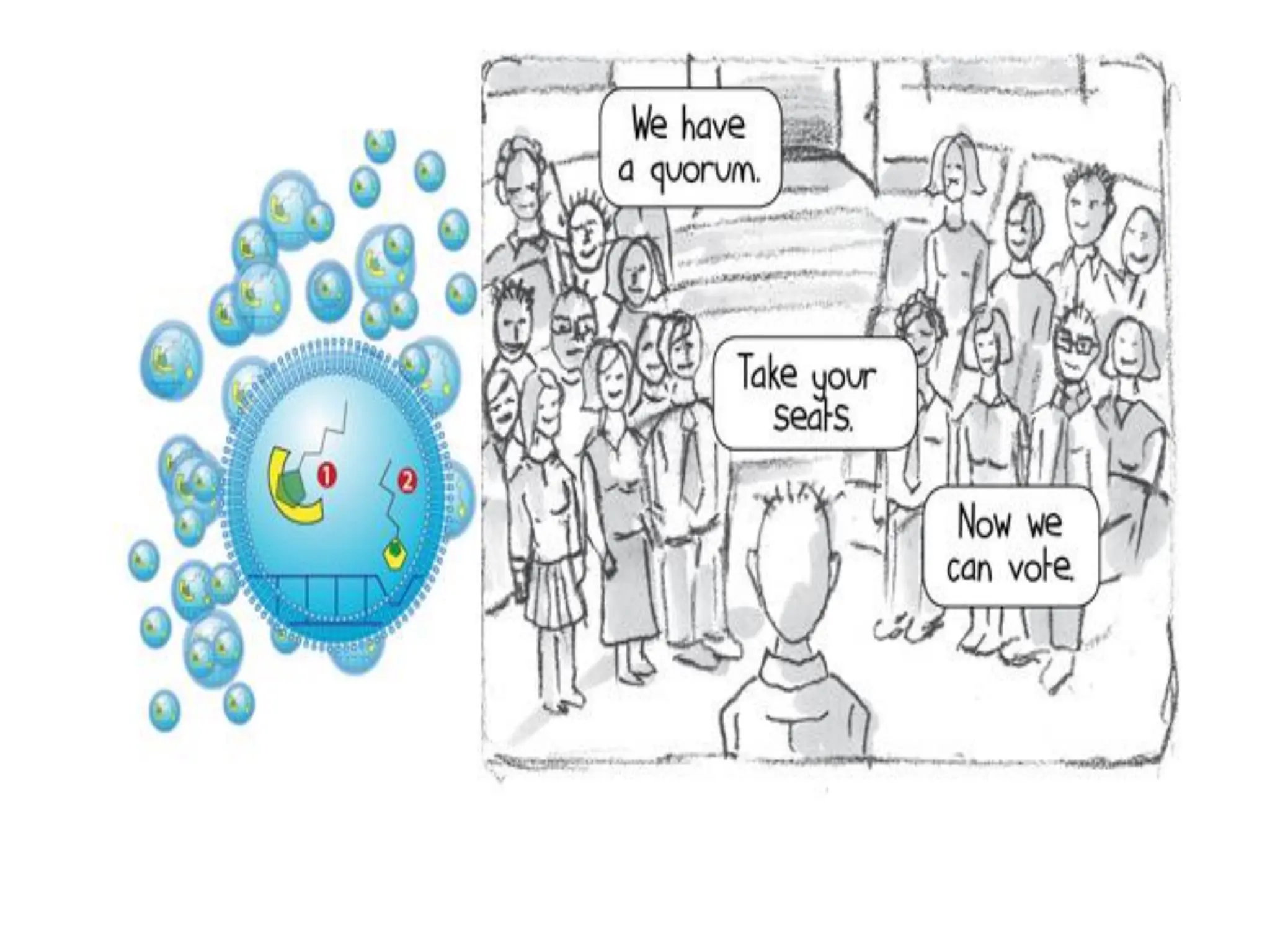
QUORUM SENSING
• Tomasz(1965) – Gram-positive Streptococcus pneumoniae produce
a “competence factor” that controlled factors for uptake of DNA
(natural transformation)
• Nealson et al. (1970) – luminescence in the marine Gram-negative
bacterium Vibrio fischeri controlled by self-produced chemical signal
termed autoinducer
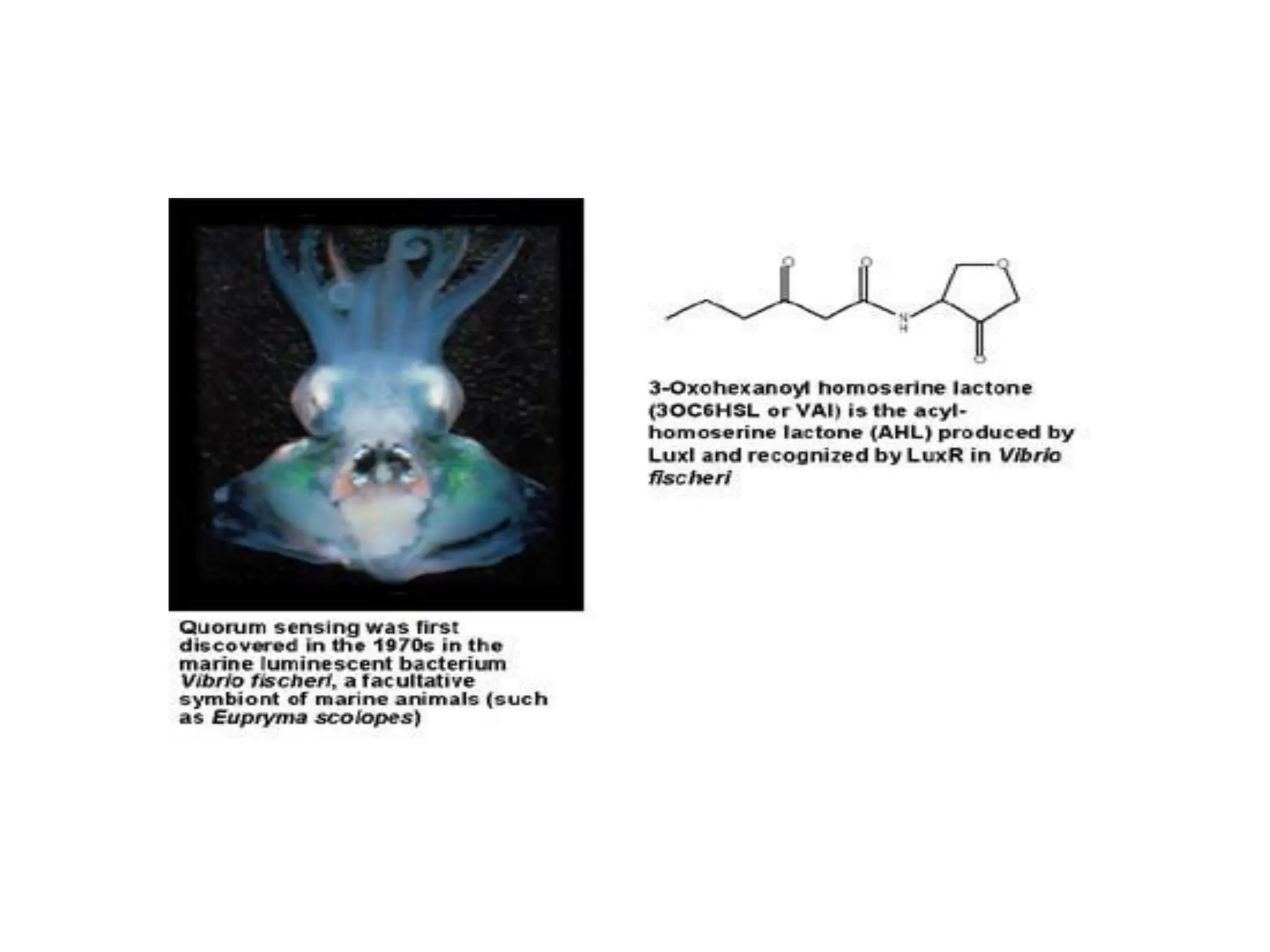
• Eberhard et al. (1981) identified the V. fischeri autoinducer signal to
be N-3-oxo-hexanoyl-L-homoserine lactone
• Engebrecht et al. (1983) cloned the genes for the signal generating
enzyme, the signal receptor and the lux genes
4.
• Fuqua etal. (1994) introduced the term “quorum sensing” to
describe cell-cell signaling in bacteria
• Early 1990’s – homologs of LuxI were discovered in different
bacterial species
• V. fischeri LuxI-LuxR signaling system becomes the paradigm for
bacterial cell-cell communication
5.
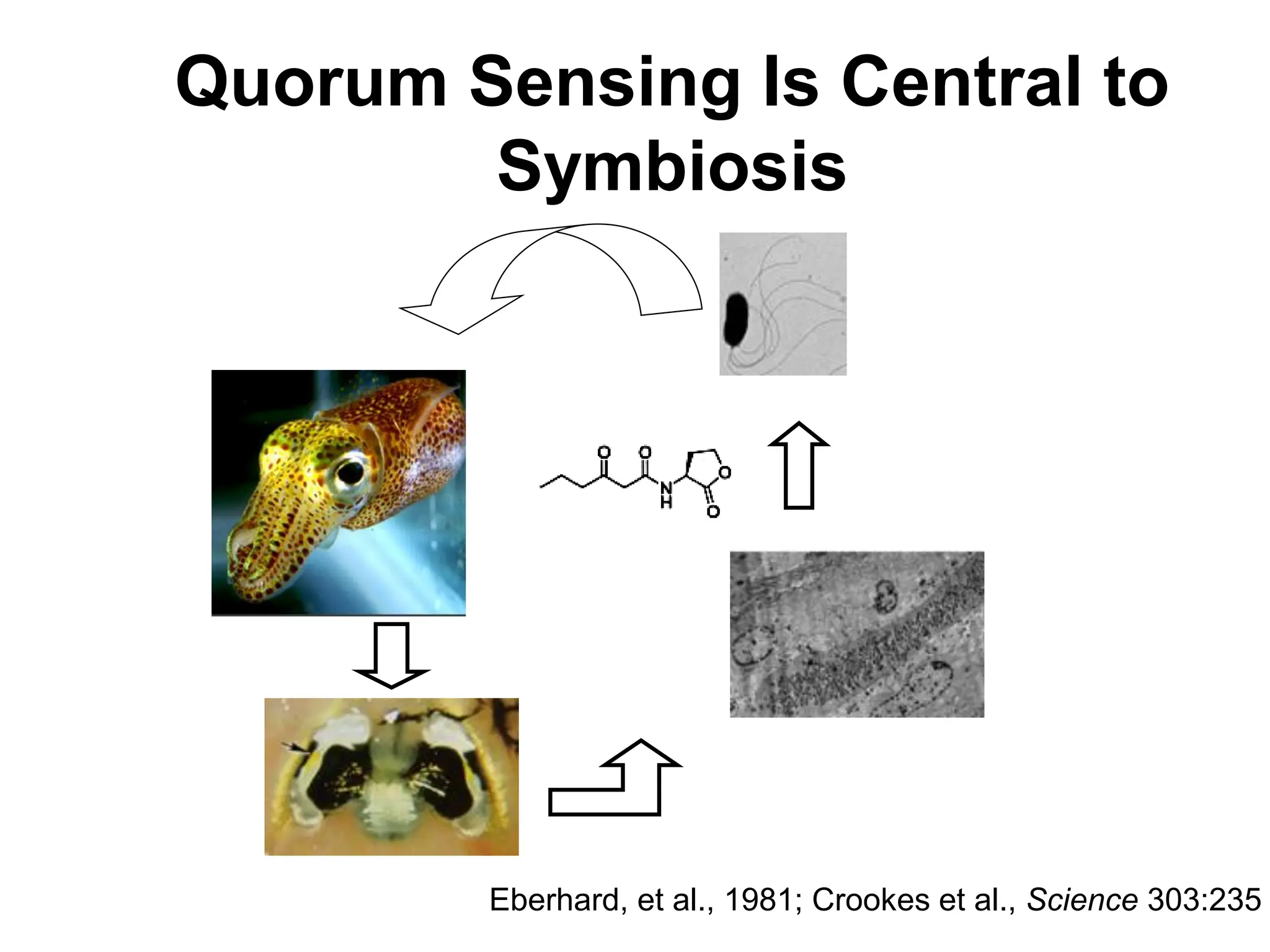
Quorum Sensing IsCentral to
Symbiosis
Eberhard, et al., 1981; Crookes et al., Science 303:235
Coordinación de sucomportamiento
• Condiciones ambientales cambiantes
Respuestas rápidas:
- adaptación a disponibilidad de nutrientes
- defensa contra otros microorganismos
- presencia de compuestos tóxicos
- coordinación factores de virulencia
11.
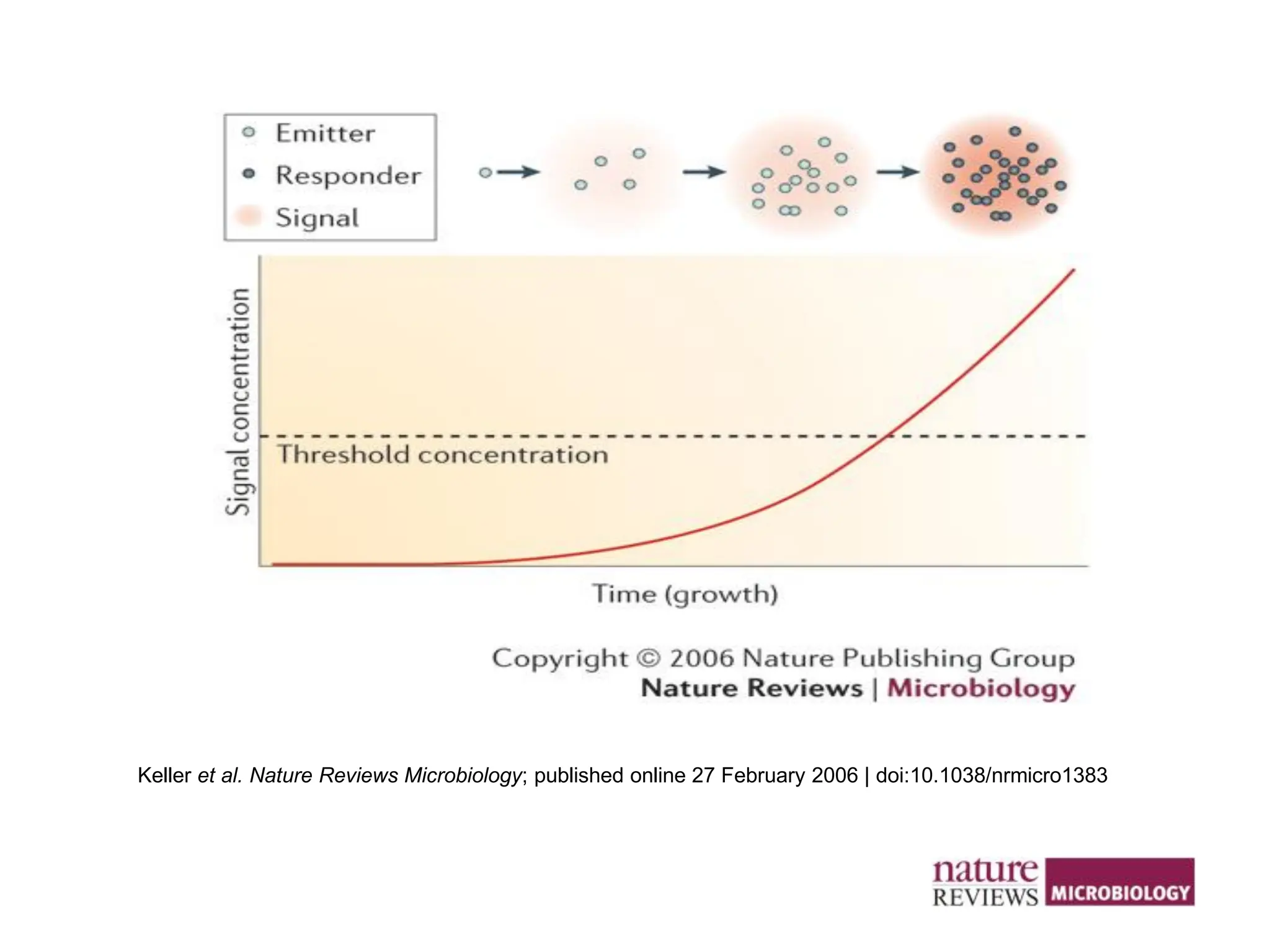
Keller et al.Nature Reviews Microbiology; published online 27 February 2006 | doi:10.1038/nrmicro1383
13.
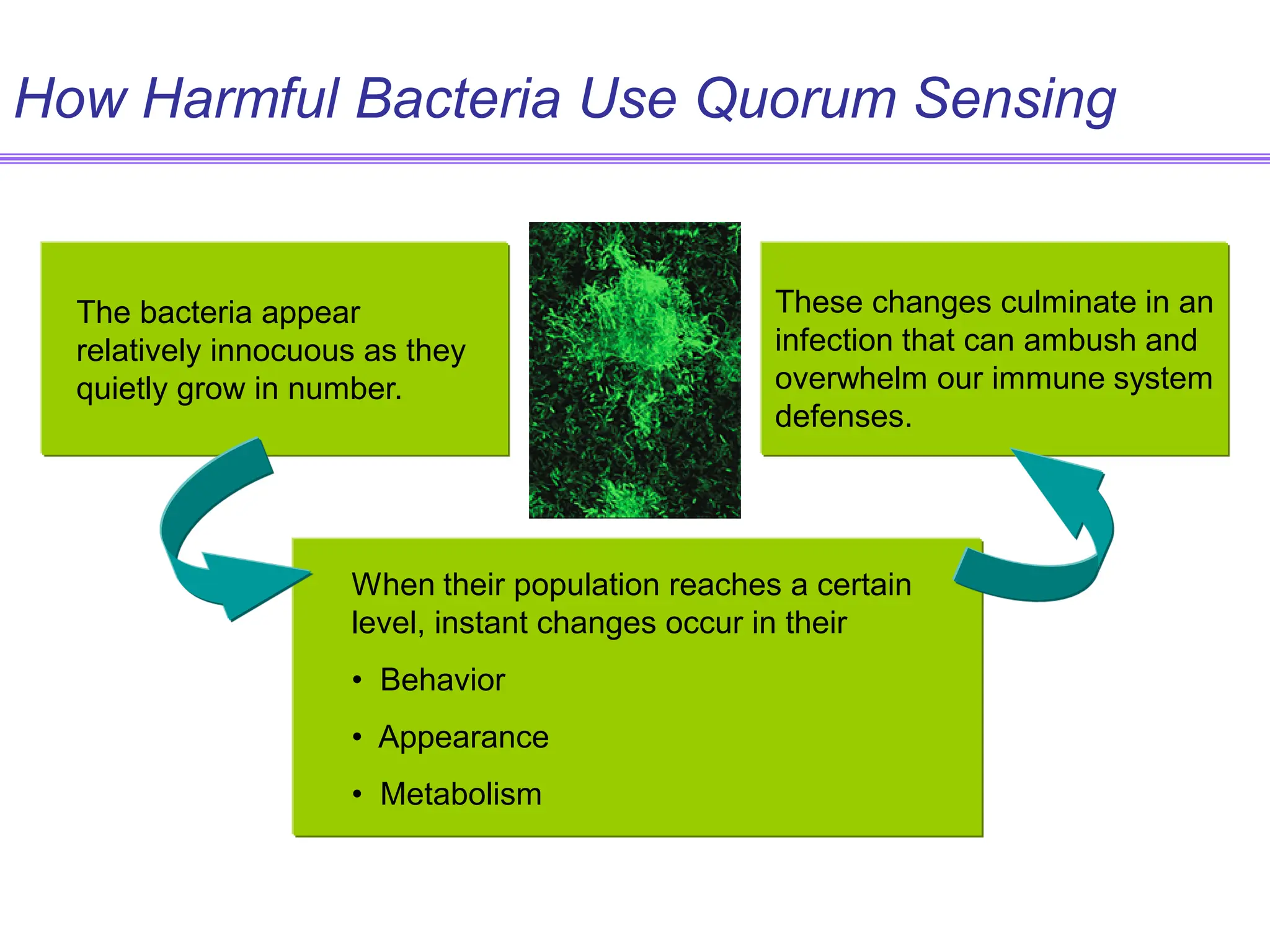
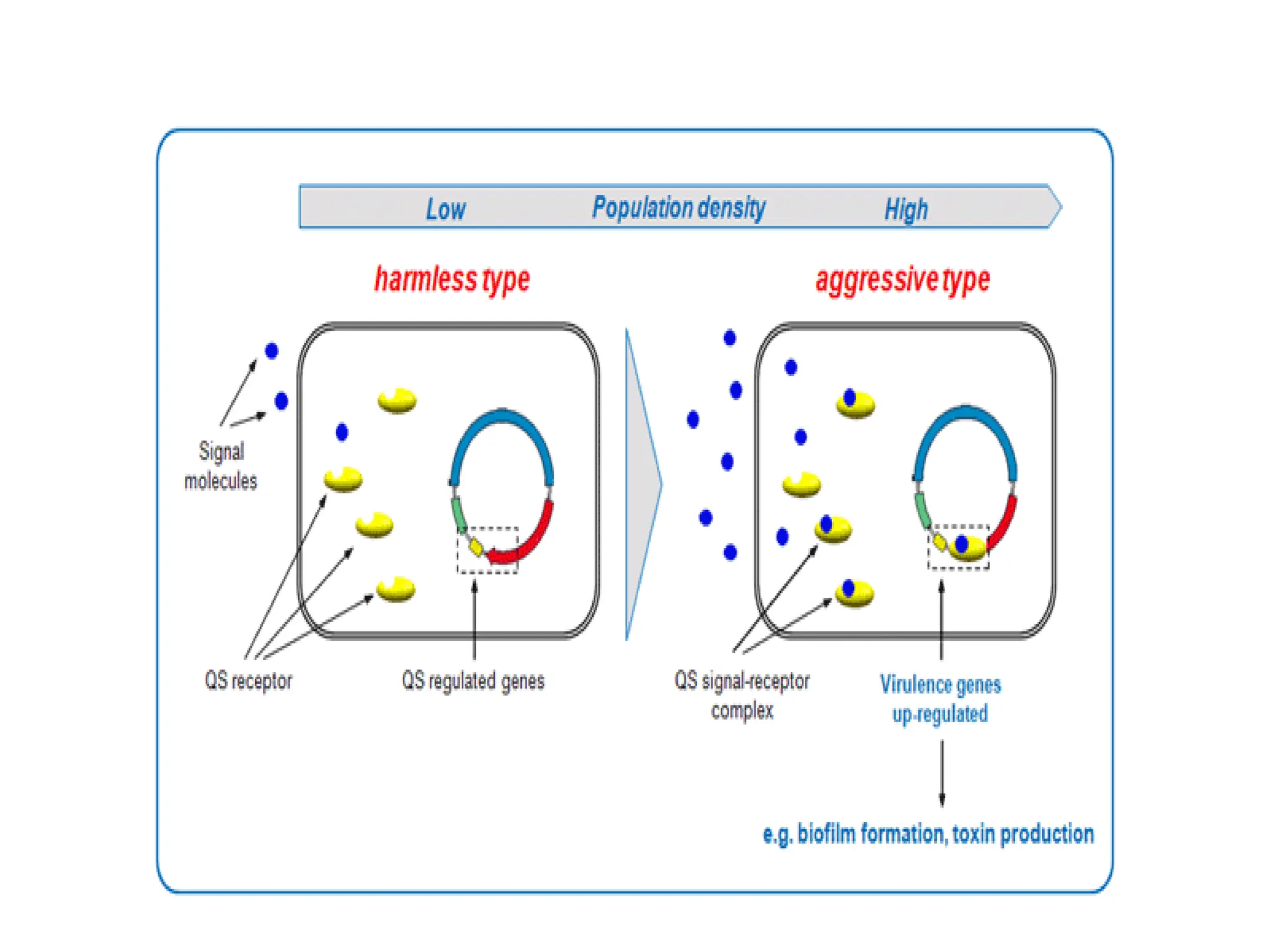
How Harmful BacteriaUse Quorum Sensing
These changes culminate in an
infection that can ambush and
overwhelm our immune system
defenses.
The bacteria appear
relatively innocuous as they
quietly grow in number.
When their population reaches a certain
level, instant changes occur in their
• Behavior
• Appearance
• Metabolism
16.
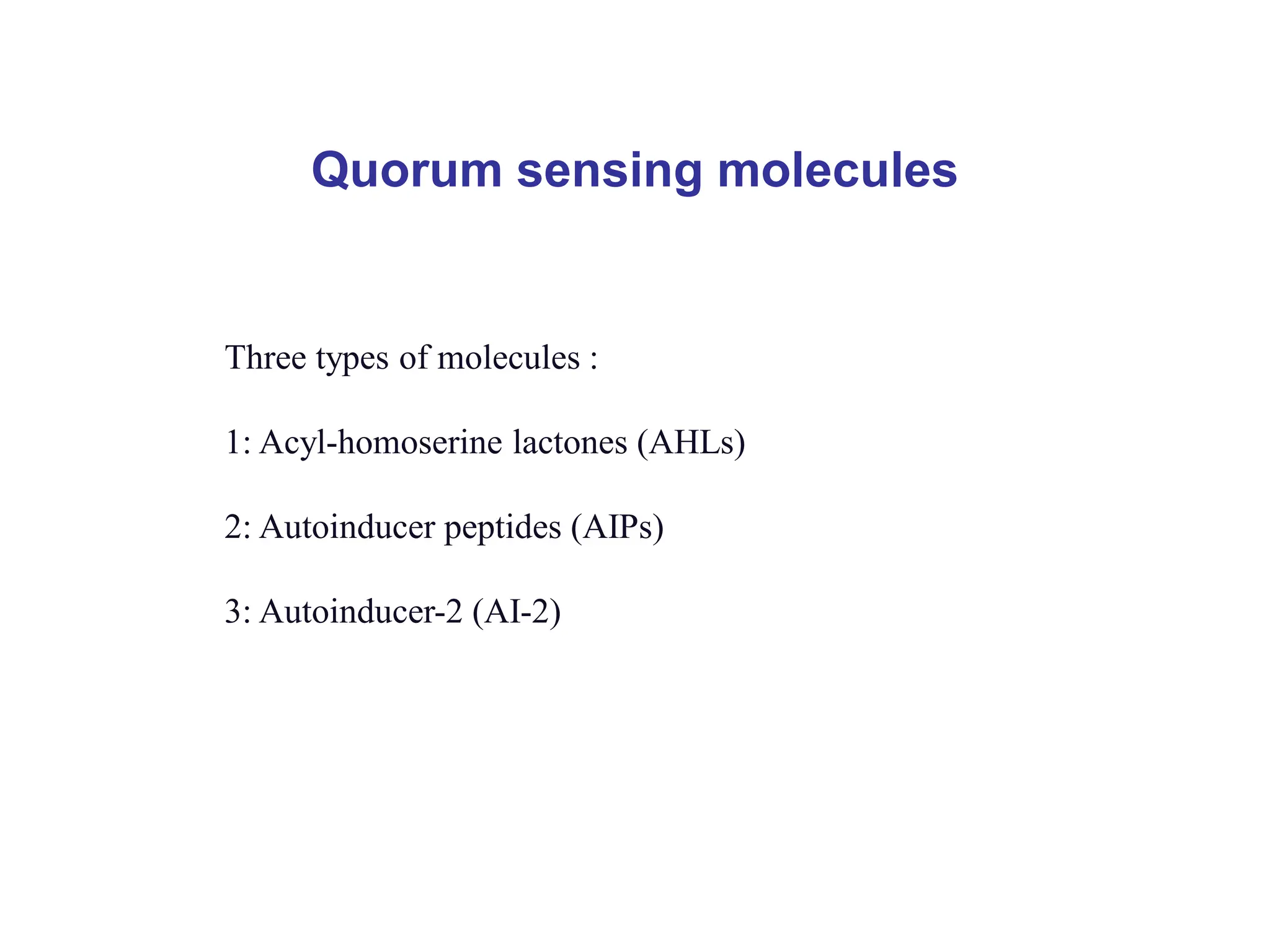
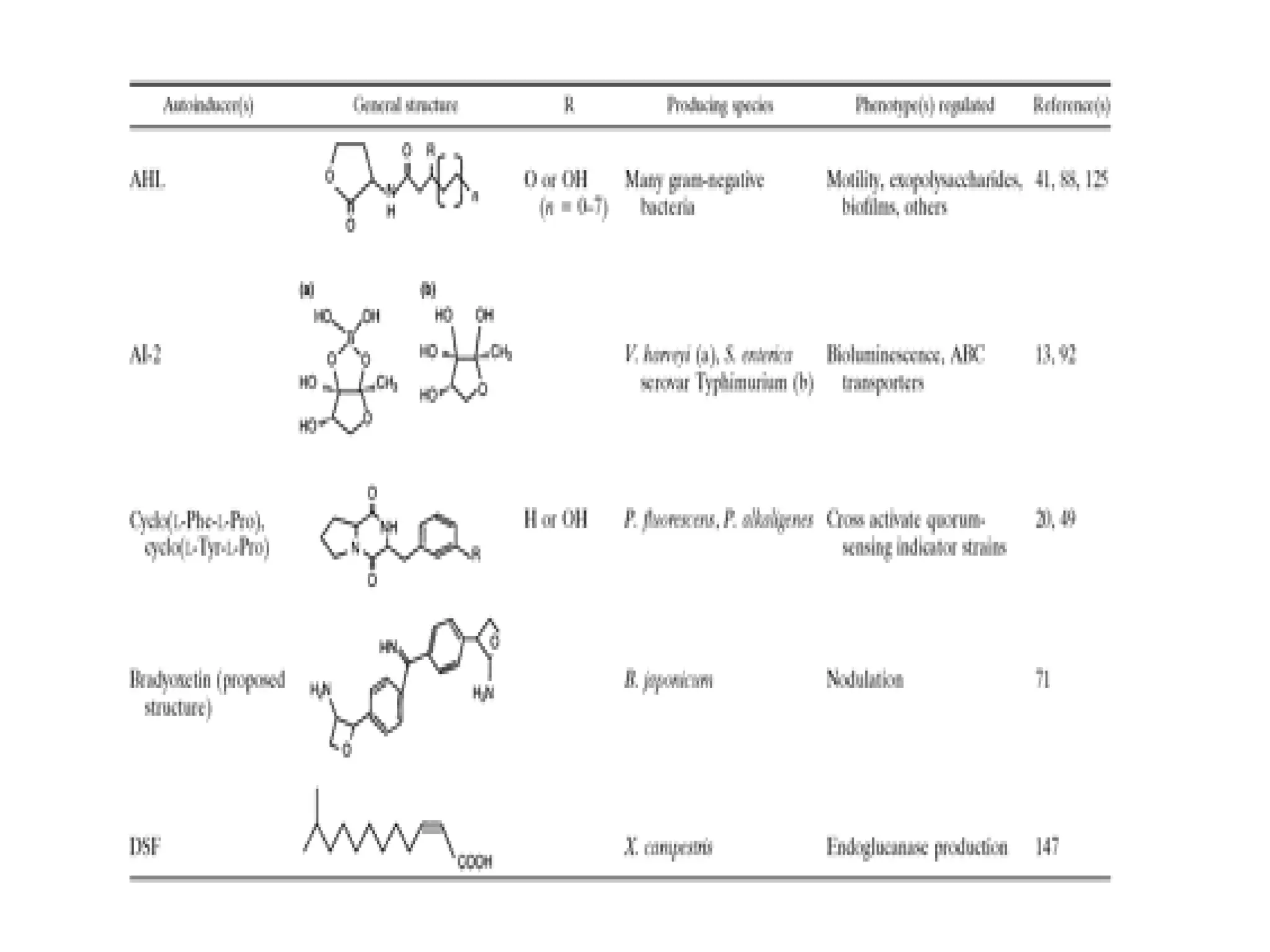
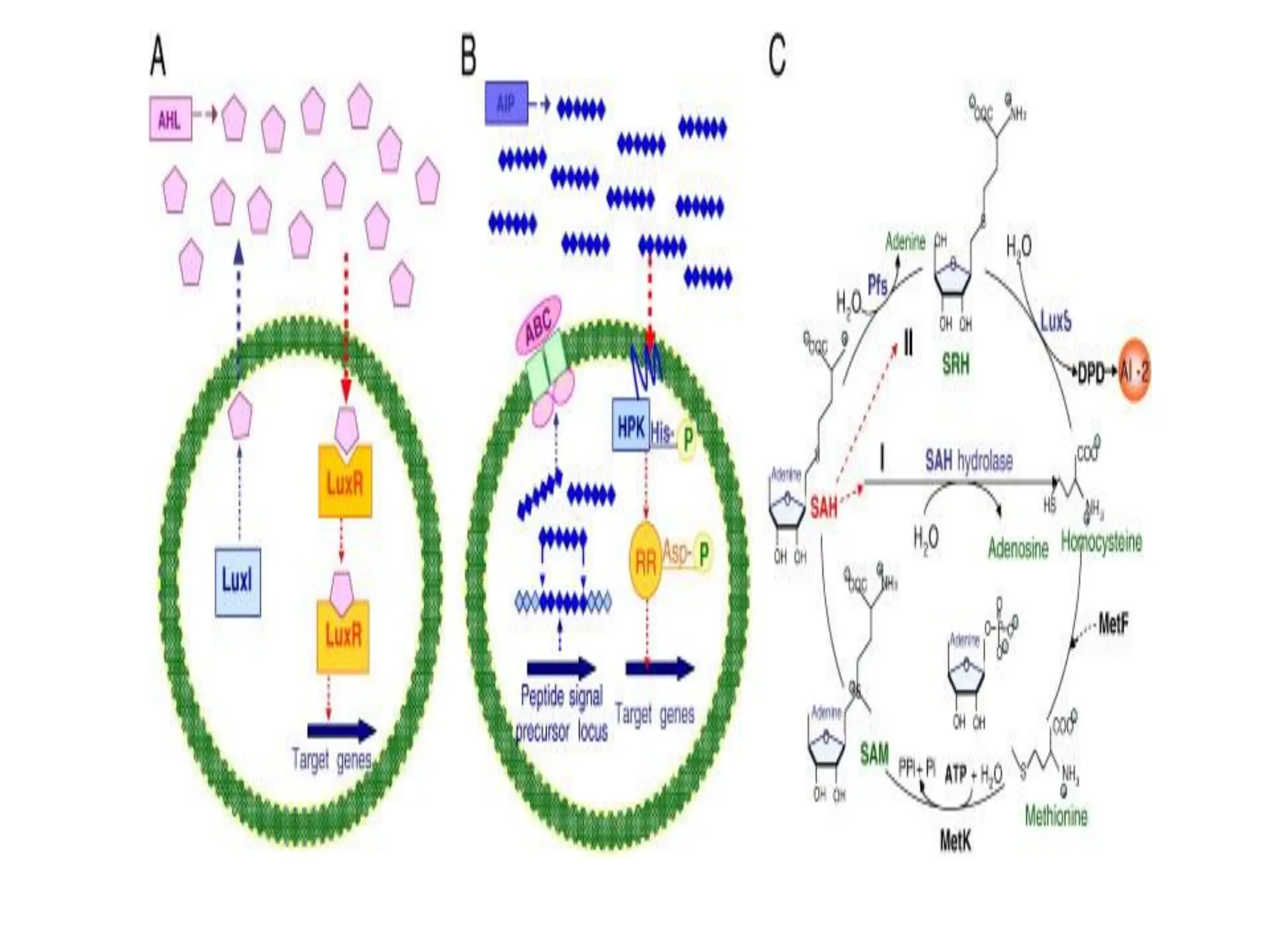
Quorum sensing molecules
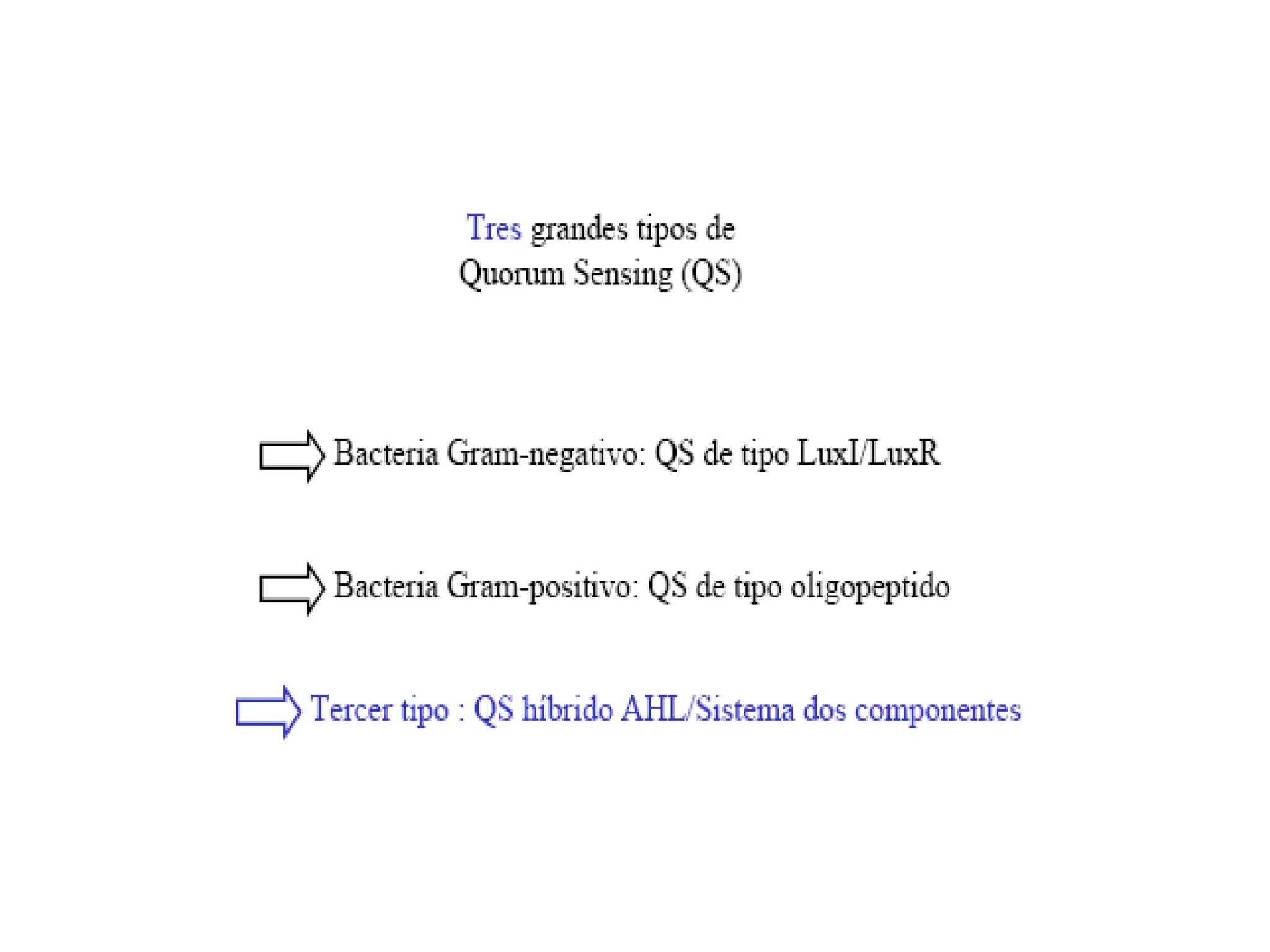
Threetypes of molecules :
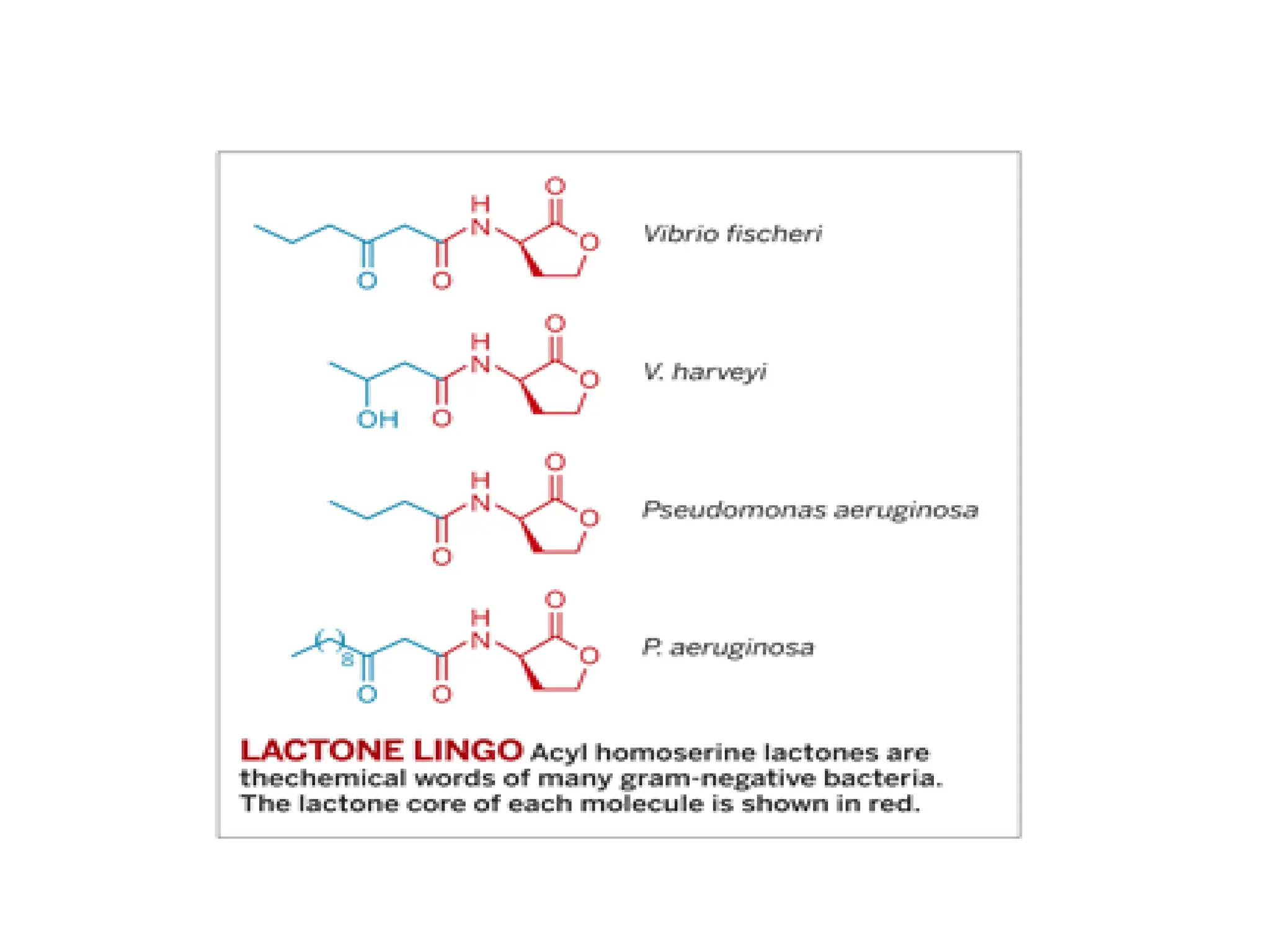
1: Acyl-homoserine lactones (AHLs)
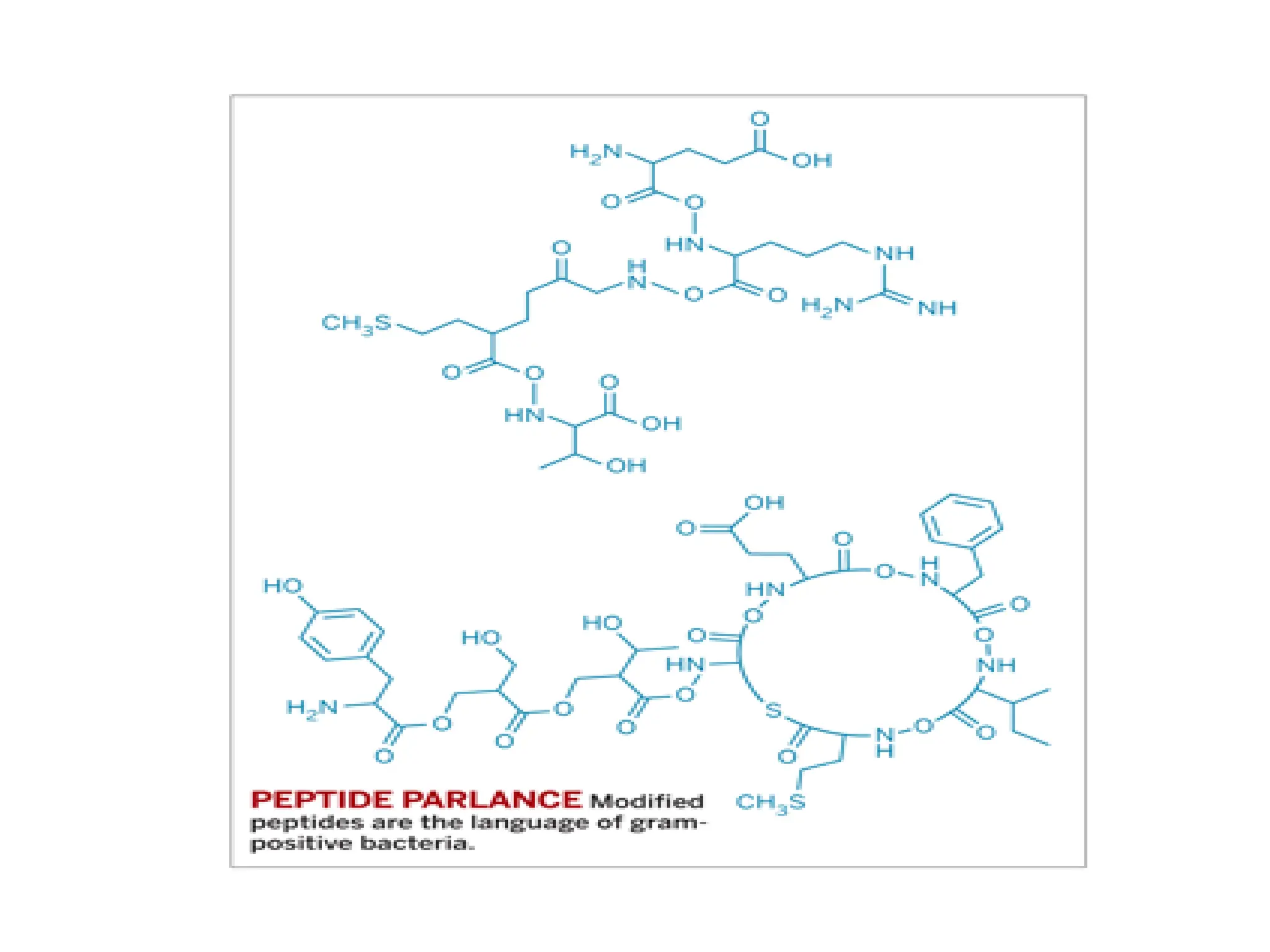
2: Autoinducer peptides (AIPs)
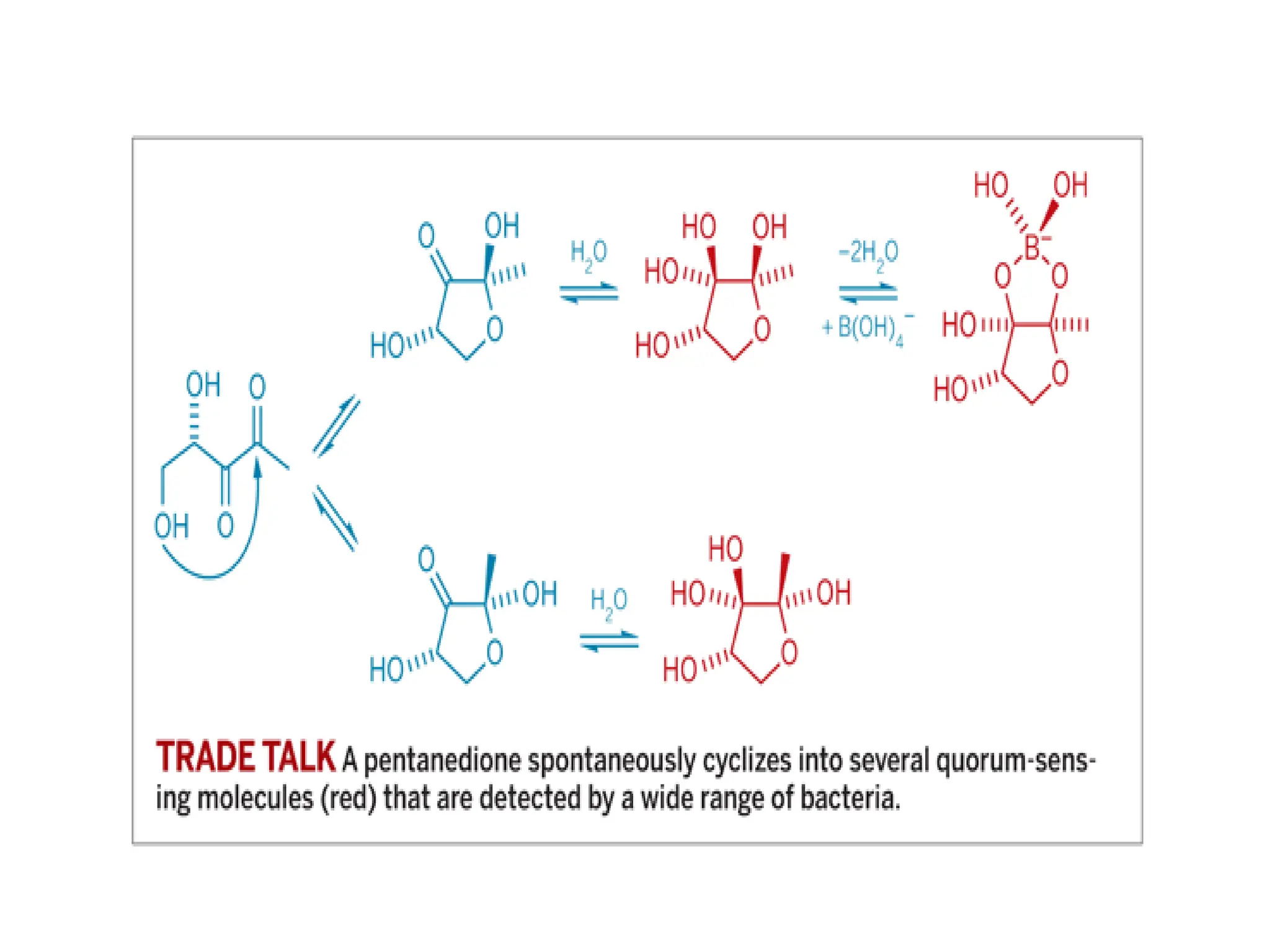
3: Autoinducer-2 (AI-2)
17.
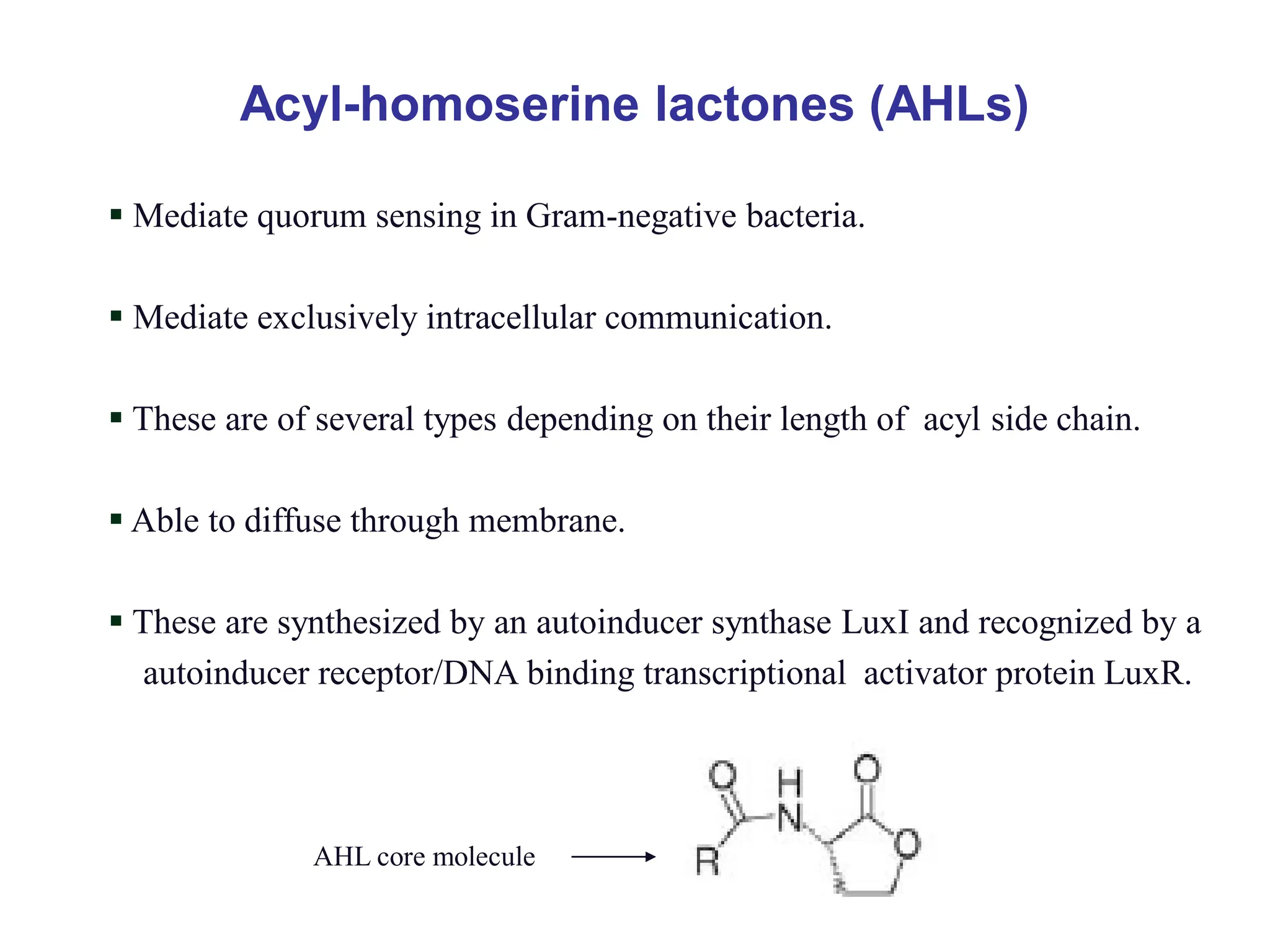
Acyl-homoserine lactones (AHLs)
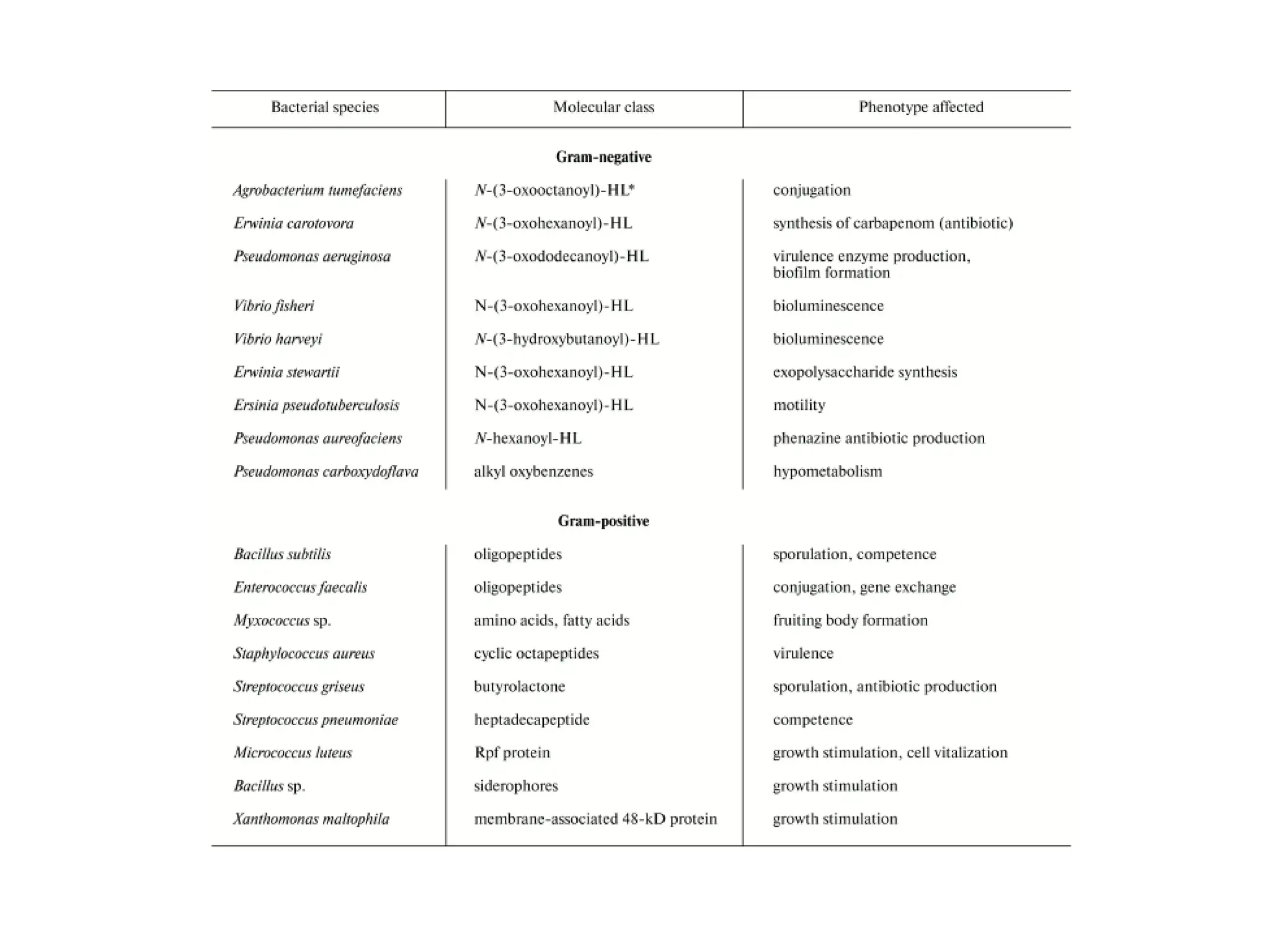
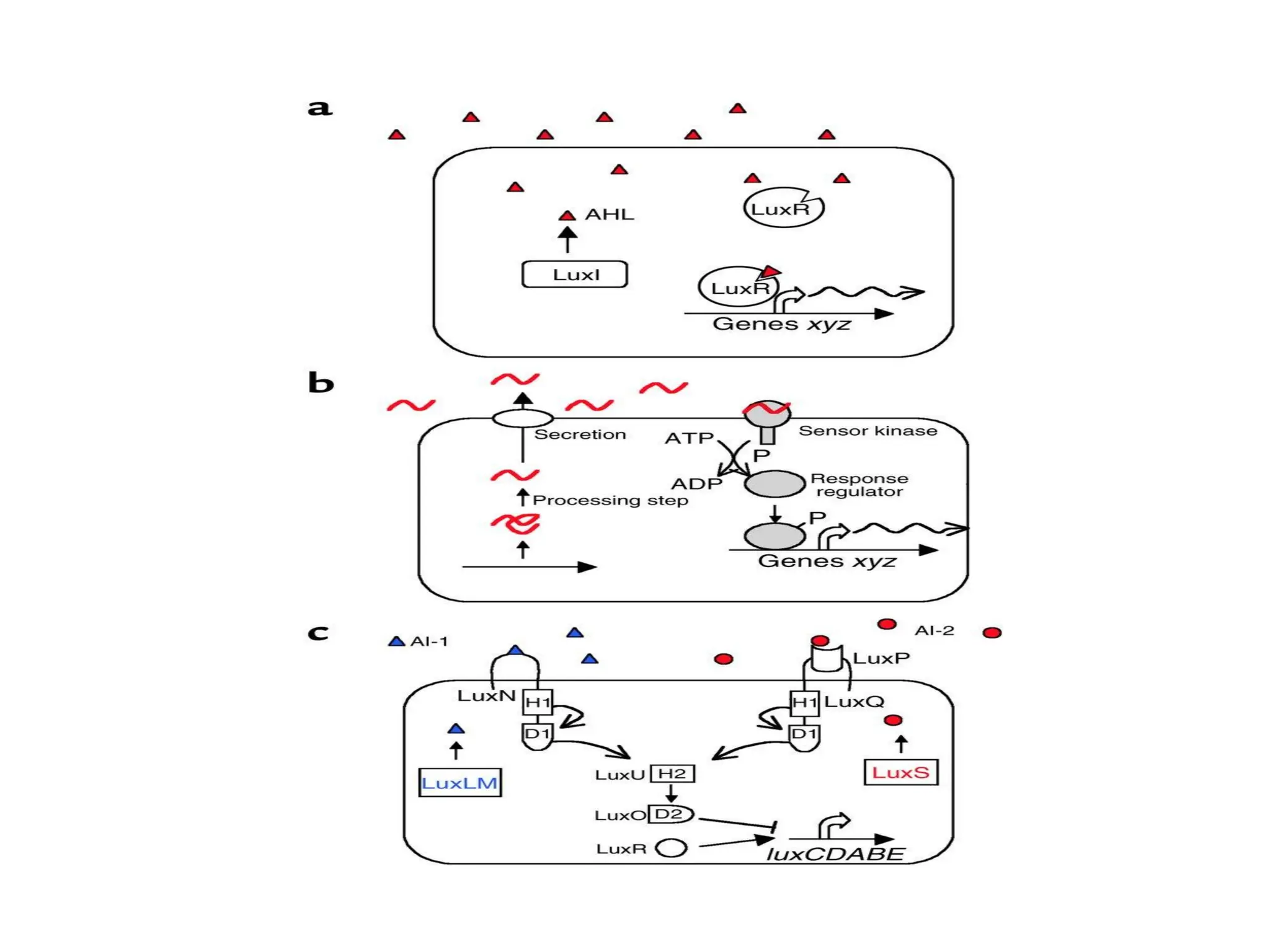
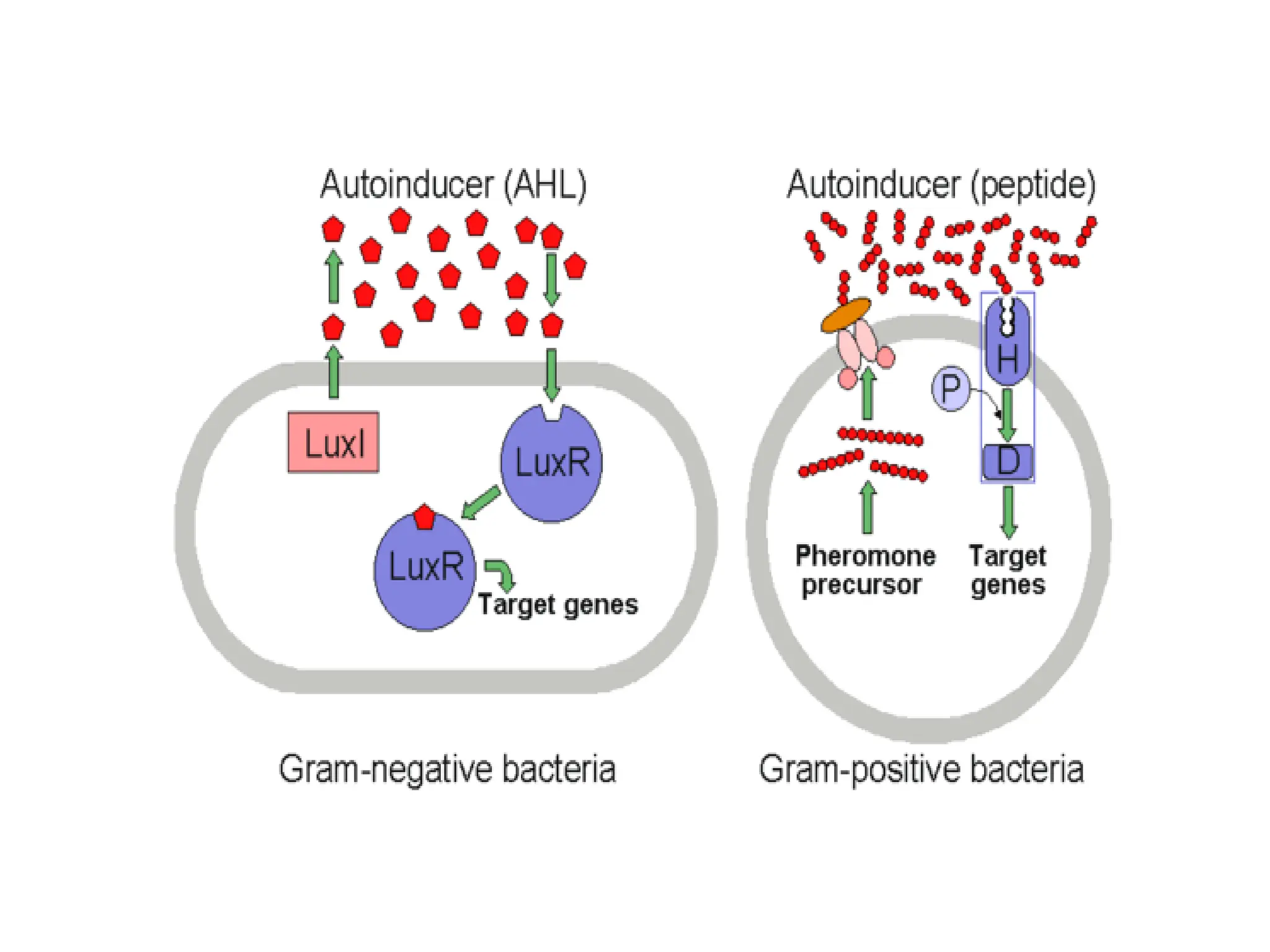
Mediate quorum sensing in Gram-negative bacteria.
Mediate exclusively intracellular communication.
These are of several types depending on their length of acyl side chain.
Able to diffuse through membrane.
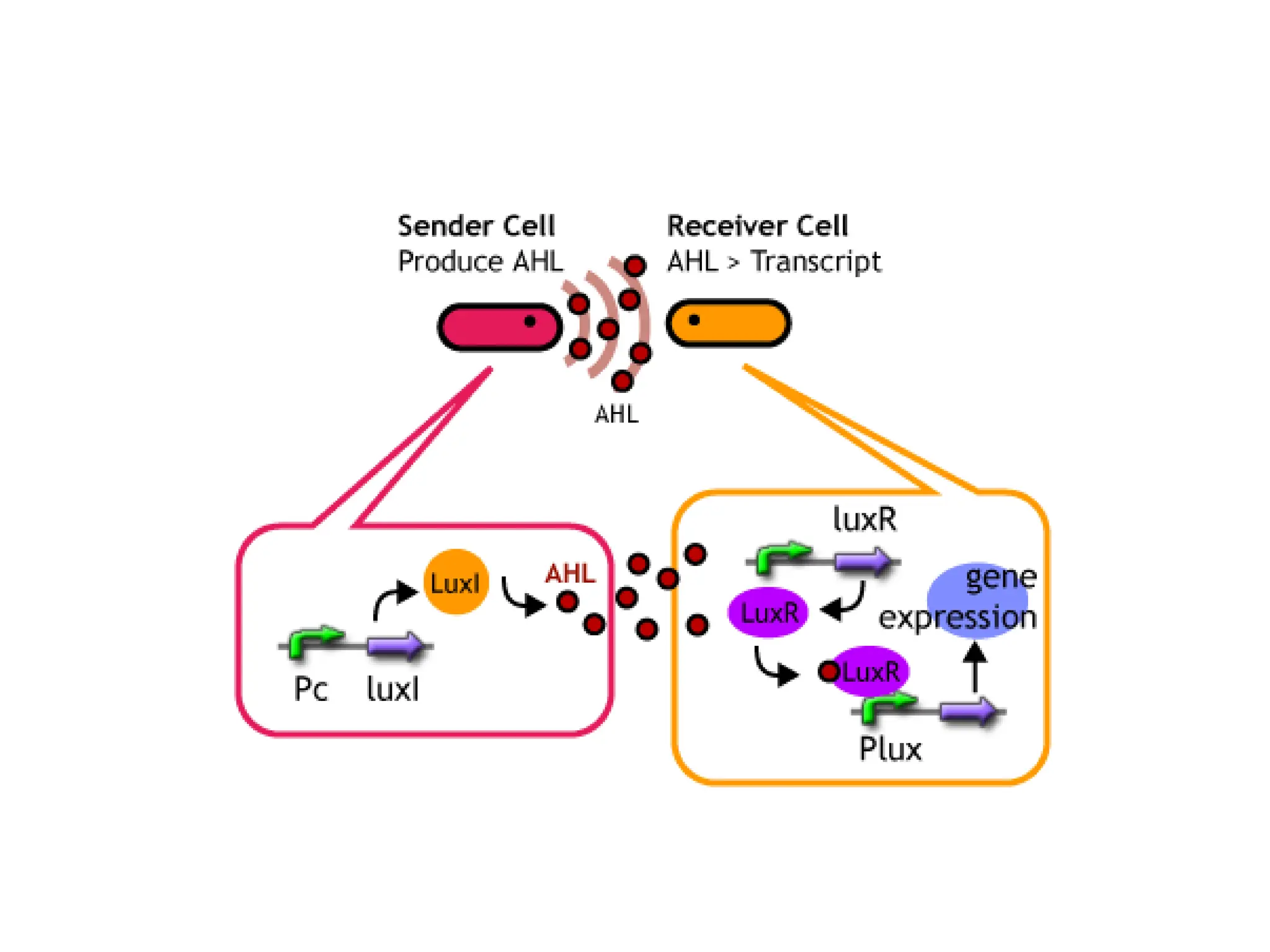
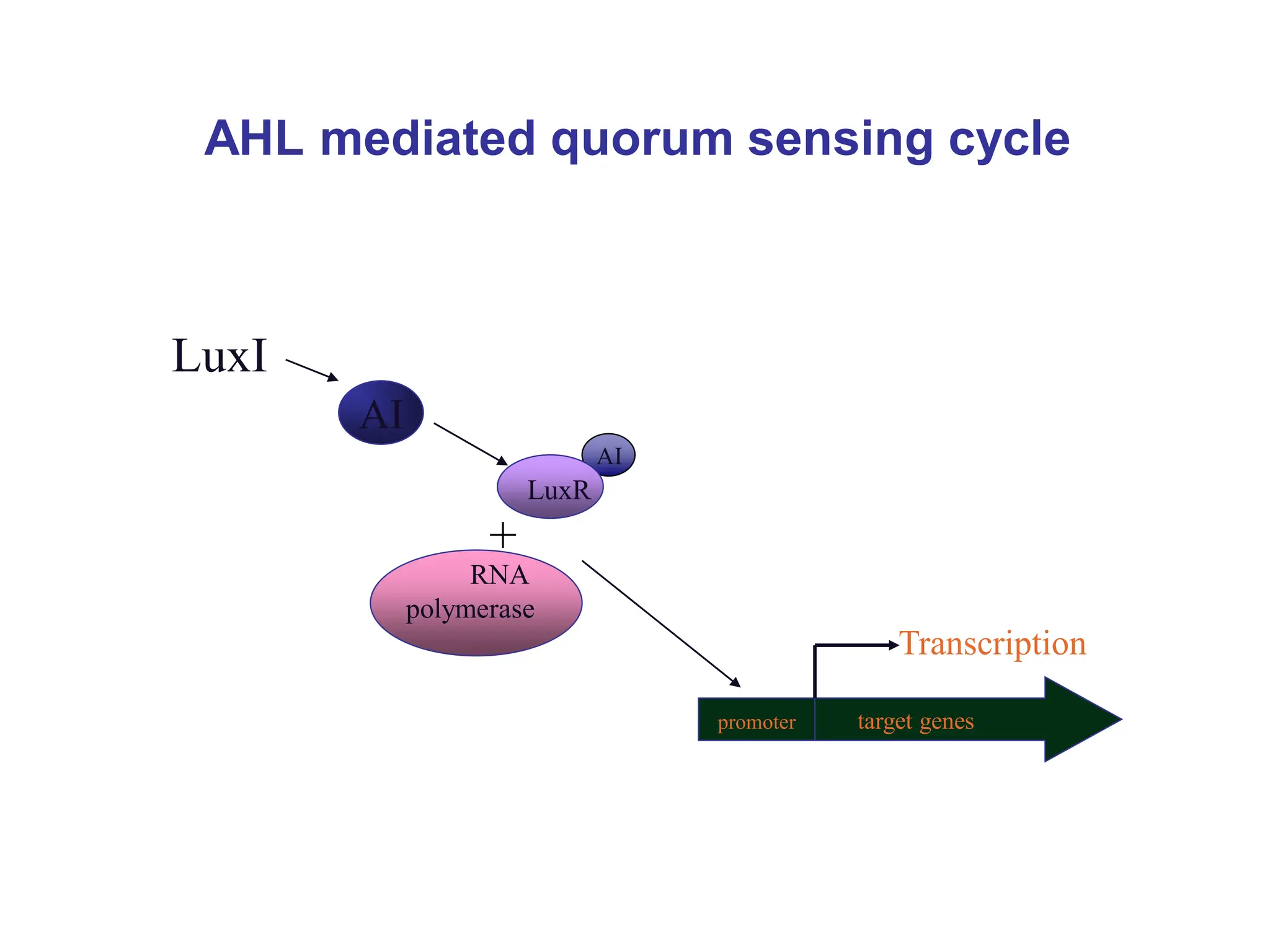
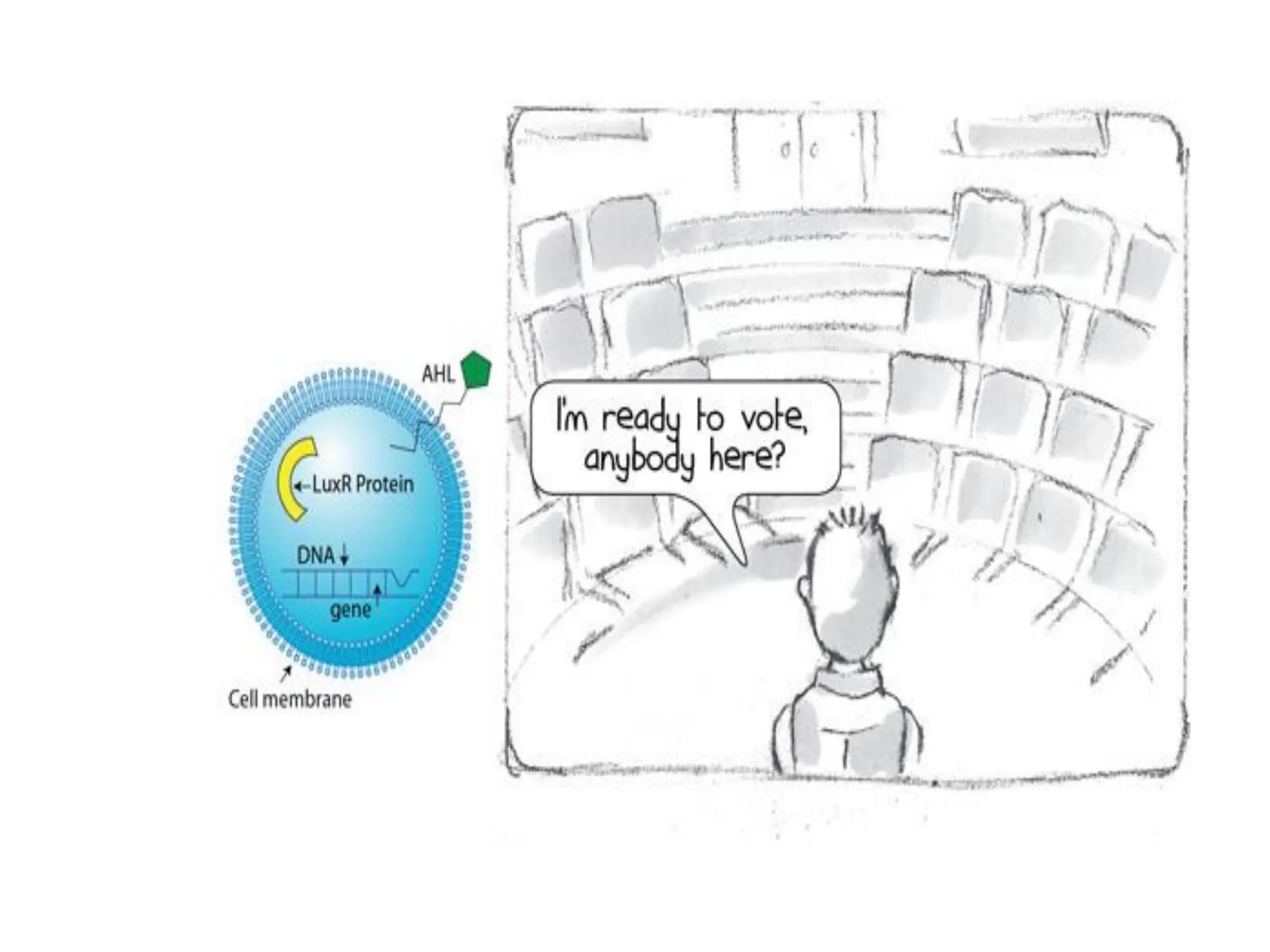
These are synthesized by an autoinducer synthase LuxI and recognized by a
autoinducer receptor/DNA binding transcriptional activator protein LuxR.
AHL core molecule
18.
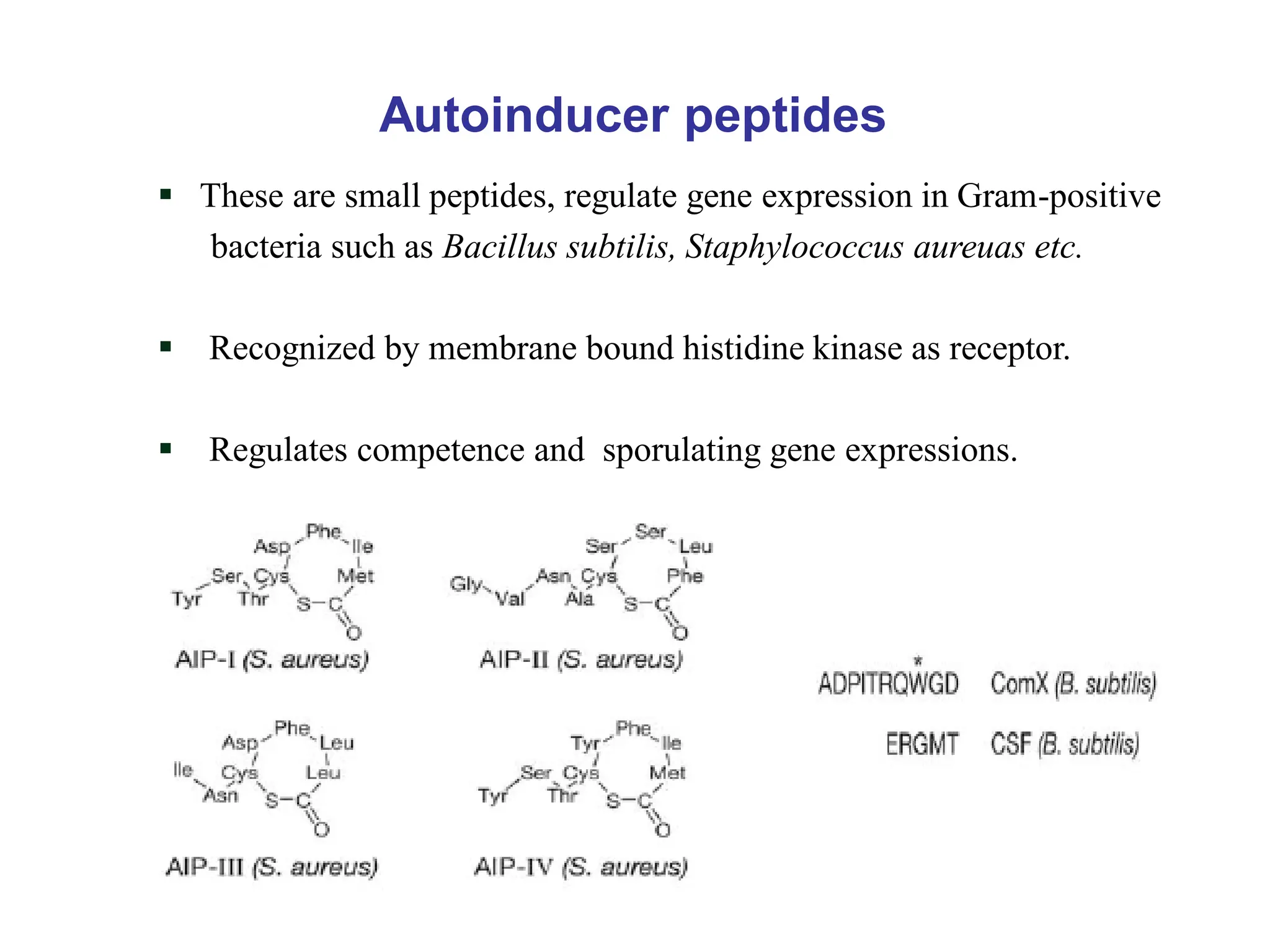
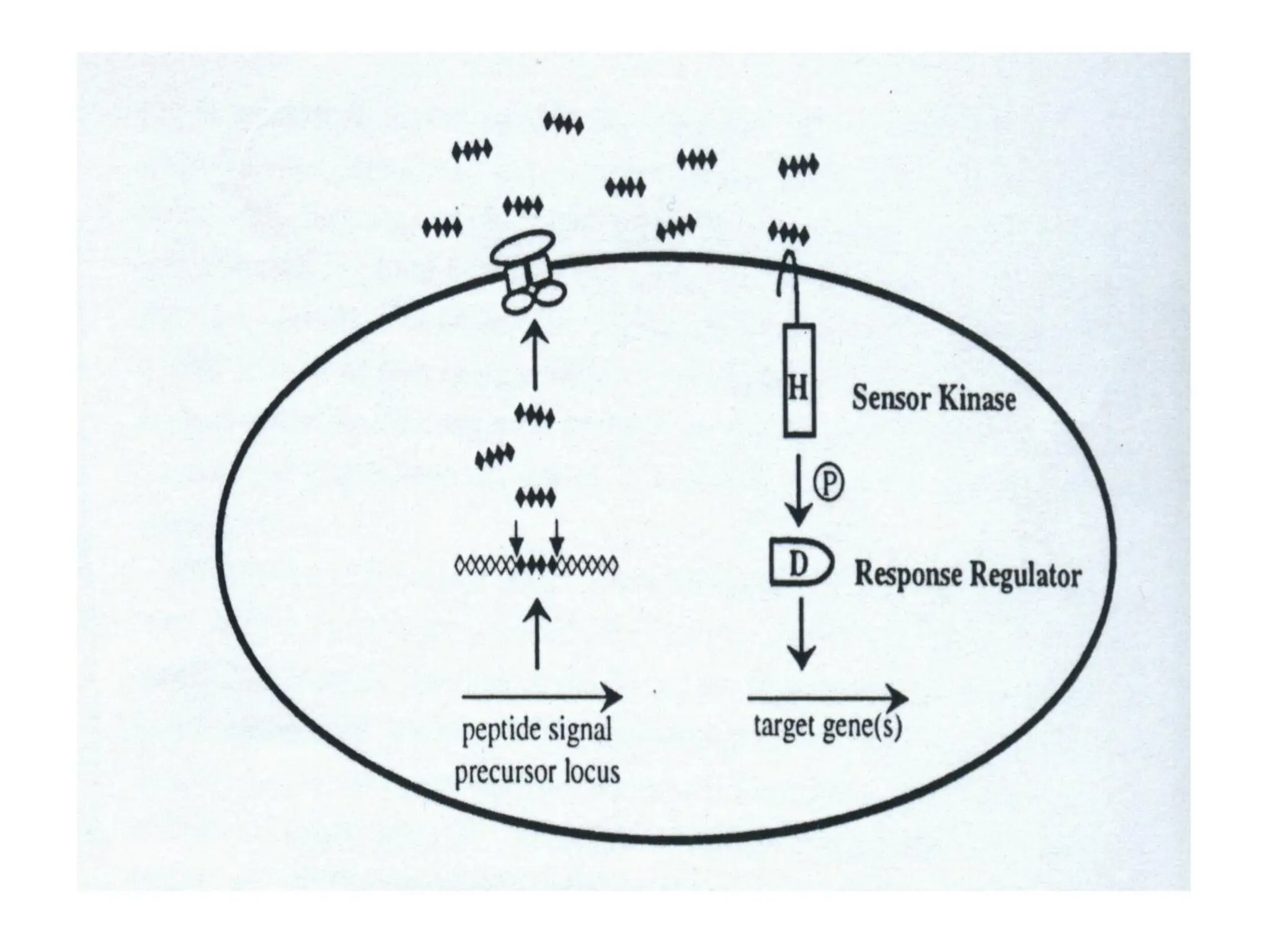
Autoinducer peptides
Theseare small peptides, regulate gene expression in Gram-positive
bacteria such as Bacillus subtilis, Staphylococcus aureuas etc.
Recognized by membrane bound histidine kinase as receptor.
Regulates competence and sporulating gene expressions.
19.
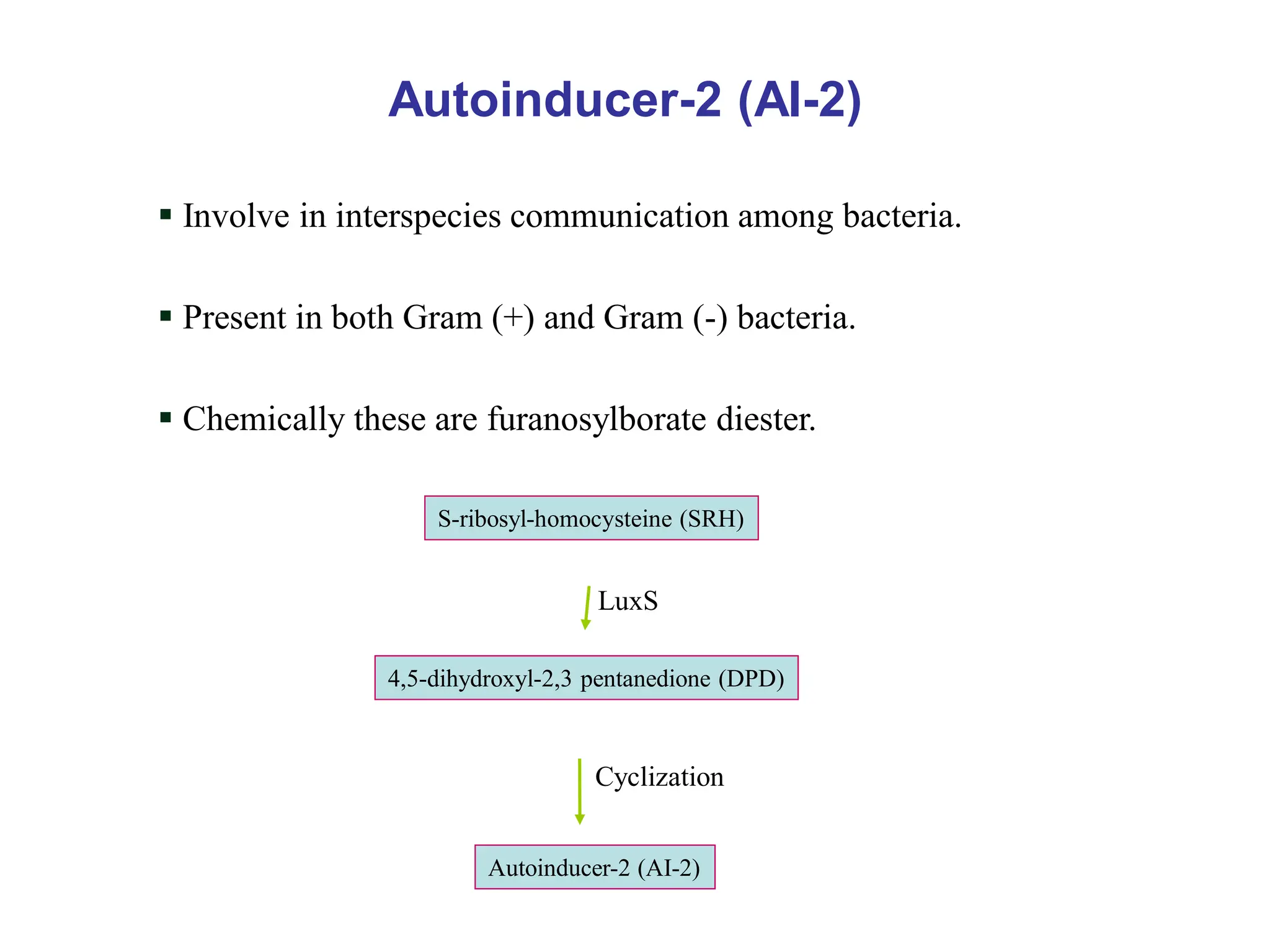
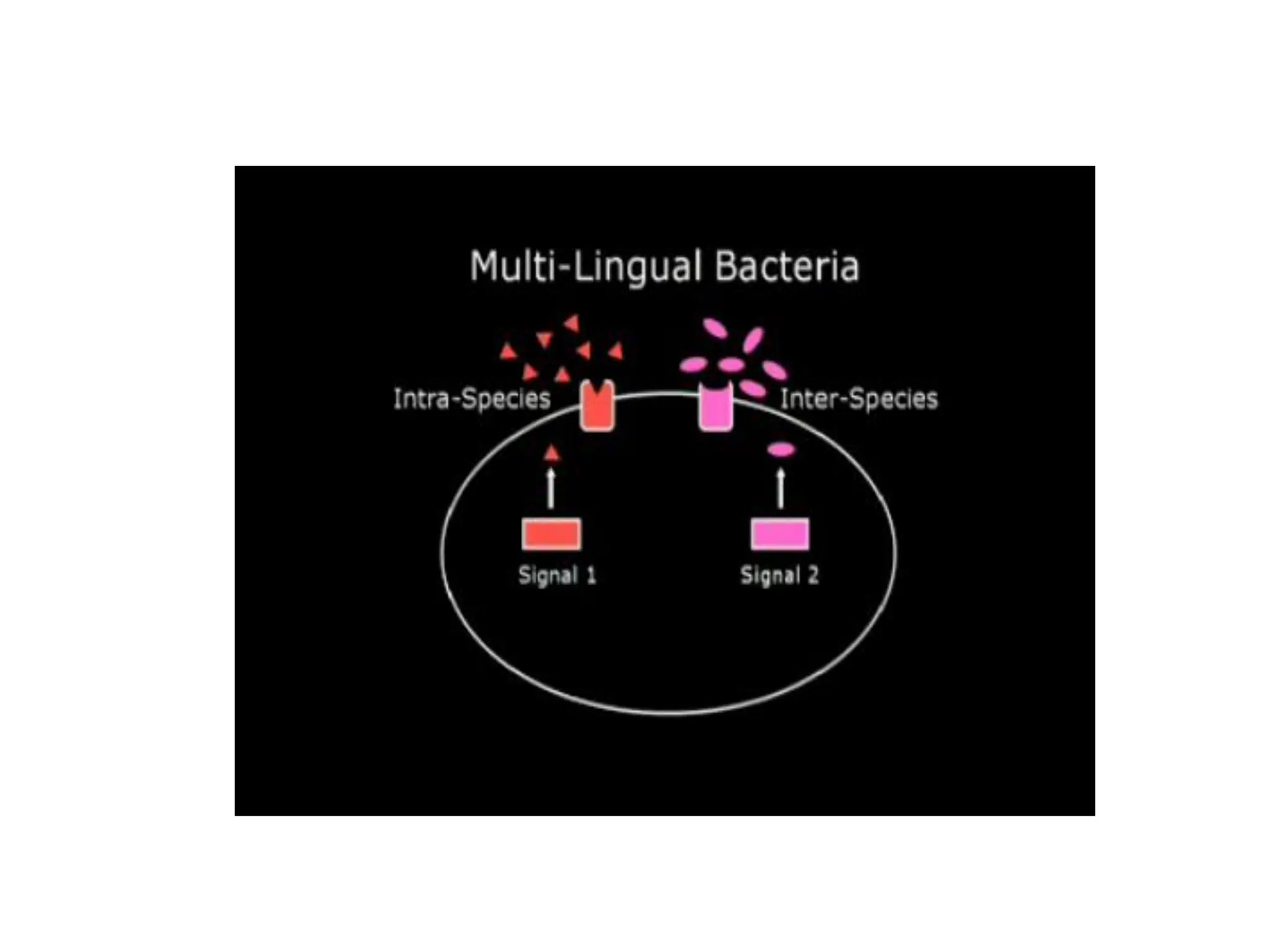
Autoinducer-2 (AI-2)
Involvein interspecies communication among bacteria.
Present in both Gram (+) and Gram (-) bacteria.
Chemically these are furanosylborate diester.
S-ribosyl-homocysteine (SRH)
4,5-dihydroxyl-2,3 pentanedione (DPD)
Autoinducer-2 (AI-2)
LuxS
Cyclization
20.
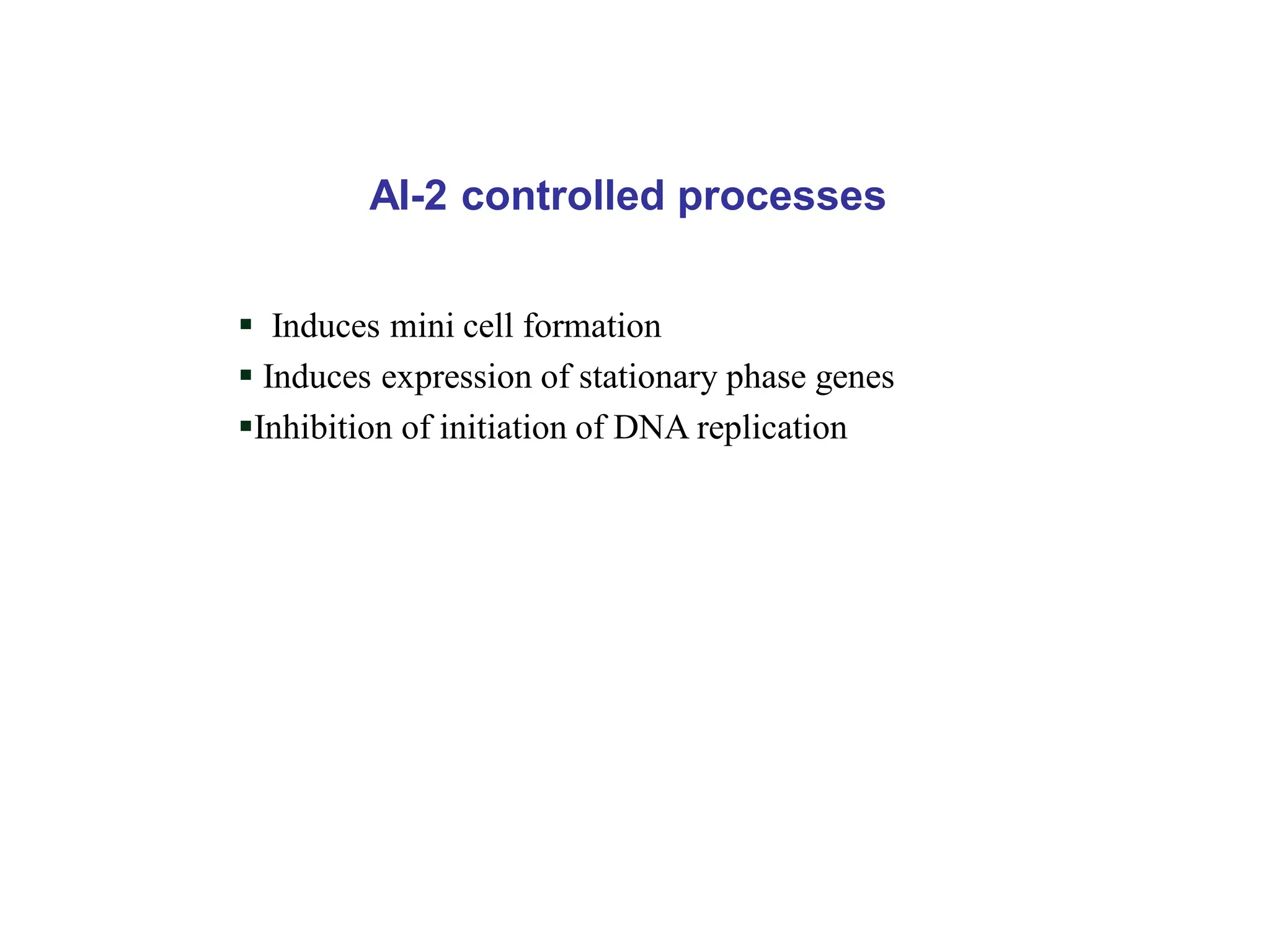
AI-2 controlled processes
Induces mini cell formation
Induces expression of stationary phase genes
Inhibition of initiation of DNA replication
23.
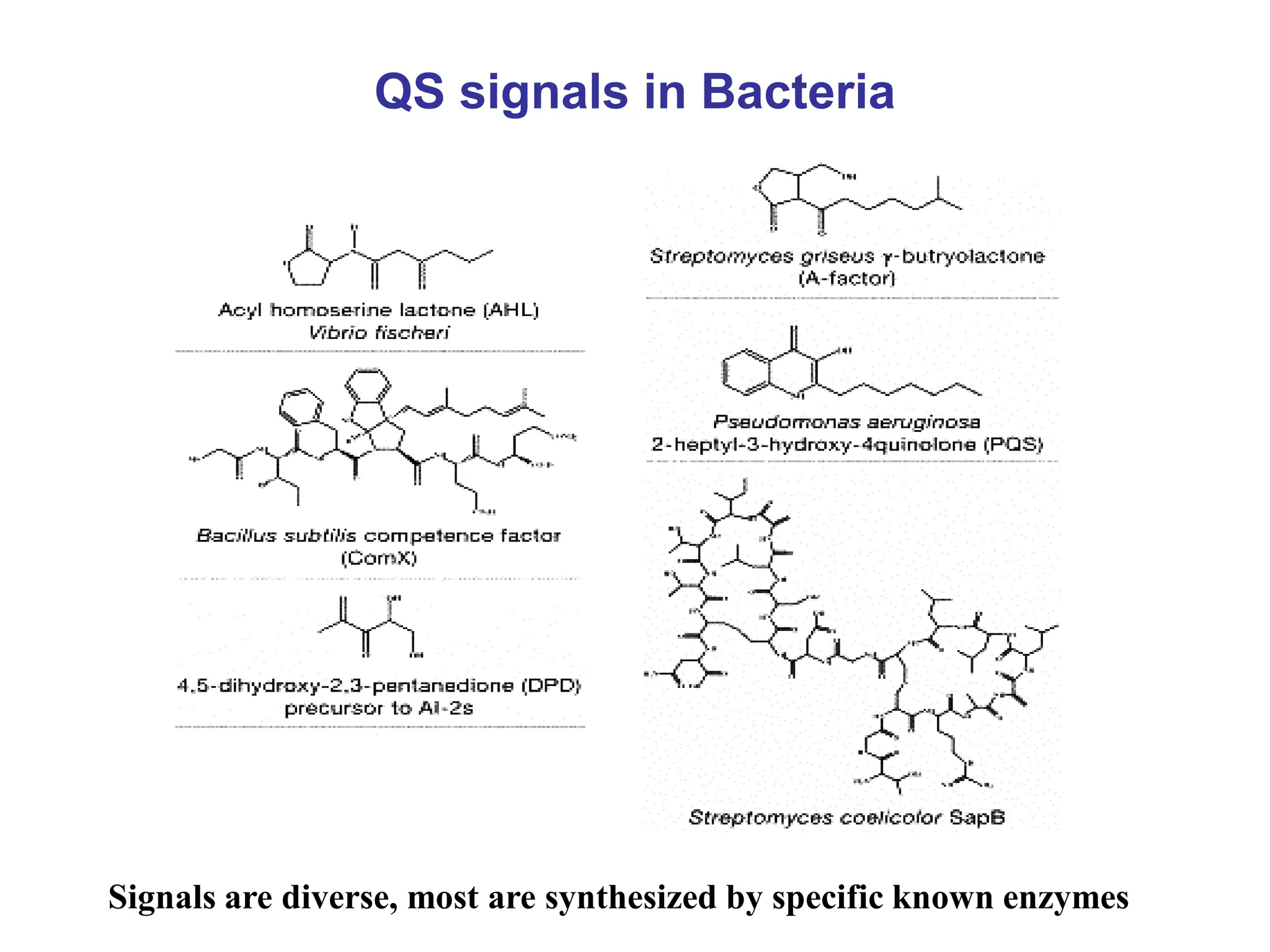
QS signals inBacteria
Signals are diverse, most are synthesized by specific known enzymes
24.
Keller et al.Nature Reviews Microbiology; published online 27 February 2006 | doi:10.1038/nrmicro1383
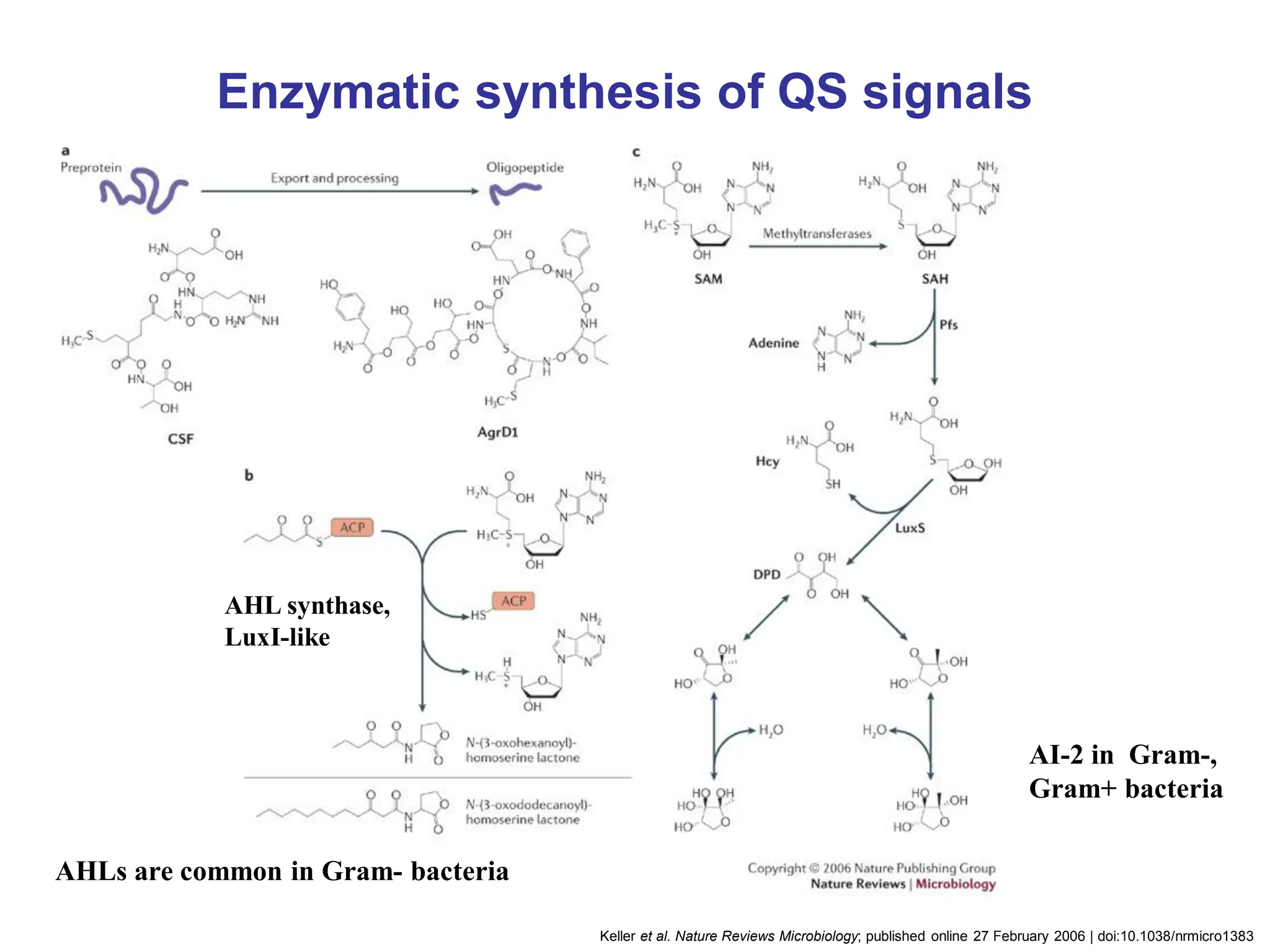
Enzymatic synthesis of QS signals
AHLs are common in Gram- bacteria
AI-2 in Gram-,
Gram+ bacteria
AHL synthase,
LuxI-like
31.
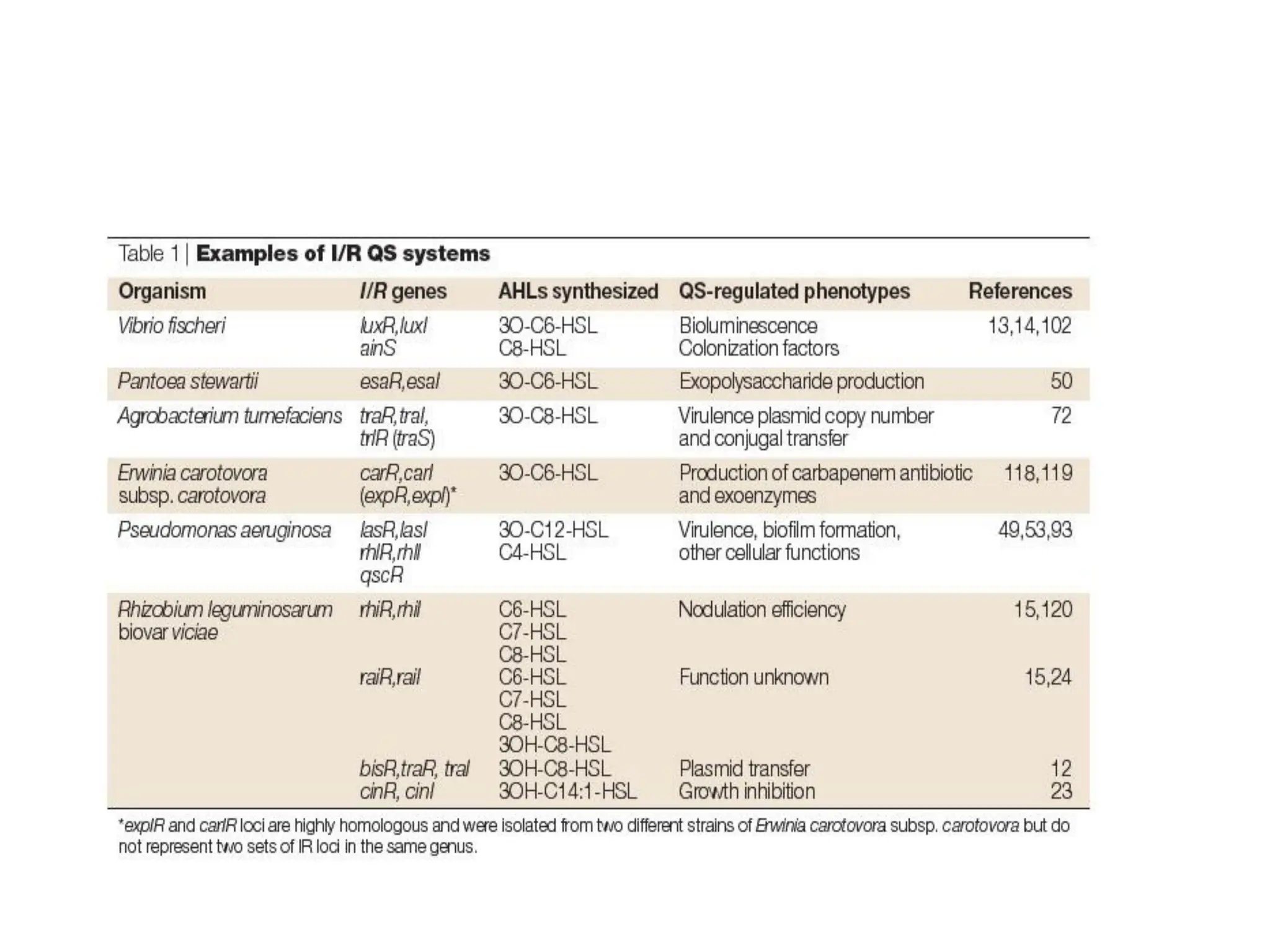
Examples of AHL-mediatedQS
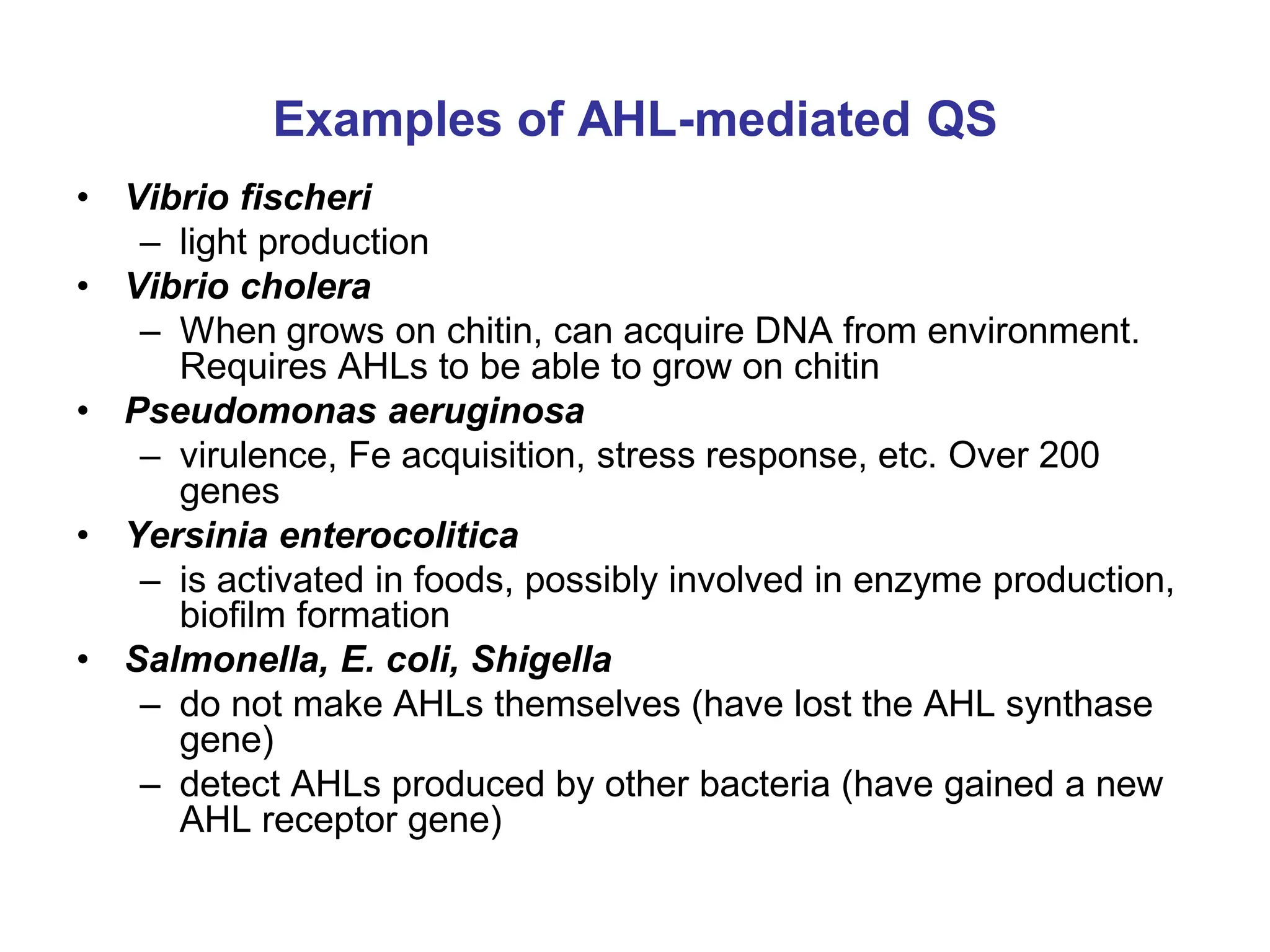
• Vibrio fischeri
– light production
• Vibrio cholera
– When grows on chitin, can acquire DNA from environment.
Requires AHLs to be able to grow on chitin
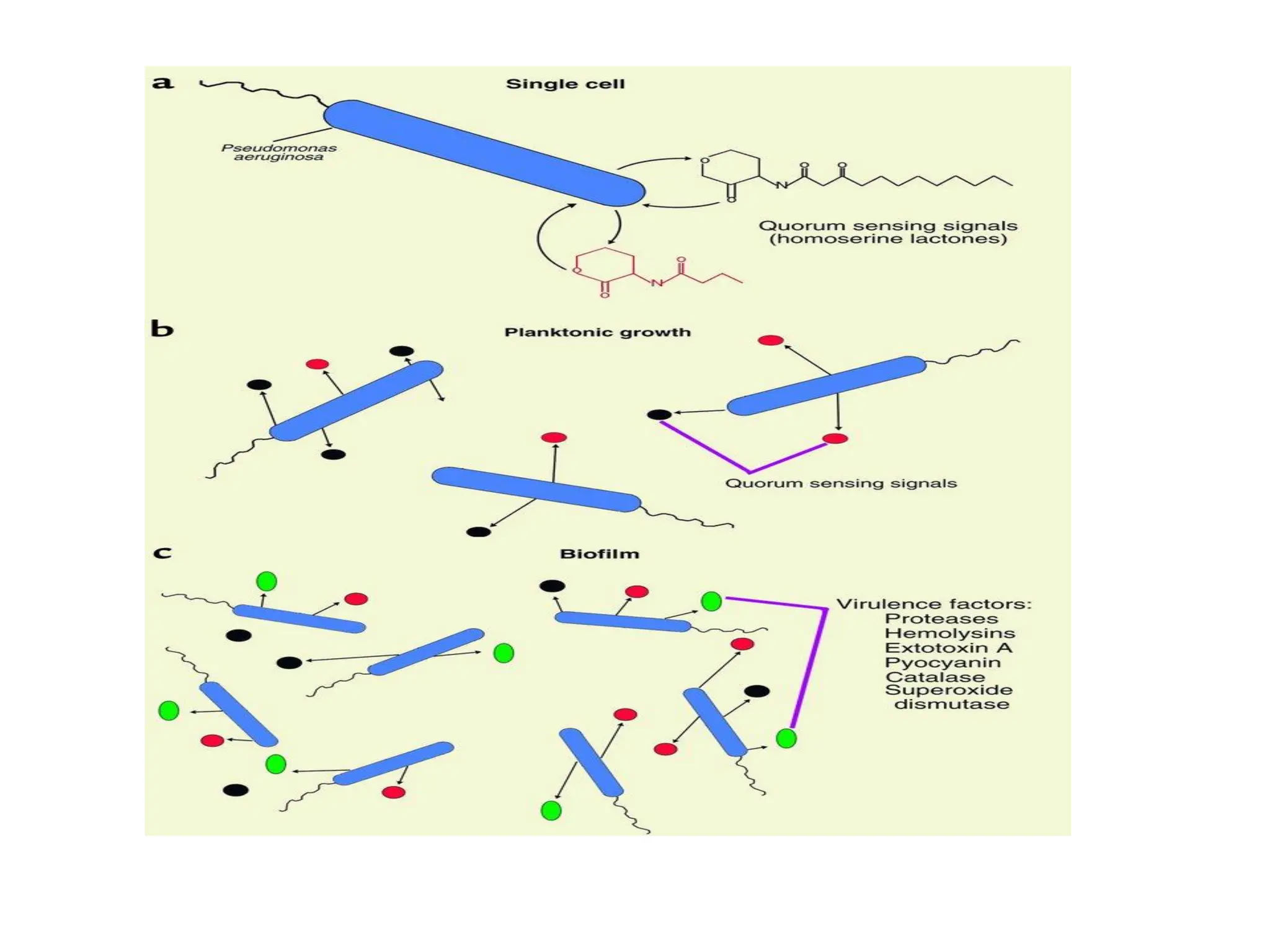
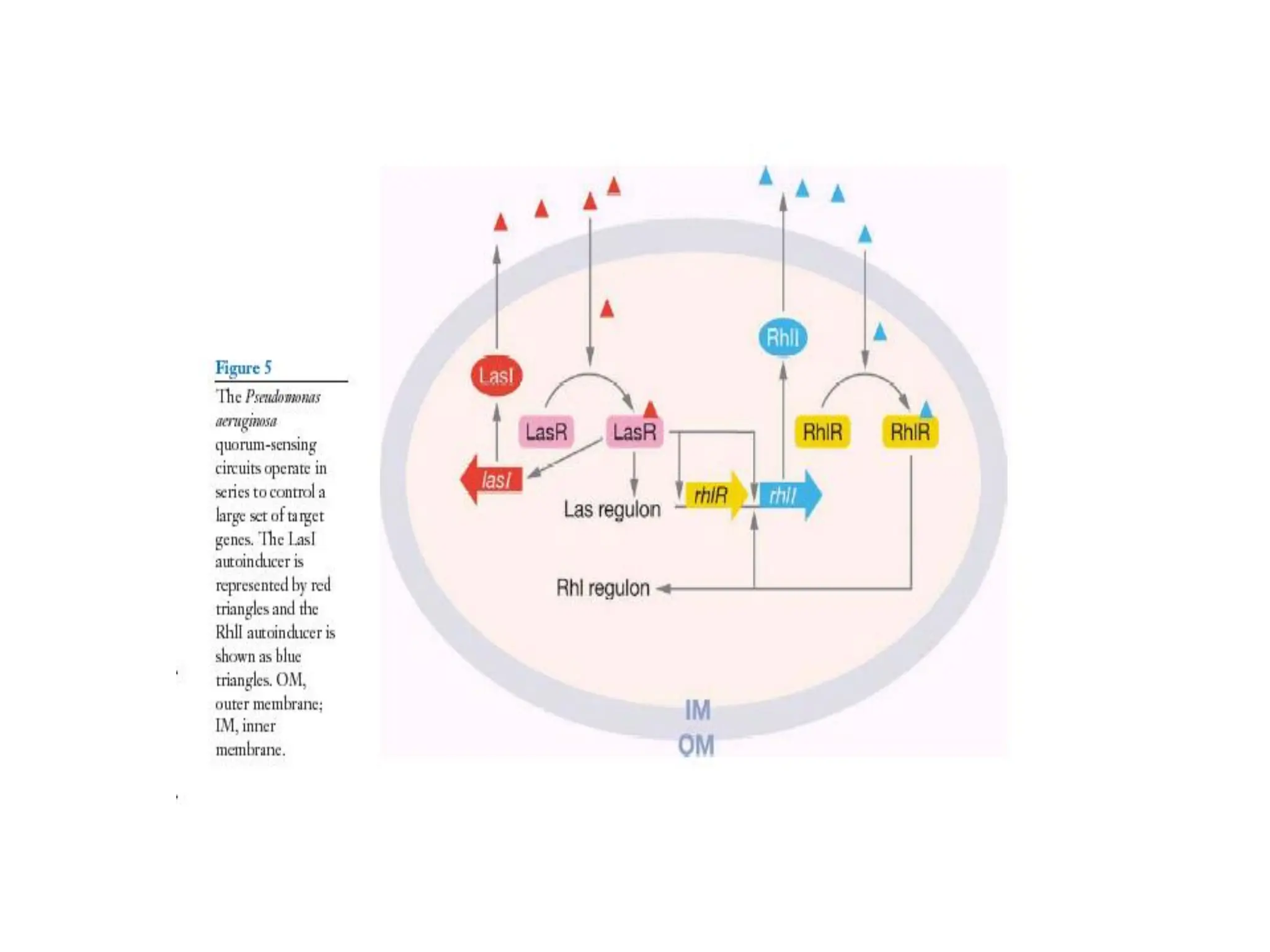
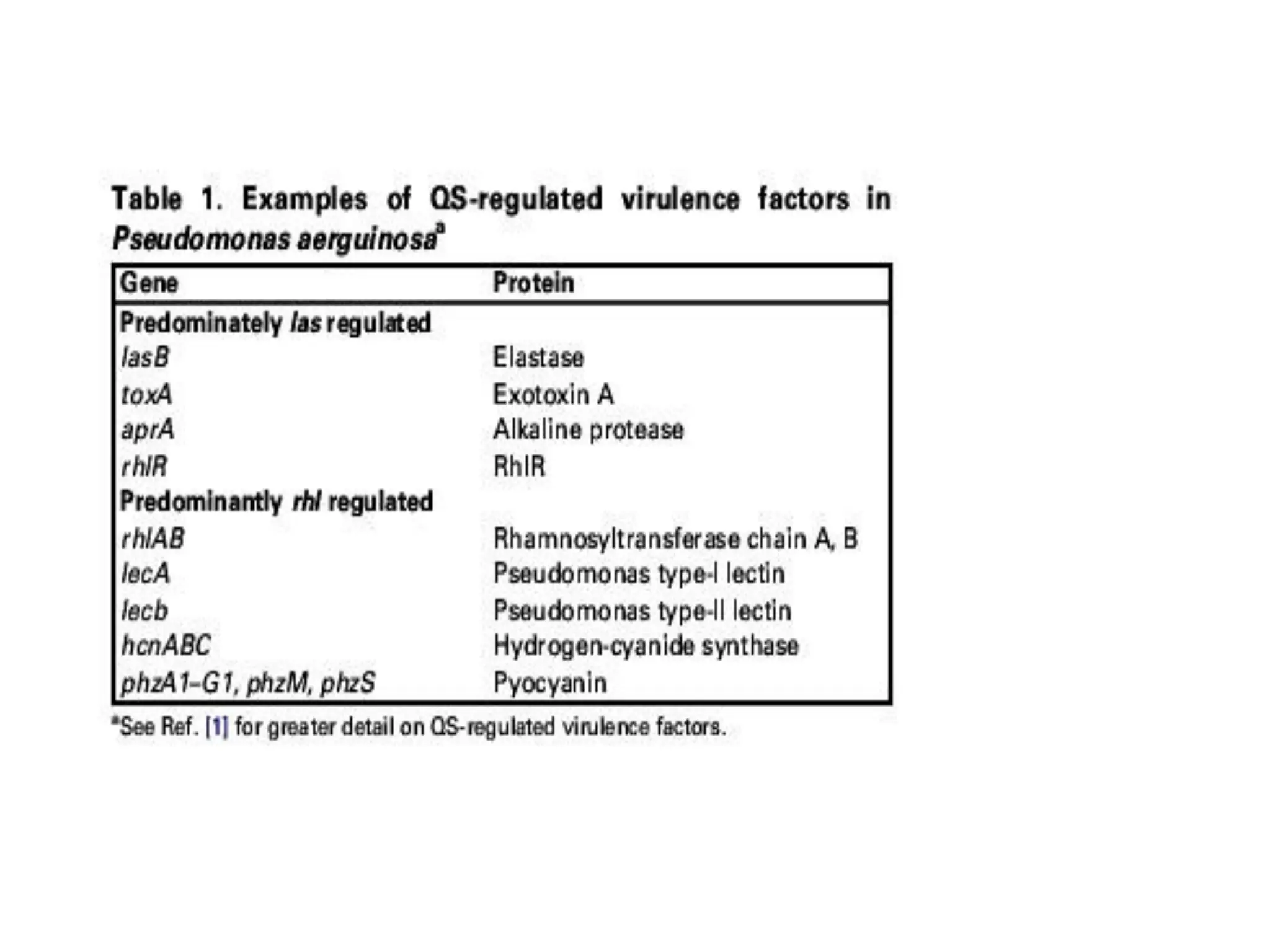
• Pseudomonas aeruginosa
– virulence, Fe acquisition, stress response, etc. Over 200
genes
• Yersinia enterocolitica
– is activated in foods, possibly involved in enzyme production,
biofilm formation
• Salmonella, E. coli, Shigella
– do not make AHLs themselves (have lost the AHL synthase
gene)
– detect AHLs produced by other bacteria (have gained a new
AHL receptor gene)
32.
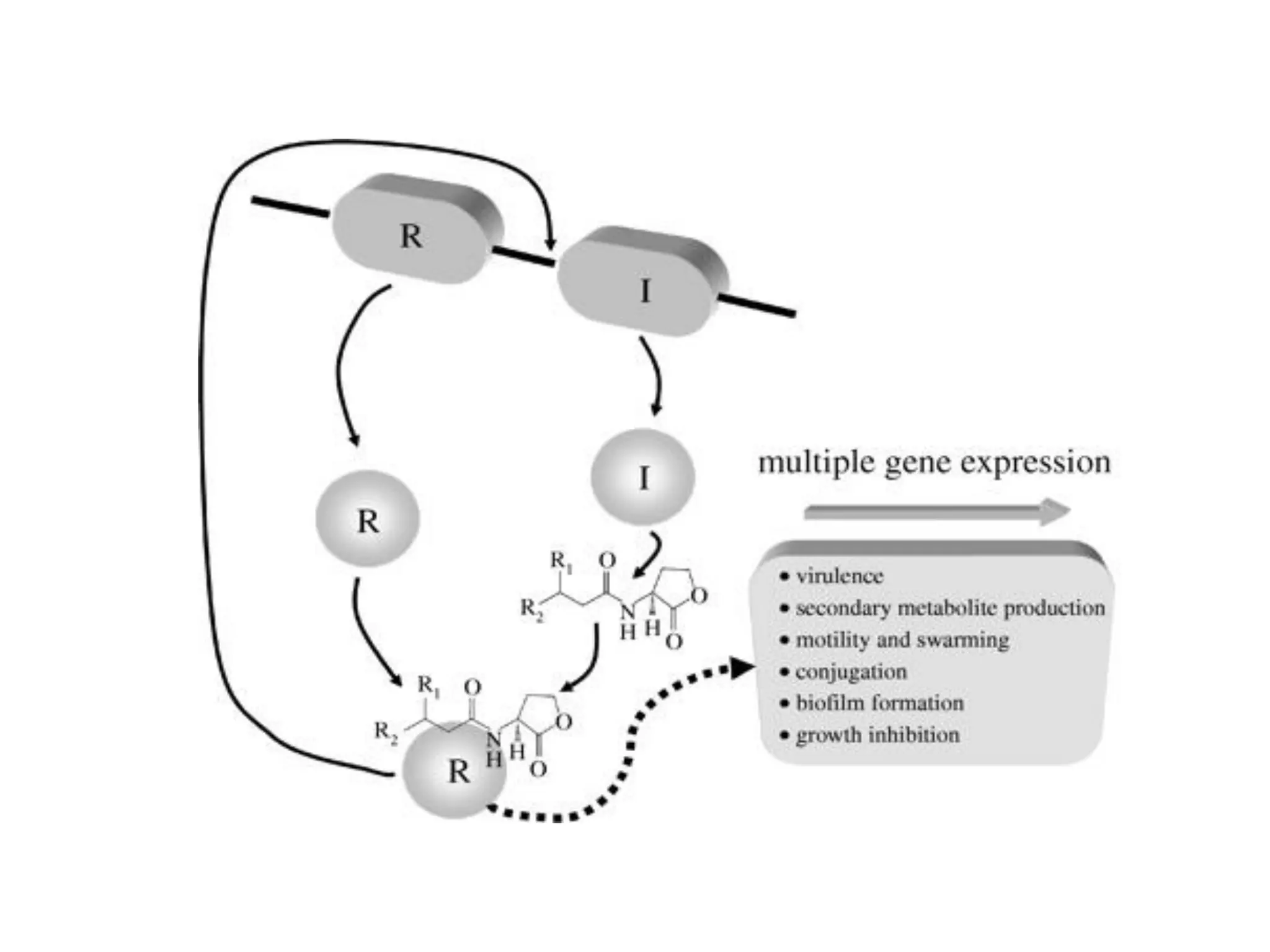
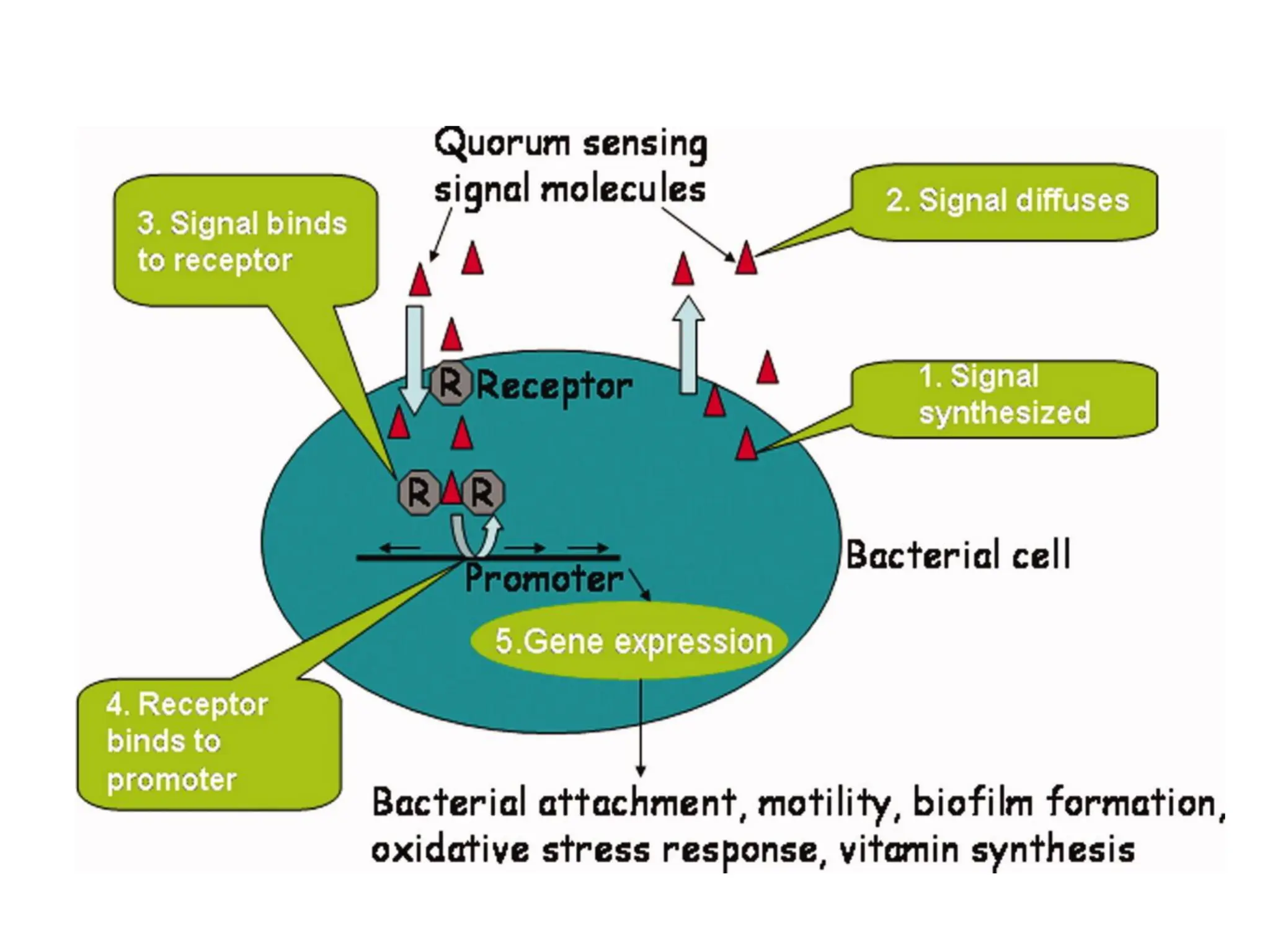
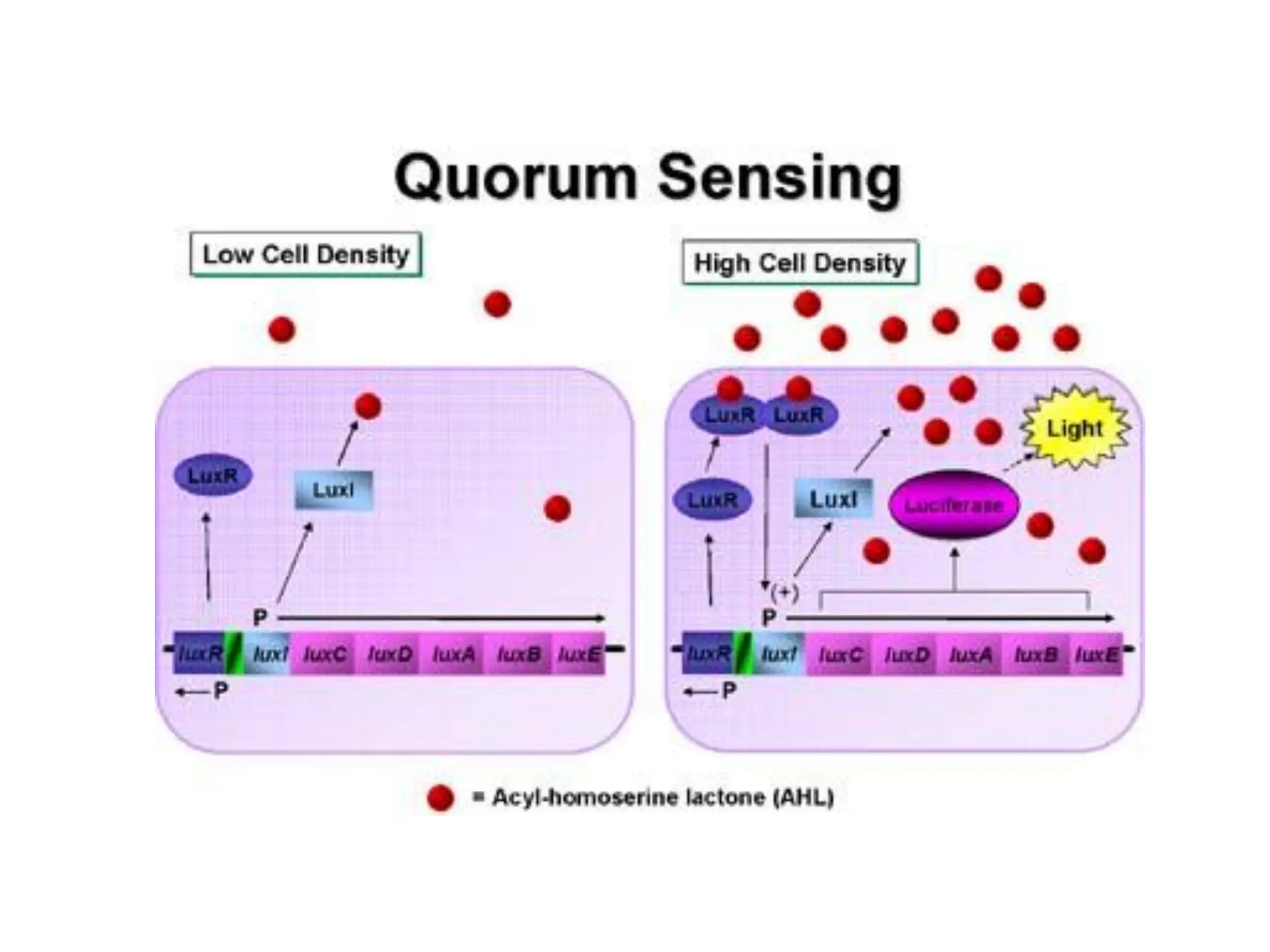
AHL mediated quorumsensing cycle
AI
LuxI
+
promoter target genes
LuxR
RNA
polymerase
Transcription
AI
35.
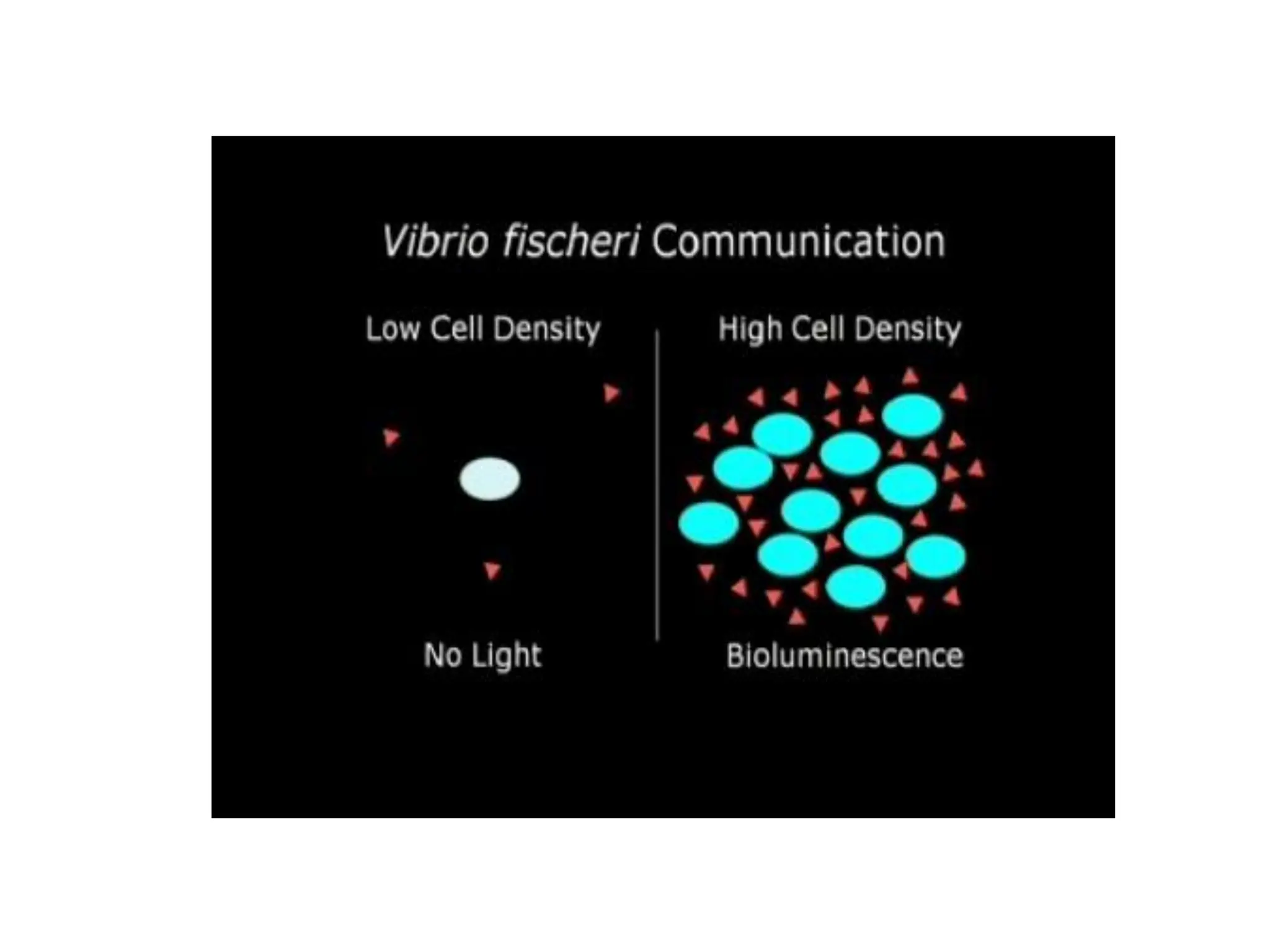
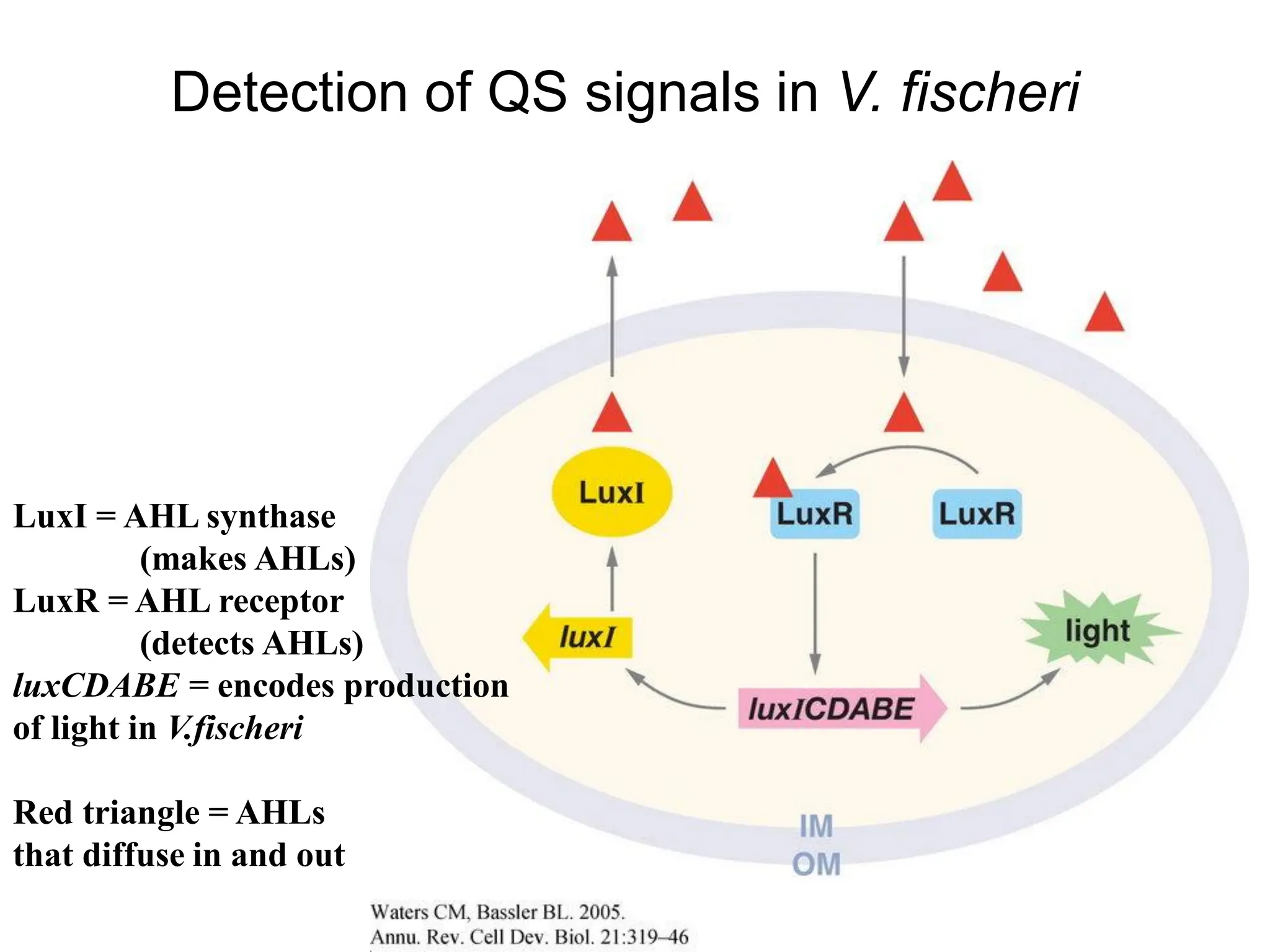
Detection of QSsignals in V. fischeri
LuxI = AHL synthase
(makes AHLs)
LuxR = AHL receptor
(detects AHLs)
luxCDABE = encodes production
of light in V.fischeri
Red triangle = AHLs
that diffuse in and out
37.
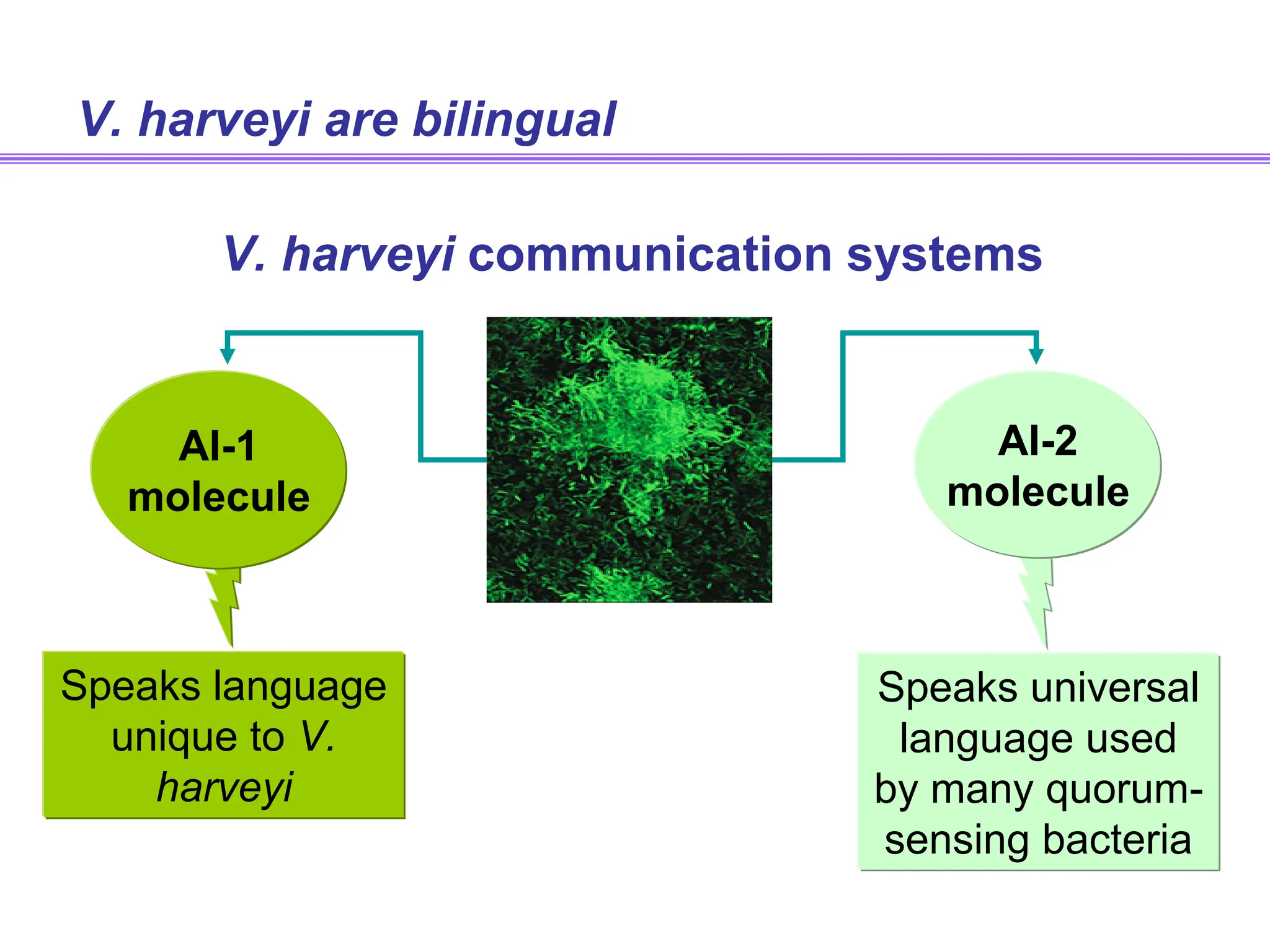
V. harveyi arebilingual
V. harveyi communication systems
AI-1
molecule
Speaks language
unique to V.
harveyi
AI-2
molecule
Speaks universal
language used
by many quorum-
sensing bacteria
39.
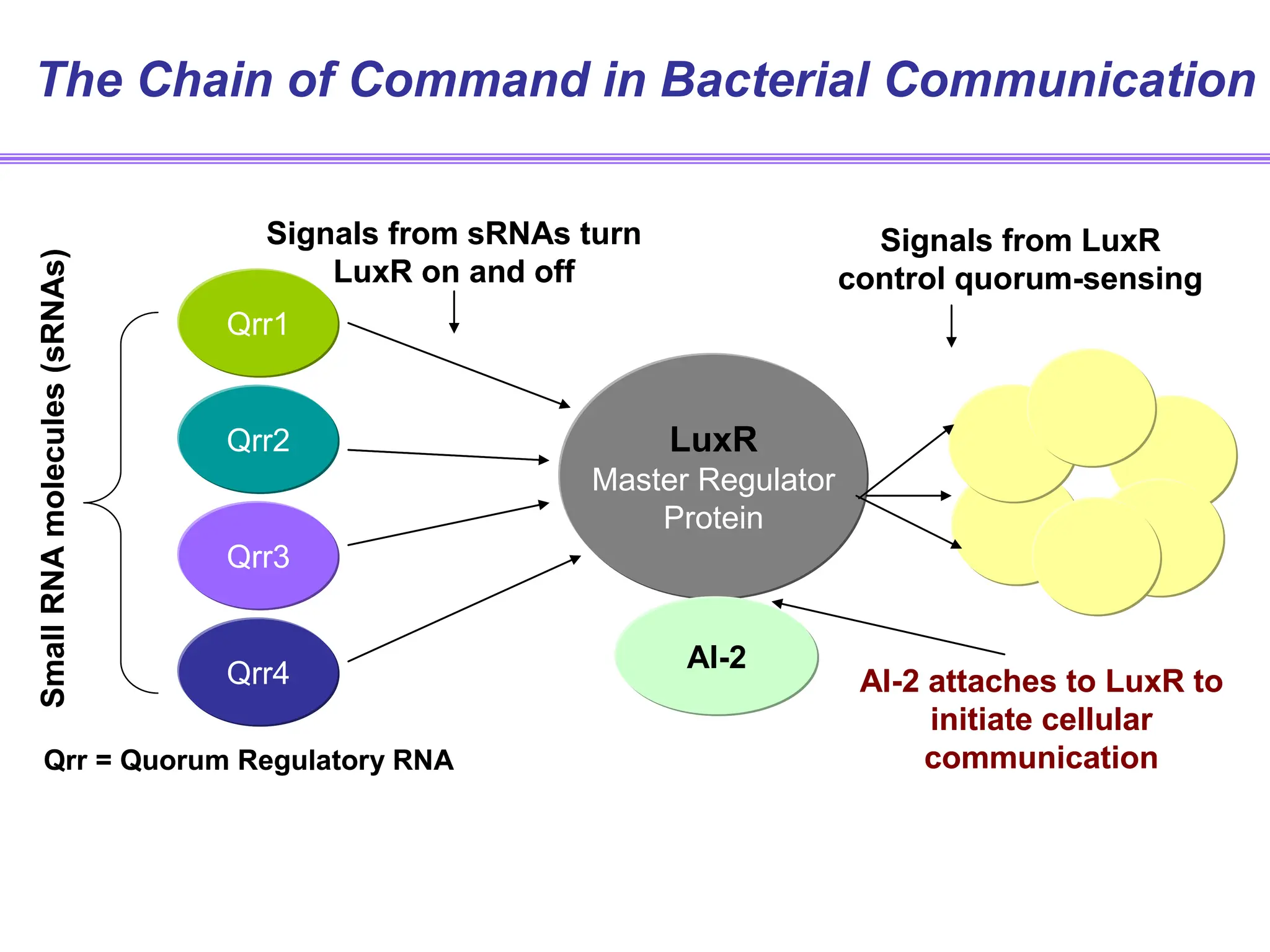
The Chain ofCommand in Bacterial Communication
LuxR
Master Regulator
Protein
Qrr1
Qrr2
Qrr3
Qrr4
Small
RNA
molecules
(sRNAs)
Qrr = Quorum Regulatory RNA
Signals from sRNAs turn
LuxR on and off
Signals from LuxR
control quorum-sensing
AI-2
AI-2 attaches to LuxR to
initiate cellular
communication
LuxR
Master Regulator
Protein
Qrr1
Qrr2
Qrr3
Qrr4
Small
RNA
molecules
(sRNAs)
Qrr = Quorum Regulatory RNA
Signals from sRNAs turn
LuxR on and off
Signals from LuxR
control quorum-sensing
AI-2
AI-2 attaches to LuxR to
initiate cellular
communication
40.
Importancia del Quorumsensing
• asociación simbiótica con organismos
multicelulares.
• expresión de factores de virulencia.
• movilidad bacteriana.
• biofilm.
• producción de antibióticos
41.
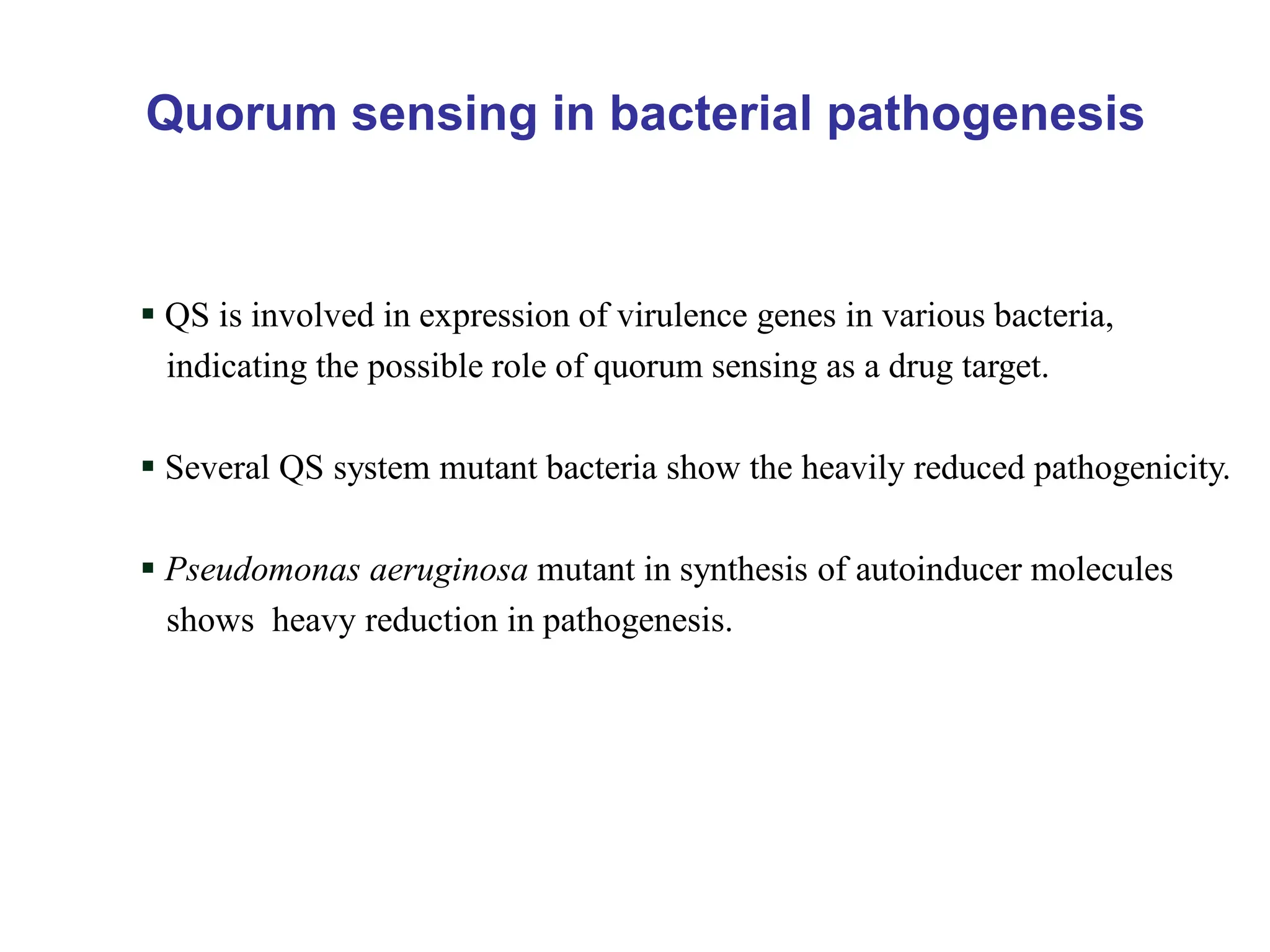
Quorum sensing inbacterial pathogenesis
QS is involved in expression of virulence genes in various bacteria,
indicating the possible role of quorum sensing as a drug target.
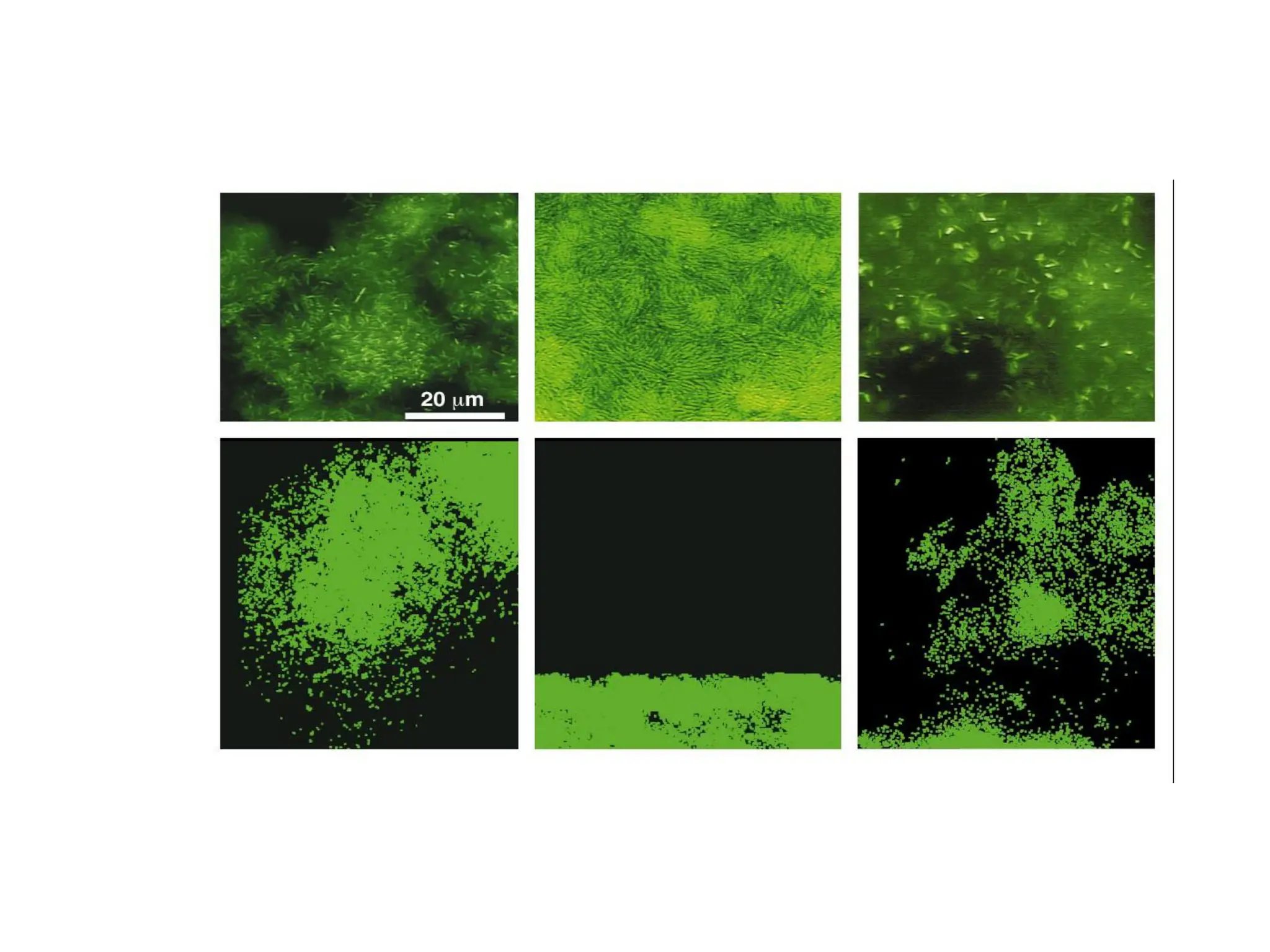
Several QS system mutant bacteria show the heavily reduced pathogenicity.
Pseudomonas aeruginosa mutant in synthesis of autoinducer molecules
shows heavy reduction in pathogenesis.
42.
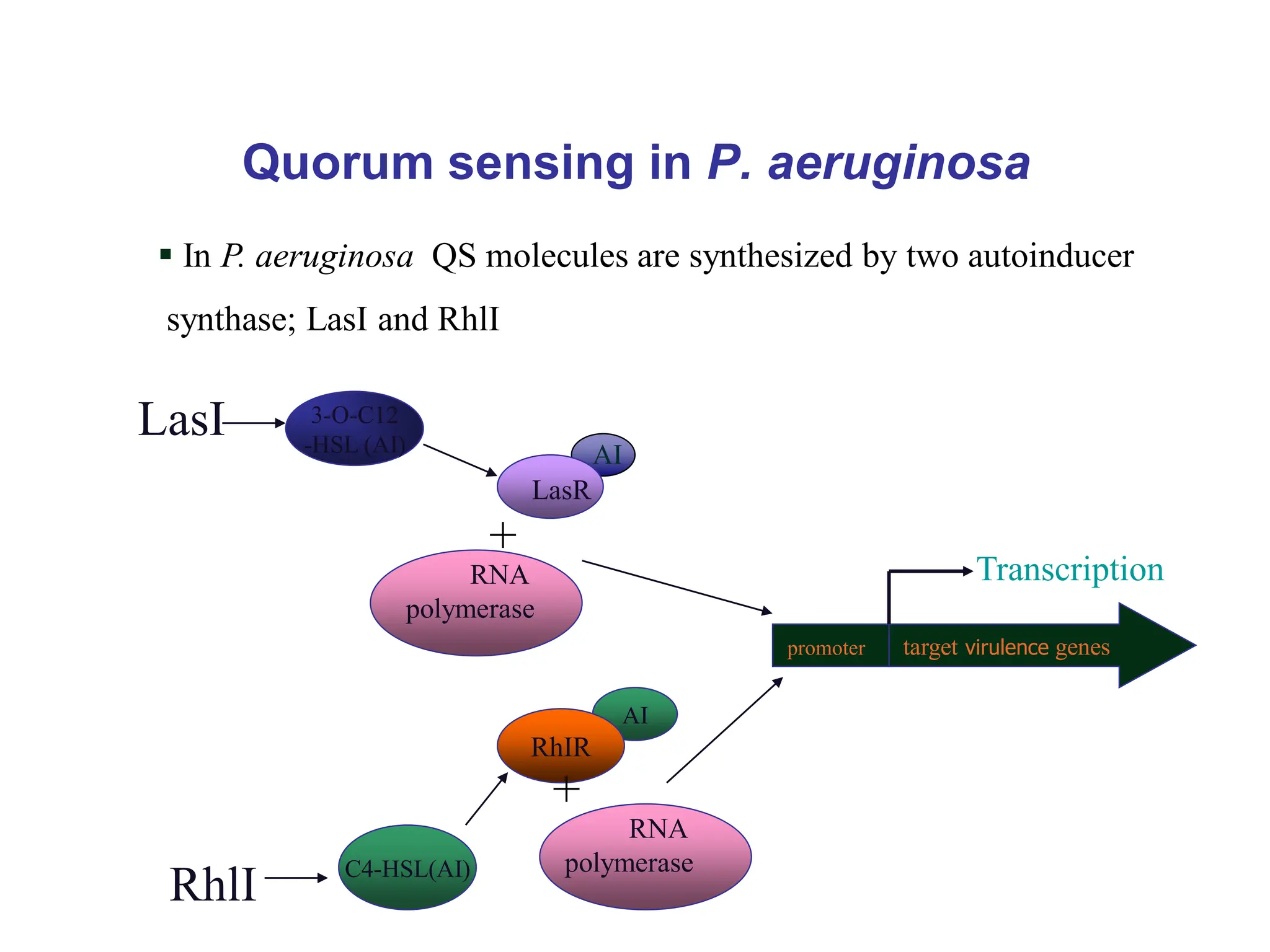
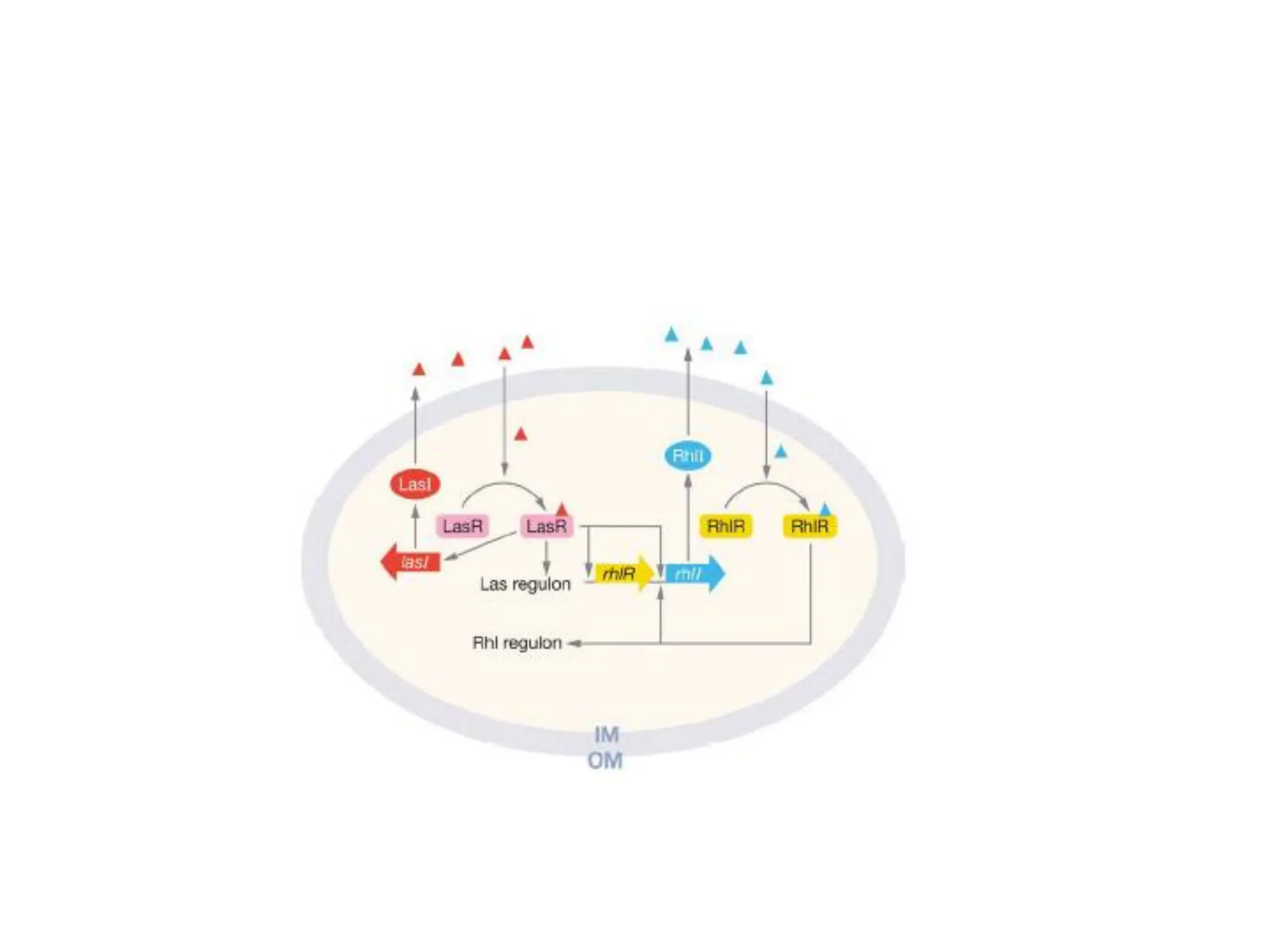
Quorum sensing inP. aeruginosa
3-O-C12
-HSL (AI)
LasI
+
promoter target virulence genes
LasR
RNA
polymerase
Transcription
RhlI
AI
AI
RNA
polymerase
RhIR
C4-HSL(AI)
+
In P. aeruginosa QS molecules are synthesized by two autoinducer
synthase; LasI and RhlI
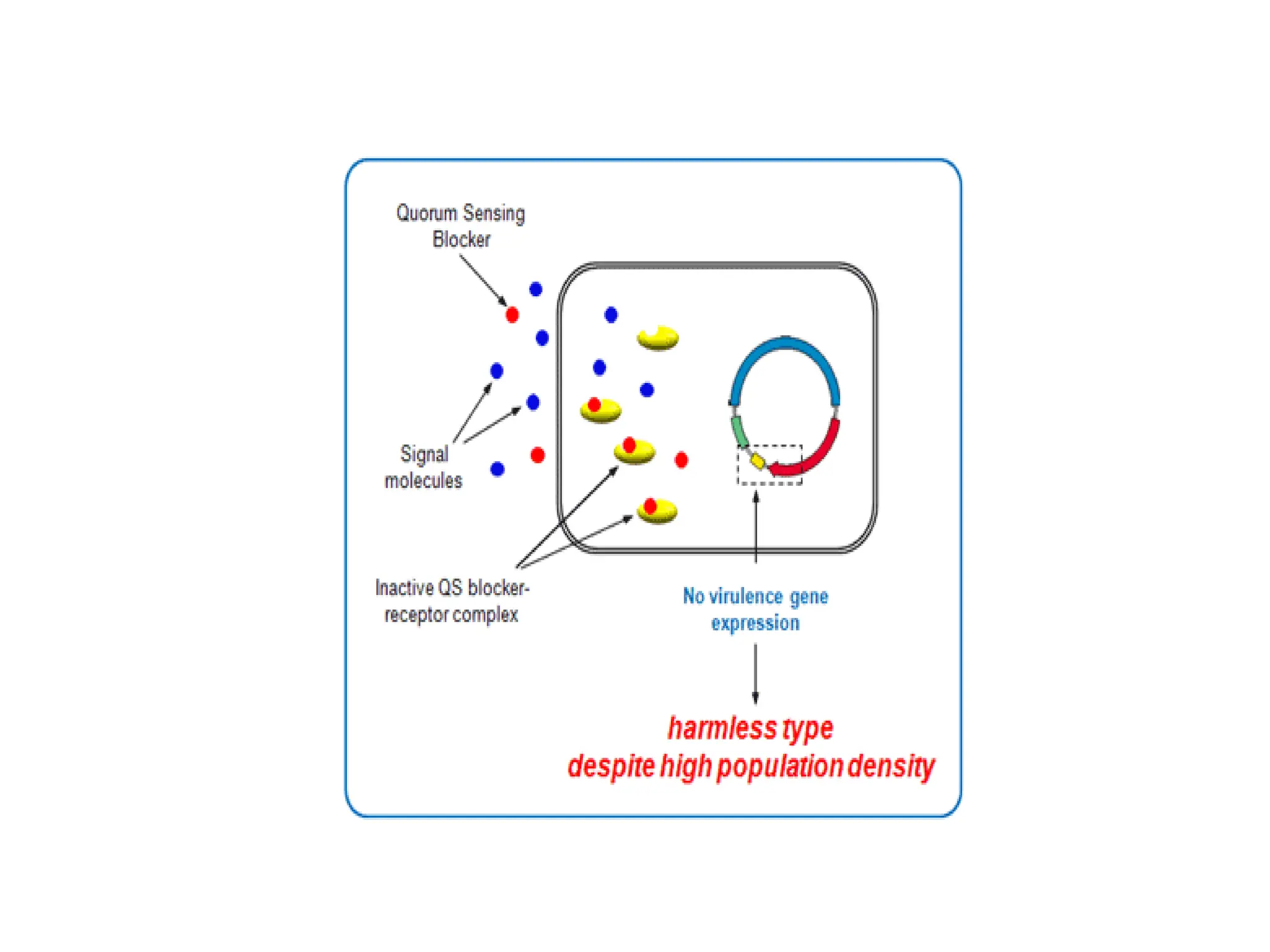
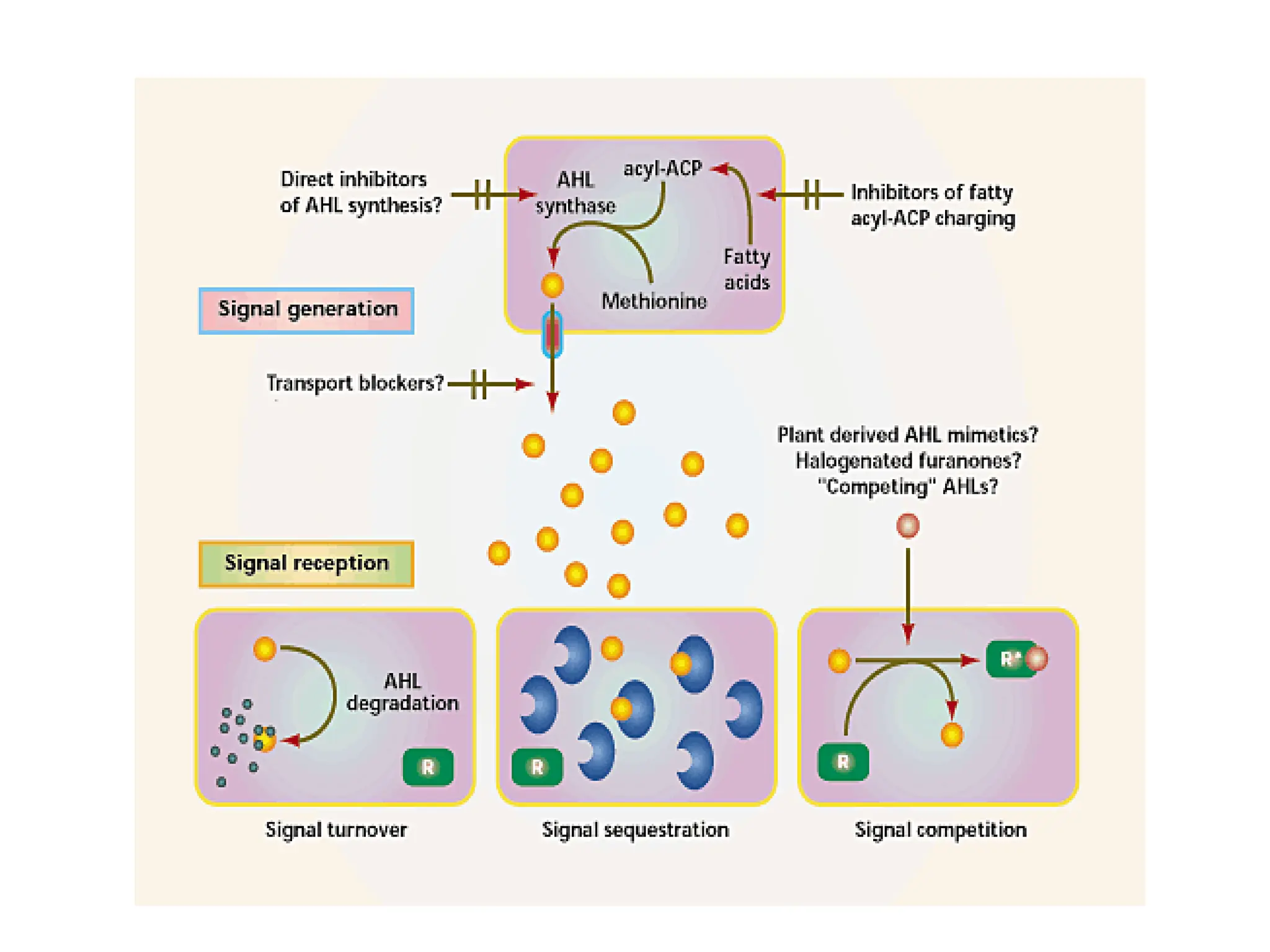
Inhibition of quorumsensing
Inhibition of quorum sensing has been proved to be very potent method
for bacterial virulence inhibition.
Several QS inhibitors molecules has been discovered.
QS inhibitors have been synthesized and have been isolated from several
natural extracts such as garlic extract.
QS inhibitors have shown to be potent virulence inhibitor both in in-vitro
and in-vivo,using infection animal models.