


Questions after  Hurricane Katrina Jonathan Barnett
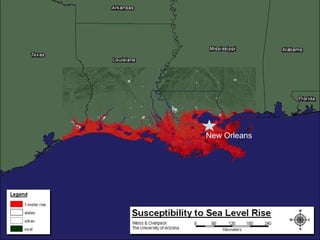
New Orleans is being rebuilt because the U.S. Army Corps of Engineers failed to do its job. Left unanswered are two questions: What would have happened to New Orleans in a direct hit from a Category 5 storm? What happens to New Orleans as global sea levels rise?
New Orleans
Before deciding, as some people have, that New Orleans should not be rebuilt, consider some other vulnerable locations ….
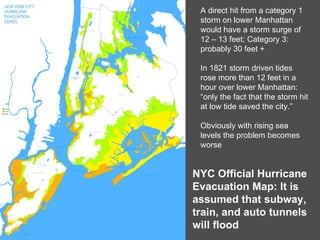
A direct hit from a category 1 storm on lower Manhattan would have a storm surge of  12 – 13 feet; Category 3: probably 30 feet + In 1821 storm driven tides rose more than 12 feet in a hour over lower Manhattan: “only the fact that the storm hit at low tide saved the city.” Obviously with rising sea levels the problem becomes worse NYC Official Hurricane Evacuation Map: It is assumed that subway, train, and auto tunnels will flood
Consider Miami Beach with a 1 foot rise in sea level, which some people consider inevitable by 2050
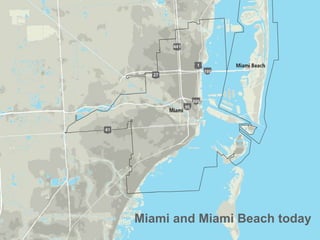
Miami and Miami Beach today
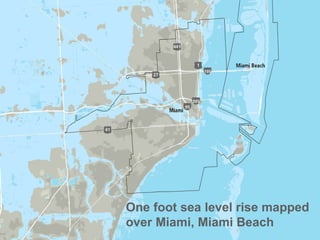
One foot sea level rise mapped over Miami, Miami Beach
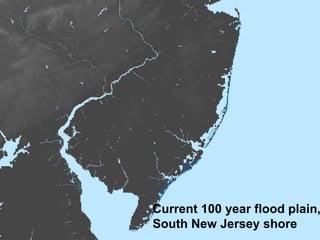
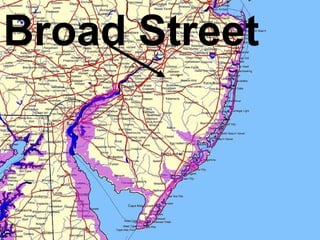
Current 100 year flood plain, South New Jersey shore
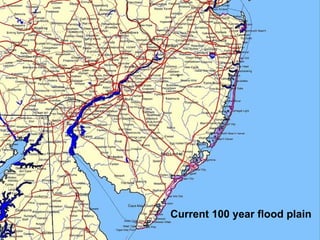
Current 100 year flood plain
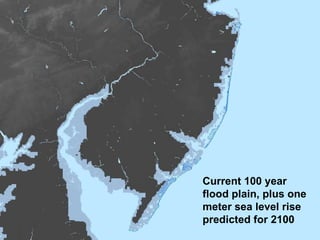
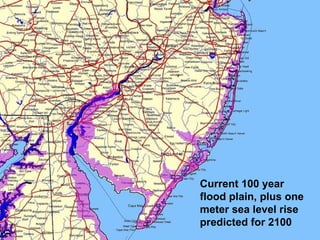
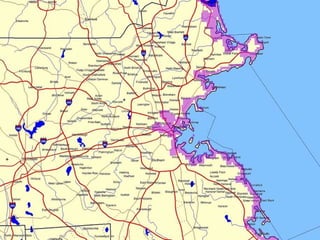
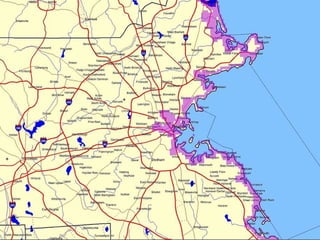
Current 100 year flood plain, plus one meter sea level rise predicted for 2100
Broad Street
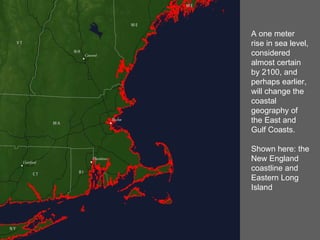
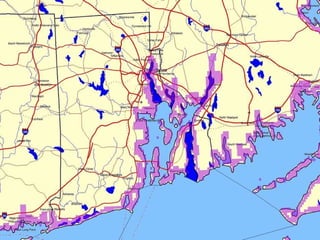
A one meter rise in sea level, considered almost certain by 2100, and perhaps earlier, will change the coastal geography of the East and Gulf Coasts. Shown here: the New England coastline and Eastern Long Island


Earthquakes are unpredictable, but also inevitable
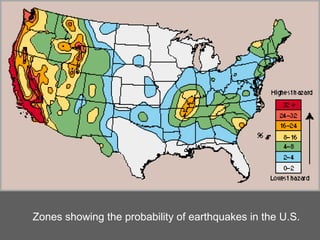
Zones showing the probability of earthquakes in the U.S.
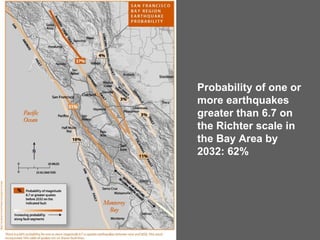
Probability of one or more earthquakes greater than 6.7 on the Richter scale in the Bay Area by 2032: 62%
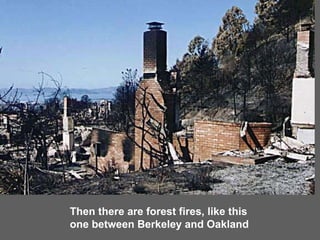
Then there are forest fires, like this one between Berkeley and Oakland
“ Half of the nation’s population growth is taking place in the 10 fastest growing states; seven of these states rank in the top 10 in the percentage of their population at risk from wildfire.” -  Roger Kennedy in  The New York Times
Preparing for potential disasters is a Homeland Security issue
Needed: A National Atlas of Risk

Questions after Hurricane Katrina

  • 1.
    Questions after Hurricane Katrina Jonathan Barnett
  • 2.
    New Orleans isbeing rebuilt because the U.S. Army Corps of Engineers failed to do its job. Left unanswered are two questions: What would have happened to New Orleans in a direct hit from a Category 5 storm? What happens to New Orleans as global sea levels rise?
  • 3.
  • 4.
    Before deciding, assome people have, that New Orleans should not be rebuilt, consider some other vulnerable locations ….
  • 5.
    A direct hitfrom a category 1 storm on lower Manhattan would have a storm surge of 12 – 13 feet; Category 3: probably 30 feet + In 1821 storm driven tides rose more than 12 feet in a hour over lower Manhattan: “only the fact that the storm hit at low tide saved the city.” Obviously with rising sea levels the problem becomes worse NYC Official Hurricane Evacuation Map: It is assumed that subway, train, and auto tunnels will flood
  • 6.
    Consider Miami Beachwith a 1 foot rise in sea level, which some people consider inevitable by 2050
  • 7.
    Miami and MiamiBeach today
  • 8.
    One foot sealevel rise mapped over Miami, Miami Beach
  • 9.
    Current 100 yearflood plain, South New Jersey shore
  • 10.
    Current 100 yearflood plain
  • 11.
    Current 100 yearflood plain, plus one meter sea level rise predicted for 2100
  • 12.
    Current 100 yearflood plain, plus one meter sea level rise predicted for 2100
  • 13.
  • 14.
    A one meterrise in sea level, considered almost certain by 2100, and perhaps earlier, will change the coastal geography of the East and Gulf Coasts. Shown here: the New England coastline and Eastern Long Island
  • 15.
  • 16.
  • 17.
  • 18.
  • 19.
    Earthquakes are unpredictable,but also inevitable
  • 20.
    Zones showing theprobability of earthquakes in the U.S.
  • 21.
    Probability of oneor more earthquakes greater than 6.7 on the Richter scale in the Bay Area by 2032: 62%
  • 22.
    Then there areforest fires, like this one between Berkeley and Oakland
  • 23.
    “ Half ofthe nation’s population growth is taking place in the 10 fastest growing states; seven of these states rank in the top 10 in the percentage of their population at risk from wildfire.” - Roger Kennedy in The New York Times
  • 24.
    Preparing for potentialdisasters is a Homeland Security issue
  • 25.
    Needed: A NationalAtlas of Risk