The Future of Financing Energy Efficiency

         University of Pennsylvania

            Michael Meehan
          CEO, Zerofootprint USA


                               ©2013 Zerofootprint - Company Confidential
First, A Story…


             ©2013 Zerofootprint - Company Confidential
1.     Energy Investment
       Challenges
        So if the finance industry has been engaged in
        climate and energy for decades, why are we
        here?

 Investment in energy projects requires good
 information. To get better information to investors, two
 primary challenges remain:

           1. Availability of quality data
           2. Consumer Engagement


                                       ©2013 Zerofootprint - Company Confidential
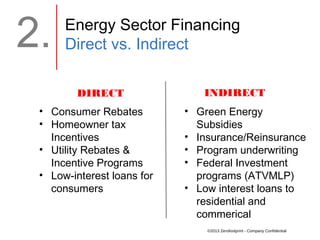
2.    Energy Sector Financing
      Direct vs. Indirect

        DIRECT                 INDIRECT
 • Consumer Rebates         • Green Energy
 • Homeowner tax              Subsidies
   Incentives               • Insurance/Reinsurance
 • Utility Rebates &        • Program underwriting
   Incentive Programs       • Federal Investment
 • Low-interest loans for     programs (ATVMLP)
   consumers                • Low interest loans to
                              residential and
                              commerical
                                ©2013 Zerofootprint - Company Confidential
3.    Energy Financing
      Direct to Consumer

Direct energy financing addresses the “low-hanging
fruit” in the market (e.g., retrofits, Energy Star) and
provides direct, tangible funding for consumer
purchases. The most straightforward, but has met with
limited success.

The nation’s 130 million homes account for 20% of US
emissions. The technology is widely available and
payback periods are known with a high degree of
confidence.

So why aren’t we doing retrofits everywhere?
                                     ©2013 Zerofootprint - Company Confidential
Energy Intelligence
   Starting with the Consumer

  Engaging energy consumers (e.g., tenants) is the key to
  acquiring the data required to make investment decisions. If
  you can’t engage them, the returns on investment rapidly
  decrease.
              Declining Returns within Engagement Programs


                   $10 Million
                                                             (47%)
$ Budgeted
                               $5 Million
                                                             $4.7 Million
                                                                       $300K

                      Successful Implementations / Time
                                                ©2013 Zerofootprint - Company Confidential
Direct Energy Financing
Challenges
Retrofitting costs real money, and the market has a data
problem.

•Costs are high: $10-15K per home ( x 130M homes =
$2T)
•Direct financing schemes are not uniform and are often
not marketed appropriately.
•Lack of actionable data – smart meters, APIs, closed
utility systems provide data, but do not engage consumers
•Leads to a lack of investor confidence in the data from
energy projects, especially in residential


                                       ©2013 Zerofootprint - Company Confidential
4.        Indirect Energy Financing

Large-scale energy efficiency projects offer more suitable
investment vehicles but have their own challenges.

•Complexity begins at the lowest levels (meters, HVAC systems,
building controls, smart homes, etc)
•Problem is compounded by complex systems to get the data:
buildings management systems, closed utility systems, etc.
•Few standards for the communication of data (beyond the building
such as Zigby, etc)

•But some successful funding models
    • US Dept of Housing and Urban Dev (HUD) offers creditworthy
       borrowers for EE upgrades (not homeowners)
    • Federal Housing Admin (FHA) PowerSaver Program ($25M)
                                             ©2013 Zerofootprint - Company Confidential
Energy Intelligence
Open Energy Data
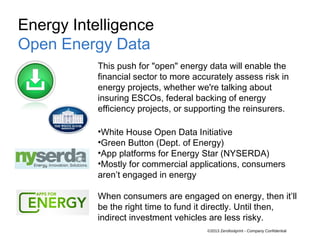
           This push for "open" energy data will enable the
           financial sector to more accurately assess risk in
           energy projects, whether we're talking about
           insuring ESCOs, federal backing of energy
           efficiency projects, or supporting the reinsurers.  

           •White House Open Data Initiative
           •Green Button (Dept. of Energy)
           •App platforms for Energy Star (NYSERDA)
           •Mostly for commercial applications, consumers
           aren’t engaged in energy

           When consumers are engaged on energy, then it’ll
           be the right time to fund it directly. Until then,
           indirect investment vehicles are less risky.
                                        ©2013 Zerofootprint - Company Confidential
5.
           Energy Intelligence Strategies
           Bringing Better Data to the Energy
           Investment Discussion
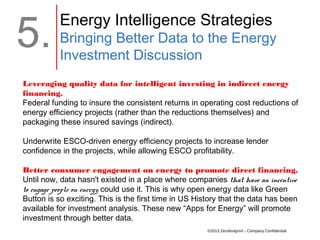
Leveraging quality data for intelligent investing in indirect energy
financing.
Federal funding to insure the consistent returns in operating cost reductions of
energy efficiency projects (rather than the reductions themselves) and
packaging these insured savings (indirect).

Underwrite ESCO-driven energy efficiency projects to increase lender
confidence in the projects, while allowing ESCO profitability.

Better consumer engagement on energy to promote direct financing.
Until now, data hasn't existed in a place where companies that have an incentive
to engage people on energy could use it. This is why open energy data like Green
Button is so exciting. This is the first time in US History that the data has been
available for investment analysis. These new “Apps for Energy” will promote
investment through better data.
                                                       ©2013 Zerofootprint - Company Confidential
Michael Meehan
    CEO, Zerofootprint USA

michael.meehan@zerofootprint.net


                        ©2013 Zerofootprint - Company Confidential

Michael Meehan

  • 1.
    The Future ofFinancing Energy Efficiency University of Pennsylvania Michael Meehan CEO, Zerofootprint USA ©2013 Zerofootprint - Company Confidential
  • 2.
    First, A Story… ©2013 Zerofootprint - Company Confidential
  • 3.
    1. Energy Investment Challenges So if the finance industry has been engaged in climate and energy for decades, why are we here? Investment in energy projects requires good information. To get better information to investors, two primary challenges remain: 1. Availability of quality data 2. Consumer Engagement ©2013 Zerofootprint - Company Confidential
  • 4.
    2. Energy Sector Financing Direct vs. Indirect DIRECT INDIRECT • Consumer Rebates • Green Energy • Homeowner tax Subsidies Incentives • Insurance/Reinsurance • Utility Rebates & • Program underwriting Incentive Programs • Federal Investment • Low-interest loans for programs (ATVMLP) consumers • Low interest loans to residential and commerical ©2013 Zerofootprint - Company Confidential
  • 5.
    3. Energy Financing Direct to Consumer Direct energy financing addresses the “low-hanging fruit” in the market (e.g., retrofits, Energy Star) and provides direct, tangible funding for consumer purchases. The most straightforward, but has met with limited success. The nation’s 130 million homes account for 20% of US emissions. The technology is widely available and payback periods are known with a high degree of confidence. So why aren’t we doing retrofits everywhere? ©2013 Zerofootprint - Company Confidential
  • 6.
    Energy Intelligence Starting with the Consumer Engaging energy consumers (e.g., tenants) is the key to acquiring the data required to make investment decisions. If you can’t engage them, the returns on investment rapidly decrease. Declining Returns within Engagement Programs $10 Million (47%) $ Budgeted $5 Million $4.7 Million $300K Successful Implementations / Time ©2013 Zerofootprint - Company Confidential
  • 7.
    Direct Energy Financing Challenges Retrofittingcosts real money, and the market has a data problem. •Costs are high: $10-15K per home ( x 130M homes = $2T) •Direct financing schemes are not uniform and are often not marketed appropriately. •Lack of actionable data – smart meters, APIs, closed utility systems provide data, but do not engage consumers •Leads to a lack of investor confidence in the data from energy projects, especially in residential ©2013 Zerofootprint - Company Confidential
  • 8.
    4. Indirect Energy Financing Large-scale energy efficiency projects offer more suitable investment vehicles but have their own challenges. •Complexity begins at the lowest levels (meters, HVAC systems, building controls, smart homes, etc) •Problem is compounded by complex systems to get the data: buildings management systems, closed utility systems, etc. •Few standards for the communication of data (beyond the building such as Zigby, etc) •But some successful funding models • US Dept of Housing and Urban Dev (HUD) offers creditworthy borrowers for EE upgrades (not homeowners) • Federal Housing Admin (FHA) PowerSaver Program ($25M) ©2013 Zerofootprint - Company Confidential
  • 9.
    Energy Intelligence Open EnergyData This push for "open" energy data will enable the financial sector to more accurately assess risk in energy projects, whether we're talking about insuring ESCOs, federal backing of energy efficiency projects, or supporting the reinsurers.   •White House Open Data Initiative •Green Button (Dept. of Energy) •App platforms for Energy Star (NYSERDA) •Mostly for commercial applications, consumers aren’t engaged in energy When consumers are engaged on energy, then it’ll be the right time to fund it directly. Until then, indirect investment vehicles are less risky. ©2013 Zerofootprint - Company Confidential
  • 10.
    5. Energy Intelligence Strategies Bringing Better Data to the Energy Investment Discussion Leveraging quality data for intelligent investing in indirect energy financing. Federal funding to insure the consistent returns in operating cost reductions of energy efficiency projects (rather than the reductions themselves) and packaging these insured savings (indirect). Underwrite ESCO-driven energy efficiency projects to increase lender confidence in the projects, while allowing ESCO profitability. Better consumer engagement on energy to promote direct financing. Until now, data hasn't existed in a place where companies that have an incentive to engage people on energy could use it. This is why open energy data like Green Button is so exciting. This is the first time in US History that the data has been available for investment analysis. These new “Apps for Energy” will promote investment through better data. ©2013 Zerofootprint - Company Confidential
  • 11.
    Michael Meehan CEO, Zerofootprint USA michael.meehan@zerofootprint.net ©2013 Zerofootprint - Company Confidential