Download to read offline

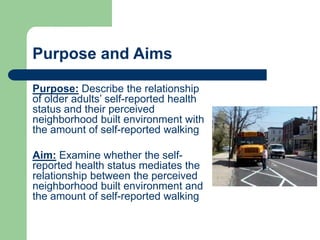


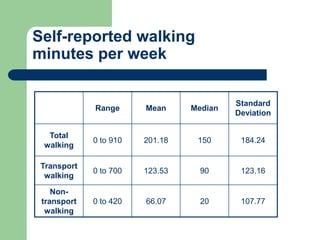
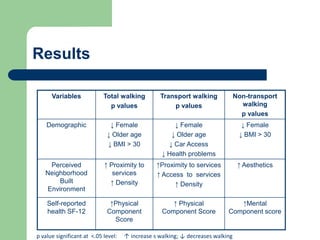



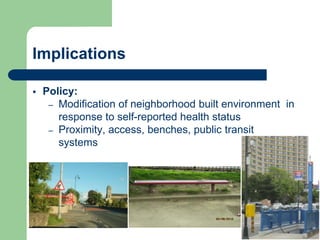

The study examines the relationship between self-reported health status, perceived neighborhood built environment, and walking habits among minority urban older adults in Philadelphia. It finds that factors like gender, age, and BMI significantly influence walking behaviors, with proximity to services and neighborhood density being important for transport walking, while aesthetics affect non-transport walking. The research suggests that health perceptions and demographic factors are more impactful than built environment features in determining walking levels, highlighting implications for clinical practice and policy modifications in neighborhood design.


