Question One
In what ways does your media product use,
develop or challenge forms and conventions
of real media products?


                        Reiss Bridges
How is my magazine recognised as a real music
magazine?
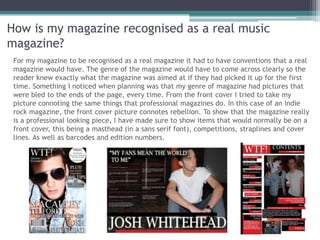
 For my magazine to be recognised as a real magazine it had to have conventions that a real
 magazine would have. The genre of the magazine would have to come across clearly so the
 reader knew exactly what the magazine was aimed at if they had picked it up for the first
 time. Something I noticed when planning was that my genre of magazine had pictures that
 were bled to the ends of the page, every time. From the front cover I tried to take my
 picture connoting the same things that professional magazines do. In this case of an indie
 rock magazine, the front cover picture connotes rebellion. To show that the magazine really
 is a professional looking piece, I have made sure to show items that would normally be on a
 front cover, this being a masthead (in a sans serif font), competitions, straplines and cover
 lines. As well as barcodes and edition numbers.
How is it recognisable as belonging to your sub-
genre of magazine (metal, indie, pop etc)?
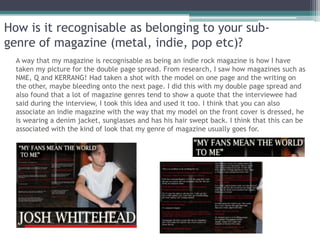
  A way that my magazine is recognisable as being an indie rock magazine is how I have
  taken my picture for the double page spread. From research, I saw how magazines such as
  NME, Q and KERRANG! Had taken a shot with the model on one page and the writing on
  the other, maybe bleeding onto the next page. I did this with my double page spread and
  also found that a lot of magazine genres tend to show a quote that the interviewee had
  said during the interview, I took this idea and used it too. I think that you can also
  associate an indie magazine with the way that my model on the front cover is dressed, he
  is wearing a denim jacket, sunglasses and has his hair swept back. I think that this can be
  associated with the kind of look that my genre of magazine usually goes for.
Have you done anything to challenge these
conventions and what was your reason for doing so?
 The idea that this magazine challenges the generic conventions of existing magazines
 relates to the fact that normally in this kind of magazine the musicians are seen as angry
 or rebellious. In my case, and especially with the double page spread, I have tried to
 show my model in a chilled out way. I didn’t want the focus of the magazine to be on
 anger. Also, in most indie rock magazines the models are always seen with their
 instruments, this is another factor I have tried to challenge, I didn’t want my magazine to
 be seen as the normal same as everything else type of magazine.

Question One

  • 1.
    Question One In whatways does your media product use, develop or challenge forms and conventions of real media products? Reiss Bridges
  • 2.
    How is mymagazine recognised as a real music magazine? For my magazine to be recognised as a real magazine it had to have conventions that a real magazine would have. The genre of the magazine would have to come across clearly so the reader knew exactly what the magazine was aimed at if they had picked it up for the first time. Something I noticed when planning was that my genre of magazine had pictures that were bled to the ends of the page, every time. From the front cover I tried to take my picture connoting the same things that professional magazines do. In this case of an indie rock magazine, the front cover picture connotes rebellion. To show that the magazine really is a professional looking piece, I have made sure to show items that would normally be on a front cover, this being a masthead (in a sans serif font), competitions, straplines and cover lines. As well as barcodes and edition numbers.
  • 3.
    How is itrecognisable as belonging to your sub- genre of magazine (metal, indie, pop etc)? A way that my magazine is recognisable as being an indie rock magazine is how I have taken my picture for the double page spread. From research, I saw how magazines such as NME, Q and KERRANG! Had taken a shot with the model on one page and the writing on the other, maybe bleeding onto the next page. I did this with my double page spread and also found that a lot of magazine genres tend to show a quote that the interviewee had said during the interview, I took this idea and used it too. I think that you can also associate an indie magazine with the way that my model on the front cover is dressed, he is wearing a denim jacket, sunglasses and has his hair swept back. I think that this can be associated with the kind of look that my genre of magazine usually goes for.
  • 4.
    Have you doneanything to challenge these conventions and what was your reason for doing so? The idea that this magazine challenges the generic conventions of existing magazines relates to the fact that normally in this kind of magazine the musicians are seen as angry or rebellious. In my case, and especially with the double page spread, I have tried to show my model in a chilled out way. I didn’t want the focus of the magazine to be on anger. Also, in most indie rock magazines the models are always seen with their instruments, this is another factor I have tried to challenge, I didn’t want my magazine to be seen as the normal same as everything else type of magazine.