How does your media product
represent particular social
groups?
My product represents the
following:
• Class
• Race
• Age
• Gender
Class
• My research told me that my magazine would be
best targeted at the Working Class and people
with low incomes such as students, which I
therefore used as a pricing guide. I have
represented this class via my protagonist who
is pictured wearing everyday clothes such as
a leather jacket and a pair of jeans- as
opposed to expensive designer clothes, and by
not charging too high a price. But, these
clothes are also typically seen worn by
artists/models in similar products to mine,
and so the way my model is dressed still
conforms to the conventions of the genre.
Race
My magazine predominately represents
white people but it does not discriminate
against other races. The protagonist and
all other pictured artists are white and
therefore this is the only race
represented physically.
Age
My magazine represents teenagers and
young adults within the ages of 15-24.
I chose to cast a 17 year old boy as
my model as he is a similar age to a
proportion of the target audience who
are therefore likely to buy the
magazine due to the fact that they
will be able to relate to him. I also
used tag lines such as “Exclusive” to
appeal to a younger audience as they
are likely to be interested in the
next new thing.
Gender
My magazine predominantly represents males
as all of my models are male. (The
majority of my target audience is made up
of males, according to my research). They
are not represented stereotypically as
they are not dressed in the way an
archetypal male would dress which
therefore challenges male conventions.
However, the Mise en Scene does conform to
conventions of the Rock genre and so could
be considered stereotypical in this sense.
Sexuality
I did not portray sexuality in my
product. There was no mention of any
relationships of any kind, and so
therefore my product neither
challenges nor conforms to any
conventions of sexuality, it simply
ignores it completely. This however
does challenge the conventions of the
Rock genre as sex is a big part of
‘Rock and Roll’ and choosing to ignore
it completely sets my product apart
from others.
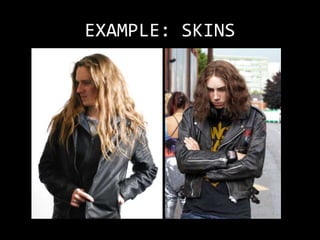
EXAMPLE: SKINS
When making my product, I consciously
used an archetype of the typical ‘Rock
star’ through the use of Mise en
Scene. I did this by dressing my
protagonist in a black leather jacket
and black jeans, and have him holding
an electric guitar- which is an iconic
signifier of the genre. This
challenges the stereotypical male seen
in most TV dramas, except the drama’s
that are targeted at a similar
audience such as Skins, in which case
my model conforms to stereotypes.

Question 2

  • 1.
    How does yourmedia product represent particular social groups?
  • 2.
    My product representsthe following: • Class • Race • Age • Gender
  • 3.
    Class • My researchtold me that my magazine would be best targeted at the Working Class and people with low incomes such as students, which I therefore used as a pricing guide. I have represented this class via my protagonist who is pictured wearing everyday clothes such as a leather jacket and a pair of jeans- as opposed to expensive designer clothes, and by not charging too high a price. But, these clothes are also typically seen worn by artists/models in similar products to mine, and so the way my model is dressed still conforms to the conventions of the genre.
  • 4.
    Race My magazine predominatelyrepresents white people but it does not discriminate against other races. The protagonist and all other pictured artists are white and therefore this is the only race represented physically.
  • 5.
    Age My magazine representsteenagers and young adults within the ages of 15-24. I chose to cast a 17 year old boy as my model as he is a similar age to a proportion of the target audience who are therefore likely to buy the magazine due to the fact that they will be able to relate to him. I also used tag lines such as “Exclusive” to appeal to a younger audience as they are likely to be interested in the next new thing.
  • 6.
    Gender My magazine predominantlyrepresents males as all of my models are male. (The majority of my target audience is made up of males, according to my research). They are not represented stereotypically as they are not dressed in the way an archetypal male would dress which therefore challenges male conventions. However, the Mise en Scene does conform to conventions of the Rock genre and so could be considered stereotypical in this sense.
  • 7.
    Sexuality I did notportray sexuality in my product. There was no mention of any relationships of any kind, and so therefore my product neither challenges nor conforms to any conventions of sexuality, it simply ignores it completely. This however does challenge the conventions of the Rock genre as sex is a big part of ‘Rock and Roll’ and choosing to ignore it completely sets my product apart from others.
  • 8.
  • 9.
    When making myproduct, I consciously used an archetype of the typical ‘Rock star’ through the use of Mise en Scene. I did this by dressing my protagonist in a black leather jacket and black jeans, and have him holding an electric guitar- which is an iconic signifier of the genre. This challenges the stereotypical male seen in most TV dramas, except the drama’s that are targeted at a similar audience such as Skins, in which case my model conforms to stereotypes.