Querying the Wikidata
Knowledge Graph
Peter Haase
LDBC Meeting, Barcelona
19.3.2015
metaphacts GmbH
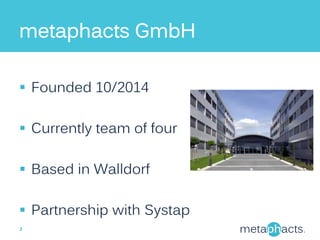
§  Founded 10/2014
§  Currently team of four
§  Based in Walldorf
§  Partnership with Systap
2	
  
Portfolio: Software, solutions,
services for knowledge graphs
§  Storing and querying of knowledge graphs
–  Scalable databases for big graphs, building on bigdata/Blazegraph
–  High-performance graph analytics, based on MapGraph / GAS
–  Light-weight reasoning with large-scale knowledge graphs
§  Creation and curation of knowledge graphs
–  Semi-automatic creation of knowledge graphs from existing sources
–  Data integration and ontology-based data access
–  Collaborative management of knowledge graphs
§  Application development utilizing knowledge graphs
–  Rapid development of end-user oriented applications
–  Visualization of knowledge graphs, semantic search
–  Mobile applications & augmented and virtual reality
3	
  
Wikidata
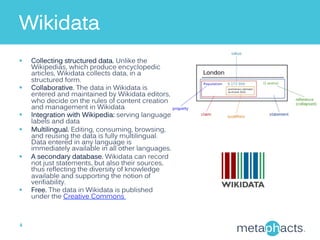
§  Collecting structured data. Unlike the
Wikipedias, which produce encyclopedic
articles, Wikidata collects data, in a
structured form.
§  Collaborative. The data in Wikidata is
entered and maintained by Wikidata editors,
who decide on the rules of content creation
and management in Wikidata
§  Integration with Wikipedia: serving language
labels and data
§  Multilingual. Editing, consuming, browsing,
and reusing the data is fully multilingual.
Data entered in any language is
immediately available in all other languages.
§  A secondary database. Wikidata can record
not just statements, but also their sources,
thus reflecting the diversity of knowledge
available and supporting the notion of
verifiability.
§  Free. The data in Wikidata is published
under the Creative Commons
4	
  
Wikidata in RDF
§  “Native” Wikidata model data model (not RDF)
–  16 million entities
–  34 million statements
–  80 million labels
–  350 languages
§  RDF exports available
–  Non-trivial mapping to RDF
–  >400 million triples
§  Examples:
–  http://wikidata.metaphacts.com/
–  http://wikidata.metaphacts.com/sparql
5	
  
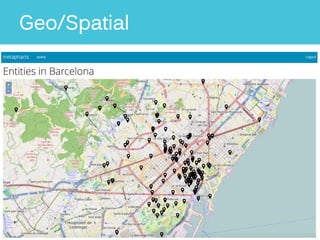
Geo/Spatial
6	
  
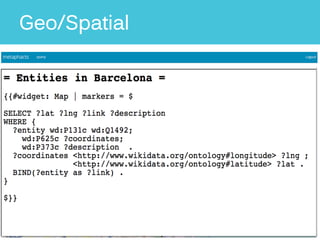
Geo/Spatial
7	
  
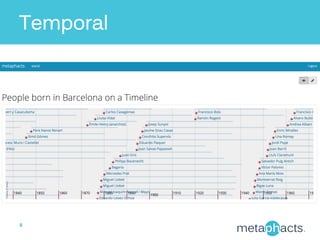
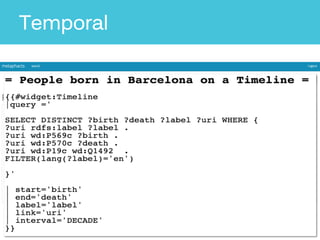
Temporal
8	
  
Temporal
9	
  
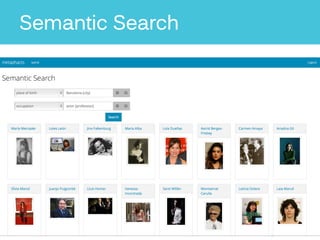
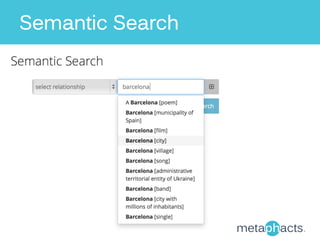
Semantic Search
10	
  
Semantic Search
11	
  
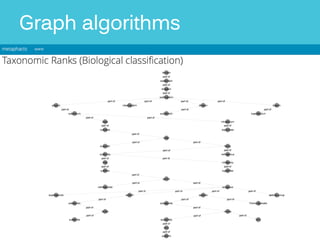
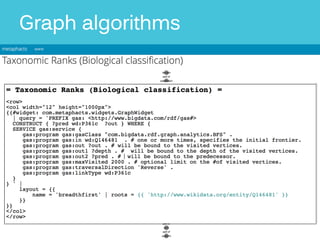
Graph algorithms
12	
  
Graph algorithms
13	
  
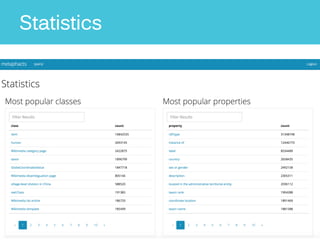
Statistics
14	
  
Screen	
  Shot	
  
2015-­‐03-­‐18	
  at	
  
08.48.24	
  
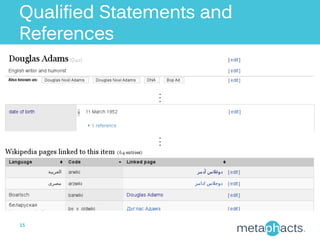
Qualified Statements and
References
15	
  
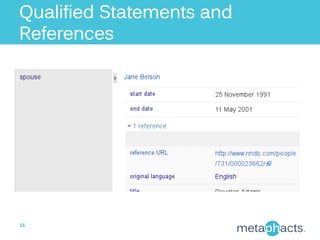
Qualified Statements and
References
16	
  
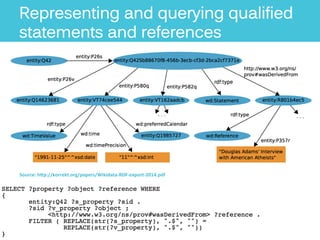
Representing and querying qualified
statements and references
Source:	
  h4p://korrekt.org/papers/Wikidata-­‐RDF-­‐export-­‐2014.pdf	
  
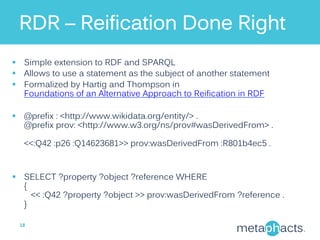
RDR – Reification Done Right
§  Simple extension to RDF and SPARQL
§  Allows to use a statement as the subject of another statement
§  Formalized by Hartig and Thompson in
Foundations of an Alternative Approach to Reification in RDF
§  @prefix : <http://www.wikidata.org/entity/> .
@prefix prov: <http://www.w3.org/ns/prov#wasDerivedFrom> .
<<:Q42 :p26 :Q14623681>> prov:wasDerivedFrom :R801b4ec5 .
§  SELECT ?property ?object ?reference WHERE
{
<< :Q42 ?property ?object >> prov:wasDerivedFrom ?reference .
}
18	
  
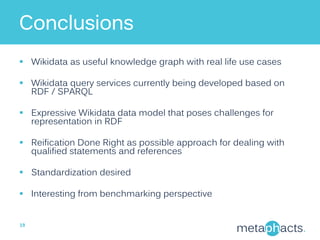
Conclusions
§  Wikidata as useful knowledge graph with real life use cases
§  Wikidata query services currently being developed based on
RDF / SPARQL
§  Expressive Wikidata data model that poses challenges for
representation in RDF
§  Reification Done Right as possible approach for dealing with
qualified statements and references
§  Standardization desired
§  Interesting from benchmarking perspective
19	
  
Contact us!
metaphacts GmbH
Kautzelweg 13
69190 Walldorf
Germany
p +49 6227 8308660
m +49 157 50152441
e info@metaphacts.com
@metaphacts
20	
  

Querying the Wikidata Knowledge Graph

  • 1.
    Querying the Wikidata KnowledgeGraph Peter Haase LDBC Meeting, Barcelona 19.3.2015
  • 2.
    metaphacts GmbH §  Founded10/2014 §  Currently team of four §  Based in Walldorf §  Partnership with Systap 2  
  • 3.
    Portfolio: Software, solutions, servicesfor knowledge graphs §  Storing and querying of knowledge graphs –  Scalable databases for big graphs, building on bigdata/Blazegraph –  High-performance graph analytics, based on MapGraph / GAS –  Light-weight reasoning with large-scale knowledge graphs §  Creation and curation of knowledge graphs –  Semi-automatic creation of knowledge graphs from existing sources –  Data integration and ontology-based data access –  Collaborative management of knowledge graphs §  Application development utilizing knowledge graphs –  Rapid development of end-user oriented applications –  Visualization of knowledge graphs, semantic search –  Mobile applications & augmented and virtual reality 3  
  • 4.
    Wikidata §  Collecting structureddata. Unlike the Wikipedias, which produce encyclopedic articles, Wikidata collects data, in a structured form. §  Collaborative. The data in Wikidata is entered and maintained by Wikidata editors, who decide on the rules of content creation and management in Wikidata §  Integration with Wikipedia: serving language labels and data §  Multilingual. Editing, consuming, browsing, and reusing the data is fully multilingual. Data entered in any language is immediately available in all other languages. §  A secondary database. Wikidata can record not just statements, but also their sources, thus reflecting the diversity of knowledge available and supporting the notion of verifiability. §  Free. The data in Wikidata is published under the Creative Commons 4  
  • 5.
    Wikidata in RDF § “Native” Wikidata model data model (not RDF) –  16 million entities –  34 million statements –  80 million labels –  350 languages §  RDF exports available –  Non-trivial mapping to RDF –  >400 million triples §  Examples: –  http://wikidata.metaphacts.com/ –  http://wikidata.metaphacts.com/sparql 5  
  • 6.
  • 7.
  • 8.
  • 9.
  • 10.
  • 11.
  • 12.
  • 13.
  • 14.
    Statistics 14   Screen  Shot   2015-­‐03-­‐18  at   08.48.24  
  • 15.
  • 16.
  • 17.
    Representing and queryingqualified statements and references Source:  h4p://korrekt.org/papers/Wikidata-­‐RDF-­‐export-­‐2014.pdf  
  • 18.
    RDR – ReificationDone Right §  Simple extension to RDF and SPARQL §  Allows to use a statement as the subject of another statement §  Formalized by Hartig and Thompson in Foundations of an Alternative Approach to Reification in RDF §  @prefix : <http://www.wikidata.org/entity/> . @prefix prov: <http://www.w3.org/ns/prov#wasDerivedFrom> . <<:Q42 :p26 :Q14623681>> prov:wasDerivedFrom :R801b4ec5 . §  SELECT ?property ?object ?reference WHERE { << :Q42 ?property ?object >> prov:wasDerivedFrom ?reference . } 18  
  • 19.
    Conclusions §  Wikidata asuseful knowledge graph with real life use cases §  Wikidata query services currently being developed based on RDF / SPARQL §  Expressive Wikidata data model that poses challenges for representation in RDF §  Reification Done Right as possible approach for dealing with qualified statements and references §  Standardization desired §  Interesting from benchmarking perspective 19  
  • 20.
    Contact us! metaphacts GmbH Kautzelweg13 69190 Walldorf Germany p +49 6227 8308660 m +49 157 50152441 e info@metaphacts.com @metaphacts 20