
Software Quality
Assurance:
QUALITY CONTROL
Foundations
Quality Control
is the series of inspections, reviews and tests
used throughout the development cycle to
ensure that each work product meets the
requirements placed upon it.
Verification & Validation
Verification – The process of evaluating a system or component to
determine whether the products of a given development phase
satisfy the conditions imposed at the start of that phase
Validation - The process of evaluating a system or component during
or at the end of the development process to determine whether it
satisfies specified requirements
Verification & Validation
Verification: refers to the set of activities that
ensure that software correctly implements a
specific function.
Validation: refers to a different set of activities
that ensure that the software that has been
built is traceable to customer requirements.
Terminology: Dynamic/Static Analysis
Dynamic analysis:
The process of evaluating a system or
component based on its behavior during
execution.
Terminology: Dynamic/Static Analysis
Static analysis:
The process of evaluating a system or
component based on its form, structure,
content, or documentation.
Dynamic vs. Static Analysis
Dynamic analysis (testing):
 execution of system components;
 running the software
Static analysis:
 investigation without operation;
 pencil and paper reviews etc.
 Modelling (mathematical representation)
Static Analysis Techniques
Overview
Reviews and Inspections
Walkthroughs, inspections, personal reviews
Formal technical reviews
Summary
Other Techniques
Control-flow analysis, data-flow analysis, metrics, …
Reviews and Inspections
A family of techniques
(1) Personal reviews
(2) Inspections
(3) Walkthroughs
(4) Formal technical reviews
Review / inspect
 To examine closely
 With an eye toward correction or appraisal
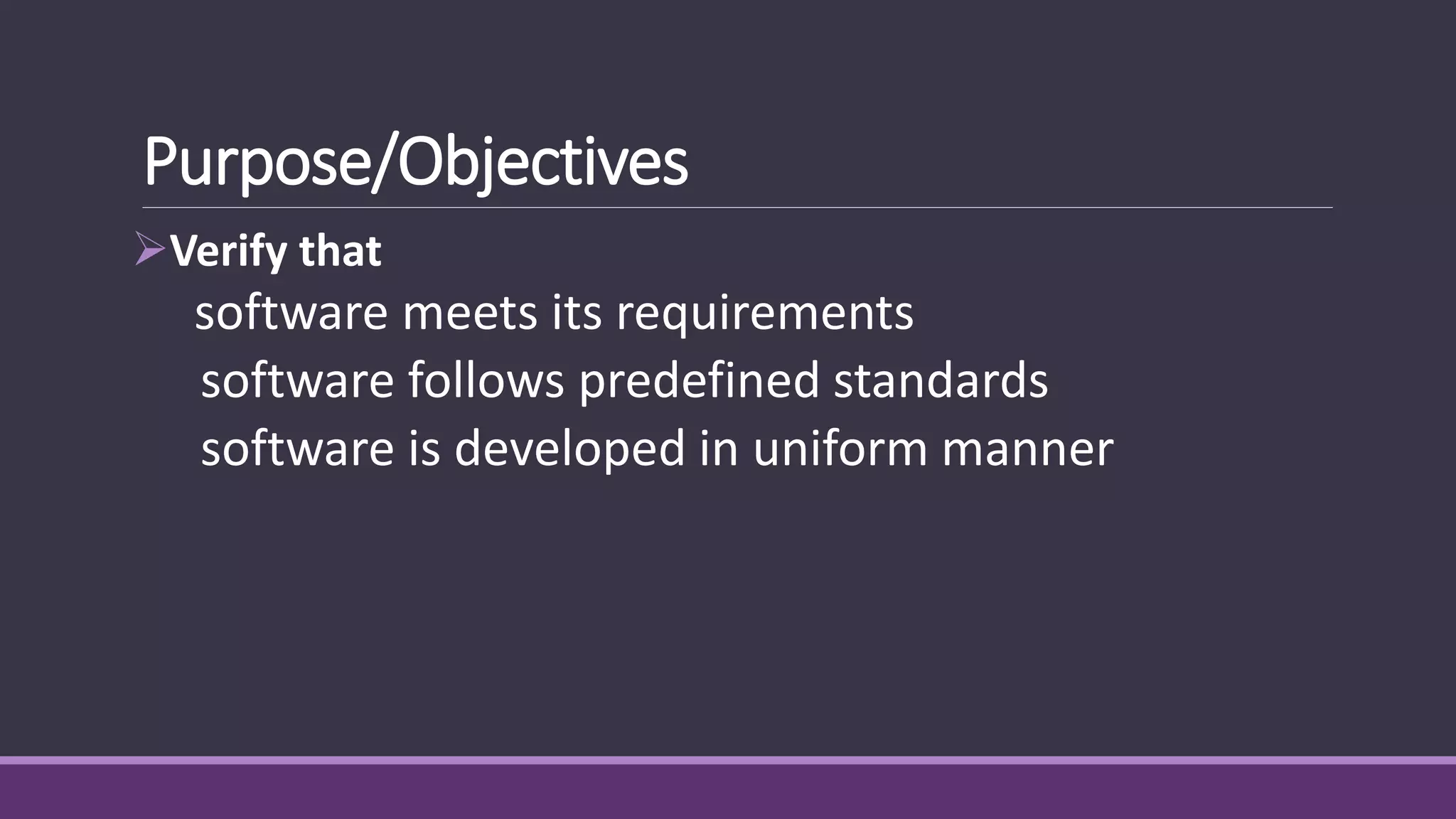
Purpose/Objectives
Verify that
software meets its requirements
software follows predefined standards
software is developed in uniform manner
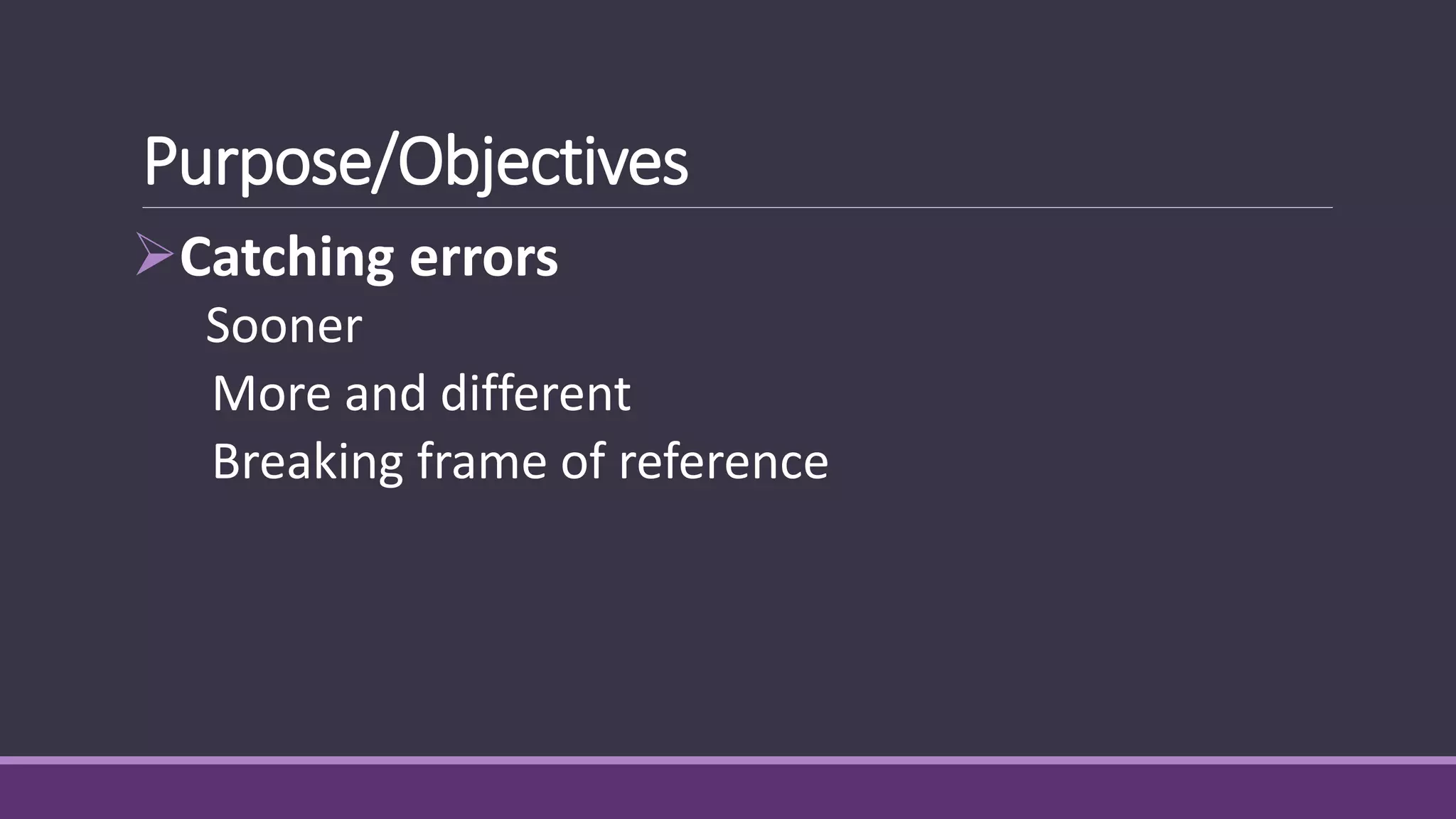
Purpose/Objectives
Catching errors
Sooner
More and different
Breaking frame of reference
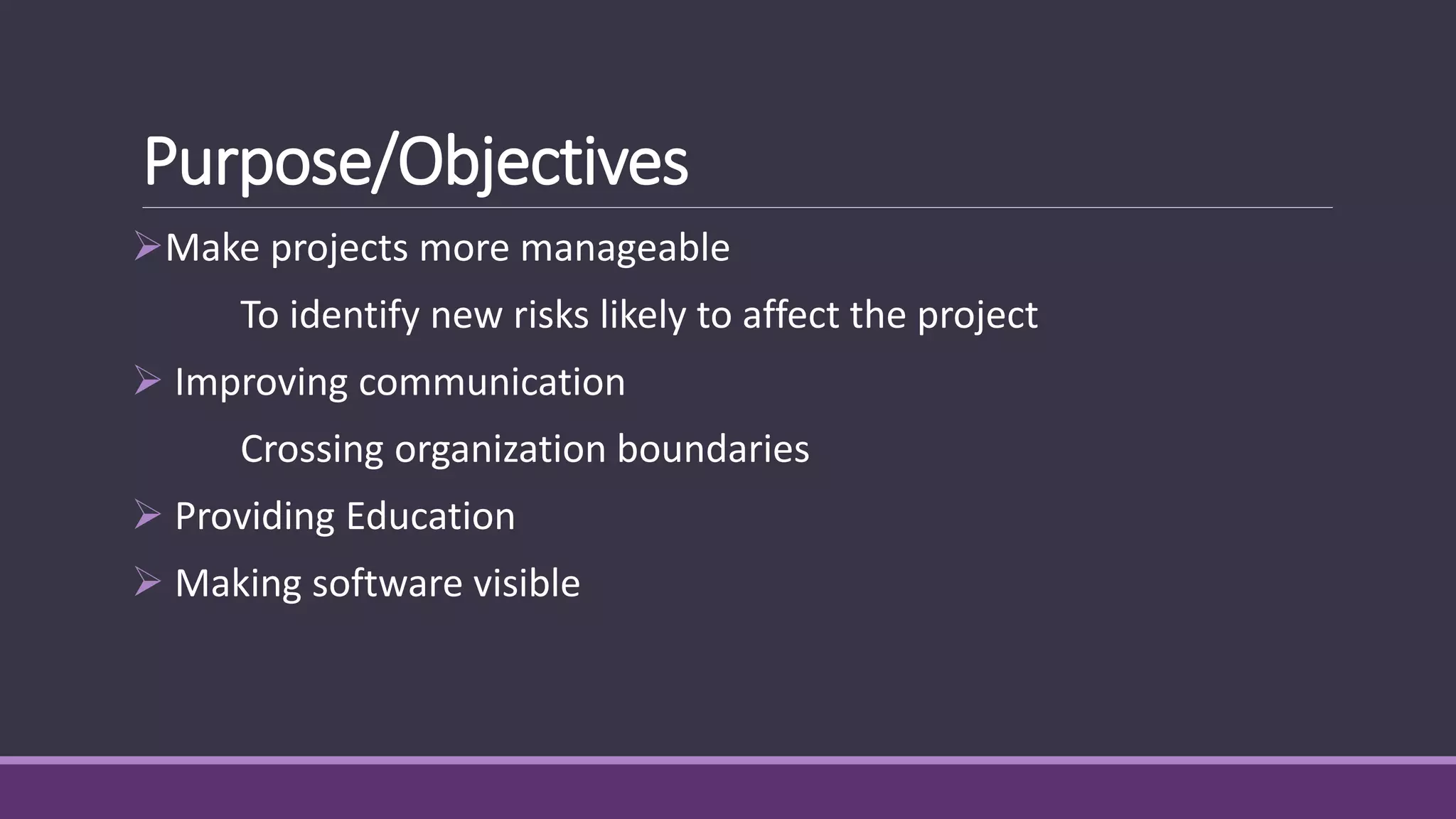
Purpose/Objectives
Make projects more manageable
To identify new risks likely to affect the project
 Improving communication
Crossing organization boundaries
 Providing Education
 Making software visible
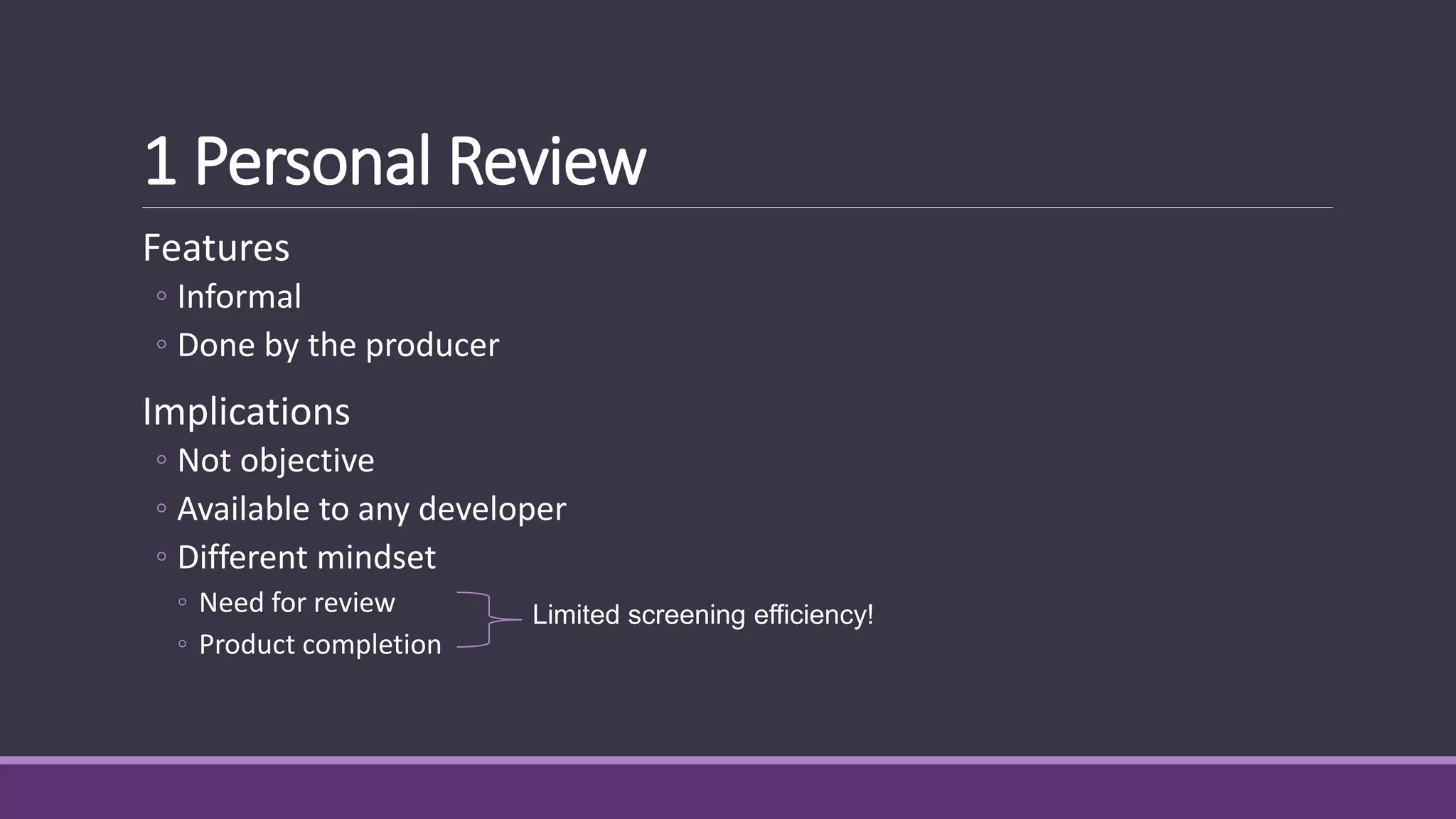
1 Personal Review
Features
◦ Informal
◦ Done by the producer
Implications
◦ Not objective
◦ Available to any developer
◦ Different mindset
◦ Need for review
◦ Product completion
Limited screening efficiency!
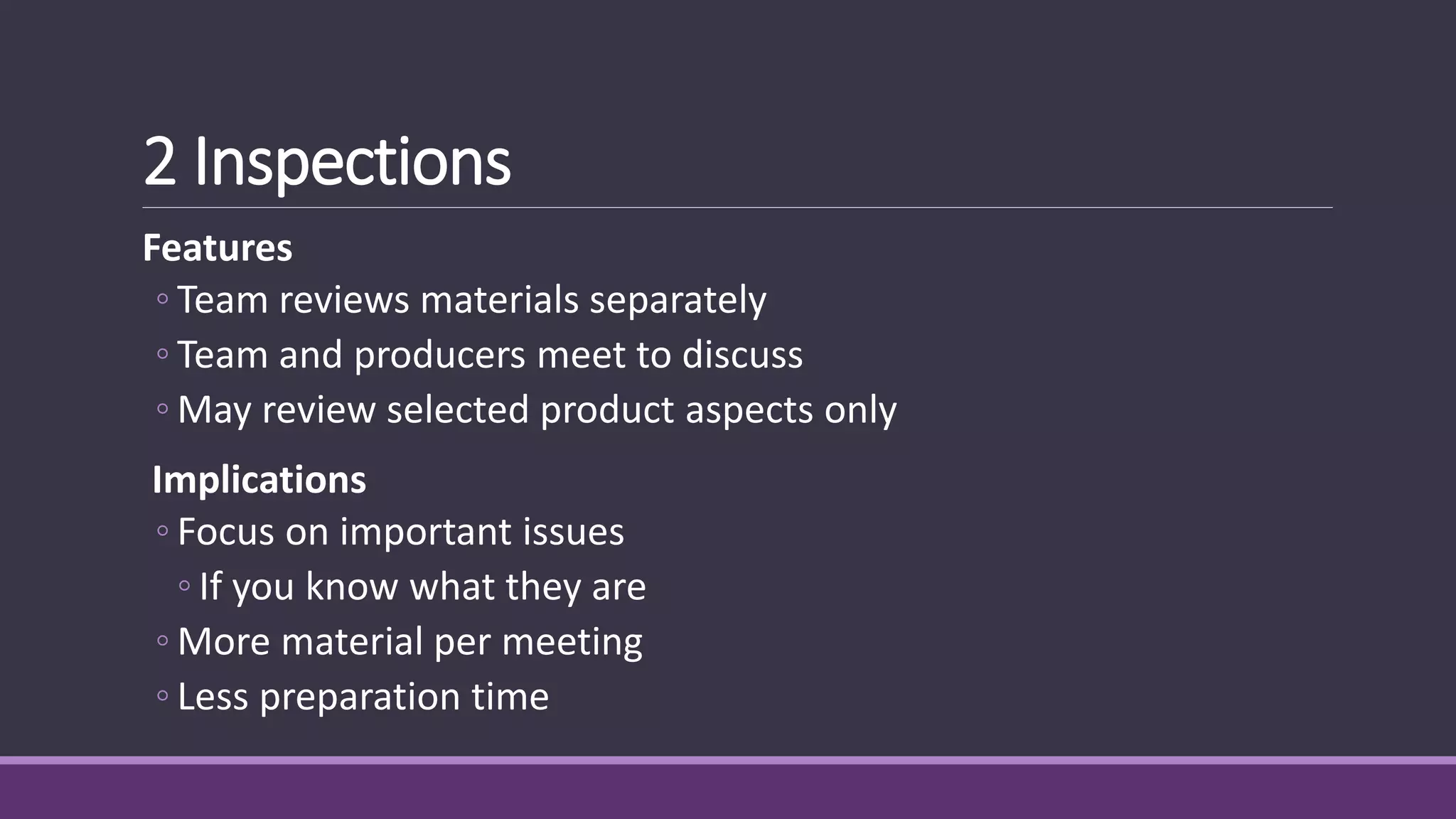
2 Inspections
Features
◦ Team reviews materials separately
◦ Team and producers meet to discuss
◦ May review selected product aspects only
Implications
◦ Focus on important issues
◦ If you know what they are
◦ More material per meeting
◦ Less preparation time
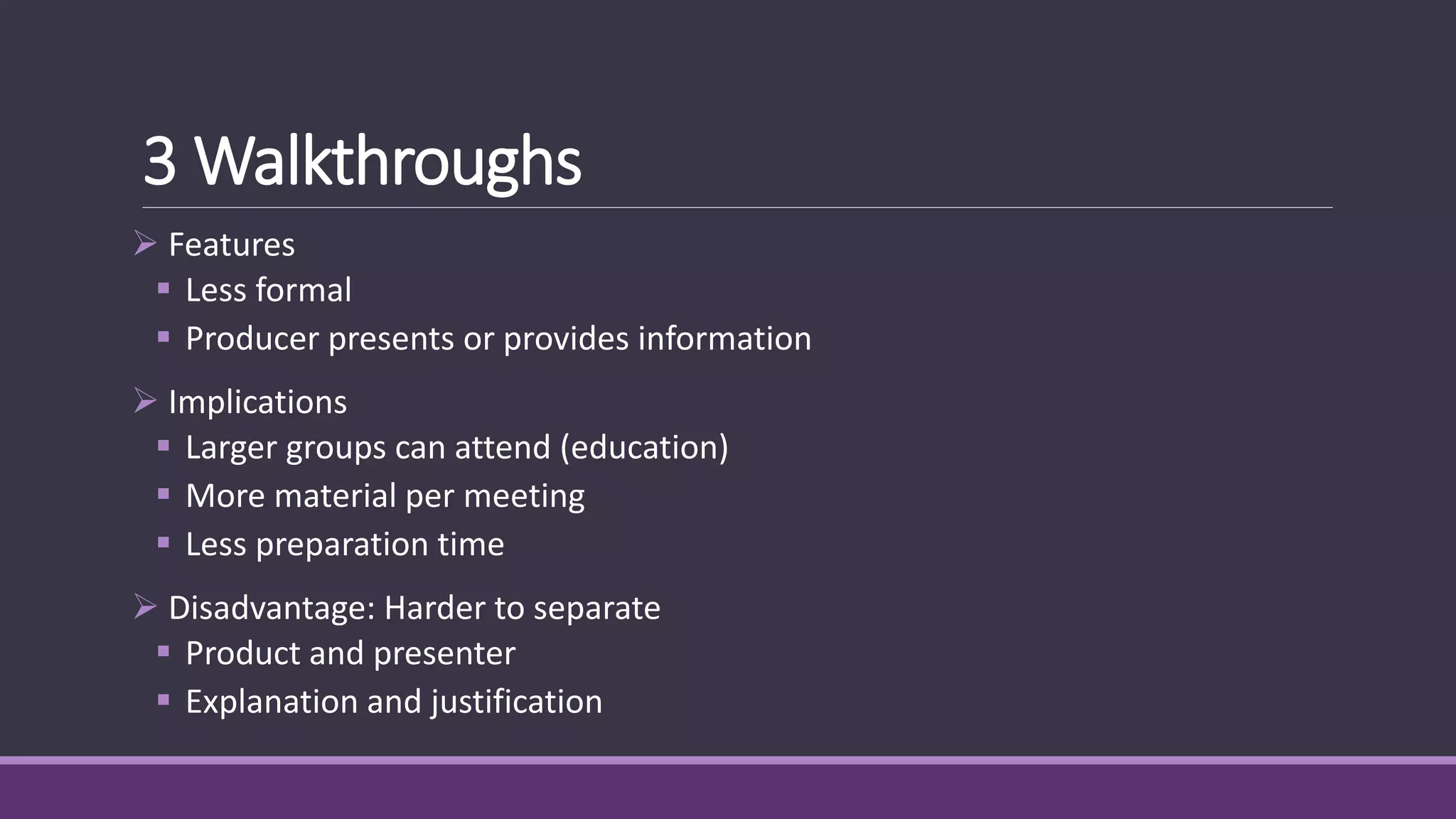
3 Walkthroughs
 Features
 Less formal
 Producer presents or provides information
 Implications
 Larger groups can attend (education)
 More material per meeting
 Less preparation time
 Disadvantage: Harder to separate
 Product and presenter
 Explanation and justification
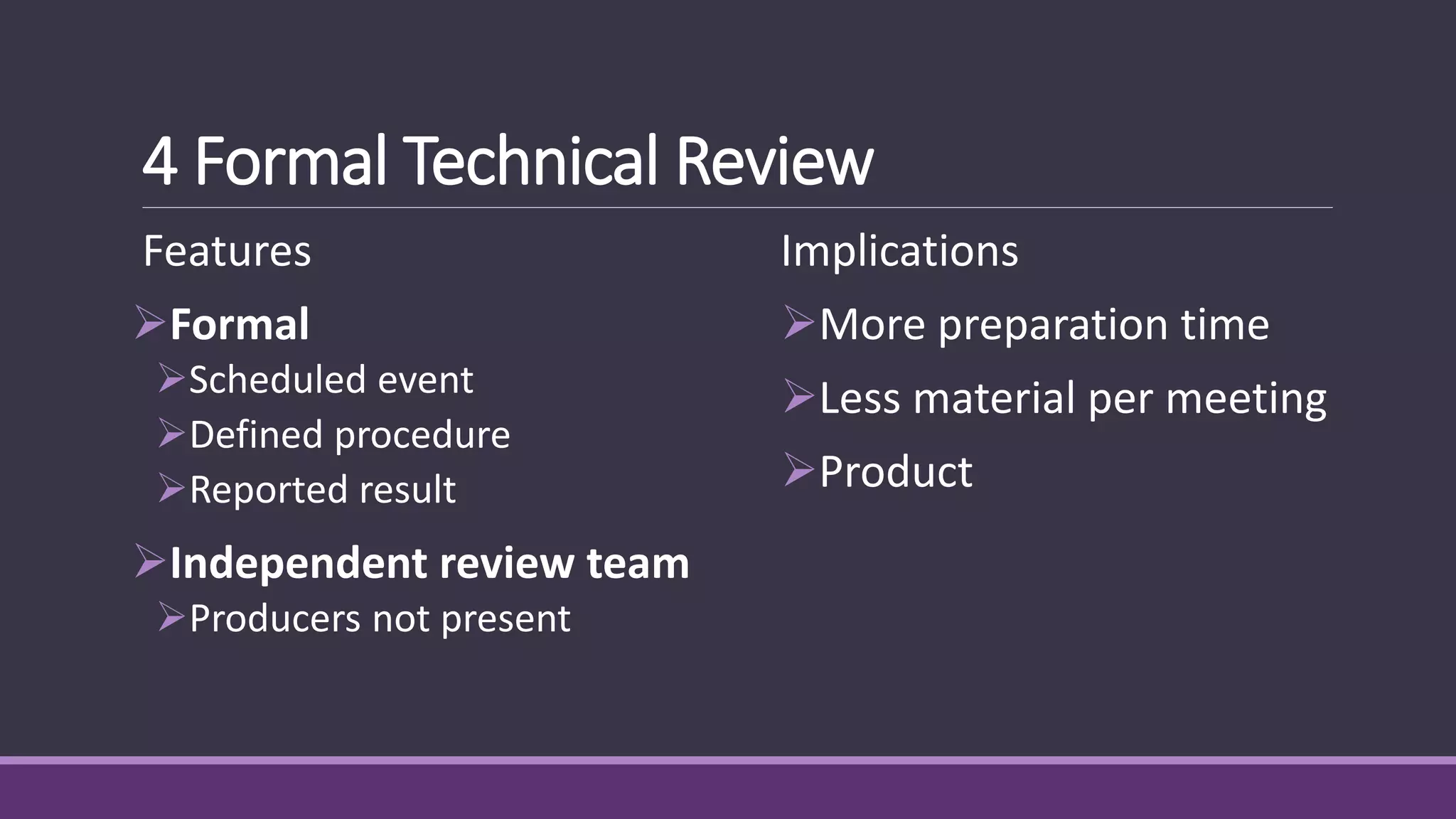
4 Formal Technical Review
Features
Formal
Scheduled event
Defined procedure
Reported result
Independent review team
Producers not present
Implications
More preparation time
Less material per meeting
Product

Quality Control

  • 1.
  • 2.
    Foundations Quality Control is theseries of inspections, reviews and tests used throughout the development cycle to ensure that each work product meets the requirements placed upon it.
  • 3.
    Verification & Validation Verification– The process of evaluating a system or component to determine whether the products of a given development phase satisfy the conditions imposed at the start of that phase Validation - The process of evaluating a system or component during or at the end of the development process to determine whether it satisfies specified requirements
  • 4.
    Verification & Validation Verification:refers to the set of activities that ensure that software correctly implements a specific function. Validation: refers to a different set of activities that ensure that the software that has been built is traceable to customer requirements.
  • 5.
    Terminology: Dynamic/Static Analysis Dynamicanalysis: The process of evaluating a system or component based on its behavior during execution.
  • 6.
    Terminology: Dynamic/Static Analysis Staticanalysis: The process of evaluating a system or component based on its form, structure, content, or documentation.
  • 7.
    Dynamic vs. StaticAnalysis Dynamic analysis (testing):  execution of system components;  running the software Static analysis:  investigation without operation;  pencil and paper reviews etc.  Modelling (mathematical representation)
  • 8.
    Static Analysis Techniques Overview Reviewsand Inspections Walkthroughs, inspections, personal reviews Formal technical reviews Summary Other Techniques Control-flow analysis, data-flow analysis, metrics, …
  • 9.
    Reviews and Inspections Afamily of techniques (1) Personal reviews (2) Inspections (3) Walkthroughs (4) Formal technical reviews Review / inspect  To examine closely  With an eye toward correction or appraisal
  • 10.
    Purpose/Objectives Verify that software meetsits requirements software follows predefined standards software is developed in uniform manner
  • 11.
    Purpose/Objectives Catching errors Sooner More anddifferent Breaking frame of reference
  • 12.
    Purpose/Objectives Make projects moremanageable To identify new risks likely to affect the project  Improving communication Crossing organization boundaries  Providing Education  Making software visible
  • 13.
    1 Personal Review Features ◦Informal ◦ Done by the producer Implications ◦ Not objective ◦ Available to any developer ◦ Different mindset ◦ Need for review ◦ Product completion Limited screening efficiency!
  • 14.
    2 Inspections Features ◦ Teamreviews materials separately ◦ Team and producers meet to discuss ◦ May review selected product aspects only Implications ◦ Focus on important issues ◦ If you know what they are ◦ More material per meeting ◦ Less preparation time
  • 15.
    3 Walkthroughs  Features Less formal  Producer presents or provides information  Implications  Larger groups can attend (education)  More material per meeting  Less preparation time  Disadvantage: Harder to separate  Product and presenter  Explanation and justification
  • 16.
    4 Formal TechnicalReview Features Formal Scheduled event Defined procedure Reported result Independent review team Producers not present Implications More preparation time Less material per meeting Product