Quality Audits
What is Audit
 Audit – Systematic, independent and documented process for obtaining audit
evidence and evaluating it objectively to determine the extent to which the audit
criteria are fulfilled.
 DEFINITION OF GMP AUDIT It is a documented, systemic tool used by
management and done periodically by independent, qualified people to verify and
evaluate an organisation’s use of the principles of good manufacturing practices
and compliance to applicable GMP regulations
 U.S. FDA DEFINITION: A systematic independent examination of a manufacturer’s
quality system that is performed at defined internals and at sufficient frequency to
determine whether both quality system activities comply with quality system
procedures are implemented effectively and that these procedures are suitable to
achieve quality system objectives.
Advantages of Audit
 An audit will show how activities and existing systems are being used at time of
audit.
 Audits can not only identify the problem but also point out the root and
contributing causes of the problems.
 It build confidence in GMP and QA system.
 Determine measures to be taken for improvement in premises, equipment,
operations, procedures, personnel etc.
Types of Audit
 Types of Audits
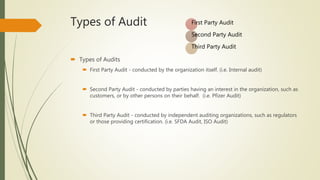
 First Party Audit - conducted by the organization itself. (i.e. Internal audit)
 Second Party Audit - conducted by parties having an interest in the organization, such as
customers, or by other persons on their behalf. (i.e. Pfizer Audit)
 Third Party Audit - conducted by independent auditing organizations, such as regulators
or those providing certification. (i.e. SFDA Audit, ISO Audit)
First Party Audit
Second Party Audit
Third Party Audit
Audit Methods
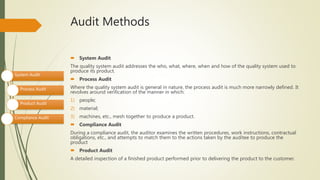
 System Audit
The quality system audit addresses the who, what, where, when and how of the quality system used to
produce its product.
 Process Audit
Where the quality system audit is general in nature, the process audit is much more narrowly defined. It
revolves around verification of the manner in which:
1) people;
2) material;
3) machines, etc., mesh together to produce a product.
 Compliance Audit
During a compliance audit, the auditor examines the written procedures, work instructions, contractual
obligations, etc., and attempts to match them to the actions taken by the auditee to produce the
product
 Product Audit
A detailed inspection of a finished product performed prior to delivering the product to the customer.
System Audit
Process Audit
Product Audit
Compliance Audit
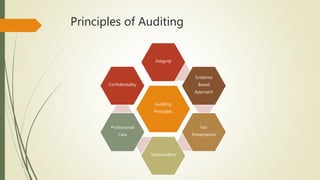
Principles of Auditing
Auditing
Principles
Integrity
Evidence
Based
Approach
Fair
Presentation
Independent
Professional
Care
Confidentiality
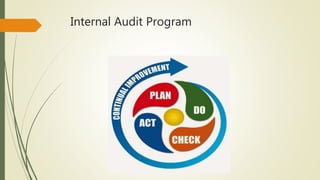
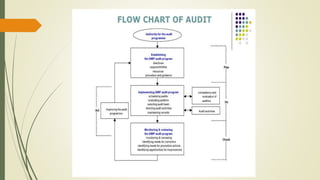
Internal Audit Program
STEPS TO PERFORM A QUALITY AUDIT
 Define and goal of the audit.
 Identify areas and product to be audited.
 Select the type of audit.
 Define the audit approach to be used.
 Identify the team leader and members.
 Identify a date and tentative audit schedule.
 Define audit report format and distribution.
Tips for Effective Internal Quality Audit Program
 1. Ensure systems and processes are clear
 2. Choose the right auditor
 3. Enter the area with respect
 4. Get employees talking
 5. Focus on the right issues
 6. Embrace non-conformance
 7. Shift the focus towards how to improve
 8. Measure and track key areas of the business
 9. Be a customer
 10. Renew periodically
Make Excellence a Habit
 Whether you are looking to improve customer satisfaction, operational excellence,
product quality performance, information security or reduce risk of business
disruption, a well-run INTERNAL QUALITY AUDIT process can become a key
performance tool to make EXCELLENCE a habit.

Quality audits

  • 1.
  • 2.
    What is Audit Audit – Systematic, independent and documented process for obtaining audit evidence and evaluating it objectively to determine the extent to which the audit criteria are fulfilled.  DEFINITION OF GMP AUDIT It is a documented, systemic tool used by management and done periodically by independent, qualified people to verify and evaluate an organisation’s use of the principles of good manufacturing practices and compliance to applicable GMP regulations  U.S. FDA DEFINITION: A systematic independent examination of a manufacturer’s quality system that is performed at defined internals and at sufficient frequency to determine whether both quality system activities comply with quality system procedures are implemented effectively and that these procedures are suitable to achieve quality system objectives.
  • 3.
    Advantages of Audit An audit will show how activities and existing systems are being used at time of audit.  Audits can not only identify the problem but also point out the root and contributing causes of the problems.  It build confidence in GMP and QA system.  Determine measures to be taken for improvement in premises, equipment, operations, procedures, personnel etc.
  • 4.
    Types of Audit Types of Audits  First Party Audit - conducted by the organization itself. (i.e. Internal audit)  Second Party Audit - conducted by parties having an interest in the organization, such as customers, or by other persons on their behalf. (i.e. Pfizer Audit)  Third Party Audit - conducted by independent auditing organizations, such as regulators or those providing certification. (i.e. SFDA Audit, ISO Audit) First Party Audit Second Party Audit Third Party Audit
  • 5.
    Audit Methods  SystemAudit The quality system audit addresses the who, what, where, when and how of the quality system used to produce its product.  Process Audit Where the quality system audit is general in nature, the process audit is much more narrowly defined. It revolves around verification of the manner in which: 1) people; 2) material; 3) machines, etc., mesh together to produce a product.  Compliance Audit During a compliance audit, the auditor examines the written procedures, work instructions, contractual obligations, etc., and attempts to match them to the actions taken by the auditee to produce the product  Product Audit A detailed inspection of a finished product performed prior to delivering the product to the customer. System Audit Process Audit Product Audit Compliance Audit
  • 6.
  • 7.
  • 8.
    STEPS TO PERFORMA QUALITY AUDIT  Define and goal of the audit.  Identify areas and product to be audited.  Select the type of audit.  Define the audit approach to be used.  Identify the team leader and members.  Identify a date and tentative audit schedule.  Define audit report format and distribution.
  • 10.
    Tips for EffectiveInternal Quality Audit Program  1. Ensure systems and processes are clear  2. Choose the right auditor  3. Enter the area with respect  4. Get employees talking  5. Focus on the right issues  6. Embrace non-conformance  7. Shift the focus towards how to improve  8. Measure and track key areas of the business  9. Be a customer  10. Renew periodically
  • 11.
    Make Excellence aHabit  Whether you are looking to improve customer satisfaction, operational excellence, product quality performance, information security or reduce risk of business disruption, a well-run INTERNAL QUALITY AUDIT process can become a key performance tool to make EXCELLENCE a habit.