



November 2010
Objectives:
1)To present an index patient admitted for abdominal
pain.
2)To discuss the family profile of X Family
3)To discuss the clinical manifestations, diagnosis &
management of PID
4)To establish family diagnosis, intervention &
recommendation using family assessment tools
The Case
GENERAL DATA
Pt. X, 21 yo, female, single, Call center agent
From Camotes, Cebu
temporarily residing in Mandaue City
Admitted for the first time due to abdominal pain
Past Medical Hx:
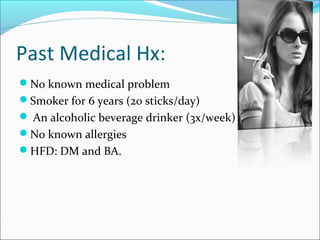
No known medical problem
Smoker for 6 years (20 sticks/day)
 An alcoholic beverage drinker (3x/week)
No known allergies
HFD: DM and BA.
Gynecologic History:
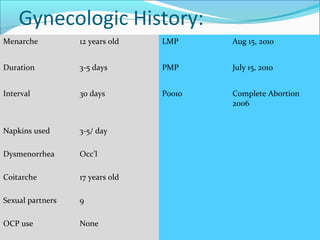
Menarche 12 years old LMP Aug 15, 2010
Duration 3-5 days PMP July 15, 2010
Interval 30 days P0010 Complete Abortion
2006
Napkins used 3-5/ day
Dysmenorrhea Occ’l
Coitarche 17 years old
Sexual partners 9
OCP use None
HPI:
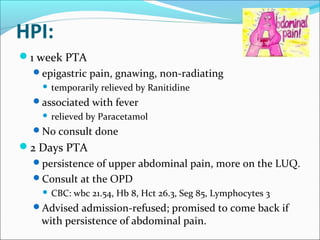
1 week PTA
epigastric pain, gnawing, non-radiating
 temporarily relieved by Ranitidine
associated with fever
 relieved by Paracetamol
No consult done
2 Days PTA
persistence of upper abdominal pain, more on the LUQ.
Consult at the OPD
 CBC: wbc 21.54, Hb 8, Hct 26.3, Seg 85, Lymphocytes 3
Advised admission-refused; promised to come back if
with persistence of abdominal pain.
HPI:
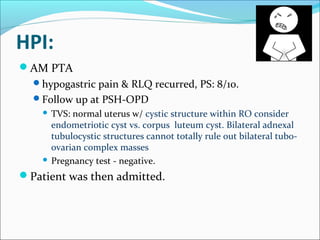
AM PTA
hypogastric pain & RLQ recurred, PS: 8/10.
Follow up at PSH-OPD
 TVS: normal uterus w/ cystic structure within RO consider
endometriotic cyst vs. corpus luteum cyst. Bilateral adnexal
tubulocystic structures cannot totally rule out bilateral tubo-
ovarian complex masses
 Pregnancy test - negative.
Patient was then admitted.
PHYSICAL EXAMINATION
BP: 90/60 HR: 88 RR:20 Temp: 37.2
Wt: 45kgs
Skin: no pallor, warm
HEENT: Pink palpebral conjunctiva, anicteric sclera,
no tonsillopharyngeal congestion
C/L: Equal chest expansion, clear breath sounds
CVS: Distinct heart sounds, Normal rate, regular
rhythm
PHYSICAL EXAMINATION
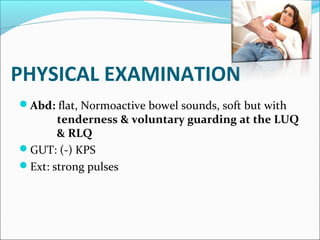
Abd: flat, Normoactive bowel sounds, soft but with
tenderness & voluntary guarding at the LUQ
& RLQ
GUT: (-) KPS
Ext: strong pulses
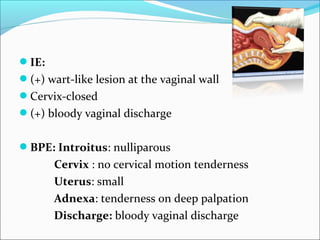
IE:
(+) wart-like lesion at the vaginal wall
Cervix-closed
(+) bloody vaginal discharge
BPE: Introitus: nulliparous
Cervix : no cervical motion tenderness
Uterus: small
Adnexa: tenderness on deep palpation
Discharge: bloody vaginal discharge
Impression:
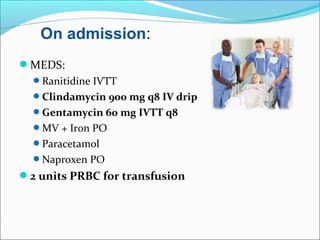
MEDS:
Ranitidine IVTT
Clindamycin 900 mg q8 IV drip
Gentamycin 60 mg IVTT q8
MV + Iron PO
Paracetamol
Naproxen PO
2 units PRBC for transfusion
On admission:
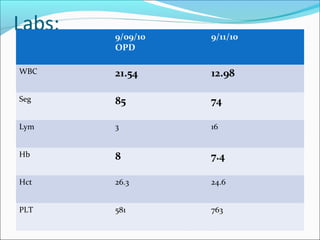
Labs: 9/09/10
OPD
9/11/10
WBC 21.54 12.98
Seg 85 74
Lym 3 16
Hb 8 7.4
Hct 26.3 24.6
PLT 581 763
Labs:
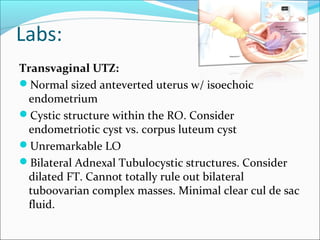
Transvaginal UTZ:
Normal sized anteverted uterus w/ isoechoic
endometrium
Cystic structure within the RO. Consider
endometriotic cyst vs. corpus luteum cyst
Unremarkable LO
Bilateral Adnexal Tubulocystic structures. Consider
dilated FT. Cannot totally rule out bilateral
tuboovarian complex masses. Minimal clear cul de sac
fluid.
Labs:
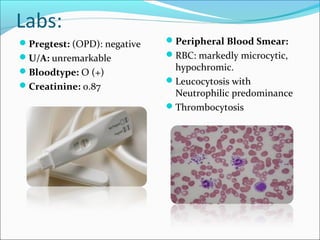
Pregtest: (OPD): negative
U/A: unremarkable
Bloodtype: O (+)
Creatinine: 0.87
Peripheral Blood Smear:
RBC: markedly microcytic,
hypochromic.
Leucocytosis with
Neutrophilic predominance
Thrombocytosis
1st
HD (9/12):
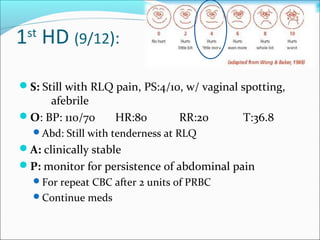
S: Still with RLQ pain, PS:4/10, w/ vaginal spotting,
afebrile
O: BP: 110/70 HR:80 RR:20 T:36.8
Abd: Still with tenderness at RLQ
A: clinically stable
P: monitor for persistence of abdominal pain
For repeat CBC after 2 units of PRBC
Continue meds
2nd
HD (9/13):
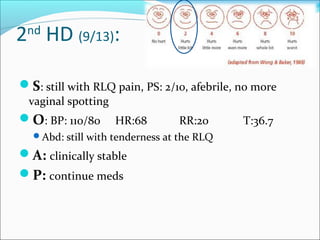
S: still with RLQ pain, PS: 2/10, afebrile, no more
vaginal spotting
O: BP: 110/80 HR:68 RR:20 T:36.7
Abd: still with tenderness at the RLQ
A: clinically stable
P: continue meds
Labs:
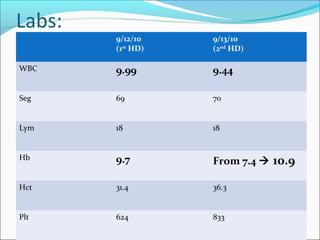
9/12/10
(1st
HD)
9/13/10
(2nd
HD)
WBC 9.99 9.44
Seg 69 70
Lym 18 18
Hb 9.7 From 7.4  10.9
Hct 31.4 36.3
Plt 624 833
3rd
– 4th
HD (9/14-15):
S: No recurrence of pain, afebrile.
O: BP: 120/80 HR: 76 Temp:36.4
ABD: flat, NABS, soft, still w/ mild tenderness at the
hypogastric area
A: clinically stable
P: MGH
Clindamycin 300mg TID x 14days
Ofloxacin 400mg BID x 14 days
FF: after 2 weeks
Follow up @ OPD
Eight days
after discharge (9/23)
S: No recurrence of fever; No vaginal discharge
 on & off epigastric pain
O: ABD: flat, NABS, soft, tenderness at epigastric area.
No more tenderness noted at the RLQ
A: PID resolved
T/C NUD
P: To continue stocks of Pantoprazole
Follow up @ OPD
Twelve days
after discharge (9/27)
S: still with on & off epigastric pain
relieved temporarily by PPI, assoc. with nausea
O: ABD: flat, NABS, soft, tenderness at the epigastric
area, no more pain at the RLQ
A: NUD
P: to continue PPI
:to consult with Gastro specialist if with persistence of
epigastric pain for UGIE
Follow up @ OPD
Fourteen days
after discharge (9/29)
Relief of epigastric pain was noted
No follow up done with her Gynecologist
Did not comply with the follow up TVS
Completed the 14 days take home antibiotic
DISCUSSIONDISCUSSION
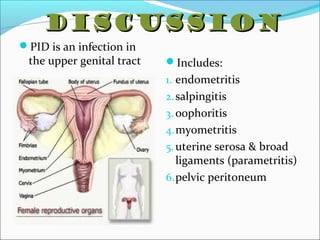
PID is an infection in
the upper genital tract Includes:
1. endometritis
2.salpingitis
3. oophoritis
4.myometritis
5.uterine serosa & broad
ligaments (parametritis)
6.pelvic peritoneum
Acute PID
ascending infection from the bacterial flora of the
vagina and cervix in more than 99%
occurs along the mucosal surface, resulting in
bacterial colonization and infection of the
endometrium and fallopian tubes.
may extend to the ovaries and nearby peritoneum
and rarely into the broad ligament and pelvic
blood vessels.
May result from:
transperitoneal spread of infectious material
 perforated appendix or intraabdominal abscess,
hematogenous & lymphatic spread
 to the tubes or ovaries in <1%
>20 species of microorganisms
cultured from direct aspiration of purulent material
from infected tubes
ages 16 to 25 years old
85% of infections
spontaneous in sexually active females.
15% of infections
develop after procedures that break the cervical mucus
barrier, allowing the vaginal flora to colonize the upper
genital tract
endometrial biopsy, curettage, (IUD) insertion,
hystero-salpingography, and hysteroscopy.
Rare in women who are amenorrheic or not
sexually active
When PID is found in the postmenopausal
woman, genital malignancies; diabetes; or
concurrent intestinal diseases (diverticulitis,
appendicitis,or carcinoma are usually discovered)
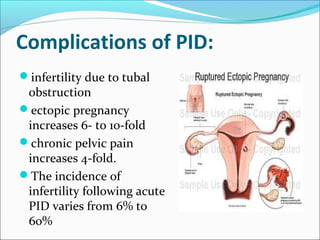
Complications of PID:
infertility due to tubal
obstruction
ectopic pregnancy
increases 6- to 10-fold
chronic pelvic pain
increases 4-fold.
The incidence of
infertility following acute
PID varies from 6% to
60%
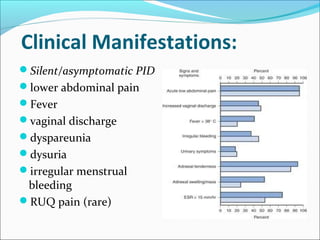
Clinical Manifestations:
Silent/asymptomatic PID
lower abdominal pain
Fever
vaginal discharge
dyspareunia
dysuria
irregular menstrual
bleeding
RUQ pain (rare)
Diagnosis:
Laparoscopy
most accurate method
with direct visualization of the internal female
organs
Ultrasound
view the pelvic area to see if fallopian tubes are
enlarged or an abscess is present
Leukocytosis
is not a reliable indicator of acute PID nor does it
correlate with the need for hospitalization
Diagnosis:
ESR
elevated (>15 mm/hr) in 75% of women with
laparoscopically confirmed acute pelvic infection.
B-HCG
to rule out ectopic pregnancy
Gram stain
examine the endocervical mucus for
inflammatory cells for N. gonorrhoeae and C.
trachomatis
Criteria for hospitalization
surgical emergency cannot be excluded
patient is pregnant
patient does not respond clinically to oral
antibiotic
patient is unable to follow/tolerate an oral
regimen
patient has severe illness, N/V & high fever
patient has a tubo-ovarian abscess
Treatment for PID:
PID can be cured with antibiotics
Any damage that has already been done to a woman's
pelvic organs (uterus, fallopian tubes, and ovaries)
before treatment will not be reversed.
Early treatment for PID is very important.
CDC OPD Management
Regimen A
Levofloxacin 500 mg PO OD for 14 days or
Ofloxacin 400 mg PO OD for 14 days with or
without
Metronidazole 500 mg PO bid for 14 days
From Centers for Disease Control and Prevention: 2006
Guidelines for treatment of sexually transmitted diseases.
MMWR 55:11, 2006.
CDC OPD Management
Regimen B
Ceftriaxone 250 mg IM in a single dose or
Cefoxitin 2 g IM in a single dose and
probenecid 1 g PO single dose or
Other parenteral 3rd
Gen cephalosporin (e.g.,
ceftizoxime or cefotaxime)plus
Doxycycline 100 mg PO bid for 14 days with or
without
Metronidazole 500 mg PO bid for 14 days
From Centers for Disease Control and Prevention: 2006
Guidelines for treatment of sexually transmitted diseases.
MMWR 55:11, 2006.
CDC Inpatient Management
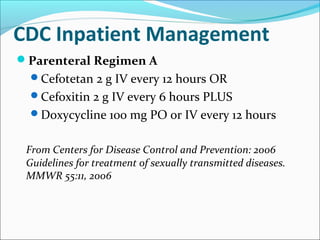
Parenteral Regimen A
Cefotetan 2 g IV every 12 hours OR
Cefoxitin 2 g IV every 6 hours PLUS
Doxycycline 100 mg PO or IV every 12 hours
From Centers for Disease Control and Prevention: 2006
Guidelines for treatment of sexually transmitted diseases.
MMWR 55:11, 2006
CDC Inpatient Management
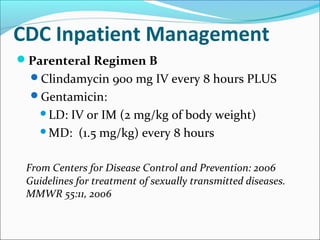
Parenteral Regimen B
Clindamycin 900 mg IV every 8 hours PLUS
Gentamicin:
LD: IV or IM (2 mg/kg of body weight)
MD: (1.5 mg/kg) every 8 hours
From Centers for Disease Control and Prevention: 2006
Guidelines for treatment of sexually transmitted diseases.
MMWR 55:11, 2006
Alternative Parenteral Regimens
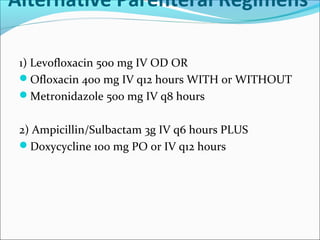
1) Levofloxacin 500 mg IV OD OR
Ofloxacin 400 mg IV q12 hours WITH or WITHOUT
Metronidazole 500 mg IV q8 hours
2) Ampicillin/Sulbactam 3g IV q6 hours PLUS
Doxycycline 100 mg PO or IV q12 hours
Prevention:
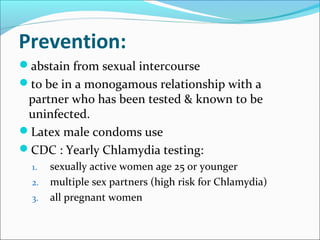
abstain from sexual intercourse
to be in a monogamous relationship with a
partner who has been tested & known to be
uninfected.
Latex male condoms use
CDC : Yearly Chlamydia testing:
1. sexually active women age 25 or younger
2. multiple sex partners (high risk for Chlamydia)
3. all pregnant women
Prevention:
Any genital symptoms:
unusual sore
discharge with odor
dysuria or bleeding between menstrual cycles
could mean an STD infection
If she has any of these symptoms, should consult
a health care provider immediately
FAMILY PROFILE
Alfred:
Father
47 y.o
Unemployed
Previously: Inter-island vessel crew
Asthmatic-No maintenance meds
Alcoholic drinker (Tanduay daily)
FAMILY PROFILE
Josefina
Mother
47 yo
Teacher
HPN: Metoprolol PRN
Anemia 2* profuse
menstruation
FAMILY PROFILE
Eric
27 yo
Eldest
Teacher
Police Officer
No medical Problem
No Vices
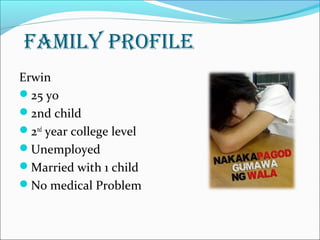
FAMILY PROFILE
Erwin
25 yo
2nd child
2nd
year college level
Unemployed
Married with 1 child
No medical Problem
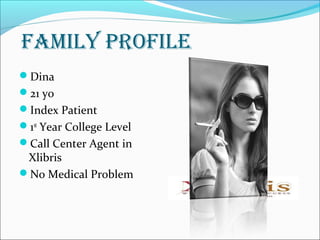
FAMILY PROFILE
Dina
21 yo
Index Patient
1st
Year College Level
Call Center Agent in
Xlibris
No Medical Problem
FAMILY PROFILE
Jerry
19 yo
4th
child/ youngest
2nd
Year College Student
in Camotes
No Medical Problem
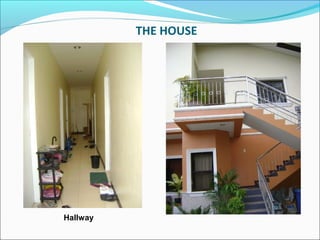
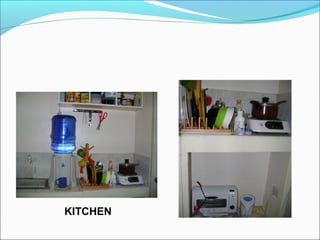
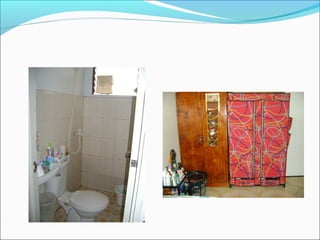
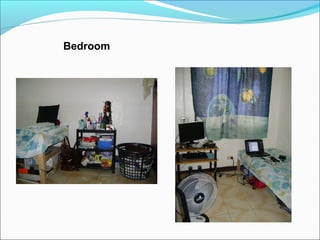
THE HOUSE
Hallway
KITCHEN
Comfort Room
Bedroom
FAMILY LIFE LINE
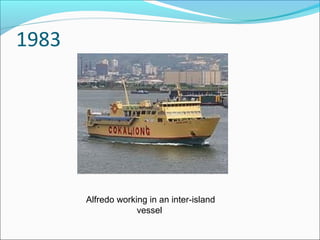
1983
Alfredo working in an inter-island
vessel
He met Josefina while onboard the vessel for Cebu City.
Became lovers and got married immediately after Josefina got
pregnant
1983: Eric was born
1985: Erwin was born
1989: Dina was born
1991: Jerry was born
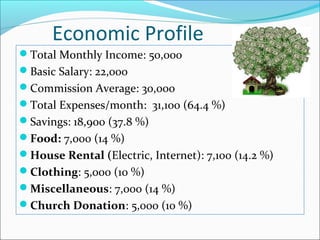
Economic Profile
Total Monthly Income: 50,000
Basic Salary: 22,000
C0mmission Average: 30,ooo
Total Expenses/month: 31,100 (64.4 %)
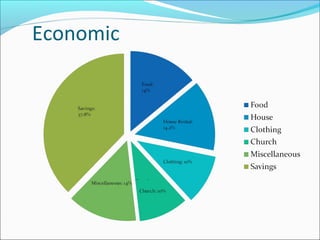
Savings: 18,900 (37.8 %)
Food: 7,000 (14 %)
House Rental (Electric, Internet): 7,100 (14.2 %)
Clothing: 5,000 (10 %)
Miscellaneous: 7,000 (14 %)
Church Donation: 5,000 (10 %)
Economic
Admission:
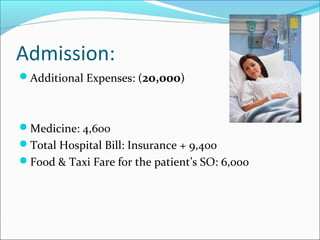
Additional Expenses: (20,000)
Medicine: 4,600
Total Hospital Bill: Insurance + 9,400
Food & Taxi Fare for the patient’s SO: 6,000
Family Assessment Tools
Family Genogram
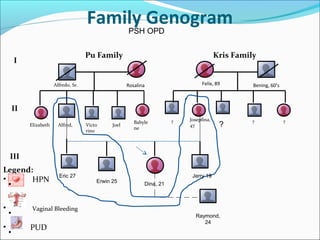
Rosalina Felix, 89 Bening, 60’s
Josepfina,
47
?
Alfredo, Sr.
Pu Family Kris Family
? ?
I
II
Elizabeth Alfred, Victo
rino
Joel
Babyle
ne
Legend:
• HPN
• Vaginal Bleeding
• PUD
III
?
•
•
•
Raymond,
24
Dina, 21
PSH OPD
Eric 27
Erwin 25
Jerry 19
Family Circle
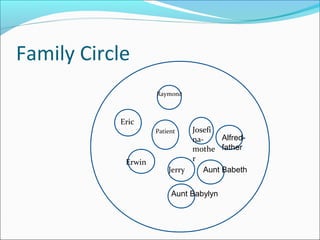
Patient
Eric
Raymond
Erwin
Jerry
Josefi
na-
mothe
r
Alfred-
father
Aunt Babeth
Aunt Babylyn
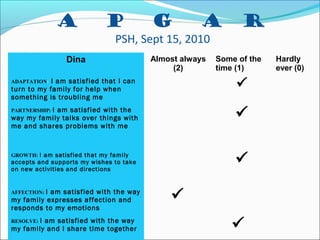
A P G A R
PSH, Sept 15, 2010
Dina Almost always
(2)
Some of the
time (1)
Hardly
ever (0)
ADAPTATION: I am satisfied that I can
turn to my family for help when
something is troubling me

PARTNERSHIP: I am satisfied with the
way my family talks over things with
me and shares problems with me

GROWTH: I am satisfied that my family
accepts and supports my wishes to take
on new activities and directions

AFFECTION: I am satisfied with the way
my family expresses affection and
responds to my emotions

RESOLVE: I am satisfied with the way
my family and I share time together 
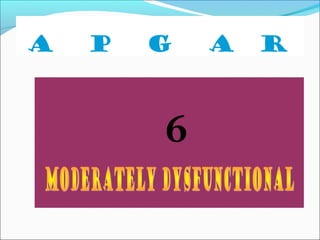
A P G A R
6
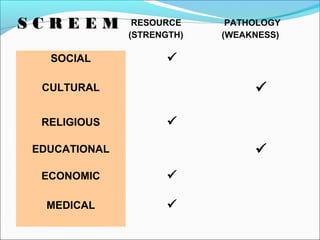
SOCIAL
CULTURAL
RELIGIOn
EDUCATIOnAL
ECOnOMICS
MEDICAL
RESOURCE
(STRENGTH)
PATHOLOGY
(WEAKNESS)
SOCIAL 
CULTURAL 
RELIGIOUS 
EDUCATIONAL 
ECONOMIC 
MEDICAL 
S C R E E MS C R E E M
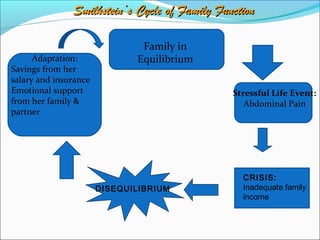
Smilkstein’s Cycle of Family FunctionSmilkstein’s Cycle of Family Function
DISEQUILIBRIUM
Family in
Equilibrium
Stressful Life Event:
Abdominal Pain
CRISIS:
Inadequate family
income
Adaptation:
Savings from her
salary and insurance
Emotional support
from her family &
partner
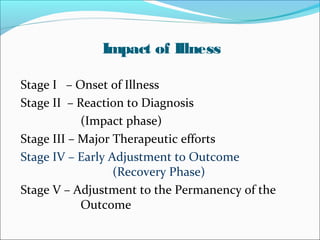
Impact of Illness
Stage I – Onset of Illness
Stage II – Reaction to Diagnosis
(Impact phase)
Stage III – Major Therapeutic efforts
Stage IV – Early Adjustment to Outcome
(Recovery Phase)
Stage V – Adjustment to the Permanency of the
Outcome
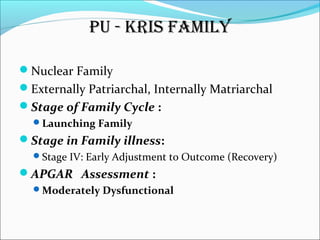
PU - kRIS FAMILy
Nuclear Family
Externally Patriarchal, Internally Matriarchal
Stage of Family Cycle :
Launching Family
Stage in Family illness:
Stage IV: Early Adjustment to Outcome (Recovery)
APGAR Assessment :
Moderately Dysfunctional
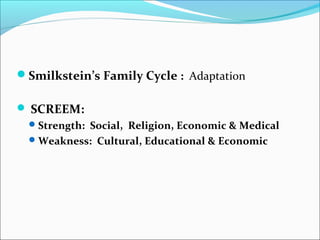
Smilkstein’s Family Cycle : Adaptation
 SCREEM:
Strength: Social, Religion, Economic & Medical
Weakness: Cultural, Educational & Economic
RECOMMENDATIONS
To the patient:
Abstinence
Maintain healthy sexual behavior (limiting the number
of sex partners )
To have one sexual partner (monogamous)
Use barriers methods (condoms, diaphragms & vaginal
spermicides)
Adopt appropriate health-care-seeking behavior (early
detection & treatment of C. trachomatis & N.
gonorrhoeae infection)
To be more active in Church activities
To stay away from her previous drinking buddies
To the Family:
To encourage the patient to follow up with her
attending physicians
To encourage the patient to continue her studies in
College
To the community:
Community health promotion and education:
a)advocacy that recommends safer sex practices
b)providing environments conducive to safer sexual
behaviors
c)strengthening community action
d)promoting healthy personal skills (by providing
information, education, and counseling)
e)orienting health services toward meeting all health
needs
To the community:
High-quality clinical care that is accessible to persons
with STD should be developed and maintained
testing for HIV, Pap-smear screening, and drug &
family- planning counseling
Partner notification - implies a public health process
that informs persons directly exposed to an STD of
their status so they may be evaluated and treated
Male partners of women w/ PID have infection rates
up to 53% for chlamydia & 41% for gonorrhea
To the community:
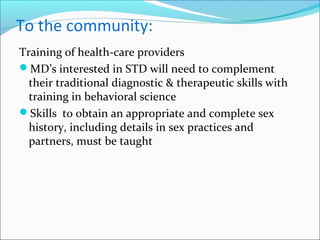
Training of health-care providers
MD’s interested in STD will need to complement
their traditional diagnostic & therapeutic skills with
training in behavioral science
Skills to obtain an appropriate and complete sex
history, including details in sex practices and
partners, must be taught
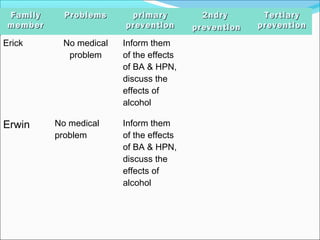
FamilyFamily
membermember
ProblemsProblems primaryprimary
preventionprevention
2ndry2ndry
preventionprevention
TertiaryTertiary
preventionprevention
Erick No medical
problem
Inform them
of the effects
of BA & HPN,
discuss the
effects of
alcohol
Erwin No medical
problem
Inform them
of the effects
of BA & HPN,
discuss the
effects of
alcohol
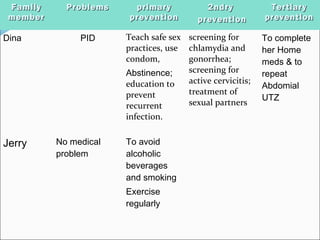
FamilyFamily
membermember
ProblemsProblems primaryprimary
preventionprevention
2ndry2ndry
preventionprevention
TertiaryTertiary
preventionprevention
Dina PID Teach safe sex
practices, use
condom,
Abstinence;
education to
prevent
recurrent
infection.
screening for
chlamydia and
gonorrhea;
screening for
active cervicitis;
treatment of
sexual partners
To complete
her Home
meds & to
repeat
Abdomial
UTZ
Jerry No medical
problem
To avoid
alcoholic
beverages
and smoking
Exercise
regularly
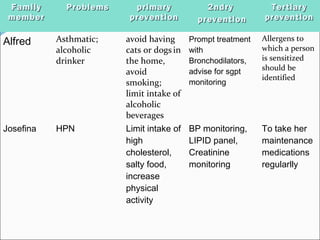
FamilyFamily
membermember
ProblemsProblems primaryprimary
preventionprevention
2ndry2ndry
preventionprevention
TertiaryTertiary
preventionprevention
Alfred Asthmatic;
alcoholic
drinker
avoid having
cats or dogs in
the home,
avoid
smoking;
limit intake of
alcoholic
beverages
Prompt treatment
with
Bronchodilators,
advise for sgpt
monitoring
Allergens to
which a person
is sensitized
should be
identified
Josefina HPN Limit intake of
high
cholesterol,
salty food,
increase
physical
activity
BP monitoring,
LIPID panel,
Creatinine
monitoring
To take her
maintenance
medications
regularlly
Pls visit: http://crisbertcualteros.page.tl
REFERENCE LIST
1) Pelvic Inflammatory Disease: Guidelines for
Prevention and Management (CDC)
2) Comprehensive Gynecology 5th Ed
3) The Filipino Physician Today 2nd
Edition
4) Harrison’s IM, 17th
Edition

Pelvic Inflammatory Disease

  • 1.
  • 2.
    Objectives: 1)To present anindex patient admitted for abdominal pain. 2)To discuss the family profile of X Family 3)To discuss the clinical manifestations, diagnosis & management of PID 4)To establish family diagnosis, intervention & recommendation using family assessment tools
  • 3.
    The Case GENERAL DATA Pt.X, 21 yo, female, single, Call center agent From Camotes, Cebu temporarily residing in Mandaue City Admitted for the first time due to abdominal pain
  • 4.
    Past Medical Hx: Noknown medical problem Smoker for 6 years (20 sticks/day)  An alcoholic beverage drinker (3x/week) No known allergies HFD: DM and BA.
  • 5.
    Gynecologic History: Menarche 12years old LMP Aug 15, 2010 Duration 3-5 days PMP July 15, 2010 Interval 30 days P0010 Complete Abortion 2006 Napkins used 3-5/ day Dysmenorrhea Occ’l Coitarche 17 years old Sexual partners 9 OCP use None
  • 6.
    HPI: 1 week PTA epigastricpain, gnawing, non-radiating  temporarily relieved by Ranitidine associated with fever  relieved by Paracetamol No consult done 2 Days PTA persistence of upper abdominal pain, more on the LUQ. Consult at the OPD  CBC: wbc 21.54, Hb 8, Hct 26.3, Seg 85, Lymphocytes 3 Advised admission-refused; promised to come back if with persistence of abdominal pain.
  • 7.
    HPI: AM PTA hypogastric pain& RLQ recurred, PS: 8/10. Follow up at PSH-OPD  TVS: normal uterus w/ cystic structure within RO consider endometriotic cyst vs. corpus luteum cyst. Bilateral adnexal tubulocystic structures cannot totally rule out bilateral tubo- ovarian complex masses  Pregnancy test - negative. Patient was then admitted.
  • 8.
    PHYSICAL EXAMINATION BP: 90/60HR: 88 RR:20 Temp: 37.2 Wt: 45kgs Skin: no pallor, warm HEENT: Pink palpebral conjunctiva, anicteric sclera, no tonsillopharyngeal congestion C/L: Equal chest expansion, clear breath sounds CVS: Distinct heart sounds, Normal rate, regular rhythm
  • 9.
    PHYSICAL EXAMINATION Abd: flat,Normoactive bowel sounds, soft but with tenderness & voluntary guarding at the LUQ & RLQ GUT: (-) KPS Ext: strong pulses
  • 10.
    IE: (+) wart-like lesionat the vaginal wall Cervix-closed (+) bloody vaginal discharge BPE: Introitus: nulliparous Cervix : no cervical motion tenderness Uterus: small Adnexa: tenderness on deep palpation Discharge: bloody vaginal discharge
  • 11.
  • 13.
    MEDS: Ranitidine IVTT Clindamycin 900mg q8 IV drip Gentamycin 60 mg IVTT q8 MV + Iron PO Paracetamol Naproxen PO 2 units PRBC for transfusion On admission:
  • 14.
    Labs: 9/09/10 OPD 9/11/10 WBC 21.5412.98 Seg 85 74 Lym 3 16 Hb 8 7.4 Hct 26.3 24.6 PLT 581 763
  • 15.
    Labs: Transvaginal UTZ: Normal sizedanteverted uterus w/ isoechoic endometrium Cystic structure within the RO. Consider endometriotic cyst vs. corpus luteum cyst Unremarkable LO Bilateral Adnexal Tubulocystic structures. Consider dilated FT. Cannot totally rule out bilateral tuboovarian complex masses. Minimal clear cul de sac fluid.
  • 16.
    Labs: Pregtest: (OPD): negative U/A:unremarkable Bloodtype: O (+) Creatinine: 0.87 Peripheral Blood Smear: RBC: markedly microcytic, hypochromic. Leucocytosis with Neutrophilic predominance Thrombocytosis
  • 17.
    1st HD (9/12): S: Stillwith RLQ pain, PS:4/10, w/ vaginal spotting, afebrile O: BP: 110/70 HR:80 RR:20 T:36.8 Abd: Still with tenderness at RLQ A: clinically stable P: monitor for persistence of abdominal pain For repeat CBC after 2 units of PRBC Continue meds
  • 18.
    2nd HD (9/13): S: stillwith RLQ pain, PS: 2/10, afebrile, no more vaginal spotting O: BP: 110/80 HR:68 RR:20 T:36.7 Abd: still with tenderness at the RLQ A: clinically stable P: continue meds
  • 19.
    Labs: 9/12/10 (1st HD) 9/13/10 (2nd HD) WBC 9.99 9.44 Seg69 70 Lym 18 18 Hb 9.7 From 7.4  10.9 Hct 31.4 36.3 Plt 624 833
  • 20.
    3rd – 4th HD (9/14-15): S:No recurrence of pain, afebrile. O: BP: 120/80 HR: 76 Temp:36.4 ABD: flat, NABS, soft, still w/ mild tenderness at the hypogastric area A: clinically stable P: MGH Clindamycin 300mg TID x 14days Ofloxacin 400mg BID x 14 days FF: after 2 weeks
  • 21.
    Follow up @OPD Eight days after discharge (9/23) S: No recurrence of fever; No vaginal discharge  on & off epigastric pain O: ABD: flat, NABS, soft, tenderness at epigastric area. No more tenderness noted at the RLQ A: PID resolved T/C NUD P: To continue stocks of Pantoprazole
  • 22.
    Follow up @OPD Twelve days after discharge (9/27) S: still with on & off epigastric pain relieved temporarily by PPI, assoc. with nausea O: ABD: flat, NABS, soft, tenderness at the epigastric area, no more pain at the RLQ A: NUD P: to continue PPI :to consult with Gastro specialist if with persistence of epigastric pain for UGIE
  • 23.
    Follow up @OPD Fourteen days after discharge (9/29) Relief of epigastric pain was noted No follow up done with her Gynecologist Did not comply with the follow up TVS Completed the 14 days take home antibiotic
  • 24.
    DISCUSSIONDISCUSSION PID is aninfection in the upper genital tract Includes: 1. endometritis 2.salpingitis 3. oophoritis 4.myometritis 5.uterine serosa & broad ligaments (parametritis) 6.pelvic peritoneum
  • 25.
    Acute PID ascending infectionfrom the bacterial flora of the vagina and cervix in more than 99% occurs along the mucosal surface, resulting in bacterial colonization and infection of the endometrium and fallopian tubes. may extend to the ovaries and nearby peritoneum and rarely into the broad ligament and pelvic blood vessels.
  • 26.
    May result from: transperitonealspread of infectious material  perforated appendix or intraabdominal abscess, hematogenous & lymphatic spread  to the tubes or ovaries in <1% >20 species of microorganisms cultured from direct aspiration of purulent material from infected tubes ages 16 to 25 years old
  • 27.
    85% of infections spontaneousin sexually active females. 15% of infections develop after procedures that break the cervical mucus barrier, allowing the vaginal flora to colonize the upper genital tract endometrial biopsy, curettage, (IUD) insertion, hystero-salpingography, and hysteroscopy.
  • 28.
    Rare in womenwho are amenorrheic or not sexually active When PID is found in the postmenopausal woman, genital malignancies; diabetes; or concurrent intestinal diseases (diverticulitis, appendicitis,or carcinoma are usually discovered)
  • 29.
    Complications of PID: infertilitydue to tubal obstruction ectopic pregnancy increases 6- to 10-fold chronic pelvic pain increases 4-fold. The incidence of infertility following acute PID varies from 6% to 60%
  • 30.
    Clinical Manifestations: Silent/asymptomatic PID lowerabdominal pain Fever vaginal discharge dyspareunia dysuria irregular menstrual bleeding RUQ pain (rare)
  • 31.
    Diagnosis: Laparoscopy most accurate method withdirect visualization of the internal female organs Ultrasound view the pelvic area to see if fallopian tubes are enlarged or an abscess is present Leukocytosis is not a reliable indicator of acute PID nor does it correlate with the need for hospitalization
  • 32.
    Diagnosis: ESR elevated (>15 mm/hr)in 75% of women with laparoscopically confirmed acute pelvic infection. B-HCG to rule out ectopic pregnancy Gram stain examine the endocervical mucus for inflammatory cells for N. gonorrhoeae and C. trachomatis
  • 36.
    Criteria for hospitalization surgicalemergency cannot be excluded patient is pregnant patient does not respond clinically to oral antibiotic patient is unable to follow/tolerate an oral regimen patient has severe illness, N/V & high fever patient has a tubo-ovarian abscess
  • 37.
    Treatment for PID: PIDcan be cured with antibiotics Any damage that has already been done to a woman's pelvic organs (uterus, fallopian tubes, and ovaries) before treatment will not be reversed. Early treatment for PID is very important.
  • 38.
    CDC OPD Management RegimenA Levofloxacin 500 mg PO OD for 14 days or Ofloxacin 400 mg PO OD for 14 days with or without Metronidazole 500 mg PO bid for 14 days From Centers for Disease Control and Prevention: 2006 Guidelines for treatment of sexually transmitted diseases. MMWR 55:11, 2006.
  • 39.
    CDC OPD Management RegimenB Ceftriaxone 250 mg IM in a single dose or Cefoxitin 2 g IM in a single dose and probenecid 1 g PO single dose or Other parenteral 3rd Gen cephalosporin (e.g., ceftizoxime or cefotaxime)plus Doxycycline 100 mg PO bid for 14 days with or without Metronidazole 500 mg PO bid for 14 days From Centers for Disease Control and Prevention: 2006 Guidelines for treatment of sexually transmitted diseases. MMWR 55:11, 2006.
  • 40.
    CDC Inpatient Management ParenteralRegimen A Cefotetan 2 g IV every 12 hours OR Cefoxitin 2 g IV every 6 hours PLUS Doxycycline 100 mg PO or IV every 12 hours From Centers for Disease Control and Prevention: 2006 Guidelines for treatment of sexually transmitted diseases. MMWR 55:11, 2006
  • 41.
    CDC Inpatient Management ParenteralRegimen B Clindamycin 900 mg IV every 8 hours PLUS Gentamicin: LD: IV or IM (2 mg/kg of body weight) MD: (1.5 mg/kg) every 8 hours From Centers for Disease Control and Prevention: 2006 Guidelines for treatment of sexually transmitted diseases. MMWR 55:11, 2006
  • 42.
    Alternative Parenteral Regimens 1)Levofloxacin 500 mg IV OD OR Ofloxacin 400 mg IV q12 hours WITH or WITHOUT Metronidazole 500 mg IV q8 hours 2) Ampicillin/Sulbactam 3g IV q6 hours PLUS Doxycycline 100 mg PO or IV q12 hours
  • 43.
    Prevention: abstain from sexualintercourse to be in a monogamous relationship with a partner who has been tested & known to be uninfected. Latex male condoms use CDC : Yearly Chlamydia testing: 1. sexually active women age 25 or younger 2. multiple sex partners (high risk for Chlamydia) 3. all pregnant women
  • 44.
    Prevention: Any genital symptoms: unusualsore discharge with odor dysuria or bleeding between menstrual cycles could mean an STD infection If she has any of these symptoms, should consult a health care provider immediately
  • 45.
    FAMILY PROFILE Alfred: Father 47 y.o Unemployed Previously:Inter-island vessel crew Asthmatic-No maintenance meds Alcoholic drinker (Tanduay daily)
  • 46.
    FAMILY PROFILE Josefina Mother 47 yo Teacher HPN:Metoprolol PRN Anemia 2* profuse menstruation
  • 47.
    FAMILY PROFILE Eric 27 yo Eldest Teacher PoliceOfficer No medical Problem No Vices
  • 48.
    FAMILY PROFILE Erwin 25 yo 2ndchild 2nd year college level Unemployed Married with 1 child No medical Problem
  • 49.
    FAMILY PROFILE Dina 21 yo IndexPatient 1st Year College Level Call Center Agent in Xlibris No Medical Problem
  • 50.
    FAMILY PROFILE Jerry 19 yo 4th child/youngest 2nd Year College Student in Camotes No Medical Problem
  • 51.
  • 52.
  • 54.
  • 55.
  • 56.
    1983 Alfredo working inan inter-island vessel
  • 57.
    He met Josefinawhile onboard the vessel for Cebu City. Became lovers and got married immediately after Josefina got pregnant
  • 58.
    1983: Eric wasborn 1985: Erwin was born 1989: Dina was born 1991: Jerry was born
  • 59.
    Economic Profile Total MonthlyIncome: 50,000 Basic Salary: 22,000 C0mmission Average: 30,ooo Total Expenses/month: 31,100 (64.4 %) Savings: 18,900 (37.8 %) Food: 7,000 (14 %) House Rental (Electric, Internet): 7,100 (14.2 %) Clothing: 5,000 (10 %) Miscellaneous: 7,000 (14 %) Church Donation: 5,000 (10 %)
  • 60.
  • 61.
    Admission: Additional Expenses: (20,000) Medicine:4,600 Total Hospital Bill: Insurance + 9,400 Food & Taxi Fare for the patient’s SO: 6,000
  • 62.
  • 63.
    Family Genogram Rosalina Felix,89 Bening, 60’s Josepfina, 47 ? Alfredo, Sr. Pu Family Kris Family ? ? I II Elizabeth Alfred, Victo rino Joel Babyle ne Legend: • HPN • Vaginal Bleeding • PUD III ? • • • Raymond, 24 Dina, 21 PSH OPD Eric 27 Erwin 25 Jerry 19
  • 64.
  • 65.
    A P GA R PSH, Sept 15, 2010 Dina Almost always (2) Some of the time (1) Hardly ever (0) ADAPTATION: I am satisfied that I can turn to my family for help when something is troubling me  PARTNERSHIP: I am satisfied with the way my family talks over things with me and shares problems with me  GROWTH: I am satisfied that my family accepts and supports my wishes to take on new activities and directions  AFFECTION: I am satisfied with the way my family expresses affection and responds to my emotions  RESOLVE: I am satisfied with the way my family and I share time together 
  • 66.
    A P GA R 6
  • 67.
  • 68.
    RESOURCE (STRENGTH) PATHOLOGY (WEAKNESS) SOCIAL  CULTURAL  RELIGIOUS EDUCATIONAL  ECONOMIC  MEDICAL  S C R E E MS C R E E M
  • 69.
    Smilkstein’s Cycle ofFamily FunctionSmilkstein’s Cycle of Family Function DISEQUILIBRIUM Family in Equilibrium Stressful Life Event: Abdominal Pain CRISIS: Inadequate family income Adaptation: Savings from her salary and insurance Emotional support from her family & partner
  • 71.
    Impact of Illness StageI – Onset of Illness Stage II – Reaction to Diagnosis (Impact phase) Stage III – Major Therapeutic efforts Stage IV – Early Adjustment to Outcome (Recovery Phase) Stage V – Adjustment to the Permanency of the Outcome
  • 72.
    PU - kRISFAMILy Nuclear Family Externally Patriarchal, Internally Matriarchal Stage of Family Cycle : Launching Family Stage in Family illness: Stage IV: Early Adjustment to Outcome (Recovery) APGAR Assessment : Moderately Dysfunctional
  • 73.
    Smilkstein’s Family Cycle: Adaptation  SCREEM: Strength: Social, Religion, Economic & Medical Weakness: Cultural, Educational & Economic
  • 74.
    RECOMMENDATIONS To the patient: Abstinence Maintainhealthy sexual behavior (limiting the number of sex partners ) To have one sexual partner (monogamous) Use barriers methods (condoms, diaphragms & vaginal spermicides) Adopt appropriate health-care-seeking behavior (early detection & treatment of C. trachomatis & N. gonorrhoeae infection) To be more active in Church activities To stay away from her previous drinking buddies
  • 75.
    To the Family: Toencourage the patient to follow up with her attending physicians To encourage the patient to continue her studies in College
  • 76.
    To the community: Communityhealth promotion and education: a)advocacy that recommends safer sex practices b)providing environments conducive to safer sexual behaviors c)strengthening community action d)promoting healthy personal skills (by providing information, education, and counseling) e)orienting health services toward meeting all health needs
  • 77.
    To the community: High-qualityclinical care that is accessible to persons with STD should be developed and maintained testing for HIV, Pap-smear screening, and drug & family- planning counseling Partner notification - implies a public health process that informs persons directly exposed to an STD of their status so they may be evaluated and treated Male partners of women w/ PID have infection rates up to 53% for chlamydia & 41% for gonorrhea
  • 78.
    To the community: Trainingof health-care providers MD’s interested in STD will need to complement their traditional diagnostic & therapeutic skills with training in behavioral science Skills to obtain an appropriate and complete sex history, including details in sex practices and partners, must be taught
  • 80.
    FamilyFamily membermember ProblemsProblems primaryprimary preventionprevention 2ndry2ndry preventionprevention TertiaryTertiary preventionprevention Erick Nomedical problem Inform them of the effects of BA & HPN, discuss the effects of alcohol Erwin No medical problem Inform them of the effects of BA & HPN, discuss the effects of alcohol
  • 81.
    FamilyFamily membermember ProblemsProblems primaryprimary preventionprevention 2ndry2ndry preventionprevention TertiaryTertiary preventionprevention Dina PIDTeach safe sex practices, use condom, Abstinence; education to prevent recurrent infection. screening for chlamydia and gonorrhea; screening for active cervicitis; treatment of sexual partners To complete her Home meds & to repeat Abdomial UTZ Jerry No medical problem To avoid alcoholic beverages and smoking Exercise regularly
  • 82.
    FamilyFamily membermember ProblemsProblems primaryprimary preventionprevention 2ndry2ndry preventionprevention TertiaryTertiary preventionprevention Alfred Asthmatic; alcoholic drinker avoidhaving cats or dogs in the home, avoid smoking; limit intake of alcoholic beverages Prompt treatment with Bronchodilators, advise for sgpt monitoring Allergens to which a person is sensitized should be identified Josefina HPN Limit intake of high cholesterol, salty food, increase physical activity BP monitoring, LIPID panel, Creatinine monitoring To take her maintenance medications regularlly
  • 83.
  • 84.
    REFERENCE LIST 1) PelvicInflammatory Disease: Guidelines for Prevention and Management (CDC) 2) Comprehensive Gynecology 5th Ed 3) The Filipino Physician Today 2nd Edition 4) Harrison’s IM, 17th Edition

Editor's Notes

  • #14 Clindamycin is for infections caused by susceptible anaerobic bacteria, for serious infections due to streptococci, pneumococci, and staphylococci Gentamycin is indicated for infections caused by susceptible strains: Pseudomonas aeruginosa, Proteus species, Escherichia coli, Klebsiella - Enterobacter-Serratia species, Citrobacter species, and Staphylococcus species
  • #21 Clindamycin-G+ cocci &amp; G- bacteria &amp; anaerobes inc. B. fragilis but minimal activity to G- enteric rods. Ofloxacin are active against G- Aerobes but poor activity to G+ cocci &amp; anaerobes.