Psychosis  due to  Endocrine DISTURBANCES Abdul,Amani Abesamis, Khrista Joy Ang, Monica Hazel De  Leon, Madelle De Leon, Madonna De Villa, Vanessa Crispina Esteban, Lloyd Esteban, Lucky Enriquez,  Lovely Cindy Fabunan, Celeste Sarah Feranculo, Catherine Tuazon, Robert Group 2


Hyperthyroidism Grave’s Disease  hyperfunctioning solitary thyroid adenomas  thyroiditis  use of exogenous thyroid hormone  TSH-producing pituitary adenoma  pituitary resistance of suppression of TSH secretion by thyroid hormone
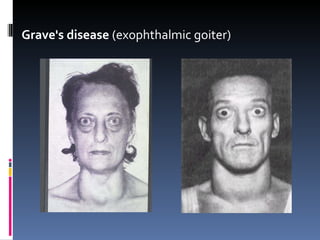
Grave's disease  (exophthalmic goiter)‏
Features
Psychiatric  features include  nervousness fatigue insomnia mood lability dysphoria  Speech may be pressured heightened activity level a short attention span impaired recent memory an exaggerated startle response In severe cases may exhibit visual hallucinations and delirium.
Differential Diagnosis  Panic disorder generalized anxiety disorder Social and specific phobias
Treatments for Graves' disease  antithyroid drugs radioactive iodine (RAI)‏ surgical thyroidectomy
 
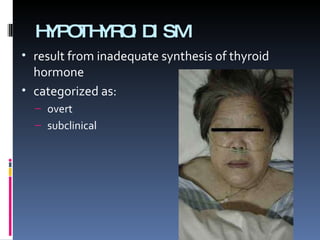
HYPOTHYROIDISM result from inadequate synthesis of thyroid hormone  categorized as: overt  subclinical
Differential Diagnosis Depression Lethargy Poor concentration Impaired memory Apathy
Differential Diagnosis Bipolar patients with depression Certain medications E.g.  barbiturates
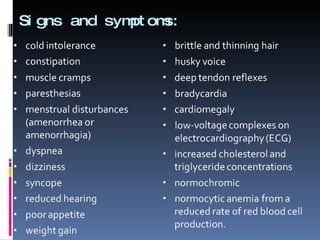
Signs and symptoms:
Psychiatric symptoms: depressed mood apathy impaired memory and concentration long response latency
Treatment  Current preparations of exogenous thyroid hormone include: levothyroxine (Levothroid, Lexoxyl)‏ synthetic T 4 liothyronine (Cytomel)‏ synthetic T3; liotrix (Thyrolar)‏ mixed synthetic T4 and T3 desiccated thyroid (Armour)‏
 
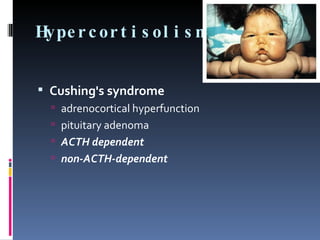
Hypercortisolism  Cushing's syndrome  adrenocortical hyperfunction pituitary adenoma ACTH dependent non-ACTH-dependent
Hypercortisolism
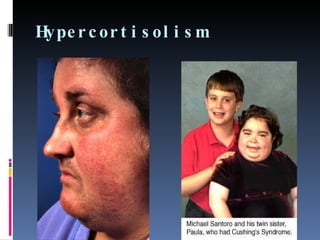
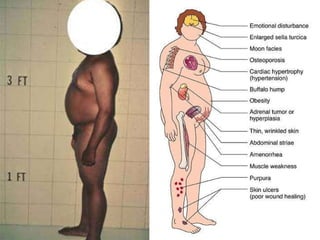
Hypercortisolism  Diagnosis and Clinical Features  “ moonfacies”  truncal obesity/“buffalo hump” appearance muscle wasting slow wound healing easy bruising thinning of the skin   abdominal striae osteoporotic bones diabetes hirsutism, acne, and amenorrhea hyperpigmentation hypertension sodium retention, potassium loss, metabolic alkalosis, and edema
 
Hypercortisolism  Diagnosis and Clinical Features  fatigue depressed mood (moderate or severe depression)‏
Hypercortisolism  Diagnosis and Clinical Features  social withdrawal paranoia, hallucinations, and depersonalization cognitive changes (deficits in concentration and memory)‏
Differences of Cushing’s syndrome from Major depressive disorder greater irritability and mood lability greater tendency to feel best in the morning less guilt and hopelessness compared to patients with major depression  
Treatment and Course Treatment of pituitary ACTH-producing tumors surgical resection pituitary irradiation Adrenal adenomas and carcinomas removed surgically chemotherapy is instituted in case of carcinoma Medications that antagonize cortisol production metyrapone or mitotane [tysobren] Medications that suppress ACTH serotonin antagonists (eg. cyproheptadine [Periactin])  Prednisone treatment, lithium and neuroleptic medications help prevent the development of manic or psychotic symptoms
Adrenocortical Insufficiency inadequate production of three major steroid hormones Primary adrenal insufficiency adrenal hypofunction Secondary adrenal insufficiency  results from deficient ACTH secretion Tertiary adrenal insufficiency  refers to deficient hypothalamic secretion of CRH
Symptoms of adrenal insufficiency  include weakness, hypoglycemia, hyponatremia, hyperkalemia, nausea, diarrhea, fever, symptoms, including fatigability, salt craving, weight loss, vitiligo, nausea, hyperpigmetntation, loss of ACTH stimulation test symptoms of chronic adrenal insufficiency overlap those of depression
Pathology and Laboratory Examination  Laboratory findings: low serum concentrations of sodium high concentrations of potassium   low or normal plasma cortisol concentrations
Treatment  Acute adrenal insufficiency requires immediate treatment with intravenous hydrocortisone in addition to fluid replacement with saline solution and potassium supplementation Primary adrenal insufficiency Mineralocorticoid e.g., fludrocortisone [Florinef] Chronic adrenal insufficiency prednisone or hydrocortisone is administered orally as maintenance treat
 
regulates the serum calcium through its effect on the bones, gut and the kidney. Dysfunction of parathyroid gland leads to abnormal regulation of the calcium metabolism.  Hypercalcemia results to: delirium personality changes apathy  cognitive impairments
Hypocalcemia  personality changes  and delirium psychiatric symptoms without the characteristic tetany of hypocalcemia  is observed if calcium gradually decreases.
 
PROLACTIN  milk production  maternal behavior inhibited by dopamine(PIF)‏
Factors that increases the prolactin concentration Drugs: methyldopa and reserpine oral contraceptive estrogen serotonergic antidepressant propranolol  hypothyroidism
Hyperprolactinemia higher level of depression stress intolerance increased irritability  hostility
 
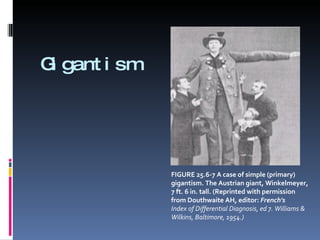
Gigantism FIGURE 25.6-7 A case of simple (primary) gigantism. The Austrian giant, Winkelmeyer, 7 ft. 6 in. tall. (Reprinted with permission from Douthwaite AH, editor:  French's Index of Differential Diagnosis, ed 7. Williams & Wilkins, Baltimore, 1954.)‏
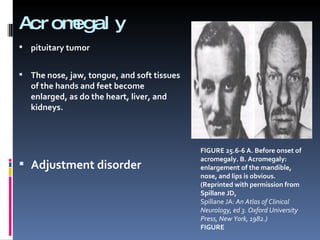
Acromegaly pituitary tumor The nose, jaw, tongue, and soft tissues of the hands and feet become enlarged, as do the heart, liver, and kidneys.  Adjustment disorder FIGURE 25.6-6 A. Before onset of acromegaly. B. Acromegaly: enlargement of the mandible, nose, and lips is obvious. (Reprinted with permission from Spillane JD, Spillane JA:  An Atlas of Clinical Neurology, ed 3. Oxford University Press, New York, 1982.)‏ FIGURE
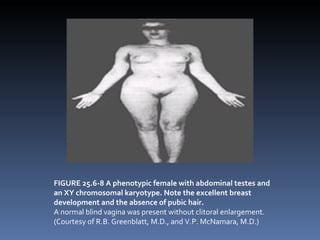
ANDROGEN INSENSITIVITY SYNDROME testicular feminization Complete androgen insensitivity  Body fat and hair distribution are typically female, and breasts develop after puberty.
FIGURE 25.6-8 A phenotypic female with abdominal testes and an XY chromosomal karyotype. Note the excellent breast development and the absence of pubic hair. A normal blind vagina was present without clitoral enlargement. (Courtesy of R.B. Greenblatt, M.D., and V.P. McNamara, M.D.)‏
 
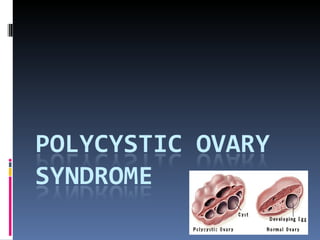
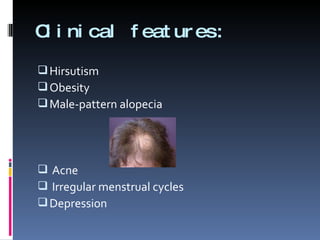
Clinical features: Hirsutism Obesity Male-pattern alopecia Acne Irregular menstrual cycles Depression
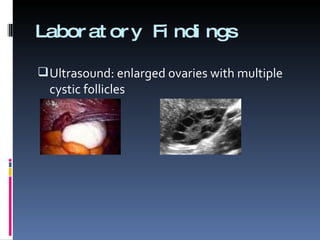
Laboratory Findings Ultrasound: enlarged ovaries with multiple cystic follicles
Risk for: Endometrial hyperplasia and carcinoma.  Type II diabetes secondary to insulin resistance associated with hyperandrogenism Association between depression and hyperandrogenism in women
Treatment antiestrogens : clomiphene (Clomid)‏ Gonadotropins laparoscopic surgery low-dose oral contraceptives Weight reduction  spironolactone

Psychosis2

  • 1.
    Psychosis dueto Endocrine DISTURBANCES Abdul,Amani Abesamis, Khrista Joy Ang, Monica Hazel De Leon, Madelle De Leon, Madonna De Villa, Vanessa Crispina Esteban, Lloyd Esteban, Lucky Enriquez, Lovely Cindy Fabunan, Celeste Sarah Feranculo, Catherine Tuazon, Robert Group 2
  • 2.
  • 3.
  • 4.
  • 5.
    Hyperthyroidism Grave’s Disease hyperfunctioning solitary thyroid adenomas thyroiditis use of exogenous thyroid hormone TSH-producing pituitary adenoma pituitary resistance of suppression of TSH secretion by thyroid hormone
  • 6.
    Grave's disease (exophthalmic goiter)‏
  • 7.
  • 8.
    Psychiatric featuresinclude nervousness fatigue insomnia mood lability dysphoria Speech may be pressured heightened activity level a short attention span impaired recent memory an exaggerated startle response In severe cases may exhibit visual hallucinations and delirium.
  • 9.
    Differential Diagnosis Panic disorder generalized anxiety disorder Social and specific phobias
  • 10.
    Treatments for Graves'disease antithyroid drugs radioactive iodine (RAI)‏ surgical thyroidectomy
  • 11.
  • 12.
    HYPOTHYROIDISM result frominadequate synthesis of thyroid hormone categorized as: overt subclinical
  • 13.
    Differential Diagnosis DepressionLethargy Poor concentration Impaired memory Apathy
  • 14.
    Differential Diagnosis Bipolarpatients with depression Certain medications E.g. barbiturates
  • 15.
  • 16.
    Psychiatric symptoms: depressedmood apathy impaired memory and concentration long response latency
  • 17.
    Treatment Currentpreparations of exogenous thyroid hormone include: levothyroxine (Levothroid, Lexoxyl)‏ synthetic T 4 liothyronine (Cytomel)‏ synthetic T3; liotrix (Thyrolar)‏ mixed synthetic T4 and T3 desiccated thyroid (Armour)‏
  • 18.
  • 19.
    Hypercortisolism Cushing'ssyndrome adrenocortical hyperfunction pituitary adenoma ACTH dependent non-ACTH-dependent
  • 20.
  • 21.
    Hypercortisolism Diagnosisand Clinical Features “ moonfacies” truncal obesity/“buffalo hump” appearance muscle wasting slow wound healing easy bruising thinning of the skin  abdominal striae osteoporotic bones diabetes hirsutism, acne, and amenorrhea hyperpigmentation hypertension sodium retention, potassium loss, metabolic alkalosis, and edema
  • 22.
  • 23.
    Hypercortisolism Diagnosisand Clinical Features fatigue depressed mood (moderate or severe depression)‏
  • 24.
    Hypercortisolism Diagnosisand Clinical Features social withdrawal paranoia, hallucinations, and depersonalization cognitive changes (deficits in concentration and memory)‏
  • 25.
    Differences of Cushing’ssyndrome from Major depressive disorder greater irritability and mood lability greater tendency to feel best in the morning less guilt and hopelessness compared to patients with major depression  
  • 26.
    Treatment and CourseTreatment of pituitary ACTH-producing tumors surgical resection pituitary irradiation Adrenal adenomas and carcinomas removed surgically chemotherapy is instituted in case of carcinoma Medications that antagonize cortisol production metyrapone or mitotane [tysobren] Medications that suppress ACTH serotonin antagonists (eg. cyproheptadine [Periactin]) Prednisone treatment, lithium and neuroleptic medications help prevent the development of manic or psychotic symptoms
  • 27.
    Adrenocortical Insufficiency inadequateproduction of three major steroid hormones Primary adrenal insufficiency adrenal hypofunction Secondary adrenal insufficiency results from deficient ACTH secretion Tertiary adrenal insufficiency refers to deficient hypothalamic secretion of CRH
  • 28.
    Symptoms of adrenalinsufficiency include weakness, hypoglycemia, hyponatremia, hyperkalemia, nausea, diarrhea, fever, symptoms, including fatigability, salt craving, weight loss, vitiligo, nausea, hyperpigmetntation, loss of ACTH stimulation test symptoms of chronic adrenal insufficiency overlap those of depression
  • 29.
    Pathology and LaboratoryExamination Laboratory findings: low serum concentrations of sodium high concentrations of potassium low or normal plasma cortisol concentrations
  • 30.
    Treatment Acuteadrenal insufficiency requires immediate treatment with intravenous hydrocortisone in addition to fluid replacement with saline solution and potassium supplementation Primary adrenal insufficiency Mineralocorticoid e.g., fludrocortisone [Florinef] Chronic adrenal insufficiency prednisone or hydrocortisone is administered orally as maintenance treat
  • 31.
  • 32.
    regulates the serumcalcium through its effect on the bones, gut and the kidney. Dysfunction of parathyroid gland leads to abnormal regulation of the calcium metabolism. Hypercalcemia results to: delirium personality changes apathy cognitive impairments
  • 33.
    Hypocalcemia personalitychanges and delirium psychiatric symptoms without the characteristic tetany of hypocalcemia is observed if calcium gradually decreases.
  • 34.
  • 35.
    PROLACTIN milkproduction maternal behavior inhibited by dopamine(PIF)‏
  • 36.
    Factors that increasesthe prolactin concentration Drugs: methyldopa and reserpine oral contraceptive estrogen serotonergic antidepressant propranolol hypothyroidism
  • 37.
    Hyperprolactinemia higher levelof depression stress intolerance increased irritability hostility
  • 38.
  • 39.
    Gigantism FIGURE 25.6-7A case of simple (primary) gigantism. The Austrian giant, Winkelmeyer, 7 ft. 6 in. tall. (Reprinted with permission from Douthwaite AH, editor: French's Index of Differential Diagnosis, ed 7. Williams & Wilkins, Baltimore, 1954.)‏
  • 40.
    Acromegaly pituitary tumorThe nose, jaw, tongue, and soft tissues of the hands and feet become enlarged, as do the heart, liver, and kidneys. Adjustment disorder FIGURE 25.6-6 A. Before onset of acromegaly. B. Acromegaly: enlargement of the mandible, nose, and lips is obvious. (Reprinted with permission from Spillane JD, Spillane JA: An Atlas of Clinical Neurology, ed 3. Oxford University Press, New York, 1982.)‏ FIGURE
  • 41.
    ANDROGEN INSENSITIVITY SYNDROMEtesticular feminization Complete androgen insensitivity Body fat and hair distribution are typically female, and breasts develop after puberty.
  • 42.
    FIGURE 25.6-8 Aphenotypic female with abdominal testes and an XY chromosomal karyotype. Note the excellent breast development and the absence of pubic hair. A normal blind vagina was present without clitoral enlargement. (Courtesy of R.B. Greenblatt, M.D., and V.P. McNamara, M.D.)‏
  • 43.
  • 44.
    Clinical features: HirsutismObesity Male-pattern alopecia Acne Irregular menstrual cycles Depression
  • 45.
    Laboratory Findings Ultrasound:enlarged ovaries with multiple cystic follicles
  • 46.
    Risk for: Endometrialhyperplasia and carcinoma. Type II diabetes secondary to insulin resistance associated with hyperandrogenism Association between depression and hyperandrogenism in women
  • 47.
    Treatment antiestrogens :clomiphene (Clomid)‏ Gonadotropins laparoscopic surgery low-dose oral contraceptives Weight reduction spironolactone

Editor's Notes

  • #2 Endocrinology Horm productn: 1.concentration of hormones 2.activity of the hormones themselves 3.hormones from other sites common medical conditions esp. in the elderly adults Lab evaluation: Evaluation of endocrine function (initial)‏ Serum electrolytes Fasting blood sugar TSH Calcium
  • #3 result from excessive or deficient amounts or resistance These latter cases are primarily hereditary and are characterized by normal or elevated concentrations of a hormone despite an absence or deficiency of the hormone's action. Increased concentrations result from the lack of normal negative feedback on the hormone's production, a consequence of the failure or deficiency of the hormone's action. f hormone or from resistance to a hormone’s action
  • #4 Of all the endocrine disorders, disorders of the thyroid are the most common
  • #6 Also called “ thyrotoxicosis ” results from overproduction of thyroid hormone by the thyroid gland most common cause is Graves' disease (exophthalmic goiter)‏ Patients with Graves' disease produce thyroid-stimulating antibodies thyroid storm “ thyrotoxic crisis” develop following withdrawal of antithyroid drugs a life-threatening syndrome usually precipitated by illness or injury marked tachycardia weakness fever altered mental status
  • #13 overt - symptomatic abnormally low thyroid hormone concentration elevated TSH subclinical Asymptomatic normal thyroid hormone concentration elevated TSH idiopathic atrophy endemic hypothyroidism from iodine deficiency in the diet hypopituitarism like from postpartum pituitary necrosis hypothalamic disease iatrogenic hypothyroidism caused by drugs such as lithium or anti-thyroid drugs or from chemical or surgical thyroidectomy
  • #15 Bipolar: may have lithium-induced hypothyroidism
  • #18 Levothyroxine it provides the most uniform thyroid replacement doses are typically between 50 and 200 mg a day replacement of thyroid hormone should be gradual patients over age 50 history of cardiac disease to avoid precipitating angina or cardiac arrhythmias the starting dose should not exceed 0.05 mg daily TSH concentrations should be measured 6 weeks after initiation of thyroid hormone treatment have a serum TSH concentration above 10 mU/L exhibit deficits in memory or cognitive functioning have a rapid-cycling bipolar disorder
  • #21 Epidemiology and Etiology prevalence of Cushing's disease = 40 per million; women(3rd and 4th decades of life) ACTH-producing pituitary adenoma most common cause of spontaneous Cushing's syndrome Adrenal adenoma/adrenocortical carcinoma/nodular adrenal hyperplasia ACTH-independent causes of increased cortisol concentrations.
  • #25 manic and psychotic symptoms (less frequently than depression)‏ Cushing’s syndrome plasma and urine concentration of cortisol is increase normal circadian rhythms of cortisol secretion are blunted or absent Administration of metyrapone blocks cortisol synthesis followed by increased cortisol production which does not occurs in cases of adrenal or ectopic origin postmetyrapone response is augmented in cases of pituitary origin Dexamethasone (Decadron) Suppression Test (DST) another test that distinguishes pituitary from adrenal cause of Cushing’s syndrome involves administering 1 mg dexamethasone at midnight and determining the plasma cortisol concentration the following morning Diagnosis and Clinical Features Steroids withdrawal  depression, weakness, anorexia, and arthralgia Withdrawal symptoms can persist for up to 8 weeks following corticosteroid withdrawal.
  • #26 Plasma cortisol concentrations above 200 nmol/L indicate a high likelihood of Cushing's syndrome vary considerably during the day Differential Diagnosis Similarities of Cushing’s syndrome and Major depressive disorder: with mood changes with shortened rapid eye movement (REM) latency increased cortisol concentration abnormal findings on DSTs  
  • #28 PRIMARY autoimmune disease infection idiopathic atrophy metastatic tumor ACTH and CRH concentrations increase in response to low concentrations of adrenal steroids Adrenal aldosterone production tends to be less affected by secondary or tertiary forms of adrenal insufficiency. Etiology Secondary and tertiary adrenal insufficiency result primarily from withdrawal of exogenous corticosteroids or ACTH, as their administration suppresses the hypothalamic-pituitary-adrenal axis   Other causes pituitary tumors, trauma, infectious disease (e.g., human immunodeficiency virus [HIV]), infarction, and surgical ablation.
  • #29 A normal test and stimulated cortisol concentrations of more than 7 μg per 100 mL stimulated cortisol concentration above 18 μg per 100 m Low cortisol responses to this test indicate adrenal insufficiency.
  • #30 Primary adrenal insufficiency ACTH concentration rises cortisol concentration does not rise following ACTH stimulation Adrenal insufficiency resulting from pituitary disease, ACTH concentrations are low or normal, and the response to CRH is blunted
  • #37 MOST COMMON PROLACTINOMAS ALL ANTIPSYCHOTICS RAISE EXCEPT CLOZAPINE AND OLANZAPINE
  • #40 GH, produced by the anterior pituitary, stimulates protein synthesis, lypolysis, and growth of skeletal cartilage. Its production is stimulated by GH-releasing factor and inhibited by somatostatin, both of hypothalamic origin. If GH concentrations are excessively high in childhood, gigantism may develop.
  • #41 Acromegaly results from an excess of GH in adulthood, after fusion of the epiphyses of the long bones, so that height is not affected. The prevalence of acromegaly is approximately 4 in 100,000. Other causes include ectopic production or excessive hypothalamic production of growth hormone releasing factor. Organ enlargement can lead to congestive heart failure. No specific psychiatric symptoms have been consistently associated with acromegaly or gigantism, or with elevated GH levels. Adjustment disorder may occur from changes in physical appearance and from living with a chronic illness. Laboratory studies show high GH concentrations. The most reliable test for acromegaly is measurement of GH following an oral glucose tolerance test. In acromegalic patients, GH secretion does not show the normal suppression by glucose. Brain imaging studies may show a pituitary tumor. Treatment involves pituitary ablation through surgery or radiation. Dopamine agonists such as bromocriptine and apomorphine, which normally increase GH levels, have the opposite effect in patients with acromegaly. The serotonin antagonist cyproheptadine may also reduce GH levels.
  • #42 is a rare X-linked recessive disorder that produces a variable appearance of external genitalia depending on the degree of androgen receptor defectiveness patients with a 46 XY karyotype are phenotypically female.
  • #43 The vagina, however, is short and blind or may be absent altogether. An inguinal hernia is a common clinical presentation in prepubertal children, and the diagnosis may not be made until surgical repair of the hernia reveals a testis. Postpubertally, primary amenorrhea is a common presentation. With the exception of the undescended testes, internal genitalia are absent. Surgical removal of the testes is recommended, as the development of gonadal tumors is a concern. The psychosexual development is feminine, and it is therefore recommended that these individuals be raised as females. In patients with incomplete testicular feminization, the appearance of external genitalia is more virilized and ambiguous.
  • #44 most widespread endocrine disorders in women Prevalence: women of reproductive age autosomal dominant Dysregulation of the rate-limiting enzyme involved in androgen biosynthesis in the ovaries
  • #46 LH concentrations usually high FSH concentrations are low or normal elevated concentrations of androstenedione, testosterone, estrone, prolactin
  • #47 Initiation of oral contraceptive treatment has been reported to improve mood, possibly by the reduction in androgen concentration that results from suppression of ovarian activity. Differential Diagnosis pituitary and adrenal disorders such as: Hyperprolactinemia Acromegaly Congenital adrenal hyperplasia
  • #48 Hirsutism may respond to spironolactone, an androgen receptor antagonist