Presented By:
Sidra Akhtar (Clinical Psychologist, Speech
Pathologist, & Chairperson SAFoundation)
Training Objectives
 Understand key points of Psychological First Aid
(PFA)
 Increase awareness of the signs and symptoms of
stress
 Identify strategies to limit distress and negative
health behaviors
 Identify strategies to support resilience among
responders
A humane, supportive response to a fellow
human being who is suffering and who may need
support.
What is Psychological First Aid (PFA)?
Involves the following themes:
 Practical care and support that does not intrude
 Assessing needs and concerns
 Helping people to access basic needs (e.g. medical support)
 Comforting people and helping them to feel calm
 Helping people connect to information, services and social
support
 Protecting people from further harm
Why PFA?
“Community Health Workers deal
with these kinds of issues every
day of their work, it’s just that at
the moment, they don’t know how
to respond”
- World Vision Kenya,
 MoH representative
 Safety
 Basic needs
 Signs of distress
 Sensitive
 Active
 Validate
 Explore
 Encourage
 Support
 Calm
 Service
Psychological First Aid
Key Points
 Appropriate for all ages
 Culturally informed
 Consistent with research evidence on risk and
resilience following trauma
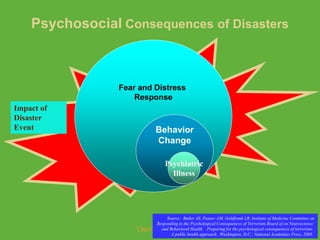
Psychosocial Consequences of Disasters
Fear and Distress
Response
Impact of
Disaster
Event Behavior
Change
Psychiatric
Illness
Source: Butler AS, Panzer AM, Goldfrank LR, Institute of Medicine Committee on
Responding to the Psychological Consequences of Terrorism Board of on Neuroscience
and Behavioral Health. Preparing for the psychological consequences of terrorism:
A public health approach. Washington, D.C.: National Academies Press, 2003.
Reactions to Stress
Adults
 Physical
 Behavioral
 Emotional
 Cognitive
 Spiritual
Reactions to Stress
Children
 Physical
 Behavioral
 Emotional
 Cognitive
 Spiritual
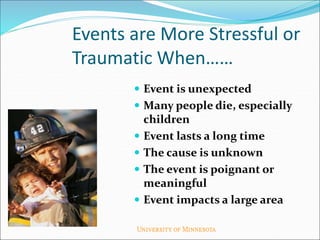
Events are More Stressful or
Traumatic When……
 Event is unexpected
 Many people die, especially
children
 Event lasts a long time
 The cause is unknown
 The event is poignant or
meaningful
 Event impacts a large area
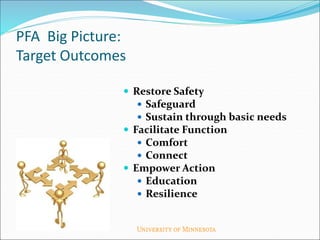
PFA Big Picture:
Target Outcomes
 Restore Safety
 Safeguard
 Sustain through basic needs
 Facilitate Function
 Comfort
 Connect
 Empower Action
 Education
 Resilience
Psychological First Aid
Help Card
 Goal:
 Promote Safety
 Calm and Comfort
 Connectedness
 Self-empowerment
PROMOTE SAFETY
 Meet basic survival needs
 Offer practical assistance
and information
 Shield survivors from
onlookers/ media
 Repeat information as often
as needed
 Assist in finding resources
Safeguarding
survivors and
sustaining
their basic
needs
CALM AND COMFORT
 Compassionate presence
 Active listening
 Don’t push for information
 Use stress management techniques
 Be flexible and supportive
 Comfort, console, soothe
Facilitate
psychological
function
through
calming and
connection
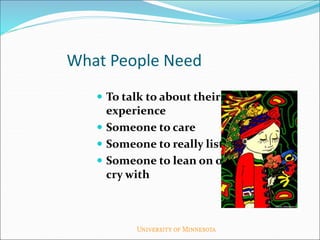
What People Need
 To talk to about their
experience
 Someone to care
 Someone to really listen
 Someone to lean on or
cry with
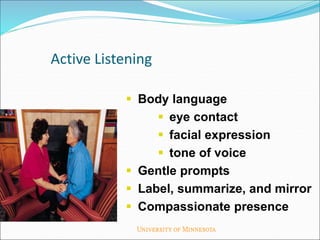
Active Listening
 Body language
 eye contact
 facial expression
 tone of voice
 Gentle prompts
 Label, summarize, and mirror
 Compassionate presence
Active Understanding
 Try not to interrupt until story
ended
 Do ask questions to clarify
 Occasionally restate part of the story
in your own words to make sure you
understand
Active Understanding
 Avoid Why/Why not?
 Don’t judge
 Avoid “I know how you feel.”
 Avoid evaluation of their experience and their
reactions
 Silence is O.K.
It is NOT OK to say….
 Let’s talk about something else
 You should work toward getting over
this
 You are strong enough to deal with this
 You’ll feel better soon
 You did everything you could
 You need to relax
 It’s good that you are alive
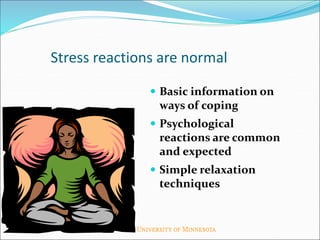
Stress reactions are normal
 Basic information on
ways of coping
 Psychological
reactions are common
and expected
 Simple relaxation
techniques
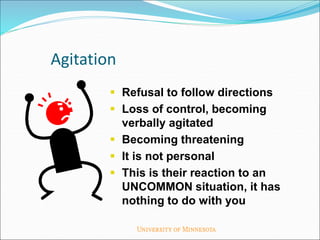
Agitation
 Refusal to follow directions
 Loss of control, becoming
verbally agitated
 Becoming threatening
 It is not personal
 This is their reaction to an
UNCOMMON situation, it has
nothing to do with you
CONNECTEDNESS
 Help connect with friends and loved
ones
 Keep survivor families intact
 Reunite children with family
 Connect survivors to available
support services
Facilitate
psychological
function
through
calming and
connection
SELF EMPOWERMENT
 Clarify Disaster information
 Engage towards meeting own needs
 Work toward “normal” life activities
 Guide towards what to expect, teach resilience
Reestablish
hope and
action through
education and
empowerment
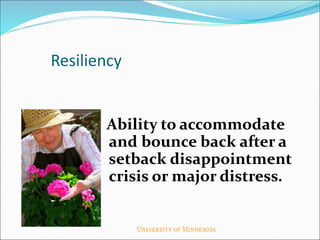
Resiliency
Ability to accommodate
and bounce back after a
setback disappointment
crisis or major distress.
Psychological First Aid

Psychological First Aid

  • 1.
    Presented By: Sidra Akhtar(Clinical Psychologist, Speech Pathologist, & Chairperson SAFoundation)
  • 2.
    Training Objectives  Understandkey points of Psychological First Aid (PFA)  Increase awareness of the signs and symptoms of stress  Identify strategies to limit distress and negative health behaviors  Identify strategies to support resilience among responders
  • 3.
    A humane, supportiveresponse to a fellow human being who is suffering and who may need support. What is Psychological First Aid (PFA)? Involves the following themes:  Practical care and support that does not intrude  Assessing needs and concerns  Helping people to access basic needs (e.g. medical support)  Comforting people and helping them to feel calm  Helping people connect to information, services and social support  Protecting people from further harm
  • 4.
    Why PFA? “Community HealthWorkers deal with these kinds of issues every day of their work, it’s just that at the moment, they don’t know how to respond” - World Vision Kenya,  MoH representative
  • 5.
     Safety  Basicneeds  Signs of distress
  • 6.
     Sensitive  Active Validate  Explore
  • 7.
  • 8.
    Psychological First Aid KeyPoints  Appropriate for all ages  Culturally informed  Consistent with research evidence on risk and resilience following trauma
  • 10.
    Psychosocial Consequences ofDisasters Fear and Distress Response Impact of Disaster Event Behavior Change Psychiatric Illness Source: Butler AS, Panzer AM, Goldfrank LR, Institute of Medicine Committee on Responding to the Psychological Consequences of Terrorism Board of on Neuroscience and Behavioral Health. Preparing for the psychological consequences of terrorism: A public health approach. Washington, D.C.: National Academies Press, 2003.
  • 11.
    Reactions to Stress Adults Physical  Behavioral  Emotional  Cognitive  Spiritual
  • 12.
    Reactions to Stress Children Physical  Behavioral  Emotional  Cognitive  Spiritual
  • 13.
    Events are MoreStressful or Traumatic When……  Event is unexpected  Many people die, especially children  Event lasts a long time  The cause is unknown  The event is poignant or meaningful  Event impacts a large area
  • 14.
    PFA Big Picture: TargetOutcomes  Restore Safety  Safeguard  Sustain through basic needs  Facilitate Function  Comfort  Connect  Empower Action  Education  Resilience
  • 15.
    Psychological First Aid HelpCard  Goal:  Promote Safety  Calm and Comfort  Connectedness  Self-empowerment
  • 16.
    PROMOTE SAFETY  Meetbasic survival needs  Offer practical assistance and information  Shield survivors from onlookers/ media  Repeat information as often as needed  Assist in finding resources Safeguarding survivors and sustaining their basic needs
  • 17.
    CALM AND COMFORT Compassionate presence  Active listening  Don’t push for information  Use stress management techniques  Be flexible and supportive  Comfort, console, soothe Facilitate psychological function through calming and connection
  • 18.
    What People Need To talk to about their experience  Someone to care  Someone to really listen  Someone to lean on or cry with
  • 19.
    Active Listening  Bodylanguage  eye contact  facial expression  tone of voice  Gentle prompts  Label, summarize, and mirror  Compassionate presence
  • 20.
    Active Understanding  Trynot to interrupt until story ended  Do ask questions to clarify  Occasionally restate part of the story in your own words to make sure you understand
  • 21.
    Active Understanding  AvoidWhy/Why not?  Don’t judge  Avoid “I know how you feel.”  Avoid evaluation of their experience and their reactions  Silence is O.K.
  • 22.
    It is NOTOK to say….  Let’s talk about something else  You should work toward getting over this  You are strong enough to deal with this  You’ll feel better soon  You did everything you could  You need to relax  It’s good that you are alive
  • 23.
    Stress reactions arenormal  Basic information on ways of coping  Psychological reactions are common and expected  Simple relaxation techniques
  • 24.
    Agitation  Refusal tofollow directions  Loss of control, becoming verbally agitated  Becoming threatening  It is not personal  This is their reaction to an UNCOMMON situation, it has nothing to do with you
  • 25.
    CONNECTEDNESS  Help connectwith friends and loved ones  Keep survivor families intact  Reunite children with family  Connect survivors to available support services Facilitate psychological function through calming and connection
  • 26.
    SELF EMPOWERMENT  ClarifyDisaster information  Engage towards meeting own needs  Work toward “normal” life activities  Guide towards what to expect, teach resilience Reestablish hope and action through education and empowerment
  • 27.
    Resiliency Ability to accommodate andbounce back after a setback disappointment crisis or major distress.