Psychological First Aid (PFA)
in disasterPsychological First Aid
P.Dharani Niveditha
MAM-14-006
Dept. of Genetics andPlant Breeding
• Psychology
• the science of the mind or of mental states and
processes.
• First-aid
• emergency treatment given to a sick or injured
person
WHAT IS THE NEED
?
PFA
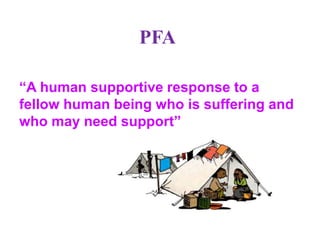
“A human supportive response to a
fellow human being who is suffering and
who may need support”
–Knowing PFA will allow you to:
 Create a compassionate environment for
yourself, fellow responders, and disaster
survivors.
 Assess what a person might need & give
immediate support.
 Help develop good coping mechanisms.
Disaster
Disaster
Response
RecoveryMitigation
Preparedness
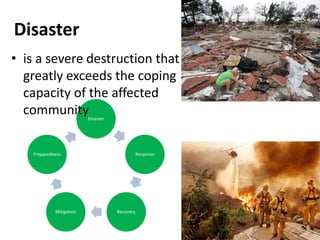
• is a severe destruction that
greatly exceeds the coping
capacity of the affected
community
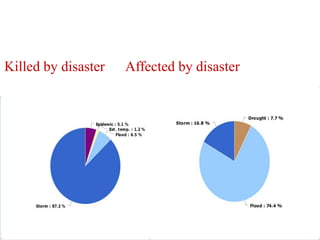
Killed by disaster Affected by disaster
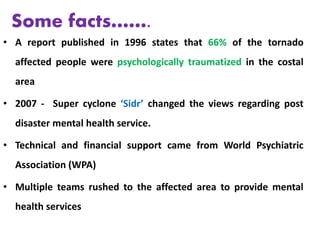
• A report published in 1996 states that 66% of the tornado
affected people were psychologically traumatized in the costal
area
• 2007 - Super cyclone ‘Sidr’ changed the views regarding post
disaster mental health service.
• Technical and financial support came from World Psychiatric
Association (WPA)
• Multiple teams rushed to the affected area to provide mental
health services
Some facts…….
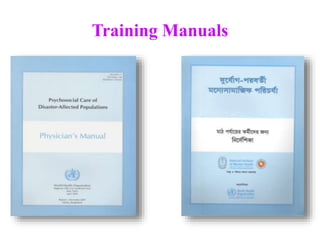
Training Manuals
DISASTER PSYCHIATRY
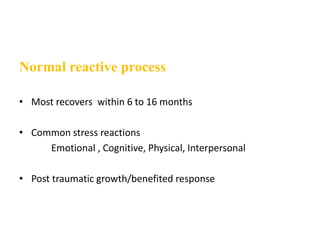
Normal reactive process
• Most recovers within 6 to 16 months
• Common stress reactions
Emotional , Cognitive, Physical, Interpersonal
• Post traumatic growth/benefited response
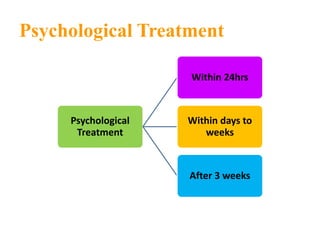
Psychological Treatment
Psychological
Treatment
Within 24hrs
Within days to
weeks
After 3 weeks
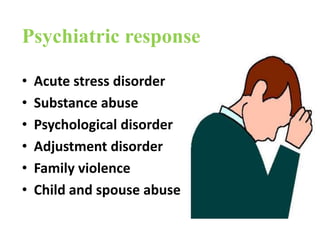
Psychiatric response
• Acute stress disorder
• Substance abuse
• Psychological disorder
• Adjustment disorder
• Family violence
• Child and spouse abuse
Psychosocial intervention
. Psychological first aid (PFA)
• Trauma counseling
• Greif counseling
• Anticipatory guidance
• Crisis counseling
• Problem solving counseling
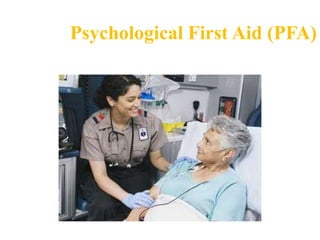
Psychological First Aid (PFA)
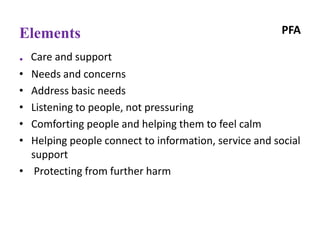
PFAElements
. Care and support
• Needs and concerns
• Address basic needs
• Listening to people, not pressuring
• Comforting people and helping them to feel calm
• Helping people connect to information, service and social
support
• Protecting from further harm
PFA
Who need immediately
• Serious life threatening injuries
• So upset, cant care themselves and family
• May hurt self/others
PFA
When and where
• Recently affected
• Sometimes days or weeks after
• Scene of accident/disaster
• Health center, shelter/camps etc
PFA
Providing PFA….
• Preparation
• Good communication
• PFA action principal
• Ending help
• Who likely need special attention
Providing PFA
Preparation
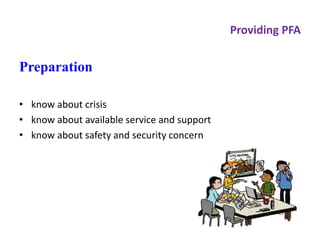
• know about crisis
• know about available service and support
• know about safety and security concern
Providing PFA
Good communication
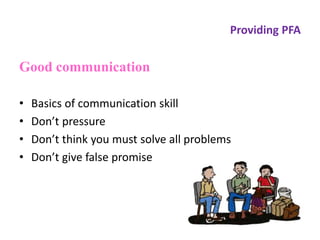
• Basics of communication skill
• Don’t pressure
• Don’t think you must solve all problems
• Don’t give false promise
Providing PFA
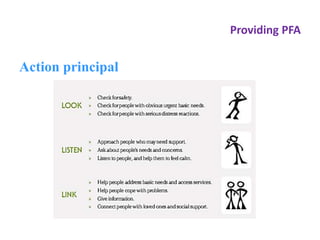
Action principal
Providing PFA
Ending help
.Depends on the context of crisis
.Individual’s role and situation
.Needs of the people
Providing PFA
Special attention group
• Child adolescent group
• People with health conditions/disabilities
• People at risk/discrimination/violence
Caring for self and colleague
• Be friendly
• Managing stress
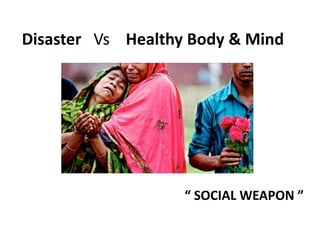
Disaster Vs Healthy Body & Mind
“ SOCIAL WEAPON ”
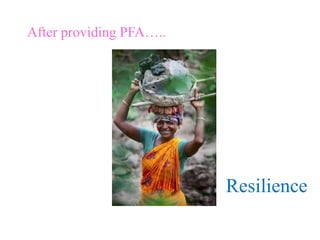
Resilience
After providing PFA…..
PFA
What PFA is not
• Not only professionals do
• Not a professional counseling
• Not “Psychological debriefing”
• Not asking, analyzing, put in order
• Available to listen but not pressuring to talk
Psychological first aid mam 2014 06

Psychological first aid mam 2014 06