
26th European Haemophilia
Consortium

SUPPORT

PSYCHOSOCIAL
Bucharest, Romania

4-6 October 2013

Counsellor

Anne Duffy
Nurse

1
What is Psychosocial Support?
• Psychosocial support is an important part of
comprehensive care for people with haemophilia
and their families
• Psychologists, social workers & counsellors can help
patients and their families adapt to and face the
challenges of living with a bleeding disorder
• Regardless of resources it is important to identify
the issues and the challenges that can affect a
person’s cognitive and emotional development
2
Why it is needed
• To create a space to enable a PWH talk about his
thoughts, feelings and concerns
• Enables the PWH to gain a personal understanding
of haemophilia
• Develops coping strategies for physical, mental,
emotional & social challenges
• Ultimate goal is to empower the PWH to manage
his life & its challenges independently
• Quality of life is related to ability to adjust to a
chronic disorder and its challenges
3
Influencing Factors
Factors which can determine how psychosocial
issues are experienced and addressed:
•Cultural values & socio-economic factors
•Access to Haemophilia Treatment Centres
- Factor availability
- Access to physiotherapy
- Access to corrective orthopaedic surgery
•Support from haemophilia organizations
4
Models of Psychosocial Care
Hospital based psychosocial support:
•Specific healthcare professionals involved
- social worker and psychologist
•Providing one-to-one counselling
•Peer support group – bringing patients and their
families together in specific groups
5
Models of Psychosocial Care
NMO based psychosocial support:
•Building a strong sense of community
•Outreach to members:
Regular Phone calls
Home visits & Hospital visits
•Peer support groups – adult pwh; young adult
pwh; mothers & fathers groups
•Meetings for members – informative & social
6
Living with Haemophilia
Life long Challenges
– Physical
– Psychological:
Child’s/sibling’s emotional responses
- Financial
– Employment
– Impact of physical hardships and
limitations

7
PARENTS
Range of Emotions
– Shock
– Denial
– Anger
– Fear & Worry
– Depression
– Guilt
8
SIBLINGS
Range of Emotions
–Anger
–Denial
–Fear
–Guilt
9
GRANDPARENTS

• Difficulty in acceptance
• Tension within extended family

10
THE FIRST YEAR
• Anxious
• Self blame
• Need to control own fear

11
TODDLERS & PRESCHOOL CHILDREN
• Worry
• Fear
• Frightened
• Failure to adjust
12
STARTING SCHOOL
• Parents’ initial fears may be diffused
by playschool
• Parents need confidence to help
teachers learn about haemophilia
• Need to be assertive with teachers,
challenging for parents
13
ADOLESCENCE
• Taking control
• Feeling different
• Relationships can be difficult
• Vulnerability of carrier girls
14
SEXUALITY
Issues requiring sensitivity:
• Carrier girls with a low factor levelheavy blood loss during menstruation
• Young men – bleeds induced by sexual
activity
15
RELATIONSHIPS & SELF ESTEEM
• Building self-esteem
• Telling can be stressful
• Need to understand in order to discuss
• Viruses may cause more stress
• Risk of transmission
- Soul searching
- Anxiety
16
AGEING WITH HAEMOPHILIA
• New Challenge – Never expected to grow old
• Confronted with age-related ailments
• Involuntary dependence on care
• Involuntary unemployment – Early retirement

17
CONSEQUENCES OF AGEING

• Loss of social contacts
• Loneliness of living alone
• Fear of unknown future

18
PRACTICAL IDEAS
• The future for people with bleeding disorders
can be bright even with limited resources
• Parents can support and learn from each other
• Children can learn from adults with haemophilia
• Adults with haemophilia can support each other
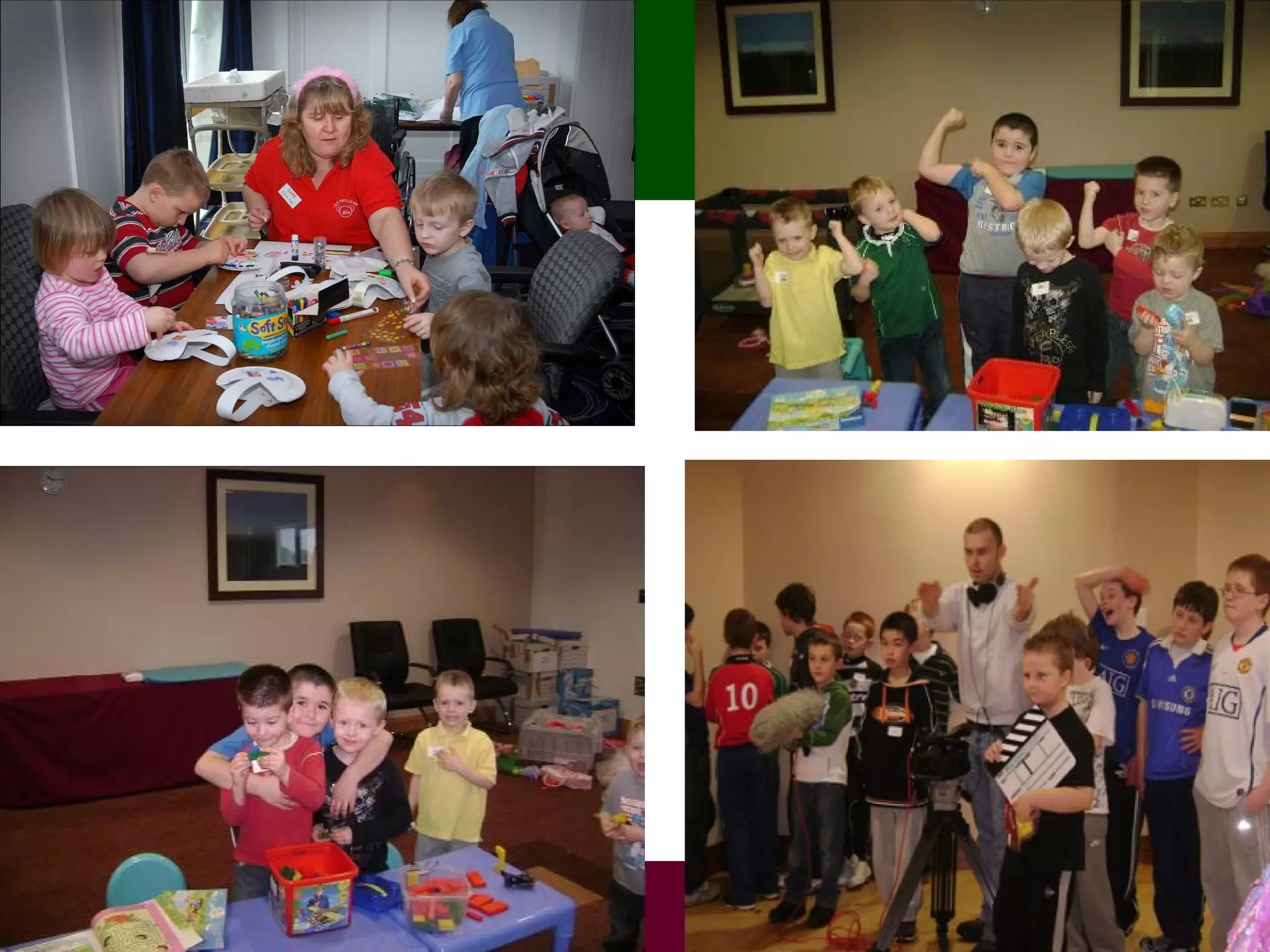
• Weekends for all the family to learn, support and
have fun together
19
20
21
REFERENCES
• Growing up with Hemophilia
Dr P Jones, 1994
• Raising a Child with Hemophilia
L A Kelly, 1999
• Basic Concepts of Hemophilia
R Butler, S Crudder, B Riske, S Toal,
2002
• Psychosocial Issues National Hemophilia Foundation
2006
• Aging with hemophilia
E Mauser-Bunschoten,
C Smit, A De Knecht-van Eekelen, 2007
• Psychosocial care for people with Hemophilia
F Cassis, WFH Monograph No 44, 2007
• Presentation slides
R Mohan, 200922
THANK YOU

23

Psychosocial Support

  • 1.
    26th European Haemophilia Consortium SUPPORT PSYCHOSOCIAL Bucharest,Romania 4-6 October 2013 Counsellor Anne Duffy Nurse 1
  • 2.
    What is PsychosocialSupport? • Psychosocial support is an important part of comprehensive care for people with haemophilia and their families • Psychologists, social workers & counsellors can help patients and their families adapt to and face the challenges of living with a bleeding disorder • Regardless of resources it is important to identify the issues and the challenges that can affect a person’s cognitive and emotional development 2
  • 3.
    Why it isneeded • To create a space to enable a PWH talk about his thoughts, feelings and concerns • Enables the PWH to gain a personal understanding of haemophilia • Develops coping strategies for physical, mental, emotional & social challenges • Ultimate goal is to empower the PWH to manage his life & its challenges independently • Quality of life is related to ability to adjust to a chronic disorder and its challenges 3
  • 4.
    Influencing Factors Factors whichcan determine how psychosocial issues are experienced and addressed: •Cultural values & socio-economic factors •Access to Haemophilia Treatment Centres - Factor availability - Access to physiotherapy - Access to corrective orthopaedic surgery •Support from haemophilia organizations 4
  • 5.
    Models of PsychosocialCare Hospital based psychosocial support: •Specific healthcare professionals involved - social worker and psychologist •Providing one-to-one counselling •Peer support group – bringing patients and their families together in specific groups 5
  • 6.
    Models of PsychosocialCare NMO based psychosocial support: •Building a strong sense of community •Outreach to members: Regular Phone calls Home visits & Hospital visits •Peer support groups – adult pwh; young adult pwh; mothers & fathers groups •Meetings for members – informative & social 6
  • 7.
    Living with Haemophilia Lifelong Challenges – Physical – Psychological: Child’s/sibling’s emotional responses - Financial – Employment – Impact of physical hardships and limitations 7
  • 8.
    PARENTS Range of Emotions –Shock – Denial – Anger – Fear & Worry – Depression – Guilt 8
  • 9.
  • 10.
    GRANDPARENTS • Difficulty inacceptance • Tension within extended family 10
  • 11.
    THE FIRST YEAR •Anxious • Self blame • Need to control own fear 11
  • 12.
    TODDLERS & PRESCHOOLCHILDREN • Worry • Fear • Frightened • Failure to adjust 12
  • 13.
    STARTING SCHOOL • Parents’initial fears may be diffused by playschool • Parents need confidence to help teachers learn about haemophilia • Need to be assertive with teachers, challenging for parents 13
  • 14.
    ADOLESCENCE • Taking control •Feeling different • Relationships can be difficult • Vulnerability of carrier girls 14
  • 15.
    SEXUALITY Issues requiring sensitivity: •Carrier girls with a low factor levelheavy blood loss during menstruation • Young men – bleeds induced by sexual activity 15
  • 16.
    RELATIONSHIPS & SELFESTEEM • Building self-esteem • Telling can be stressful • Need to understand in order to discuss • Viruses may cause more stress • Risk of transmission - Soul searching - Anxiety 16
  • 17.
    AGEING WITH HAEMOPHILIA •New Challenge – Never expected to grow old • Confronted with age-related ailments • Involuntary dependence on care • Involuntary unemployment – Early retirement 17
  • 18.
    CONSEQUENCES OF AGEING •Loss of social contacts • Loneliness of living alone • Fear of unknown future 18
  • 19.
    PRACTICAL IDEAS • Thefuture for people with bleeding disorders can be bright even with limited resources • Parents can support and learn from each other • Children can learn from adults with haemophilia • Adults with haemophilia can support each other • Weekends for all the family to learn, support and have fun together 19
  • 20.
  • 21.
  • 22.
    REFERENCES • Growing upwith Hemophilia Dr P Jones, 1994 • Raising a Child with Hemophilia L A Kelly, 1999 • Basic Concepts of Hemophilia R Butler, S Crudder, B Riske, S Toal, 2002 • Psychosocial Issues National Hemophilia Foundation 2006 • Aging with hemophilia E Mauser-Bunschoten, C Smit, A De Knecht-van Eekelen, 2007 • Psychosocial care for people with Hemophilia F Cassis, WFH Monograph No 44, 2007 • Presentation slides R Mohan, 200922
  • 23.