Rotation 4
GROUP 3
INTRODUCTION
▪ POSTPARTUM DEPRESION
o Depression suffered by a mother following childbirth, typically arising
from the combination of hormonal changes, psychological adjustment
to motherhood, and fatigue.
o After childbirth, a dramatic drop in hormones (estrogen and
progesterone) in your body may contribute to postpartum
depression. Other hormones produced by your thyroid gland also
may drop sharply — which can leave you feeling tired, sluggish and
depressed. Emotional issues
INTRODUCTION
▪ POSTPARTUM BLUES
o Postpartum blues, also known as baby blues and maternity blues, is a
very common but self-limited condition that begins shortly after
childbirth and can present with a variety of symptoms such as mood
swings, irritability, and tearfulness. Mothers may experience negative
mood symptoms mixed with intense periods of joy.
INTRODUCTION
▪ POSTPARTUM PSYCHOSIS
o Postpartum psychosis is a serious mental health illness that can affect
someone soon after having a baby. It affects around 1 in 500 mothers
after giving birth. Many people who have given birth will experience
mild mood changes after having a baby, known as the "baby blues".
o Causes. We're not sure what causes postpartum psychosis, but you're
more at risk if you: already have a diagnosis of bipolar disorder or
schizophrenia. have a family history of mental health illness, particularly
postpartum psychosis (even if you have no history of mental illness).
Pathophysiology
▪ Postpartum depression is a serious mental illness that involves the brain
and affects your behavior and physical health. If you have depression,
then sad, flat, or empty feelings don’t go away and can interfere with your
day-to-day life.
▪ Causes:
o Hormonal changes (estrogen and progesterone)
o Emotional issues
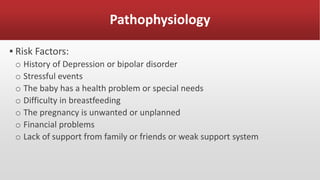
Pathophysiology
▪ Risk Factors:
o History of Depression or bipolar disorder
o Stressful events
o The baby has a health problem or special needs
o Difficulty in breastfeeding
o The pregnancy is unwanted or unplanned
o Financial problems
o Lack of support from family or friends or weak support system
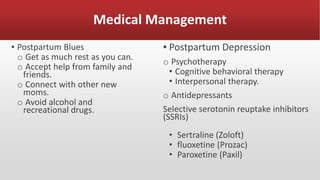
Medical Management
▪ Postpartum Blues
o Get as much rest as you can.
o Accept help from family and
friends.
o Connect with other new
moms.
o Avoid alcohol and
recreational drugs.
▪ Postpartum Depression
o Psychotherapy
• Cognitive behavioral therapy
• Interpersonal therapy.
o Antidepressants
Selective serotonin reuptake inhibitors
(SSRIs)
• Sertraline (Zoloft)
• fluoxetine (Prozac)
• Paroxetine (Paxil)
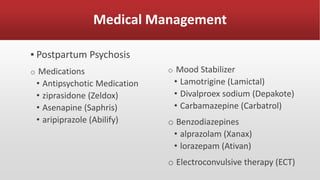
Medical Management
▪ Postpartum Psychosis
o Medications
• Antipsychotic Medication
• ziprasidone (Zeldox)
• Asenapine (Saphris)
• aripiprazole (Abilify)
o Mood Stabilizer
• Lamotrigine (Lamictal)
• Divalproex sodium (Depakote)
• Carbamazepine (Carbatrol)
o Benzodiazepines
• alprazolam (Xanax)
• lorazepam (Ativan)
o Electroconvulsive therapy (ECT)
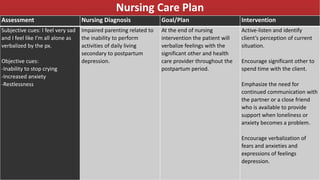
Nursing Care Plan
Assessment Nursing Diagnosis Goal/Plan Intervention
Subjective cues: I feel very sad
and I feel like I’m all alone as
verbalized by the px.
Objective cues:
-Inability to stop crying
-Increased anxiety
-Restlessness
Impaired parenting related to
the inability to perform
activities of daily living
secondary to postpartum
depression.
At the end of nursing
intervention the patient will
verbalize feelings with the
significant other and health
care provider throughout the
postpartum period.
Active-listen and identify
client’s perception of current
situation.
Encourage significant other to
spend time with the client.
Emphasize the need for
continued communication with
the partner or a close friend
who is available to provide
support when loneliness or
anxiety becomes a problem.
Encourage verbalization of
fears and anxieties and
expressions of feelings
depression.

Depression rle

  • 1.
  • 2.
    INTRODUCTION ▪ POSTPARTUM DEPRESION oDepression suffered by a mother following childbirth, typically arising from the combination of hormonal changes, psychological adjustment to motherhood, and fatigue. o After childbirth, a dramatic drop in hormones (estrogen and progesterone) in your body may contribute to postpartum depression. Other hormones produced by your thyroid gland also may drop sharply — which can leave you feeling tired, sluggish and depressed. Emotional issues
  • 3.
    INTRODUCTION ▪ POSTPARTUM BLUES oPostpartum blues, also known as baby blues and maternity blues, is a very common but self-limited condition that begins shortly after childbirth and can present with a variety of symptoms such as mood swings, irritability, and tearfulness. Mothers may experience negative mood symptoms mixed with intense periods of joy.
  • 4.
    INTRODUCTION ▪ POSTPARTUM PSYCHOSIS oPostpartum psychosis is a serious mental health illness that can affect someone soon after having a baby. It affects around 1 in 500 mothers after giving birth. Many people who have given birth will experience mild mood changes after having a baby, known as the "baby blues". o Causes. We're not sure what causes postpartum psychosis, but you're more at risk if you: already have a diagnosis of bipolar disorder or schizophrenia. have a family history of mental health illness, particularly postpartum psychosis (even if you have no history of mental illness).
  • 5.
    Pathophysiology ▪ Postpartum depressionis a serious mental illness that involves the brain and affects your behavior and physical health. If you have depression, then sad, flat, or empty feelings don’t go away and can interfere with your day-to-day life. ▪ Causes: o Hormonal changes (estrogen and progesterone) o Emotional issues
  • 6.
    Pathophysiology ▪ Risk Factors: oHistory of Depression or bipolar disorder o Stressful events o The baby has a health problem or special needs o Difficulty in breastfeeding o The pregnancy is unwanted or unplanned o Financial problems o Lack of support from family or friends or weak support system
  • 7.
    Medical Management ▪ PostpartumBlues o Get as much rest as you can. o Accept help from family and friends. o Connect with other new moms. o Avoid alcohol and recreational drugs. ▪ Postpartum Depression o Psychotherapy • Cognitive behavioral therapy • Interpersonal therapy. o Antidepressants Selective serotonin reuptake inhibitors (SSRIs) • Sertraline (Zoloft) • fluoxetine (Prozac) • Paroxetine (Paxil)
  • 8.
    Medical Management ▪ PostpartumPsychosis o Medications • Antipsychotic Medication • ziprasidone (Zeldox) • Asenapine (Saphris) • aripiprazole (Abilify) o Mood Stabilizer • Lamotrigine (Lamictal) • Divalproex sodium (Depakote) • Carbamazepine (Carbatrol) o Benzodiazepines • alprazolam (Xanax) • lorazepam (Ativan) o Electroconvulsive therapy (ECT)
  • 9.
    Nursing Care Plan AssessmentNursing Diagnosis Goal/Plan Intervention Subjective cues: I feel very sad and I feel like I’m all alone as verbalized by the px. Objective cues: -Inability to stop crying -Increased anxiety -Restlessness Impaired parenting related to the inability to perform activities of daily living secondary to postpartum depression. At the end of nursing intervention the patient will verbalize feelings with the significant other and health care provider throughout the postpartum period. Active-listen and identify client’s perception of current situation. Encourage significant other to spend time with the client. Emphasize the need for continued communication with the partner or a close friend who is available to provide support when loneliness or anxiety becomes a problem. Encourage verbalization of fears and anxieties and expressions of feelings depression.