SIKKIM
PRESENTED BY- NANCY MAURYA
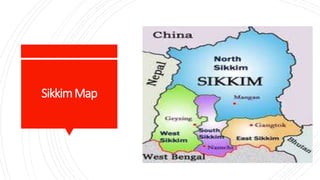
SikkimMap
Sikkim
 Sikkim i.e. The “Goodly Region”, Standard Tibetan: is
a landlocked.Indian state nestled in the Himalayas.
The state borders Nepal to the west, Tibet Autonomous
Region,
 People’s Republic of China to the north and east, and
Bhutan to the southeast. The state of West Bengal
borders Sikkim to its south.
PeopleOfSikkim
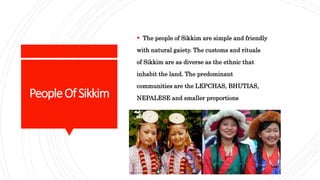
 The people of Sikkim are simple and friendly
with natural gaiety. The customs and rituals
of Sikkim are as diverse as the ethnic that
inhabit the land. The predominant
communities are the LEPCHAS, BHUTIAS,
NEPALESE and smaller proportions
USPOfSikkim
 With around 600,000 permanent residents, Sikkim is the
least populous state in India and the second-smallest state
after Goa in total area. Kangchenjunga, the world’s
thirdhighest peak, is located on Sikkim’s border with
Nepal.Sikkim is a popular tourist destination, owing to its
culture, scenery and biodiversity. It also has the only open
border between India and China.
LEGENDOF
SIKKIM
Legend has it that the Buddhist saint
Guru Rinpoche visited Sikkim in the 9th century,
introduced Buddhism .Indeed, the
Namgyal dynasty was established in 1642. Over
The next 150 years, the kingdom witnessed
frequent raids and territorial losses to Nepalese
invaders. It allied itself with the
British rulers of India, but was soon annexed by
them. Later, Sikkim became a British
protectorate, before merging with India following
a referendum in 1975
LanguagesOf
Sikkim
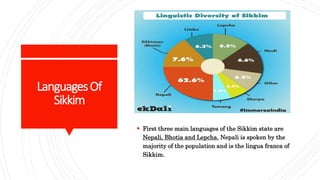
 First three main languages of the Sikkim state are
Nepali, Bhotia and Lepcha. Nepali is spoken by the
majority of the population and is the lingua franca of
Sikkim.
Climate
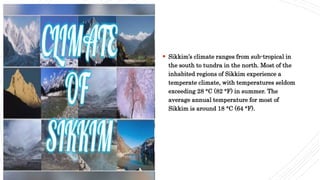
 Sikkim’s climate ranges from sub-tropical in
the south to tundra in the north. Most of the
inhabited regions of Sikkim experience a
temperate climate, with temperatures seldom
exceeding 28 °C (82 °F) in summer. The
average annual temperature for most of
Sikkim is around 18 °C (64 °F).
Culture
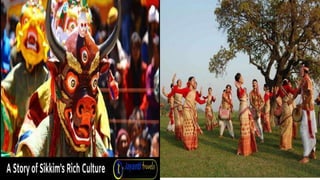
 Sikkim is a unique blend of different religion, customs and
traditions of different communities. In the ancient times,
Sikkim was occupied by three tribes; Naong, Chang and
the Mon. But with the course of time, the inhabitants of
the nearby countries became a major inhabitant of the
state. That includes the Lepchas; the clan of Nagas from
Tibet, are one of the tribal groups, the Bhutias; the
descendents of Buddhists from Tibet and the Nepalese;
the descendents of the Hindus from Nepal, which now
dominates the considerable portion of the Sikkim’s
population. And hence, Nepali is the most common among
all the languages in Sikkim. The Tibetan Bhutias, secured
their deep rooted ties to the tradition and belief since the
last three centuries they had been settled in Sikkim.
Living together harmoniously, the Sikkimese Bhutias and
Tibetans display the cultural, social and linguistic
commonness in between.
Festivals
CelebratedIn
Sikkim
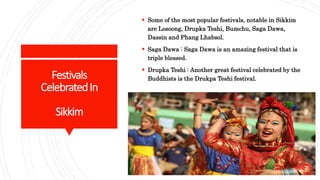
 Some of the most popular festivals, notable in Sikkim
are Losoong, Drupka Teshi, Bumchu, Saga Dawa,
Dassin and Phang Lhabsol.
 Saga Dawa : Saga Dawa is an amazing festival that is
triple blessed.
 Drupka Teshi : Another great festival celebrated by the
Buddhists is the Drukpa Teshi festival.
Music
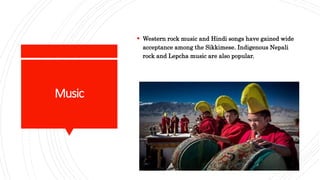
 Western rock music and Hindi songs have gained wide
acceptance among the Sikkimese. Indigenous Nepali
rock and Lepcha music are also popular.
SportsOfSikkim
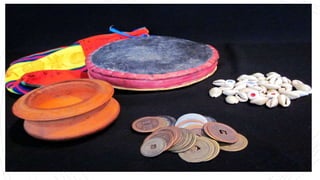
 Sho is a traditional game of Sikkim, also called SHOH
and is very popular among worker class.
 Traditional games are those games within a society
that people have played for many years. They could be
indoor or outdoor games. In other words, they are the
games and movements that are traditional to our
cultures, from dances to ball games and water sports.
UNESCO has recognized TRADITIONAL SPORTS
AND GAMES (TSG) as world intangible heritage.
Education
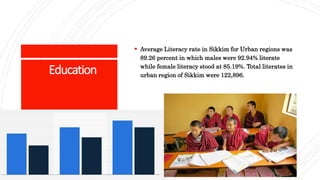
 Average Literacy rate in Sikkim for Urban regions was
89.26 percent in which males were 92.94% literate
while female literacy stood at 85.19%. Total literates in
urban region of Sikkim were 122,896.
THANKYOU

Sikkim

  • 1.
  • 2.
  • 3.
    Sikkim  Sikkim i.e.The “Goodly Region”, Standard Tibetan: is a landlocked.Indian state nestled in the Himalayas. The state borders Nepal to the west, Tibet Autonomous Region,  People’s Republic of China to the north and east, and Bhutan to the southeast. The state of West Bengal borders Sikkim to its south.
  • 4.
    PeopleOfSikkim  The peopleof Sikkim are simple and friendly with natural gaiety. The customs and rituals of Sikkim are as diverse as the ethnic that inhabit the land. The predominant communities are the LEPCHAS, BHUTIAS, NEPALESE and smaller proportions
  • 5.
    USPOfSikkim  With around600,000 permanent residents, Sikkim is the least populous state in India and the second-smallest state after Goa in total area. Kangchenjunga, the world’s thirdhighest peak, is located on Sikkim’s border with Nepal.Sikkim is a popular tourist destination, owing to its culture, scenery and biodiversity. It also has the only open border between India and China.
  • 6.
    LEGENDOF SIKKIM Legend has itthat the Buddhist saint Guru Rinpoche visited Sikkim in the 9th century, introduced Buddhism .Indeed, the Namgyal dynasty was established in 1642. Over The next 150 years, the kingdom witnessed frequent raids and territorial losses to Nepalese invaders. It allied itself with the British rulers of India, but was soon annexed by them. Later, Sikkim became a British protectorate, before merging with India following a referendum in 1975
  • 7.
    LanguagesOf Sikkim  First threemain languages of the Sikkim state are Nepali, Bhotia and Lepcha. Nepali is spoken by the majority of the population and is the lingua franca of Sikkim.
  • 8.
    Climate  Sikkim’s climateranges from sub-tropical in the south to tundra in the north. Most of the inhabited regions of Sikkim experience a temperate climate, with temperatures seldom exceeding 28 °C (82 °F) in summer. The average annual temperature for most of Sikkim is around 18 °C (64 °F).
  • 9.
    Culture  Sikkim isa unique blend of different religion, customs and traditions of different communities. In the ancient times, Sikkim was occupied by three tribes; Naong, Chang and the Mon. But with the course of time, the inhabitants of the nearby countries became a major inhabitant of the state. That includes the Lepchas; the clan of Nagas from Tibet, are one of the tribal groups, the Bhutias; the descendents of Buddhists from Tibet and the Nepalese; the descendents of the Hindus from Nepal, which now dominates the considerable portion of the Sikkim’s population. And hence, Nepali is the most common among all the languages in Sikkim. The Tibetan Bhutias, secured their deep rooted ties to the tradition and belief since the last three centuries they had been settled in Sikkim. Living together harmoniously, the Sikkimese Bhutias and Tibetans display the cultural, social and linguistic commonness in between.
  • 11.
    Festivals CelebratedIn Sikkim  Some ofthe most popular festivals, notable in Sikkim are Losoong, Drupka Teshi, Bumchu, Saga Dawa, Dassin and Phang Lhabsol.  Saga Dawa : Saga Dawa is an amazing festival that is triple blessed.  Drupka Teshi : Another great festival celebrated by the Buddhists is the Drukpa Teshi festival.
  • 12.
    Music  Western rockmusic and Hindi songs have gained wide acceptance among the Sikkimese. Indigenous Nepali rock and Lepcha music are also popular.
  • 13.
    SportsOfSikkim  Sho isa traditional game of Sikkim, also called SHOH and is very popular among worker class.  Traditional games are those games within a society that people have played for many years. They could be indoor or outdoor games. In other words, they are the games and movements that are traditional to our cultures, from dances to ball games and water sports. UNESCO has recognized TRADITIONAL SPORTS AND GAMES (TSG) as world intangible heritage.
  • 15.
    Education  Average Literacyrate in Sikkim for Urban regions was 89.26 percent in which males were 92.94% literate while female literacy stood at 85.19%. Total literates in urban region of Sikkim were 122,896.
  • 16.