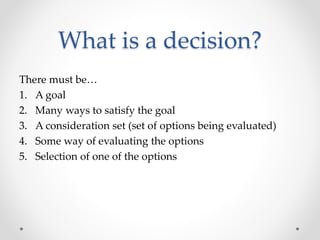
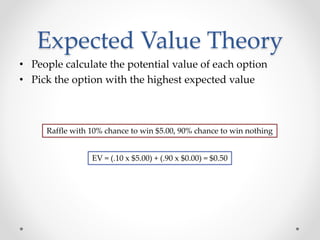
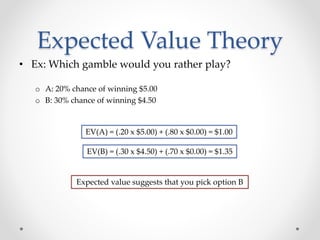
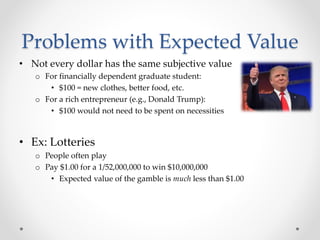
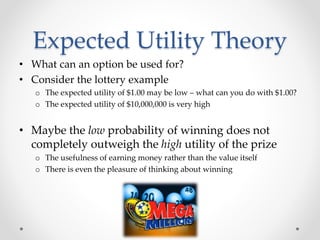
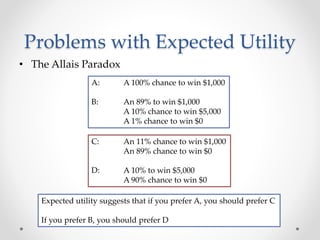
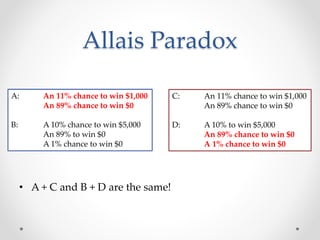
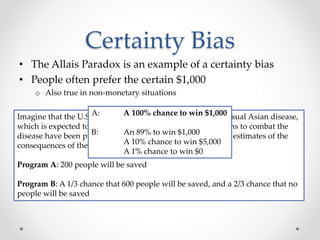
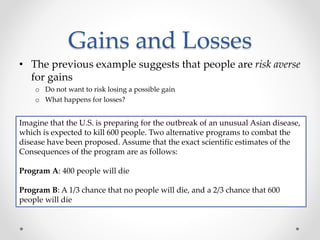
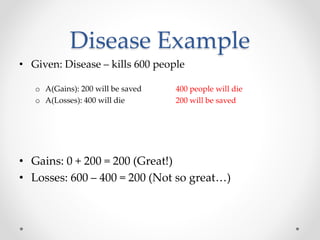
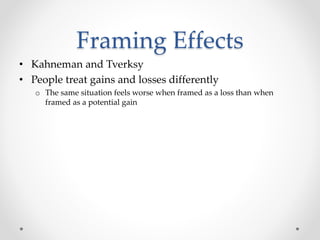
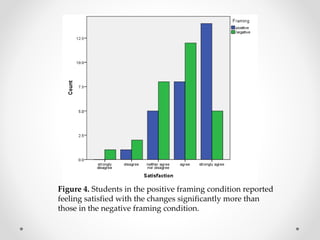
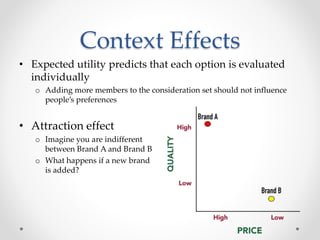
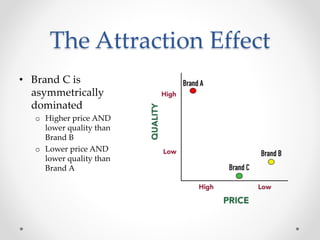
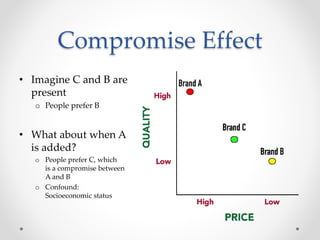
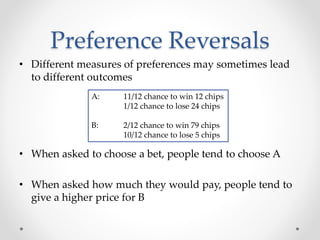
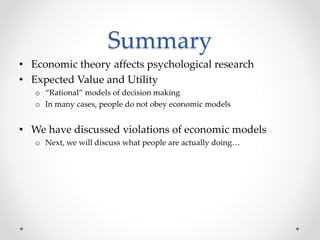
This document discusses decision making and judgment. It begins by defining what constitutes a decision, which requires a goal, multiple options to achieve the goal, a consideration set of options being evaluated, a way to evaluate the options, and selecting one option. It then discusses concepts from economics like expected value theory and expected utility theory, and how these models compare to actual human decision making behavior. It also covers phenomena like framing effects, the attraction effect, compromise effect, preference reversals, mental accounting, and the house money effect that demonstrate ways human judgment deviates from rational models.