Protestant Reformation
And Its Consequences
Just a Reminder…

• Renaissance
 ▫ “Rebirth” of learning and science
 ▫ Rediscovery of Greco-roman ideals
• Humanism
 ▫ Idea that man, not God, was the center of the universe
 ▫ Man controls his own destiny
 ▫ Man can learn about and understand his world by observation
   and reason without God’s help
 ▫ Led many to question both governments and the institutional
   Church
Protestant Reformation
Protestant – one who protests
and works for reform outside the
Catholic Church
Why is this necessary?

• Church Corruption
 ▫ History of popes with mistresses and children; John XII ran a
   brothel from inside the Vatican in the 10th century
 ▫ Clergy sells indulgences to forgive sins, decrease days spent in
   purgatory, save the dead from damnation

• Belief is superstitious
 ▫ Worship of “relics” thought to provide salvation

• Humanism emphasizes reason
 ▫ Church used its power and authority to keep the people ignorant
   and illiterate – people couldn’t think for themselves
An Indulgence (1517) signed
                                              by Johann Tetzel
                                            “With the Authority of all
                                            Saints and with mercy for
                                          you, I free you of all sins and
                                         crimes and excuse you from all
                                            punishments for ten days.
                                                  Johann Tetzel”


“When the coin in the coffer rings, the soul from purgatory springs.”
                                          – saying attributed to Johann Tetzel
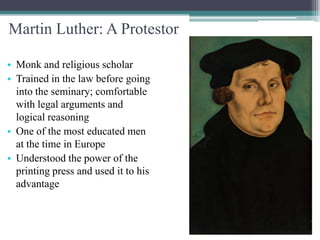
Martin Luther: A Protestor

• Monk and religious scholar
• Trained in the law before going
  into the seminary; comfortable
  with legal arguments and
  logical reasoning
• One of the most educated men
  at the time in Europe
• Understood the power of the
  printing press and used it to his
  advantage
Luther’s 95 Theses (1517)

• Arguments against the Catholic Church
 ▫ Based on his reading of Romans 1:17, “He who through faith is
   righteous shall live.”

• Nailed to the Wittenberg Cathedral door
 ▫ Written in German so people could read for themselves
 ▫ Mass produced with the printing press and widely distributed

• Humanism emphasizes reason
 ▫ Church used its power and authority to keep the people ignorant
   and illiterate – people couldn’t think for themselves
Luther’s Ideas
• Justification (salvation) by Faith Alone
  ▫ Based on his reading of Romans 1:17, “He who through faith is righteous
    shall live.”

• The Bible is the Sole Authority
  ▫ Undermines the infallibility of the Pope and the clergy members of the
    Catholic Church

• An Educated People is Necessary
  ▫ If people can read, they can read their own Bibles and so rely on
    themselves to know what it says
  ▫ Citizens in “protestant” areas of Europe will generally be more literate
    than in Catholic ones well into the 20th century
Cultural Impact of the
    Printing Press
Luther takes advantage of a
rising literacy and prints
pamphlets for the masses

Uses images used to teach the
illiterate criticisms of the
Catholic Church
Other Major
Protestant Reformers
• Calvin
  ▫ In Switzerland with influence in Scotland, France, and the Netherlands
  ▫ Strong Proponent of a Predestination and the “Elect” – only 144,000 earn
    heaven in the end
  ▫ Influential for colonial Puritans and their legacy of an American idea of
    US as God’s chosen people
• Henry VIII
  ▫ In England, after the Catholic Church would not grant him a
    divorce, creates the Church of England
• Elizabeth I
  ▫ In England, creates the Anglican Church as a compromise
  ▫ Like her father, is sworn allegiance to as the head of the church
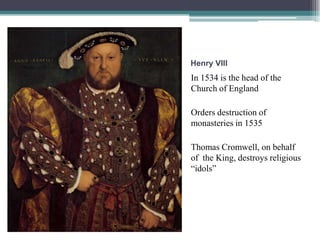
Henry VIII
In 1534 is the head of the
Church of England

Orders destruction of
monasteries in 1535

Thomas Cromwell, on behalf
of the King, destroys religious
“idols”
Consequences
• Thirty Years War
  ▫ War between Catholics and Protestants (1618 to 1648)
     Culmination of a series of sporadic wars that first broke out in the German
      lands during the time of Luther (1520s)
     The most destructive war in European history before the outbreak of World
      War I in 1914
  ▫ Ends with the Treaty of Westphalia in 1648, which decrees that Catholic
    nations recognize the existence of Protestant states
• Counter-Reformation
  ▫ Ignatius Loyola (Catholic) founds the Society of Jesus (Jesuits) in 1534, an order
    dedicated reforming the Church within the Church
    ▫ A learned order, the Jesuits open schools and colleges to more people to read
      both the Bible and other works
    ▫ Emphasized a Classical Education (Greco-Roman) with faith woven into the
      curriculum

Protestant reformation an its consequences

  • 1.
  • 2.
    Just a Reminder… •Renaissance ▫ “Rebirth” of learning and science ▫ Rediscovery of Greco-roman ideals • Humanism ▫ Idea that man, not God, was the center of the universe ▫ Man controls his own destiny ▫ Man can learn about and understand his world by observation and reason without God’s help ▫ Led many to question both governments and the institutional Church
  • 3.
    Protestant Reformation Protestant –one who protests and works for reform outside the Catholic Church
  • 4.
    Why is thisnecessary? • Church Corruption ▫ History of popes with mistresses and children; John XII ran a brothel from inside the Vatican in the 10th century ▫ Clergy sells indulgences to forgive sins, decrease days spent in purgatory, save the dead from damnation • Belief is superstitious ▫ Worship of “relics” thought to provide salvation • Humanism emphasizes reason ▫ Church used its power and authority to keep the people ignorant and illiterate – people couldn’t think for themselves
  • 5.
    An Indulgence (1517)signed by Johann Tetzel “With the Authority of all Saints and with mercy for you, I free you of all sins and crimes and excuse you from all punishments for ten days. Johann Tetzel” “When the coin in the coffer rings, the soul from purgatory springs.” – saying attributed to Johann Tetzel
  • 6.
    Martin Luther: AProtestor • Monk and religious scholar • Trained in the law before going into the seminary; comfortable with legal arguments and logical reasoning • One of the most educated men at the time in Europe • Understood the power of the printing press and used it to his advantage
  • 7.
    Luther’s 95 Theses(1517) • Arguments against the Catholic Church ▫ Based on his reading of Romans 1:17, “He who through faith is righteous shall live.” • Nailed to the Wittenberg Cathedral door ▫ Written in German so people could read for themselves ▫ Mass produced with the printing press and widely distributed • Humanism emphasizes reason ▫ Church used its power and authority to keep the people ignorant and illiterate – people couldn’t think for themselves
  • 8.
    Luther’s Ideas • Justification(salvation) by Faith Alone ▫ Based on his reading of Romans 1:17, “He who through faith is righteous shall live.” • The Bible is the Sole Authority ▫ Undermines the infallibility of the Pope and the clergy members of the Catholic Church • An Educated People is Necessary ▫ If people can read, they can read their own Bibles and so rely on themselves to know what it says ▫ Citizens in “protestant” areas of Europe will generally be more literate than in Catholic ones well into the 20th century
  • 9.
    Cultural Impact ofthe Printing Press Luther takes advantage of a rising literacy and prints pamphlets for the masses Uses images used to teach the illiterate criticisms of the Catholic Church
  • 10.
    Other Major Protestant Reformers •Calvin ▫ In Switzerland with influence in Scotland, France, and the Netherlands ▫ Strong Proponent of a Predestination and the “Elect” – only 144,000 earn heaven in the end ▫ Influential for colonial Puritans and their legacy of an American idea of US as God’s chosen people • Henry VIII ▫ In England, after the Catholic Church would not grant him a divorce, creates the Church of England • Elizabeth I ▫ In England, creates the Anglican Church as a compromise ▫ Like her father, is sworn allegiance to as the head of the church
  • 11.
    Henry VIII In 1534is the head of the Church of England Orders destruction of monasteries in 1535 Thomas Cromwell, on behalf of the King, destroys religious “idols”
  • 12.
    Consequences • Thirty YearsWar ▫ War between Catholics and Protestants (1618 to 1648)  Culmination of a series of sporadic wars that first broke out in the German lands during the time of Luther (1520s)  The most destructive war in European history before the outbreak of World War I in 1914 ▫ Ends with the Treaty of Westphalia in 1648, which decrees that Catholic nations recognize the existence of Protestant states • Counter-Reformation ▫ Ignatius Loyola (Catholic) founds the Society of Jesus (Jesuits) in 1534, an order dedicated reforming the Church within the Church ▫ A learned order, the Jesuits open schools and colleges to more people to read both the Bible and other works ▫ Emphasized a Classical Education (Greco-Roman) with faith woven into the curriculum

Editor's Notes

  • #8 Brought the idea of Many German princes (especially Prince Fredrick of Saxony) in the Holy Roman Empire stood by Luther and against the pope – some for political and economic reasons, others because they believed in Luther’s ideas regarding salvation and they liked the idea of a “German Church”