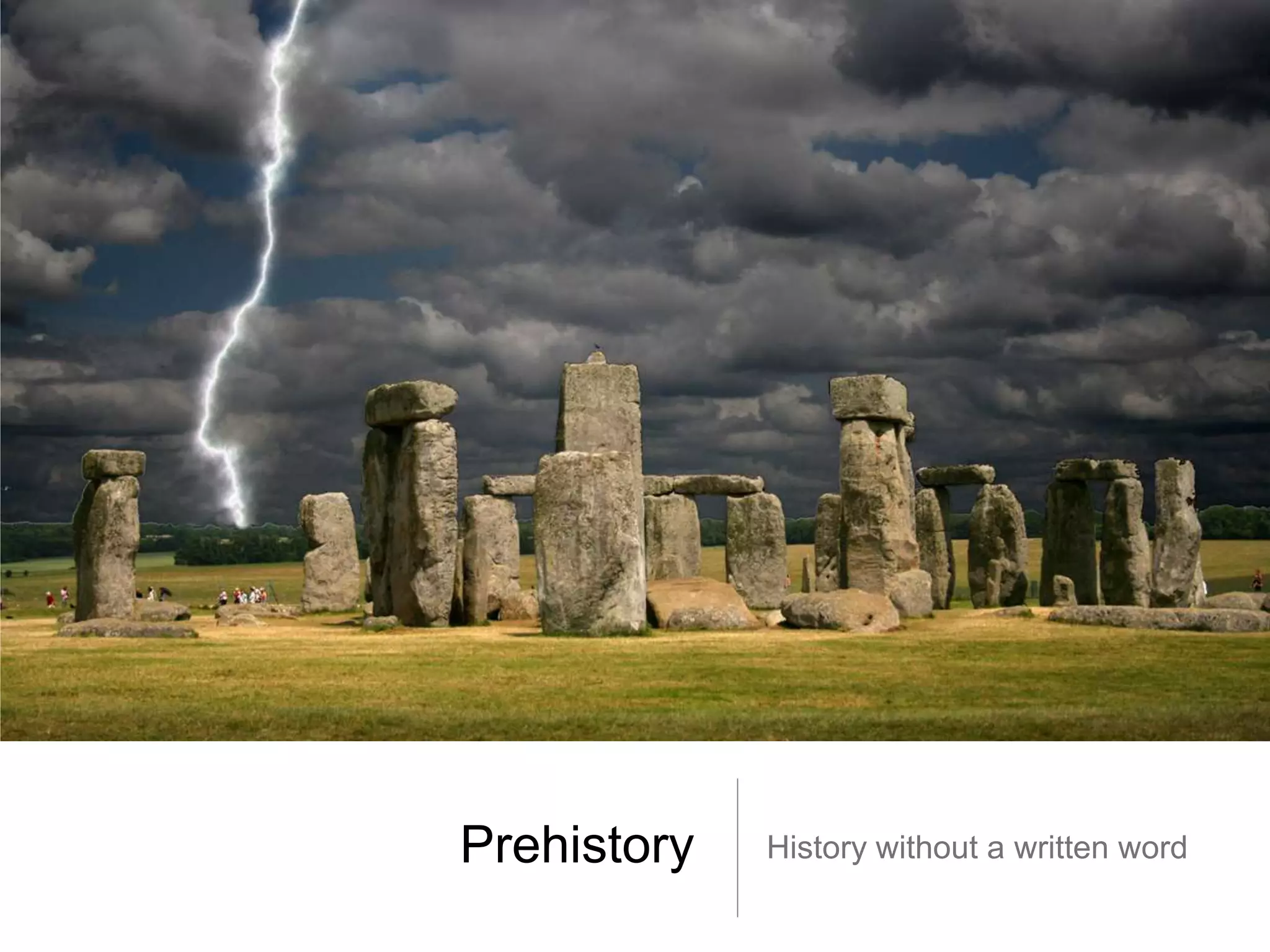
Prehistory   History without a written word
DISCLAIMER
This presentation is an overview of the material in your text. It is not
comprehensive, nor is it meant to be. This presentation allows you to introduce
yourself to concepts and images in the respective chapter. Best practice says to
view this presentation with your book open, as many of the images in this
presentation are small or incomplete.
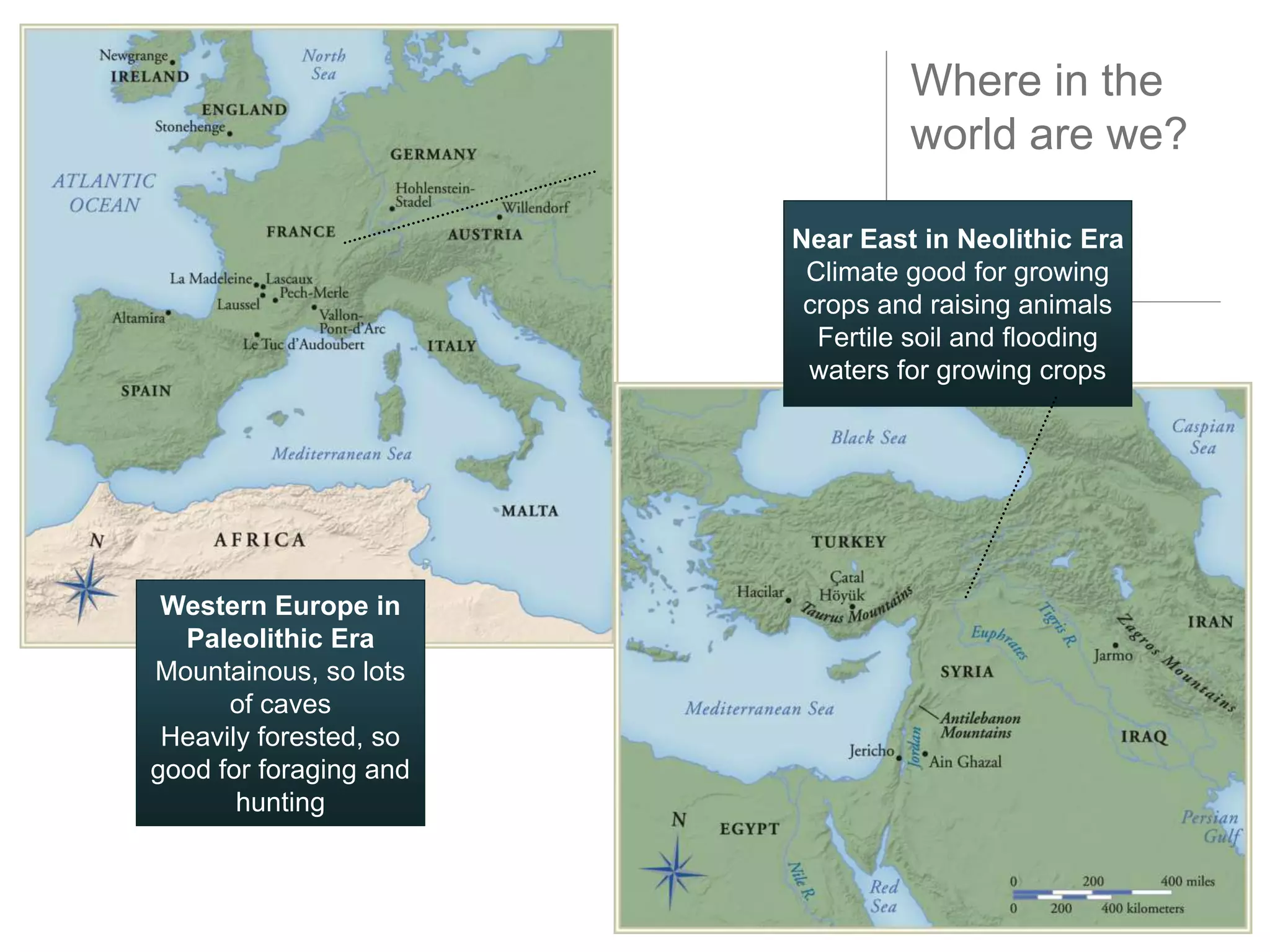
Where in the
                                 world are we?

                        Near East in Neolithic Era
                         Climate good for growing
                         crops and raising animals
                          Fertile soil and flooding
                         waters for growing crops


 Western Europe in
  Paleolithic Era
Mountainous, so lots
      of caves
 Heavily forested, so
good for foraging and
       hunting
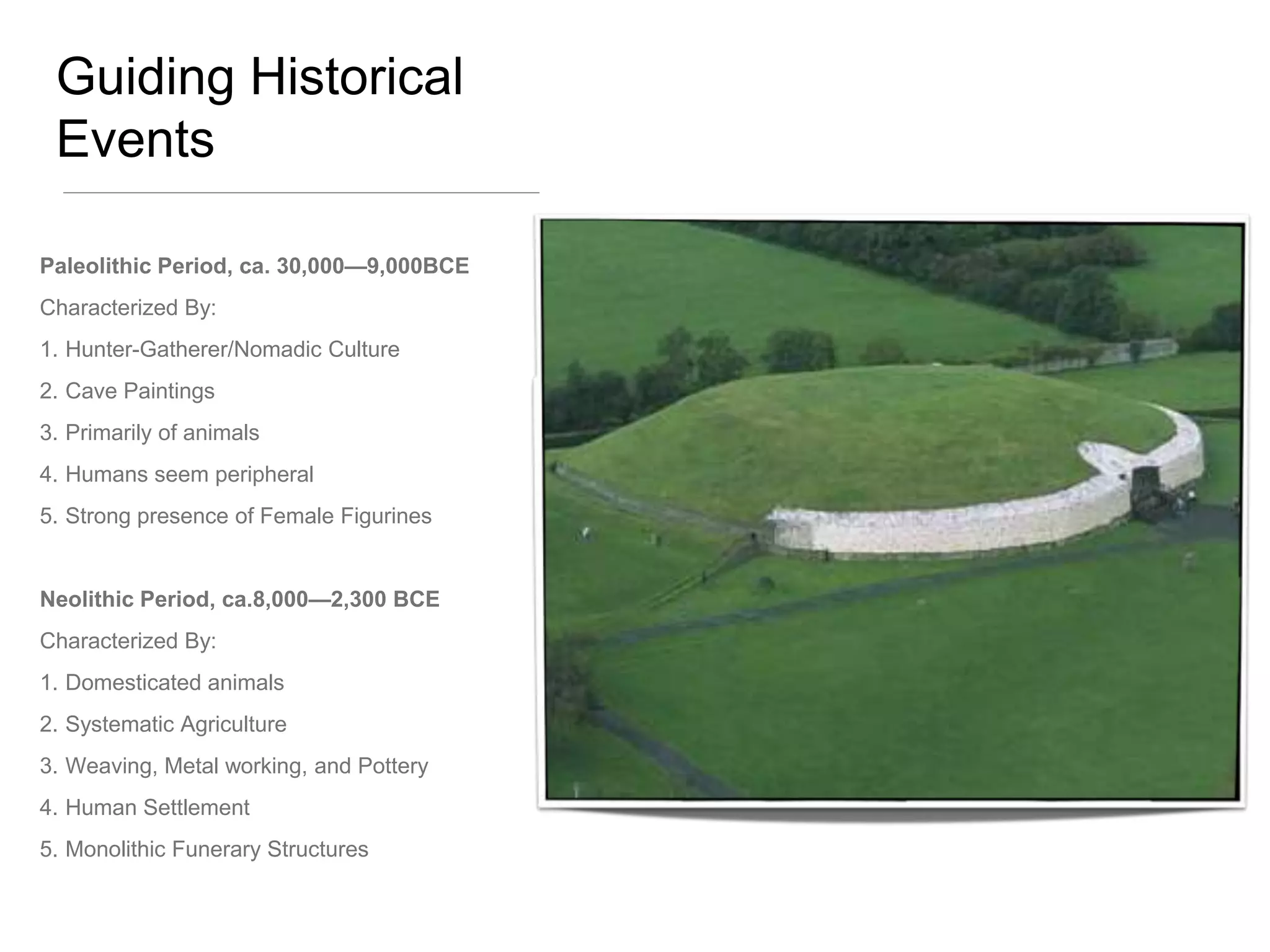
Guiding Historical
 Events

Paleolithic Period, ca. 30,000—9,000BCE
Characterized By:
1. Hunter-Gatherer/Nomadic Culture
2. Cave Paintings
3. Primarily of animals
4. Humans seem peripheral
5. Strong presence of Female Figurines


Neolithic Period, ca.8,000—2,300 BCE
Characterized By:
1. Domesticated animals
2. Systematic Agriculture
3. Weaving, Metal working, and Pottery
4. Human Settlement
5. Monolithic Funerary Structures
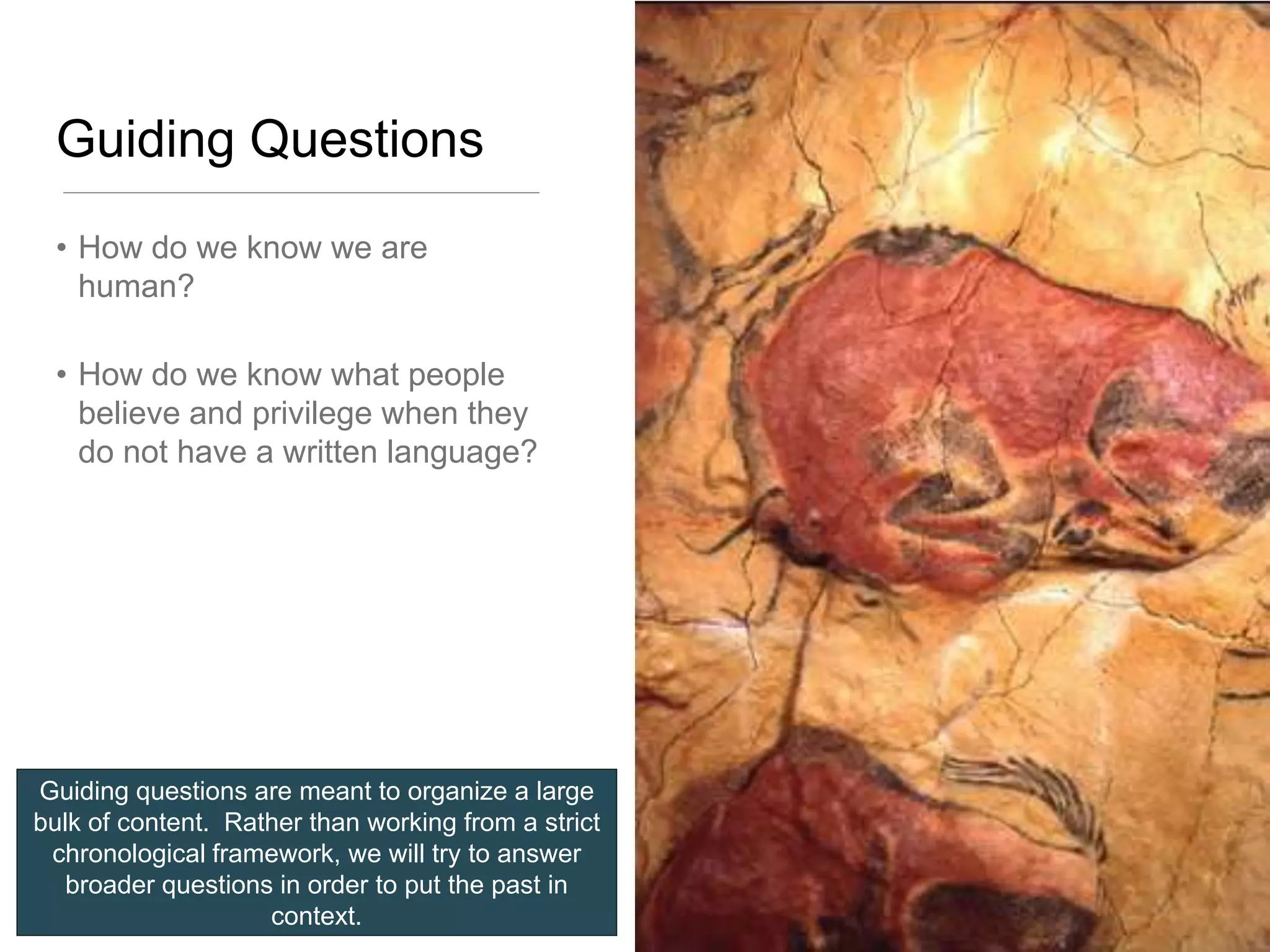
Guiding Questions
 • How do we know we are
   human?

 • How do we know what people
   believe and privilege when they
   do not have a written language?


Guiding questions are meant to organize a large
bulk of content. Rather than working from a strict
 chronological framework, we will try to answer
   broader questions in order to put the past in
                    context.
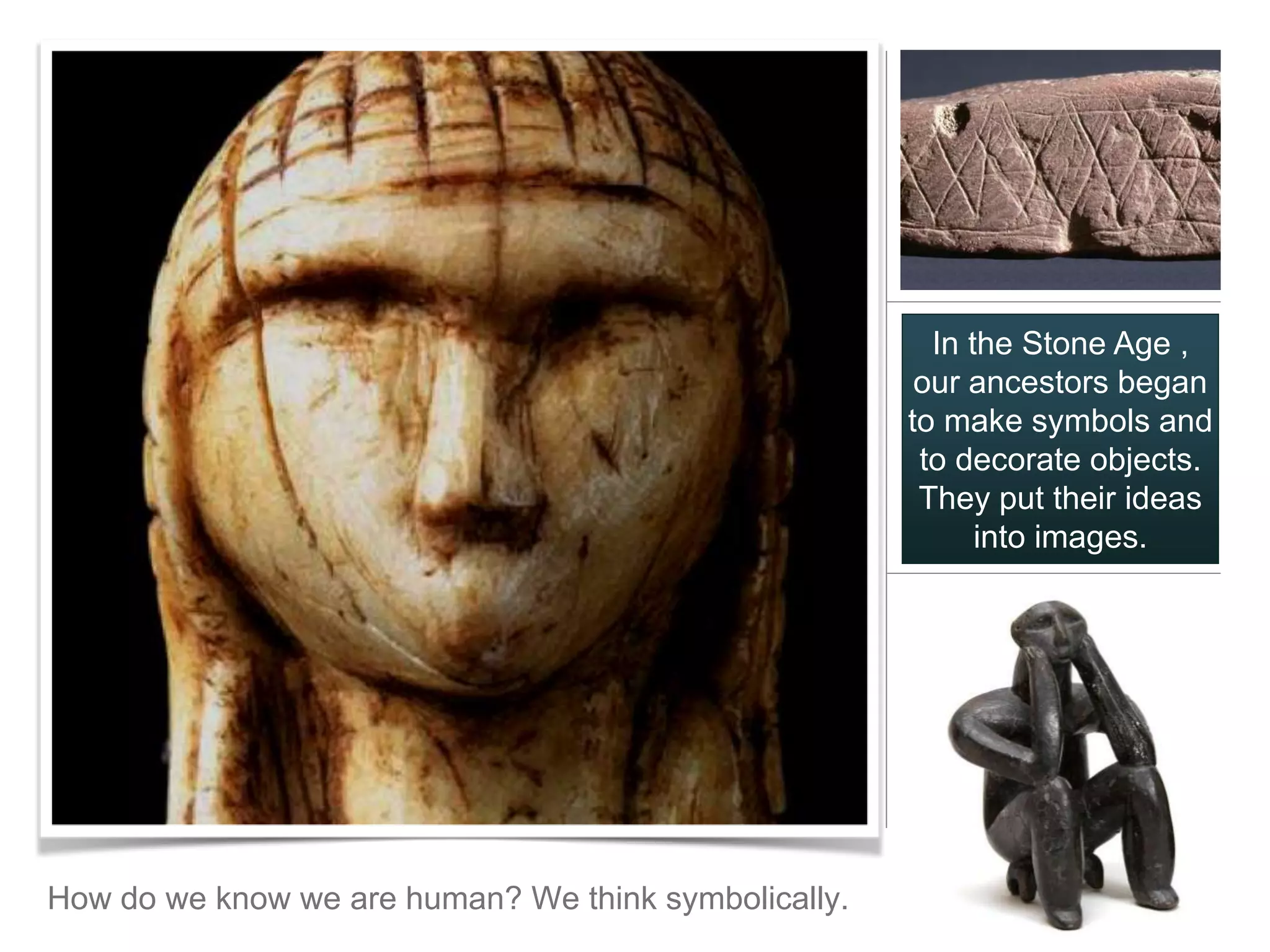
In the Stone Age ,
                                                       our ancestors began
                                                      to make symbols and
                                                       to decorate objects.
                                                       They put their ideas
                                                            into images.


How do we know we are human? We think symbolically.
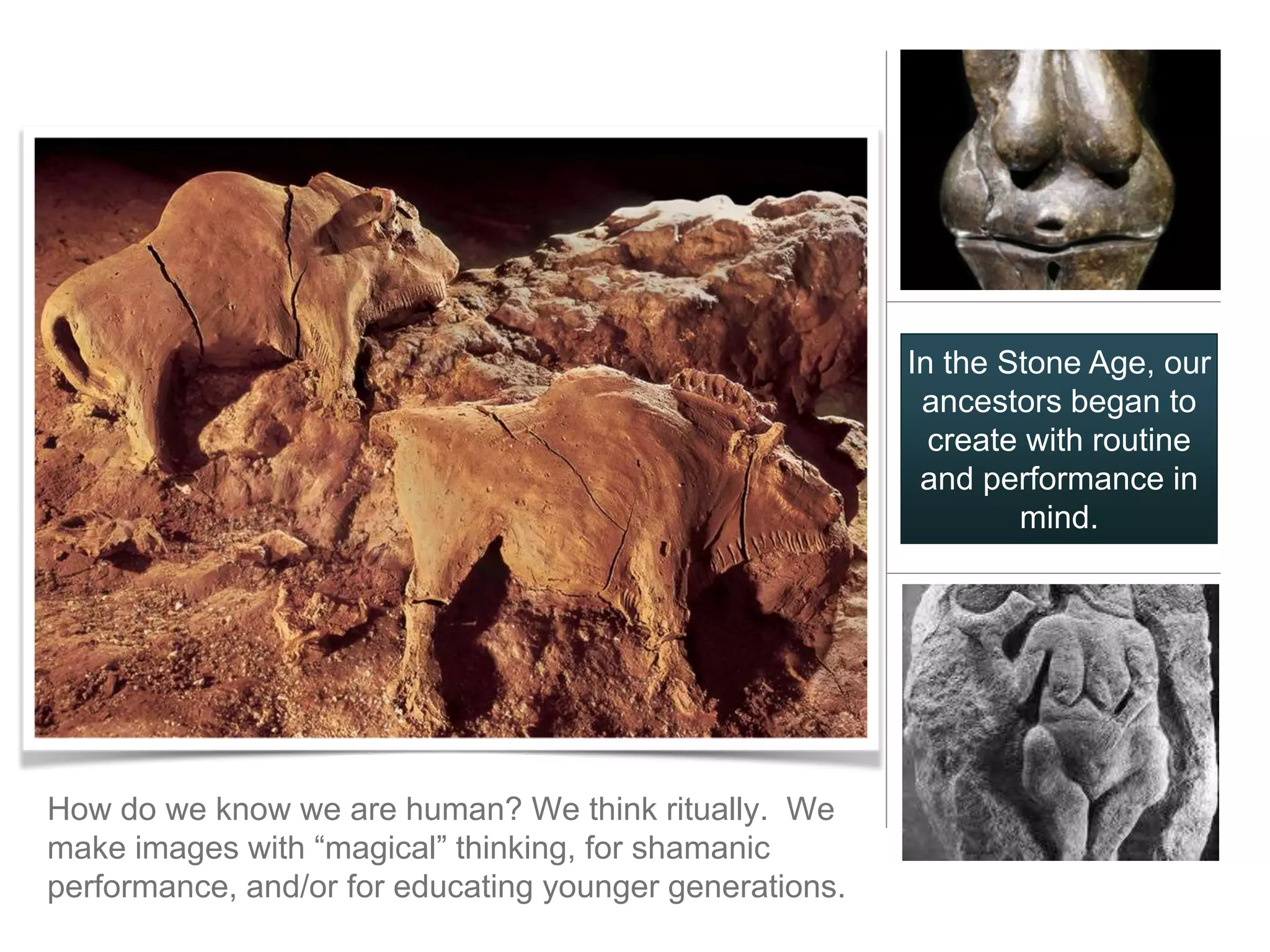
In the Stone Age, our
                                                          ancestors began to
                                                           create with routine
                                                          and performance in
                                                                 mind.


How do we know we are human? We think ritually. We
make images with “magical” thinking, for shamanic
performance, and/or for educating younger generations.
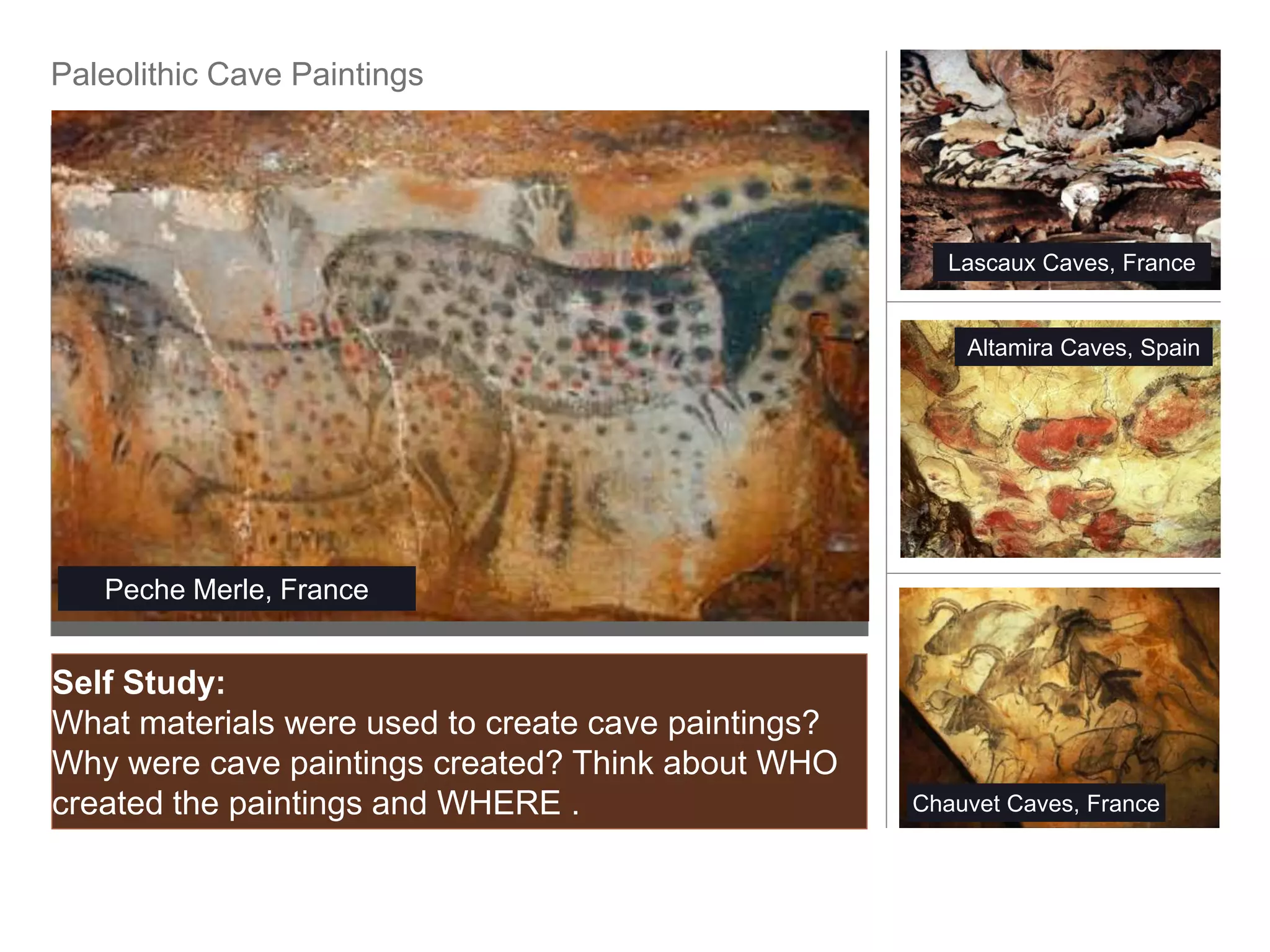
Paleolithic Cave Paintings


                                                        Lascaux Caves, France


                                                         Altamira Caves, Spain


   Peche Merle, France


Self Study:
What materials were used to create cave paintings?
Why were cave paintings created? Think about WHO
created the paintings and WHERE .                    Chauvet Caves, France
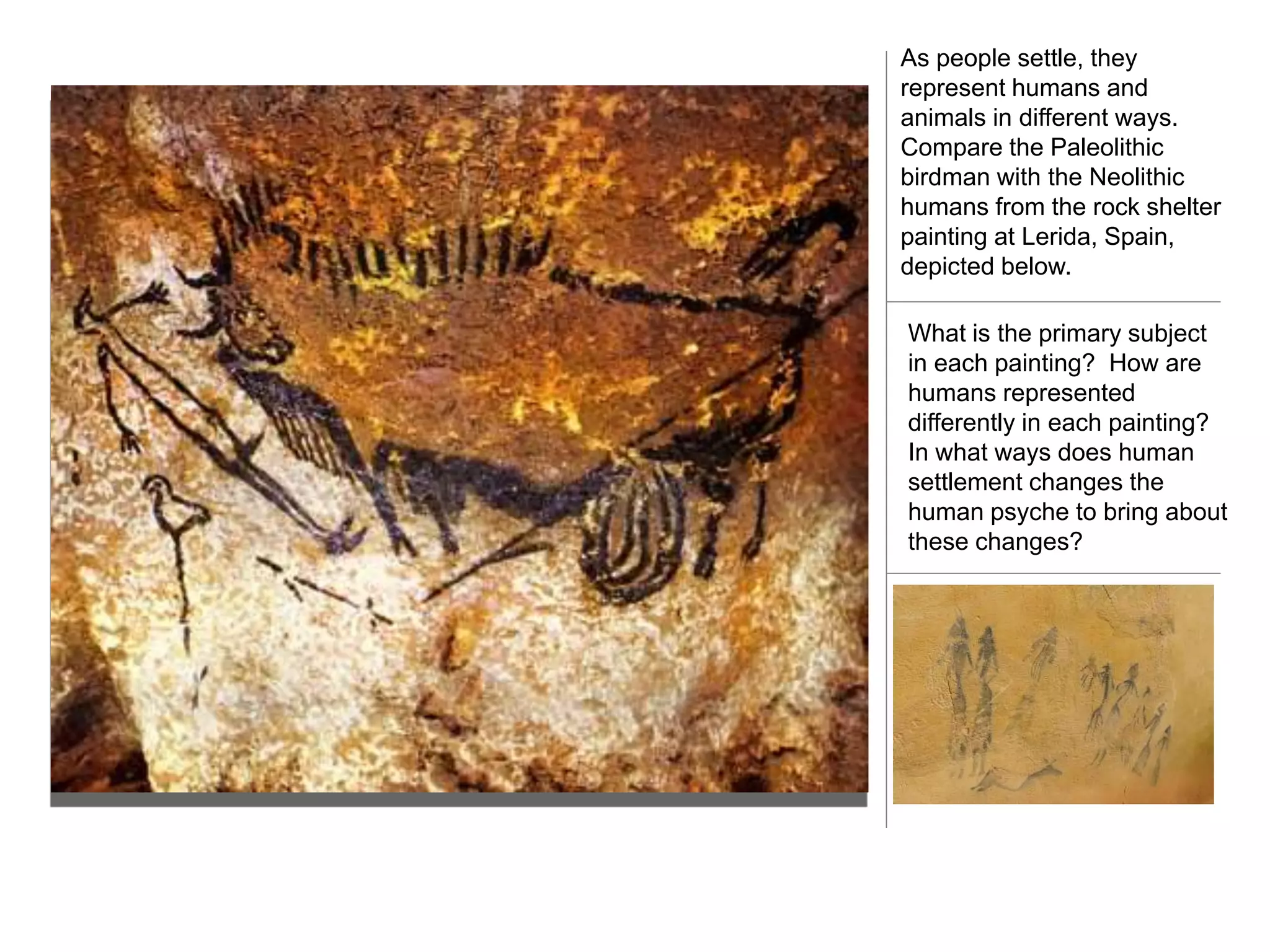
As people settle, they
represent humans and
animals in different ways.
Compare the Paleolithic
birdman with the Neolithic
humans from the rock shelter
painting at Lerida, Spain,
depicted below.

What is the primary subject
in each painting? How are
humans represented
differently in each painting?
In what ways does human
settlement changes the
human psyche to bring about
these changes?
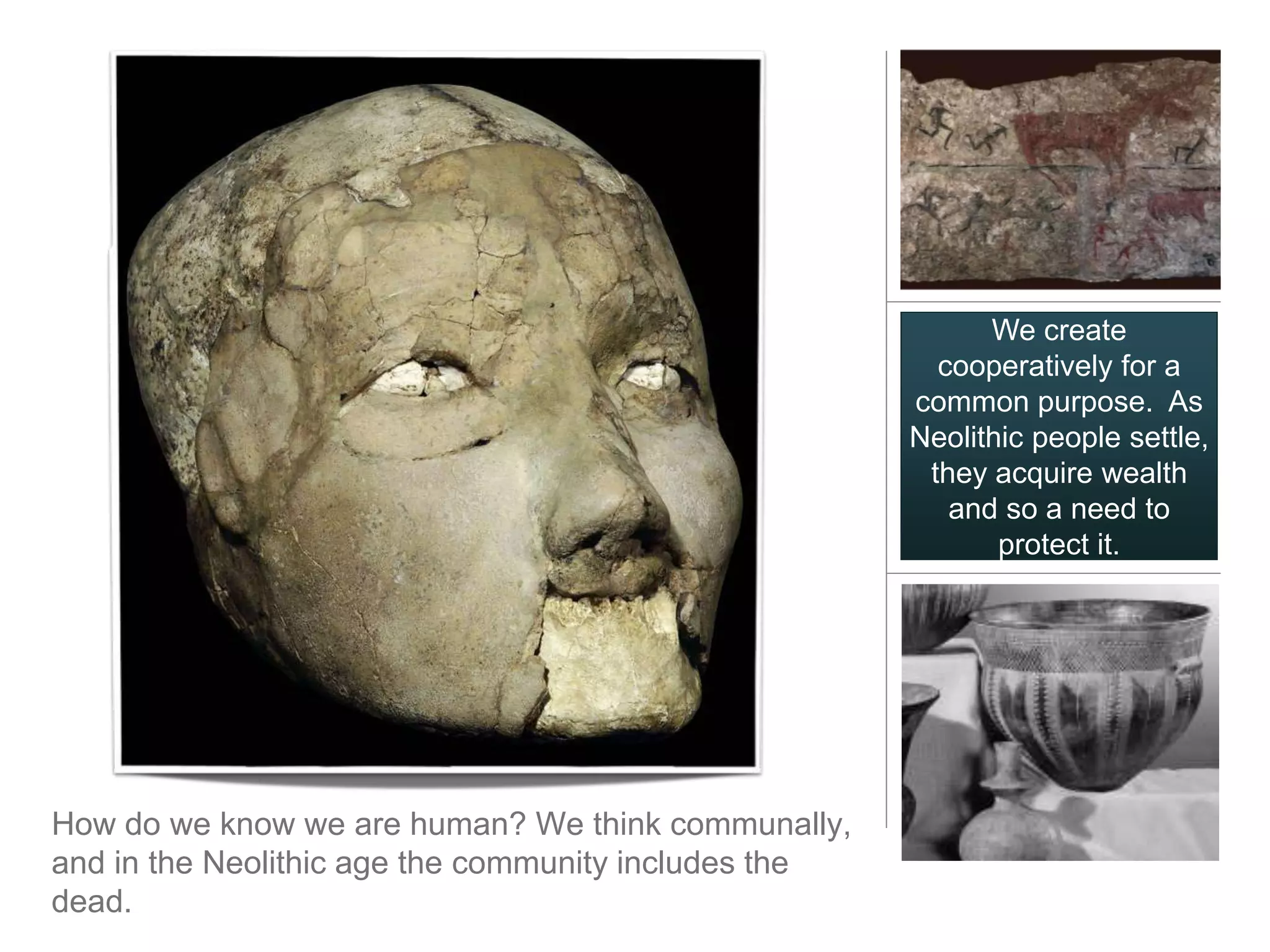
We create
                                                        cooperatively for a
                                                      common purpose. As
                                                      Neolithic people settle,
                                                       they acquire wealth
                                                         and so a need to
                                                             protect it.


How do we know we are human? We think communally,
and in the Neolithic age the community includes the
dead.
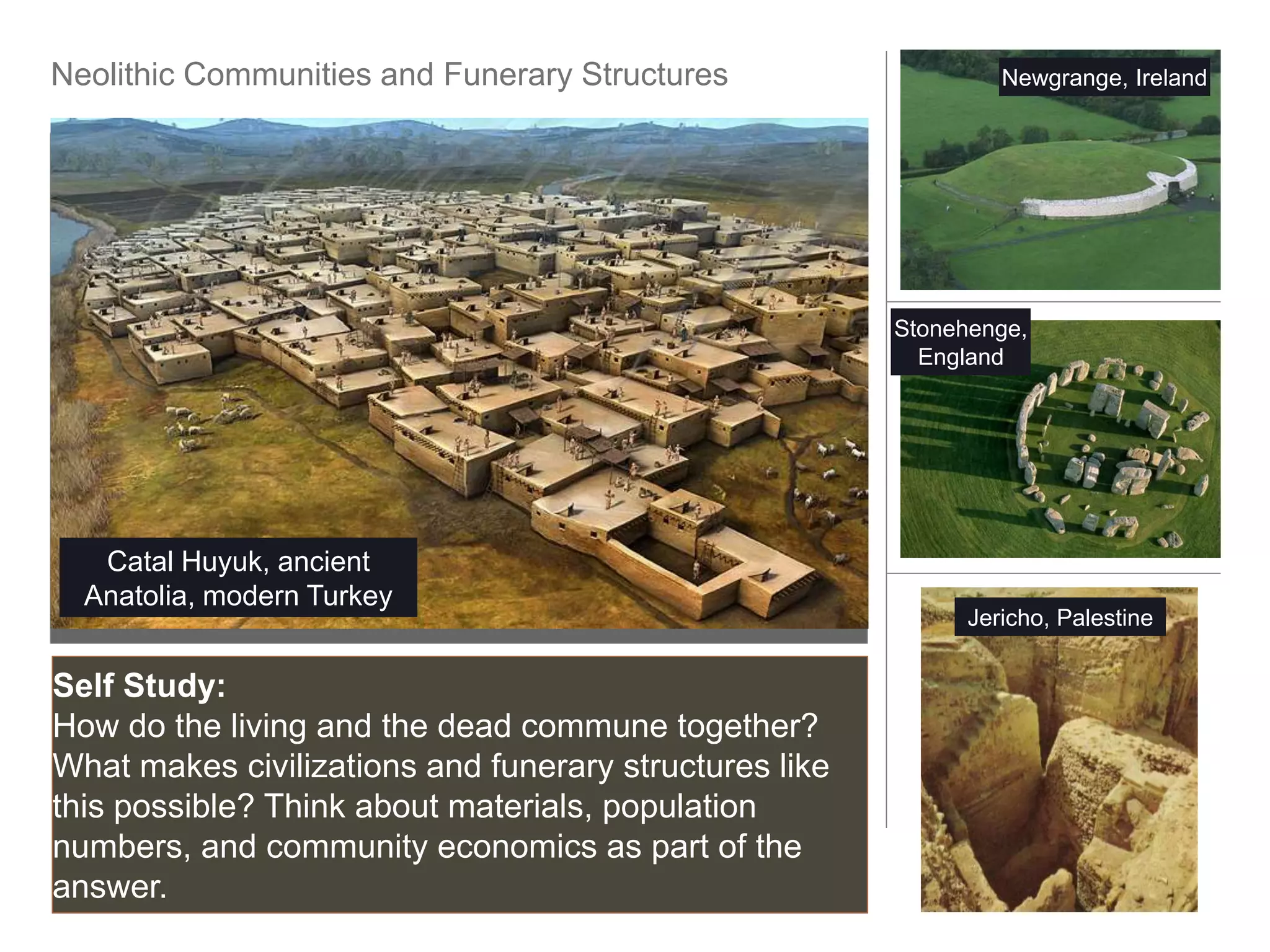
Neolithic Communities and Funerary Structures                    Newgrange, Ireland


                                                        Stonehenge,
                                                          England


   Catal Huyuk, ancient
  Anatolia, modern Turkey
                                                              Jericho, Palestine


Self Study:
How do the living and the dead commune together?
What makes civilizations and funerary structures like
this possible? Think about materials, population
numbers, and community economics as part of the
answer.
In subsequent materials, you will explore:

• The exaggeration of imagery in the Paleolithic era

• Archeological study of cave paintings

Prehistory Overview

  • 1.
    Prehistory History without a written word
  • 2.
    DISCLAIMER This presentation isan overview of the material in your text. It is not comprehensive, nor is it meant to be. This presentation allows you to introduce yourself to concepts and images in the respective chapter. Best practice says to view this presentation with your book open, as many of the images in this presentation are small or incomplete.
  • 3.
    Where in the world are we? Near East in Neolithic Era Climate good for growing crops and raising animals Fertile soil and flooding waters for growing crops Western Europe in Paleolithic Era Mountainous, so lots of caves Heavily forested, so good for foraging and hunting
  • 4.
    Guiding Historical Events PaleolithicPeriod, ca. 30,000—9,000BCE Characterized By: 1. Hunter-Gatherer/Nomadic Culture 2. Cave Paintings 3. Primarily of animals 4. Humans seem peripheral 5. Strong presence of Female Figurines Neolithic Period, ca.8,000—2,300 BCE Characterized By: 1. Domesticated animals 2. Systematic Agriculture 3. Weaving, Metal working, and Pottery 4. Human Settlement 5. Monolithic Funerary Structures
  • 5.
    Guiding Questions •How do we know we are human? • How do we know what people believe and privilege when they do not have a written language? Guiding questions are meant to organize a large bulk of content. Rather than working from a strict chronological framework, we will try to answer broader questions in order to put the past in context.
  • 6.
    In the StoneAge , our ancestors began to make symbols and to decorate objects. They put their ideas into images. How do we know we are human? We think symbolically.
  • 7.
    In the StoneAge, our ancestors began to create with routine and performance in mind. How do we know we are human? We think ritually. We make images with “magical” thinking, for shamanic performance, and/or for educating younger generations.
  • 8.
    Paleolithic Cave Paintings Lascaux Caves, France Altamira Caves, Spain Peche Merle, France Self Study: What materials were used to create cave paintings? Why were cave paintings created? Think about WHO created the paintings and WHERE . Chauvet Caves, France
  • 9.
    As people settle,they represent humans and animals in different ways. Compare the Paleolithic birdman with the Neolithic humans from the rock shelter painting at Lerida, Spain, depicted below. What is the primary subject in each painting? How are humans represented differently in each painting? In what ways does human settlement changes the human psyche to bring about these changes?
  • 10.
    We create cooperatively for a common purpose. As Neolithic people settle, they acquire wealth and so a need to protect it. How do we know we are human? We think communally, and in the Neolithic age the community includes the dead.
  • 11.
    Neolithic Communities andFunerary Structures Newgrange, Ireland Stonehenge, England Catal Huyuk, ancient Anatolia, modern Turkey Jericho, Palestine Self Study: How do the living and the dead commune together? What makes civilizations and funerary structures like this possible? Think about materials, population numbers, and community economics as part of the answer.
  • 12.
    In subsequent materials,you will explore: • The exaggeration of imagery in the Paleolithic era • Archeological study of cave paintings