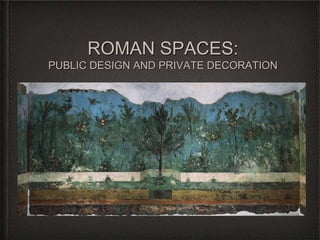
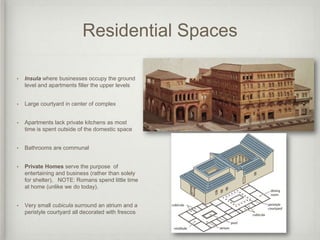
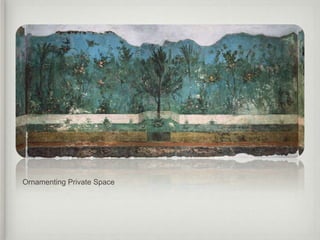
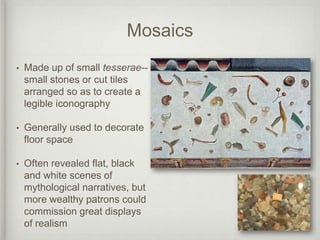
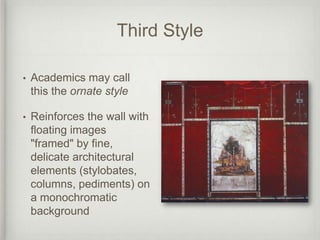
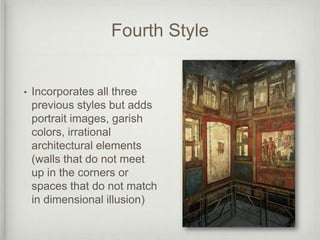
Roman urban design was based on a grid system for efficient travel and transportation. Cities were organized around public spaces like temples, forums, and basilicas which indicated the importance of religion and government. Residential spaces like insulae had businesses on the ground floors and apartments above with shared bathrooms and courtyards. Private homes served purposes beyond shelter like entertaining. Interior spaces like cubicula were decorated with frescoes, mosaics depicting myths, and murals painted in the first to fourth styles which gave illusions of materials, perspective, and framed images.